Palo Duro Canyon Lighthouse Trail and Rim Routes
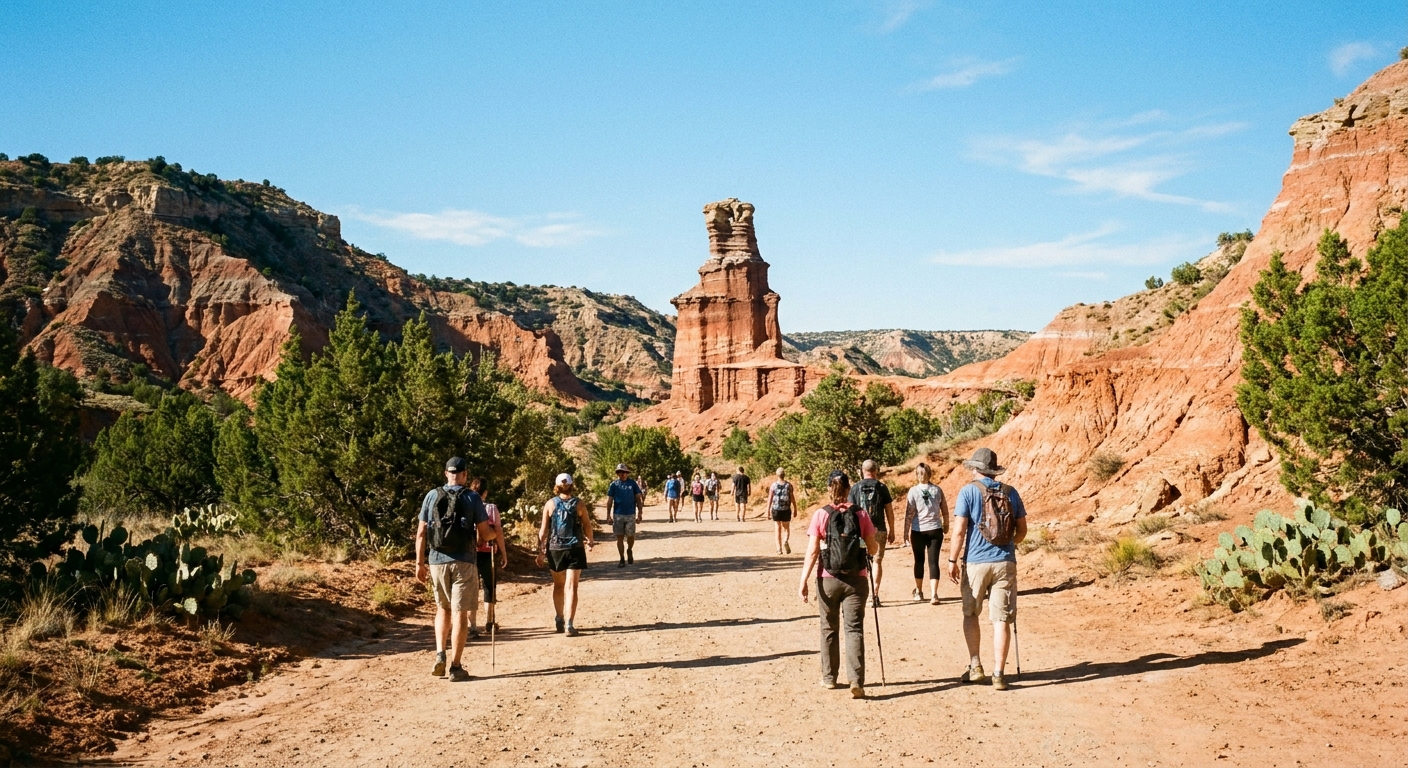
Palo Duro Canyon looks like the Texas Panhandle decided to keep a secret. From the rim, it is all big sky and prairie. Drop into the canyon and suddenly you are walking through rust-red walls, cottonwoods, and a trail system built for people who actually want to earn their views.
If you are a first timer, the Lighthouse Trail is the headline. But the rim routes and scenic overlooks are where you can stitch together a full day that balances rugged with comfortable. This guide covers the practical stuff most people learn the hard way: old CCC trail construction quirks, wind, rattlesnakes, prairie dog buffers, the reality of midday shade, flash-flood etiquette, trail sharing basics, and the honest drive distance from Amarillo.

Quick orientation for first timers
Where you are
Palo Duro Canyon State Park sits southeast of Amarillo near Canyon, Texas. It is often called the second-largest canyon in the United States, and the scale feels real once you start stacking switchbacks and looking back at the layers.
Lighthouse Trail basics
- Distance: About 5.8 miles round trip (out and back).
- Time: Most first timers land in the 2 to 4 hour range, depending on pace, heat, wind, and photo stops.
- Exposure: Sun and wind are the main “why is this harder than expected” factors.
What “Lighthouse Trail” actually means
Most people say “we did the Lighthouse” when they did the main out-and-back to the Lighthouse formation and, optionally, the short spur that climbs closer to the base. Those are two different experiences. The main trail is exposed but generally straightforward. The spur is steeper, looser underfoot, and more exposed to wind and sun.
Know the day’s shape
- Morning: Best temps, best light, and fewer crowds.
- Midday: Shade is scarce on the Lighthouse Trail. If it is hot, it is hot.
- Late afternoon: Beautiful light, but watch timing so you are not finishing the last mile in the dark.
Lighthouse Trail: what it feels like
The trail surface is not “just dirt”
Parts of Palo Duro’s trail system were laid out and improved by the Civilian Conservation Corps (CCC) in the 1930s. You will see the legacy in how some sections are benched into slopes, how drainage is handled, and how rockwork appears where you least expect it.
What that means for you:
- Hard-packed tread with embedded rock: It can feel like natural pavement, until you hit a loose patch and your foot skates.
- Old drainage cuts: After storms, the trail can hold shallow ruts that grab toes. Slow down on the return when you are tired.
- Stone edging and step-like sections: They are helpful, but they also create trip points if you are moving fast.
This is a shared trail
The Lighthouse Trail is multi-use, so expect mountain bikes as well as hikers. The vibe is friendly, but it helps to move with shared-trail awareness.
- Stay to the right when you can, especially on narrower sections.
- Listen for riders coming up behind you and step aside when needed.
- If you are hiking with kids or a dog, keep them close on blind turns.
Wind is a real character here
The Panhandle does not do gentle breezes. On exposed stretches, prairie wind can push you sideways, especially if you are carrying a pack with a tall profile or you are hiking the spur where the canyon funnels airflow.
Wind tips that actually help:
- Keep your hat on a leash or choose a snug cap over a wide brim.
- Use trekking poles if you have them. Wind plus uneven rock is a classic ankle combo.
- If gusts are strong, give yourself extra space near edges and avoid scrambling on the spur when you feel unstable.
Shade scarcity is the main gotcha
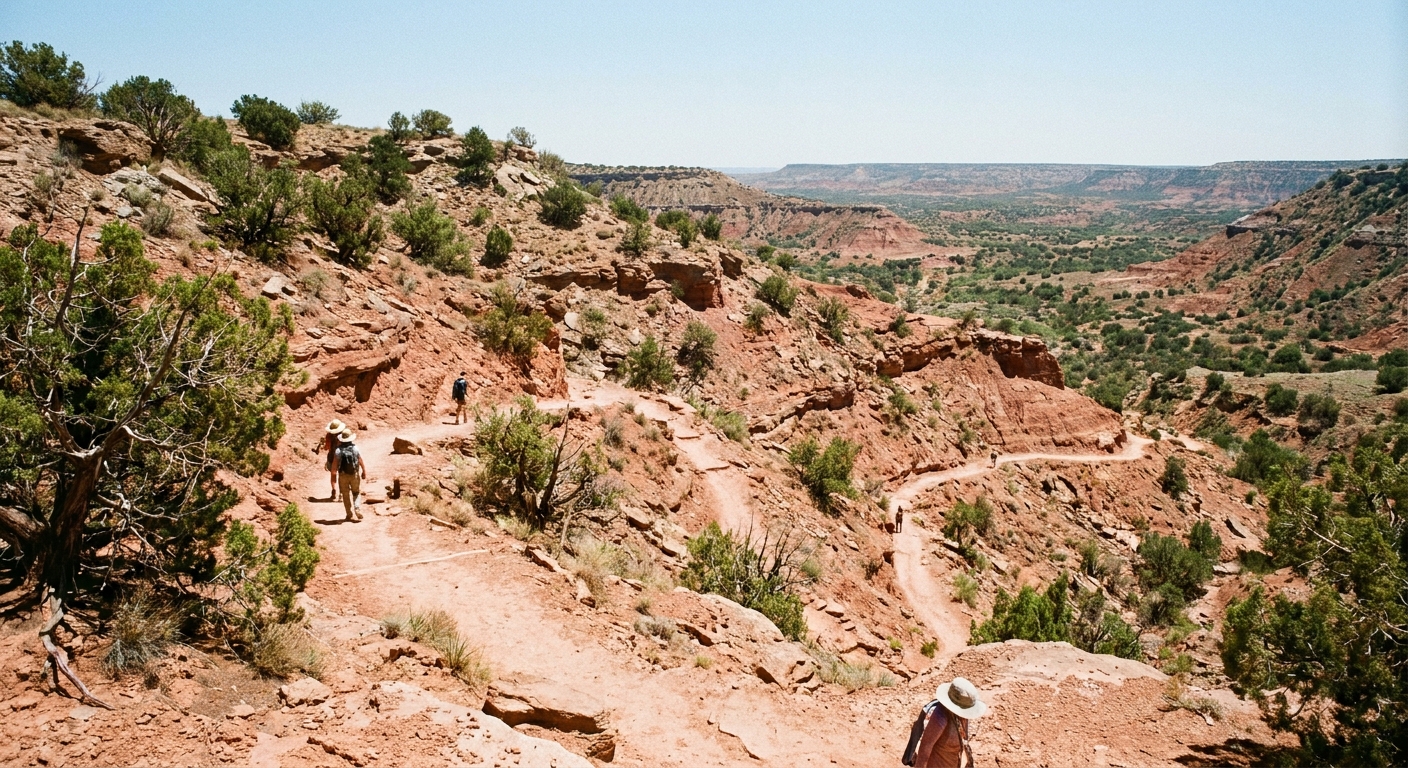
On the Lighthouse Trail, you will get bursts of shade near canyon vegetation, but long stretches are open. If you are used to wooded hikes, the exposure can sneak up on you, especially with reflected heat off pale dirt and rock.
Hydration strategy that actually holds up in the Panhandle: drink early, bring more than you think, and treat electrolytes as part of the plan when it is warm.
- Water: Texas State Parks commonly recommends about 1 liter (roughly a quart) per hour of hiking. For a 2 to 4 hour Lighthouse hike, that can mean 2 to 4 liters per person depending on conditions. If that sounds like a lot, that is because it is, and the canyon is not interested in your minimalist packing goals.
- Electrolytes: Add them early, not only after you feel wrecked.
- Sun: Sunscreen plus a breathable long-sleeve layer can feel better than bare skin in direct sun.
- Timing: Start early. If you can see the heat shimmer over the flats, the canyon is already cooking.
The Lighthouse Spur
Short scramble, not a stroll
The spur up toward the Lighthouse formation is optional, and that is not a polite way of saying “skip it.” It is genuinely worth doing if conditions are good and you are comfortable on steeper terrain. But the footing is looser, the angle is sharper, and the sun and wind feel turned up.
Rattlesnake-aware foot placement
Palo Duro is rattlesnake country. Most hikers never see one, and that is the goal. The practical habit to adopt is simple: place feet deliberately, especially when stepping over rocks, ledges, or into the shade of a boulder where a snake might be cooling.
- Do not step where you cannot see the landing.
- Step on top of logs and rocks, not over them, then look down the other side before you step off.
- If you hear a rattle, freeze, locate the snake visually, and give it a wide detour. Do not try to “move it along.”
Wind plus exposure: when to turn
If gusts are strong enough that you are bracing constantly, treat that as your sign. The spur is not the place to prove a point. The main Lighthouse view is still a win, and it is a lot more fun when you are not white-knuckling your way down.
Prairie dogs and buffers
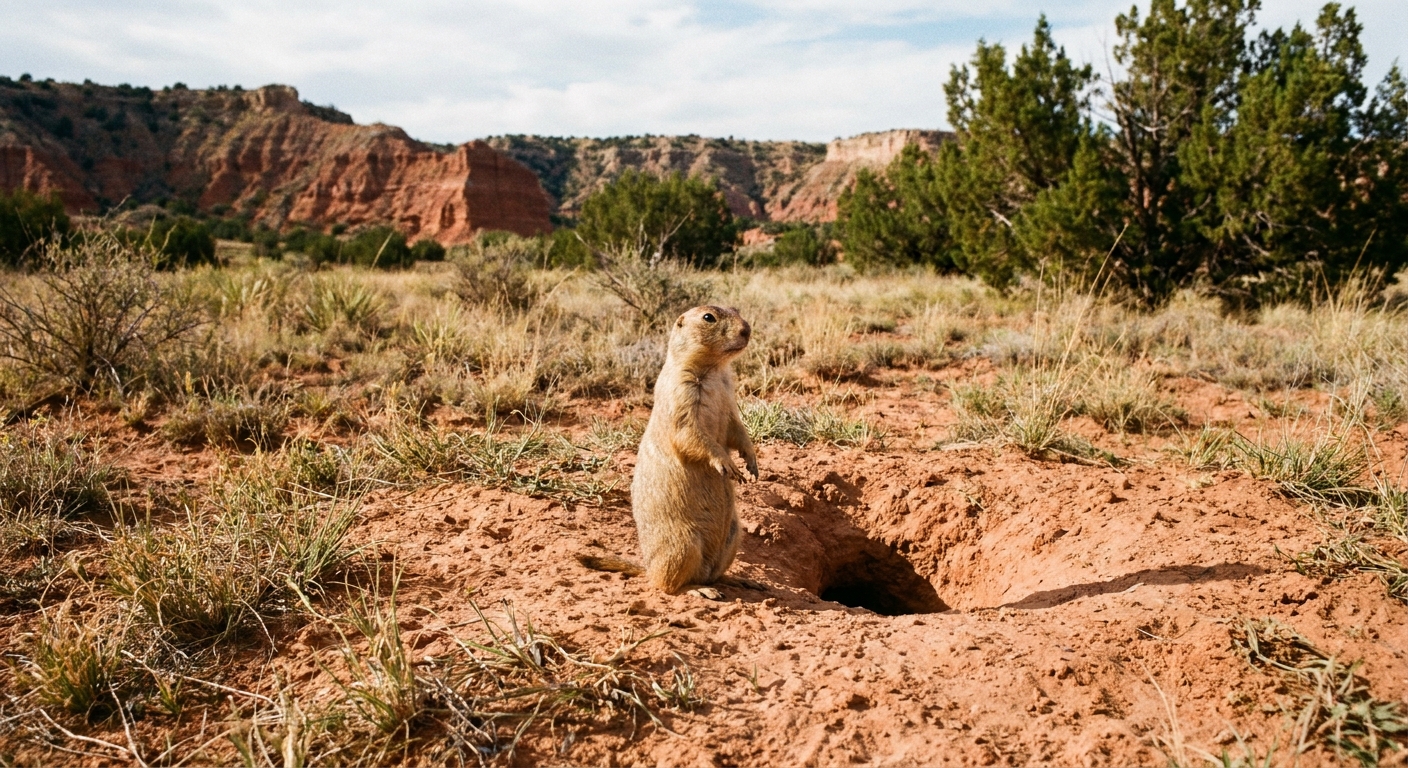
You will likely see prairie dogs around flatter areas and near some roadside pullouts. They are adorable in a way that makes people forget two things: wild animals are not props, and prairie dog colonies can carry fleas and diseases. Parks and wildlife agencies commonly recommend giving prairie dogs space, and it is wise to treat them like you would treat any wildlife.
A simple buffer rule
- Stay well back from burrow openings and active colonies.
- Do not feed them. It changes their behavior and makes them bolder around people.
- Keep dogs leashed and away from burrows.
For photography, use zoom and patience. You will get better behavior shots without stressing them.
Flash-flood etiquette
Palo Duro is not slot-canyon tight like parts of Arizona, but water still moves fast through drainages and low crossings after storms. Even if it is sunny where you are standing, a storm upstream can send water down the system.
How to hike flood-aware
- Check the forecast before you drive into the park: Pay attention to thunderstorm chances, not just temperature.
- Watch the sky and listen: If you hear thunder, treat it as a real factor in your decision-making.
- Do not cross moving water: Turn around or wait it out at higher ground. “It looks shallow” is not a plan.
- Avoid lingering in dry washes: They are the first place floodwater shows up.
Etiquette matters, too: if rangers or signage advise closures or reroutes after storms, follow them. Those rules exist because someone already tested the alternative.
Scenic rim routes
If the Lighthouse Trail is your big hike, the rim routes are your cinematic add-on. They also save the day if wind or heat makes a long hike feel like a questionable decision.
Rim viewpoints to prioritize
- Early morning rim stops: Cooler air, softer light, and that quiet, wide-open feeling the Panhandle does best.
- Midday overlooks: Great for short walks and photos, then retreating to air conditioning or shade for a reset.
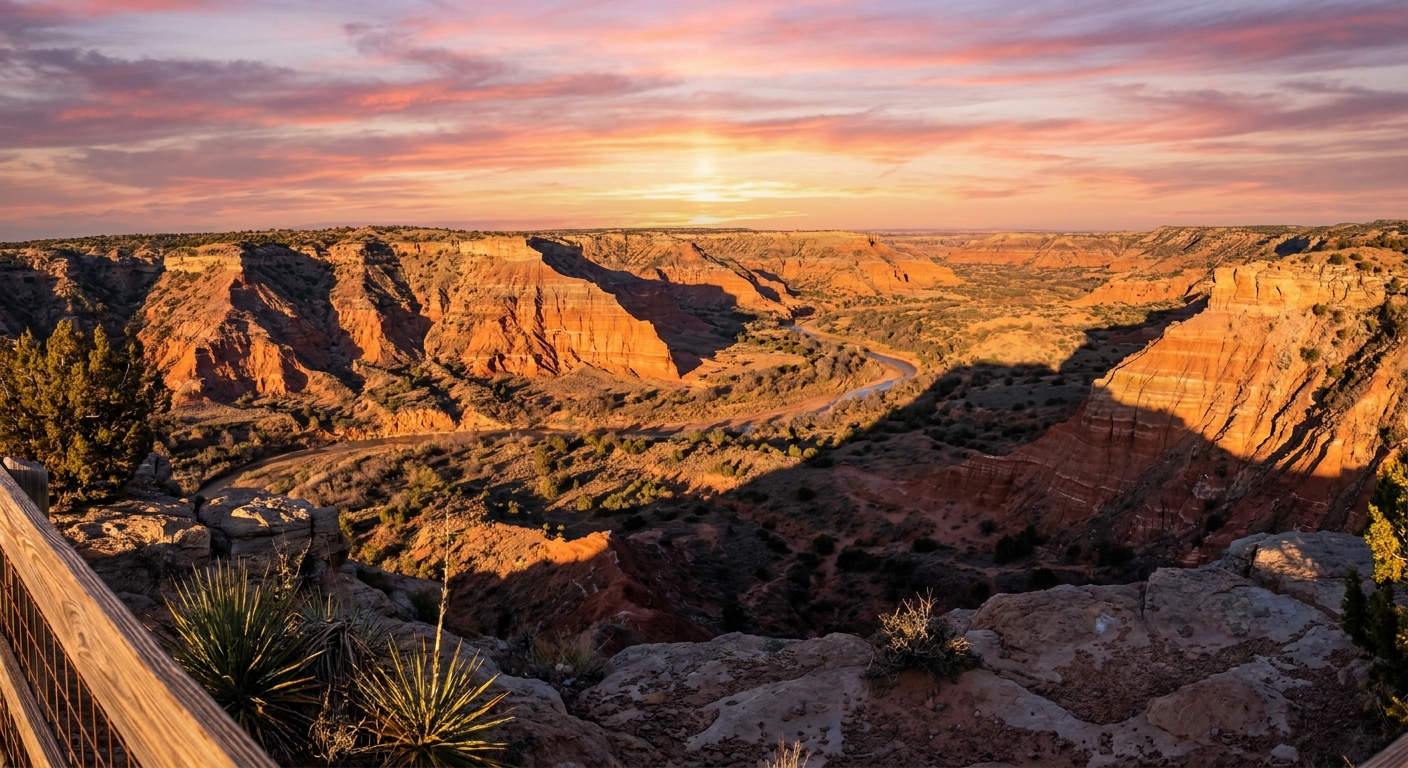
- Late-day rim drive: The canyon walls glow. This is when Palo Duro looks like it is lit from inside.
Plan to take your time. The best rim experience is slow travel in miniature: pull over, look longer than you think you need to, then move on.
What to pack
This is a place where the “I will just bring a bottle of water” approach gets punished, especially in warm months. Here is a streamlined list that still keeps things simple.
Essentials
- Water plus electrolytes (aim for about 1 liter per hour of hiking)
- Sun protection: sunscreen, sunglasses, and a hat that will not fly away
- Light long sleeves or a sun hoodie for exposure
- Closed-toe shoes with decent tread
- Basic first aid, including blister care
- Snacks you will actually eat when it is hot
Nice-to-haves
- Trekking poles for loose sections and windy days
- A small headlamp in case your hike runs long
- Binoculars for rim overlooks and wildlife spotting
Amarillo lodging
Most visitors base themselves in Amarillo because it has the widest range of hotels, restaurants, and, yes, coffee shops worth building a morning around. The tradeoff is drive time. Palo Duro is not “right there” if you are imagining a five-minute hop.
How to think about the commute
- From Amarillo: Expect a real drive each way, and add buffer time for park entry, traffic, and stopping at overlooks once you get inside.
- From Canyon, Texas: Usually closer and simpler if you want a quicker start.
- Inside the park: Camping and cabins shorten your morning dramatically and make sunrise and sunset easier, but you will trade urban conveniences for stars and quiet.
If your goal is an early Lighthouse hike, staying closer than Amarillo can be the difference between hiking in cool air and hiking in a hair dryer.
Simple first-timer itinerary
Option A: Lighthouse plus rim
- Early: Arrive, start Lighthouse Trail before the day heats up.
- Mid-morning: Decide on the spur based on wind, heat, and how your footing feels.
- Lunch: Eat and hydrate before you feel depleted.
- Afternoon: Scenic rim drives and overlooks, short strolls only.
- Golden hour: One last rim stop for photos and that full canyon glow.
Option B: Rim day
- Prioritize overlooks, short interpretive walks, and shaded picnic breaks.
- Save Lighthouse for the next morning when temps and wind cooperate.
Leave no trace
Palo Duro’s beauty is tough, but it is also fragile in the ways that matter. Stay on trail to prevent erosion, pack out every wrapper, and give wildlife a wide, calm radius. If you bring a speaker, consider leaving it in the car. The sound of wind moving through the canyon is part of the point.
If you do one thing to make your first Lighthouse hike better: start earlier than you think you need to, and carry more water than your pride wants to admit.