Petroglyph National Monument: Boca Negra and the Volcanoes Loop

Maya Lin
Maya Lin is a travel journalist and outdoor enthusiast who believes the best trips combine rugged adventures with urban comforts. After spending six years backpacking across four continents, she founded Trail & Town Guide to help fellow travelers navigate both hidden mountain passes and bustling city neighborhoods with confidence.
Albuquerque has this sneaky talent for giving you big desert drama in small windows of time. One minute you are grabbing an iced coffee off Central, the next you are standing in front of volcanic basalt etched with centuries-old images. Petroglyph National Monument is the perfect bridge between “I only have half a day” and “I still want something that feels distinctly New Mexico.”
This loop-style plan focuses on two visitor-friendly areas: Boca Negra Canyon for fast access to dense petroglyph viewing, then the Volcanoes Day Use Area for a longer walk with wide-open views and a sense of the landscape that shaped the rock art.
Know before you go
What Petroglyph is, in one minute
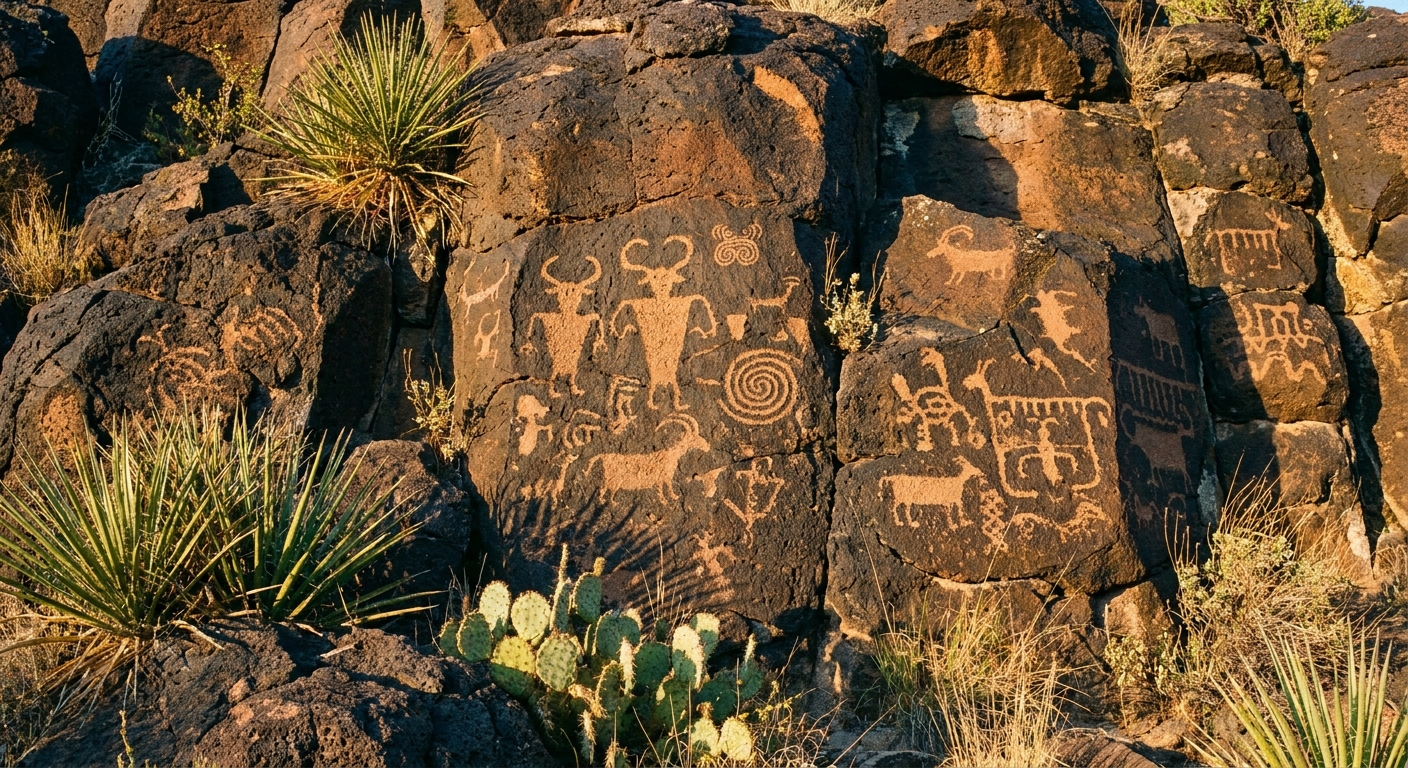
Petroglyph National Monument protects a long basalt escarpment on Albuquerque’s West Mesa. The carvings were pecked into the dark volcanic rock over many centuries by Indigenous peoples and later by Spanish settlers. You will see geometric designs, animals, human figures, and symbols that are still culturally significant today.
Hours and access (do not get gate-locked)
One key logistics note: Boca Negra Canyon has a gated entrance with an early closure. It typically closes at 4:30 PM year-round, with last entry at 4:00 PM. In summer, that means “sunset” plans here can backfire.
- For late-day light: do Boca Negra earlier, then save your sunset time for a non-gated area like Rinconada Canyon (longer, more rugged hike) or for big-sky views in the Volcanoes Day Use Area.
- Always verify current hours: seasonal staffing and special closures happen. Check the monument and City of Albuquerque pages before you drive over.
Best time of day (and why it matters here)
In warm months, the West Mesa heat is real and the trails offer limited shade. Plan to start early morning or late afternoon for comfort. For photography, those same times give you more side-light, which helps shallow carvings pop against the rock. Just remember that Boca Negra’s gate closes well before sunset.
- Summer: aim for sunrise to mid-morning for Boca Negra, then use late afternoon for the Volcanoes area or Rinconada Canyon if you want a later hike.
- Spring and fall: mid-morning is comfortable, but earlier and later light still wins for photos.
- Winter: midday can be ideal, with fewer crowds and soft light.
What to bring (carry-on philosophy friendly)
- Water: more than you think you need, especially for the Volcanoes loop.
- Sun protection: hat, sunglasses, sunscreen.
- Grippy shoes: basalt can be uneven and gritty.
- Snacks: there is not a café on-site, and the desert does not care about your meal schedule.
- Camera or phone: plus a microfiber cloth for dusty lenses.
Stop 1: Boca Negra Canyon
If you want the biggest “wow” per minute, start at Boca Negra Canyon. This is the monument’s most accessible concentrated petroglyph viewing area: short trails lead to multiple viewpoints with panels visible from the path.
Parking, fees, and timing
The lot is small and this unit can get busy. If you arrive and it is full, do not force it. Circle once, then consider swapping the order and doing the Volcanoes loop first. Another smart move is arriving earlier than you planned, especially on weekends.
- Gate hours: Boca Negra is gated and typically closes at 4:30 PM with last entry at 4:00 PM. Plan your day so you are not racing the clock.
- Parking fee: Boca Negra is city-operated and requires a small parking fee (commonly $1 on weekdays and $2 on weekends) or coverage via an America the Beautiful pass. Fees can change, so bring a couple of dollars just in case.
Which trails to choose
Boca Negra has a few short options that can be combined depending on your time and mobility. This is the important part: not every trail here is fully paved or stroller-friendly.
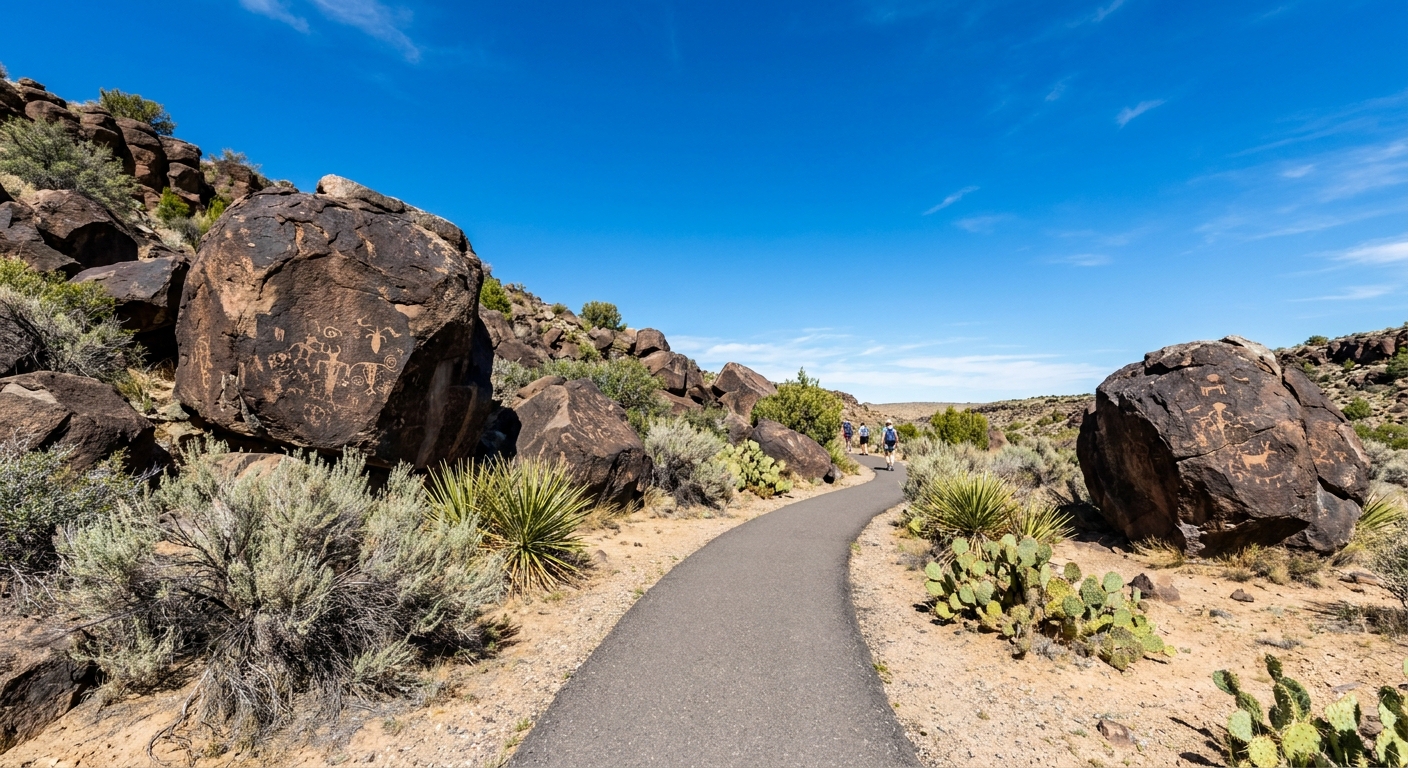
- Quick look: choose Macaw or Cliff Base for the easiest, mostly paved access to viewpoints.
- Best half-hour: pair Macaw and Cliff Base, then decide if you want one more climb.
- Mesa Point reality check: Mesa Point is steep and rocky with uneven footing. It is worth it if you are steady on your feet, but it is not the move for strollers or anyone expecting a smooth paved path.
- Family-friendly: stick to the easier trails and keep little hands off the rock.
Photography etiquette that protects the site
The best photos happen when you slow down, not when you climb closer. Stay on the trail and resist the temptation to “just step off for a better angle.” Those social trails crush fragile plants and accelerate erosion around the panels.
- No chalk, water, or rubbing: never outline carvings or wet the rock to increase contrast. It can permanently damage the surface.
- No climbing on boulders: even if it looks sturdy, it can scrape the patina that makes petroglyphs visible.
- Use side-light: visit early in the day for Boca Negra, or shade glare with your body without touching the panel.
Slow travel tip: give one panel a full five minutes. Your eyes start noticing the lighter peck marks, then the “story” emerges.
Stop 2: Volcanoes Day Use Area loop
After Boca Negra, drive to the Volcanoes Day Use Area for a bigger, more open-sky experience. This side of the monument is less about dense petroglyph overlooks and more about walking through the volcanic landscape that created the basalt canvas.
What the loop feels like
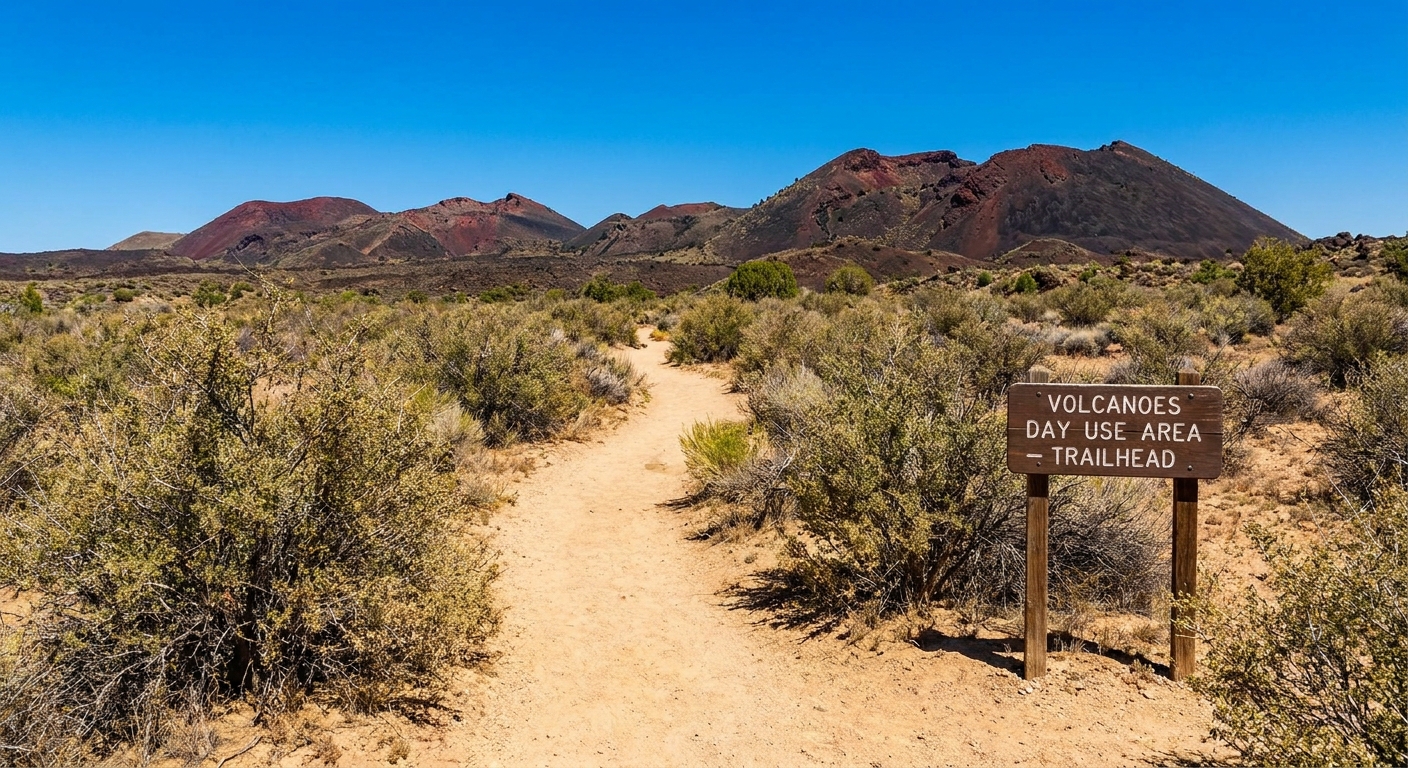
Expect a wide trail across sandy, rocky terrain with expansive views. You will see the cinder cones of the Albuquerque Volcanoes off in the distance and feel how quickly the city falls away.
Heat and wind reality check
This area can feel hotter than you expect because of sun exposure and reflected heat off the ground. Wind is common too, which can dehydrate you quietly. If the forecast is intense, shift this portion to early morning or shorten your loop.
Rattlesnake awareness
Rattlesnakes live here, and most problems happen when people step off trail or put hands where they cannot see. You do not need to be fearful, just deliberate.
- Stay on established trails and watch where you place feet and hands.
- Do not step over rocks or logs blindly. Step on top, then look down the other side.
- Give snakes space. Back up slowly and let them move on.
- Keep dogs close and leashed if pets are allowed in the area you are visiting. Desert plants and wildlife are not forgiving.
How long to budget
Plan 1.5 to 2.5 hours for the loop depending on pace, weather, and how often you stop for views. If you are stacking this with Old Town or a flight, this is the piece to adjust.
The ideal half-day plan
Here is a time-efficient sequence that works well for most visitors.
- Boca Negra Canyon: 45 to 75 minutes for short trails and multiple viewpoints. Start earlier in the day so you are not squeezed by the gate closing.
- Drive and reset: 15 to 25 minutes plus a water refill and sunscreen reapply.
- Volcanoes Day Use Area loop: 90 to 150 minutes depending on heat and hiking style.
If you only have 90 minutes total, do Boca Negra only. It is the highest payoff for minimal time, especially if your goal is to actually see petroglyphs up close without a long hike. Just keep the 4:00 PM last entry in mind.
How to pair it with Old Town or a layover
Petroglyph + Old Town
Petroglyph National Monument sits on the west side of Albuquerque, and Old Town is a natural follow-up when you want shade, history, and food after sun and basalt.
- Do Petroglyph first: you will be happier walking the trails before the day heats up, and you will avoid getting clipped by Boca Negra’s early gate closure.
- Then Old Town: aim for a late lunch, browse local shops, and if you have energy, pop into a museum or gallery.
- Coffee mission: reward yourself with something local and icy. You earned it.
Perfect for a layover or departure day
If you have a long layover or you are killing time before a flight, this plan is surprisingly doable because you can scale it up or down.
- 2 to 3 hours: Boca Negra only, plus a quick detour for food. Plan around the gate hours.
- 4 to 5 hours: Boca Negra + Volcanoes loop, then head straight to the airport.
- Buffer time: always build in extra for parking, heat breaks, and traffic. Desert hikes are not the place to cut it close.
Respecting living culture
Petroglyphs are not just “ancient art.” Many symbols remain meaningful to Pueblo communities today. The best way to visit is to treat the site like a cultural space, not an obstacle course.
- Leave everything as you found it. No tracing, no touching, no souvenirs.
- Keep voices low near panels where others are looking closely.
- If you post on social media, consider keeping locations general so fragile areas do not get loved to death.
Quick checklist
- Start early for cooler temps and better photo light at Boca Negra.
- Boca Negra is gated: plan for the typical 4:30 PM close and 4:00 PM last entry.
- Expect tight parking at Boca Negra and a small parking fee. Have a backup order.
- Macaw and Cliff Base are the easiest paths. Mesa Point is steep and rocky.
- Stay on trail. Do not touch or mark the rock.
- Carry more water than you think you need.
- Watch for rattlesnakes by staying alert, not alarmed.
- Pair with Old Town for an easy culture-and-food finish.