Picacho Peak State Park Wildflowers and Road Trip Hikes
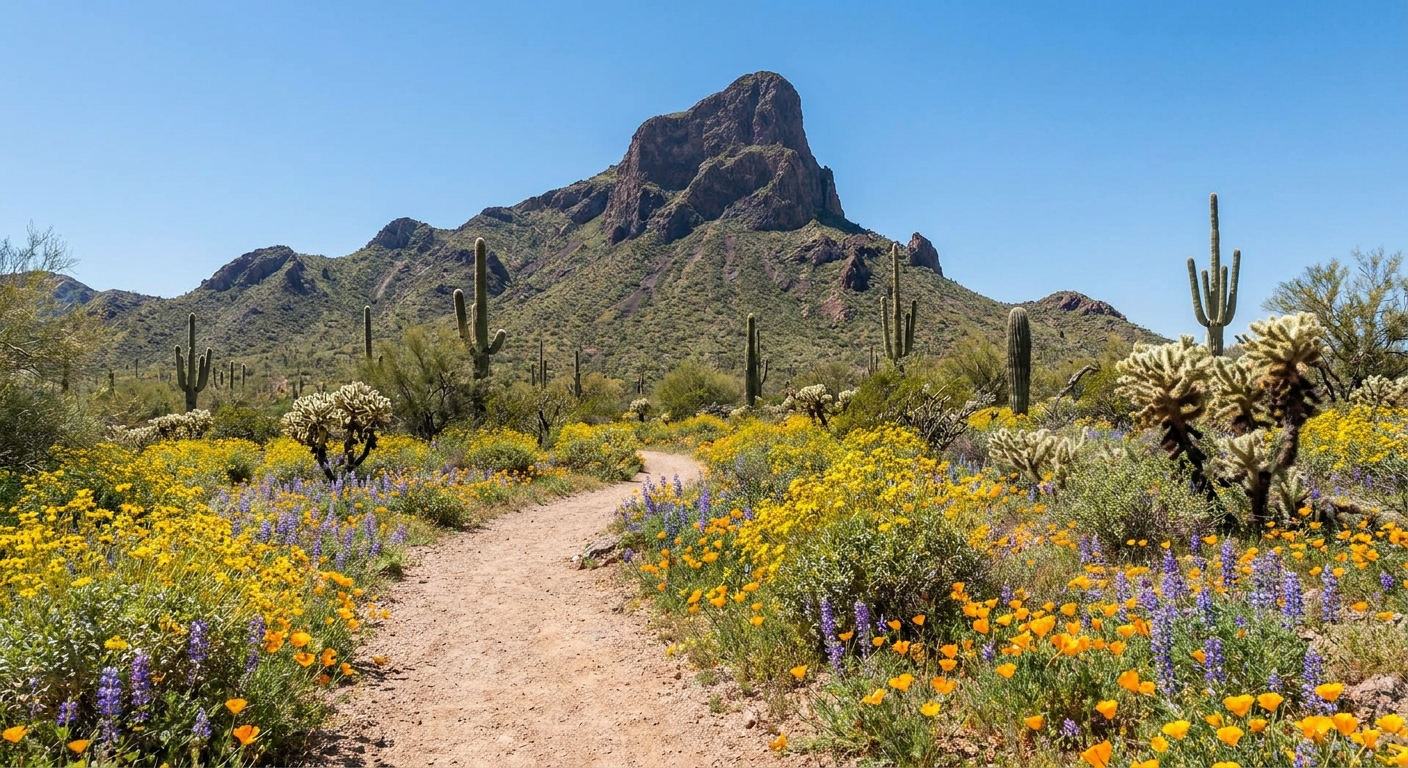
If you have ever driven I-10 between Tucson and Phoenix and watched a jagged peak rise out of the desert like a spilled pile of black rock, you have already met Picacho Peak. It is the kind of landmark that makes you sit up in your seat, even if you promised yourself this would be a “no stops, just snacks” road trip.
Picacho Peak State Park is a near-perfect detour because it is close to the freeway, easy to navigate, and surprisingly varied. In spring it can feel like someone turned the saturation up on the Sonoran Desert, with poppies and lupine glowing against dark volcanic slopes. Outside bloom season, it is still a great leg-stretcher with big views, a real sense of place, and hikes that range from mellow to “hands on cable, heart in throat.”

Quick park facts for road trippers
- Location: Right off I-10 between Tucson and Phoenix, near the town of Picacho.
- Why stop: Spring wildflowers, iconic desert scenery, and a choose-your-own-adventure hike menu.
- Best use: A 60 to 180 minute stop that still feels like you did something memorable.
- Facilities: Visitor center and restrooms, picnic areas, campground, and trailhead parking.
- Fee: Typically $7 per vehicle (check current rates before you go).
- Hours: Gates close at sunset, so plan your hike with a real turnaround time.
Town Wander tip: If you are trying to break up the drive, Picacho works best as a “park, hike, snack, back on the highway” stop. Save longer hangs for nearby Tucson or Phoenix where the food and hotel options are richer.
Wildflower timing you can actually plan around
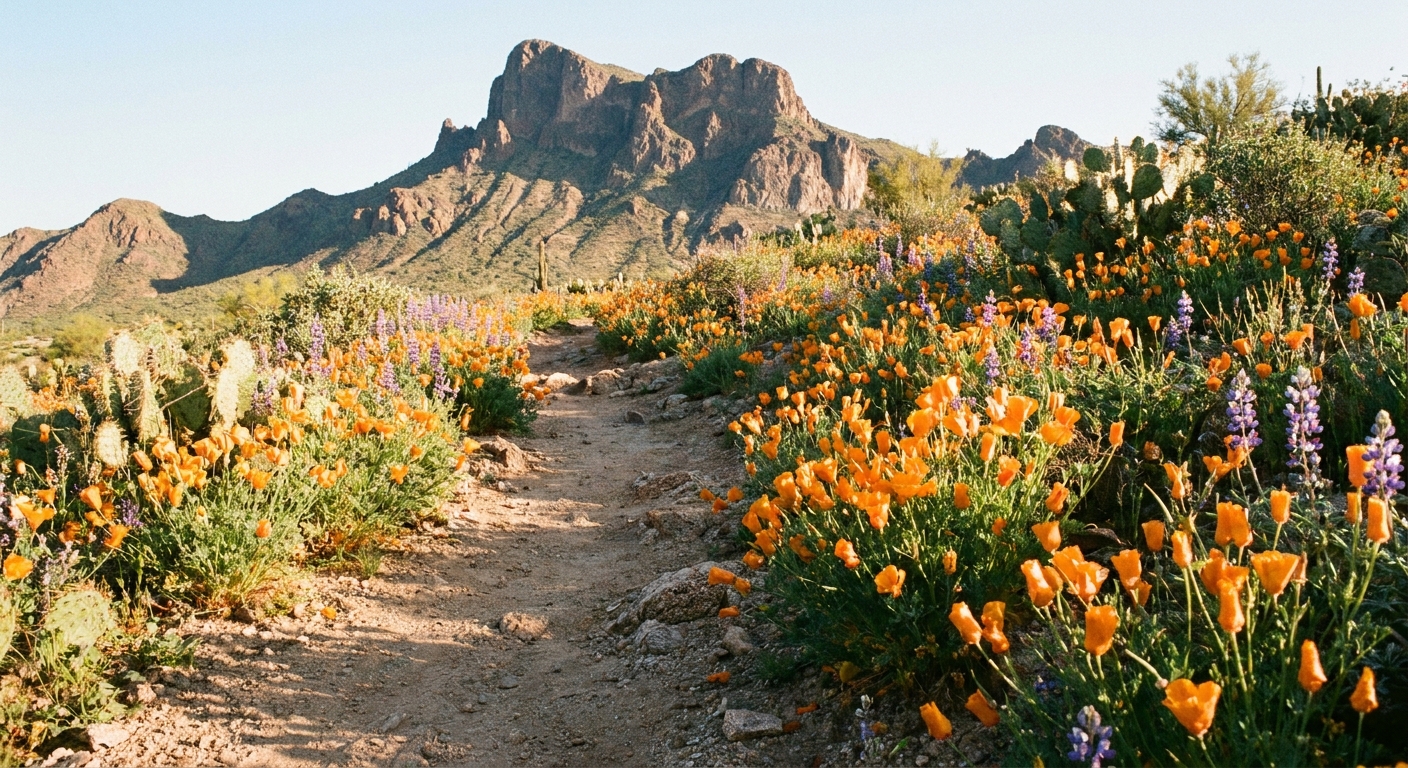
Picacho’s wildflower season is famous, but it is not a guaranteed annual performance on the same date. Desert blooms depend on a combination of winter rain, warming trends, and wind. Some years it is jaw-dropping. Other years it is more like a few bright pockets and a lot of “you had to be here in 2019.”
Typical bloom window
- Most likely peak: Late February through March
- Possible early color: Late January into early February (in good rain years)
- Late-season holdouts: Early April, especially at slightly higher or shadier spots
What you will usually see
In strong years, look for broad sweeps of Mexican gold poppies on lower slopes and flats, plus lupine, brittlebush, owl clover, and desert marigold mixed in. Color tends to be best after a few warm days following rain, when buds finally open.
How to time it like a local
- Track rainfall patterns: Consistent winter precipitation matters more than one big storm.
- Plan for a flexible week: If you can shift your road trip by even a few days, you will increase your odds.
- Hit the park early: Morning light makes flowers look richer, and you will dodge heat and crowds.
Choosing your hike: Sunset Vista vs Hunter
Picacho has a handful of trails, but most visitors are deciding between two routes that often get talked about together. Here is the honest breakdown, including the part that surprises first-timers.
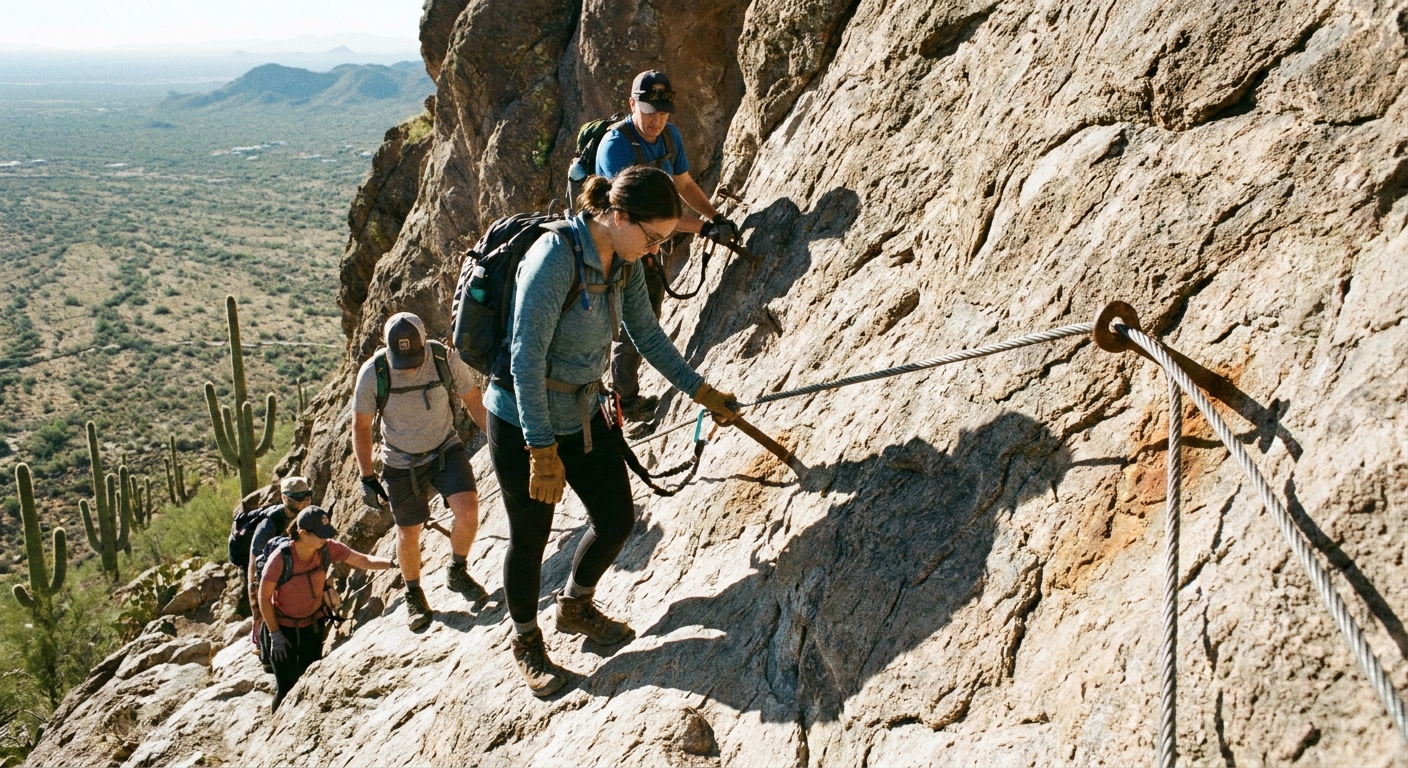
Important reality check: Both Sunset Vista and Hunter converge at the saddle. If you go beyond the saddle and continue to the summit, you will use the same steep, exposed cable sections on the final ascent and descent, no matter which approach you picked. The “no cables” version of Picacho is stopping at the saddle (or lower) and turning around.
Sunset Vista Trail
Best for: Most visitors, wildflower viewing, and big views without committing to the summit cables.
Sunset Vista is the park’s classic scenic hike. It is a well-traveled trail that climbs gradually through saguaro-studded desert with wide-open views. In bloom season, this is often the easiest way to get maximum color for your effort. If you want a great hike that stays non-technical, hike Sunset Vista to the saddle and enjoy the payoff there.
- Difficulty feel: Moderate, with steady elevation gain.
- Exposure: High sun exposure, typical desert heat risk.
- What to expect: A sustained uphill walk, rocky footing in places, and excellent viewpoints, especially near the saddle.
Hunter Trail
Best for: Experienced hikers who want a steeper, more direct approach and are comfortable with exposure.
Hunter is the one people whisper about in the parking lot. It is steeper and more rugged early on, and it gets you to the saddle with less of the gradual scenic ramp-up that Sunset Vista gives you. If your goal is the summit, you will still face the same cable-assisted final section beyond the saddle.
- Difficulty feel: Strenuous and steep.
- Exposure: Significant in upper sections and especially past the saddle.
- What to expect: A punchy climb, loose rock in spots, and then the shared cable route if you continue to the top.
If you do not like heights, the summit push past the saddle can feel like a hard no. If you love a little adrenaline and have solid footing, the cables can be the highlight of your Tucson to Phoenix corridor trip.
About “loop” hikes
You will sometimes hear people describe doing “Sunset Vista up, Hunter down” (or vice versa). You can do it, but there is a catch: the trailheads are on different sides of the mountain. Unless you set a shuttle or have a second car waiting, you will need to walk about 2 miles on the paved park road to get back to your starting parking lot. It is doable, just do not let it surprise you at the end of the day.
Water, heat, and what to carry
Picacho is low elevation desert hiking with big sun exposure. The park can feel deceptively “quick” because the peak is right there, but the combination of heat, wind, and steep grades can drain you fast.
How much water to bring
- Cool season (roughly November through March): Plan at least 1 liter per person for shorter hikes, and 2 liters if you are going to the saddle, attempting the summit, combining routes, or you are a thirsty hiker like me.
- Warm season (April through October): Aim for 2 to 3 liters per person for a longer hike. For many travelers, midday summer hiking here is simply not worth the risk.
Carry this, too
- Sun protection: Hat, sunscreen, and sunglasses. There is very little shade.
- Grippy shoes: Especially if you might go past the saddle.
- Salty snack: Electrolytes matter in dry heat, even on shorter hikes.
- Light layer: Winter mornings can be chilly, and wind on exposed slopes can surprise you.
My personal rule: If you are debating whether you need the second bottle, you need the second bottle.
Using Picacho as an I-10 stop
This park shines when you treat it like a well-timed pause in your drive, not an all-day epic. Here are a few easy formats that work well between Tucson and Phoenix.
60 to 90 minutes
- Quick bathroom stop at the visitor area
- Short walk on a nature trail or a partial out-and-back on Sunset Vista
- Photos of the peak and desert plants up close
2 to 3 hours
- Hike Sunset Vista to the saddle (or a lower viewpoint if you are short on time)
- Slow down for wildflower patches instead of rushing the climb
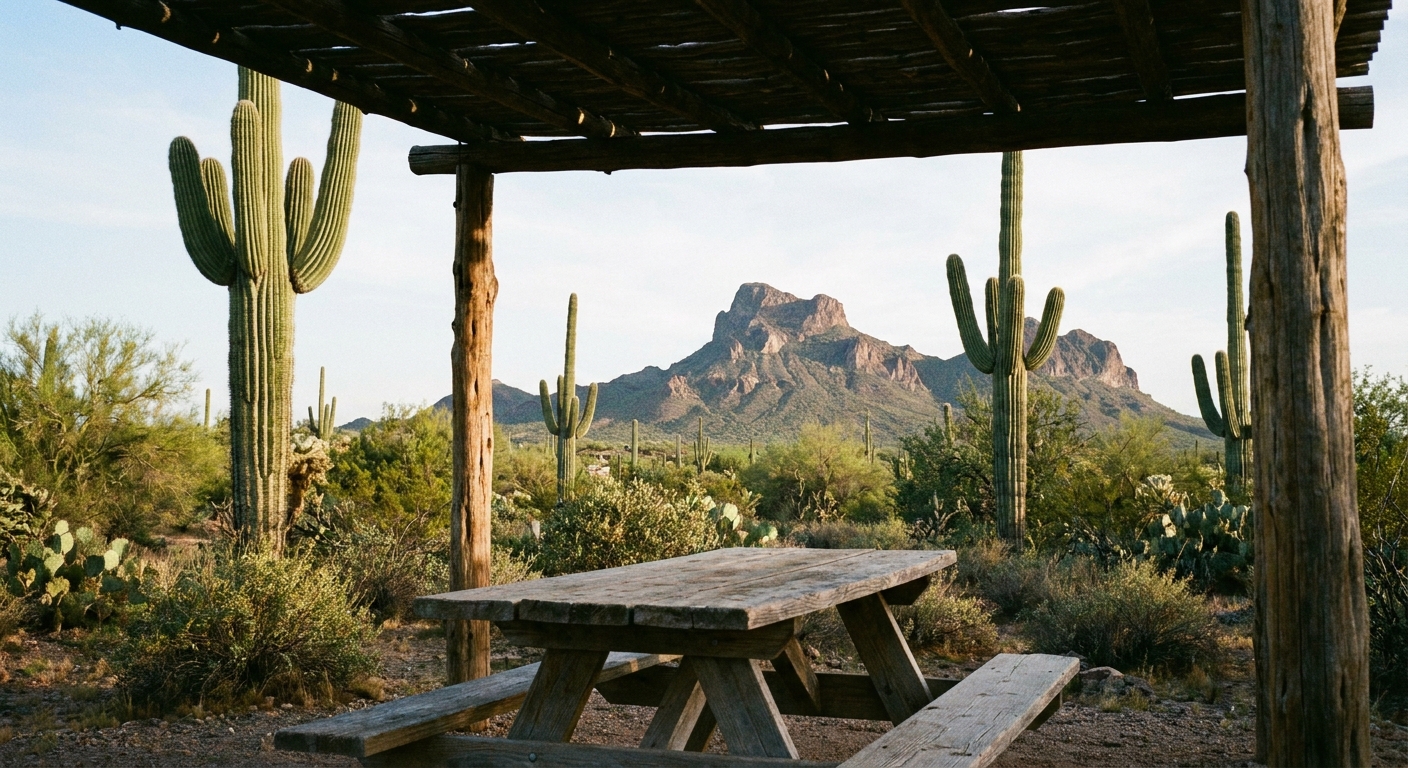
- Eat a packed snack at a picnic area before getting back on I-10
Half day
- Start early to avoid heat and crowds near the cables
- If summiting, plan extra time for the final cable section and for careful downclimbing
- If doing a point-to-point hike between trailheads, budget time for the paved road walk back (or arrange a shuttle)
Safety notes
Know when to skip the summit
If it is windy, rainy, or you feel uneasy on exposed terrain, the smart move is to hike to the saddle and turn around. The summit route past the saddle requires comfort with heights, dry rock, and patience at the cables.
Start early
Even in spring, the sun can get intense quickly. Morning hikes also feel quieter and more wildlife-friendly. Also, with gates closing at sunset, an early start keeps you from doing that stressful “are we going to make it out?” math on the way down.
Desert etiquette
- Stay on trail to protect fragile plants and soil crust.
- Pack out all trash, including fruit peels. The desert does not “take care of it.”
- Give wildlife space. This is their home, not our photo set.
Make it a Trail and Town day
Picacho Peak is a rare Arizona stop that fits neatly into a broader travel day. You can hike in the morning, then lean into the “town” part of the equation later with a proper meal and a good coffee in Tucson or Phoenix.
Northbound to Phoenix
After your hike, reward yourself in Phoenix with a café stop and a long lunch. If you are traveling with non-hikers, Picacho still works because the visitor area and short trails offer plenty of scenery without committing to the saddle or cables.
Southbound to Tucson
Tucson is a natural pairing for slow travel. If you have time, build your evening around local food and a neighborhood stroll. The contrast between desert trail dust and a city dinner is exactly why I love this corridor.
Before you go
- Check conditions: Weather, trail advisories, and seasonal heat concerns.
- Pick your hike honestly: Sunset Vista for a steady scenic climb, Hunter for a steeper approach. The summit cables are shared beyond the saddle.
- Plan for gates: Park gates close at sunset.
- Bring the fee: Typically $7 per vehicle.
- Carry more water than feels necessary: Desert air hides how fast you are dehydrating.
- Go early in wildflower season: Better light, cooler temps, and fewer crowds.
Picacho Peak is not just something you drive past. With a little timing and a realistic plan, it becomes one of those road trip stops you keep talking about long after you are back on the interstate.