Pinnacles National Park: East vs West Entrance Day Hike Plans

Maya Lin
Maya Lin is a travel journalist and outdoor enthusiast who believes the best trips combine rugged adventures with urban comforts. After spending six years backpacking across four continents, she founded Trail & Town Guide to help fellow travelers navigate both hidden mountain passes and bustling city neighborhoods with confidence.
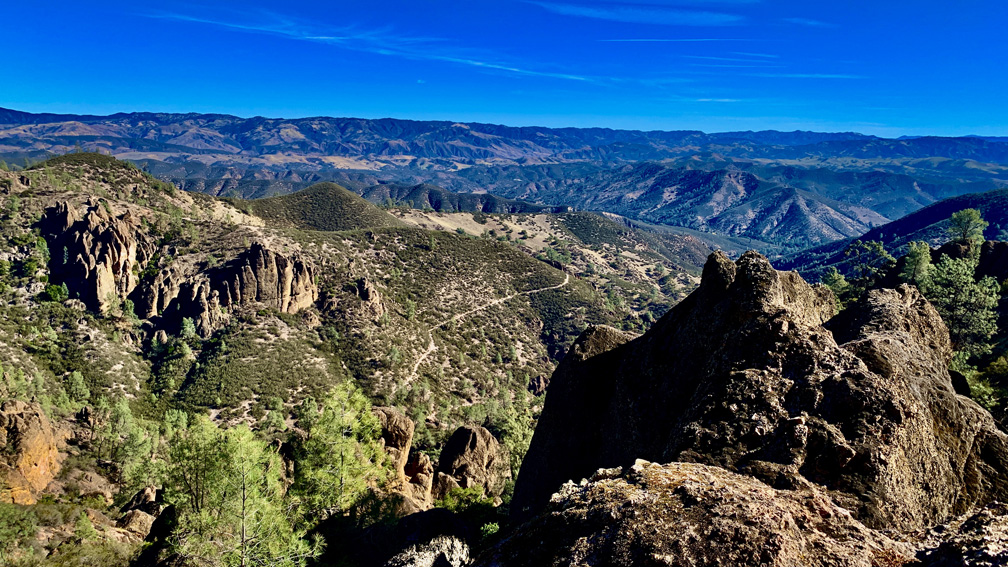
Pinnacles is the National Park you pick when you want a real trail day, a little drama in the rock, and still want to be back in a proper bed with a cold drink. The catch is that Pinnacles has two entrances that do not connect by road. You can hike across the park, but you cannot drive through it. That one detail changes everything about your one-day plan.
This guide breaks down East vs West like a friend who already took the wrong turn, showed up too late for parking, and learned the condor rules the hard way.
Check before you go
- Cave status: Bear Gulch Cave and Balconies Cave can close seasonally (bats, flooding, safety). Check the Pinnacles National Park (NPS) website the day before and the morning of.
- Trail conditions: storms can bring mud, rockfall, and washouts. Summer can bring heat advisories.
- Heat plan: in warm months, treat sunrise like your start time, not a vibe.
- Parking alerts: weekends and wildflower days can fill early, especially on the West side.
East vs West at a glance
If you only remember one thing: East is easier for longer, classic loops with campground access and more “make a day of it” flexibility. West is best for quick hits, especially if you want a shorter day and you are okay treating parking like a competitive sport on weekends.
One more thing that clears up a lot of confusion: you can technically hike to either cave area from either entrance, but for a one-day trip these are the most practical starts.
Quick decision checklist
- Choose East Entrance if you want: longer loops, campground access, and a smoother full-day itinerary.
- Choose West Entrance if you want: a shorter day with a big payoff, faster access from the Bay Area Peninsula and South Bay, and a “be done by lunch” option.
- Choose based on caves: Bear Gulch Cave and Bear Gulch Reservoir are most efficiently accessed from the East Entrance (Bear Gulch Day Use area). Balconies Cave is most efficiently accessed from the West Entrance (Chaparral area).
- Choose based on exposure: the High Peaks trails are steep and exposed with narrow sections (with railings in key spots), and they are not everyone’s idea of fun.
What is actually different between entrances?
- No through road: East Entrance Road and West Entrance Road do not connect for vehicles. Plan like you are committing to one side for the day.
- Services: The main Pinnacles Visitor Center is on the East side near the campground, along with a small seasonal store and a visitor contact station. The West side has a smaller, intermittently open contact station in the Chaparral area and fewer services.
- Parking: East is often easier for full-day plans. West can be tight on weekends and peak season.
- Trail access: both sides reach iconic rock formations, but the most efficient loop options change based on where you start.
- Gateway towns (GPS sanity check): For the West Entrance, aim navigation toward Soledad first. For the East Entrance, aim toward Paicines (and often Hollister for services) before you point it at “Pinnacles.” This avoids the classic mistake where your phone tries to route you through the park like it is a normal drive.
What to expect on trail
Steep steps (High Peaks)
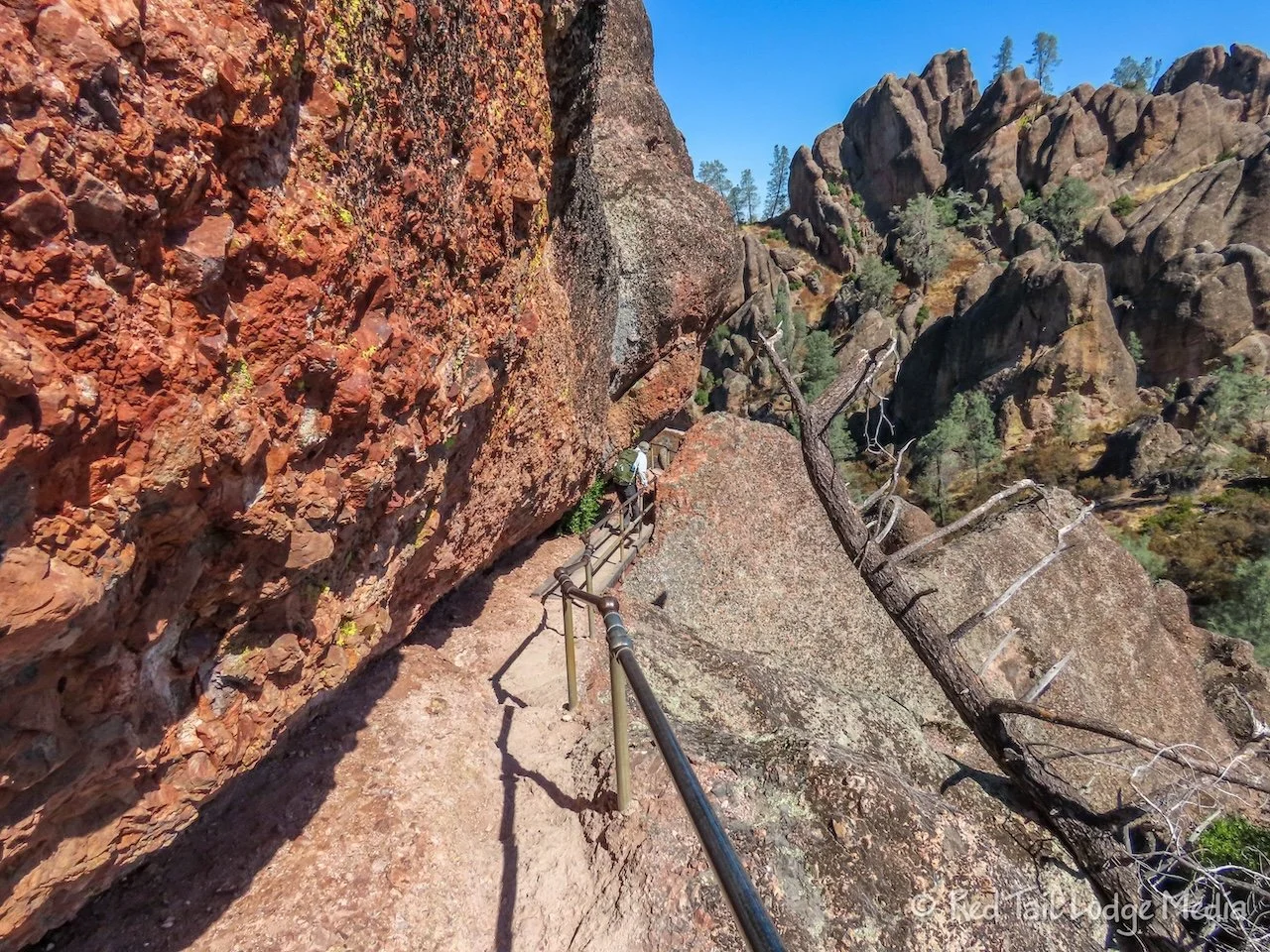
Pinnacles’ famous High Peaks routes include stone steps, handrails, and tight turns carved into the rock. Expect:
- Short, steep stair climbs that can bottleneck with other hikers.
- Exposed drop-offs in spots, with railings on the most dramatic sections.
- Route-finding attention: stay on trail and follow signs at junctions. In general, keep an eye out for “High Peaks” and “Bear Gulch” signage where routes braid together.
If you have a strong fear of heights, go for a cave-and-reservoir day instead of forcing the High Peaks. You will still get a fantastic Pinnacles experience.
Talus caves: Bear Gulch and Balconies
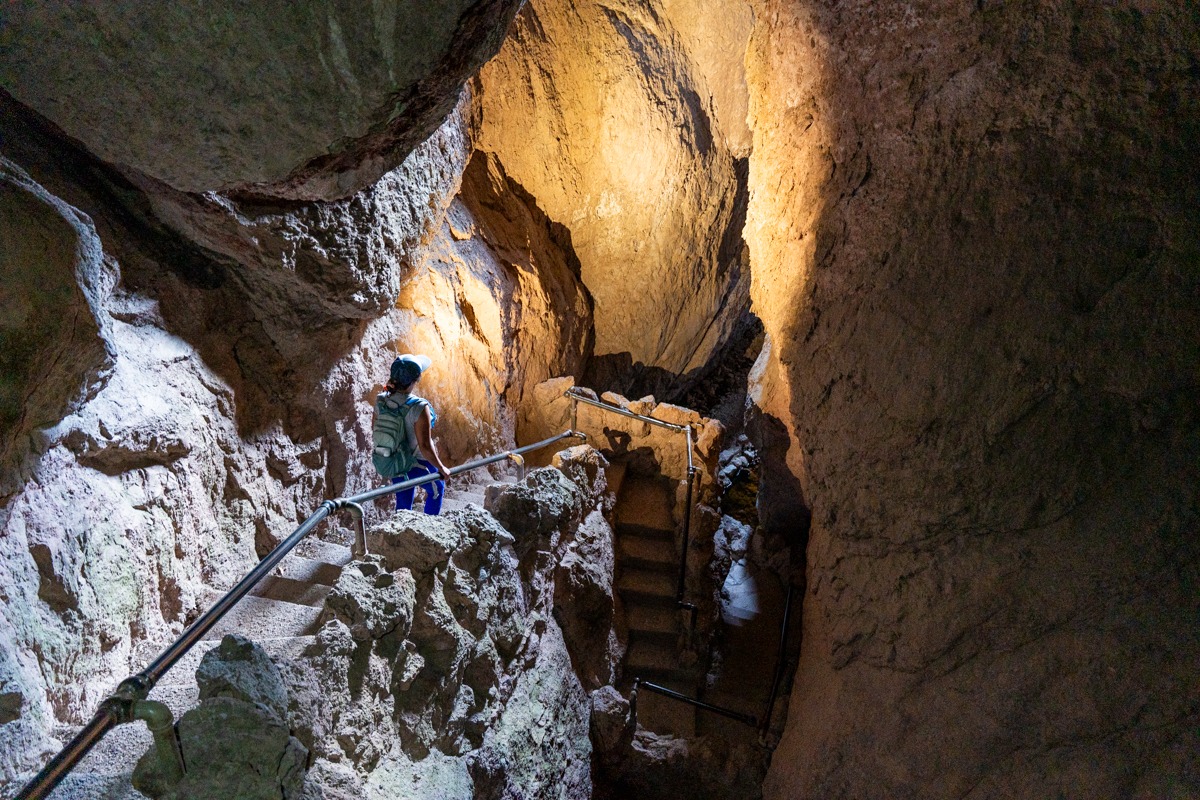
Both caves at Pinnacles are talus caves, created when huge boulders tumbled into a narrow canyon and wedged in place. They are not long, polished tourist caves. They are more like a rocky hallway that happens to have a roof.
- Bear Gulch Cave: pairs naturally with Bear Gulch Reservoir and is a classic Pinnacles highlight. The cave can be seasonally closed to protect bats or due to high water.
- Balconies Cave: a darker, cooler-feeling passage with a fun “adventure” vibe. Also subject to seasonal closures.
In either cave, bring a headlamp (your phone light works in a pinch), move slowly on wet rock, and be ready to duck. If you are claustrophobic, you can usually take an alternate trail around the cave area depending on closures.
Condor odds and etiquette
Pinnacles is one of the best places in California to see California condors, especially when they are riding thermals along the cliffs. Your odds are never guaranteed, but your chances improve when you hike in the High Peaks and cliffy zones during good soaring weather.
How to improve your chances
- Look up when you reach open, windy ridgelines.
- Scan for huge wings: condors are massive and often glide without flapping much.
- Bring binoculars if you have them. Even compact ones change the game.
- Hike earlier to beat heat, then keep an eye out as the day warms and thermals strengthen.
Condor etiquette
- Give space: if you spot a condor perched, stay back and do not approach for a closer photo.
- Keep it quiet: loud voices and sudden movement can disturb roosting birds.
- Do not feed wildlife: it is unsafe for animals and changes their behavior around people.
- Stay on trail: shortcutting or scrambling off-route can damage habitat and puts you in risky terrain.
- Pack out trash: even small scraps can harm wildlife.
If you see people getting too close, the best move is usually to model good behavior rather than play park ranger. Create space, keep your group calm, and let the bird do its thing.
One-day plan from the East Entrance
The East Entrance is my pick when you want a proper hiking day: a big loop, fewer logistics, and the easiest access to the Bear Gulch area.
Itinerary A: High Peaks + Bear Gulch
Trailhead: Bear Gulch Day Use Area (East Entrance)
Best for: hikers comfortable with steep steps and exposure, and anyone who wants the classic Pinnacles spires experience with a cave and reservoir finish (when open).
Rough time and distance: plan on 4 to 6.5 hours and roughly 5.5 to 7 miles, depending on your exact High Peaks route, detours, and cave status.
- Start early from the Bear Gulch Day Use Area.
- Climb toward the High Peaks via one of the main High Peaks routes (choose based on current conditions and your comfort with exposure).
- Spend time in the High Peaks scanning for condors and soaking in the volcanic spires.
- Drop toward Bear Gulch for the cave and reservoir payoff. If Bear Gulch Cave is closed, take the bypass and still tag the reservoir viewpoint.
- Exit calmly back to the East Entrance with tired legs and fewer parking headaches than you would have had on the West.
Timing note: the High Peaks sections slow everyone down, even fit hikers, because of stairs and narrow passing spots.
Itinerary B: Bear Gulch Cave + Reservoir focus
Trailhead: Bear Gulch Day Use Area (East Entrance)
Best for: families with older kids, mixed-ability groups, or anyone who wants a signature Pinnacles moment without committing to the most exposed ridge sections.
Rough time and distance: usually 2.5 to 4.5 hours and roughly 3 to 6 miles, depending on cave detours, crowds, and how long you hang at the reservoir.
- Hike to Bear Gulch Cave if it is open. Bring a headlamp and be patient with two-way foot traffic.
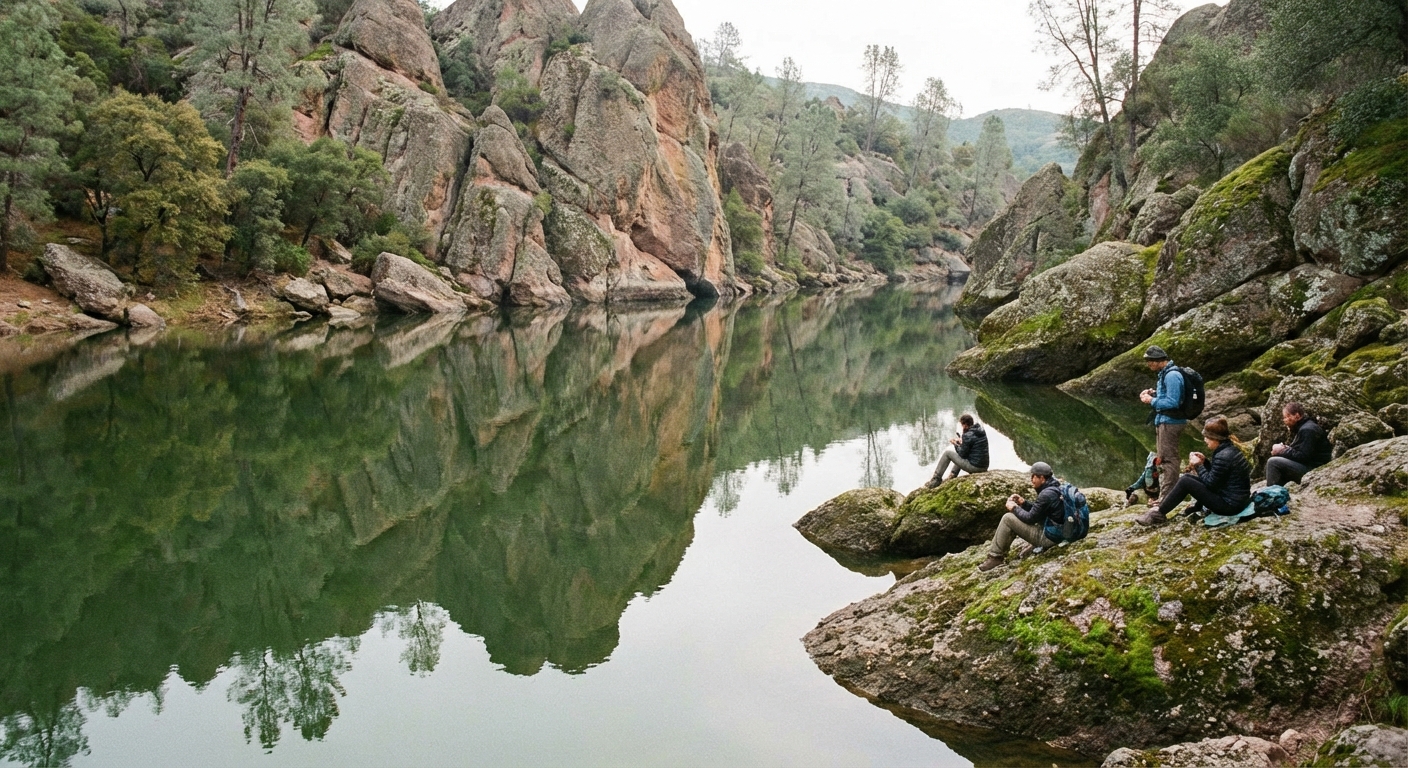
- Continue to Bear Gulch Reservoir for a snack stop and the “how is this real?” scenery.
- Add a short extension toward nearby junctions or viewpoints if you have energy, then return the same way.
My notes: this is the itinerary I choose on hotter days because you can keep things controlled and avoid getting stuck baking on rock steps at noon. It is also a great “still make it to dinner” kind of plan.
One-day plan from the West Entrance
The West Entrance shines when you want maximum wow for minimum time commitment. It is also the cleanest way to do Balconies Cave without turning your day into a logistics spreadsheet.
Itinerary C: Balconies Cave + Cliffs
Trailhead: Chaparral area (West Entrance)
Best for: first-timers, casual hikers, and anyone who wants a fun cave passage with big rock scenery on a relatively efficient outing.
Rough time and distance: usually 1.5 to 3 hours and roughly 2.4 to 3.5 miles, depending on whether you do the full cliffs loop and how long you linger.
- Arrive early to avoid parking stress on weekends.
- Hike toward Balconies Cave if it is open. It is darker and more “adventure hallway” than Bear Gulch, so use that headlamp.
- If the cave is closed, do the Balconies Cliffs route for the scenery without the squeeze-through.
- Return to the West Entrance trailhead and call it a solid day.
Itinerary D: High Peaks sampler
Trailhead: Chaparral area (West Entrance)
Best for: hikers who want steep steps and big views but do not have time (or desire) for a massive loop.
Rough time and distance: typically 4 to 7 hours and roughly 6 to 10 miles, depending on your turnaround point.
- Start from the West Entrance and hike toward the High Peaks.
- Turn around at a pre-decided point based on time, heat, and comfort with exposure.
- On the way back, consider adding a short scenic detour if conditions and daylight allow, then exit the same way.
My notes: this works well in winter or shoulder season when daylight is shorter, but you still want to earn your views.
Bay Area weekend timing
Pinnacles looks close on a map, but Bay Area weekend reality includes highway bottlenecks, limited parking, and everyone having the exact same idea to go hiking when the forecast is perfect.
Best timing
- Saturday: aim to arrive early morning. Mid-morning arrivals often mean tight parking, especially at the West Entrance.
- Sunday: slightly better if people are heading back earlier, but still plan on an early start.
- Shoulder seasons: late fall through spring are prime for comfortable hiking. Summer can be brutally hot and hikes become more about heat management than scenery.
My simple crowd plan
- If you want the West Entrance: treat it like a popular brunch spot. Show up early or expect a wait and compromised plans.
- If you want a full-day loop: choose the East Entrance for a calmer start and easier plan B options.
- Build in buffer time for slowdowns at narrow stair sections and in caves.
Seasonal reality check
- Summer: heat is the main hazard. Start at sunrise, carry extra water, and keep your biggest climbs early.
- Winter and storms: expect slick rock, mud, and colder wind on exposed ridges. Caves can close or flood.
- Spring: beautiful, but it can be deceptively hot once the sun hits the rock.
What to pack
- Water: more than a typical city day. For many hikers, 2 to 3 liters per person is a comfortable starting point for longer routes, more in heat.
- Sun protection: hat, sunglasses, and sunscreen. The shade is limited.
- Headlamp: especially if you plan to go through a cave.
- Grippy shoes: rock steps and cave floors can be slick.
- Layers: mornings can be cool, afternoons can bake.
- Snacks you will actually eat: salty plus sweet. Pinnacles is not the place to test a new energy gel flavor.
- A little extra time: the best souvenir here is not rushing. You want enough margin to stop, stare at the spires, and still make it out without speed-hiking the last miles.
Safety and trail etiquette
- Yield on narrow sections: be patient at stairs and railings. Let faster groups pass at wider spots.
- Watch for rockfall: do not linger under steep cliff bands longer than necessary.
- Stay aware in caves: slow down, keep your light pointed down-trail, and give space to people coming the other direction.
- Respect closures: cave closures protect bats and visitor safety. Bypasses still make for a great day.
If you are deciding between entrances last-minute, here is my honest tie-breaker: choose East for Bear Gulch and a bigger hiking day, choose West for Balconies and an efficient visit with a high chance of ending the day feeling pleasantly tired instead of totally cooked.