Poison Ivy, Oak, and Sumac

Maya Lin
Maya Lin is a travel journalist and outdoor enthusiast who believes the best trips combine rugged adventures with urban comforts. After spending six years backpacking across four continents, she founded Trail & Town Guide to help fellow travelers navigate both hidden mountain passes and bustling city neighborhoods with confidence.
If you have ever finished a gorgeous hike and then spent the next week itching like you tried to high-five a beehive, you already know the emotional arc of urushiol. That is the oily resin in poison ivy, poison oak, and poison sumac that triggers the classic blistery rash. The good news is you do not have to memorize botany textbooks to stay safe. You just need a few reliable visual cues, a solid “what to do in the first 10 minutes” plan, and the confidence to treat the rash properly if you do get tagged.
This guide covers identification in every season, where each plant is most common in the US, how hikers actually brush into it, and how to respond fast. Read it once now. Save it for later when you are standing at a trail junction squinting at a suspicious vine.
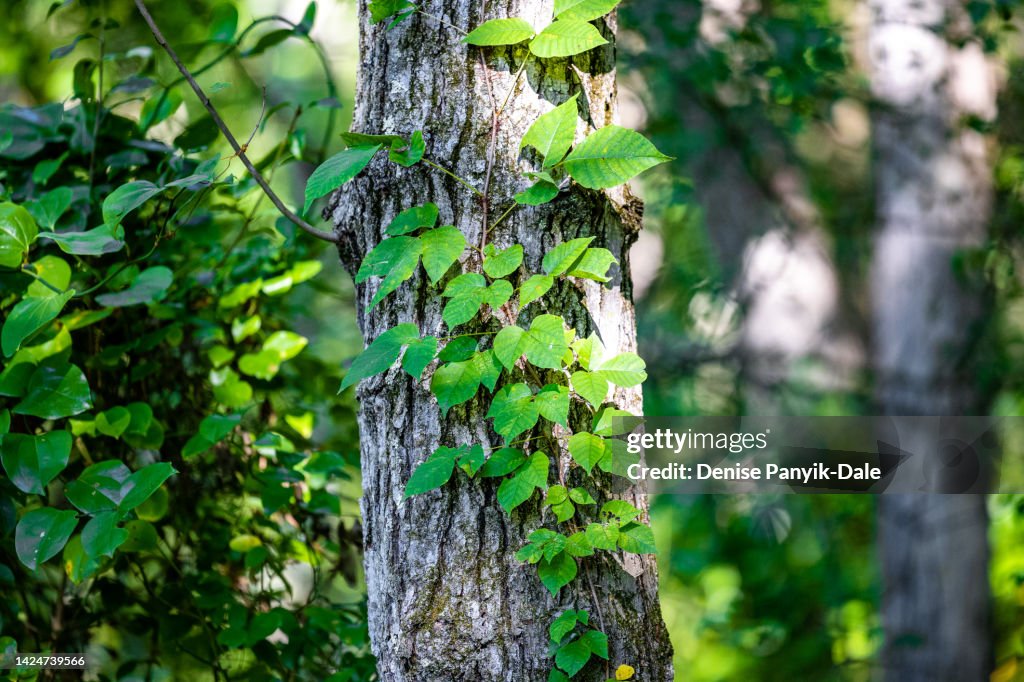
Quick reference: fast clues
When you are moving, sweating, and trying to keep up with friends, you need quick rules that work in the messy real world. Start here.
Leaves of three, let it be
- Poison ivy: usually three leaflets.
- Poison oak: usually three leaflets.
- Poison sumac: not three leaflets. It has 7 to 13 leaflets arranged in pairs.
Other quick trail cues
- Glossy is a hint: new growth can look shiny, especially when wet. Do not use shine alone as an ID check.
- Edges matter: ivy leaflets can be smooth or toothed. Oak leaflets often look lobed like tiny oak leaves.
- Growth habit: ivy can be a groundcover, shrub, or vine. Oak is typically a shrub (sometimes vine-like in the West). Sumac is a tall shrub or small tree in wet areas.
- Light berries: poison ivy and poison sumac often have off-white berries. That is a strong warning sign.
Important caveat: “Leaves of three” is a great starting point, not a complete ID. Many harmless plants also have three leaflets. Use it as your stop sign, then confirm with shape, stems, and setting.
Common lookalikes
If you only remember one thing here, make it this: do not grab unknown plants to “check.” Look with your eyes, not your hands.
- Virginia creeper: usually five leaflets (not three), often on vines.
- Boxelder seedlings: can have three leaflets and pop up near trails and disturbed areas.
- Blackberry and raspberry: can be three leaflets, plus thorns (thorns do not mean safe).
- Young maple: seedlings can confuse people at a glance.
Where each plant grows in the US
Knowing what is likely in your region helps you stay calm and accurate. These ranges are general. Microclimates and disturbed areas can extend them.
Poison ivy (Toxicodendron radicans)
- Most common: Eastern and Central US, Midwest, Southeast. Also present in parts of the West, especially along waterways and in disturbed areas.
- Loves: forest edges, trail borders, sunny clearings, fence lines, riverbanks, abandoned lots. It thrives where humans and wildlife disturb soil.
Poison oak
- Western poison oak (Toxicodendron diversilobum): common along the Pacific Coast, especially California, plus some southern and lowland pockets of Oregon and Washington.
- Atlantic poison oak (Toxicodendron pubescens): found in the Southeastern US, often in sandy soils.
- Loves: chaparral, coastal scrub, open woodlands, sunny slopes, and brushy trail corridors.
Poison sumac (Toxicodendron vernix)
- Most common: Eastern US, especially the Northeast, Mid-Atlantic, Upper Midwest pockets, and Southeast.
- Loves: wetlands. Think bogs, swamps, marsh edges, and slow-moving stream margins. If your boots are sinking, sumac is more plausible.

Identify poison ivy
Poison ivy is the shape-shifter of the trio. It can look like a tidy little plant, a waist-high shrub, or a vine climbing a tree like it pays rent.
Leaf shape
- Three leaflets on one stem. The center leaflet usually has a longer little stalk than the two side leaflets.
- Leaf edges can be smooth, wavy, or lightly toothed. Do not rely on serration alone.
- Surface can be matte or glossy. New growth often looks shinier.
Growth habit
- Groundcover: spreads low across soil, especially on trail edges.
- Shrub: bushy, knee to chest high.
- Vine: climbs trees, posts, and rocks. Older vines can look hairy or rope-like due to dense aerial rootlets.
Season changes
- Spring: reddish or bronze-tinged new leaves, then bright green.
- Summer: green and full. May blend into surrounding vegetation.
- Fall: yellow, orange, and deep red. Often gorgeous, which is rude.
- Winter: leafless vines and stems still hold urushiol. You can get a rash from bare twigs.

Identify poison oak
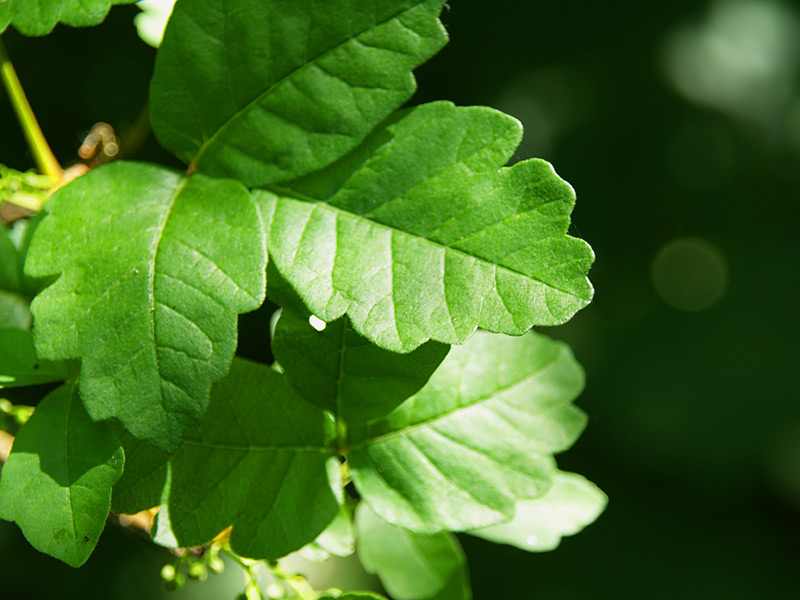
Poison oak is poison ivy’s close cousin, and it often looks a bit more “leafy-lobed” like tiny oak leaves. It is also famously common in brushy, sun-baked trail corridors where your calves and forearms do a lot of drive-by contact.
Leaf shape
- Three leaflets, like poison ivy.
- Lobed leaf edges are common. Think: rounded lobes, oak-like silhouette.
- Texture can look slightly fuzzy in some regions, especially Atlantic poison oak, but do not count on fuzziness as your only cue.
Growth habit
- Usually a shrub (from low and spreading to shoulder-high), but western poison oak can also grow vine-like in some settings.
- Forms dense patches that lean into trails after rain or during peak growth.
Season changes
- Spring: green with possible reddish new growth.
- Summer: green, sometimes slightly duller than ivy.
- Fall: yellow to orange to red, especially in coastal and foothill zones.
- Winter: leafless stems can still cause reactions.
Identify poison sumac
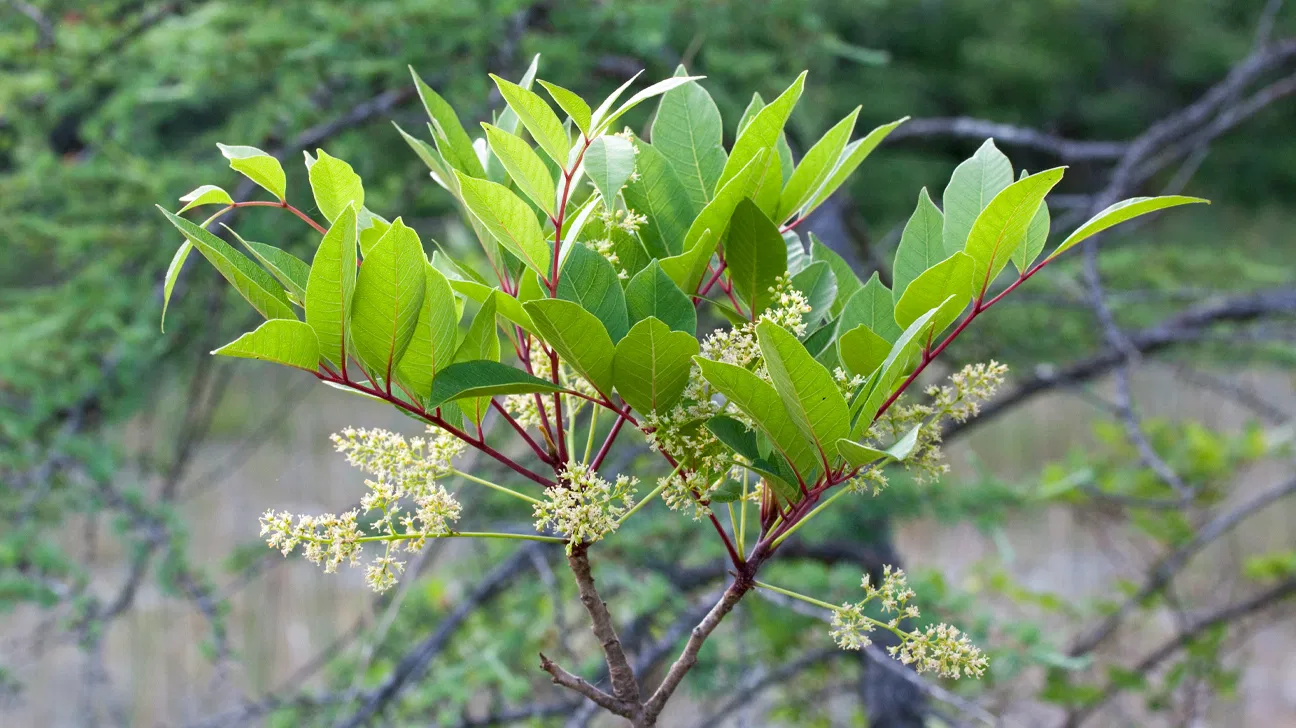
Poison sumac is less common, but it can cause severe reactions in some people. The biggest practical tip is this: if you are in a wet, swampy area and you see a shrub or small tree with many leaflets, pay attention.
Leaf shape
- 7 to 13 leaflets per leaf, arranged in pairs with one leaflet at the tip.
- Smooth edges and an elongated, oval shape. Leaflets often look neat and symmetrical.
- Reddish stems are common.
Growth habit
- Tall shrub or small tree, often 5 to 15 feet.
- Wetland plant: commonly found with standing water nearby or saturated soil.
Season changes
- Spring and summer: smooth green leaflets.
- Fall: vivid orange and red tones.
- Winter: bare branches still carry urushiol.
Berry clue: poison sumac typically has pale green to off-white berries that hang in loose clusters. Many harmless sumacs have red, fuzzy, upright fruit clusters. Still, use multiple cues, not just berries.
How hikers get exposed
Urushiol does not need an invitation. It transfers easily and can stay potent on surfaces for a long time, sometimes months to years depending on conditions.
- Brushing past leaves on narrow trails, especially when plants lean in after rain.
- Touching gear that touched the plant: trekking poles, dog leashes, backpacks, tent stuff sacks.
- Pet fur: dogs and other pets can carry urushiol on their coat without reacting, then deliver it to your hands and lap later.
- Camp chores: gathering firewood, sitting on logs, or using “nature’s bathroom” off trail near brush.
- Smoke: burning poison ivy, oak, or sumac is dangerous. Inhaling smoke carrying urushiol can cause severe respiratory reactions.
Trail avoidance
On the move
- Stay center-trail when possible, especially in overgrown sections.
- Wear barriers: long pants, long socks, and a long-sleeve sun shirt in brushy seasons.
- Use poles intentionally: if you must push foliage aside, use a pole, not your hand.
- Do not kneel blindly for photos or breaks in leafy trail margins.
Gear and group habits
- Designate a “dirty” zone in your car or entryway for packs and shoes after suspect terrain.
- Keep wipes handy for hands and poles, especially before eating.
- If hiking with a dog, discourage bush-crashing and consider wiping down legs and belly after the hike.
About barrier creams: Some hikers use urushiol-blocking barrier products. They can help, but they are not magic. Think of them as backup, not permission to plow through brush.
If you touched it: what to do now
The goal is simple: get the oil off your skin before it settles in. The sooner you wash, the better. Minutes matter more than hours, but later washing can still help and can prevent re-exposure from anything you touched.
Step-by-step
- Stop the spread: do not rub your face, eyes, or other skin. Urushiol transfers easily.
- Wash skin fast: use cool or lukewarm running water with soap if available. Focus on hands, wrists, forearms, ankles, and anywhere that brushed vegetation.
- Use friction: lather and rub. A washcloth, gentle scrubby towel, or dedicated wipes help lift sticky oil better than a quick rinse.
- Rinse thoroughly: soap lifts oils, but you need enough water to carry them away.
- Clean under nails: use a nail brush if you have one, or carefully scrub with soap.
- Change or isolate clothing: bag it until you can wash it. Do not toss contaminated clothes on your car seat.
- Clean gear: poles, phone case, camera, water bottle, backpack straps. Use soap and water when possible.
Timing reality: wash as soon as you can, ideally within minutes. Even washing within an hour or two may still reduce severity for many people (and it helps stop you from re-spreading oil to new areas).
Do not rely on sanitizer: alcohol-based hand sanitizer may move oils around and does not reliably remove urushiol. Soap and water is the workhorse.
Optional but loved by many hikers: specialized urushiol cleansers (like Tecnu or Zanfel) are designed for this job and can be useful for skin and some gear. Use them as a tool, not a guarantee, and follow the label.

Rash basics
Poison plant rash is an allergic contact dermatitis. The rash is not contagious, and the fluid in blisters does not spread it. What spreads the rash is usually urushiol you did not wash off, or different skin thickness causing a delayed appearance in some areas.
Typical timeline
- Onset: often 12 to 48 hours after exposure, sometimes sooner if you are very sensitive.
- Peak: itching and blistering can intensify over several days.
- Duration: commonly 1 to 3 weeks, depending on severity and treatment.
Common symptoms
- Redness, swelling, intense itching
- Blisters or weeping areas
- Streaky or patchy rash pattern where the plant brushed the skin
Home treatment
Once the rash starts, treatment focuses on calming inflammation and protecting skin while your immune system settles down.
Comfort measures
- Cool compresses: 10 to 20 minutes at a time, several times per day.
- Oatmeal baths or colloidal oatmeal soaks for widespread itch.
- Calamine lotion to dry weeping areas and reduce itch.
- Oral antihistamines for sleep: sedating options can help at night. (Topical antihistamines are often not recommended due to potential skin irritation for some people.)
Anti-inflammatory options
- Topical hydrocortisone can help mild cases, especially early. Follow label directions.
- Prescription topical steroids may be needed for more intense localized reactions.
What to avoid
- Scratching: it increases infection risk and prolongs misery.
- “Numbing” sprays that contain benzocaine or similar ingredients: they can trigger additional contact dermatitis in some people.
- Home solvents like gasoline or harsh chemicals: dangerous and damaging to skin.
Pro tip from many regrettable experiences: trim nails short during the itchy phase. It reduces skin damage when you inevitably scratch in your sleep.
Wash clothes and gear
If you only treat your skin but ignore your stuff, you can keep re-dosing yourself with urushiol.
- Clothing: wash separately in hot water with detergent. Run an extra rinse if possible.
- Shoes: wipe down with soap and water. Pay attention to laces and tongue areas.
- Trekking poles: wash grips and shafts with soap and water.
- Backpack: clean straps, hip belt, and any area that brushed vegetation.
- Phone and watch: wipe cases and bands carefully.
- Pets: if you suspect contact, bathe with pet shampoo and wear gloves. Focus on legs, belly, and fur that brushes plants.
Urushiol can remain active on objects for a long time. If you cannot wash something right away, isolate it in a bag until you can.
Optional tool: dedicated urushiol washes (like Tecnu) are also used by many people for decontaminating gear and skin after exposure. Follow the label and test on a small area if you are unsure about a surface.
When to get medical help
Most cases can be managed at home, but some situations need professional care, sometimes urgently.
Get urgent care now if you have
- Trouble breathing, wheezing, or throat tightness
- Swelling of the face, lips, tongue, or eyes
- Rash inside the mouth or concern for smoke inhalation exposure
See a clinician soon if
- The rash is severe, widespread, or on genitals
- It involves eyes or significant facial swelling
- You have fever, increasing pain, pus, or red streaks (possible infection)
- It is not improving after a few days of home care
- You have repeated significant exposures or a history of strong reactions
Doctors can prescribe stronger topical steroids or oral steroids for severe reactions. If you are given an oral steroid course, follow the plan exactly. Courses that are too short can sometimes lead to a rebound flare.
Common myths
- Myth: The rash is contagious. Fact: it is an allergic reaction. It does not spread person-to-person unless urushiol is still on skin or objects.
- Myth: Blister fluid spreads the rash. Fact: blister fluid does not contain urushiol.
- Myth: Dead plants are safe. Fact: urushiol can persist on dead stems and vines.
- Myth: If I do not itch right away, I am fine. Fact: onset is often delayed.
Small anti-itch kit
I like solutions that fit in a small zip pouch and do not require a full bathroom. Here is what earns space.
- Small soap sheet pack or travel soap
- Rinse-friendly water bottle you can spare for washing (or extra water capacity)
- Alcohol-free wipes for hands and gear (not a replacement for washing, but better than nothing)
- Small calamine or anti-itch lotion
- 1% hydrocortisone cream (for mild early rash)
- Disposable gloves (for washing gear or bathing a dog)
- Optional: a small packet or travel size of a dedicated urushiol cleanser
One last confidence boost
You do not need perfect identification to stay safe. Most successful hikers use a simple system: treat any three-leaflet plant on the trail edge as suspicious, avoid brushing through unknown vegetation, and wash early if you think you touched something. Combine that with a realistic gear-cleaning habit, and poison ivy season becomes a manageable inconvenience instead of a trip-ruining saga.
If you want to keep learning, the best practice is unglamorous: slow down at trail margins and look for growth patterns. Your future self, the one not scratching at 2 a.m., will be grateful.