Rialto Beach to Hole-in-the-Wall: Tides and Parking
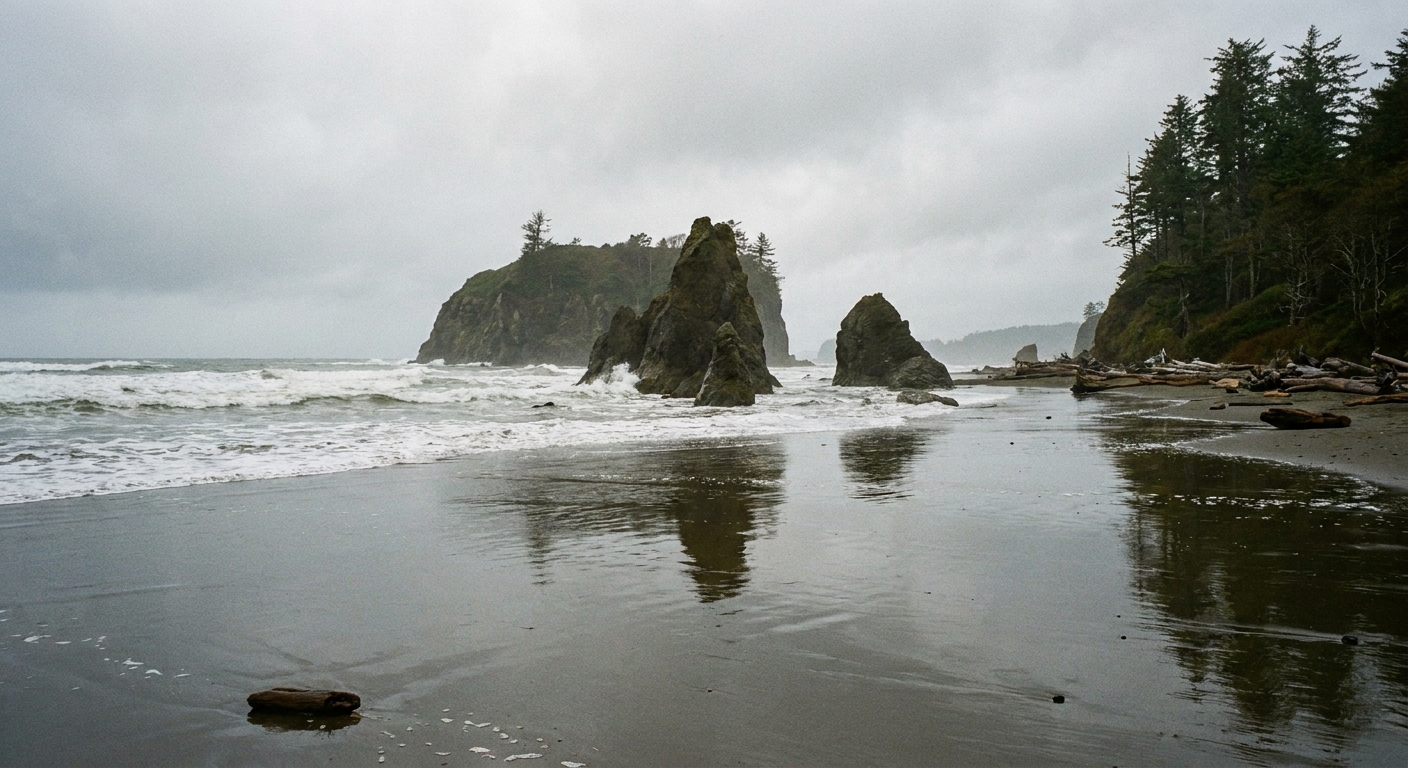
Rialto Beach is one of those Olympic National Park hikes where your success is decided before you even lace up your shoes. Not by fitness, not by route-finding, but by tide timing and when you pull into the parking lot. Get those two right, and the walk to Hole-in-the-Wall is pure coastal magic: sea stacks in the mist, gulls arguing overhead, and tide pools that look like tiny aquariums tucked into black rock.
This page is intentionally narrow. Olympic has rainforests, ridgelines, and a wild coastline, but today’s objective is just one: Rialto Beach to Hole-in-the-Wall and back, done safely and comfortably around the tide.

Know the crux: the headland
Hole-in-the-Wall sits about 1.5 miles north of the Rialto Beach trailhead, so expect around 3 miles round trip, plus extra wandering for tide pools and driftwood detours. (Different maps measure slightly differently depending on the start point and the day’s beach shape.)
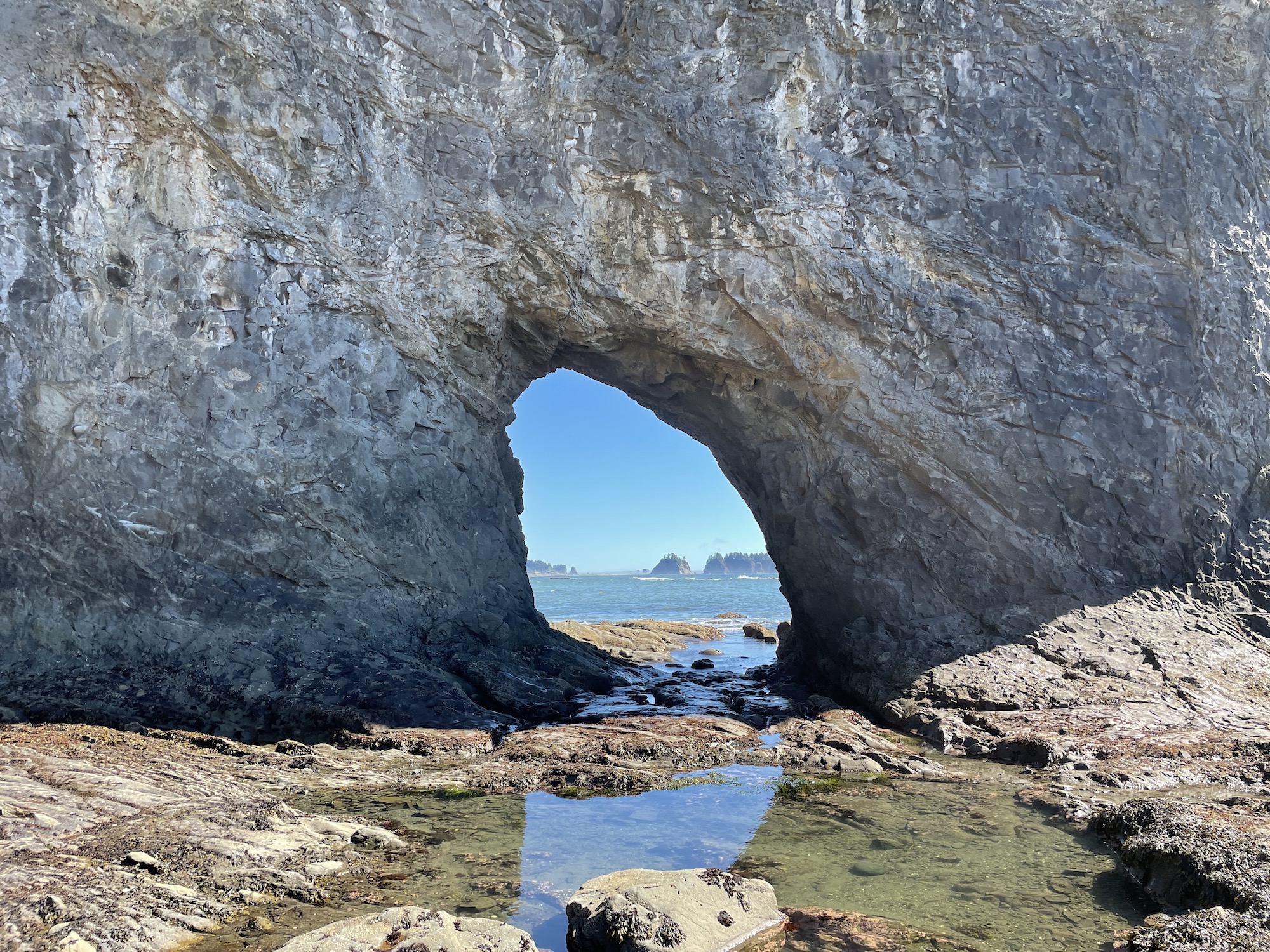
The key challenge is the rocky headland just before you reach the arch. At higher tides, waves can push right up against the rocks and block the pass-through. At lower tides, the same spot becomes a simple, scenic stroll with only a few wet sections.
What “ankle-deep vs blocked” looks like
- Ankle-deep conditions: You can usually pass, but you will step through shallow water around rocks. Expect slick stones and occasional shin splashes if a wave surges. Waterproof footwear helps, but traction matters more.
- Borderline conditions: The pass-through is technically possible, but waves slap the rocks and you will feel rushed. This is where people slip, get soaked, or get pinned against driftwood. If you feel like you are timing your steps between sets, it is not the right moment.
- Blocked conditions: Water meets the cliff base and there is no safe dry route. Do not climb the headland. Don’t try to “beat” a set. Turn around and enjoy the beach south of the point instead.
One more reality check: the beach here is dynamic. Storms shift sand and cobble, and the “easy line” you saw in a photo might not exist today. Even in a good tide window, surge and wave sets can change conditions quickly, so keep reassessing as you approach.
Tide timing: pick a safe window
For this hike, you’re planning around a tide-sensitive pinch point, not just “low tide for tide pools.” Your goal is to be at the headland during a lower tide window so you are not forced into risky moves.
Step-by-step tide planning
- Check a tide table for the nearest NOAA reference to Rialto Beach. Many visitors use La Push as a practical stand-in. Stations and reference points can differ slightly, so treat the number as guidance, not a guarantee.
- Build in a buffer on both sides of low tide so you are not arriving right as water is rising or still too high. A conservative rule is to target being near Hole-in-the-Wall roughly 1 to 2 hours before low tide through 1 hour after, depending on swell and your comfort.
- Estimate your walking time: most people take 45 to 75 minutes each way because the sand can be soft and the scenery slows you down.
- Factor in ocean conditions: larger swell can make a “numerically OK” tide feel pushier. If the surf looks aggressive at the trailhead, tighten your buffer and be willing to call it.
If you want a stress-free day, plan it like this: arrive early, walk north as the tide drops, explore at the lowest point, then stroll back as it rises. You will see more life in the tide pools and you will avoid the “do we have time?” feeling at the headland.
My personal rule: if I would feel silly explaining my plan to a park ranger, I adjust the plan. On tidal headlands, humility keeps you dry.
When not to go
Some days are better saved for a rainforest walk and a warm drink afterward.
- High surf advisories or big swell: If waves are running high up the beach and smashing the headland, treat the route to Hole-in-the-Wall as a no-go.
- King tides and stormy tide swings: Extreme tides can shrink the safe beach fast, especially if you linger in tide pools and forget the clock.
- Right after major storms: Logs, cobbles, and the “normal” route can shift overnight. Expect more obstacles and fewer clean escape lines.
- Lightning, heavy wind, or poor visibility: The coast can turn serious quickly. If you cannot read the ocean, you cannot manage it.
Parking and arrival windows
Parking at Rialto Beach is straightforward in layout but can be brutally competitive in timing, especially on summer weekends and any day with a nice low tide. There is a main lot near the beach access, and when it fills, you are not left with many great alternatives.
Best arrival strategy
- For weekends and peak season: aim to arrive early morning or later in the day. If your low tide is mid-day, that is when the lot pressure often peaks. In that case, arriving even earlier and having a slow coffee-and-beachcombing start can save your whole plan.
- For shoulder season weekdays: you still want to arrive with margin, but you’ll usually have more flexibility.
- If you arrive and it’s full: don’t idle in a stressful loop hoping someone leaves. Decide quickly: wait a set amount of time, pivot to another nearby beach, or come back at a different tide window.
Parking tips
- Have your park pass ready (or plan to display your America the Beautiful pass). Don’t be the person juggling receipts in the wind.
- Use the restroom at the trailhead. Once you are walking, options are limited and fragile coastal vegetation is not a bathroom.
- Lock up and leave nothing visible. Even at gorgeous trailheads, car prowls happen.
The out-and-back plan
1) Arrive and scan the surf (10 minutes)
Before you commit to the walk, take a moment at the beach access and look north. You’re checking for three things: how far up the beach the waves are running, how steep the shorebreak looks, and whether driftwood is shifting. If logs are moving, give the ocean extra respect.
2) Walk north on firm sand (30 to 60 minutes)
The fastest walking is often on packed, damp sand closer to the waterline, but don’t crowd the waves. In places where cobbles replace sand, slow down. Wet round stones are where ankles get wrecked.
3) Cross Ellen Creek (5 to 15 minutes)
About halfway to Hole-in-the-Wall, you will reach Ellen Creek. Depending on season and recent rain, this can be a simple hop, a careful log balance, or a quick wade. Don’t force a sketchy crossing. If the creek is high or the log situation looks bad, this is a perfectly reasonable turnaround point.
4) Cross the headland at your safest moment (10 minutes)
If you arrive and it feels sketchy, wait and watch a few wave sets. If it still feels sketchy, turn around. There is no prize for touching the arch.
5) Explore tide pools near the arch (20 to 60 minutes)
At low tide, the area around Hole-in-the-Wall reveals classic Olympic tide pool life: anemones, barnacles, sea stars, crabs, and fishy little pockets of water trapped between rocks.
- Step on bare rock when you can, not on living mats of mussels or algae.
- Watch for slick green algae, it is basically nature’s ice rink.
- Keep your hands to yourself. Tide pools are not touch tanks.
6) Return as the tide rises (45 to 75 minutes)
Your return is when the tide can quietly change the shape of the beach. If you took a shortcut around rocks on the way in, don’t assume it will still be open on the way out.
Wildlife and coastal safety
This stretch of coast can feel like a documentary set. The goal is to keep it that way by giving animals space and keeping yourself out of trouble.
Keep your distance
- Numeric baseline: Give wildlife lots of room. A practical minimum is at least 50 yards from most wildlife, and more if the animal reacts. If it lifts its head repeatedly, shifts away, or changes behavior because of you, you are too close. Always defer to posted signs and current NPS guidance.
- Seals and sea lions: if you see one hauled out on the beach or rocks, give it a wide berth.
- Birds: don’t approach nesting areas or linger near birds that are clearly guarding space.
- General rule: use your zoom lens or binoculars, not your feet, to get a closer look.
Logs and waves are the sneaky hazards
- Never turn your back on the ocean near the waterline. Rogue waves happen.
- Don’t sit on driftwood near the surf. Waves can roll logs with shocking force.
- Watch the tide behind you when you’re tide pooling. It is easy to get focused on a tiny anemone and miss the water rising around your route back.

Tide pool ethics
This coast is tough and alive, and the tide pools are not souvenirs. A few small choices make a big difference.
- Look, don’t handle: don’t pry animals off rocks, poke anemones, or move sea stars for photos.
- Don’t rearrange the place: skip rock stacking and don’t flip rocks. If you accidentally lift something, set it back gently exactly as you found it.
- Step carefully: avoid stepping on mussels, barnacles, or seaweed mats.
- Pack out everything: including food scraps and “biodegradable” bits that still do not belong here.
What to pack
Rialto is a beach, but it is not a flip-flop beach. Think: wet sand that steals heat, wind that slices through cotton, and salt spray that turns everything slightly damp.
Footwear and clothing
- Traction-first shoes: trail runners with good grip are great. Waterproof is nice, but grip matters more on slick rock.
- Warm layer: even in summer, bring a light insulated layer or fleece.
- Rain shell or wind shell: the coast can feel stormy on a clear forecast.
- Hat and gloves in cooler months. Wind chill is real.
- Spare socks in the car. This is the simplest luxury after wet sand.
Safety and comfort
- Tide info screenshot on your phone. Reception is unreliable, and you do not want to be guessing.
- Headlamp if you are anywhere near dusk. Coastal twilight arrives fast under cloud cover.
- Small first-aid kit, especially blister care and a wrap for an ankle tweak.
- Water and snacks. The beach feels easy, but soft sand is work.
Optional but worth it
- Binoculars for seabirds and offshore movement.
- Trekking poles can help if you are uneasy on cobbles.
- A thermos of coffee if you arrive early to beat parking. This is one of my favorite comfort tricks in a rugged place.
Quick FAQs
How long does the hike take?
Most people spend 2 to 4 hours total including tide pools. Walking-only time is often 1.5 to 2.5 hours round trip depending on sand conditions and pace.
Is the route clearly marked?
It is mostly intuitive. You follow the shoreline north. The challenge is not navigation, it is tide timing and footing.
Can I do it at high tide?
You can walk on Rialto Beach at many tide levels, but reaching Hole-in-the-Wall safely depends on the headland conditions. If the pass-through is wet and wave-washed, treat it as a no-go.
Are dogs allowed?
Yes, but with a hard limit: in Olympic National Park, dogs are allowed on Rialto Beach only up to Ellen Creek (on leash) and are not allowed beyond Ellen Creek toward Hole-in-the-Wall. If you bring a dog, plan on Ellen Creek being your turnaround point and always confirm details on the official NPS pets page before you go.
Is this route accessible?
Expect sand, cobbles, driftwood, and a creek crossing. It is not wheelchair or stroller friendly, and soft sand can feel harder than the mileage suggests.
The ideal day
Arrive early enough to park without drama, walk north as the tide drops, cross Ellen Creek without forcing it, hit Hole-in-the-Wall near low tide, explore the pools with patience and respect, and head back before the ocean decides to close the door behind you.
If you want the broader Olympic context after this single-beach mission, pair it with a town comfort stop in Forks or La Push for a warm drink and a dry change of clothes. Rugged coast, small comforts. That’s the balance I’m always chasing.