Road to Hāna Waterfalls and Pullouts You Can Hike in One Day
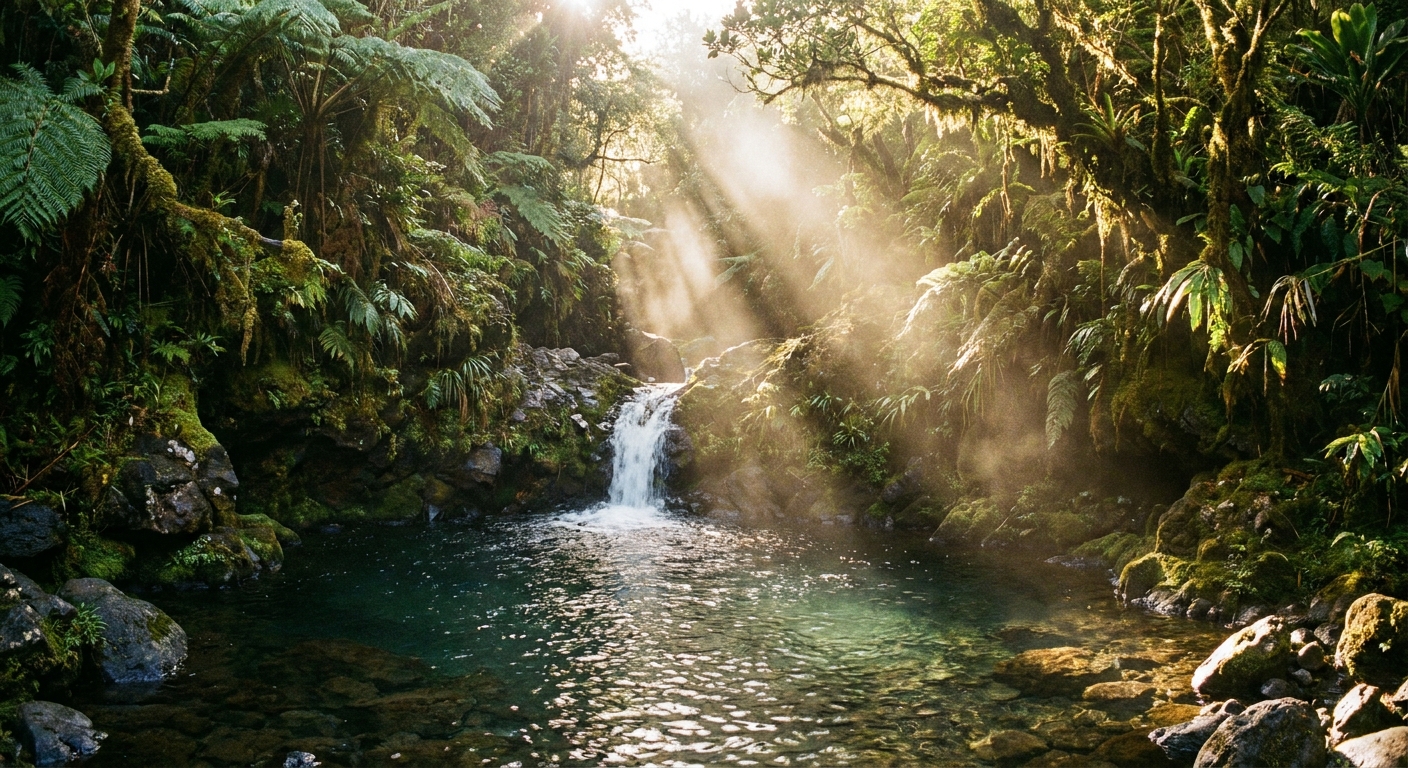
I love the Road to Hāna for the same reason it drives people a little feral: it is not one attraction. It is dozens of tiny moments. A wet stone stair tucked behind a gate. A pullout that looks like nothing until you hear water. A banana bread stop that becomes your morale checkpoint.
This guide is for a survivable one-day clockwise loop that prioritizes waterfalls and short, legal walks from parking, plus the stuff that actually determines whether you have a great day or a stressful one: restrooms, food cadence, and when to call it and turn around.

Before you go: what “clockwise” means
Clockwise loop typically means: start from Paʻia or Kahului, drive to Hāna on Hāna Highway (HI-360), then continue past Hāna to ʻOheʻo Gulch (Kīpahulu) and return via the Piʻilani Highway (HI-31) and the backside of Haleakalā.
Important reality check: the backside includes narrow lanes, rough patches, rockfall zones, and limited services. Conditions change after storms. Check local advisories and be comfortable with slow, defensive driving. If that is not you, I include honest turnaround points below.
Rental car note (do not skip this): many standard rental car agreements prohibit driving the backside (parts of Piʻilani Highway) and doing so can void coverage, including damage waivers and insurance. Even when it is not explicitly prohibited, some contracts exclude certain damage (commonly tires, glass, and undercarriage) or rough-road incidents. Read your contract, call the company if you are unsure, and choose a turnaround plan if it is not allowed.
What to pack
- Cash for roadside stands (and tips where appropriate).
- Reef-safe sunscreen, bug spray, and a light rain layer.
- Sturdy sandals or trail shoes with grip. Wet roots are not impressed by your vacation slides.
- Dry bag for phone, keys, and wallet.
- Water and snacks even if you plan to buy lunch. You will miss a food stop at least once.
- Downloaded maps. Cell coverage is inconsistent.
Safety and etiquette
- Flash floods are real. If water looks brown, fast, or rising, do not enter streams. Do not cross flowing water on foot.
- Cliff edges crumble. Stay back from undercut banks and unfenced overlooks. If you would not trust it in a mountain canyon at home, do not trust it here.
- Do not block traffic. Pull fully into legal pullouts. Never stop in the lane “for a quick photo.”
- Respect private property and closures. “It’s just a short walk” is how access gets shut down for everyone.
- One-lane bridges: take turns. Yield, wave thanks, and do not rush pedestrians.
- Pack out trash. If you bring fruit, peels still count as trash.
Time and cost snapshot
- Typical full clockwise day: plan for 8 to 12 hours total.
- Driving time (clockwise loop): often 4.5 to 6+ hours behind the wheel, depending on traffic, stops, and conditions.
- Stopped time: easily 3 to 5 hours if you do multiple short walks, lunch, and a park visit.
- Latest “commit” time: if you want to continue past Hāna to Kīpahulu and still have daylight for the backside, try to leave Hāna by 1:00 pm (earlier if weather is questionable).
Fees to expect (verify current rates before you go): Waiʻānapanapa is a Hawaiʻi State Park with a separate reservation and fee system. Haleakalā National Park (Kīpahulu) is NPS and typically has an entry fee (or pass). They are not the same program, and one does not automatically cover the other.
The one-day clockwise plan (mile markers)
This itinerary assumes an early start. For the best shot at parking at popular waterfall pullouts and fewer tour vans, aim to be rolling by 6:00 to 6:30 am from Paʻia. If you start at 9:00 am, you can still have a good day, but you will have to be more ruthless about skipping stops.
Mile markers (MM) are posted along HI-360 (Hāna Highway), but they can be inconsistently signed, and some people mentally “start counting” from different starting points (Paʻia versus Kahului). Treat mile markers as helpful context, not gospel.
Also: pullout legality and enforcement can be inconsistent. Default to posted signs and basic safety. If you cannot safely get fully off the road, keep driving.
Stop 1: Twin Falls (MM 2)
Why stop: Quick leg-stretch, early waterfall option close to town. It is also a reality check for trail conditions after rain.
- Walk: Short trail options to falls and pools, length varies by which falls you choose.
- Restrooms: Typically available at the farm stand area when open.
- Food: Snacks and smoothies often available on-site.
- Crowds: Heavy later. Early morning is your friend.
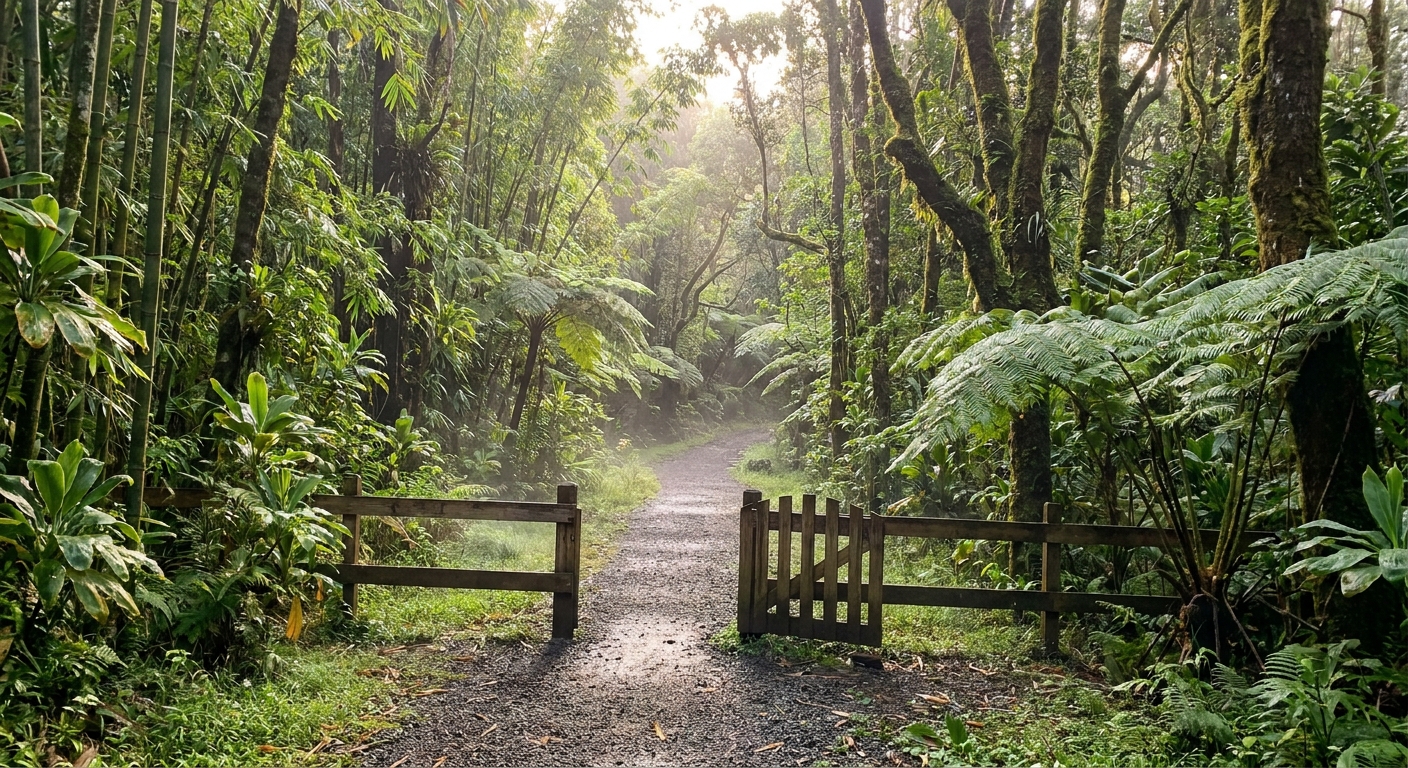
Stop 2: Garden of Eden lookouts (MM 10 to 11)
Why stop: If you want one curated viewpoint with bathrooms and a gentler walk, this is an easy add. It is a paid attraction, so decide based on your budget and time.
- Walk: Short garden paths and viewpoints.
- Restrooms: Usually available.
- Best for: Travelers who want a guaranteed viewpoint without scrambling on wet rocks.
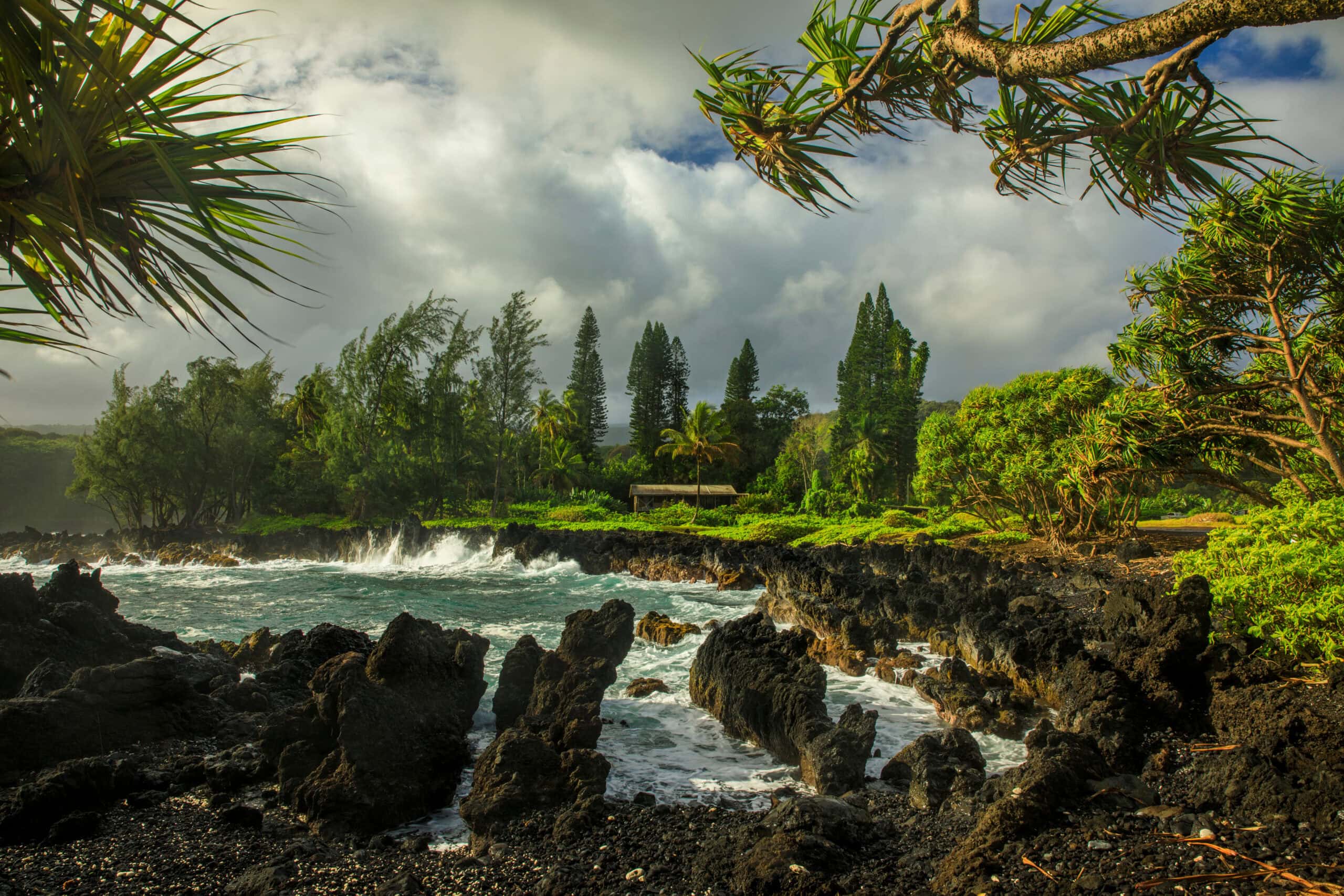
Stop 3: Keʻanae Peninsula (MM 16)
Why stop: A cultural landscape and one of the best “big ocean” breaks on the drive. The lava coastline here is dramatic, especially when the swell is up.
- Walk: Short, mostly flat wandering around the peninsula and shoreline viewpoints.
- Restrooms: Limited. Plan to use facilities earlier when you see them.
- Etiquette: This is a lived-in community. Keep noise down, park respectfully, and do not trespass for photos.
Stop 4: Upper Waikani Falls (Three Bears) view (MM 19)
Why stop: One of the iconic roadside waterfalls. If you can find a safe, legal pullout, it is a quick photo stop.
- Walk: Minimal if you park in a proper pullout. Do not create new paths or stop in traffic.
- Cliff note: Road edges can be slick and narrow. Prioritize safety over the “perfect angle.”
Stop 5: Puaʻa Kaʻa State Wayside (MM 22 to 23)
Why stop: One of the most practical stops on the whole route. It often has restrooms and a short nature-walk feel. Think of it as your “reset button.”
- Walk: Short paths to small pools and waterfalls.
- Restrooms: Commonly available here, which is gold on this road.
- Good moment for: Snack, refill water, quick bug spray reapply.
Stop 6: Wailua Valley State Wayside (MM 26)
Why stop: Quick viewpoint into a green valley. No big hike, but a great “breathe and look” moment when the road fatigue starts to creep in.
- Walk: Short walk from parking to viewpoint.
- Time cost: 5 to 10 minutes if you keep it snappy.
Stop 7: Waiʻānapanapa State Park (MM 32)
Why stop: Not a waterfall, but it is one of the most unique coastal walks on the route, and it pairs well with waterfall-chasing because it is a different kind of scenery break.
- Walk: Short beach access plus optional coastal trail segments.
- Planning note: This park uses a Hawaiʻi State Parks timed entry and parking reservation system most days. Requirements can change, so check the official State Parks reservation site and book well in advance in peak weeks.
- Safety: Shorebreak can be powerful. Enjoy the view and stay cautious near the waterline.
Stop 8: Hāna town reset (MM 34 area, in town)
Why stop: This is your strategic break. Use restrooms, grab lunch, and decide whether you are continuing to Kīpahulu and the backside.
- Gas: There is typically gas in or near Hāna, but hours and availability can be limited. Do not assume late-day access. If you need it, get it while you see it.
- Food cadence: Aim to eat something real here. If you wait until mid-afternoon, you will start making bad choices, like driving the backside hungry and cranky.
- Time target: Try to reach Hāna by late morning if starting early.
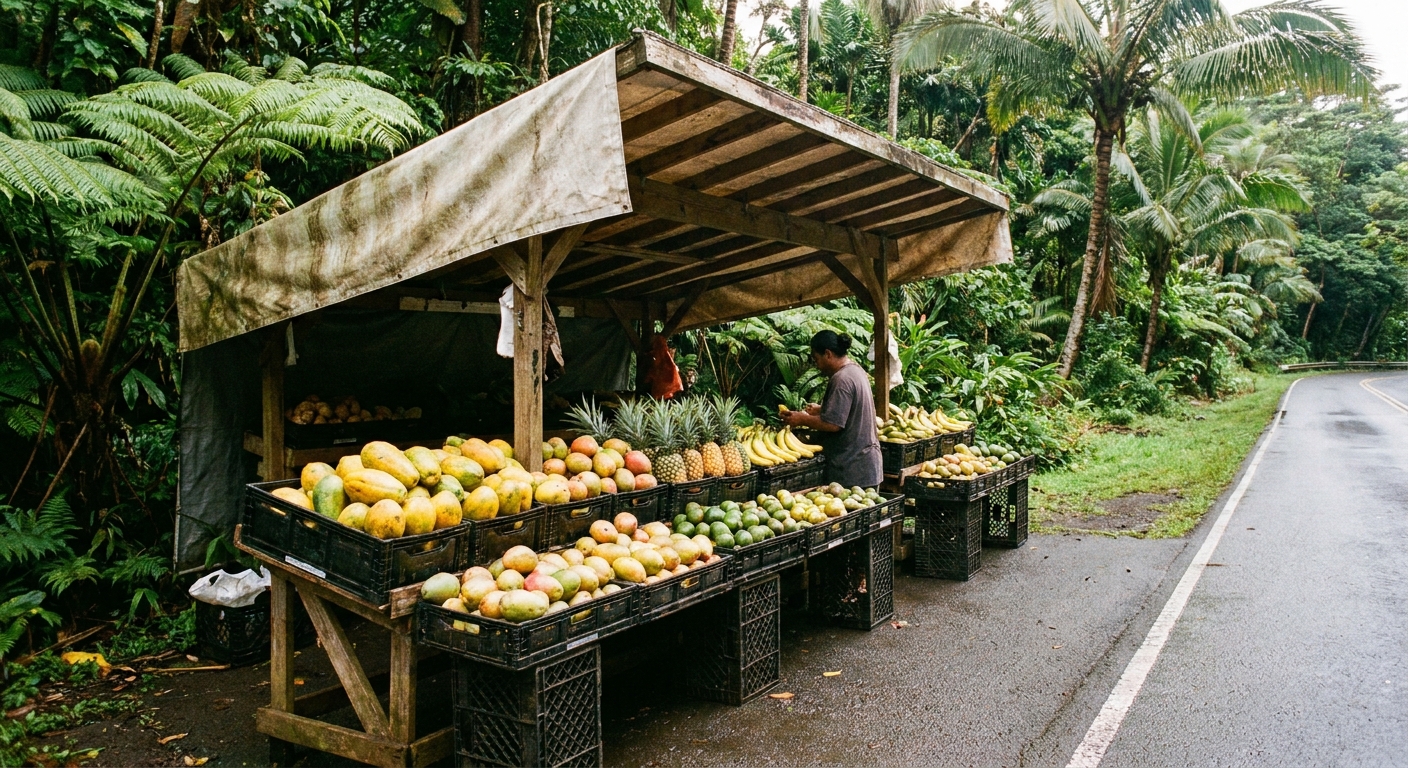
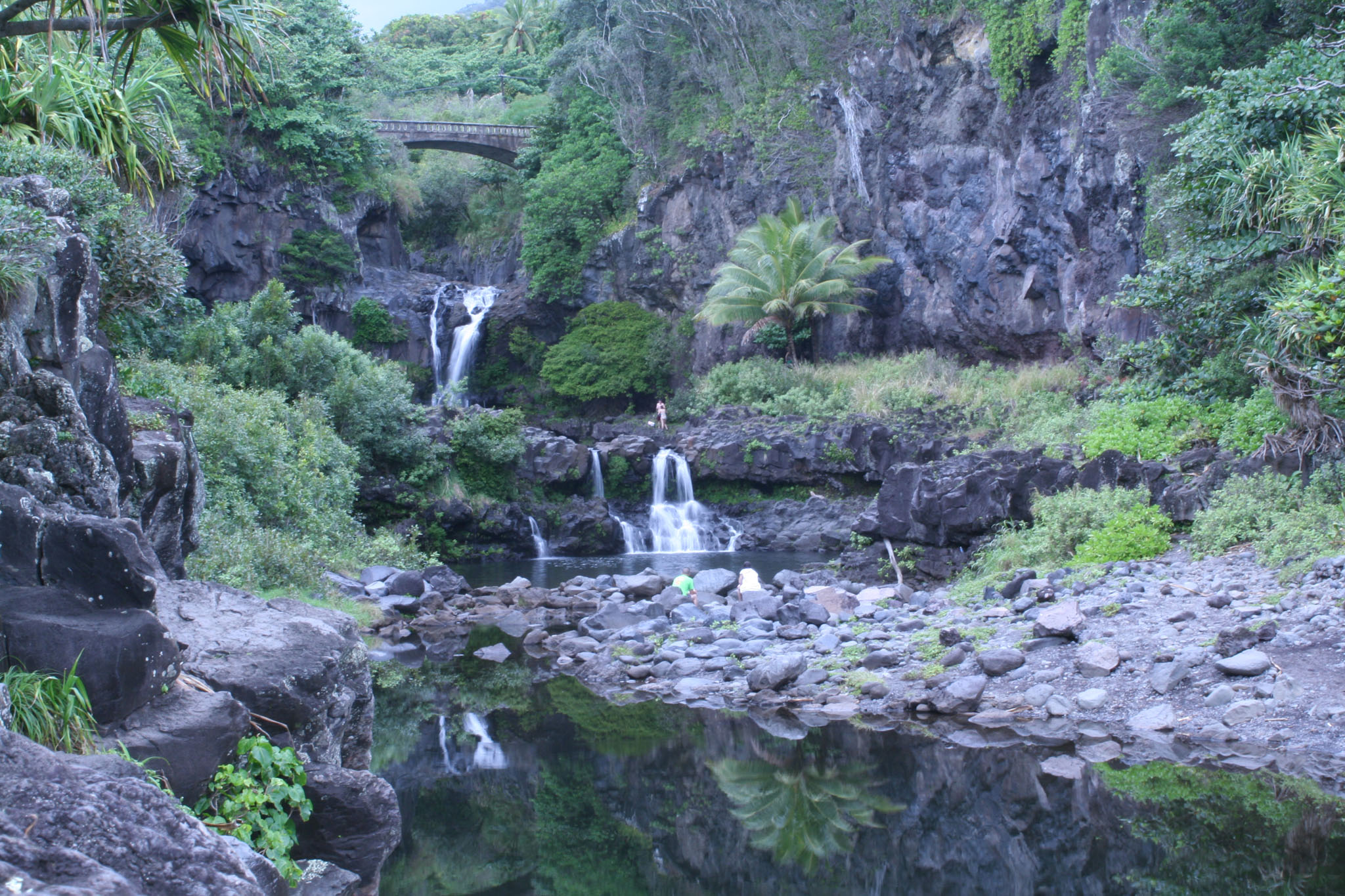
Stop 9: ʻOheʻo Gulch (Kīpahulu), Haleakalā National Park
Why stop: This is a developed National Park area with maintained trails and facilities. It is also where flash-flood risk is taken seriously. Swimming access is frequently restricted or closed depending on conditions. Respect closures, every time.
- Walk: Short, maintained trail to viewpoints. Longer options exist if you have time and conditions are dry.
- Restrooms: Typically available at the park.
- Timing: Afternoon light can be beautiful, but crowds often peak midday.
Shortest legal walks
Quick yes stops
- Wailua Valley State Wayside: Short viewpoint walk.
- Puaʻa Kaʻa State Wayside: Short paths, restrooms often available.
- Keʻanae Peninsula: Short wandering, big reward.
- Waiʻānapanapa State Park: Park infrastructure and straightforward access once you have a reservation.
- ʻOheʻo Gulch (Kīpahulu): Maintained park trails and facilities.
Temptations to treat carefully
- Roadside waterfall pullouts: Only stop if you can park fully off-road without blocking traffic and without creating a hazard. If it feels sketchy, it is sketchy.
- Unofficial trails: If it crosses private land, is posted, or is obviously a user-made scramble, skip it. Access issues on this corridor are real.
- Swimming under waterfalls: Treat it like a mountain river, not a resort pool. Watch for rising water, falling rocks, and strong currents.
Restrooms and food cadence
On the Road to Hāna, your day goes better when you plan bathrooms and food like you would on a long hike.
My simple cadence
- Before Paʻia: Coffee and restroom. Start topped off.
- Early morning stop: Twin Falls area if open, otherwise keep going.
- Mid-morning: Puaʻa Kaʻa State Wayside is a great bathroom anchor.
- Late morning or noon: Eat in Hāna town. Do not “just snack” and hope for the best.
- Afternoon: Kīpahulu facilities if you continue past Hāna.
- Backside drive: Assume limited options. Carry water and a snack even after lunch.
If you are traveling with kids, elders, or anyone who gets carsick: stop more often, not less often. Ten minutes at a viewpoint can prevent a full-hour meltdown later.
Crowds and early starts
If you start early
- More parking success at small pullouts.
- Cooler temps and better traction on damp trails.
- Less pressure from tour traffic behind you.
If you start late
- Expect full lots at popular stops and more leapfrogging with tour vans.
- More time sitting behind slow-moving lines with fewer safe passing zones.
- You may need to pick two or three main stops and call it a win.
Turnaround points
Not everyone should do the backside. If your driver is anxious on narrow roads, if rain is pounding the windshield, if your rental agreement says no, or if you simply want an easier day, these are the cleanest “turn back with dignity” options.
Option A: Keʻanae Peninsula (MM 16)
Best for: A half-day that still feels iconic. You get rainforest road vibes, coastal drama, and a few waterfall roadside views on the way.
Option B: Puaʻa Kaʻa State Wayside (MM 22 to 23)
Best for: “We want a real waterfall walk and bathrooms, then we are done.” Practical and satisfying.
Option C: Waiʻānapanapa and Hāna (MM 32 to 34)
Best for: You want the black sand beach plus the Hāna Highway experience, but you do not want the backside drive. Reserve Waiʻānapanapa, eat lunch in town, then return the way you came.
Option D: Kīpahulu (ʻOheʻo Gulch) and return the same way
Best for: You want the national park stop but conditions, time, or rental rules make the backside questionable. This is a long day with extra backtracking, but it avoids the most intimidating road sections.
If roads close
Storms can trigger closures, rockfall, and flooding. Do not improvise your way around a closure.
- Check before you leave: look for Hawaiʻi DOT updates for HI-360 and HI-31, Hawaiʻi State Parks alerts for Waiʻānapanapa, and NPS alerts for Haleakalā (Kīpahulu).
- If the backside is closed: do not attempt the clockwise loop. Use a turnaround plan (Hāna or Kīpahulu, then return the way you came).
- If HI-360 has restrictions: be willing to make the day a short out-and-back (Keʻanae or Puaʻa Kaʻa are solid wins).
Backside driving notes
If you do continue clockwise past Kīpahulu, treat the return as its own mission, not an afterthought.
- Confirm your rental agreement allows it. If it does not, do not gamble with your coverage.
- Go slow. Locals and experienced drivers still take this carefully.
- Watch for rockfall and rough pavement. Keep distance from the car ahead.
- Mind the light. Try not to commit to the backside too late. Driving narrow roads after dark is a different experience.
- Respect gates and closures. If a road is closed, that is the end of the discussion.
Mini checklist
- Start early and decide your must-do stops in advance.
- Park legally, fully off the road, or do not stop.
- Use restrooms when you see them.
- Reserve Waiʻānapanapa ahead of time if it is on your list.
- Budget for park fees (state park reservations are separate from NPS fees).
- Do not enter brown, fast-moving water.
- Stay back from cliff edges and undercut banks.
- Plan a turnaround point before anyone gets tired.
If you want the Road to Hāna to feel like an adventure instead of an obstacle course, treat it like a hike with a steering wheel: pace yourself, fuel regularly, and know when to turn around while you are still having fun.