Sabino Canyon Shuttle Rules and Easy Trails Near Tucson
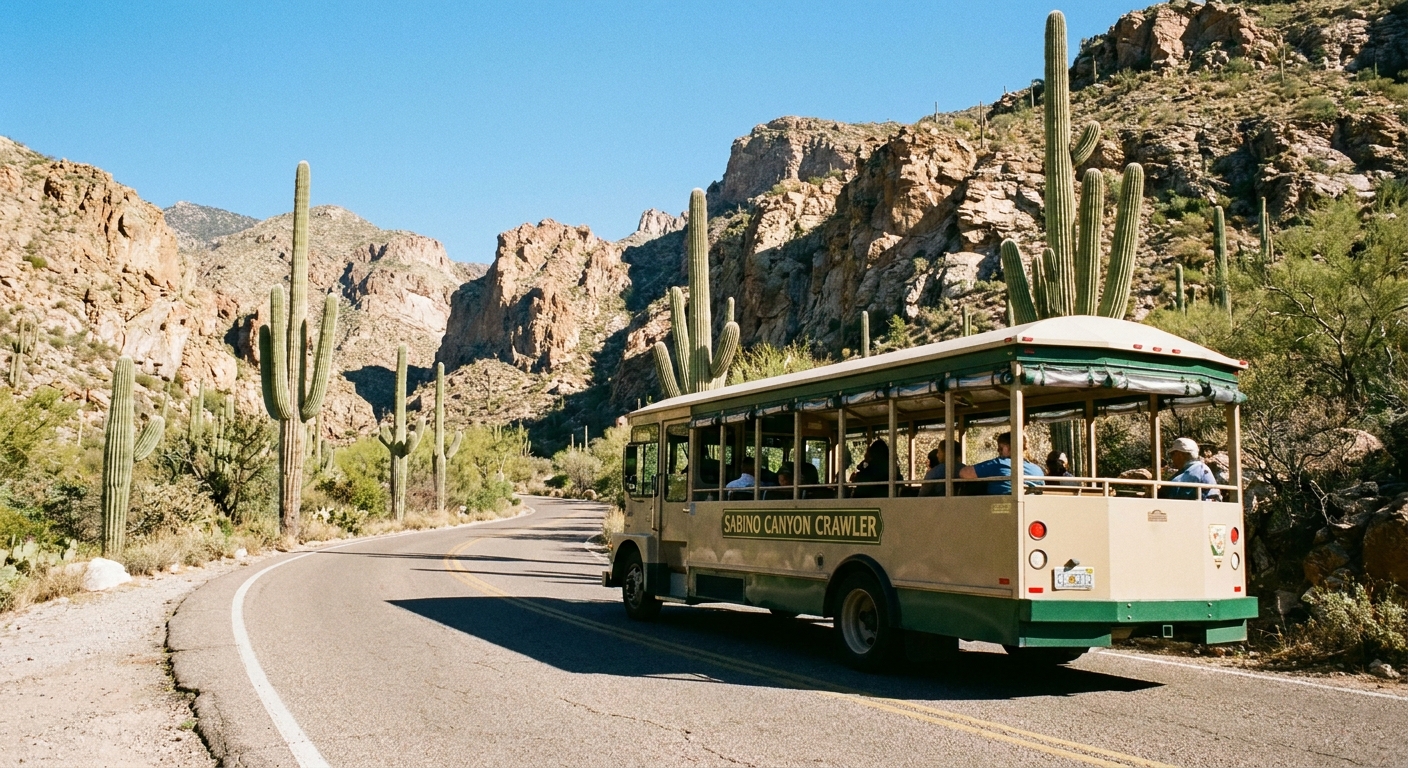
Sabino Canyon Recreation Area is one of Tucson’s most reliable “big scenery, low logistics” desert outings. You get towering canyon walls, a ribbon of water in the right seasons, and a paved corridor that lets beginners ease in while stronger hikers branch off onto dirt trails.
But it also comes with one big source of confusion: what the shuttle can and cannot do on a given day, and how that differs from the nearby Saguaro National Park units people lump together in conversation.
This page untangles the rules in plain English and then points you to the best easy-to-moderate hikes for first-timers, families, and anyone who wants a satisfying desert day without a sufferfest.

Sabino Canyon vs. Saguaro: don’t mix the rules
If you are trip-planning around Tucson, you will see three names repeated: Sabino Canyon Recreation Area, Saguaro National Park East (Rincon Mountain District), and Saguaro National Park West (Tucson Mountain District). They are close, but the management and “how you visit” rules are not interchangeable.
- Sabino Canyon Recreation Area is managed by the Coronado National Forest. The signature experience is the Sabino Canyon Crawler (the shuttle) on Sabino Canyon Road plus an easy network of trails that intersect the road and creek.
- Saguaro National Park has two separate districts (east and west). There is no Sabino-style shuttle road system there. You drive the park roads and hike from trailheads, with National Park Service rules and fees.
Translation: if you are searching for “Saguaro tram” or expecting a shuttle inside the national park, you actually want Sabino Canyon.
Shuttles: Crawler, Bear Canyon, tickets
Which shuttle are you seeing?
From the visitor center area, you may see two different shuttle lines. They are both legitimate, and they go to different places.
- Sabino Canyon Crawler: runs up the paved Sabino Canyon Road with numbered stops. This is the classic route most people mean when they say “Sabino Canyon tram.”
- Bear Canyon shuttle: serves Bear Canyon (a separate canyon area). It is great if your goal is Bear Canyon trails and scenery, but it does not replace the Sabino Canyon Road route.
Fees: parking vs. shuttle ticket
Plan for two separate costs:
- Forest Service parking fee: paid for your vehicle day use, unless you have a valid pass (including America the Beautiful) that covers it.
- Shuttle ticket: purchased separately if you ride the Crawler and or the Bear Canyon shuttle. Ticketing details can change, so treat the official site and posted signage as the final word.
Sabino Canyon Crawler basics and schedule
How the Crawler works (the simple version)
The shuttle, officially the Sabino Canyon Crawler, runs up the paved Sabino Canyon Road with multiple stops. You can ride it like a sightseeing loop, use it like a “hiker assist” to skip pavement, or do a mix of both.
- Tickets: purchased separately from entry and typically sold at the visitor center area. Prices and exact policies can change seasonally, so treat the official schedule as the final word.
- Stops: the road has numbered stops that line up with common trails and viewpoint access. Beginner hikers often choose a stop, hike a short loop, then ride back.
- Accessibility: the paved road and shuttle system are a good fit for visitors who want views with minimal uneven footing. Availability for mobility devices can vary by vehicle and policy.
Schedule: what changes through the year
The most important planning move is to check the current Crawler schedule before you commit to start times, especially if you are aiming for a specific sunset or morning temperature window. The Crawler generally operates seven days a week year-round, but departure frequency and the day’s last run can vary by season.
Why it matters in practice:
- If you start late in the day, your return options may be limited, which can turn a “quick stroll” into an unexpectedly long walk on pavement.
- Some seasons have reduced frequency, which can mean longer waits at stops.
No “foot-only days” for the Crawler: the real rule people mean
One of the most common mix-ups: there are not routine “foot-only” days created by shutting down the shuttle. The Crawler runs year-round on its operating schedule.
What does change by day is bicycle access on Sabino Canyon Road. Bicycles are prohibited on Wednesdays and Saturdays, and on other days they can be restricted by time of day. Policies can change, so check the current posted rules before you go.
Translation: if you heard “the road is foot-only,” that is usually shorthand for “no bikes today,” not “no shuttle today.”
Heat, rattlesnakes, and storm strategy
Heat: a “rattlesnake-forward” mindset
In the Sonoran Desert, heat management is not just comfort. It affects wildlife behavior and your reaction time. I like a “rattlesnake-forward” approach: assume you could see a snake at any moment, and set yourself up to notice it.
- Start early. Cooler temperatures mean snakes are less likely to be stretched across the warm pavement or open trail in full sun.
- Watch your edges. Snakes love shade lines, trail edges, and rocks that hold warmth. Avoid stepping over ledges blindly.
- Slow down in brushy sections. If you cannot see your next footfall, you are moving too fast.
- Wear closed-toe shoes. Hiking sandals can be fine on pavement, but for dirt side trails, sturdy shoes are the safer call.
How much water to carry
Water needs vary by temperature, pace, and sun exposure, but in Tucson’s warmer months, the “one bottle is fine” mentality is how easy days become rescues. For most casual hikers, bring more than you think you need, and add electrolytes if you sweat heavily.
- Carry a minimum baseline: enough that turning around still leaves a buffer for a slower return.
- Pack salty snacks: especially if you are walking the paved road in sun.
Creek crossings after storms
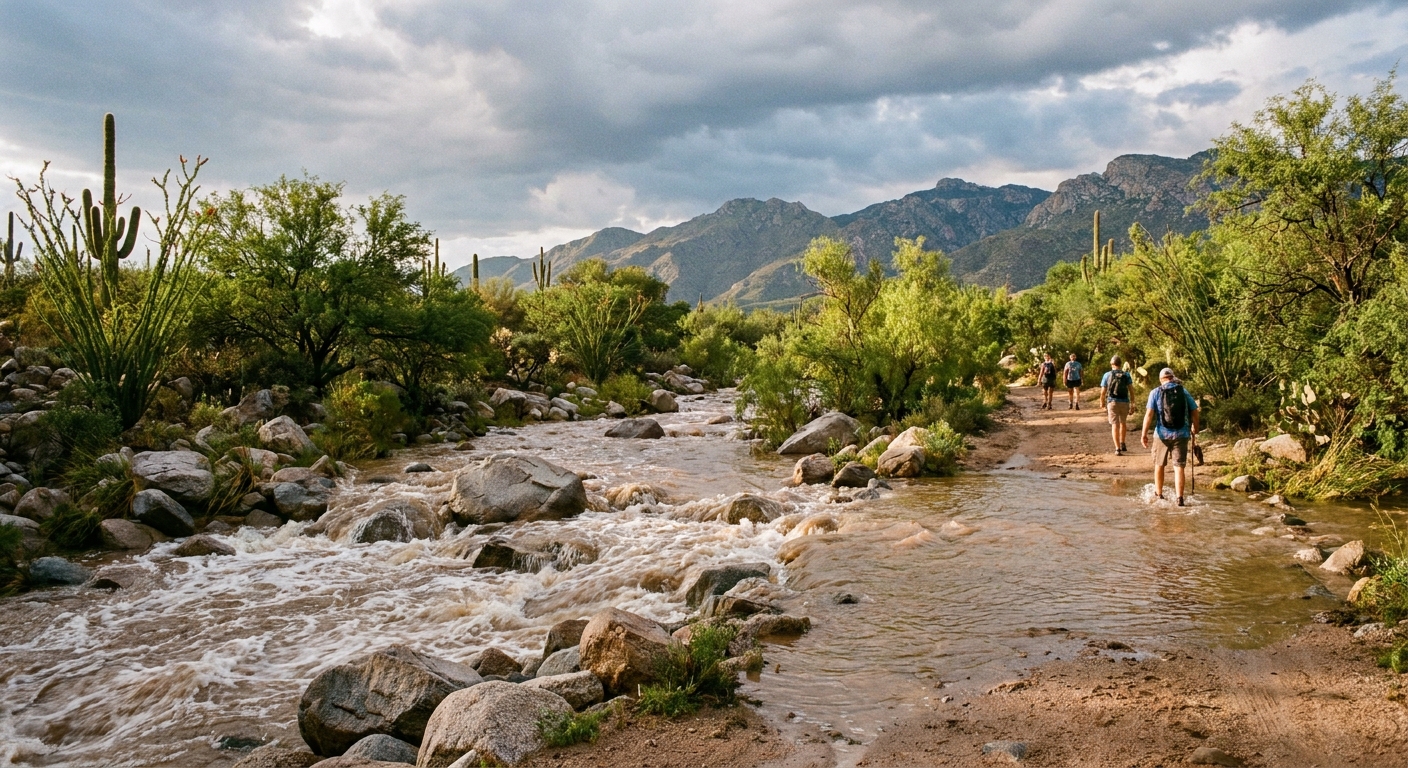
Sabino Canyon can go from dry and dusty to surprisingly watery after monsoon storms or heavy rain. Those pretty crossings can also be the trickiest part of your day.
- Do not assume the crossing you saw online is passable today. Water levels change quickly.
- Turn around if the flow is fast or murky. Slipping on submerged rocks is a common injury source.
- Give the canyon time after storms. Trails can be washed out, and sediment makes footing unpredictable.
Stroller-friendly and beginner-friendly: where pavement helps
If you want a desert outing that works for strollers or for anyone who prefers stable footing, Sabino Canyon’s paved segments are the reason it shines.
Best paved option
- Sabino Canyon Road (paved): wide, consistent surface with steady grade changes. Ideal for strollers and for “choose your own distance” walks.
Where strollers get tricky
- Side trails that drop to the creek can include sand, rocks, and uneven steps.
- Crossing areas may have water or slick stone after storms.
If you are stroller-walking, treat the paved road as your main route and use scenic pull-offs as optional add-ons only when they look truly smooth in real time.
Easy-to-moderate trails at Sabino Canyon
Instead of throwing a dozen trail names at you, here are the most satisfying options for an easy-to-moderate day, including clear “turnaround points” so beginners can hike confidently without worrying about getting in over their heads.
1) Sabino Canyon Road walk (any day, any pace)
Why it is great: you control the distance, the views are immediate, and it is easy to bail out early. It also pairs perfectly with the Crawler on shuttle days.
Beginner turnaround map:
- Option A: walk to the first scenic bend or viewpoint that feels “worth it,” then turn around while you still feel fresh.
- Option B: walk to one numbered stop, snack, then return. If you are unsure, pick the earliest stop that gives you canyon-wall drama.
- Option C: ride the Crawler up to a mid-canyon stop, walk downhill back toward the visitor area.
Good for: first-time desert visitors, stroller walks, recovery days, and anyone adjusting to Tucson heat.
2) Creekside exploring near the lower canyon (short nature hit)
Why it is great: you get that “water in the desert” magic with minimal effort, especially in cooler months or after rains.
Beginner turnaround map: follow the most obvious path toward the creek until the surface gets rocky or you reach a crossing that requires stepping on wet stones. Turn around before your shoes get soaked.
Watch for: mud after storms and slick rock near water.
3) Moderate add-on: a short loop plus a shuttle assist
Why it is great: the Crawler lets you sample a moderate-feeling hike without committing to a long paved approach.
Beginner turnaround map:
- Ride to a mid-canyon stop.
- Choose one side trail that gains a little elevation.
- Turn around at the first wide, comfortable viewpoint, not the last possible one.
This “viewpoint turnaround” rule is the best trick I know for keeping moderate hikes fun in desert conditions.
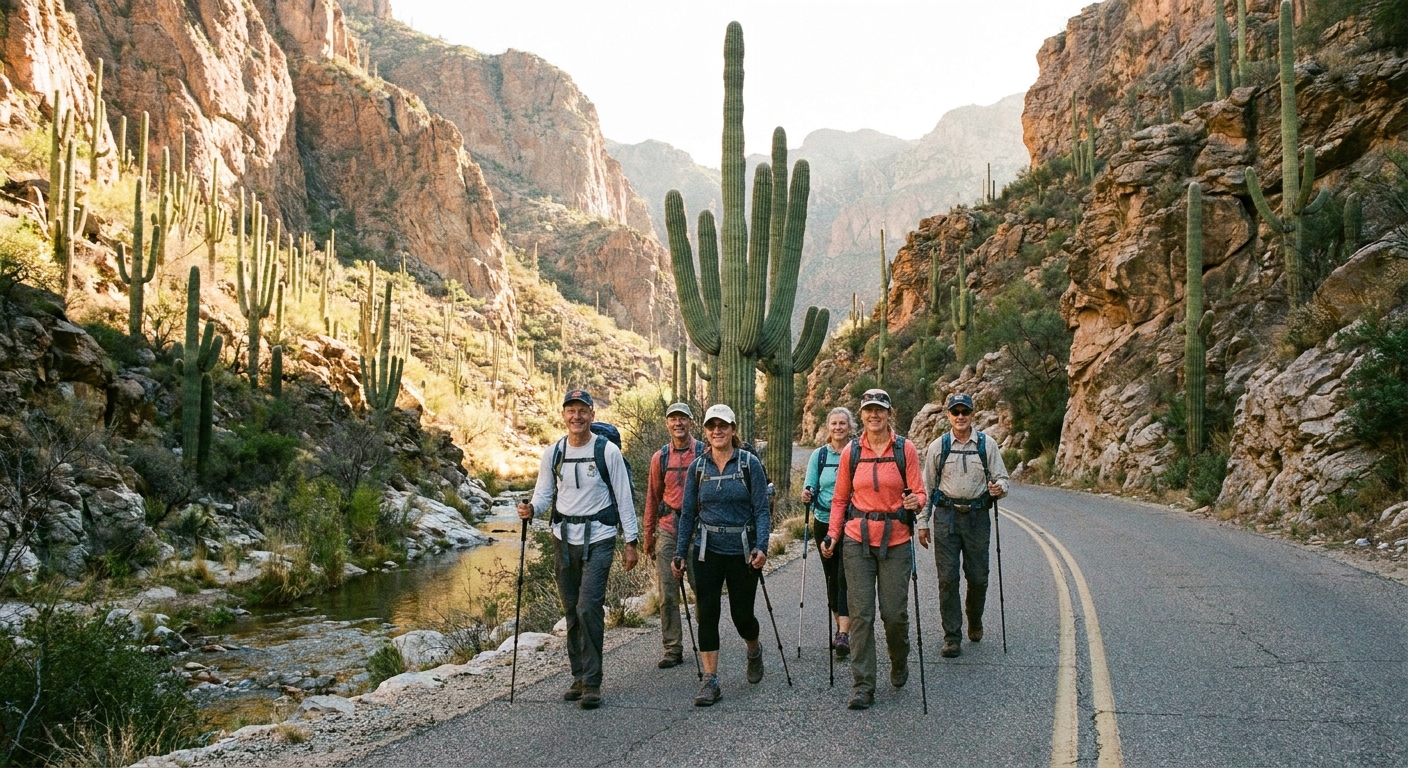
Easy hikes near Tucson (outside Sabino)
If you have one extra morning in Tucson, pair Sabino Canyon with one of these easy-to-moderate classics. They hit that Town Wander sweet spot: real desert atmosphere, clear navigation, and a great post-hike coffee stop nearby.
Sweetwater Preserve (west Tucson)
Vibe: rolling desert singletrack with big-sky views and lots of loop potential.
- Why it works for beginners: you can build a short loop and extend only if everyone feels strong.
- Strategy: start early, bring more water than you think, and choose wider junctions for breaks.
Gates Pass area (west side)
Vibe: iconic saguaro scenery and sunset energy.
- Why it works: many trail options nearby let you choose gentle grades.
- Heads up: parking and traffic can be intense near peak sunset hours.
Tucson Mountain District (Saguaro National Park West)
Vibe: dense saguaros, classic Sonoran Desert postcard terrain.
- Why it works: trailheads are straightforward, and you can keep mileage modest.
- Reminder: national park fees and rules apply, separate from Sabino Canyon’s forest management and parking fee system.
A simple half-day plan
If you ride the Crawler
- Arrive early for cooler temps and easier parking.
- Ride up to a mid-canyon stop.
- Walk an out-and-back to one viewpoint or creekside spot.
- Ride down and finish with a short paved stroll near the lower canyon.
If you do not ride the shuttle
- Set a distance cap before you start (example: “we walk 45 minutes out, then turn around”).
- Stay shade-smart, break often, and snack early.
- Turn around sooner than you think if the sun is high or anyone is fading.
What to pack
- Water: more than you think you need, plus electrolytes in warm weather
- Sun protection: hat, sunglasses, sunscreen
- Footwear: closed-toe shoes for dirt trails
- Traction insurance: a small towel or extra socks if you think you might step in creek water
- Navigation basics: downloaded map or photo of the trailhead signage
- Time buffer: especially if you are relying on the Crawler schedule
Quick FAQs
Is Sabino Canyon in Saguaro National Park?
No. Sabino Canyon Recreation Area is part of the Coronado National Forest system. Saguaro National Park has two separate districts on the east and west sides of Tucson.
Do I need the shuttle to enjoy Sabino Canyon?
No. You can walk the paved road and explore shorter side trails without ever getting on the Crawler. The shuttle just helps you reach farther viewpoints with less time in the sun.
Why are there two trams?
There are two shuttle routes from the visitor center area: the Sabino Canyon Crawler (Sabino Canyon Road) and the Bear Canyon shuttle (Bear Canyon). Make sure you line up for the route that matches your plan.
When is Sabino Creek flowing?
It varies by season and rainfall. Expect more water after winter precipitation and after monsoon storms, but be cautious because crossings can be sketchy right after heavy rain.
What is the most beginner-friendly option?
The paved Sabino Canyon Road, done as a short out-and-back with a pre-set turnaround point, is the most forgiving choice.