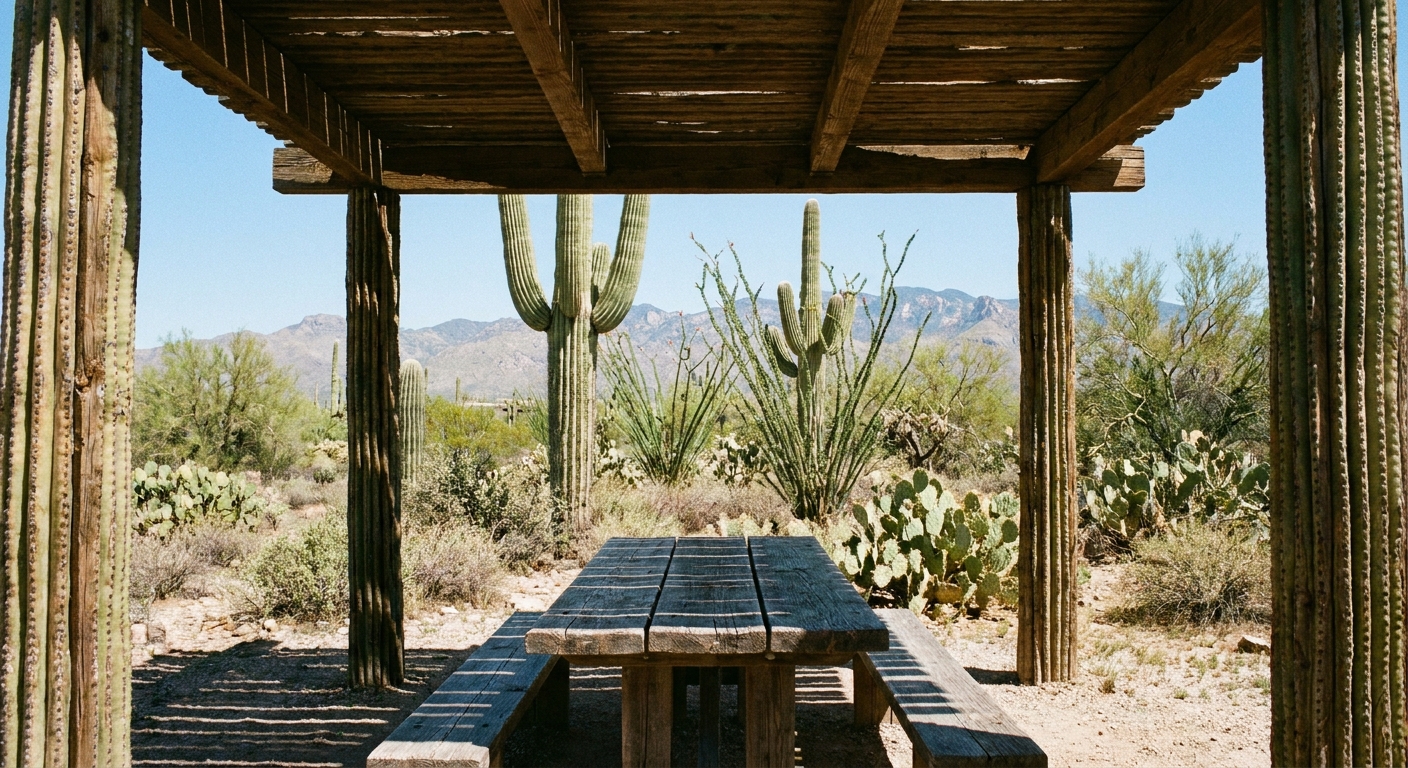
Saguaro National Park Half-Day: Signal Hill and Desert Ecology Loops
Saguaro National Park is famous for big desert skies and bigger cactus silhouettes, but you do not need a long, sweaty summit hike to get the “this is the Sonoran Desert” feeling. If you have half a day, the highest reward-per-mile is on the park’s short interpretive loops, where you can slow down enough to notice the velvet texture on a cholla spine, the way a saguaro’s ribs expand after rain, and the stories people carved into stone long before this was a national park.
This plan strings together three easy wins: Signal Hill’s petroglyphs (Tucson Mountain District, aka “West”), the Desert Ecology Trail (Rincon Mountain District, aka “East”), and one or two short loops that match your energy level. It is designed to avoid repeating the usual East vs West “best hikes” roundup by focusing on viewpoints and interpretive walks instead of longer trails. If you like a Trail and Town rhythm, this itinerary also leaves room for a quick coffee or snack stop without turning your half-day into a speed run.

Before you go
Saguaro National Park is split into two separate districts on opposite sides of Tucson:
- Tucson Mountain District (West): denser saguaro forests, iconic sunset light, and the best “I did this in 30 minutes” petroglyph stop at Signal Hill.
- Rincon Mountain District (East): a slightly more open feel along the scenic loop, excellent short interpretive trails, and signage that makes the landscape click. The Rincon Mountains also rise much higher overall, even though the main driving loop sits at a similar desert-floor elevation to the West.
Reality check on time: if you try to do both districts in one half-day, your “hike time” becomes “windshield time.” It is doable, but budget 45 to 60 minutes to drive across Tucson between districts (more with traffic), plus time for parking. If you want a more relaxed half-day, commit to one district and add an extra loop.
Quick logistics
- Entrance fee: the park charges an entrance fee (or you can use an America the Beautiful pass). Check the current rate before you go.
- Restrooms and water: you will find restrooms at major visitor areas and some trailheads, but do not assume they are at every stop. Carry your own water.
- Scenic drives: West is anchored by Bajada Loop Drive. East is anchored by Cactus Forest Loop Drive.
What to pack for easy loops
- Water: at least 1 liter per person, more in hot months. Desert air is sneaky.
- Sun protection: hat, sunglasses, sunscreen. Shade is limited on most short trails.
- Footwear: closed-toe shoes. The ground is rocky and spines do not forgive bare skin.
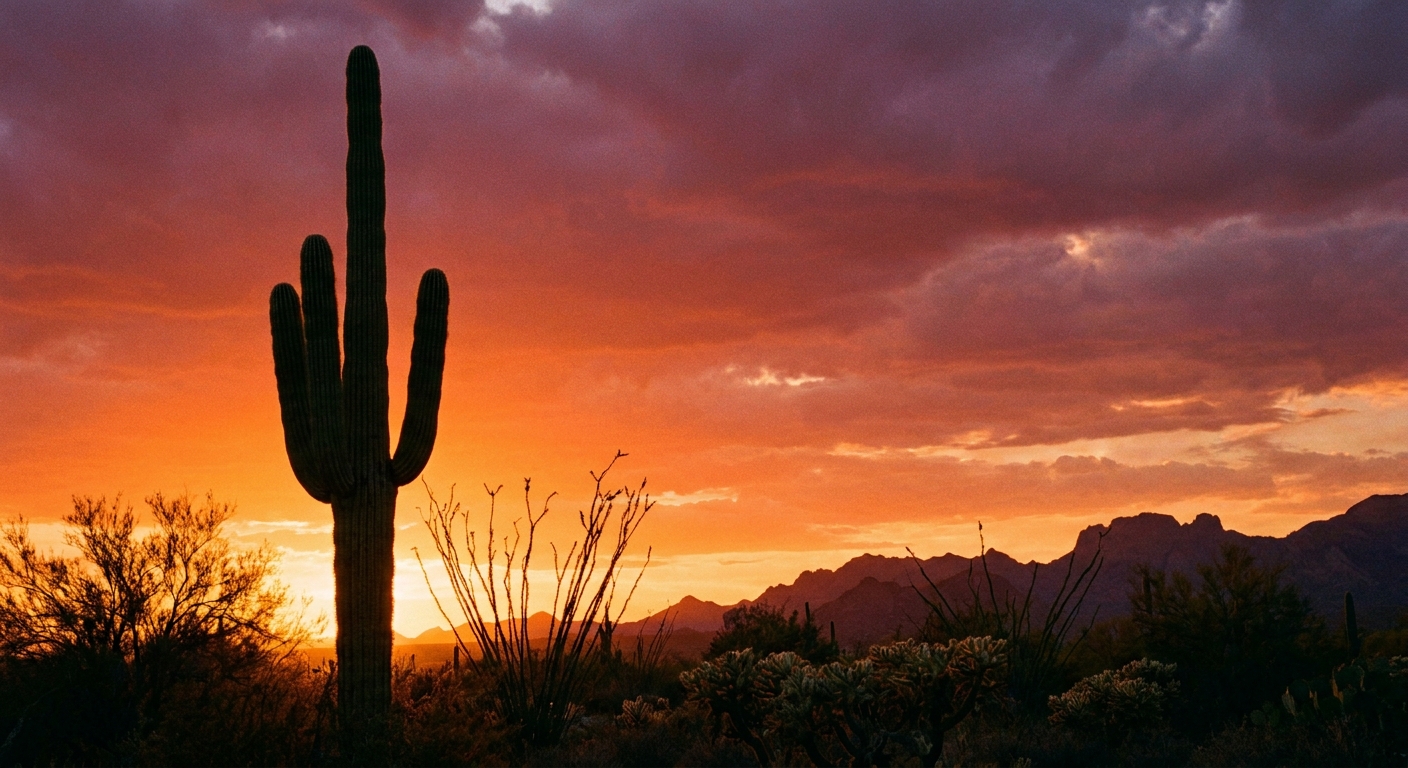
- Timing: early morning is best for wildlife and softer light. Late afternoon is best for color, especially in the West district.
Note: conditions in the Sonoran Desert can be dangerous during extreme heat. If it feels like an oven when you step out of the car, scale back to the shortest loops, prioritize shade where available, and do more of your “learning” at pullouts and picnic areas.
Option A: West district
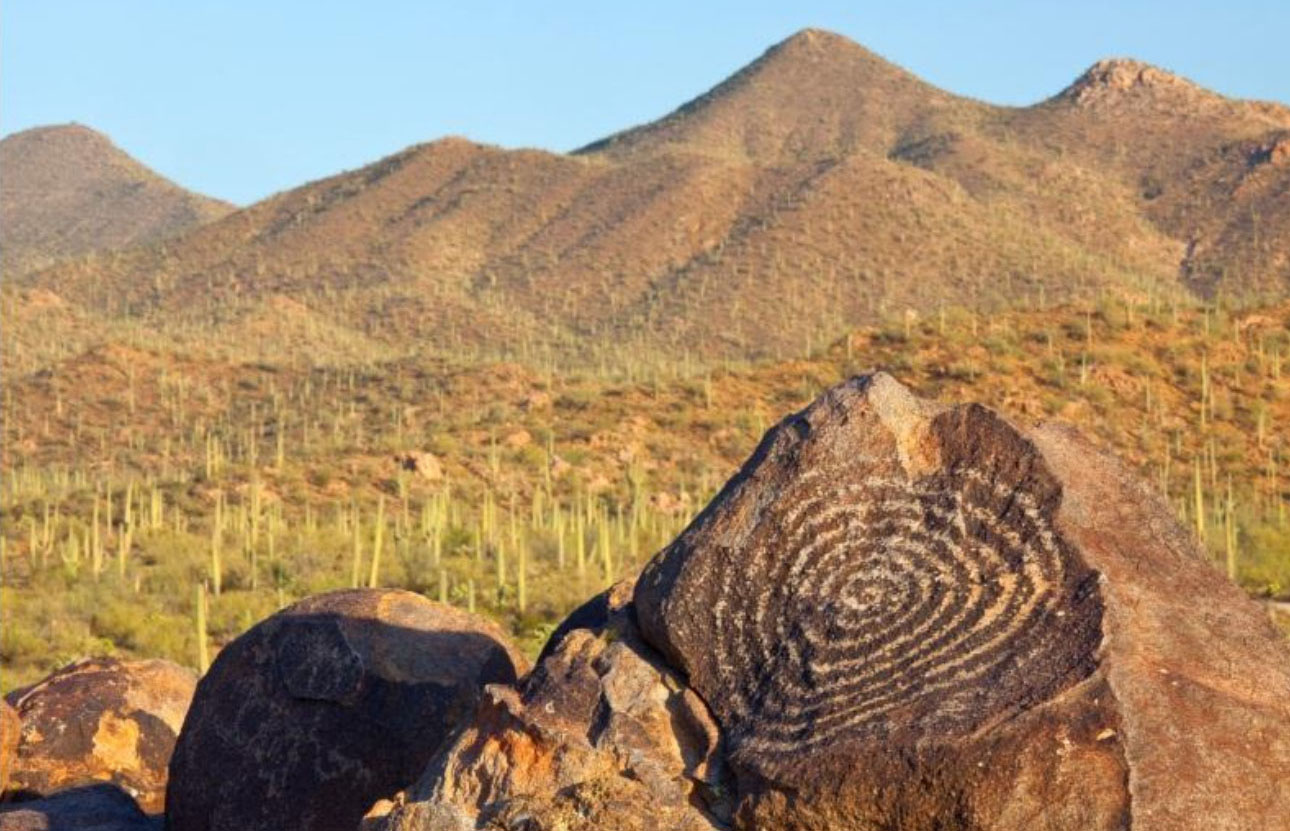
If you want the most memorable stop with the least walking, build your half-day around Signal Hill. This is one of those places where a short stroll can leave you thinking about time on a very different scale.
Stop 1: Signal Hill Trail
Why it is worth it: you get a concentrated collection of petroglyphs in a dramatic boulder field, plus classic saguaro scenery with minimal effort.
- Distance: about 0.3 miles round trip
- Time needed: 30 to 60 minutes, depending on how slowly you look
- Difficulty: easy, with some uneven rock and steps
- Where to start: park at the Signal Hill Picnic Area and follow the signed path
- Best tip: move slowly and let your eyes adjust. Many carvings are subtle and appear best when the light hits at an angle.
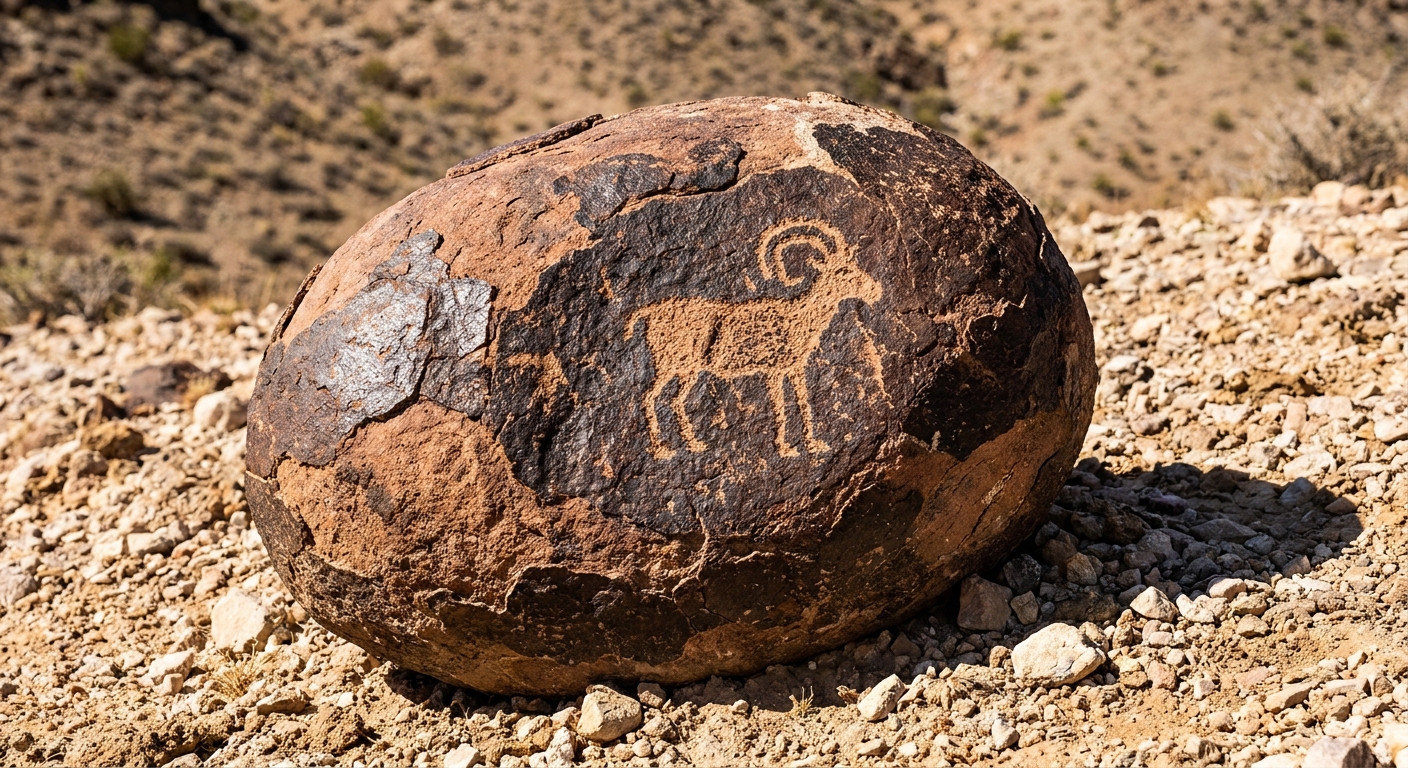
What you are seeing: petroglyphs are designs carved into rock surfaces, often into the dark “desert varnish” that forms over long periods. Signal Hill’s carvings are widely associated with Indigenous peoples of the region and ancestral communities who traveled, lived, and left marks of meaning here. Please keep to the trail and never touch the carvings. Oils from hands and erosion from foot traffic damage the rock over time.
Stop 2: One short loop nearby
After Signal Hill, add one short loop to round out the story. Pick based on what you want: a quick view, a plant-focused walk, or a leg stretch.
- Valley View Overlook Trail: a short walk to a wide open vista that feels especially good late in the day. It is commonly listed at about 0.8 miles round trip. Great desert-horizon payoff for minimal effort. (Trail status can change, so confirm signage at the trailhead.)
- Bajada Loop Drive pullouts: not a hike, but perfect for a low-energy half-day. Use pullouts to scan for birds and take photos with fewer people.
- Picnic-area mini walks: look for short signed nature paths near picnic areas so you can take a water break while still being in the landscape.
Coffee break pairing (Town Wander style): plan your caffeine either before you enter the West district (for sunrise energy) or after (for a post-desert reset in Tucson). A simple iced coffee tastes heroic after a dusty trail.
Option B: East district
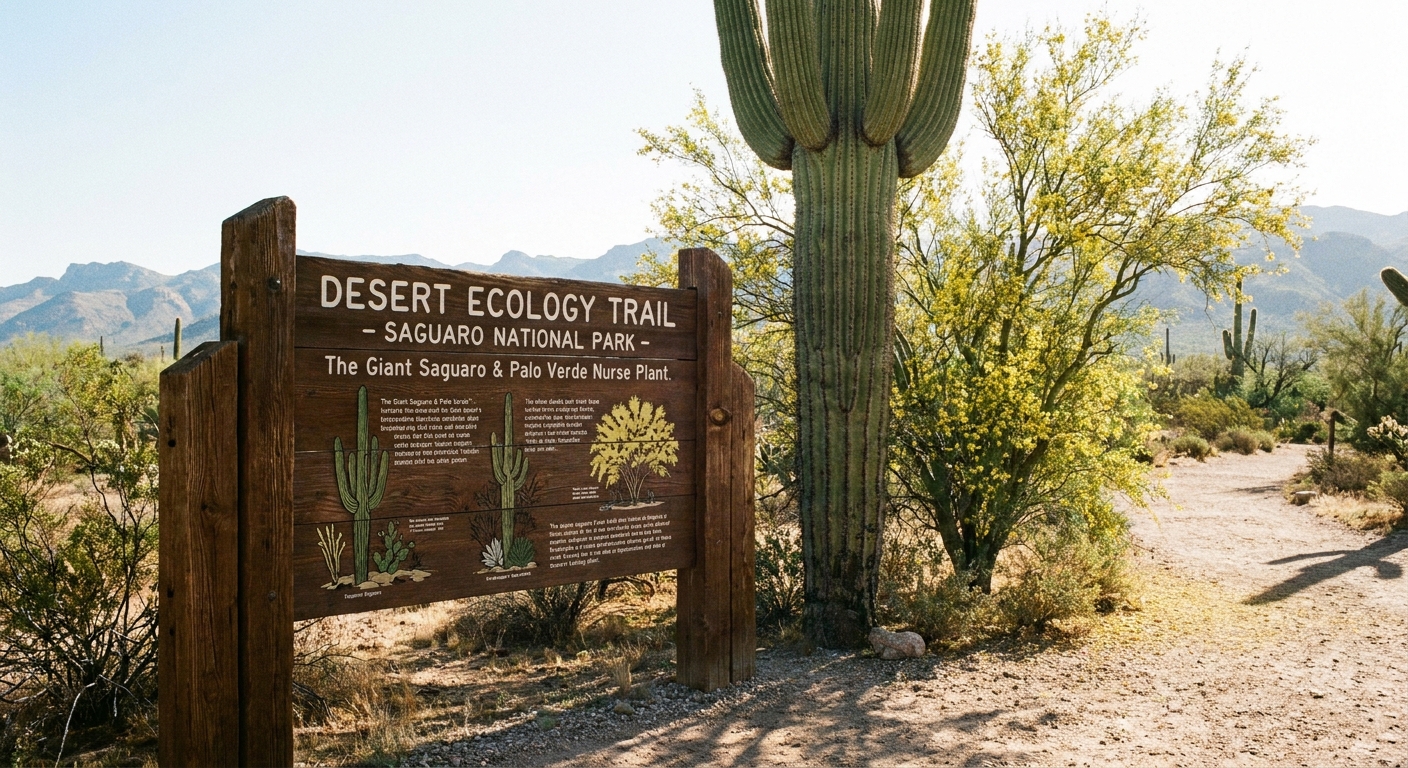
If you love when a trail teaches you what you are looking at, the East district is your friend. The highlight here is the Desert Ecology Trail, a short loop that turns the Sonoran Desert into a living museum, minus the glass.
Stop 1: Desert Ecology Trail
Why it is worth it: the signage is genuinely helpful, especially if you are new to desert ecosystems. Expect close-up looks at saguaros, palo verde, cholla, and the small but essential plants that knit the landscape together.
- Distance: about 0.25 miles (loop)
- Time needed: 20 to 45 minutes at an easy pace
- Difficulty: easy
- Accessibility: generally flat and short, suitable for many visitors. For wheelchair or stroller details, rely on current on-site signage and NPS accessibility notes since surfaces and grades matter.
- Where to start: along Cactus Forest Loop Drive, follow signs for the Desert Ecology Trail parking area
What to look for:
- Nurse trees: saguaros often start life under shrubs or small trees that provide shade and protection.
- Desert “spacing”: plants are not sparse because the desert is empty, but because water is. Notice how each plant claims a small territory.
- Spines and ribs: ribs help saguaros expand after rain; spines reduce water loss and protect the plant from hungry mouths.
Stop 2: Add one more short loop
After you have the ecology context, a second short walk feels richer because you understand what you are seeing.
- Freeman Homestead Trail: a short, history-leaning walk that adds a human layer to the landscape. Commonly listed at about 1 mile round trip, and typically flat.
- Mica View area: gentle walking and big views with options to keep it short. A popular choice is the Mica View Loop, commonly listed at about 1.2 miles.
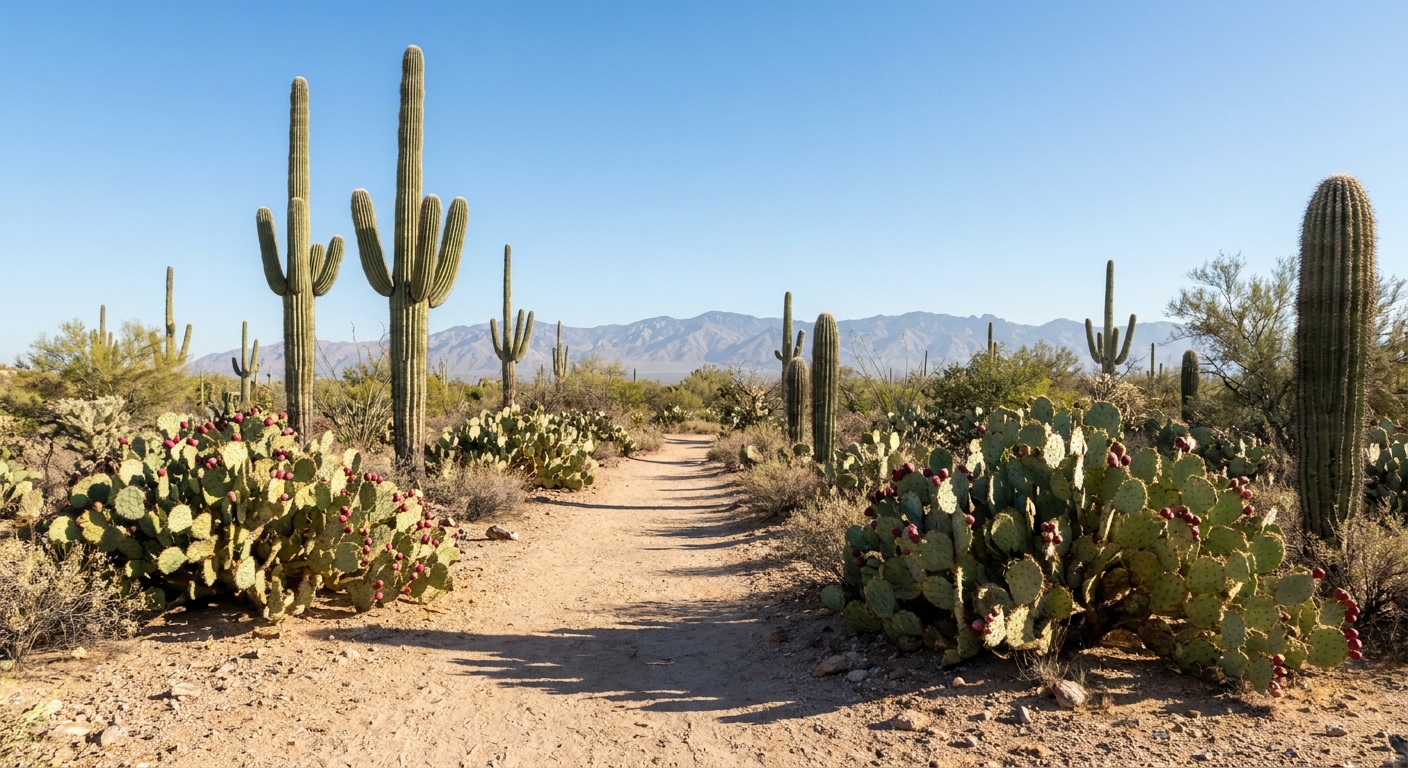
Slow travel tip: take five quiet minutes without moving. Listen for cactus wrens, watch for lizards doing push-ups on sun-warmed rocks, and look for tiny shadows shifting under creosote bushes. The desert rewards stillness.
Both districts in a half-day?
Yes, but do it intentionally. The two districts are separated by Tucson, so the secret is choosing one anchor stop in each district, keeping your trail time short, and accepting that this is a sampler, not a deep dive. Plan on 45 to 60 minutes of driving between districts, plus parking.
The smart split
- West (Tucson Mountain District): Signal Hill for petroglyphs
- East (Rincon Mountain District): Desert Ecology Trail for interpretive context
Suggested flow (half-day sampler):
- Start early in the West for Signal Hill before it gets hot and busy.
- Drive through Tucson and treat it as your urban comfort intermission: restroom, snack, and iced coffee top-off.
- Finish in the East on the Desert Ecology Trail, then add a second short loop only if you still have time and energy.
What not to do: do not try to stack multiple longer trails on both sides. The park is better when you are not speed-running it.
Desert etiquette and safety
- Stay on trail: fragile desert soils, plant roots, and slow-growing ground cover are easy to damage and slow to recover.
- Give wildlife space: javelinas, snakes, and even cute-looking rabbits all deserve distance.
- Do not touch cacti: even a light brush can leave spines in your skin, and it damages plants.
- Leave petroglyphs untouched: no rubbing, no tracing, no “just a quick photo with my hand on it.”
- Heat awareness: if you feel dizzy, chilled, or unusually fatigued, stop, hydrate, and get into shade. Turn back early.
If you only remember one thing: the Sonoran Desert is not empty. It is a living system running on tight margins. Walk softly and you will see more.
Make it feel like a trip
My favorite half-day rhythm at Saguaro is simple: one cultural stop (Signal Hill), one ecology stop (Desert Ecology Trail), and one comfort stop (a local coffee or a shaded picnic). It hits the Trail and Town sweet spot, and it makes the park feel personal instead of performative.
If you have extra time, come back for the opposite light. The same saguaros look completely different in the early morning versus golden hour, and that is the desert’s quiet magic.