Saguaro National Park in One Day: East vs West Timed Itinerary
Saguaro National Park is the rare kind of desert park that lets you do two completely different days without ever leaving the Tucson area. The catch is that the park is split into two districts a drive apart: Rincon Mountain District (Saguaro East) and Tucson Mountain District (Saguaro West). Depending on traffic and where you start, it is roughly an hour (often 45 to 75 minutes) from one side to the other. If you only have one day, your best move is to time-box it. Desert light is everything, and desert heat is not negotiable.
This guide gives you two timed itineraries, one for East and one for West, plus a realistic “both districts in one day” option if you want the bragging rights and have the stamina. I am also going to say the quiet part out loud: for most visitors, one district is enough. Pick the one that matches your travel style, commit to it, and you will leave with better photos and a happier body.

East vs West: which district should you choose?
Think of Saguaro East as the “more space to roam” side and Saguaro West as the “most iconic views, fastest payoff” side.
- Choose Saguaro East (Rincon Mountain District) if you want a quieter feel, more options for longer hikes, and a scenic drive that pairs well with a morning start. The terrain feels a little more open, and it is a great pick if you like walking more than driving. Its classic drive is Cactus Forest Loop Drive.
- Choose Saguaro West (Tucson Mountain District) if you want dense saguaro forests, sunset magic, and a compact scenic drive with frequent pullouts. This is the district that tends to look like the postcards. Its go-to loop is Bajada Loop Drive.
When one district is enough
One district is enough if:
- You are visiting between late spring and early fall and need to avoid midday heat.
- You want a relaxed day with one scenic drive, one short hike, and unrushed viewpoints.
- You are traveling with kids, older relatives, or anyone who does not enjoy hopping in and out of the car repeatedly.
When it makes sense to combine both
Combine East and West only if:
- You are visiting in cooler months and can comfortably be outside longer.
- You are happy with shorter hikes and more driving.
- You can start at sunrise and still have energy for sunset.
If you are traveling in hot weather, plan your day like a siesta: do your hiking early, do your driving and indoor stops midday, then go back out for sunset.
Know before you go
Fees and passes
- Expect a standard National Park Service entry fee.
- The America the Beautiful pass is accepted.
- If you already have an annual pass, this is one of those parks where it pays for itself fast.
Where to start
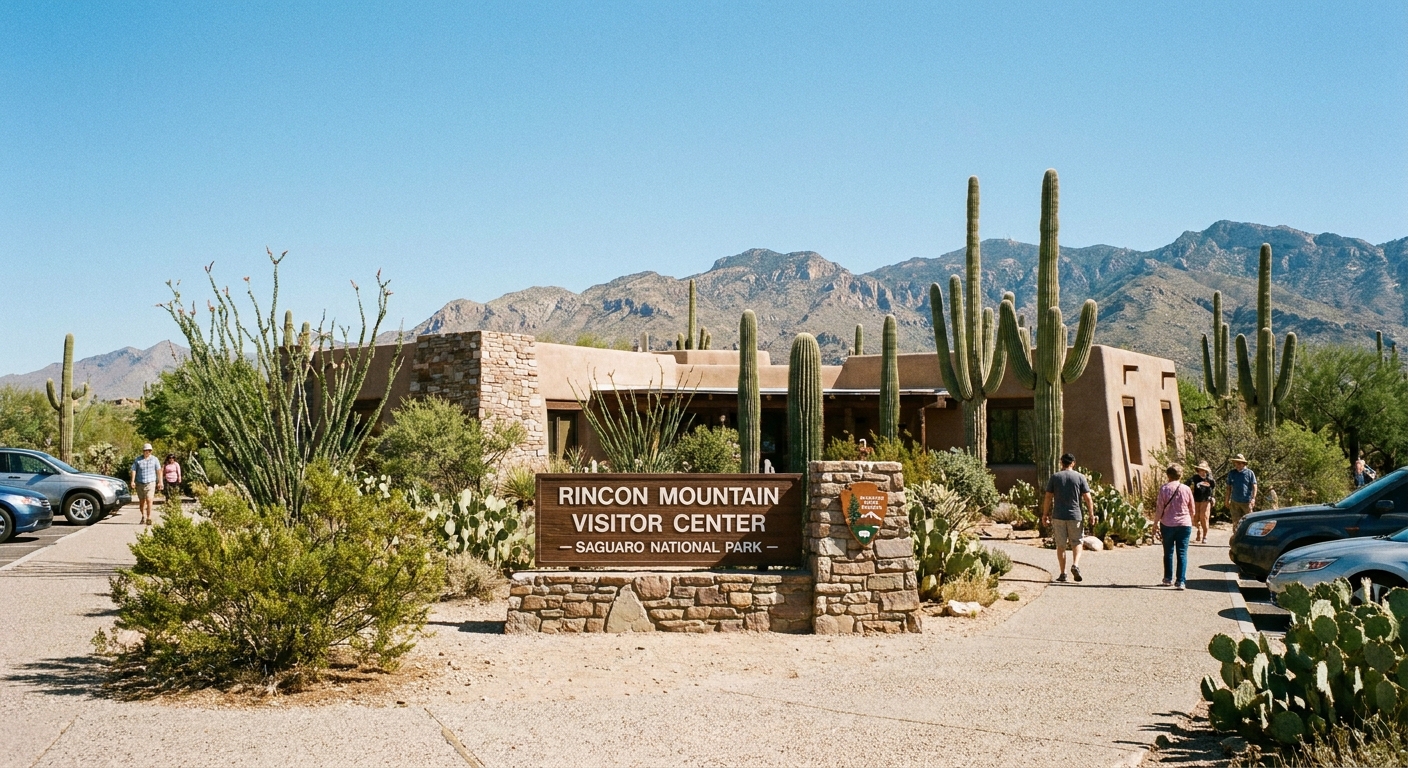
- Saguaro East: start at Rincon Mountain Visitor Center.
- Saguaro West: start at Red Hills Visitor Center.
Roads and driving reality
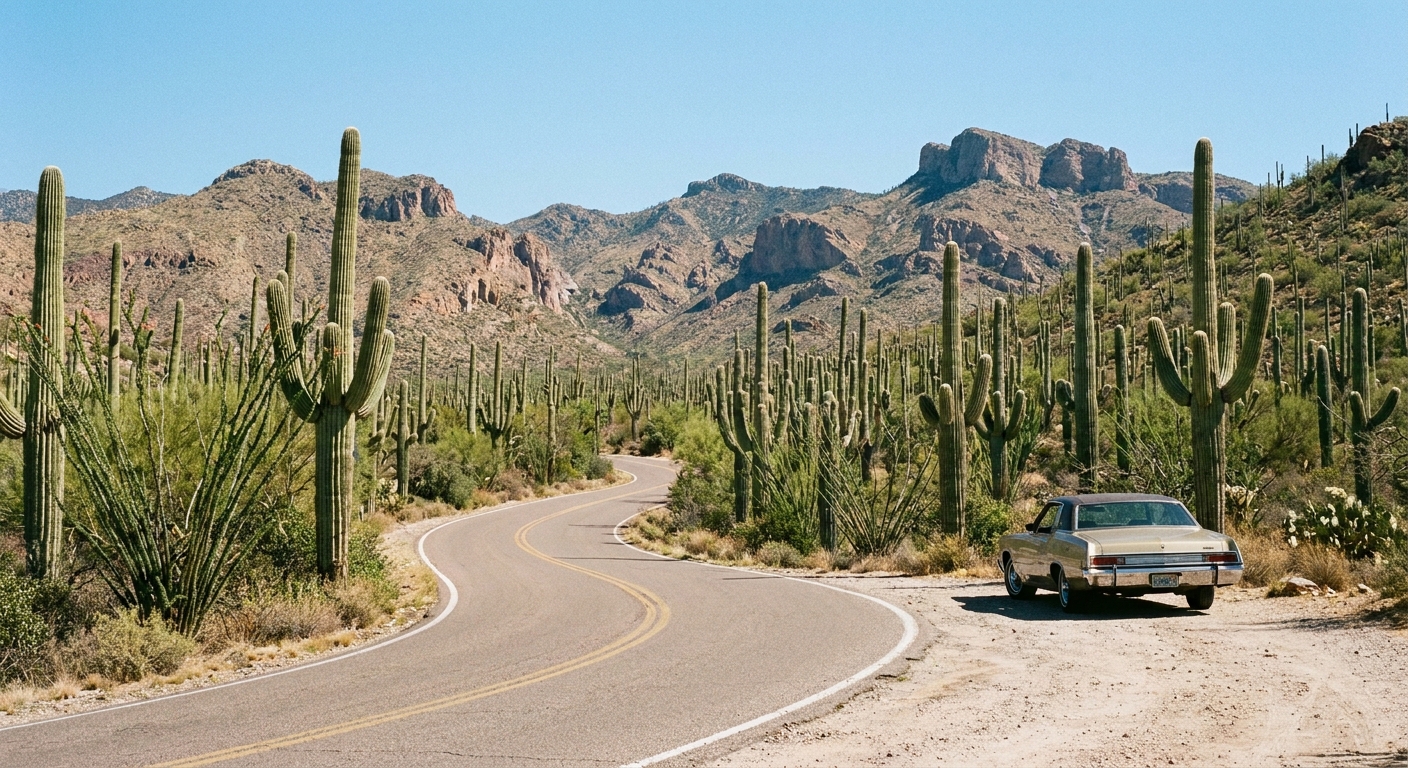
- The two main scenic loops, Cactus Forest Loop Drive (East) and Bajada Loop Drive (West), are paved and fine for a standard car.
- The districts are separated by Tucson. Expect 45 to 75 minutes from one visitor center to the other depending on traffic and time of day.
- Popular pullouts and short trails can fill up mid-morning in peak season. If you want easy parking, earlier is kinder.
Heat-season pacing (rules that actually help)
- Best hiking window: sunrise to about 10:00 am in hot months.
- Midday plan: scenic pullouts with minimal walking, lunch in Tucson, or a long indoor break with serious air conditioning.
- Late-day window: last 90 minutes before sunset for views and short walks.
Carry more water than you think you need. A simple baseline for a short outing is at least 1 liter per person for 1 to 2 hours, more in heat or full sun, plus electrolytes if you sweat easily. You can be “fine” until you are suddenly not.
Season notes (the stuff that changes your plan)
- Summer: heat is the main event. Also watch for monsoon storms (typically mid-summer into early fall). Lightning is real, and washes can flood fast.
- Winter: temps are friendlier, but daylight is short. Sunset can sneak up on you, so start earlier than you think.
- Shoulder seasons: mornings can be cool and afternoons can spike. Layers and a hard cutoff time for hiking help.
Safety basics (fast, not preachy)
- Stay on trail: it protects you and the desert crust that keeps the ecosystem functioning.
- Rattlesnakes happen: watch where you step and where you put your hands, especially around rocks and brush. Give them space.
- Know heat red flags: headache, dizziness, nausea, confusion, or chills in the heat are your cue to stop, get shade, cool down, and hydrate.
- Visitor centers: a great place for updates and exhibits, and sometimes water refill when available. Do not plan your day assuming you will be able to top off.
Option A: Saguaro East in one day
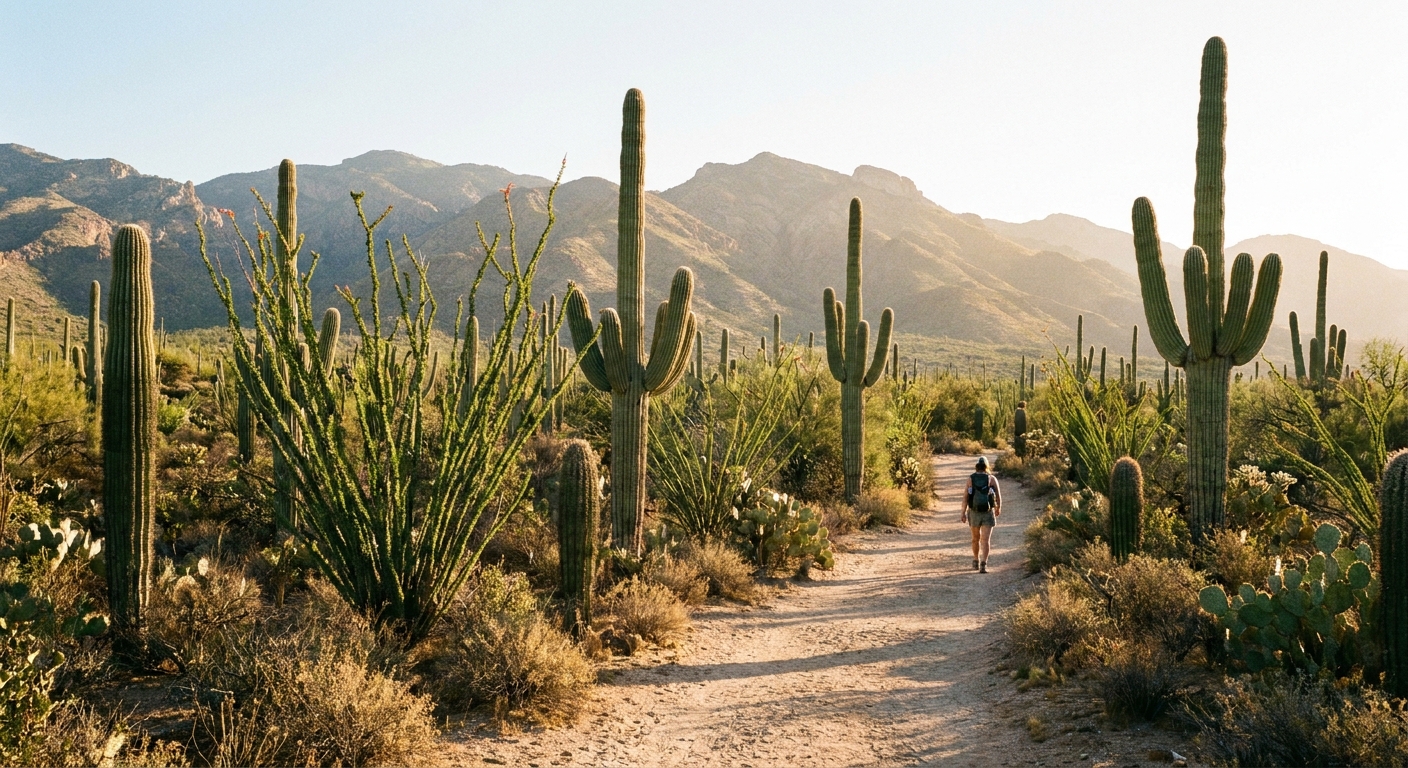
This itinerary prioritizes a strong morning on trail, a smart midday break, then a scenic drive and viewpoints when the light gets softer again.
Morning hike picks
- Freeman Homestead Trail for a gentle desert walk with history and an easy pace.
- Mica View Trail for wide-open views and a great “first hour of the day” feel.
Main hike options (a step up, still realistic)
- Loma Verde Trail out-and-back for a longer, quieter desert walk. Go as far as feels good, then turn around.
- Garwood Trail for more elevation and bigger views if you want to feel like you earned your photos. Start early and be honest about the heat.
If you do not want a longer hike, your “main hike” can simply be two short trails back-to-back with lots of slow looking and photos. This is not the park to speedrun.
Timed itinerary
- Sunrise to 8:00 am: Arrive early and start with a short, easy trail to wake up your legs. If you want a simple classic, do Freeman Homestead or Mica View. Keep it mellow and enjoy the cool air.
- 8:00 to 8:45 am: Stop at the Rincon Mountain Visitor Center for trail updates, exhibits, and a plan check. If water refill is available, use it, but do not rely on it.
- 9:00 to 11:00 am: Do your main hike while you still have shade angles and tolerable temps. Pick Loma Verde or Garwood, or combine two short trails if that fits your day better.
- 11:00 am to 2:30 pm: Midday break. Drive back toward Tucson for lunch, a café stop, or an indoor attraction. This is the difference between enjoying the park and merely surviving it.
- 2:30 to 4:30 pm: Return for Cactus Forest Loop Drive with viewpoint pullouts. Keep your walking minimal if it is still hot.
- Optional, last 60 to 90 minutes before sunset: Come back out for a short stroll and photos. In summer, this can be the most comfortable time to be outside again.
How far you will go
- Easy day: 1 to 3 miles total walking, mostly flat.
- Moderate day: 3 to 7 miles total walking with more trail time in the morning.
Why East works well as a one-district day: it rewards a longer morning on foot. If you try to squeeze West in too, East can feel like you only skimmed it.
Option B: Saguaro West in one day
If you want maximum saguaro density, quick access to big views, and a district that shines at sunset, West is your pick. The scenic drive here is famously efficient, in the best way.
Morning hike picks
- Valley View Overlook Trail for an easy walk to a classic viewpoint that shines in early light or late light.
- Signal Hill Trail for a short hike to petroglyphs and a big desert panorama.
Main hike options (still short-ish, higher payoff)
- King Canyon Trail for a more substantial morning hike with classic Sonoran scenery. Start early and turn around if the sun starts to feel personal.
- Sendero Esperanza Trail for a longer option with wide views and a more “out there” feel. Best in cooler months or very early starts.
If you want to keep it simple, do Signal Hill plus Valley View Overlook and call that your main hike block. It is a strong combo and it keeps the day heat-smart.
Timed itinerary
- 7:00 to 8:30 am (ideal): Arrive early for a short hike while it is still cool. Do Valley View Overlook or Signal Hill. Even a 60 to 90 minute walk can feel like a full experience when the saguaros are everywhere.
- 8:30 to 9:15 am: Stop at the Red Hills Visitor Center for current conditions, route ideas, and exhibits. If water refill is available, top off, but assume it might not be.
- 9:30 to 11:30 am: Do your main hike. Pick something that fits your heat tolerance. King Canyon is a good step up without turning into an all-day sufferfest. In summer, treat late morning as your cutoff for anything longer.
- 11:30 am to 3:30 pm: Midday reset in Tucson: lunch, coffee, and a long indoor break. If you are committed to sunset, you want to be rested for it.
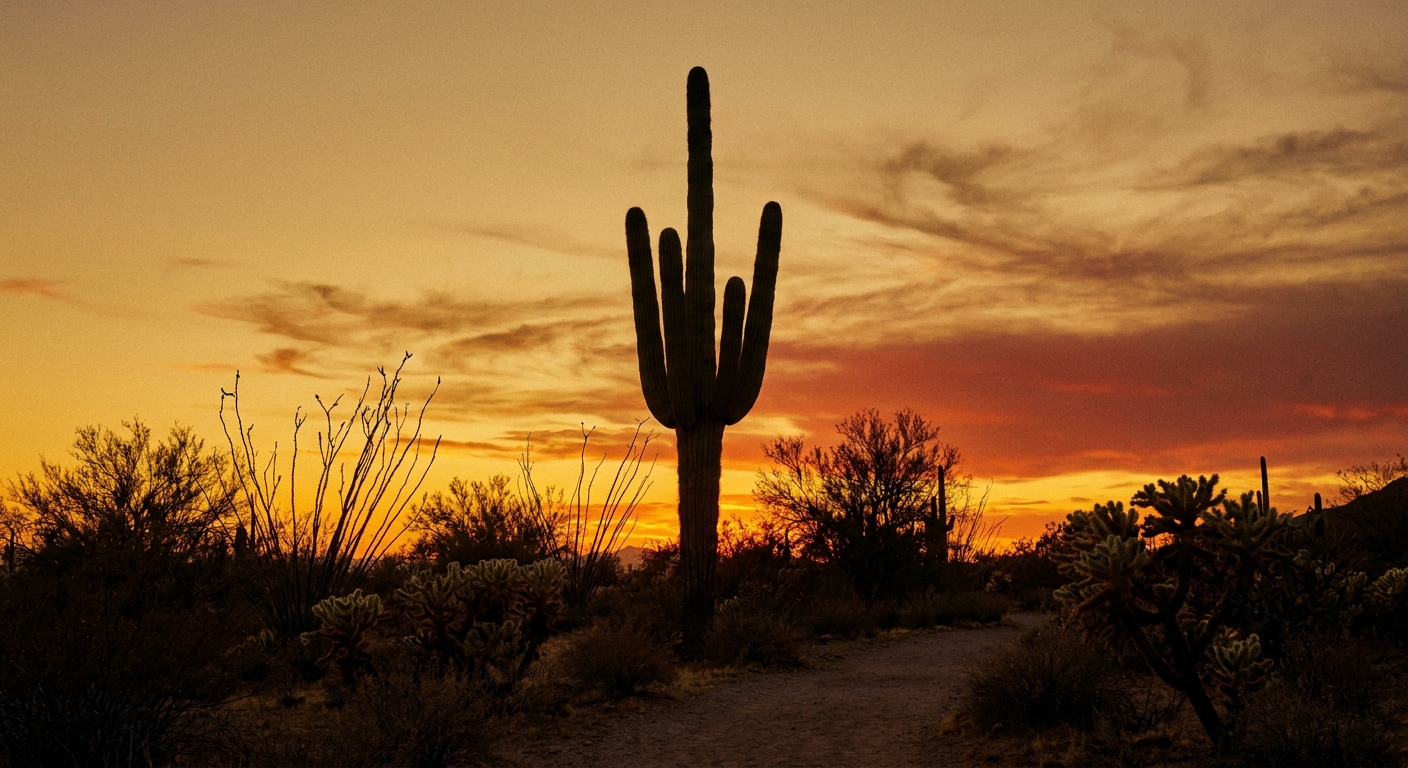
- 3:30 pm to sunset: Drive Bajada Loop Drive slowly with frequent pullouts. Aim to be at a viewpoint for the last light. The saguaros glow, shadows stretch, and the whole desert looks like it has depth.
How far you will go
- Easy day: 1 to 3 miles total walking plus lots of scenic pullouts.
- Moderate day: 3 to 7 miles total walking if you hike early and keep the afternoon to driving and viewpoints.
Option C: Both districts in one day
This is the best way to combine both without turning your day into a blur: hike in East at sunrise, take a long midday break in Tucson, then chase sunset in West. You get variety, and you avoid the worst heat outside.
Timed itinerary
- Sunrise to 9:30 am: Saguaro East. Short-to-moderate morning hike plus a quick visitor center stop. For a clean, easy win, start with Freeman Homestead or Mica View, then add a longer out-and-back like Loma Verde if temperatures allow.
- 9:30 to 11:00 am: Drive toward Tucson and transition time. Grab snacks, top off water, and do not underestimate “just getting across town.”
- 11:00 am to 3:30 pm: Long Tucson break: lunch, coffee, or indoor attractions. Treat this like your recovery block.
- 3:30 pm to sunset: Saguaro West. Bajada Loop Drive and viewpoints, then a short golden-hour walk if temperatures allow. If you want one last simple hike, do Valley View Overlook or Signal Hill close to last light.
How far you will go
- Walking: 2 to 7 miles total, split into two shorter outings.
- Driving: Expect a lot. This is not the day for “let’s just see where the road goes.”
Who should not do this: anyone visiting in extreme heat, anyone who hates driving, or anyone who would rather remember a few perfect moments than a long list of checkboxes.
Micro-plans
Easiest and most photogenic
- Choose Saguaro West.
- Do Valley View Overlook or Signal Hill in the morning, take a long midday break, then commit to Bajada Loop Drive at sunset.
More trail time, fewer crowds
- Choose Saguaro East.
- Start at sunrise, make Freeman Homestead or Mica View your warm-up, then put your longer hike in the morning and save Cactus Forest Loop Drive for later.
One day in Tucson, want a bit of both
- Do East at sunrise and West at sunset.
- Keep hikes short, drive Cactus Forest Loop Drive in East and Bajada Loop Drive in West, and protect your midday energy.
Essentials for a desert day
- Water: bring more than you think, plus electrolytes if it is hot.
- Sun protection: wide-brim hat, sunglasses, and sunscreen you will actually reapply.
- Footwear: trail shoes or sneakers with grip. Desert paths can be rocky.
- Food: salty snacks and something you can eat even when it is too warm to feel hungry.
- Navigation: offline maps or a downloaded route. Cell service can be inconsistent on some stretches.
And yes, I am going to say it: the best souvenir is a slow morning and an unhurried sunset. The saguaros have been here a long time. You do not need to rush them.