Salinas Pueblo Missions in One Day: Quarai, Abó, Gran Quivira

Maya Lin
Maya Lin is a travel journalist and outdoor enthusiast who believes the best trips combine rugged adventures with urban comforts. After spending six years backpacking across four continents, she founded Trail & Town Guide to help fellow travelers navigate both hidden mountain passes and bustling city neighborhoods with confidence.
New Mexico does ruins in a way that feels both cinematic and quietly personal. At Salinas Pueblo Missions National Monument, you can walk through three distinct mission sites in one day, each with its own mood: a shaded canyon edge at Quarai, wide-open desert geometry at Abó, and the windswept, almost-otherworldly loneliness of Gran Quivira.
This loop is one of my favorite kinds of travel days: lots of history, short walks, no reservation stress, and just enough driving to make the landscape shifts feel earned. Below is a realistic one-day plan with drive times, quick trail distances, exposure notes, and the kind of ruin etiquette that keeps these places protected for the next curious traveler.
One non-negotiable detail: the units have strict NPS operating hours, and the entrance gates close (often 4:00 pm or 5:00 pm depending on season). Check the official NPS hours for each unit the morning you go and build in a buffer so you don’t get turned away late or risk getting locked in.
Know before you go
What it is
Salinas Pueblo Missions National Monument is made up of three separate units spread across central New Mexico near the small town of Mountainair. Each unit preserves the remains of a 1600s Spanish mission tied to an Indigenous pueblo community, including Tiwa and Tompiro peoples. The setting is the point, but so is the tension: these were frontier settlements shaped by trade routes, drought, shifting alliances, and colonial pressure that was often coercive, not simply neighborly.
Hours and gate closures
This monument is easy to underestimate because it feels open and unhurried. Operationally, it isn’t. Gates close at posted hours (commonly 4:00 pm or 5:00 pm depending on season), and hours can change for holidays, staffing, or weather. Plan to arrive at your final unit at least 60 to 90 minutes before closing, and don’t cut it close.
Time commitment
You can visit all three units in one full day if you start early and keep the walks short and focused. Plan on 6 to 9 hours total depending on your start city, how long you linger, and whether you add a sit-down meal in Mountainair.
Facilities, fees, and expectations
- Fees: As of the most recent NPS listings, there is no entrance fee for Salinas Pueblo Missions, but always confirm current details on the official NPS site before you go.
- Bathrooms: Restrooms are often available, but access can be affected by hours and seasonal conditions. Don’t assume they’ll be open late in the day.
- Water: Don’t count on potable water at the units. Bring your own and top off in Mountainair.
- Cell service: Spotty to unreliable between sites.
- Roads: Paved access roads to the units. Wind and dust are common.
Heat, wind, and exposure
This is high desert travel. Even in cooler months, the sun can feel intense. Wind isn’t a minor detail here, especially at Gran Quivira where the plateau exposure is the whole experience.
- Carry more water than you think: A good baseline is 2 liters per person for the day, more in summer.
- Sun protection: Hat with a brim, sunscreen, and sunglasses.
- Wind strategy: A light layer helps with chill and blowing grit. Protect camera gear from dust.
- Storms: In summer, afternoon thunderstorms can build fast. Gran Quivira is exposed, so if you hear thunder, take it seriously and head back toward your car.
- Timing: In hot months, do your most exposed wandering earlier, then take a mid-day break in Mountainair.
Accessibility notes
Expect short walks on improved paths, but surfaces can vary from paved to packed dirt and gravel, with some uneven areas near ruins. If you’re visiting with a wheelchair, stroller, or limited mobility, it’s worth checking the NPS unit pages for current accessibility details and any temporary closures.
The one-day loop
There are a few ways to order the sites. The most natural loop from the Mountainair area is:
- Quarai (cooler, often calmer in the morning)
- Abó (quick, open, great midday stop)
- Gran Quivira (save for later when you have time to linger and absorb the scale)
Drive times vary based on your exact start point, whether you’re backtracking through Mountainair, and road conditions. The estimates below are for normal conditions and don’t include stops.
Suggested schedule (with a gate buffer)
- 8:30 am Arrive Quarai
- 10:00 am Depart for Abó
- 10:30 am Arrive Abó
- 11:30 am Depart for Mountainair lunch and coffee
- 12:45 pm Depart for Gran Quivira
- 1:30 pm Arrive Gran Quivira (earlier is better if gates close at 4:00 pm)
- 3:30 pm Start wrapping up and head out (adjust based on posted closing time)
Important: If the posted closing time is 4:00 pm, aim to be leaving Gran Quivira by 3:00 to 3:30 pm. If it’s a 5:00 pm day, you’ve got more breathing room, but I still wouldn’t plan to exit at the exact closing hour.
Approximate drive times between units
- Mountainair to Quarai: about 15 minutes
- Quarai to Abó: about 25 to 35 minutes
- Abó to Mountainair: about 10 to 15 minutes
- Mountainair to Gran Quivira: about 35 to 45 minutes
Walking distances: All three sites are mostly short, flat strolling on improved paths. Expect 0.5 to 1.5 miles total per site depending on how much you wander and whether you explore every side path.
Stop 1: Quarai
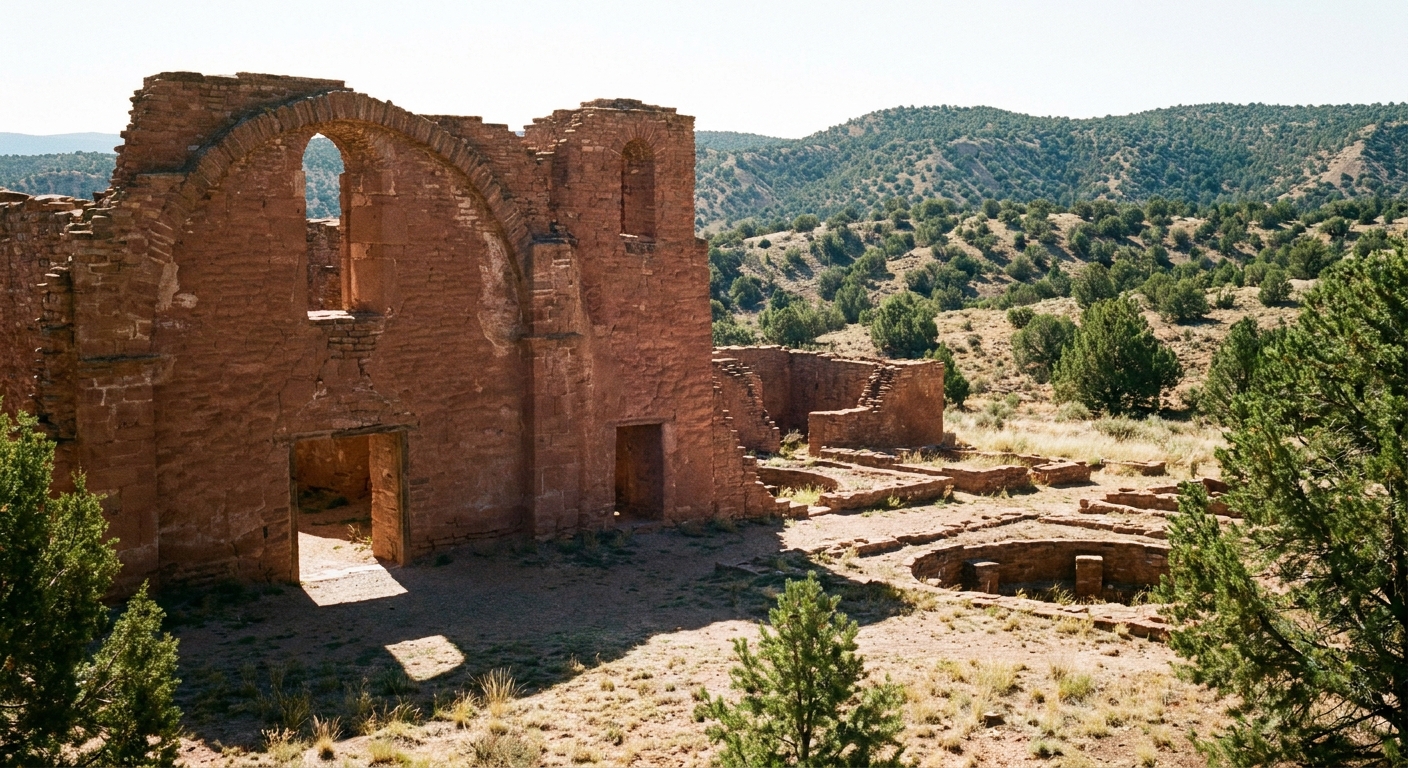
Quarai feels like the gentlest introduction: big stone walls tucked near the foothills, with a sense of shelter that’s rare in this region. Morning light here is gorgeous, and the calmer air can make it feel almost cool even when the forecast says otherwise.

How long
60 to 90 minutes is perfect for a full circuit with time to read signage and take photos.
Mini-walk
- Start at the parking and interpretive area and follow the main path into the mission complex.
- Circle the outer edges first to understand the footprint.
- Then move slowly through the interior space and look for construction details in the stonework.
Exposure notes
There’s some wind protection from terrain and vegetation, but it’s still bright and sun-exposed. This is a good place to do your first water check. Sip early, not once you feel overheated.
Stop 2: Abó
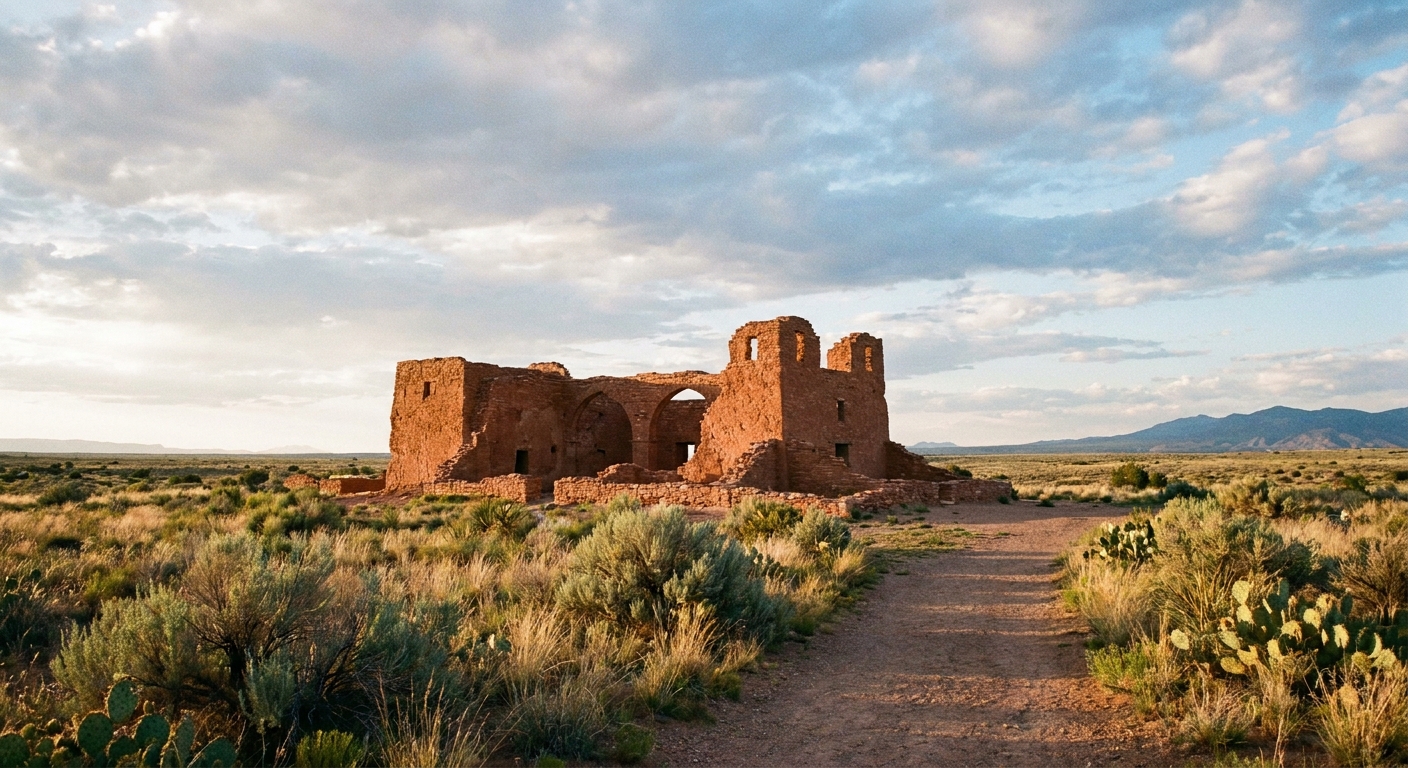
Abó is the quick-hit stop that still lands emotionally. The mission ruins rise from an open landscape with fewer visual distractions, which makes the geometry of the remaining walls feel bold and almost graphic. If you’re balancing this loop with a longer drive from Albuquerque or Santa Fe, Abó is your easiest place to keep the schedule on track without feeling rushed.
How long
30 to 60 minutes. It’s compact, clear, and very walkable.
Mini-walk
- Do a slow perimeter loop first for the best angles on the facade.
- Step inside the main ruin footprint and pause. Let the quiet do its thing.
- Look outward from inside the walls. The landscape view is part of the story.
Exposure notes
This stop can feel hot fast. It’s open and reflective, especially under a midday sun. Keep your hat on and use sunscreen reapplication as a ritual between sites.
Lunch in Mountainair
Mountainair is your practical gateway. It’s also where you can make the day feel human again with a real meal, a cold drink, and a bathroom you don’t have to hunt for.
What to do in town
- Refill water and grab extra snacks for Gran Quivira.
- Find coffee if you’re like me and measure road trips in espresso stops.
- Check the wind before heading to the most exposed unit. If it’s howling in town, it’ll be stronger at Gran Quivira.
- Confirm hours for your afternoon unit so you’re not doing mental math in a parking lot later.
Food options can be limited depending on the day and time, so it’s smart to carry a backup lunch and a few real snacks, not just emergency granola bars.
If you started the day in Albuquerque or Santa Fe, this is also a good spot to decide whether you’ve got the energy for the full loop. Gran Quivira is the longest out-and-back commitment from town.
Stop 3: Gran Quivira
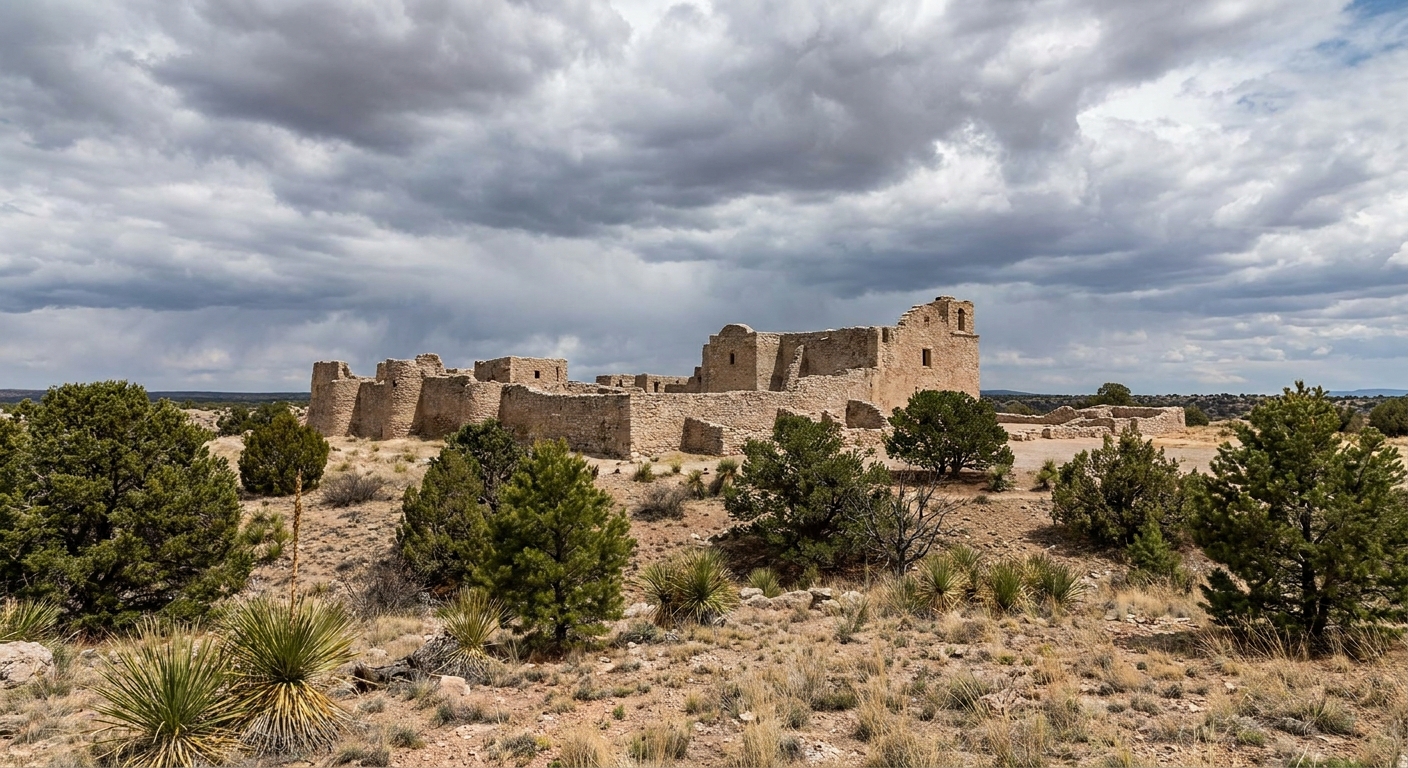
Gran Quivira is the one that sticks with you. The ruins sit on a broad, open plateau where the wind has nothing to negotiate with. The remaining mission walls feel stark and monumental, and the surrounding landscape makes it easy to imagine how isolated this place could have felt during drought years or harsh winters.
How long
90 minutes to 2 hours. Give this stop time. It’s bigger, and the experience is about walking, pausing, then walking again.
Mini-walk
- Start with the mission ruins and do a full loop around the exterior.
- Follow the path that connects the major features of the site and take your time reading signage.
- Finish with a slow, quiet lap where you put the phone away and just listen to the wind.
Exposure notes
This is the most exposed unit for both sun and wind. Even on mild days, bring a layer. If you wear contacts, consider sunglasses that block wind well, or switch to glasses for the afternoon. And keep an eye on the sky in monsoon season. There’s not much shelter out here.
Ruin etiquette
These sites are both archaeological and sacred. Visiting with care isn’t about being precious. It’s about not accelerating damage that’s already inevitable with time and weather.
- Stay on established paths whenever possible. Shortcutting erodes fragile soils and can disturb artifacts.
- Don’t climb on walls or lean for the perfect photo. Masonry shifts. Small pressure adds up.
- Leave everything where it is, including tiny pottery sherds. What looks like a pebble can be part of the story.
- Keep voices low if other visitors are present. The quiet is part of the experience for everyone.
- Respect closures and fencing. They exist for preservation and safety, not inconvenience.
If you want a great photo, step back, not up. The best compositions here come from letting the landscape frame the ruins.
Getting here
From Albuquerque
Albuquerque is the simplest launch point for a full loop day trip. Plan for roughly 1 hour 15 minutes to 1 hour 45 minutes to Mountainair depending on where you’re starting in the city, traffic, and your route, then add your site-to-site driving. It’s a long but very doable day if you start early and respect the gate times.
From Santa Fe
Santa Fe adds extra driving. It’s still doable if you start early and keep stops efficient, but the day becomes more road-forward. If you’re coming from Santa Fe, consider making it a two-day outing with an overnight in or near Mountainair if you want a slower pace.
From Mountainair
If you stay in Mountainair, this loop becomes wonderfully unhurried. You can hit Quarai early, linger at Gran Quivira late (within posted hours), and still be back in time for dinner without white-knuckling the drive home.
What to pack
- Water: 2 to 3 liters per person in warm weather
- Snacks: salty and shelf-stable, plus one treat you actually want to eat
- Sun kit: hat, sunglasses, sunscreen
- Wind layer: light jacket or long sleeve shirt
- Footwear: sneakers or light hikers with good traction on gravel
- Navigation: pin each unit in your map app and download offline maps before you lose service
- Car basics: full gas tank before heading to Gran Quivira, phone charger
Make it intentional
The temptation with multi-unit monuments is to speed-run them like a checklist. Salinas rewards the opposite. Do fewer photos. Take more pauses. Read the signage slowly. Notice how each place sits differently in the land.
If you only remember one planning tip, make it this: start early, drink water before you feel thirsty, double-check the posted closing times, and save extra time for Gran Quivira. It’s the kind of landscape that makes you want to stay five minutes longer, and then five more, but the gates won’t negotiate.