Sandia Peak Tramway Half-Day Plan

Maya Lin
Maya Lin is a travel journalist and outdoor enthusiast who believes the best trips combine rugged adventures with urban comforts. After spending six years backpacking across four continents, she founded Trail & Town Guide to help fellow travelers navigate both hidden mountain passes and bustling city neighborhoods with confidence.
Albuquerque is one of those cities where the skyline comes with a mountain attached. The Sandias sit there like a backdrop you can almost touch, and then you realize you actually can, thanks to the Sandia Peak Tramway. In roughly 15 to 20 minutes, you trade desert heat and city murals for pine-scented air and a long horizon that makes you feel pleasantly small.
This is a half-day plan for first-timers who want the tram, the crest, and a short, high-reward walk without turning it into a full-blown hiking day. I will also help you decide between midday and sunset, and explain how this experience differs from Petroglyph National Monument and the foothill trails above town.
Know before you go
Getting there and parking
- Drive time: About 25 to 35 minutes from Downtown or Old Town in normal traffic.
- Parking: On-site lots at the base station, but they can fill during peak times. Build extra buffer on weekends and near sunset.
How long it takes
- Minimum: 2.5 hours if you already have tickets and you keep it to viewpoints and one short walk.
- Sweet spot: 3.5 to 4.5 hours to ride up, wander the crest, do an easy out-and-back, snack or eat, and ride down without rushing.
- With sunset crowds: Plan closer to 5 hours, especially on weekends.
Altitude and temperature
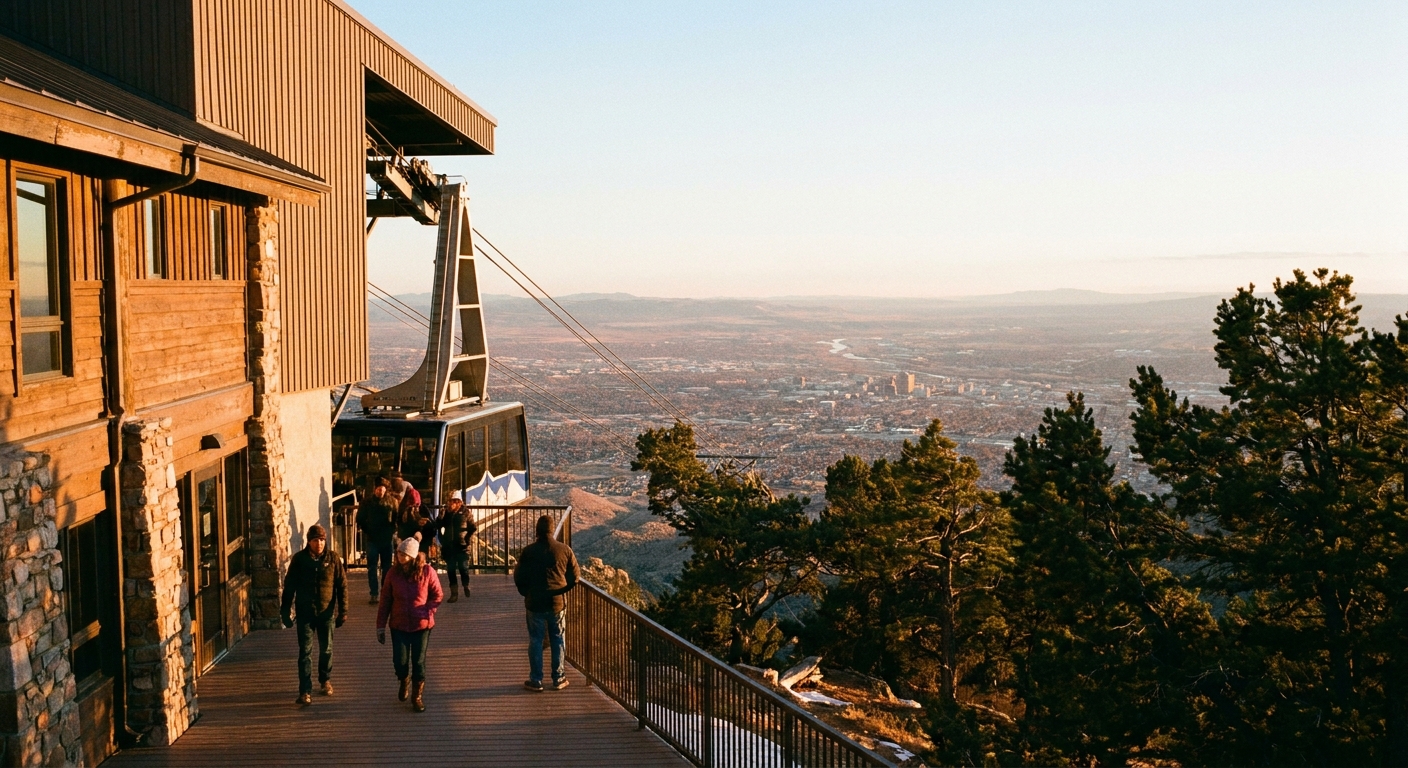
The crest is high, and it shows. Sandia Crest is about 10,378 feet, and the upper station area sits just over 10,000 feet. That is enough altitude to surprise people who feel totally fine at 5,000 feet in Albuquerque. Take it slow for the first 10 minutes, hydrate, and pack a layer even if the city is hot. It is often 15 to 30°F cooler up top, and wind can make it feel colder fast.
If altitude hits you: shorten your walk, skip alcohol, sip water, and prioritize getting back down. If symptoms worsen or you feel unsteady, head to the upper station and descend.
Wind cancellations happen
The tram is famous for views and also for occasionally not running due to wind. It is just mountain weather. Build a flexible plan:
- Check status day-of: look for the tram’s official status update before you drive over.
- If the tram is canceled: pivot to the Sandia Foothills trails, the Bosque, museums, or Petroglyph National Monument.
- If you are set on riding: schedule the tram earlier in your trip, not on your last available day.
Tickets and timing
Sandia Peak Tramway tickets can sell out, especially for sunset. The most stress-free move is to buy in advance online if you can. Online tickets are typically sold as timed-entry slots, which is another reason to plan ahead. If you are buying day-of, arrive early and be prepared to adjust your ideal time.
- Sunset rides: highest demand, best light, most waiting.
- Midday rides: easiest logistics, often great for long-distance clarity, but harsher light for photos.
- Weekday mornings: often the calmest experience.
Your half-day plan
Stop 1: Base station start
Give yourself 30 to 45 minutes at the base for parking, ticket scanning, bathrooms, and the small but real possibility of a line. If you are sensitive to motion, grab a spot where you can look out, not down, and keep your gaze on the horizon once the car starts moving.
Stop 2: The ride up
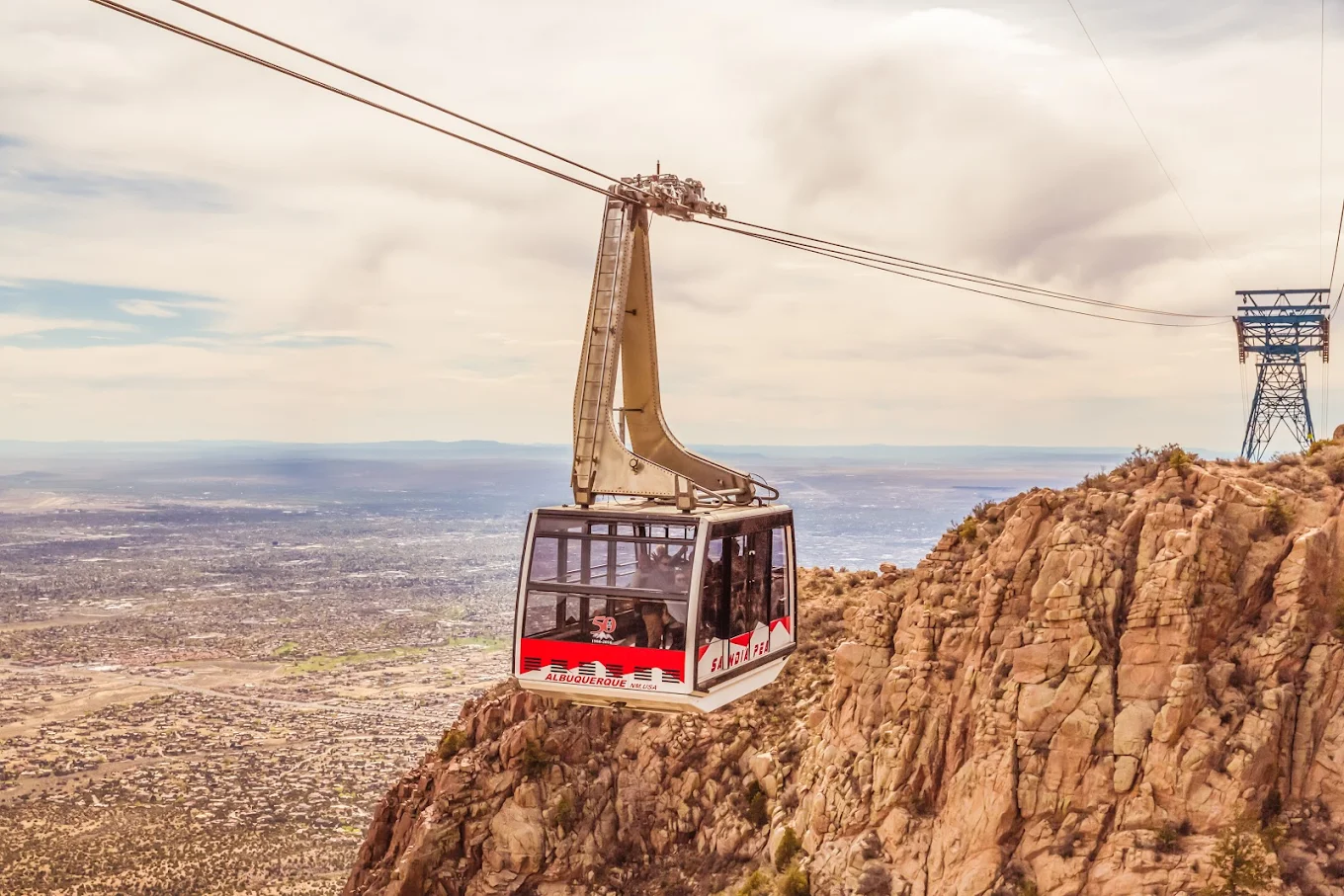
The ride is the show. You climb over a steep, rocky face and gain a lot of elevation quickly. In clear weather, you will see Albuquerque laid out like a map, the Rio Grande corridor as a green ribbon, and wide-open desert stretching toward the horizon. The perspective shift is the magic: the city shrinks, the mountains feel bigger, and the sky feels closer.
On a hazy day, the views can be softer and moodier. On a crystal-clear day, it is the kind of visibility that makes you start naming landmarks out loud.
Stop 3: Upper station views
Once you step out at the top, do not sprint straight for a trail. Take a few minutes to acclimate and let your eyes adjust. The upper station is near the crest, with a forested feel that surprises a lot of first-timers who expect bare rock. Depending on season and recent weather, you might be in bright sun, cool shade, or a quick-moving cloud.
- What you see: Albuquerque and the Rio Grande Valley spread out below, plus a huge sweep of New Mexico landscape. The exact wow depends on light and weather.
- What you feel: cooler temps, thinner air, and often wind.
Stop 4: Easy walk to Kiwanis Cabin
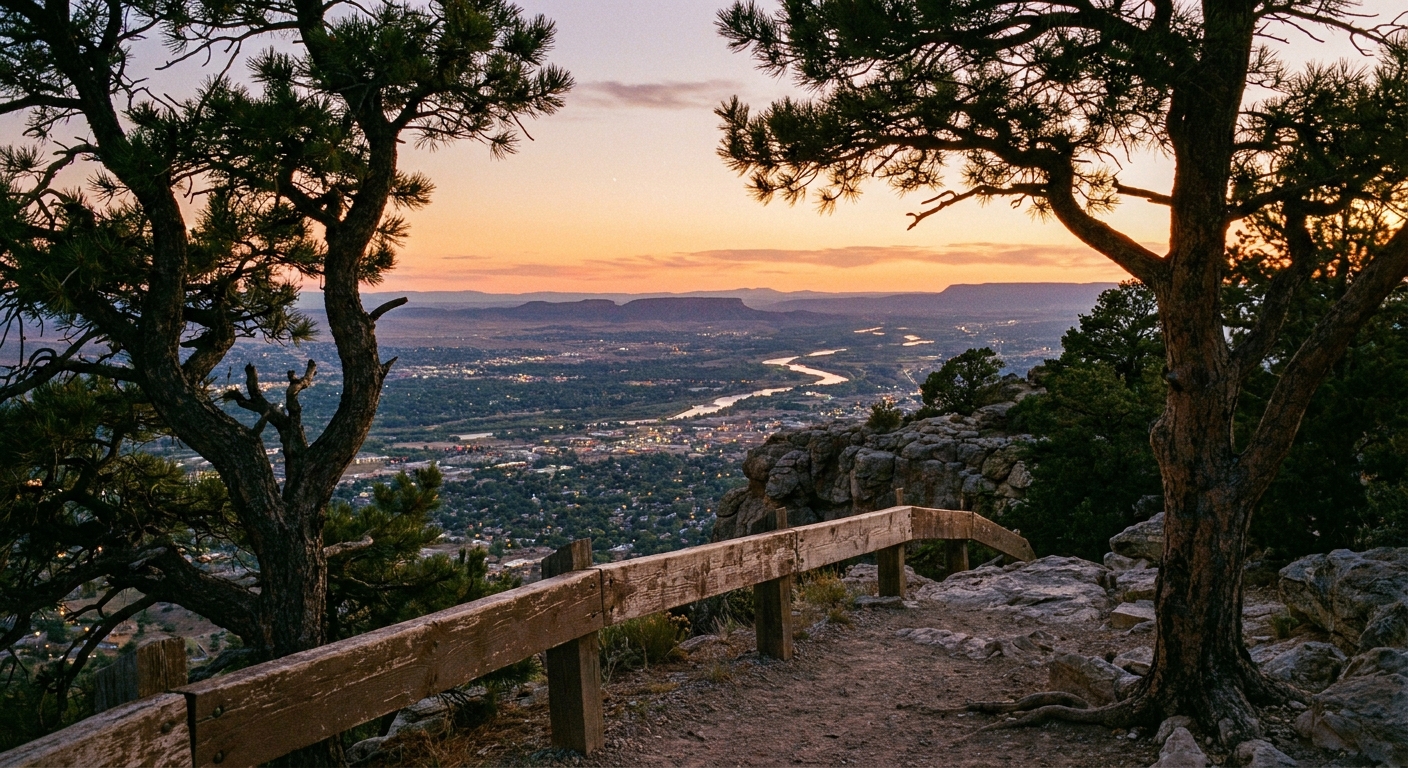
If you want a short walk that still feels like you earned something, give yourself a concrete goal: the historic stone Kiwanis Cabin. It is a great “turnaround point” for a half-day visit, and the walk gives you that classic crest mix of forest, breeze, and sudden views.
- Route style: easy out-and-back on signed paths in the crest area.
- Distance: roughly 1 to 3 miles total, depending on where you start and how far you continue. At altitude, even mellow can feel like a workout, so pace accordingly.
Trail note: Conditions change quickly up here. In shoulder seasons and winter, expect icy patches. In summer, expect afternoon thunderstorms. If lightning is in the area, get off exposed viewpoints and head back toward the upper station.
Stop 5: TEN 3 and a warm break
One of my favorite things about the tram is that it can be both rugged and comfortable in the same afternoon. At the top, you can eat at TEN 3. The fine-dining room is the splurge move and reservations are strongly recommended. The casual bar side is typically walk-in, which is perfect for a hot drink, dessert, or a “we made it” toast.
Hours can be limited or seasonal, so it is smart to check what is currently open before you commit your whole plan to a specific meal. Bring water and a small snack even if you plan to buy food. At altitude, you will feel better with steady hydration.
Stop 6: Ride down with buffer
Plan to be back at the loading area with a little extra time. Sunset crowds can create bottlenecks, and you do not want your last memory to be sprinting through pine needles while muttering “please do not leave without me.”
Midday vs sunset
Midday
- Best for: easier tickets, fewer people, quick half-day logistics.
- Light: brighter and harsher for photos, but often great for long-distance clarity.
- Heat: the top is cooler, but the city and base station can be hot in summer.
Sunset
- Best for: dramatic light, romantic views, that “I cannot believe this is a city day” feeling.
- Light: warm tones on the mountains and valley, with fast-changing skies.
- Crowds: highest demand and longest waits.
If you only have one shot and you love photography, go for sunset and plan extra time. If you are optimizing for smooth logistics and comfort, midday is your friend.
What to pack
- Layering: a light jacket or fleece, even in summer.
- Wind insurance: a shell if the forecast is breezy.
- Water: at least one bottle per person.
- Sun protection: sunglasses and sunscreen. UV hits harder at altitude.
- Footwear: sneakers are fine for short walks, but shoes with grip help on rocky or dusty sections.
- Optional: binoculars for scanning the valley and distant ridgelines.
Accessibility notes
The tram ride and the upper station facilities are generally friendly for a wide range of visitors, but the short walks can quickly turn uneven. If you are using a wheelchair or stroller, stick to the most developed viewpoint areas near the upper station and ask staff what is currently easiest. Expect crowds inside tram cars during peak times, especially around sunset.
Other ways to reach the crest
One quick orientation note: the upper station is near the crest, but there is also a separate way to access the area by car using the Sandia Crest Scenic Byway when it is open. Driving gets you to high elevation with different views and zero tram lines, but it does not have the same “floating over the canyon” drama.
How this compares
Tram and crest
This is a high-altitude viewpoint experience with a quick, dramatic change in climate and scenery. It is about scale: the city below, the massive horizon, the feeling of being on top of the world without a long hike to earn it.
Petroglyph National Monument
Petroglyph is a cultural landscape on the edge of the city, where short hikes lead to volcanic rock and ancient carvings. The views are lovely, but the main draw is the stories etched into stone and the desert terrain. It is warmer, lower elevation, and more about history and interpretation than alpine atmosphere.
Sandia foothills trails
The foothills are your choose-your-own-adventure hiking zone. You get quick climbs, big views with legwork, and longer routes that reveal the terrain change step by step. The tram is for when you want the crest experience without committing to a full hike up.
Weather and safety
- Check the forecast twice: once for Albuquerque and once for the crest. They can be wildly different.
- Thunderstorms: summer afternoons can bring lightning. Start earlier if storms are predicted.
- Winter conditions: the crest can be snow-and-ice winter even when the city feels mild. Traction and warm layers are not optional on cold days.
- Altitude pacing: headaches and dizziness are your cue to slow down, hydrate, keep your walk short, and descend if you are not improving.
Sample itineraries
Option A: Midday (3.5 hours)
- Arrive at base station, buffer time for parking and lines (30 to 45 minutes)
- Ride up and spend 20 minutes at viewpoints
- Easy out-and-back toward Kiwanis Cabin (45 to 75 minutes)
- Snack or coffee break (20 to 30 minutes)
- Ride down
Option B: Sunset (4.5 to 5 hours)
- Arrive early and build in extra line time (45 to 60 minutes)
- Ride up and do your walk before the light peaks (60 to 90 minutes)
- Early dinner or bar bite at TEN 3 (30 to 60 minutes)
- Sunset viewpoints, then return to loading area with a buffer
- Ride down
Plan B if canceled
If wind shuts the tram down, you can still have a very Albuquerque half-day:
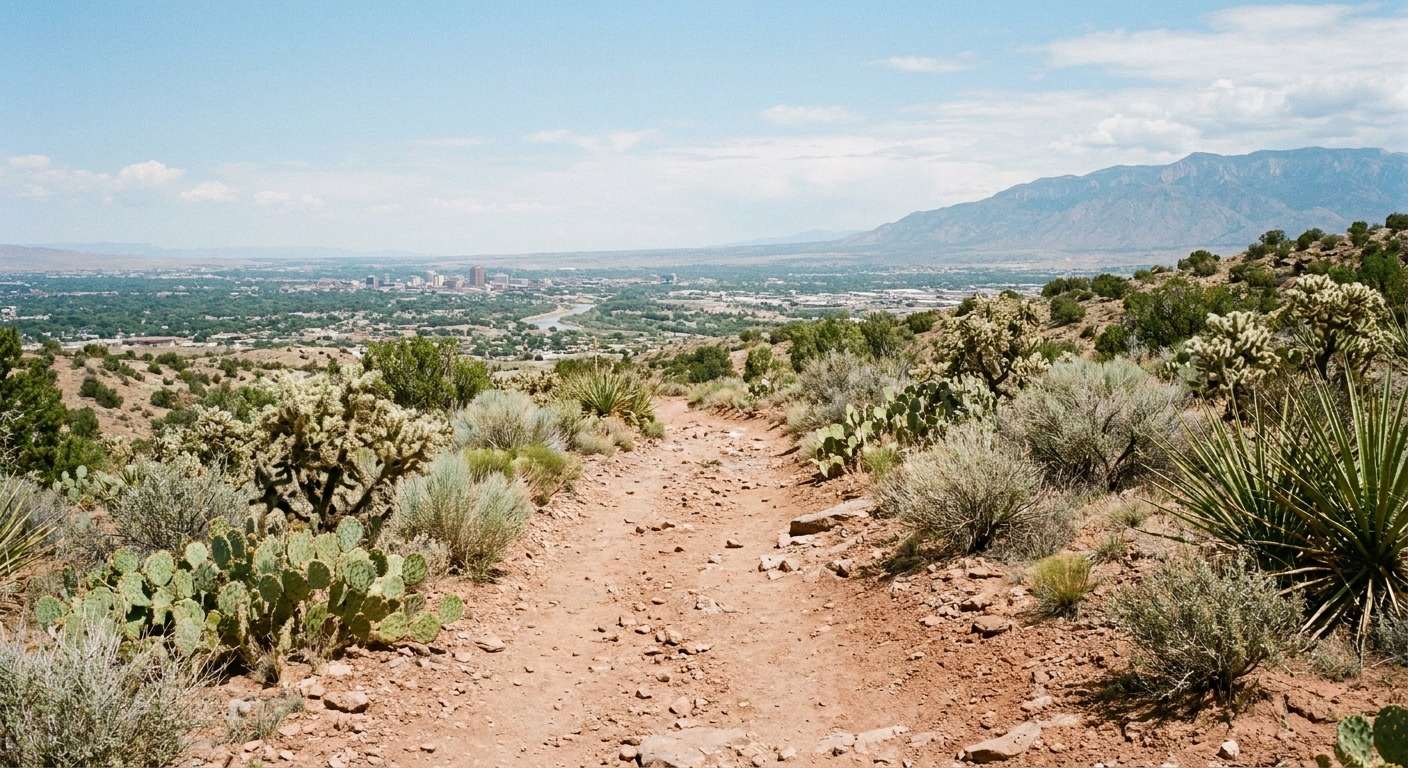
- Foothills hike: hit a trail in the Sandia Foothills for city views with desert terrain.
- Petroglyph National Monument: go for a short hike and sunset over volcanic rock.
- Old Town and coffee: lean into culture, galleries, and a slow afternoon.
Quick recap
For a first visit, the Sandia Peak Tramway is the easiest way to experience Albuquerque’s city-plus-mountain personality in one outing. Buy timed tickets ahead when possible, expect wind to be the wildcard, bring layers, and give yourself enough time for a short walk toward Kiwanis Cabin. If you want drama and glow, go at sunset. If you want smooth and simple, go midday. Either way, you will leave with that rare souvenir: a memory that feels bigger than your camera frame.