Skyline Lake at Stevens Pass

Maya Lin
Maya Lin is a travel journalist and outdoor enthusiast who believes the best trips combine rugged adventures with urban comforts. After spending six years backpacking across four continents, she founded Trail & Town Guide to help fellow travelers navigate both hidden mountain passes and bustling city neighborhoods with confidence.
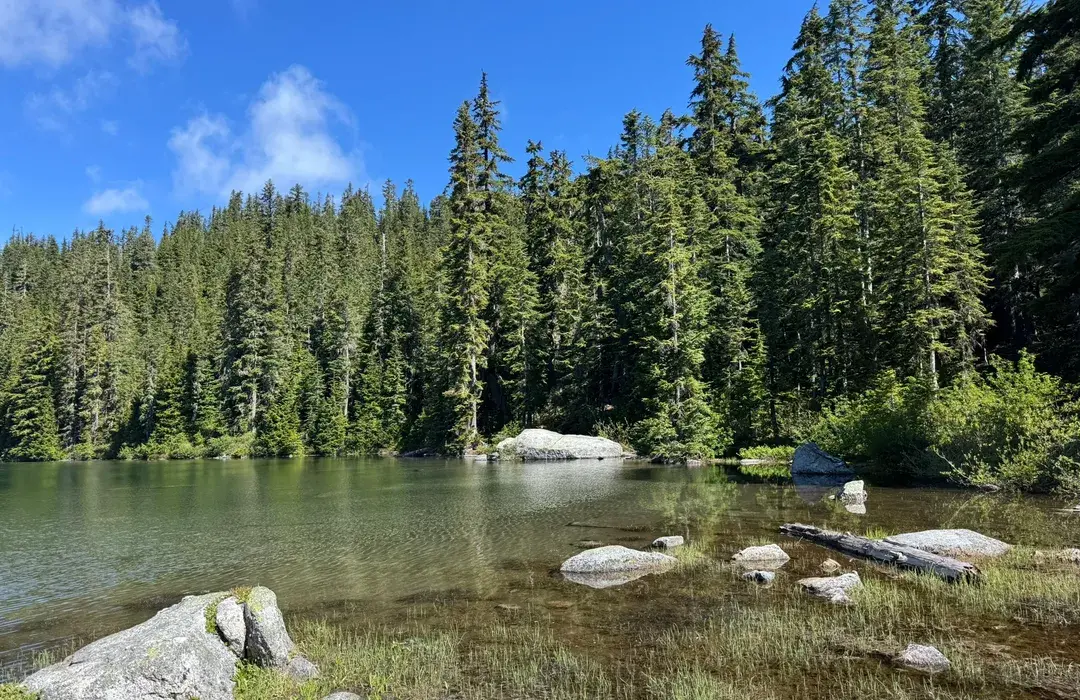
Some hikes feel like a bargain. Skyline Lake is one of them. You start in the Stevens Pass ski area parking lot, grunt straight up through forest and then into rockier slopes, and suddenly you are staring at a blue bowl of water tucked under steep ridges. It is short. It is steep. It can hold snow well into summer. And if you time it right, you can be back at the car fast enough to still earn a real coffee down the highway.
Skyline Lake hike basics
- Trailhead: Stevens Pass ski-area parking lot (Skyline Lake Trail)
- Distance: about 3 miles round trip (some maps show a bit more if you wander around the basin)
- Elevation gain: about 1,100 to 1,300 feet (short and punchy)
- Time: 2 to 4 hours depending on snow, fitness, and how long you linger at the lake
- Difficulty: Moderate to strenuous because of the grade
- Best season: Mid summer through early fall for mostly snow-free travel. Early summer can mean snowfields near the top.
- Dogs: Often allowed on leash, but confirm current rules for the lot and trail before you go
This is a great “between plans” hike because the logistics are simple. You park at the pass, walk uphill, and your reward shows up quickly. The tradeoff is that you earn it with your calves.
Getting there and where to park
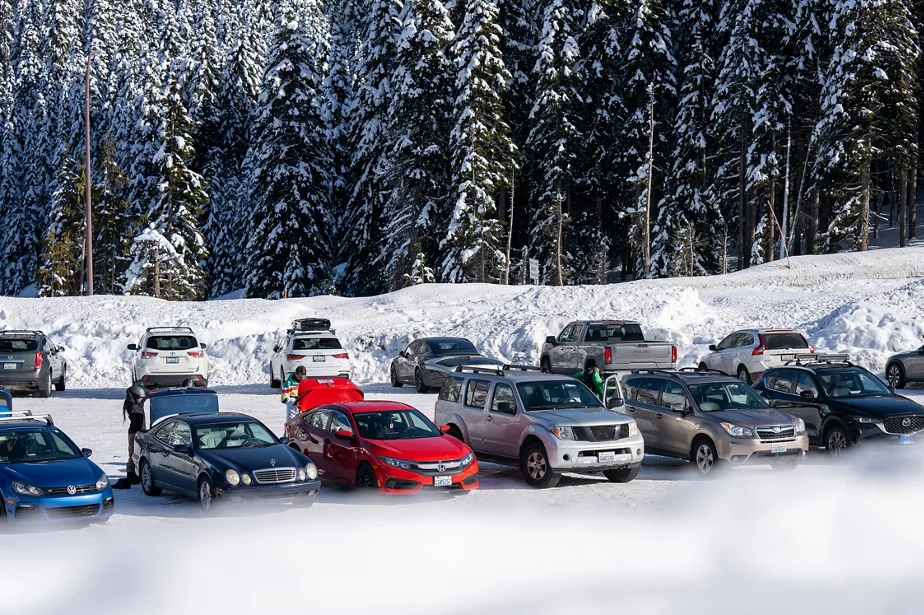
You start from the Stevens Pass ski-area lot right off US Highway 2. This is not one of those trailheads that requires a long forest road approach, which is part of why it gets busy on warm weekends.
Finding the start
Look for Skyline Lake Trail signage from the main ski-area parking. Routefinding is usually straightforward, but the pass has a lot of paths, service roads, and ski infrastructure. If you use a map app, download the area ahead of time and confirm you are on the Skyline Lake route before you commit to the steep part.
You may also notice you are close to the Pacific Crest Trail corridor around Stevens Pass. That can make the area feel like a trail buffet, which is great, as long as you stay oriented on the way back to the lot.
Parking pass you need
Parking at Stevens Pass changes over time, and the ski-area lot can be managed differently than nearby forest trailheads. Before you go, check current requirements for the Stevens Pass ski-area lot, including whether payment, reservation, or a displayed permit is required and how to do it correctly. If you arrive without the right setup, you are essentially donating money to the ticketing gods.
Maya tip: Cell service can be unreliable at mountain passes. If you might need to pay by phone, pull up the instructions before you drive up, or be ready with a backup plan.
The trail, step by step
From the lot into the woods
The trail gets to work fast. Expect a steady climb right away through forest, with the kind of grade that makes you do mental math about how many switchbacks count as a “break.” The footing is usually straightforward dirt and roots, but it can get slick with rain or morning condensation.
Rockier terrain and open views
As you gain elevation, the trail becomes more alpine in feel. Depending on the year, you will see more rock underfoot and more open sightlines back toward the highway corridor and nearby peaks.
Final approach to the lake
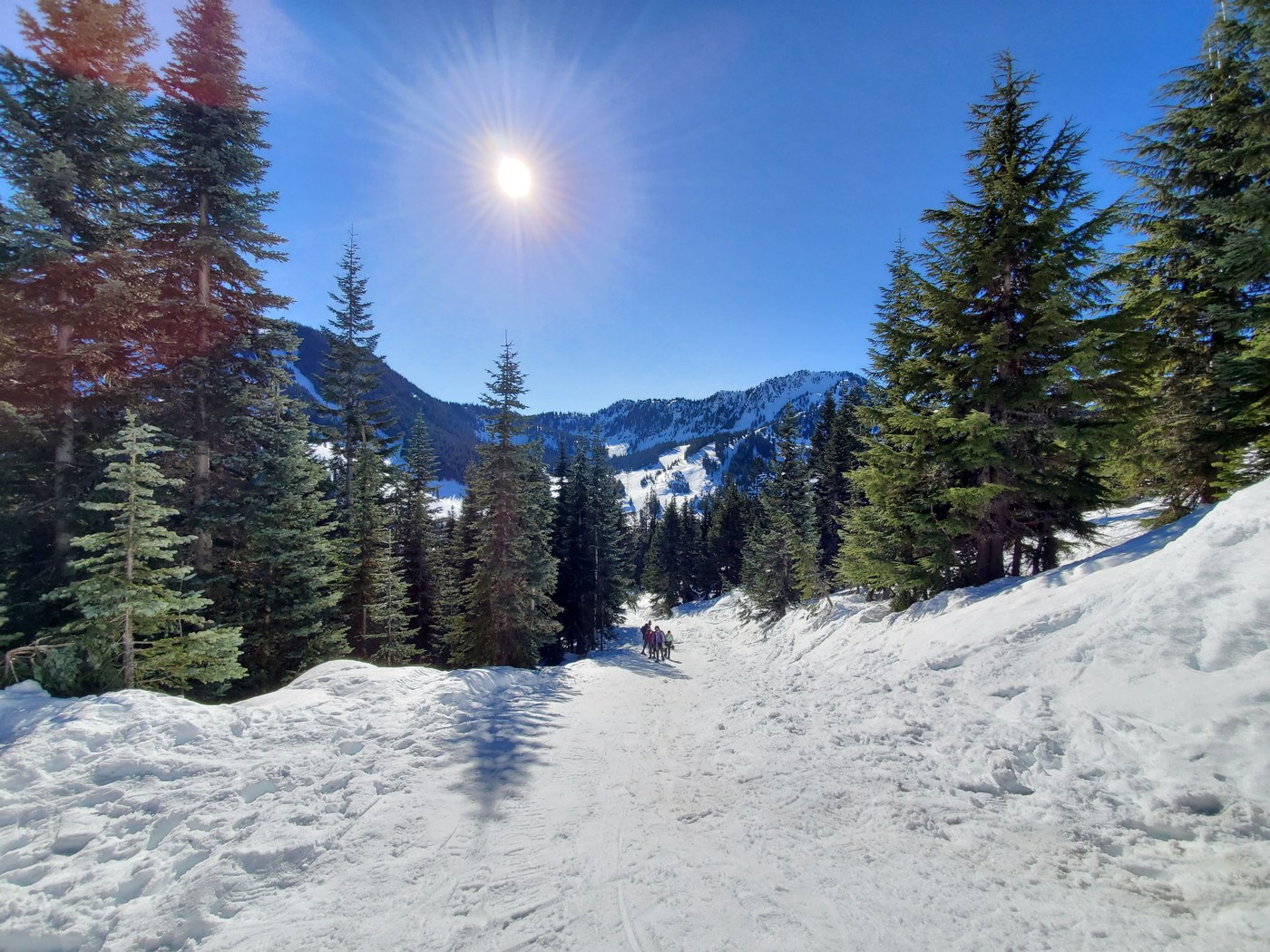
The last stretch is where summer snowfields are most likely to linger. In a bigger snow year, patches can stick around into July, and shaded sections can stay firm earlier in the day.
Summer snowfields: what to expect
Skyline Lake is famous for being accessible and for holding snow. That combination means you should treat early season conditions seriously even though the hike is short.
When snow is most likely
- Early summer: snowfields often linger near the top and around the basin
- Morning: snow is typically firmer and slicker
- Afternoon: snow softens, which can improve traction but can also increase postholing
A clear turnaround if snow is too firm
If you reach a snowfield on the upper trail and it is hard, icy, or you cannot kick secure steps, turn around there. Specifically, do not cross firm snow without reliable traction and the skill to use it. The slope angle and runout matter. If a slip would send you sliding into rocks, it is not a “maybe.” It is a no.
My personal rule on Skyline Lake: if I cannot walk the first few steps of the snowfield with confident, non-slipping footing while keeping three solid points of contact (feet and poles), I treat that spot as my turnaround for the day.
What helps on variable snow
- Traction devices appropriate for firm snow (microspikes can help on packed conditions)
- Trekking poles for balance
- Time your start for the conditions you expect, and accept that conditions can change fast
- Comfort making conservative decisions even if you can see the lake “right there”
One nuance: waiting for softer snow can make footing feel less slippery, but it can also turn the upper trail into a postholing slog. If you are punching through to your shins and burning energy fast, that is also a solid reason to turn around.
What it feels like at the lake
When Skyline Lake is melted out, the shoreline is a mix of rock and small gravelly spots, and the basin feels tucked in and surprisingly quiet for being so close to the highway. On hot days, it is a classic place to drop your pack, soak your feet, and watch clouds snag on ridgelines.
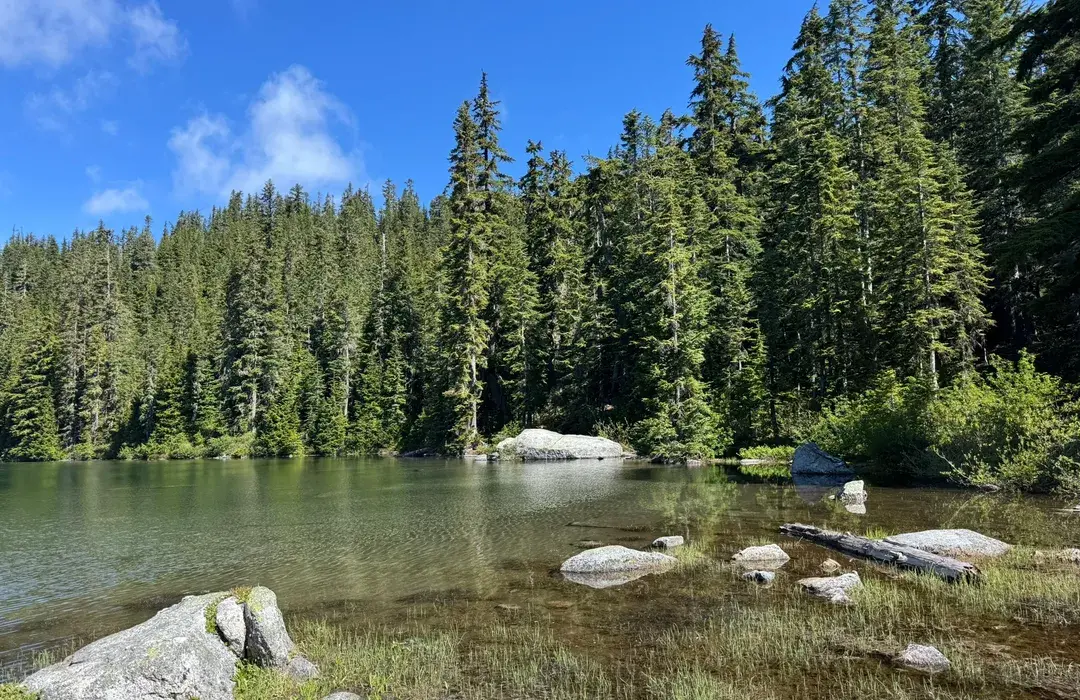
Please keep it that way. Stick to durable surfaces around the shore, pack out every crumb, and be cautious with fragile alpine vegetation. A short hike gets loved hard.
Trail notes and small realities
- Facilities: The ski area sometimes has restrooms available seasonally, but do not assume they will be open. Have a backup plan.
- Water: There is no reliable treated water on the hike. People do filter lake water, but use your judgment and bring a filter if you plan to drink from natural sources.
- Mosquitoes: Around melt-out, they can be intense. If you are sensitive, plan for it.
- Wildlife: Expect the usual alpine opportunists, including bold rodents. Keep snacks secured and do not feed anything, even accidentally.
- Accessibility: This is steep, often rocky, and sometimes snowy. It is not stroller-friendly and it is not a casual walk in regular sneakers if conditions are wet or early season.
What to bring (carry-on-only mindset)
By “carry-on-only,” I mean light but not clueless. You can pack small and still be prepared.
- Footwear: grippy trail shoes or light boots. If you expect snow, consider footwear that pairs well with traction.
- Layers: even in summer, a light insulating layer and shell are smart at the pass.
- Water and snacks: the climb is short but intense.
- Navigation: offline map downloaded ahead of time.
- Sun protection: snowfields can amplify glare.
- Traction and poles: in early season or after fresh storms.
This is not a huge-gear day, but it is also not a flip-flops stroll. Treat it like a real mountain outing.
Timing and strategy
- Go early to beat parking stress and afternoon heat on the climb.
- Pick a weekday if you want the lake to feel like a quiet alpine escape.
- After rain, expect slick footing and foggy views. Still beautiful, just moodier.
- In shoulder season, be prepared for sudden weather shifts at the pass.
Quick FAQ
Is Skyline Lake a good hike for beginners?
It can be, if you are comfortable with a steep climb and you choose a mostly snow-free day. If there are firm snowfields near the top, it becomes a different hike entirely.
Can I do it without traction in early summer?
Sometimes yes, sometimes no. Conditions change week to week. If you encounter a firm snowfield and you did not bring traction, use the snowfield as your turnaround point.
Do I need a parking pass at Stevens Pass in summer?
Maybe. Requirements can change by season and operator, so confirm the current rule for the Stevens Pass ski-area lot before you drive up.
My favorite way to do Skyline Lake
I like this hike as a “half-day reset.” I pack light, start early enough to avoid the parking scramble, and treat the lake as a slow moment rather than a summit checklist. If the upper snow is firm, I turn around without negotiating with myself, then redirect that energy into a long coffee stop and a second, lower-elevation walk later in the day. Skyline Lake will still be there next weekend, and the mountain does not care about my plans.