Sleeping Bear Dunes Without the Crowds

Maya Lin
Maya Lin is a travel journalist and outdoor enthusiast who believes the best trips combine rugged adventures with urban comforts. After spending six years backpacking across four continents, she founded Trail & Town Guide to help fellow travelers navigate both hidden mountain passes and bustling city neighborhoods with confidence.
Sleeping Bear Dunes National Lakeshore is one of those places that makes you feel like you accidentally wandered into a postcard. Blue-green Lake Michigan, soft blond dunes, and forests that smell like sun-warmed pine needles. It is also one of those places where, in midsummer, you can spend more time circling parking lots than hiking.
This plan is for the calmer weeks when the lake is still doing its magic but the crowds have loosened their grip. Think: crisp mornings, empty overlooks, and enough breathing room to actually hear the wind on the bluff. We will hit two of the best lake-view trails, then choose a dune experience that fits your energy and your tolerance for people.
Quick note before you roll in: Sleeping Bear Dunes is a National Park Service site, so you will need a valid entrance pass (or pay the entrance fee) to access Lakeshore areas, including the main trailheads and Pierce Stocking Scenic Drive.
When to go for a quieter Sleeping Bear
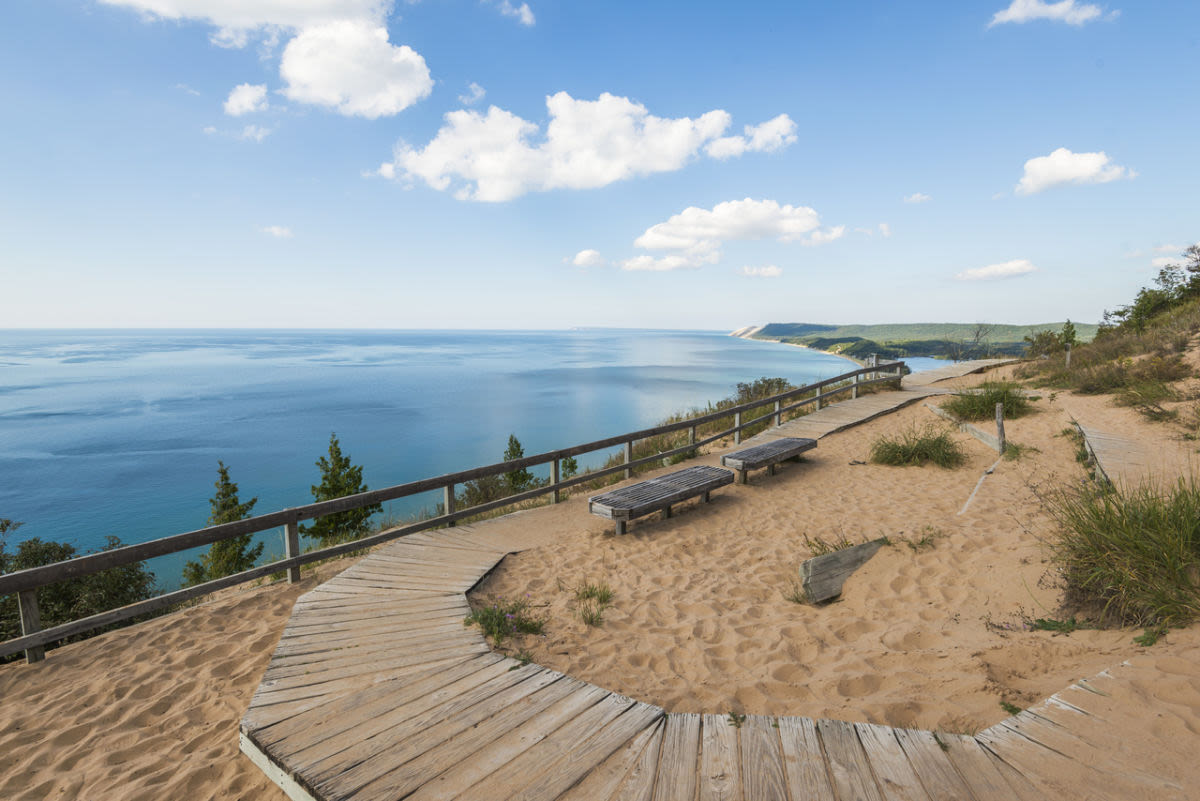
If your goal is “same scenery, less chaos,” aim for shoulder season. You get easier parking, quieter trails, and a more relaxed vibe in nearby towns like Empire, Glen Arbor, and Leland.
Best low-crowd windows
- Late April to mid June: Cool mornings, spring wildflowers in the woods, and far fewer families traveling. The water is very cold and the air can be brisk near the lake.
- After Labor Day through mid October: My favorite. Warm-ish afternoons, golden light over the dunes, and generally the easiest logistics. Early fall color starts popping in the forests later in the season.
What to expect
- Spring: Muddy patches on forest trails, more standing water, and higher bug pressure in sheltered areas.
- Fall: Cooler evenings, fewer bugs, and cleaner trail surfaces. Daylight drops fast, so start earlier than you think.
A calm 1 to 2 day plan
This itinerary uses the two classic viewpoint hikes, Empire Bluff and Pyramid Point, then gives you two options for dunes: the famous Dune Climb for iconic sand-running energy, or a quieter dune walk if you want the same landscape without the “summer camp field trip” feel.
Driving reality check (so your day stays calm): Empire to Glen Arbor is about 15 minutes. Glen Arbor to Pyramid Point trailhead is usually about 10 to 15 minutes. Empire to Pyramid Point is roughly 25 to 35 minutes depending on your route and traffic. Add extra time in peak color weekends when everyone has the same idea.
Day 1: Empire Bluff at sunrise
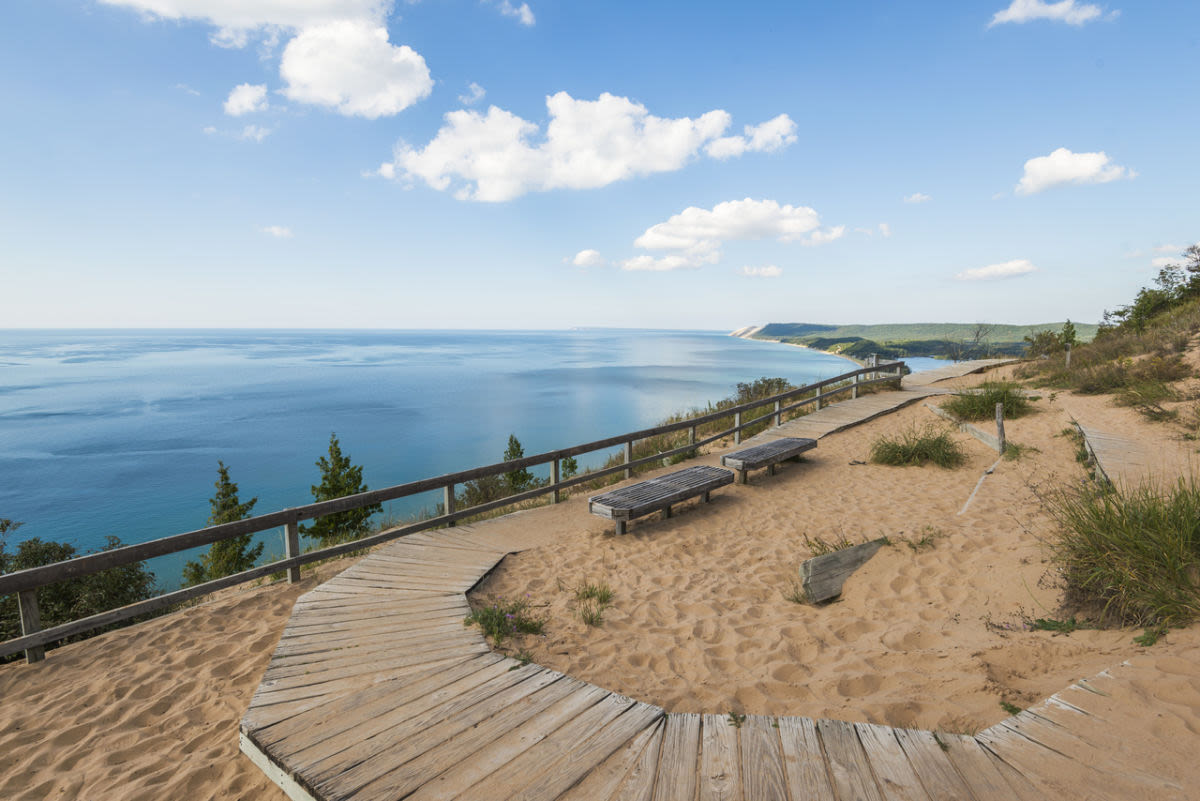
Start early at Empire Bluff. In shoulder season, an early start is the difference between a meditative walk through the woods and sharing the overlook with a dozen tripods. The trail is short and friendly, but it delivers a big payoff: a high, clean view over Lake Michigan and the pale arc of shoreline below.
- Plan: Hike in, linger at the bluff, then take it slow on the way out. This is an easy win for carry-on-only travelers who still want a “real hike” feeling.
- Post-hike: Head into Empire or Glen Arbor for coffee and a warm pastry. Shoulder season is made for lingering.
Day 2: Pyramid Point and your dunes pick
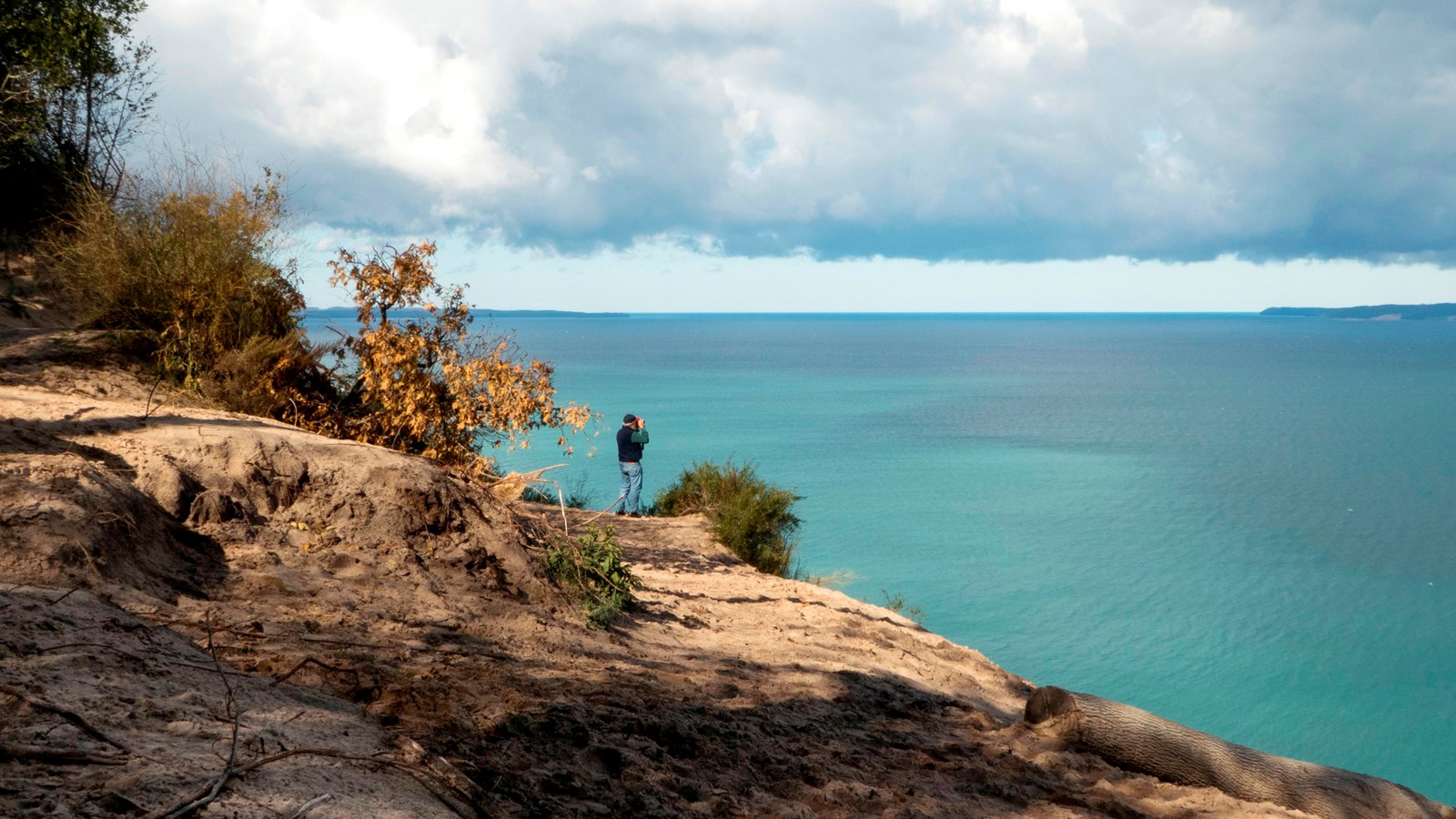
Pyramid Point is the other can't-miss vista. It is a classic bluff walk through woods that suddenly opens to an expansive lake panorama. The overlook can feel dramatic, especially when the lake is choppy and the horizon looks like an ocean line.
After Pyramid Point, you have a choice:
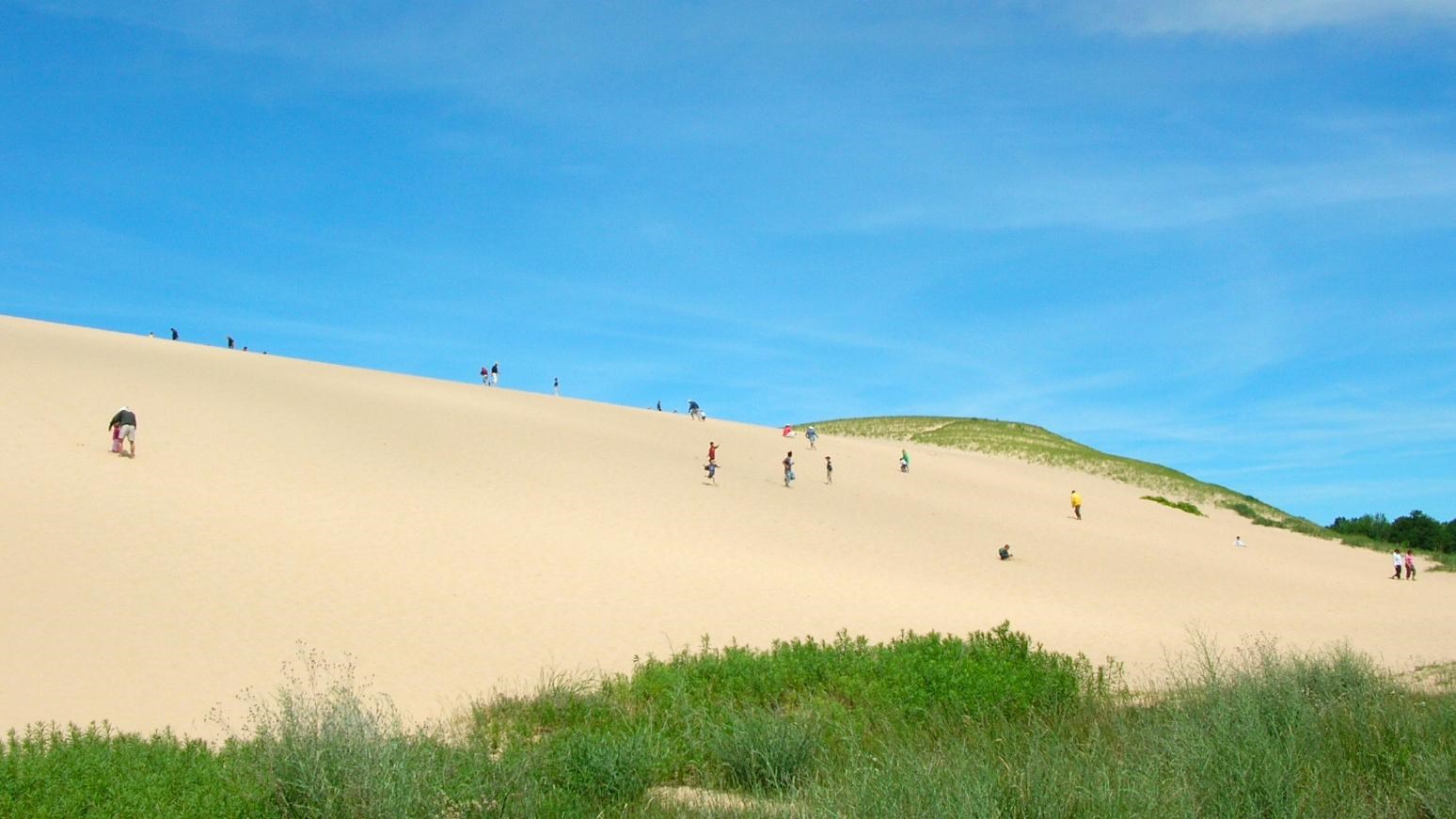
- Option A: The Dune Climb if you want the iconic steep sand experience and don't mind sharing it.
- Option B: A quieter dune moment elsewhere in the Lakeshore if you want sand and lake views with fewer people.
Parking realities
Sleeping Bear is not hard because the hiking is extreme. It is hard because parking can be a bottleneck, especially in summer and on weekends. Shoulder season helps a lot, but it's still smart to plan like a local.
Empire Bluff parking
- Lot size: Small to moderate. It fills much less aggressively than the Dune Climb, but it can still be tight on peak fall weekends.
- Strategy: Go early morning or later afternoon. Midday is when you are most likely to arrive at the same time as everyone else.
- Reality check: If the lot is full, don't block roads or improvise illegal roadside spots. Circle back later or swap the order of your day.
Pyramid Point parking
- Lot size: Limited. It is popular because the payoff-to-effort ratio is excellent.
- Strategy: Arrive earlier than you think you need to. In shoulder season, a weekday start usually feels effortless. Weekend afternoons can still get busy during peak color.
Dune Climb parking
- Lot size: Large, but demand is larger in summer.
- Strategy: Shoulder season is your friend here. If you must go in summer, aim for early morning or evening, or accept that you may wait for a space.
- On-the-ground vibe: This is a high-energy area with families, kids sprinting uphill, and lots of people picnicking. Not bad, just not quiet.
Town Wander tip: If you are building your day around “quiet,” schedule the Dune Climb for the least popular time, then put your overlook hikes in the prime morning light when the woods feel private.
Overlooks vs dunes
Empire Bluff and Pyramid Point are all about that moment when the trees part and the lake snaps into view. The Dune Climb is about physical play and big sand. Both are worth doing, but they hit different travel moods.
Choose overlooks if you want
- Maximum scenery with minimal effort: Bluff trails give you “wow” quickly, with less slogging than deep sand.
- Better photography light: Sunrise and late afternoon on the bluffs can be unreal.
- More calm: Even when popular, the forest absorbs sound. You can usually find personal space.
Choose the Dune Climb if you want
- A classic Sleeping Bear rite of passage: It is famous for a reason.
- A workout: Sand makes everything harder in a satisfying way.
- A playful vibe: This is not a whisper-quiet hike. It is a sunny, social scene.
Want dunes without the crowd energy?
If your heart is set on sand but you don't love the Dune Climb scene, consider planning a dune moment at a less concentrated access point in the Lakeshore, or simply timing the Dune Climb for a cool, windy morning in shoulder season. Windy days scare off some casual visitors and make the dunes feel wilder.
Bug and tick notes
Sleeping Bear’s best overlooks often start with a shaded forest walk. That is wonderful for temperature and terrible for bugs on certain weeks. Plan like a relaxed professional and you will be fine.
Ticks
- Where they hang out: Brushy edges, tall grass, and leaf litter along the trail margins. The wooded approaches to bluff overlooks are prime “check your socks” territory.
- What to do: Wear long socks, keep to the center of the trail, and do a full tick check when you get back to the car. Pay attention around ankles, behind knees, and waistband areas.
- Gear tip: Light-colored clothing makes ticks easier to spot.
Mosquitoes and biting flies
- When they peak: Late spring and early summer, especially after rain and in calm, humid conditions.
- What helps: A small bottle of repellent and a long-sleeve layer you can throw on in the woods, then peel off at the sunny overlook.
Poison ivy
- Where it shows up: Along sunny trail edges and disturbed areas near parking and path entrances.
- Rule: Stay on trail and avoid brushing against vegetation when stepping aside for other hikers.
My personal rhythm: I treat the first mile through the woods as “bug protocol time,” then reward myself at the overlook with snacks and a long, slow gaze at the lake.
What to pack
This is where my carry-on-only brain shines. You don't need much, but the right few things make the day smoother.
- Layers: The lake breeze can turn a warm day into a chilly overlook.
- Water and snacks: Bluff trails are short, but it's easy to linger longer than planned.
- Footwear with traction: Forest trails can be damp in spring, and sand is always a leg workout.
- Bug and tick basics: Repellent, a small mirror or phone camera for quick checks, and tweezers if you are cautious.
- Sun protection: The dunes reflect light, even on cooler days.
Make it trail and town
One of the best parts of Sleeping Bear is that you can pair a bluff hike with a cozy town afternoon without feeling like you are cheating on your outdoorsy self. Shoulder season is perfect for that split personality.
- After Empire Bluff: Coffee and a slow breakfast in Empire or Glen Arbor, then drive Pierce Stocking Scenic Drive for classic dune-and-lake overlooks. It runs on a seasonal schedule, so double-check that it is open during your dates (especially in early spring and late fall).
- After Pyramid Point: A late lunch, a quick browse in local shops, and a sunset stop somewhere along the water.
If you build your day around the calmest light and the smallest parking headaches, you'll get the version of Sleeping Bear that feels spacious, wild, and quietly cinematic. The kind of trip where you come home tired, sandy, and still somehow well-rested.