Slide Rock State Park: Swim Spot, Parking, and Crowd Timing

Maya Lin
Maya Lin is a travel journalist and outdoor enthusiast who believes the best trips combine rugged adventures with urban comforts. After spending six years backpacking across four continents, she founded Trail & Town Guide to help fellow travelers navigate both hidden mountain passes and bustling city neighborhoods with confidence.
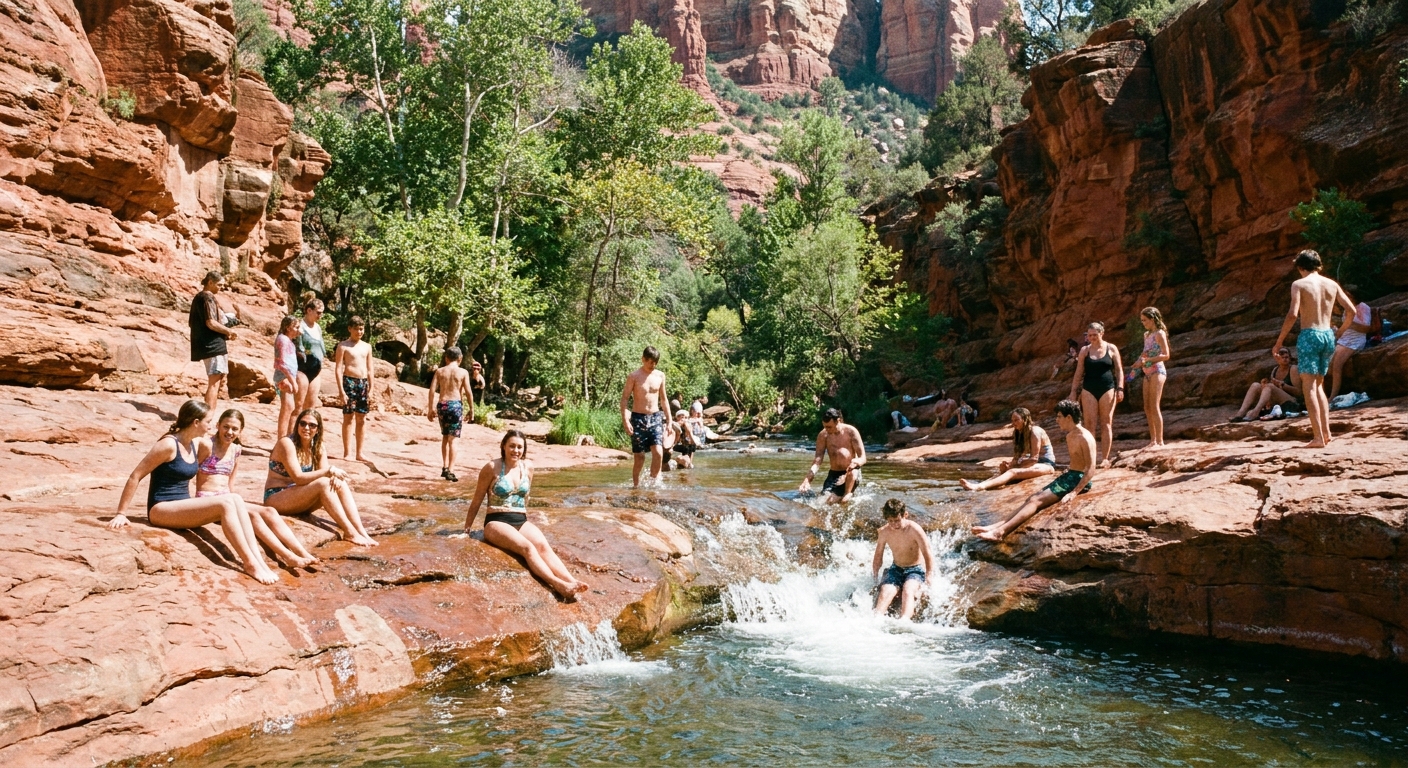
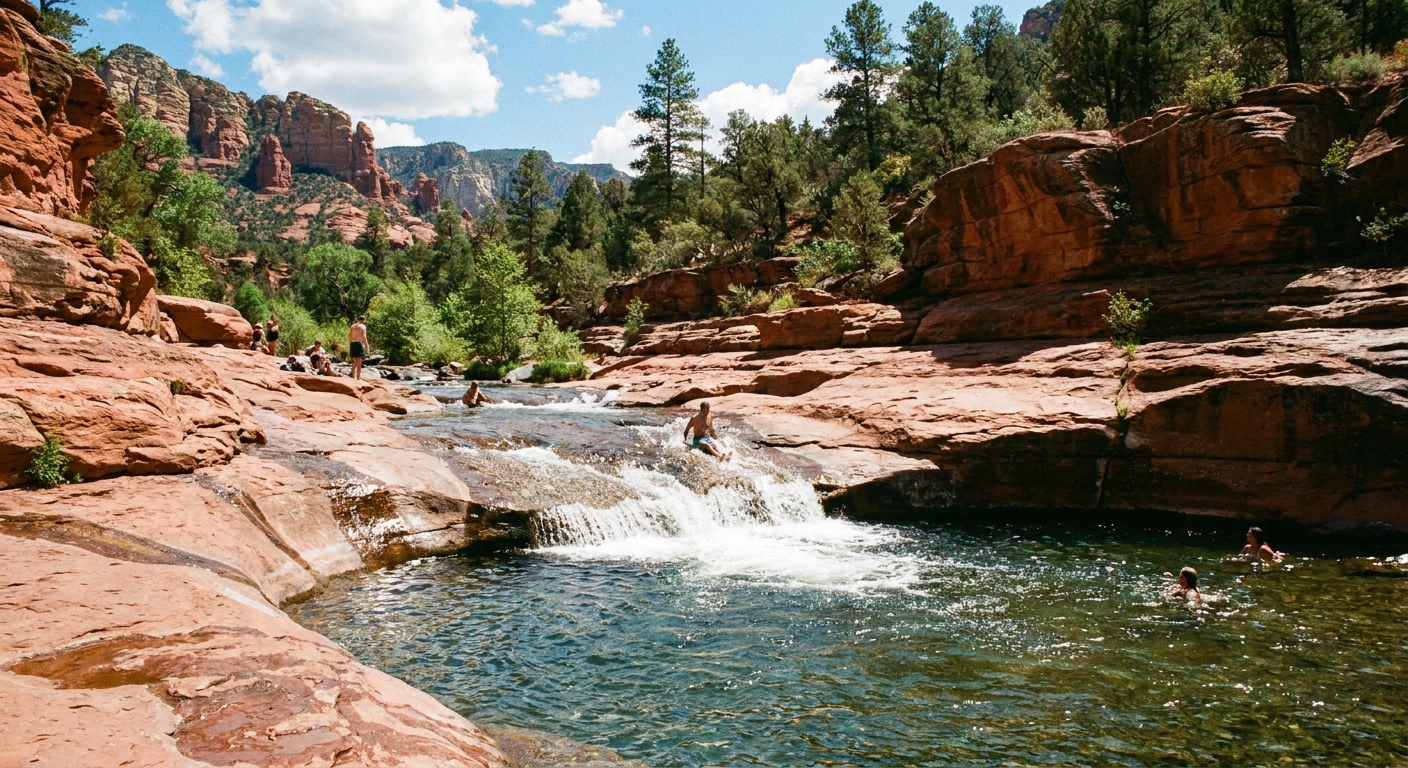
If Sedona has a “bring a towel” landmark, it is Slide Rock State Park. Picture red sandstone shelves, clear Oak Creek curling through a shady canyon, and a natural water chute that turns grown adults into laughing kids in about three seconds.
It is also a deceptively tricky quick stop in the area. Entry is per vehicle, the parking lots fill fast, and Oak Creek can be shockingly cold even when the air feels like summer. Below is everything I wish someone had texted me before my first visit, including when to go, how to stay safe (and within the rules) on the rocks, and how to stack Slide Rock with a nearby hike without turning your day into a parking scavenger hunt.
Know before you go
Where it is
Slide Rock State Park sits in Oak Creek Canyon along State Route 89A, roughly 7 miles north of uptown Sedona. In light traffic it can be about 15 to 25 minutes, but weekends, holidays, and afternoon bottlenecks in the canyon can stretch that.
Hours and gates
Hours can vary by season and special conditions, and capacity holds do happen on peak days. Confirm current hours and alerts on the official Arizona State Parks page before you drive up the canyon.
What you are paying for
This is an Arizona State Parks site, so the entry fee is a day-use fee per vehicle (or per person if you arrive on foot or by bike). Fees are seasonal and can change, so treat any number you see online as a ballpark and confirm on the official listing before you go.
- Typical structure: higher rates in peak season, lower rates in shoulder or winter months.
- Payment: staffed entry station during busy periods, with posted instructions for off-hours.
- Pass idea: if you are visiting multiple Arizona State Parks on the same trip, look at Arizona State Parks annual pass options and exclusions and see if one fits your itinerary.
Restrooms, picnic areas, and amenities
- Restrooms: available near the main use areas.
- Picnic tables: scattered around the day-use area, but shade is first-come, first-served.
- Amenities are limited: do not assume you will find food concessions or gear rentals. Bring water, snacks, and a sturdy bag that can handle wet clothes. If you are counting on anything beyond basics, check the park page for what is currently open.
Pets and glass
- Pet policy: this is a big one. Pets are generally not allowed down by the water or in the swim area. If you are traveling with a dog, plan for a different stop, or confirm the current rule on the park page before you arrive.
- No glass: glass containers are prohibited. It is a rocky swim spot, and broken glass here is a nightmare for bare feet and water shoes alike.
Accessibility and cell service
- Accessibility: surfaces are uneven and can be slick. Expect steps, rocks, and narrow paths near the creek. Some picnic and restroom areas may be more accessible than the waterline itself, but the “main attraction” is natural terrain.
- Cell service: Oak Creek Canyon can be spotty. Screenshot directions and any reservation or pass info before you lose signal.
Oak Creek conditions by season
Oak Creek is fed by a mix of springs and seasonal runoff, and it runs through a shaded canyon. Translation: the water often stays cold, and conditions can change after storms.
Spring (March to May)
- Water feel: cold to very cold. Think “quick dip” for most people.
- Flow: can be higher with snowmelt and after spring storms, which makes slick rocks and current more serious.
- Best for: a scenic visit with light wading, picnicking, and photos, plus a shorter swim if you run warm.
Summer (June to early September)
- Water feel: refreshing and still cold, especially in the morning.
- Flow: often manageable, but monsoon storms can spike levels quickly.
- Best for: full-on Slide Rock time, lounging in the shallows, and letting the creek do the cooling for you.
Fall (mid-September to November)
- Water feel: cool to cold as nights drop.
- Crowds: noticeably lighter after early September, especially weekdays.
- Best for: a calmer visit with enough warm afternoons for a swim if the sun is out.
Winter (December to February)
- Water feel: very cold. Most visitors skip swimming.
- Bonus: quieter trails and a totally different mood in the canyon.
- Watch for: icy patches in shaded areas and cold exposure if you get wet.
My rule of thumb: if you would not be comfortable standing outside in a wet swimsuit for 10 minutes, plan to keep your creek time short and bring warm layers for afterward.
Sliding and jumping safety
Slide Rock is famous because the sandstone forms a smooth chute. That does not mean it is a water park. The “ride” is natural rock, the water speed varies, and the consequences of a bad landing are real.
Sliding basics
- Rock is slick: algae and constant water flow make the surface slippery. Move slowly until you are seated and ready.
- Landings change: water depth and the shape of the landing zone shift with flow and season.
- Scout first: watch a few slides, then choose a spot where you can clearly see the exit and where others are safely landing.
- Follow posted guidance: if rangers have an area roped off or signs up, take the hint. Conditions change fast here.
Cliff-jumping
Jumping happens, but it is not a designated activity everywhere, and it is not risk-free. Rules and restrictions can change, and rangers may limit jumping based on crowding, flow, or hazards. If you are thinking about it, treat this as non-negotiable:
- Only jump where it is clearly allowed and never where signage prohibits it.
- Check depth yourself and do not assume it is the same as last week or last summer.
- One jumper at a time, and keep the landing zone totally clear.
- No alcohol, no bravado: most injuries I hear about at swim spots start with one of those two ingredients.
Hidden hazards people underestimate
- Head and spine risk: shallow water and submerged rocks can turn a “fun jump” into an emergency.
- Foot injuries: jagged edges and slippery steps are common. Water shoes with real soles help a lot.
- Current and strainers: branches and rocks downstream can trap you if you slip into fast water.
- Cold shock: the first plunge can steal your breath. Ease in if you are sensitive to cold.
Cold water and flash floods
Most Slide Rock problems are not dramatic. They are the slow-burn combo of cold water, dehydration, and slippery footing. The other risk to respect is sudden weather.
- Hydrate like you are hiking: the canyon can be hot, and swimming dehydrates you more than you think.
- Bring warm layers: a quick-dry shirt or light hoodie makes the post-swim chill much easier.
- Set a buddy rule: especially with kids or weaker swimmers. Oak Creek is not deep everywhere, but it can be pushy.
- Know the signs of hypothermia: intense shivering, clumsiness, confusion, and fatigue. Get dry, get warm, and take it seriously.
- Wear traction: water shoes reduce slips on algae-slick rock and protect toes on uneven stone.
- Monsoon reality: in summer storm season, leave the creek immediately if water rises, turns muddy, or debris starts moving through. Flash flooding can happen even if it is sunny where you are standing.
If you are visiting with small kids, I like the “two-minute check” approach: every few minutes, pause and ask how everyone feels, then adjust. It keeps the day smooth and avoids the sudden spiral from “I am fine” to “I am freezing.”
Parking and crowds
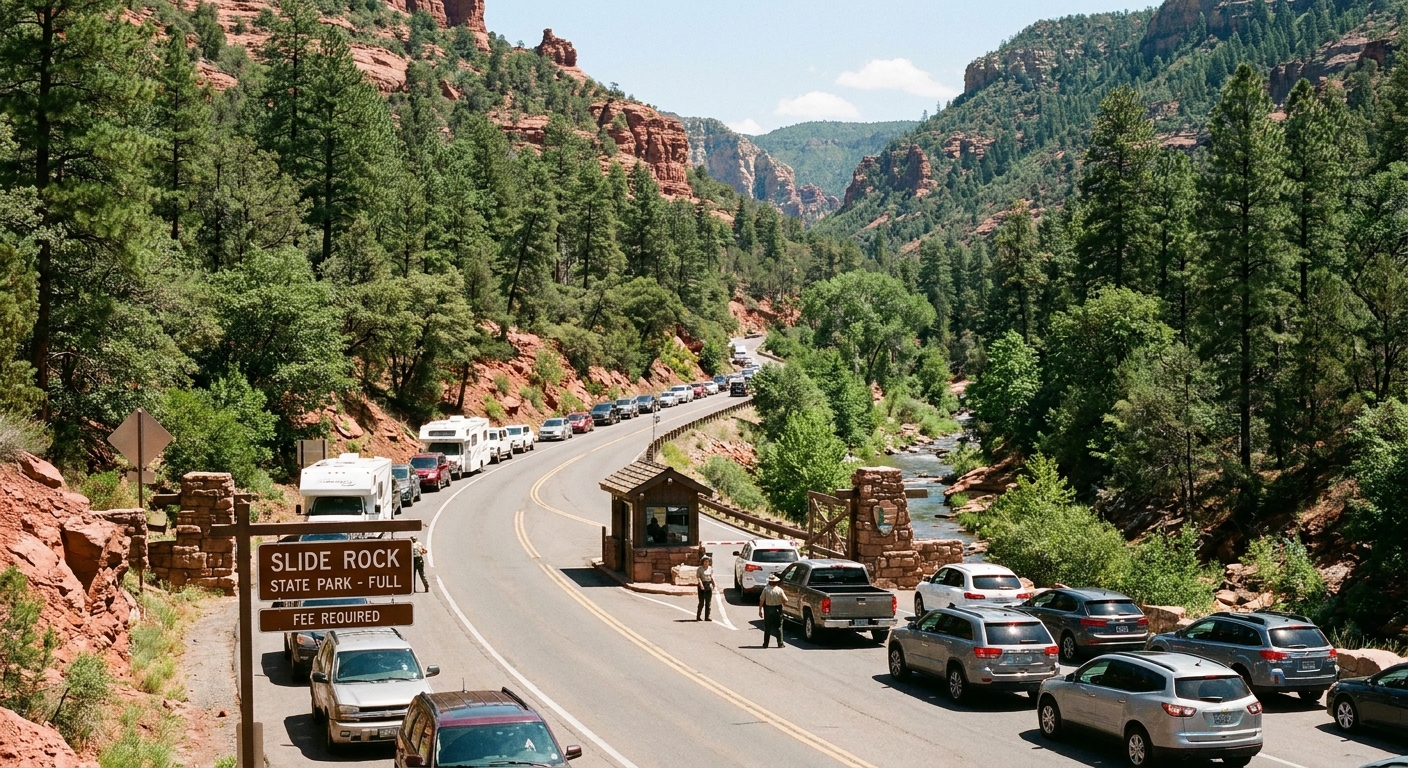
Parking is the make-or-break factor at Slide Rock. On summer weekends, the lots can fill early and the park may temporarily stop admitting cars when capacity is reached. When that happens, you are not “almost there.” You are waiting.
Best times to arrive
- Peak summer weekends and holidays: arrive early in the morning for the best chance at an easy entry and a good spot.
- Weekdays: late morning to early afternoon can still be busy, but it is generally more forgiving than Saturday.
- Shoulder seasons: you can often show up later, but sunny fall weekends still draw crowds.
Overflow game plan
- Have a Plan B: if you roll up and capacity is paused, decide ahead of time whether you will wait, pivot to a hike, or come back at a different time.
- Do not block traffic: Oak Creek Canyon is narrow, and backups create safety issues.
- Pack for patience: snacks, water, and a full tank help if you end up inching along.
Crowd timing tip: If swimming is your priority, go early. If photos and a mellow picnic are your priority, late afternoon can feel calmer, but watch daylight and be prepared for cooler temps in the shade.
Half-day plan
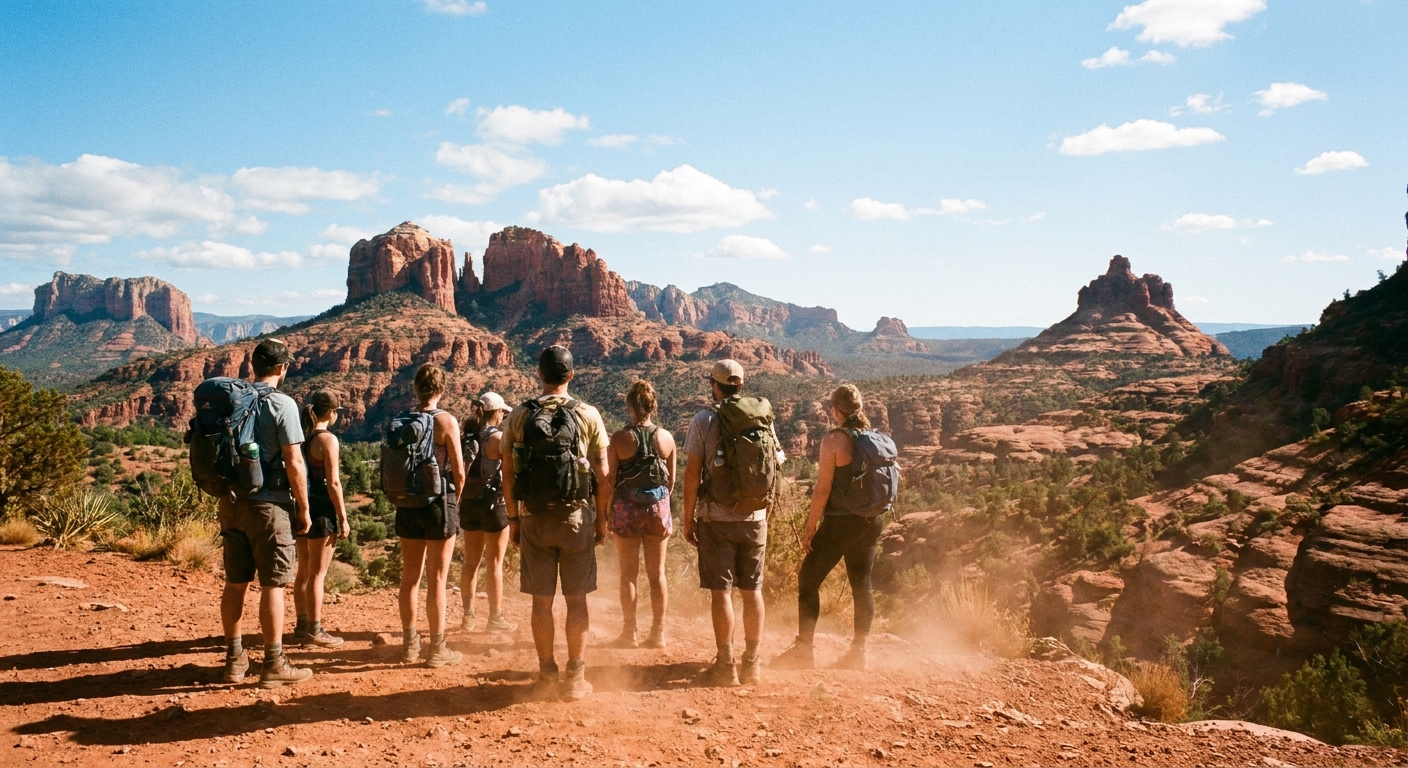
This is my favorite way to do it: treat Slide Rock as a half-day water stop, then pair it with a hike that gives you classic red rock views without repeating the same “creek-wade” vibe you would get elsewhere in Oak Creek.
Option A: Swim then viewpoints
- Start: Slide Rock early for easier parking and the cleanest “fresh morning” feel.
- Then: head back toward Sedona for a viewpoint-style hike where you stay mostly dry.
- Great matches: Cathedral Rock area viewpoints, Airport Mesa area trails, or other higher, breezier routes that feel totally different from canyon swimming.
Option B: Hike then cooldown
- Start: do a sun-exposed hike early before the heat ramps up.
- Then: use Slide Rock as your reward and temperature reset in the late afternoon.
- Watch for: parking and potential capacity holds later in the day during peak season.
Option C: No-swim alternate
If swimming is not happening today, or the water is too cold, do the historic loop instead: Slide Rock includes the Pendley Homestead and its old apple orchard roots, one of the reasons this spot became a park in the first place. It is an easy way to add some local story to your stop and still feel like you did more than sit in traffic.
What to pack
- Water shoes with grip
- Towel and a dry set of clothes for the car
- Plenty of drinking water and salty snacks
- Sunscreen and a hat, even in the canyon
- Small dry bag for phone and keys
- Light layer for after swimming
Carry-on-only travelers, this is your moment: a swimsuit, packable towel, and sandals live in my trunk all summer because Slide Rock is exactly the kind of spontaneous stop that turns a normal Sedona day into a memorable one.
Etiquette and sustainability
Oak Creek Canyon is beautiful because it is sensitive. A little care keeps it that way.
- Pack out all trash, including food scraps.
- Keep soaps and lotions out of the water. Apply sunscreen well before you swim so it has time to absorb.
- Give people space at the slide entry and exit points.
- Respect closures and signage. They exist because conditions change fast here.
- No glass, even for “just one drink” at your picnic. Bring reusable bottles and cans instead.
Crowd timing
- Least crowded: winter weekdays, spring weekdays (cold water)
- Sweet spot: early fall weekdays for comfortable air temps and lighter crowds
- Most crowded: summer weekends, holidays, and hot afternoons
If you only remember one thing: go early on summer weekends, and treat the creek like real moving water, not a lazy pool.