Toadstool Hoodoos Trail Near Kanab
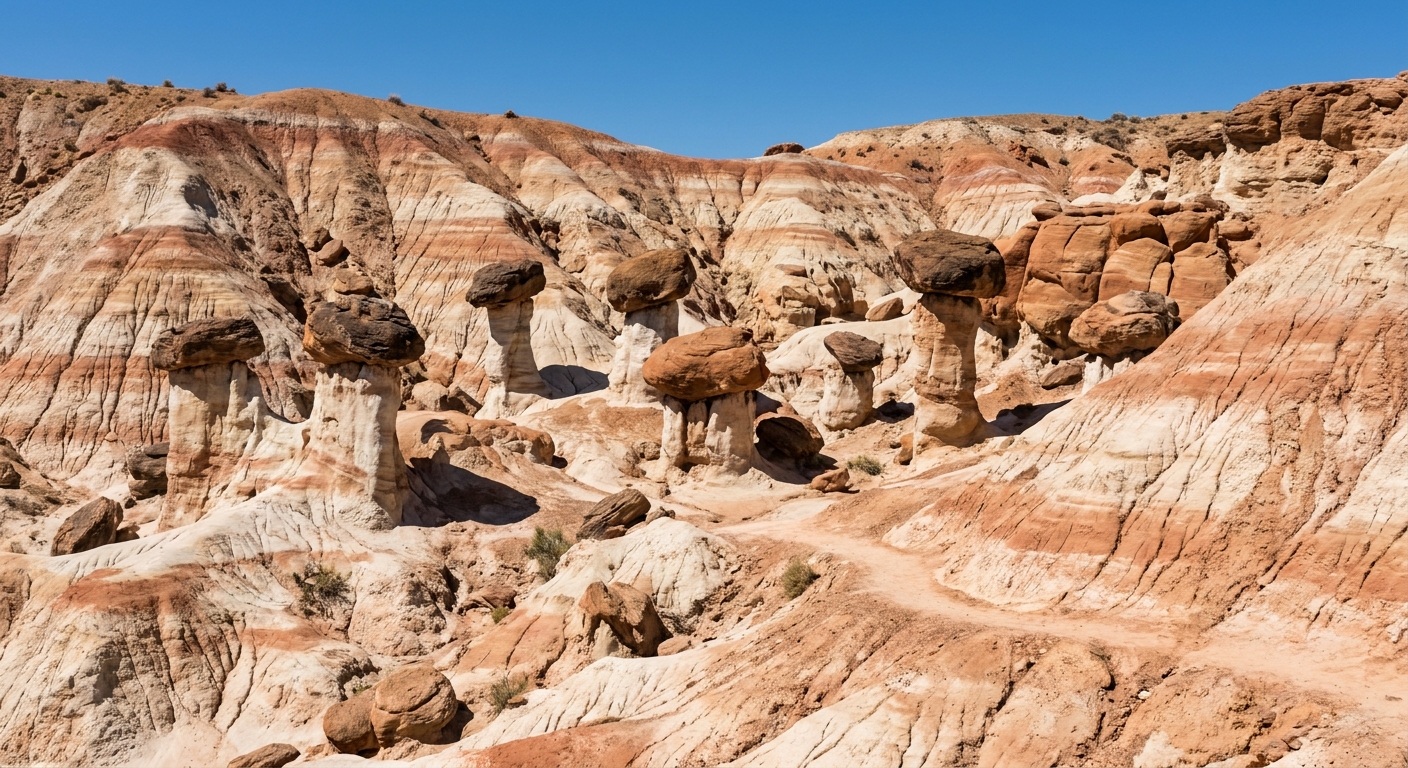
Some Southern Utah hikes ask for ropes, route-finding confidence, and a willingness to come home dusty, humbled, and very hungry. The Toadstool Hoodoos Trail is not one of those hikes, and that is exactly why it belongs on your Kanab area short list. In under an hour (two if you move like a photographer), you get that classic Grand Staircase Escalante look: striped badlands, chunky caprocks, and hoodoos shaped like storybook mushrooms.
This is a micro-hike that still feels cinematic. It also pairs beautifully with a coffee stop in Kanab and an afternoon drive toward the Vermilion Cliffs.

Quick stats
- Distance: about 1.5 to 1.7 miles round trip (often a little more with wandering and photos)
- Time: 45 to 90 minutes for most hikers
- Difficulty: easy to moderate (short, but sandy and a bit exposed)
- Elevation gain: minimal overall, with small ups and downs
- Trail type: out and back, with informal spur paths near the hoodoos
- Best seasons: spring and fall; winter can be lovely if roads are clear; summer requires an early start
- Dogs: allowed on leash
Where it is: The trail is right off US-89 between Kanab and Page, commonly signed as the Toadstool Hoodoos Trailhead (sometimes grouped with nearby stops like the Sand Caves area). Many guides refer to it as being in or near Grand Staircase Escalante National Monument, and it is often treated as a quick roadside hike on that corridor.
Getting there
Trailhead and parking: Look for the signed Toadstool Hoodoos Trailhead pullout along US-89. Parking is roadside style and can fill up at peak times, so earlier is easier.
Highway note: US-89 traffic moves fast here. Slow down early, use turn signals, and be extra alert when pulling in or out.
Fees and facilities: This is typically a no-frills stop. Do not count on water, trash service, or restrooms at the trailhead, and assume there is no fee unless signage at the pullout says otherwise.
What the hike feels like
The opening stretch is straightforward desert walking with a wide horizon. You will see the badlands ahead and, as you approach, the terrain turns into soft sand, low ledges, and pale clay layers that look like they have been frosted onto the hills.
The hoodoos themselves are the payoff. They tend to appear a little later than first-timers expect, tucked into the folds of the badlands rather than right at the end of a single obvious path. Once you are in the hoodoo zone, the vibe becomes more “wander thoughtfully” than “follow a single track.”
Wayfinding
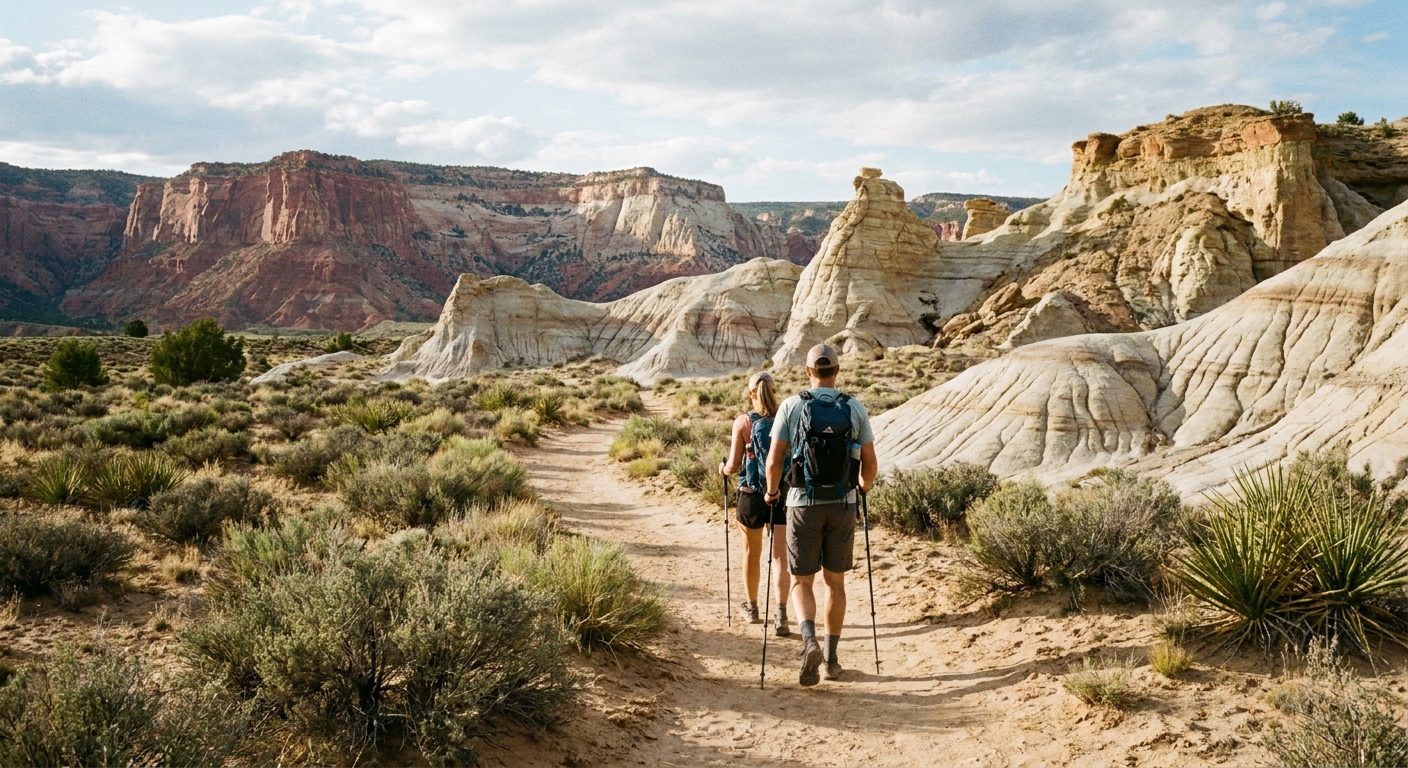
If you have done Wire Pass or Buckskin, you already know how quickly “a trail” can become “a concept.” Toadstool Hoodoos is calmer, but there are still a few moments where people drift onto steeper, crumbly edges than necessary. The stakes here are usually minor (think slips and sandy scrambles, not true cliffs), but it is still worth moving conservatively.
How to stay on the easiest line
- Follow the main footpath until the terrain opens up. Early on, it is obvious and generally flat.
- When you reach the badlands, aim for the low, sandy benches. The easiest travel is usually on broad, sloping shelves, not right on the sharp edges.
- Avoid the crumbly lips. Some viewpoints tempt you onto narrow rims. The clay and sand can break away, especially after rain.
- If you feel exposed, you are probably off the easiest route. Backtrack 30 feet and look for a gentler ramp or bench.
- Use landmarks. Pick a distinct hoodoo cluster or striped slope to orient yourself on the way back.
Practical note: cell service is often spotty. You likely will not need GPS, but do not count on it.
Wind and exposure
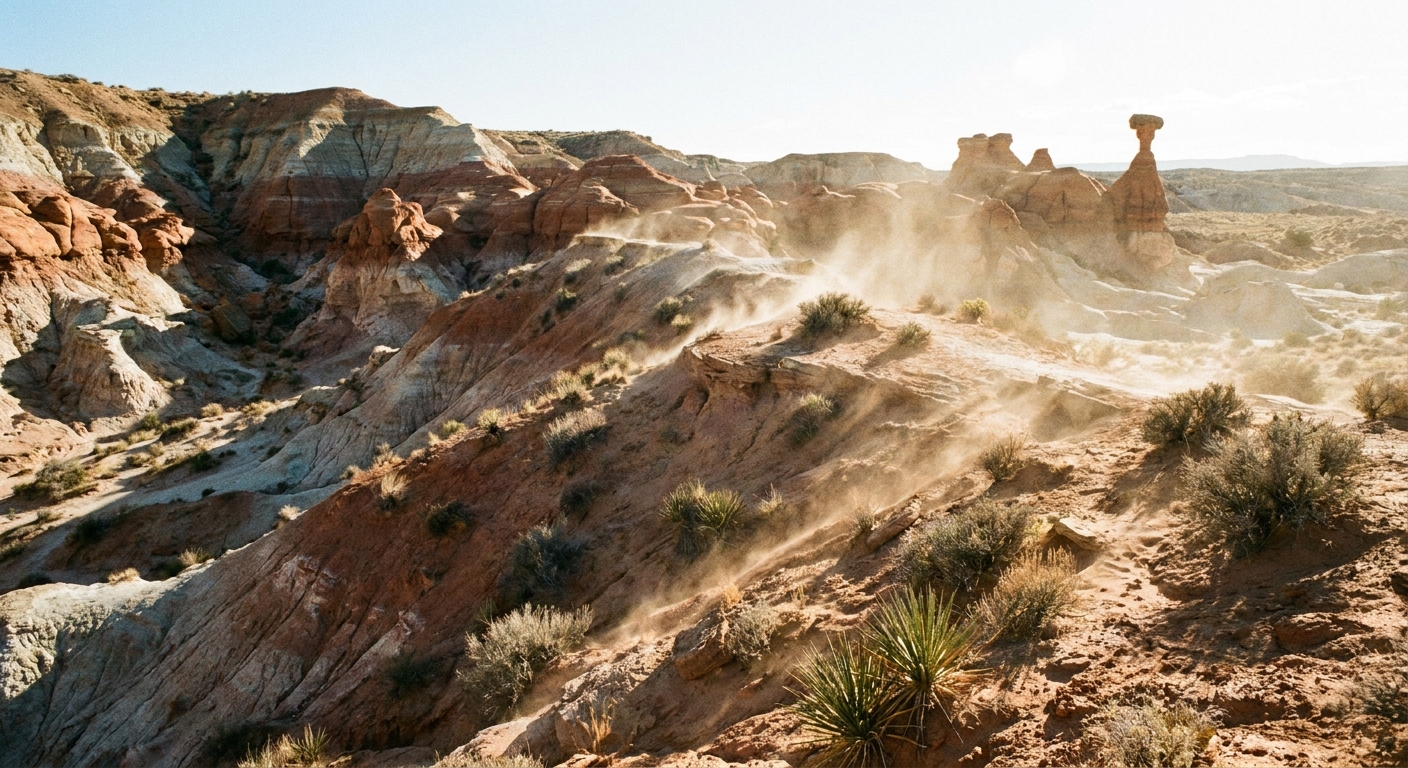
This area can feel deceptively calm at the trailhead and then turn breezy once you are out in the open. There is little shade, and the badlands funnel wind in a way that makes light jackets feel like sails.
Exposure tips that actually help
- Start earlier than you think in warm months. Sunrise to mid-morning is the sweet spot.
- Carry water even for a short hike. The dry air and wind can sneak up on you.
- Protect your eyes. Wind plus sand is a classic combo here. Sunglasses make the hike more comfortable.
- Mind edges and loose slopes. Gusts are not usually dangerous on their own, but they pair badly with crumbly terrain.
- After rain, go gently. Clay can be slick and footprints can damage fragile slopes. If the ground is tacky, consider waiting a day.
- Watch monsoon weather. Even though this is not a slot canyon hike, desert storms can bring lightning and sudden downpours. If thunder is in the forecast, pick a different morning.
Best light for photos
Toadstool Hoodoos is a photographer’s playground because the layers and textures do more than just sit there. They change fast with the sun angle.
When to go
- Golden hour (early morning or late afternoon): The hoodoos pop, shadows carve out the ridges, and the color bands look richer.
- Midday: Still beautiful, but flatter light. Great if you are documenting details and patterns up close.
- Overcast: Rare here, but fantastic for soft, even tones on the striped slopes.
Simple shot list
- A low-angle photo of a single “toadstool” with the layered hill behind it
- A wider scene that shows the hoodoos nested in the badlands
- Texture close-ups of the bands, pebbles, and caprock
Bring a lens cloth. Windblown grit is the uninvited guest at every Southern Utah photo session.
How it compares
If you already have Wire Pass and Buckskin days on your Kanab itinerary, think of Toadstool Hoodoos as the perfect “rest day that still feels like a destination.”
Toadstool Hoodoos
- Commitment: low
- Navigation: easy, minor wandering near the hoodoos
- Conditions: wind and sun exposure are the main factors
- Experience: open desert, hoodoo formations, badlands textures
- Best for: quick stop, photographers, and families with kids including toddlers (expect sand, a few little ups and downs, and plenty of time for slow exploring)
Wire Pass
- Commitment: moderate
- Navigation: straightforward but depends on wash conditions
- Conditions: flash flood risk, sand, occasional obstacles
- Experience: slot canyon corridors and light beams
- Best for: first-time slot canyon hikers who want a big payoff without a mega-day
Buckskin Gulch (long days)
- Commitment: high
- Navigation: more serious, especially for longer routes
- Conditions: flash flood risk, darker canyon stretches, mud or standing water depending on season
- Experience: long, immersive slot canyon adventure
- Best for: hikers who want a full-day objective and are comfortable with changing canyon conditions
If Wire Pass and Buckskin are your “rugged,” Toadstool Hoodoos is your “town-friendly” counterpart. You can hike it in the morning and still have time for a proper lunch in Kanab.
What to pack
You do not need a big kit here, but you do want the right basics. This is desert hiking where small mistakes feel bigger because there is no shade and the wind steals moisture fast.
- Water: at least 0.5 to 1 liter per person for most conditions
- Sun protection: hat, sunscreen, and a light long-sleeve if you burn easily
- Footwear: sneakers are fine; trail shoes help in loose sand
- Wind layer: a light jacket or shirt you can throw on quickly
- Snacks: because hoodoo wandering takes longer than you plan
- Optional: trekking poles if you want extra stability on sandy slopes
Leave no trace
The badlands are fragile. The same soft slopes that make the landscape look like melted cake are also easy to scar.
- Stay on durable surfaces when you can. Sand and established paths are better than crusty clay slopes.
- Do not climb the hoodoos. The formations are delicate and crumble over time.
- Pack out everything. Wind can turn a loose wrapper into a cross-desert litter situation fast.
Easy add-ons
If you are building a day that balances trail time with town comforts, here are a few ways to stack it:
- Sunrise hike, Kanab brunch. Do the hoodoos early, then reward yourself with a slow meal and good coffee back in town.
- Scenic drive day. Pair the hike with viewpoints along US-89 and a stop to simply watch the light move across the cliffs.
- Pre-slot canyon warm-up. Use this as an easy day before Wire Pass or Buckskin when you want to save your legs.
Toadstool Hoodoos is proof that you do not need an epic mileage day to get an epic landscape. Sometimes the smartest Southern Utah move is the short one, especially when it leaves you time for a second cup of coffee.