Upper vs Lower Antelope Canyon Tours
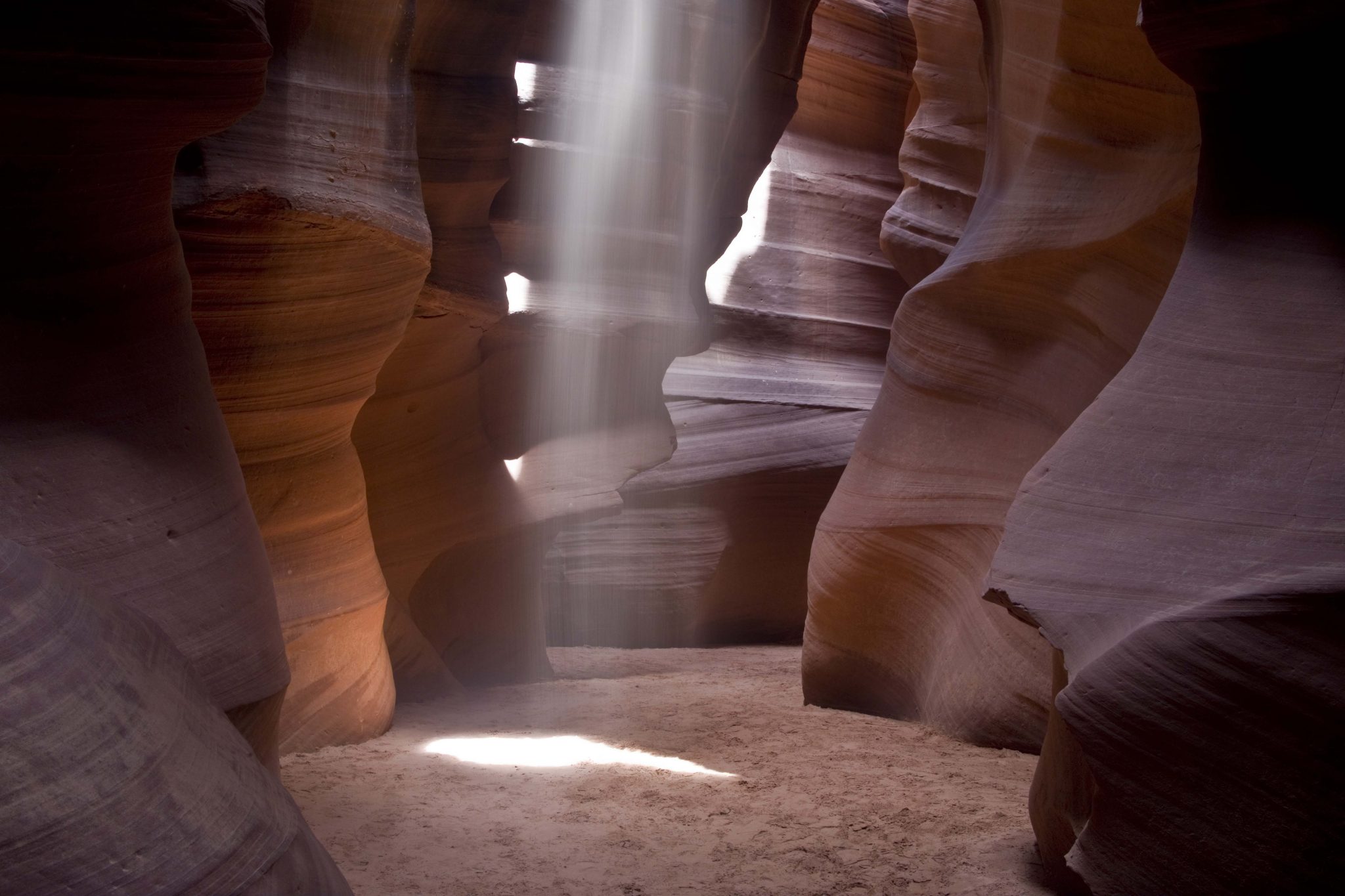
In Page, Arizona, the Antelope Canyon decision looks simple on a map: two famous sections of Antelope Canyon draw travelers for very different reasons. In real life, Upper Antelope Canyon and Lower Antelope Canyon feel like two different trips. One is the classic, beam-chasing, mostly-flat walk. The other is a more athletic slot canyon adventure with ladders, stairs, and a little more grit under your shoes.
If you are trying to match your canyon tour to your schedule, mobility needs, photography goals, budget, and summer weather tolerance, this guide will help you pick the right one the first time.

The quick verdict
Choose Upper if
- You want the best chance at iconic light beams (in season and at the right time of day).
- You prefer a mostly flat canyon floor with less climbing.
- You are traveling with kids, older family members, or anyone who is uneasy with ladders and steep steps.
- You want a shorter, more “bucket list” style tour that fits neatly into a packed itinerary.
- You are comfortable paying more for the most famous section.
Choose Lower if
- You are up for stairs, ladders, and a more active walk.
- You want a canyon experience that feels a bit more adventurous and less like a single straight corridor.
- You are visiting outside peak light beam months and still want stunning curves, textures, and deeper slot sections.
- You do not mind a slightly longer tour and a little more physical effort.
- You want a similar wow factor at a price that is often lower than Upper.
Entry and terrain
This is the biggest practical difference, and it affects everything from what shoes you wear to who will enjoy the tour.
Upper entry
Upper is known for being more accessible once you are inside. The canyon floor is relatively flat and sandy, with fewer obstacles. Many tours also include a guided vehicle transfer to the canyon entrance from a check-in location in Page (operator-dependent).
Best for: travelers who want the slot canyon experience without a lot of climbing, plus families with younger kids who do better on level ground.
Lower entry
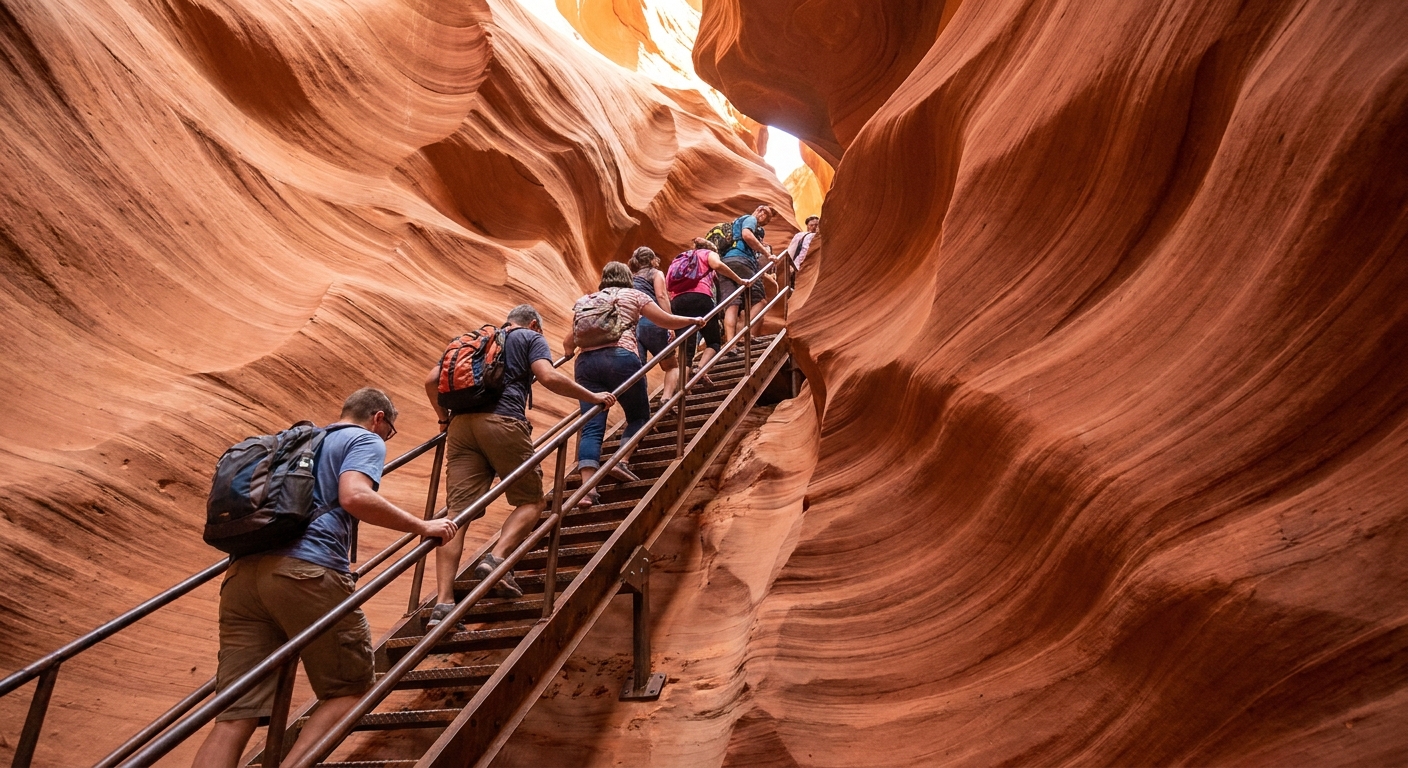
Lower often starts closer to the entrance area, with less of a shuttle-style transfer for many operators, but you will typically face a steep descent down stairs right away. The route includes multiple stair sets and ladder-style sections throughout. It is not technical climbing, but it is continuous up and down in tight spaces.
Best for: travelers who enjoy a more active hike and do not mind moving through narrow passages with elevation changes.
Light beams
Those famous “god rays” are not a guaranteed daily show. Light beams depend on sun angle, clear skies, and enough dust in the air to make the beam visible.
Upper light beams
Upper is the classic light beam canyon because its shape and openings are well-suited to sun rays dropping in from above. The light beam season is generally spring through early fall, with the strongest odds in summer. The most sought-after windows are usually around late morning to early afternoon when the sun is high.
Even in season, cloud cover can mute beams, and in winter the sun angle often makes beams less likely. You will still get gorgeous reflected light and glowing walls, but the dramatic spotlight effect is more seasonal.
Lower light beams
Lower can get beautiful light and glow, but it is less famous for consistent, pillar-like beams. Think more “sculpted light” than “stage spotlight.” If your number one goal is a beam photo, Upper usually wins.
Practical tip: If you are visiting outside peak beam months, do not plan your happiness around light beams. Plan it around texture. Both canyons are jaw-dropping year-round, and Lower often feels more dynamic for people who like a little movement and variety.
Photography rules
Antelope Canyon is one of the most photographed places in the Southwest, and the rules reflect that. They are strict, they are enforced, and the easiest way to enjoy the tour is to plan on traveling minimal.
Tripods and monopods
Tripods and monopods are not allowed in both Upper and Lower Antelope Canyon, and the specialized photography tours that used to allow extra time and tripod setups are no longer offered. Policies can change and can vary slightly by operator, so always confirm the current gear rules with your specific tour company before you go. Plan for handheld shooting only.
Crowd pace and gear limits
Expect your guide to manage traffic flow and keep groups moving, especially in Upper. In both canyons, there are strict limits on what you can carry.
- Bags are generally prohibited: most operators do not allow backpacks, daypacks, or large purses, even small ones. Some may allow a very small clear bag or a small clutch, but policies vary. Check your operator’s current rules before you arrive.
- Hands-free wins: if you can, travel with pockets or a slim phone case wallet so you are not juggling gear on stairs (Lower) or in tight sections.
Practical photo tips
- Bring a lens cloth: sandstone dust happens, especially in summer and during busy time slots.
- Use a strap: in tight spaces, dropping gear is easier than you think.
- Phone shooters: tap to expose for the bright wall, not the darkest shadows. The canyon can trick your camera into underexposing the glow.
- Do not count on silence: it is a group experience. If you want “empty canyon” vibes, prioritize the first tours of the day.
Tour time and pacing
Exact durations vary by operator and season, but here is the realistic planning version.
- Upper: often feels shorter and more linear, with a steady guided pace to keep groups moving.
- Lower: usually feels longer because of the stair sections and the way the route winds and changes levels.
Add buffer time for check-in, parking, walking to staging areas, and shuttle transfers if your operator uses them. Also, ask your operator for the exact tour duration and arrival time requirements. If you are building a day around Horseshoe Bend, Lake Powell, or a drive to Zion, your “one-hour tour” can easily become a three-hour block on the calendar.
Price and value
Prices change with season and demand, but the general pattern is consistent.
- Upper usually costs more than Lower. You are paying for the most famous section, the flatter walk, and the best odds at classic beams in season.
- Lower is often less expensive and can feel like a better value if you want a longer, more active route.
Also note that fees can stack. Depending on the operator, taxes and Navajo Nation permit fees may be included or itemized separately. Always read the checkout page closely so there are no surprises.
Accessibility notes
Both canyons involve sand, uneven footing, and tight spaces, and both are guided on Navajo land with operator-specific rules. In general, Upper is flatter inside the canyon, while Lower includes many stairs and ladder sections. Neither section should be assumed to be wheelchair-accessible. If mobility is a concern, contact your tour operator before booking to confirm current access, walking surfaces, and any required transfers.
Best for
Upper is a great fit for
- Mobility-conscious travelers: fewer stairs and less climbing inside the canyon.
- First-timers: the experience is straightforward and hits the classic highlights quickly.
- Light beam chasers: especially spring through early fall, strongest in summer, with late morning to early afternoon time slots.
- Tighter itineraries: easier to slot into a day trip from Flagstaff, Sedona, or even as a stop on a Zion to Grand Canyon route.
Lower is a great fit for
- Active travelers: you will do stairs and ladders, and it feels more like a mini-adventure.
- People who get claustrophobic less easily: there are narrower sections and more vertical movement.
- Repeat visitors: if you already did Upper, Lower gives you a fresh feel.
- Travelers who care more about forms and curves than beams: the sculpted walls photograph beautifully in any season.
Booking windows
Antelope Canyon is not a “show up and see what happens” stop, especially in peak season.
General guidance
- Peak months (spring through early fall): book as soon as your travel dates are firm. Late morning and midday Upper tours are often the first to disappear.
- Shoulder season (late fall and winter): you may find more availability, but weekends and holidays still book fast.
- Best time slots: if light beams matter, aim for late morning to early afternoon in peak beam season. If crowds stress you out, the earliest time slots usually feel calmer.
Check-in rules
Build your Page day like this: tour first, everything else second. Many operators require arriving early for check-in, and late arrivals are often not accommodated. Some may require a matching name on the reservation and a photo ID. Confirm your operator’s current check-in time, ID rules, and parking instructions before you go.
Monsoon risk
Summer is stunning in the canyon, but it comes with the Southwest’s monsoon season, generally running mid or late June through September and often peaking July through September. Slot canyons are vulnerable to flash flooding, even if it is not raining directly over the canyon. Storms miles away can send water downstream fast.
What to expect
- Tours can be delayed, altered, or canceled due to weather risk.
- Operators monitor conditions closely and will prioritize safety. Take warnings seriously.
- Humidity and heat increase, and the canyon can feel warmer than you expect in a crowd.
How to plan smart
- Schedule earlier in the day when possible. Many monsoon storms build in the afternoon.
- Keep your day flexible: do not stack non-refundable activities too tightly after your tour.
- Bring water and start hydrated. Dry desert air plus summer heat is sneaky.
- Wear grippy closed-toe shoes: sand on metal stairs (Lower) and wet patches after storms can be slick.
Good to know: a cancellation for safety is not a ruined day. Page has plenty of backup plans: sunrise at Horseshoe Bend, viewpoints around Lake Powell, and air-conditioned museum time if the sky is having opinions.
What it feels like
Both canyons are guided experiences on Navajo land, and that guided structure is part of the reality. The payoff is access, context, and safety in a landscape that can be dangerous without local expertise.
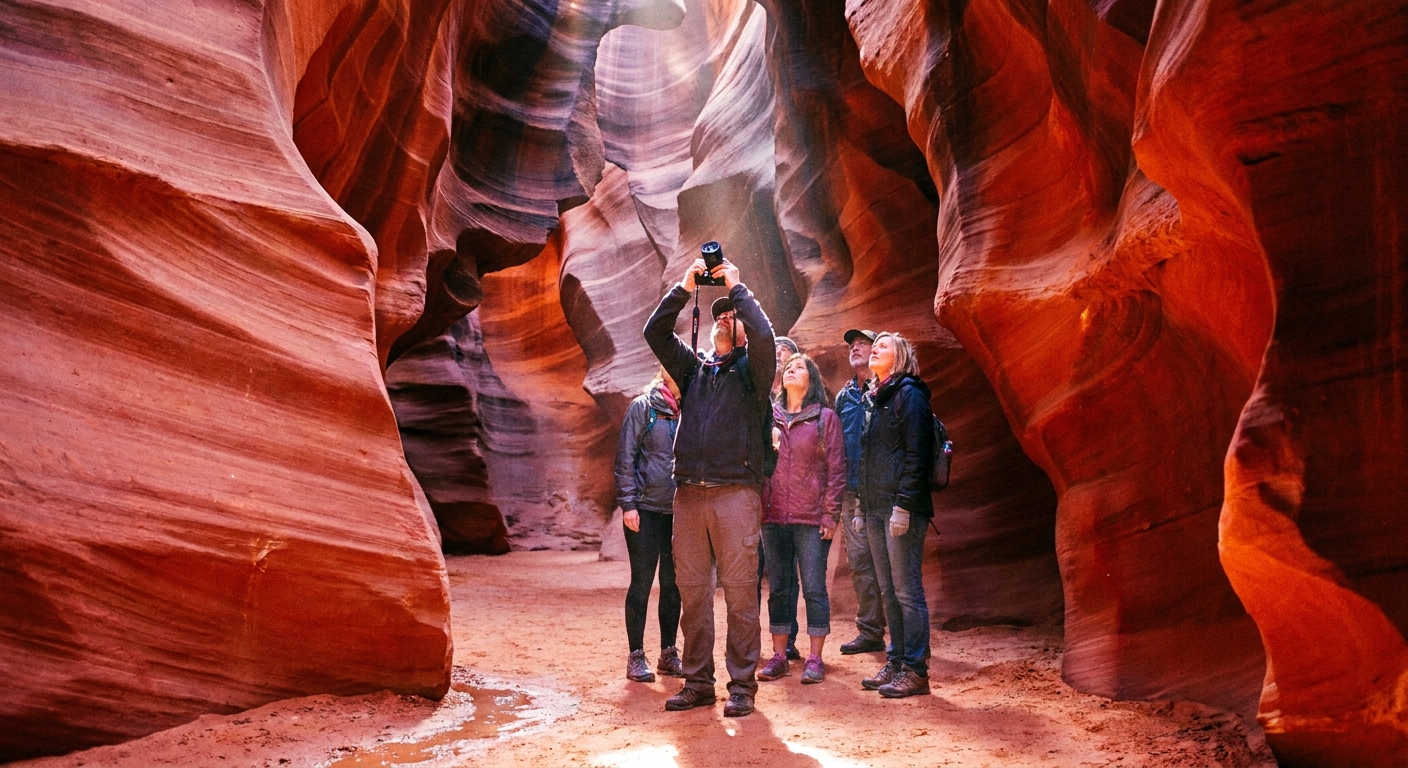
- Upper: often feels like a “cathedral corridor” where groups move through in a steady stream. Magical, iconic, and sometimes very busy.
- Lower: feels more like a slot canyon hike with frequent vertical transitions. Still popular, but the movement can make it feel more exploratory.
FAQs
Can I do both in one day?
Yes, but it is a lot of logistics and a lot of canyon time. If you do both, give yourself a buffer between tours for check-in, driving, and the reality that everything takes longer in peak season.
Which is better for kids?
It depends on the kid. Upper is generally easier because it is flatter. Lower can be great for confident, active kids who enjoy stairs and ladders, but it is less ideal for anyone who is nervous with heights or tight spaces.
Which is better if I only have a few hours in Page?
If you want the classic “I went to Antelope Canyon” moment with minimal physical effort, pick Upper. If you want a more active, varied route and do not mind stairs, pick Lower.
Bottom line
If your trip is built around a single iconic shot and a mostly flat walk, Upper Antelope Canyon will likely match your expectations best. If you want a more adventurous slot canyon feel with stairs, ladders, and a route that keeps changing shape, Lower Antelope Canyon is the one.
Either way, book early, show up early, and pack light. Really light. Most importantly, let the canyon do what it does best: make you forget your phone exists for at least a few minutes.