Very Large Array Day Trip from Albuquerque

Maya Lin
Maya Lin is a travel journalist and outdoor enthusiast who believes the best trips combine rugged adventures with urban comforts. After spending six years backpacking across four continents, she founded Trail & Town Guide to help fellow travelers navigate both hidden mountain passes and bustling city neighborhoods with confidence.
If you have ever seen photos of giant white radio dishes pivoting against an impossibly big New Mexico sky, you already know the vibe of the Very Large Array (VLA) near Socorro. What surprised me the first time I visited is how easy it is to fold into a trip that is otherwise about green chile breakfasts in Albuquerque, an afternoon museum hop, or a sunrise wildlife drive.
The VLA is one of those rare stops that hits both halves of my travel brain: it is pure high desert road trip, and it is also a front-row seat to world-class science. Here is how to do it smoothly from Albuquerque, what you can realistically see on site (including the best self-guided walk), what it can cost, and how to pair it with either Bosque del Apache or Petroglyph National Monument without turning your day into a stressful sprint.
Quick orientation
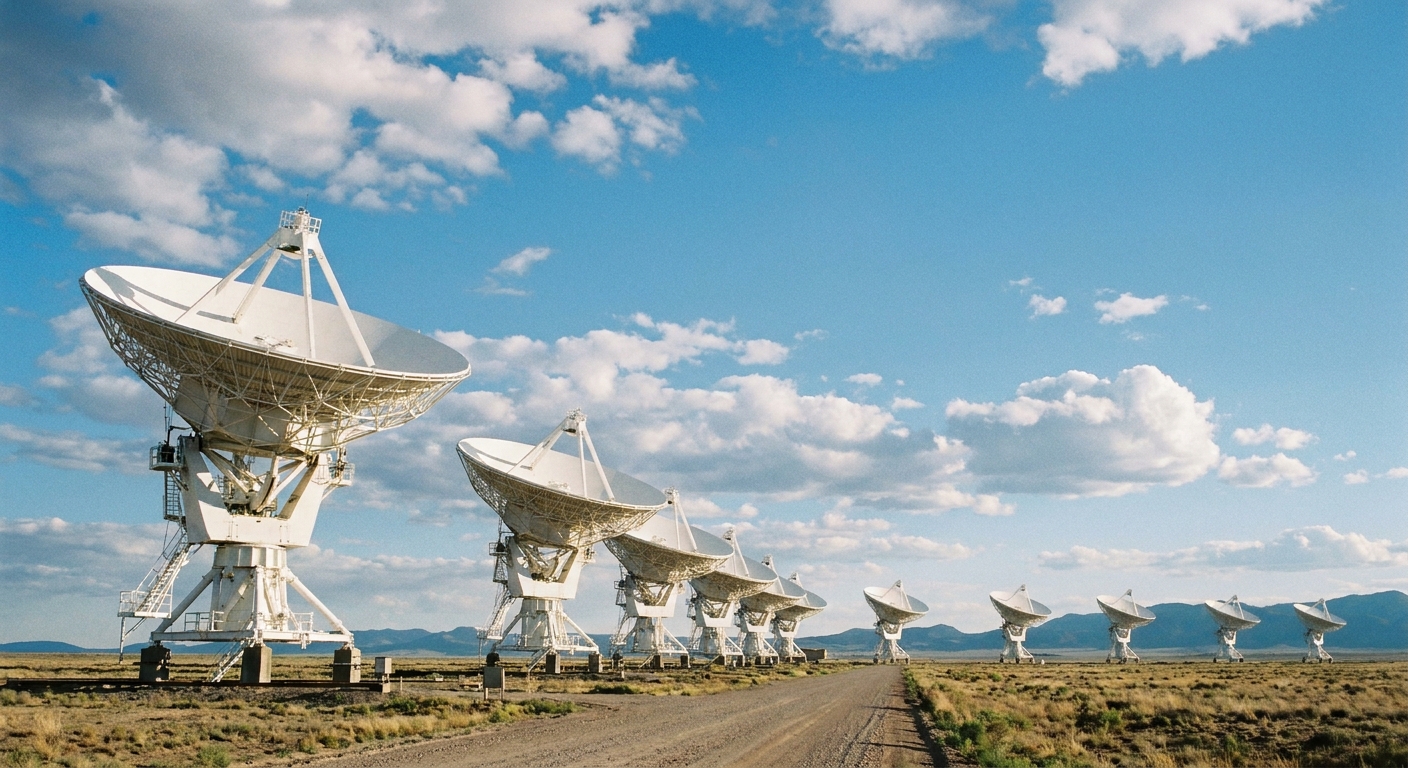
The Very Large Array is located on the Plains of San Agustin west of Socorro. It is remote in the best way, meaning: bring water, expect big weather swings, and do not assume you will have reliable cell service.
- From Albuquerque: roughly 2 to 2.5 hours each way to the visitor center, depending on your route and stops.
- From Socorro: about 45 minutes to an hour to the visitor center.
- What it is: 27 dish antennas working together as a single instrument to study radio waves from space.
- Scale reality check: each antenna is about 25 meters (82 feet) across, so yes, the “big dish” photos are accurate.
- What it feels like: a long, quiet drive to a place that looks like sci-fi but sounds like wind and meadowlarks.
Getting there
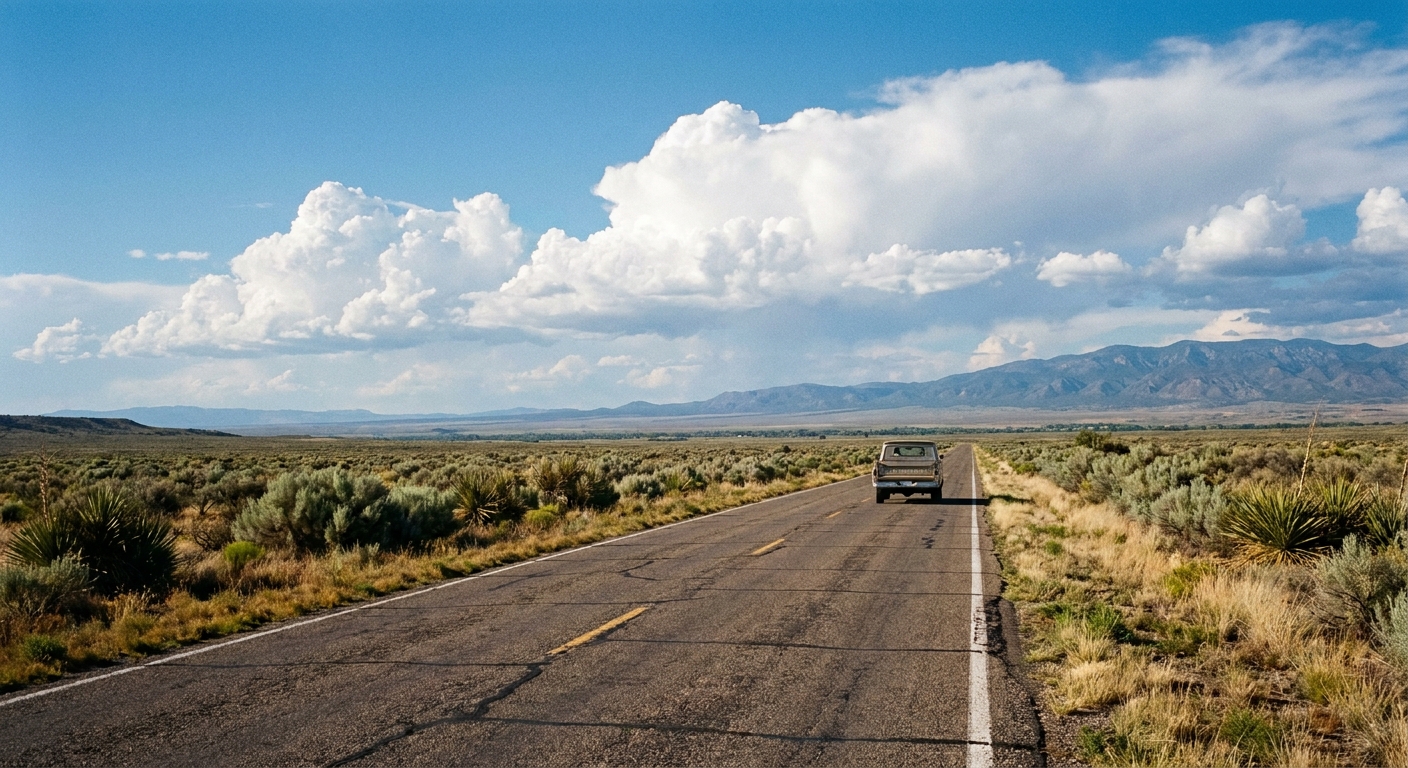
If you are coming from Albuquerque, the most common approach is I-25 south toward Socorro, then US-60 west toward Magdalena, followed by the signed turnoff for the VLA access road. Route choices and construction can shift drive times, so I treat the ETA as “best case,” not a promise.
- Services are limited once you leave the bigger towns. Fuel up in Albuquerque, Belen, or Socorro and grab snacks before you head west.
- Download offline maps before you go. The last stretch is exactly where you do not want to be improvising.
Hours, fees, and basics
VLA hours can change seasonally and for holidays, so treat any schedule you see on third-party sites as a starting point. The most reliable move is to confirm same-week on the official VLA website or by calling ahead before you leave Albuquerque, especially if your entire day hinges on catching a tour.
Admission and payment
Expect a small admission fee to visit the VLA site and visitor center, but verify current pricing and payment methods on the official site before you go. Policies can change, and remote card readers are not always living their best lives. I like having a backup option (cash or an alternate card) just in case.
On-site amenities
- Restrooms: available at the visitor center during open hours.
- Gift shop: typically aligned with visitor center hours, but confirm if you are timing your visit tightly.
- Food: do not count on finding meals on site. This is a bring-your-own-snacks kind of stop.
Planning tips
- Aim for late morning or early afternoon if you want the fullest visitor center experience. If you show up very early, you may be ahead of opening.
- Give yourself 60 to 120 minutes on site for a self-guided stop. Add time if you are doing a tour.
- Expect weather even when Albuquerque is mild. Wind on the Plains of San Agustin can be intense, and winter temps can bite.
Inside the visitor center, you are typically looking at exhibits that explain how radio astronomy works, why the array is arranged the way it is, and what kinds of discoveries the VLA has contributed to. It is approachable even if your last science class was a decade ago.
Guided vs self-guided
This is the classic choice: do you want maximum freedom, or do you want someone to connect the dots for you? Both work. The best option depends on your schedule and how curious you feel in the moment.
Self-guided visit
A self-guided stop is ideal if you are threading the VLA into a bigger day, traveling with kids who have unpredictable attention spans, or you simply like moving at your own pace.
- Pros: flexible timing, easy to keep it to a half day, great for photographers.
- Cons: you may miss context that makes the place feel even more mind-blowing.
- Time budget: 1 to 2 hours.
Guided tours
Guided tours (when offered) are worth it if you want the story behind what you are seeing and you love asking questions. The VLA is not just “big dishes in a field.” It is logistics, engineering, signal processing, and a whole lot of clever problem-solving in a harsh environment.
One practical expectation-setter: tours have traditionally been offered on a first-Saturday cadence at times, but schedules can change and can be limited or paused. Always confirm current tour days, start times, and any reservation requirements on the official site before you build your day around it.
- Pros: richer understanding, more satisfying if you are a science traveler.
- Cons: fixed start times, can fill up, may not run year-round.
- Time budget: plan on 2+ hours total on site, depending on the tour format.
My rule of thumb: If the VLA is your main event, pick guided. If it is a “science stop” on a day trip, self-guided keeps your day relaxed.
Deck and views
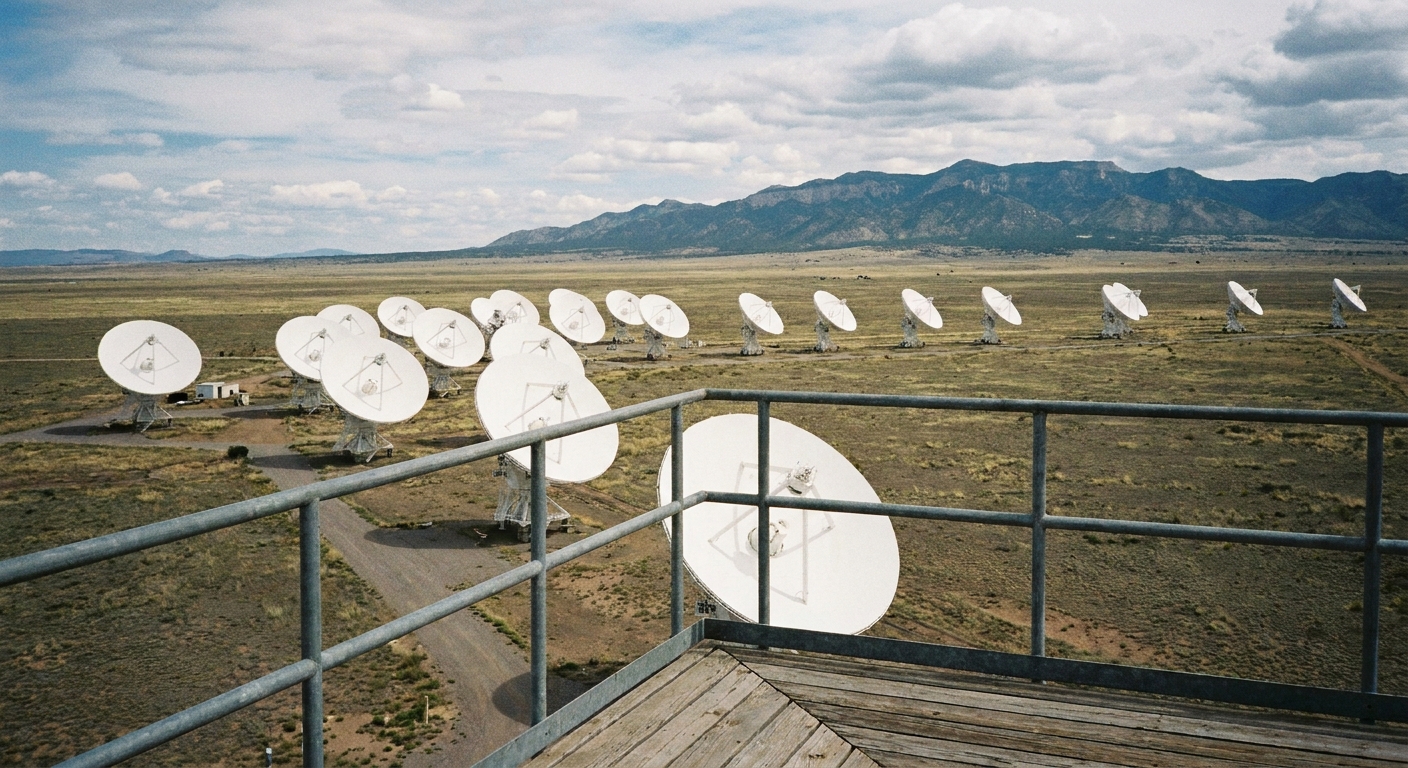
The observation deck is where the VLA goes from “interesting” to “wait, this is real.” On a clear day you can take in the scale of the array against the wide-open basin. The dishes often look close in photos, but in person you realize how much land you are looking across.
Highlights
- Multiple antennas at once with a clear view of how they are spaced.
- That unmistakable high-desert horizon with the Magdalena Mountains in the distance.
- Movement if you are lucky: antennas can rotate as they track targets, and sometimes you can spot activity around the rails used to reposition them.
If you are traveling with someone who “is not really into astronomy,” the deck is your ace. It is dramatic, quick, and the photo payoff is immediate.
Self-guided trail
If you do one thing beyond the visitor center exhibits and the observation deck, make it the self-guided walking trail. This is the centerpiece of the DIY VLA experience. It is the moment where your brain finally accepts the true scale of what you are looking at.
What the walk is like
- Up close payoff: the trail takes you right up to the base of a giant antenna, close enough to feel how massive the structure really is.
- Easy effort, real exposure: it is visitor-friendly and not a “hike,” but you are out on an open plain with sun and wind. Bring water and sun protection.
- Surface and access: expect a straightforward outdoor path with interpretive signs. Conditions can vary with weather, so if accessibility is a concern, call ahead and ask what to expect that week.
- Best mindset: take your time and read the signs. The “how” is almost as fun as the “wow.”
Bring a wind layer, hang onto your hat, and keep an eye on the sky. This place can go from calm to gusty fast.
Cell service
Let me save you from the most common VLA mistake: assuming you will have reliable cell service. The Plains of San Agustin are remote, and coverage can be spotty to nonexistent depending on your carrier and exact location. This is not the place to rely on streaming maps or last-minute searches.
Do this before you leave
- Download offline maps for the whole route, including the final approach roads.
- Screenshot key info: visitor center hours, tour times, admission details, and any reservation notes.
- Pack water and snacks, especially if you are pairing it with a refuge or monument later.
This is also a good moment to lean into the upside: when the signal drops, the noise drops too. The drive starts feeling like a real road trip instead of a commute with podcasts.
Season notes
- Summer: plan for heat, strong sun, and the possibility of monsoon storms and lightning later in the day. If clouds build fast, take the hint and head in.
- Winter: wind chill can be sharp, and roads can be affected by storms. Check forecasts and road conditions before you commit.
- Shoulder seasons: often the sweet spot for comfort, but wind is still a main character.
Half-day plan
If you want the VLA without sacrificing the rest of your New Mexico plans, build it like a strong layover: clear goal, tight timing, zero chaos.
Option A: VLA then Albuquerque
- Depart Albuquerque: early morning.
- VLA visit: late morning, self-guided plus the walking trail, or timed for a tour if it lines up.
- Return: mid afternoon.
- Ideal for: travelers with dinner plans in town, brewery people, museum people, anyone who likes sleeping in their own hotel bed.
Option B: VLA then Socorro
- Depart Albuquerque: late morning.
- VLA visit: afternoon, with time for the deck and the self-guided walk.
- After: linger in Socorro for a low-key meal or aim for warm light on the drive.
- Ideal for: photographers chasing softer light and travelers who like a slower start.
Pair with Bosque
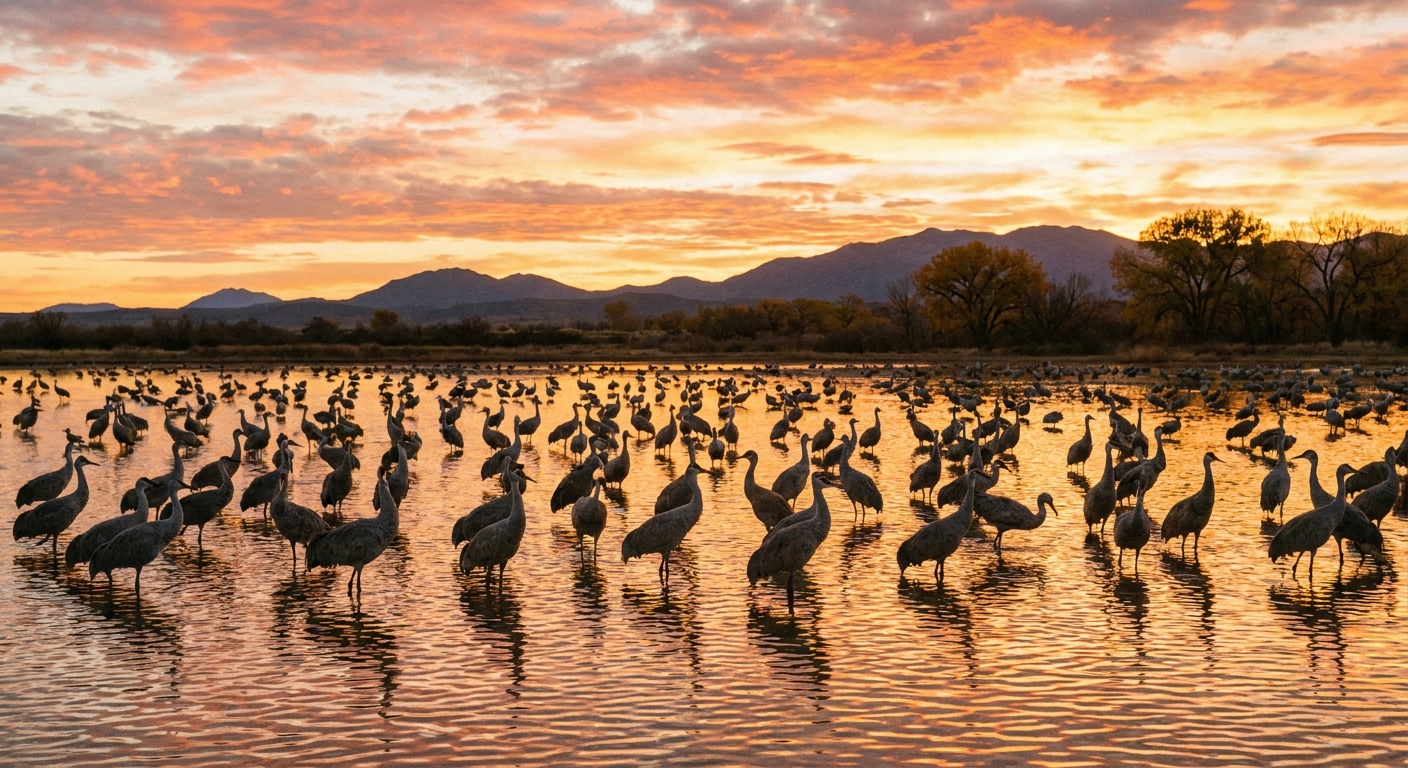
If you want a day that feels quintessential New Mexico, pairing the VLA with Bosque del Apache National Wildlife Refuge is a satisfying combo: cosmic scale at mid-day, living ecosystem at the edges of the day. The refuge is especially famous for birding and seasonal migrations, but even outside peak seasons the landscapes can feel peaceful and expansive.
How to make it work
- Keep the VLA stop efficient (self-guided is often the easiest).
- Plan for a drive loop at the refuge rather than a long hike, unless you have a full day.
- Bring binoculars if you have them. If not, a camera zoom works too.
Timing note: Bosque shines at sunrise and late afternoon. If you can, structure your day so you are at the refuge for the softer light window, then let the VLA be your mid-day anchor.
Pair with Petroglyph
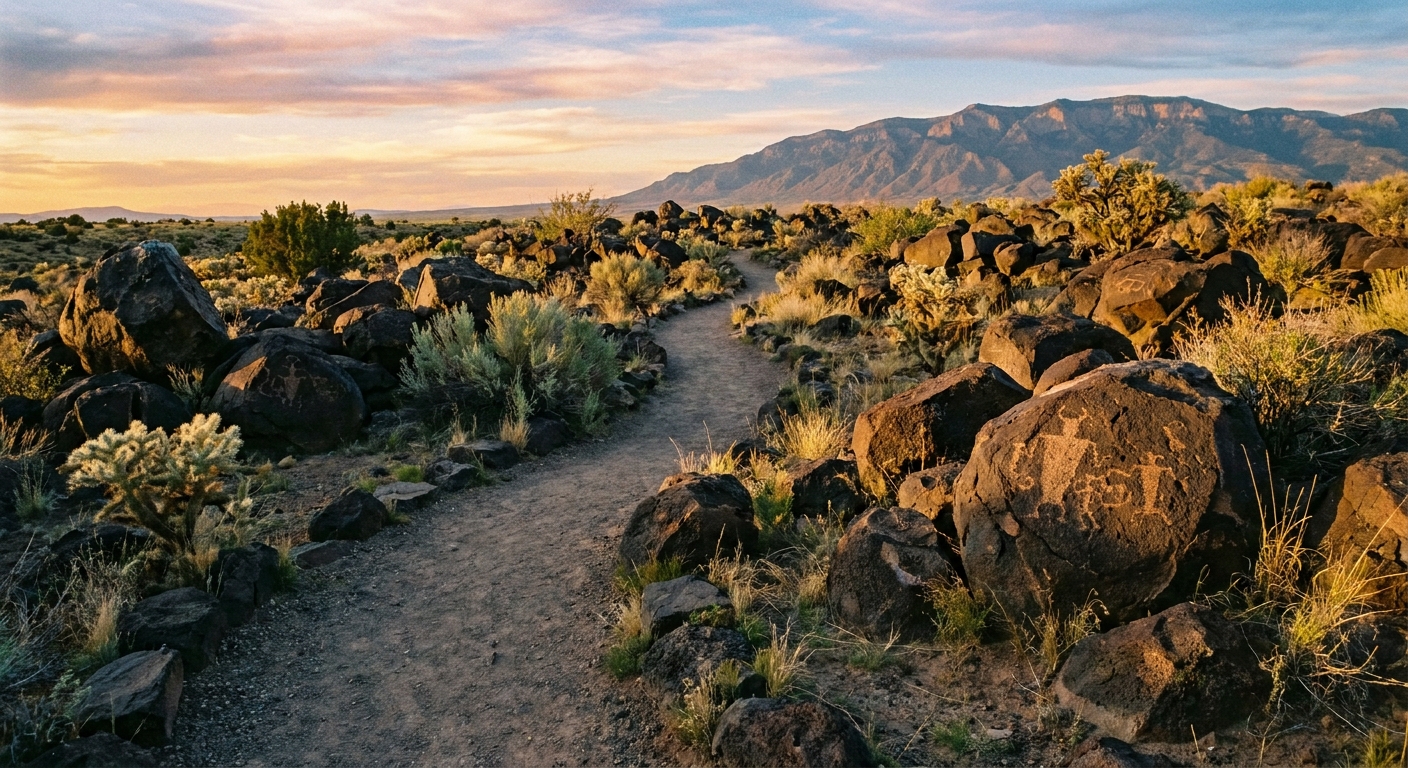
If you would rather keep your day centered on Albuquerque, pair the VLA with an afternoon at Petroglyph National Monument. It is a great way to pivot from modern science to deep human history without leaving the metro area.
A smooth plan
- VLA in the morning with a firm turnaround time.
- Late afternoon at Petroglyph when the light gets softer and the basalt is not radiating heat as aggressively.
- Choose a short loop based on your energy level rather than trying to do it all.
This pairing works best if you like variety: a big road trip feel earlier, then an easy, culturally rich walk closer to your hotel later.
Practical tips
- Dress for wind. Even on a sunny day, the plains can be cold and loud with gusts.
- Bring a lens cloth. Dust is real, and it loves camera glass and sunglasses.
- Pack a real picnic. This is one of those places where eating outside feels like part of the experience.
- Drive with margin. Remote roads plus changing weather equals “do not cut it close.”
- Follow site rules. You are visiting an active research facility. Stay in designated visitor areas, read the signs, and do what staff asks.
- Photography etiquette: photos from public visitor areas are typically part of the fun, but avoid wandering into restricted zones or blocking walkways while you frame the perfect shot.
If you like collecting travel moments that are both beautiful and brain-expanding, the VLA delivers. It is rugged New Mexico, a science landmark, and a reminder that some of the most exciting things humans do happen far away from crowds, under a sky that looks endless.