Wallace Falls: Lower, Middle, or Upper?

Maya Lin
Maya Lin is a travel journalist and outdoor enthusiast who believes the best trips combine rugged adventures with urban comforts. After spending six years backpacking across four continents, she founded Trail & Town Guide to help fellow travelers navigate both hidden mountain passes and bustling city neighborhoods with confidence.
Wallace Falls is one of those Highway 2 classics I recommend when you want a real waterfall payoff without turning your day into an alpine sufferfest. The question is not whether it is worth it. It is how far you should go: stop at the Lower Falls, push to the Middle Falls (the iconic view), or keep climbing to the Upper Falls for a quieter finish.
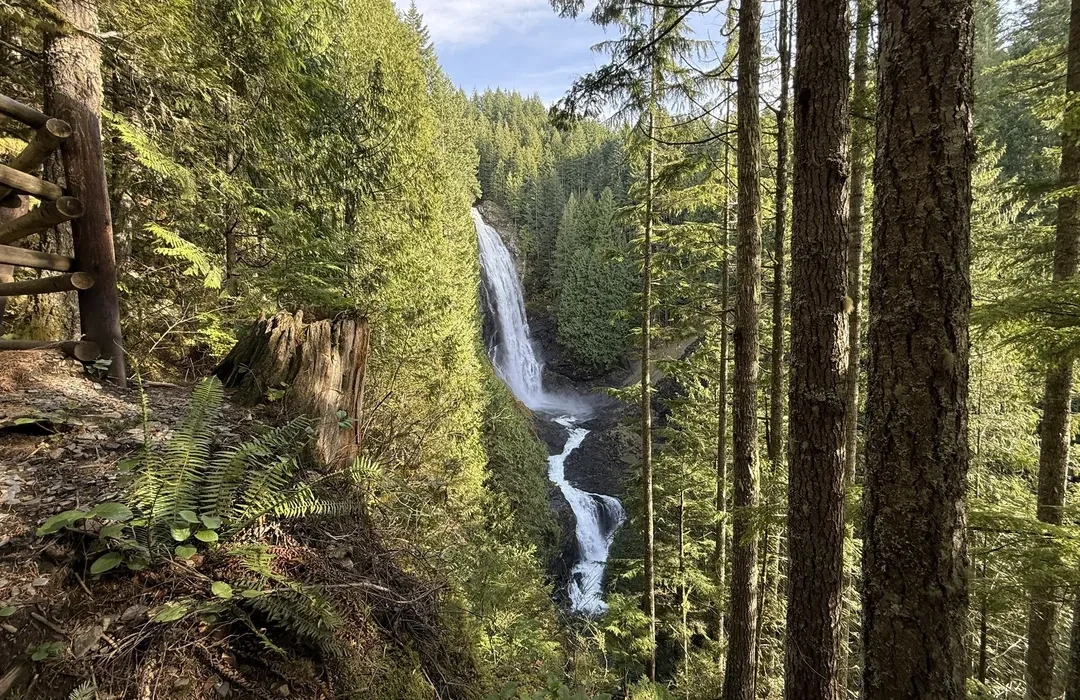
I have done all three turnarounds, including a couple of weekends when the parking lot felt like a festival. Here is how I decide, with honest tradeoffs and the practical stuff people always forget until they are standing at the trailhead.
Quick answer: which falls?
- Choose the Lower Falls if you want a short, easy outing, you have kids who are still warming up to hiking, or you are visiting on a peak weekend and just want the sound of rushing water fast.
- Choose the Middle Falls if you want the signature Wallace Falls moment and the best view-for-effort ratio. For most first-timers, this is the sweet spot.
- Choose the Upper Falls if you have the time and legs, want a little more breathing room, and like the feeling of finishing a hike with fewer people around.
If you are torn, my default recommendation is: Middle Falls if you are here for the first time, Upper Falls if you are here for the second time.
Trail basics
Wallace Falls State Park sits just outside Gold Bar, Washington, along the Highway 2 corridor. The hike follows the Wallace River upstream through dense, damp forest. You will pass a series of viewpoints and side paths that lead to the park’s waterfall tiers.
The tiers are separate viewpoints rather than a single loop where you see everything at once. The higher you go, the more elevation you gain, and the more the crowd thins out.
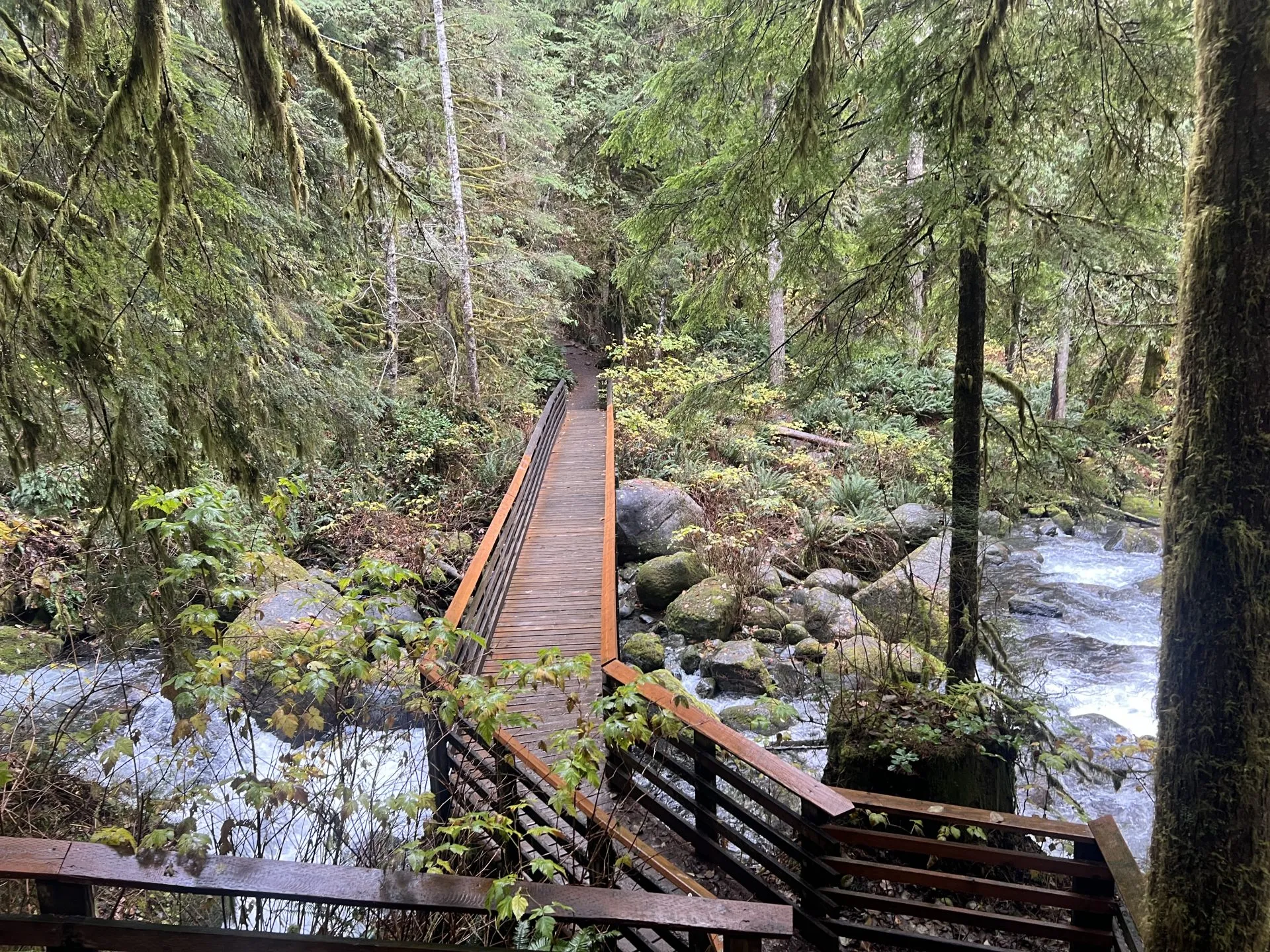
Important expectation-setting: Wallace Falls is a state park waterfall hike. You do not need an Alpine Lakes Wilderness permit, and you are not doing a Columbia River Gorge-style waterfall loop. Think: a well-loved, well-maintained trail with big scenery and big weekend energy.
Distance and effort
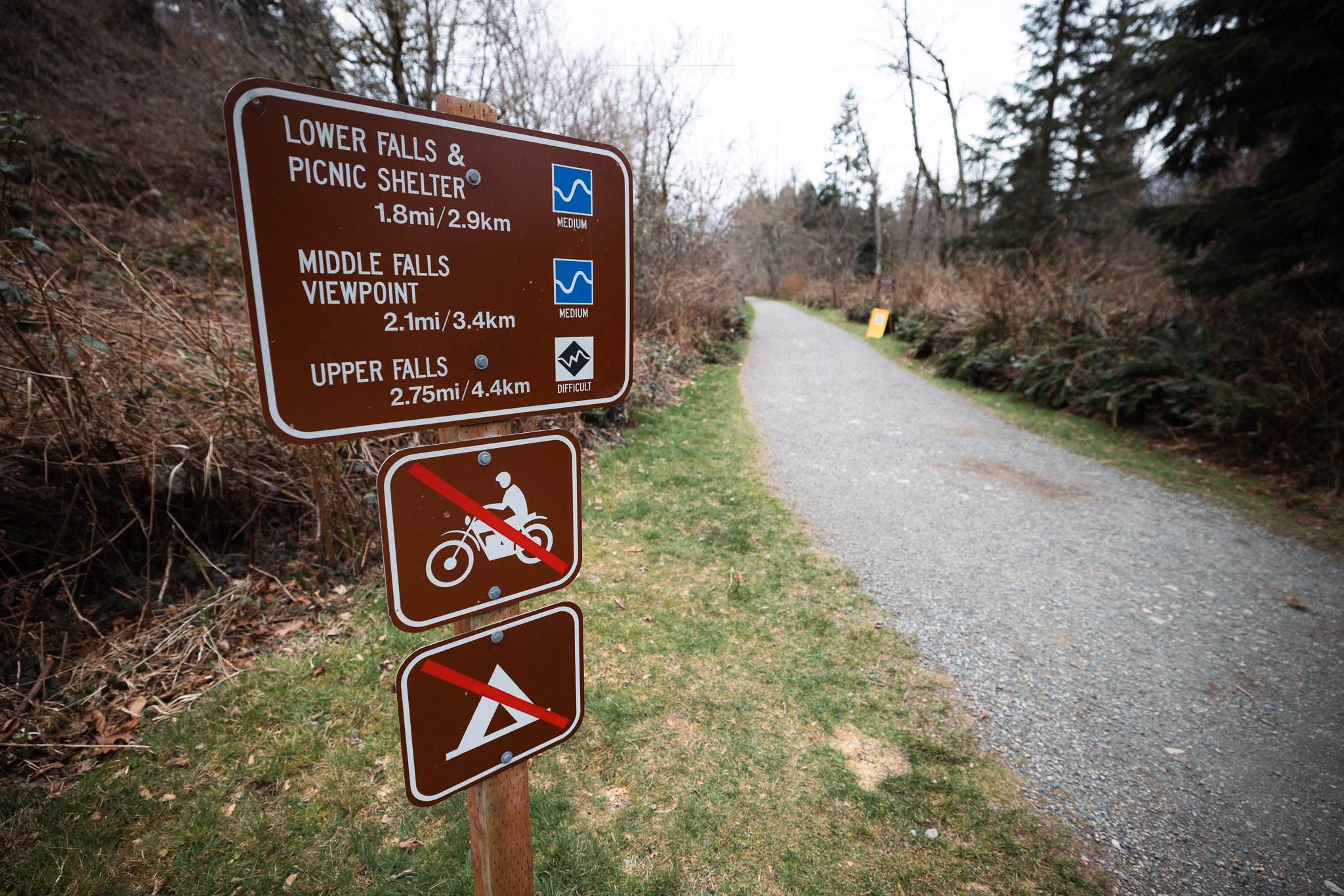
Wallace Falls mileage is famously inconsistent across sources because it depends on which viewpoint spur you choose and whether you mix routes (Woody Trail vs Railroad Grade). Use these about ranges as planning estimates, then trust the trailhead map and on-trail signs for the final word.
- Lower Falls: about 2.5 to 3.5 miles round trip, with modest elevation gain. This is the most “family stroll that still feels like a hike” option.
- Middle Falls: about 4.5 to 5.0 miles round trip, with moderate elevation gain. This is the classic turnaround.
- Upper Falls: about 5.5 to 6.0 miles round trip, with steady climbing and a more workout-y feel, especially on the way back up after photo stops.
In plain language: Lower is quick, Middle is satisfying, Upper is a half-day hike with a little pride baked in.
My timing rule of thumb:
- Lower Falls: 1 to 2 hours
- Middle Falls: 2.5 to 4 hours
- Upper Falls: 3 to 5 hours
Those ranges assume a normal amount of stopping for photos and catching your breath. If you picnic at viewpoints, add time.
When Lower Falls is enough
I love a big summit day as much as anyone, but Wallace Falls is also a fantastic short outing. The Lower Falls turnaround makes sense when:
- You are hiking with little kids or anyone who is unsure about distance. Lower Falls gives a waterfall payoff without the long climb.
- You arrived late and just want a quick nature reset before dinner in town.
- It is a crowded weekend and you would rather do a shorter walk and spend the rest of your day somewhere quieter.
- You want the riverside feel more than the “lookout platform” vibe. The lower section tends to feel like a lush riverside forest walk.
What you miss by stopping at Lower Falls: the most dramatic “postcard” angle is higher up. Lower is still pretty, but Middle is the showstopper.
If your group is debating, a good compromise is to aim for Lower Falls, check in honestly at the viewpoint, then decide if you want to keep going. There is no shame in turning around here. This is supposed to be fun.
Why Middle Falls is the classic
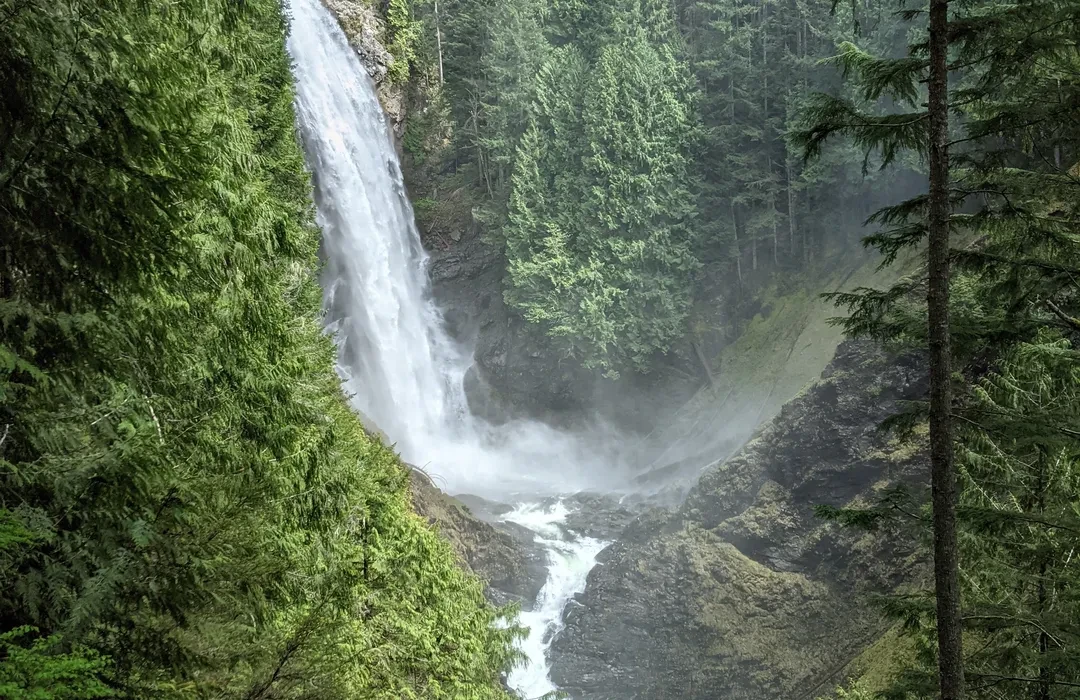
The Middle Falls viewpoint is the moment most people come for: a powerful drop, a narrow rocky chute, and that full-body roar that makes everyone talk a little louder without realizing it.
- Best payoff per mile: If you only do Wallace Falls once, I would rather you earn Middle Falls.
- Most iconic photos: This is where you get the dramatic framed view of the falls.
- Great shared-win hike: It is challenging enough to feel earned, but not so long that it scares off newer hikers.
The honest tradeoff: Middle Falls is also where the crowds concentrate. On weekends, expect waiting for space at the viewpoint. If you are patient and friendly, it is fine. If you crave solitude, consider continuing up or going early.
Why Upper Falls is worth it
The walk from Middle to Upper feels like a shift. You are still in the same green, mossy world, but the farther you go, the more people peel off and head back down. That quieter trail is the biggest bonus feature of going to Upper.
- More breathing room: Fewer people, less viewpoint congestion.
- Longer forest immersion: If you like being in the woods as much as you like the waterfall itself, you will appreciate the extra distance.
- A more complete day out: Upper makes Wallace Falls feel like a real half-day hike, not just a quick waterfall dash.
The tradeoff is that the wow factor does not necessarily double just because the mileage does. The Middle Falls is still the marquee view. I go to Upper when I want the experience to last longer, not because I expect a dramatically better photo.
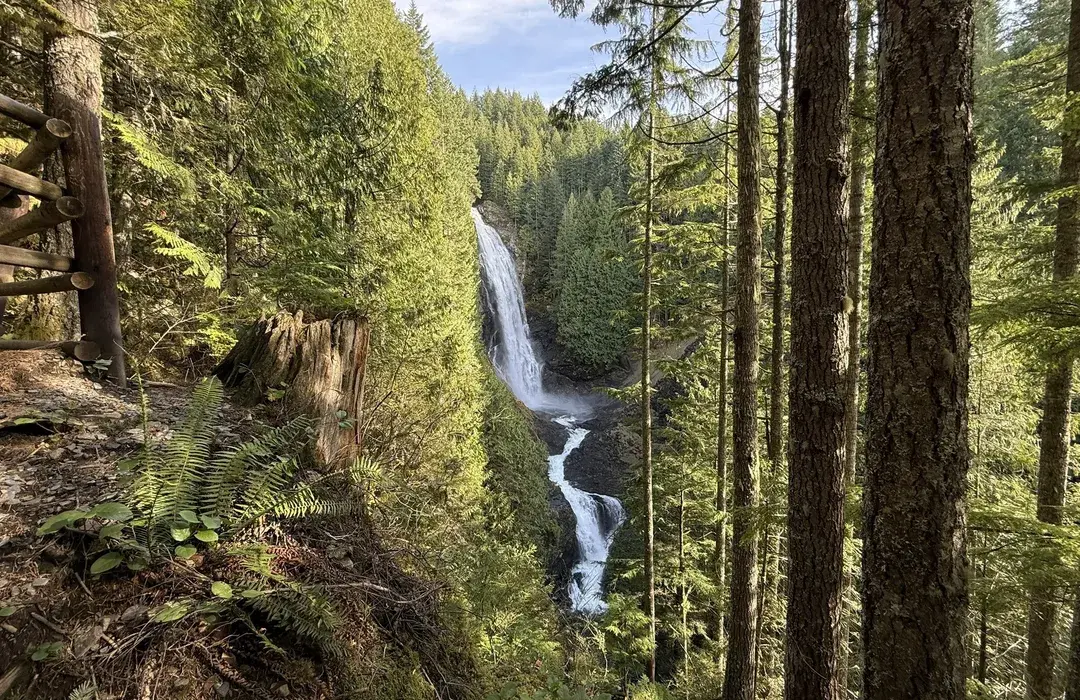
Good to know: Upper can feel noticeably cooler and damper, especially in shoulder season. Pack a light layer even if the parking lot feels warm.
Woody Trail vs Railroad Grade
This is the part that trips people up, because the names sound like one is the “main” route and one is the side route.
- The Woody Trail is the primary pedestrian hiking route to the waterfall viewpoints. If you are hiking to Lower, Middle, or Upper, you will almost certainly be on the Woody Trail for most of it.
- The Railroad Grade is the wider, more gradual alternative route in the park. It is often used for a gentler incline, for variety, or to spread out from the main hiking flow.
My rule of thumb
- First time? Take the Woody Trail to the falls viewpoints. It is the most direct, classic waterfall-hike experience.
- Want a steadier climb or a change of scenery? Use the Railroad Grade for one direction, then return via the Woody Trail (or vice versa) to make an interesting out-and-back or partial loop.
Because junction choices can nudge your total mileage, I recommend checking the trail map at the kiosk and deciding whether you want the most direct route to the viewpoints, or a slightly different approach that trades directness for a mellower grade. Either way, you are still in waterfall country.
Parking and Discover Pass
Wallace Falls is a Washington State Park, so you should expect to need a Discover Pass for vehicle access and parking. If you already have one for state parks and many other state-managed recreation sites, you are set.
- Bring it with you: Display it as required on your dashboard.
- If you do not have one: Plan ahead. Options and enforcement can change, so check the current Wallace Falls State Park page on Washington State Parks before you go.
I always treat the pass like my hiking version of “keys, wallet, phone.” It is annoying to realize you forgot it when you are already in line for a spot.
Crowds and timing
This is one of the most popular waterfall hikes near Seattle, and the popularity is earned. The side effect is full parking and tight viewpoints on sunny weekends.
Strategies that work
- Go early: If you can start in the morning, you will have a dramatically better experience.
- Go late: Late afternoon can also be calmer, especially if you only plan to do Lower or Middle.
- Choose your turnaround intentionally: If the lot is packed and your group is not excited about weaving through crowds, Lower Falls is a great “take the win and leave happy” option.
- Continue to Upper for space: If you have the time and energy, the crowd tends to thin above Middle.
- Pack patience: Expect to wait for photos at Middle Falls. It goes faster when everyone takes a quick turn.
If you are hiking with someone new to trails, I find it helps to name the crowding out loud before you start. It resets expectations and keeps the mood light.
Season and conditions
Wallace Falls is a year-round hike, but it changes with the calendar.
- Best flow: Winter and spring usually bring the loudest, fullest falls. It is also when the trail is most likely to be slick.
- Summer: Still beautiful, but flows can be lower during late summer dry spells. Bring more water than you think you need.
- Cold snaps: Expect mud, icy patches, and slippery boards and roots. If it is freezing in the morning, I assume the shady sections will be sketchy until proven otherwise.
If conditions are questionable, I dial back expectations and treat Middle Falls as a perfectly solid goal.
Safety and accessibility
The trail is well-maintained, but it is still real terrain: roots, stairs, mud, and drop-offs at viewpoints.
- Stay behind railings and barriers: The edges are not the place to gamble, especially with kids.
- Keep a close hand on children near viewpoints: The sound and spray are distracting in the best way.
- Strollers and wheels: This is not a stroller-friendly waterfall hike past the earliest sections. If you need fully accessible surfaces, this one is a tough fit.
The goal is to leave with photos and happy legs, not a story that starts with “we stepped around the fence because…”
What to pack
This is not a technical hike, but it is the Pacific Northwest. Wet roots and slick spots are part of the charm.
- Good traction shoes: Trail runners or hiking shoes you trust on damp ground.
- Light rain layer: Even if the forecast looks fine. Mist near the falls is real.
- Water and a snack: Middle and Upper feel more enjoyable when you do not rush.
- Small first-aid basics: Blister coverage is the big one.
- Phone battery cushion: Photos plus spotty service can drain you fast.
If you are going on a hot summer day, add electrolytes. The climb back can sneak up on you.
Sample itineraries
Option A: Lower Falls plus town comforts
- Arrive, do Lower Falls, keep it relaxed
- Drive back toward Gold Bar or nearby stops for coffee and lunch
- Bonus: short scenic pullouts along Highway 2 if you are exploring
Option B: Middle Falls as the main event
- Start early, hike to Middle Falls, take a real break at the viewpoint
- Head down before the trail gets busier
- End with a sit-down meal nearby so your legs forgive you
Option C: Upper Falls half-day
- Plan a longer morning, steady pace, fewer rushed photos
- Stop at Middle Falls but do not let it be your only rest
- Upper Falls turnaround, then a long, mellow descent
FAQ
Is Wallace Falls good for beginners?
Yes, especially to the Lower Falls. Middle Falls is beginner-friendly if you take your time and bring water. Upper Falls is more of a moderate workout because the elevation adds up.
Do I need a permit?
For a typical Wallace Falls State Park day hike, you are dealing with state park access rules and parking requirements, not an Alpine Lakes Wilderness permit system. Check Washington State Parks for current fees and options.
If I only have two hours, what should I do?
Aim for the Lower Falls. If you move efficiently and the trail is not too crowded, you might be able to stretch farther, but Lower is the safest “guaranteed enjoyable” plan in a tight window.
Is the Railroad Grade worth it?
If you want a steadier incline or you are hiking with someone who dislikes constant up-and-down, yes. For first-timers who want the most direct waterfall-viewpoint experience, the Woody Trail keeps it simple.
My recommendation
If you are choosing just one turnaround: do the Middle Falls. It is the Wallace Falls memory you will keep.
If you are arriving late, hiking with kids, or simply not in the mood for a longer climb: Lower Falls is absolutely enough, and you will still get that lush, river-and-evergreens Pacific Northwest feeling.
If you want to turn a popular state-park hike into something that feels a little more spacious and satisfying: keep going to Upper. What the walk adds is not just another viewpoint, but a calmer rhythm on the trail.