What to Do If You Encounter a Snake While Hiking

Maya Lin
Maya Lin is a travel journalist and outdoor enthusiast who believes the best trips combine rugged adventures with urban comforts. After spending six years backpacking across four continents, she founded Trail & Town Guide to help fellow travelers navigate both hidden mountain passes and bustling city neighborhoods with confidence.
Most snake encounters on US trails are a lot like awkward small talk: surprising, a little tense, and over fast if you give everyone space. Snakes are not out hunting hikers. They are trying to thermoregulate, hide, and not get stepped on. Your job is simple: slow down, create distance, and let the snake choose an exit.
I have met plenty of snakes from the Rockies to the Southeast, and the pattern is consistent. The sketchiest moments happen when people move too quickly, get too close for a photo, or step where they cannot see. This guide walks you through exactly what to do if you see a snake, how to spot the main venomous snakes hikers worry about, what snakebite first aid actually looks like, and how to prevent the whole situation in the first place.
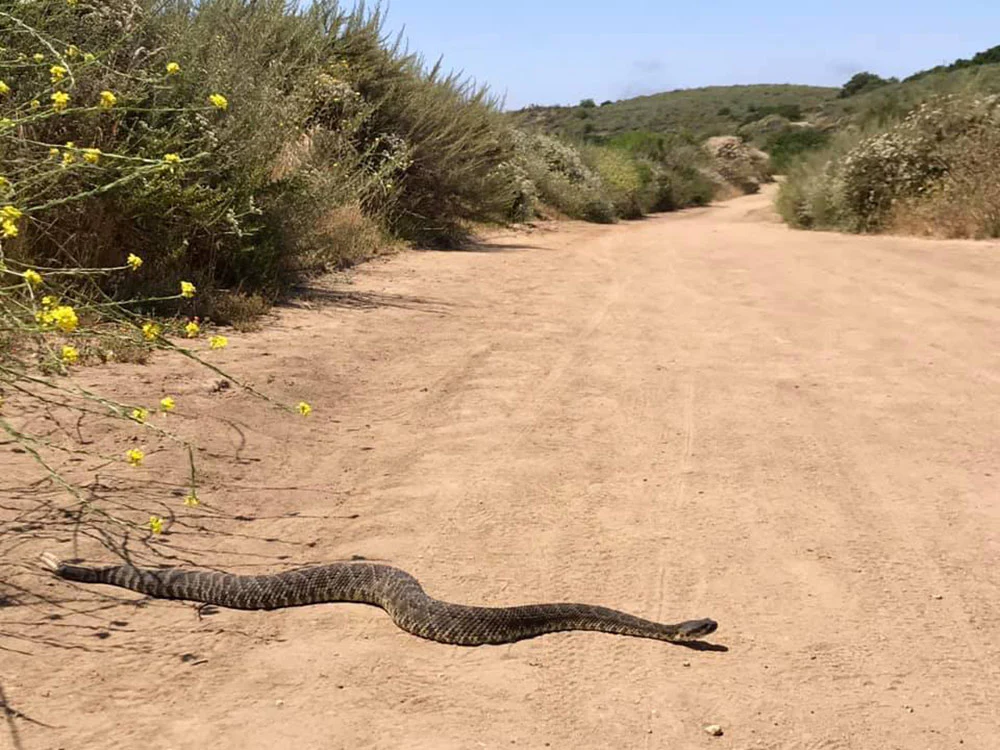
The 10-second plan when you see a snake
If you remember nothing else, remember this sequence. It keeps you safe and gives the snake a chance to leave.
- Stop moving. Freeze for a second so you do not step closer without realizing it.
- Locate the snake’s head. Do not guess. If you cannot see the head clearly, assume you are too close and back away.
- Back away slowly. Take 3 to 5 deliberate steps back. No hopping, no sudden turns.
- Create a wide buffer. Aim for 6+ feet if you can. That is a conservative comfort zone, not a promise about strike distance. More is better.
- Let it pass, or go around widely. If the snake is on the trail, wait. If you must go around, step well off the path only if you can see the ground clearly. Avoid tall grass, rock piles, thick brush, and leaf litter you cannot visually check.
- Call out to others. A calm “Snake on trail” warning helps the next group avoid a surprise step.
Do not: try to move the snake, throw rocks, poke it with a trekking pole, or corner it for a photo. Defensive snakes are the ones that bite.
Venomous vs non-venomous: what matters
On US hikes, most snakes you see will be non-venomous and doing you a favor by eating rodents. But the venomous groups that cause most trail anxiety, and in certain regions are legitimately common, are rattlesnakes, copperheads, and water moccasins (also called cottonmouths). These three are pit vipers, meaning they have heat-sensing pits and often look thicker-bodied than many harmless snakes.
One important add-on for a truly US-wide guide: coral snakes are also venomous and live in parts of the South and Southwest. They are not pit vipers, and they are a different kind of medical problem, so they deserve a quick callout below.
Also, quick “rules” like “triangular head equals venomous” are not reliable because many harmless snakes flatten their heads when threatened. Instead, focus on behavior and distance. If you cannot confidently identify it from a safe distance, treat it as potentially venomous and give it space.
Quick ID: common venomous snakes
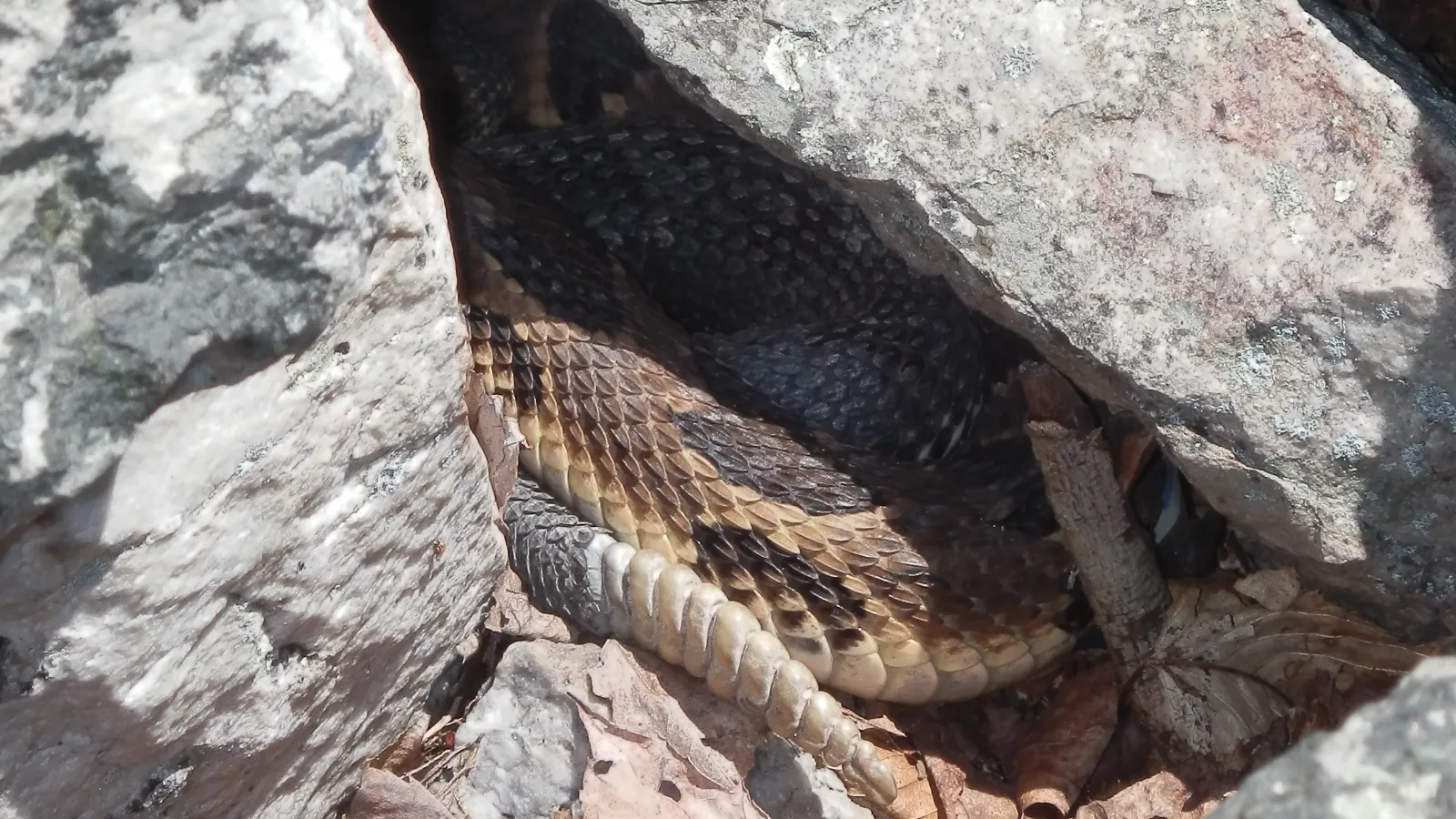
Rattlesnakes
Where: Many regions across the US, especially the West and Southwest, plus parts of the Midwest and Southeast depending on species.
Clues:
- Rattle: a segmented tail tip that may buzz when the snake is alarmed. Not all rattlesnakes rattle every time, and juveniles can have a small, quieter rattle.
- Build: often thick-bodied with patterned coloration that blends into rocks and dry grasses.
- Habitat: sunny trail edges, rocky outcrops, scrub, open woods. They like places where they can warm up and still vanish fast.
Trail reality check: The rattle is a warning, not a challenge. If you hear it and cannot see the snake, stop immediately and scan before moving.
Small nuance: Most US pit viper bites are not primarily neurotoxic, but some rattlesnakes can cause neurologic symptoms. Either way, treat any suspected venomous bite as an emergency.
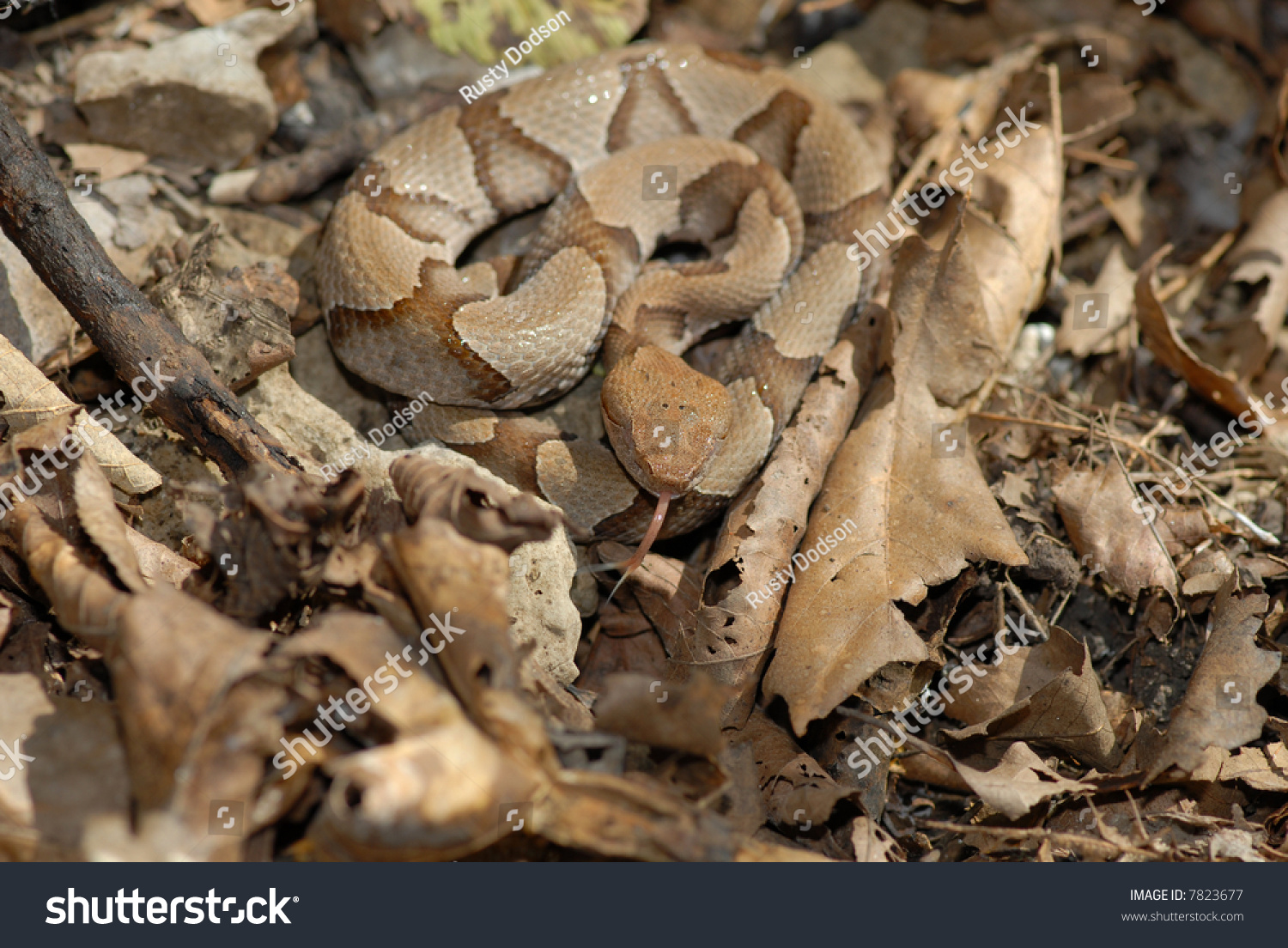
Copperheads
Where: Eastern and central US, including many popular hiking states in the Southeast and Mid-Atlantic.
Clues:
- Hourglass bands: distinctive darker crossbands that narrow along the spine and widen on the sides.
- Excellent camouflage: copperheads disappear into leaves and sticks. Many encounters are nearly step-on situations.
- Habitat: wooded trails, rocky hillsides, leaf litter, brushy edges.
Trail reality check: Because they blend in so well, copperhead prevention is largely about where you place your feet and hands.
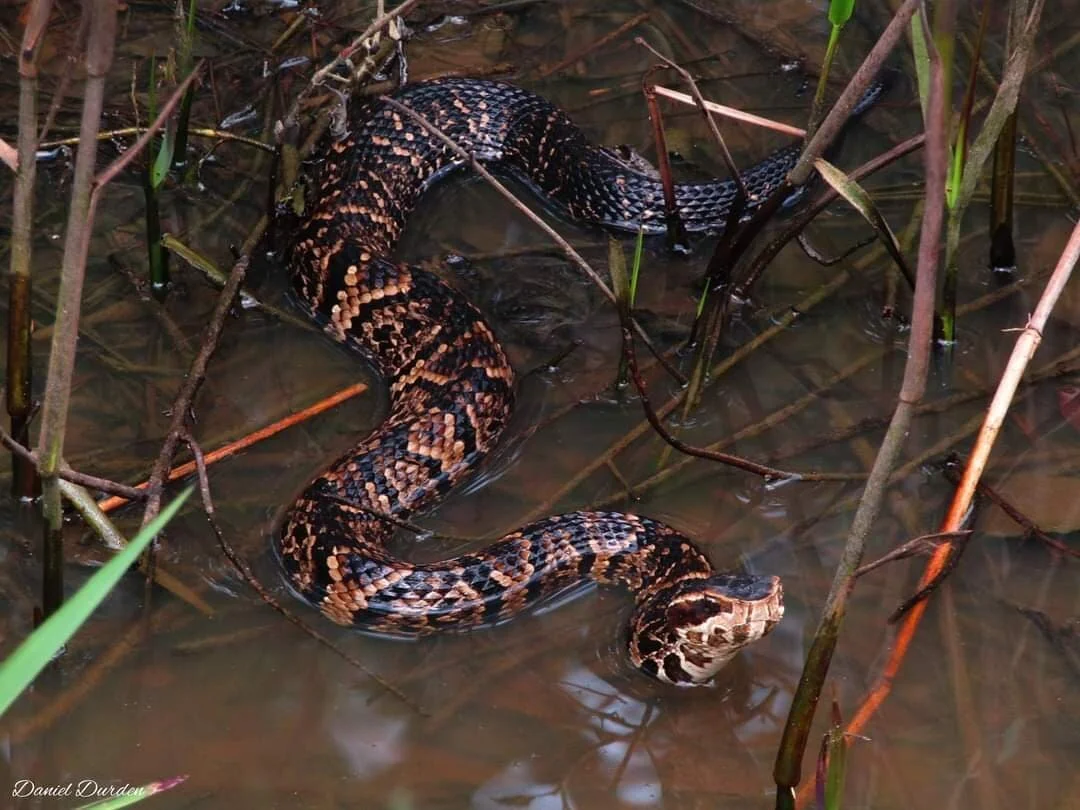
Water moccasins (cottonmouths)
Where: Southeastern US, typically near water.
Clues:
- Thick, dark body: often appears heavier than many harmless water snakes.
- Defensive display: may open its mouth to show a pale, “cotton” interior.
- Habitat: marsh edges, slow-moving creeks, ponds, swampy trails. They may be on banks, logs, or in shallow water.
Common confusion: Non-venomous water snakes are frequently mistaken for cottonmouths. If you are not sure, keep distance and move on.
Coral snakes
Where: Parts of the Southern US and Southwest (regional, but important).
Clues: Coral snakes are typically smaller and have bold colored banding. People love the old rhymes about band colors, but lighting, regional variation, and look-alikes make that a risky game. The safe rule is simpler: do not try to confirm an ID up close. Give any brightly banded snake space.
Trail reality check: Coral snake venom is primarily neurotoxic, and symptoms can be delayed. That does not mean it is “fine.” It means you still need prompt medical care and close monitoring.
If the snake is on the trail
This is the most common scenario, especially in cooler mornings when snakes use the trail like a warm sidewalk.
- Wait it out. Often the snake will move off within a minute or two if it has an escape route.
- Give it an exit. Do not crowd it from both sides. If a group arrives, spread out and stay back.
- Take a wide detour only if it is safe. If the shoulders are thick brush, tall grass, rock piles, or leaf litter you cannot see into, waiting is safer than stepping into hidden snake habitat.
- Do not try to “shoo” it. Many bites occur when people attempt to relocate a snake with sticks or rocks.
If you are surprised up close
Sometimes you spot a snake at the exact moment you are already too close. This is when calm, slow movement matters most.
- Freeze, then back up slowly. Sudden jumps can trigger a defensive strike.
- Keep your eyes on it. You are trying not to step toward it while you retreat.
- Do not run downhill without looking. It is easy to trip, and a fall can be worse than the snake encounter.
- After you are clear, regroup. Make sure everyone in your party knows where the snake is before anyone moves forward.
Snakebite first aid
Let’s be blunt: the goal is to get professional medical care fast. Modern treatment works. Most serious complications come from delayed care, or from harmful DIY methods.
If someone is bitten
- Move away from the snake. Create distance so there is no second bite.
- Call 911 or emergency services immediately. If you are remote, activate your satellite messenger or PLB. Tell them it is a suspected venomous snakebite and share your location.
- If you can do it safely, take a photo from a distance. Do not approach the snake and do not waste time. A quick zoomed photo can help with identification.
- Keep the person still and calm. Movement increases blood flow and can speed venom distribution. If you have the skills and supplies, gently immobilize the limb (splinting helps) while you wait for guidance.
- Remove rings, watches, or tight clothing near the bite. Swelling can start quickly.
- Position the bitten limb neutrally. Keep it relaxed and supported around heart level if possible. Follow EMS instructions if they give specific positioning guidance.
- Cover with a clean, dry dressing. Think basic wound care.
- Monitor breathing, alertness, and allergic reactions. Be ready to start CPR if needed. Trouble breathing is uncommon with many US pit viper bites, but it can happen. Watch for wheezing, hives, or facial swelling after any bite.
- Note the time of the bite and symptom changes. Swelling progression, nausea, dizziness, weakness, unusual bleeding, numbness, or increasing pain are useful details.
Important: Some bites are “dry” (no venom), and some serious bites do not look dramatic in the first minutes. Lack of immediate symptoms does not rule out envenomation. Get evaluated anyway.
Do not do these “solutions”
- Do not cut the wound or try to “bleed out” venom.
- Do not suck out venom with your mouth or a pump kit.
- Do not apply a tourniquet. This can cause severe tissue damage.
- Do not apply ice or soak in cold water.
- Avoid alcohol or caffeine. You want steady vitals and a clear head, not stimulants or extra dehydration risk.
- Do not attempt to catch or kill the snake. This causes additional bites. If you can safely take a photo from far away, great. Otherwise, move on.
If you are unsure whether it was venomous: Treat it as venomous.
When to get medical care
For a suspected bite from a rattlesnake, copperhead, cottonmouth, or coral snake, seek emergency care immediately, even if symptoms seem mild at first.
Go to the ER or call emergency services if any of the following happen after a bite from any snake you cannot confidently identify:
- Rapid swelling, bruising, or severe pain
- Nausea, vomiting, sweating, weakness
- Numbness or tingling spreading beyond the bite area
- Trouble breathing or swallowing
- Fainting, confusion, or unusual sleepiness
- Bleeding that is hard to stop
If a clearly non-venomous snake bites you, it is still worth cleaning the wound well and watching for infection. Consider urgent care if the bite is deep, dirty, or you are due for a tetanus shot.
Prevention: avoid encounters and bites
My “carry-on only” brain loves prevention because it is lightweight, repeatable, and free. Most snakebite prevention is just mindful movement.
On the trail
- Watch your step and your hands. Step on top of logs and rocks, not over them blindly. Look before you put your hands on ledges.
- Stay on the path. Trail edges and tall grass are classic hiding zones.
- Slow down in prime snake conditions. Warm days, cool mornings, and shoulder seasons when snakes bask on open ground.
- Listen. In rattlesnake country, a buzz is a gift. Stop and scan before moving.
- Use a headlamp at dusk. Low light increases missteps, and some snakes are more active around evening.
- Keep dogs close. Leashed dogs are less likely to investigate a snake. Many canine bites happen nose-first.
What to wear
- Closed-toe shoes, always. Sandals plus brushy trails is a bad combo.
- Long pants help. They do not make you bite-proof, but they add a layer against scratches and minor contact.
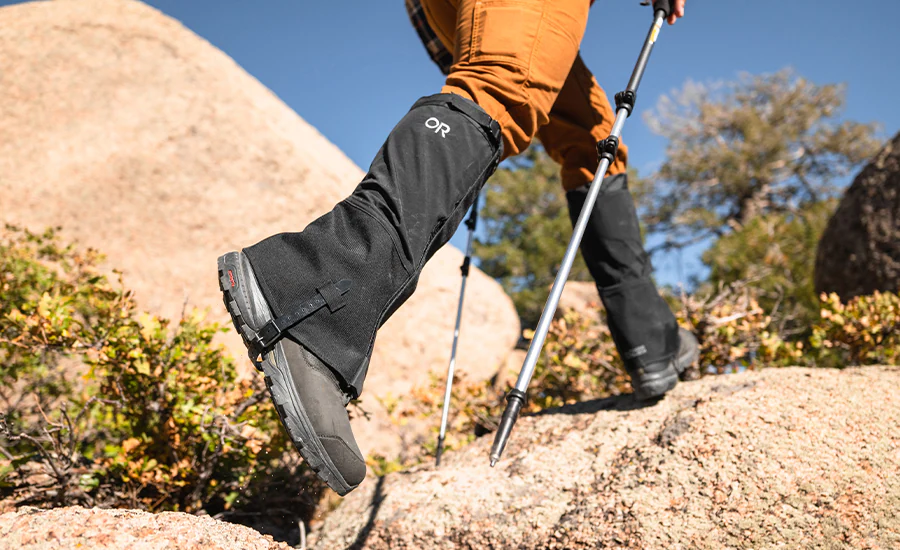
- Consider gaiters in thick brush. Especially in the Southeast or Southwest when trails are narrow and overgrown.
At breaks and campsites
- Do a quick scan before sitting. Sunny rocks and warm sand are popular snake lounges.
- Shake out gear. Boots, gloves, and towels left on the ground can become surprise shelters for small critters, including snakes.
- Keep food secured. Not because snakes want your snacks, but because camp food draws rodents, and rodents draw predators.
Myths that make hikes riskier
- “Snakes chase people.” Usually they are fleeing to cover, and their escape route happens to align with yours. Step aside and let them go.
- “Baby snakes are more dangerous because they cannot control venom.” This is widely repeated, but not a reason to treat adults as “safer.” Any venomous bite is an emergency, regardless of age.
- “You can identify venomous snakes by head shape or pupil shape.” These cues are unreliable in the field and require getting close enough to be unsafe.
- “Rattlesnakes always rattle.” They do not. Silence does not mean safety.
FAQ
How far can a snake strike?
It varies by species and size. A practical hiker rule is to keep a 6+ foot buffer whenever possible because it buys you time and reduces surprise. If you cannot get that much space, back up until you can.
Should I carry a snakebite kit?
Skip suction kits and cutting tools. They do not help and can make injuries worse. If you hike in remote areas, a satellite communicator and knowing the fastest route to care are far more valuable.
What if the snake is in the water?
Give it space and avoid splashing close to it. If you are wading or crossing, choose a different spot or wait. In the Southeast, assume any unidentified snake near still water could be a cottonmouth and keep a wide berth.
What if I see a snake on a busy trail?
Stand back at a safe distance, calmly warn approaching hikers, and let the snake move off. If there is a park ranger or trail steward nearby, notify them. Do not attempt to handle the snake yourself.
The takeaway
A snake encounter is not a hike-ruiner. It is a reminder to hike like you belong in the ecosystem, not like you are speeding through it. Stop, give space, let the snake leave, and keep your hands and feet where you can see them. If a bite happens, stay calm, limit movement, and get medical help immediately.
If you want to level up your overall trail safety toolkit, Town Wander also covers other common hazards like ticks, lightning, and wildlife encounters. Add snake savvy to that list, and you will hike with a lot more confidence.