What to Do If You See a Bear While Hiking

Maya Lin
Maya Lin is a travel journalist and outdoor enthusiast who believes the best trips combine rugged adventures with urban comforts. After spending six years backpacking across four continents, she founded Trail & Town Guide to help fellow travelers navigate both hidden mountain passes and bustling city neighborhoods with confidence.
Seeing a bear on the trail can spike your heart rate fast. The good news is that most bear encounters end with the bear leaving. Your job is to make smart, predictable choices that reduce risk for you and for the bear.
This guide walks you through exactly what to do, based on the two most common scenarios hikers face: spotting a bear at a distance and surprising a bear up close. We will also cover the key differences between black bears and grizzlies (brown bears), how to use bear spray, and how to prevent encounters with good trail habits and proper food storage.
Scope note: This is general guidance for North American black bears and grizzly or brown bears. Always follow local ranger or land manager instructions first. Other bears (like polar bears) require different protocols.
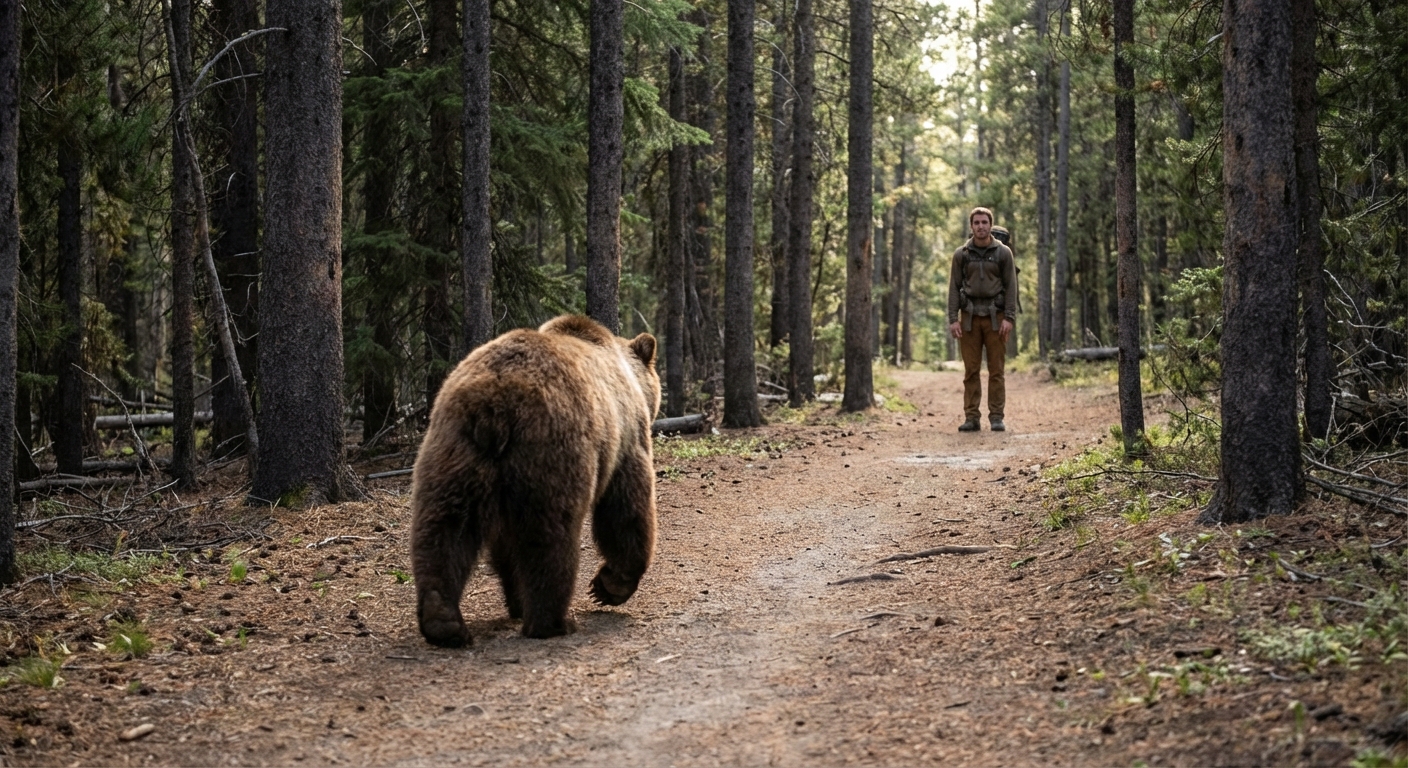
First, do this in any bear encounter
No matter the species, these steps help you avoid escalating the situation.
- Stop and assess. Do not run. Running can trigger a chase response.
- Stay calm and speak in a normal voice. A steady, human voice helps the bear identify you as a person, not prey.
- Make yourself look bigger. Stand tall. If you are with others, stand close together.
- Keep your pack on. It protects your back and helps you look larger.
- Give the bear space. Back away slowly the way you came. Do not block its route.
- Get your bear spray in hand. Unclip it and be ready. Keep the safety on until you are prepared to spray, so you do not accidentally discharge it.
- Do not scream, throw food, or approach for photos. These often make things worse.
If the bear has not noticed you, the safest move is usually to quietly back away and leave the area.
Black bear vs. grizzly: how to tell quickly
In the moment, you may not get a perfect ID. That is okay. Still, a few quick markers can help because response differs most in a close, defensive encounter.
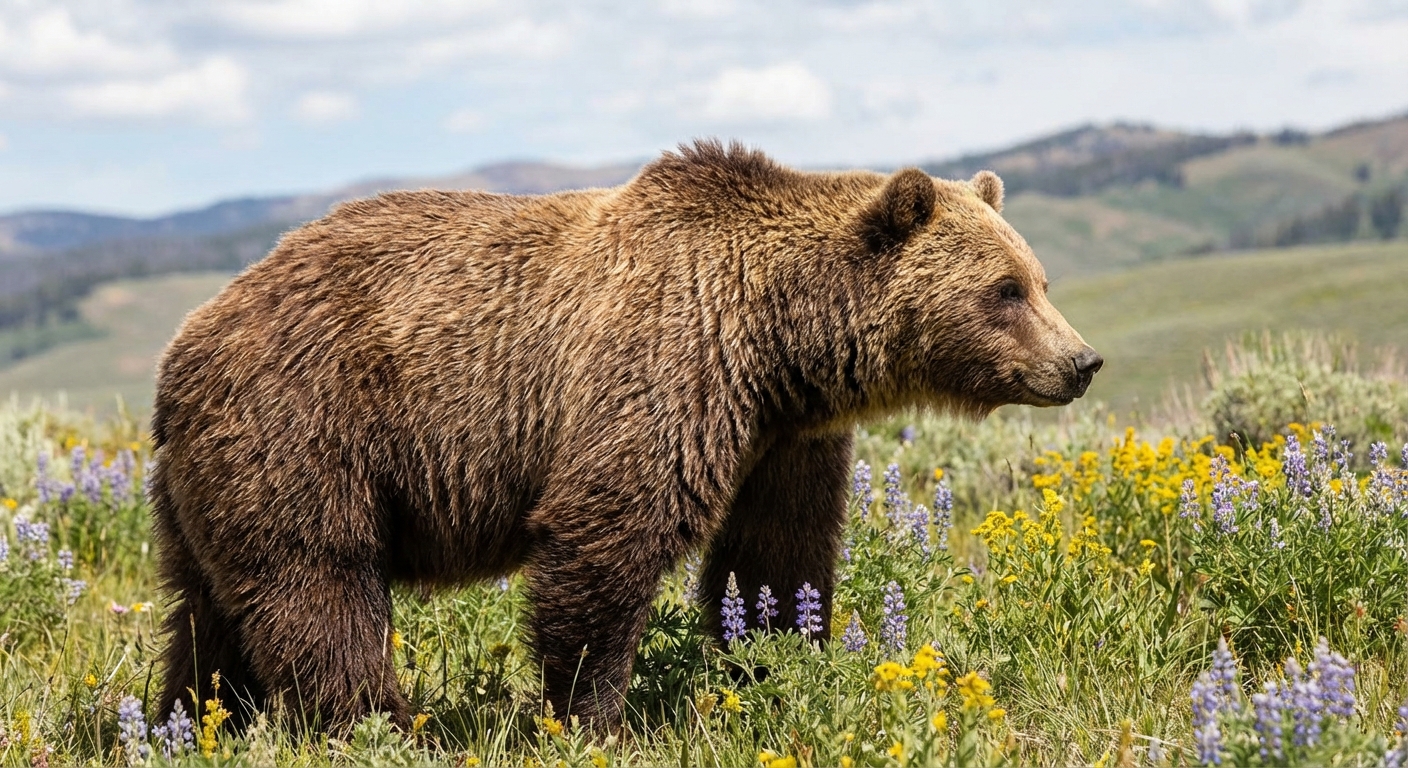
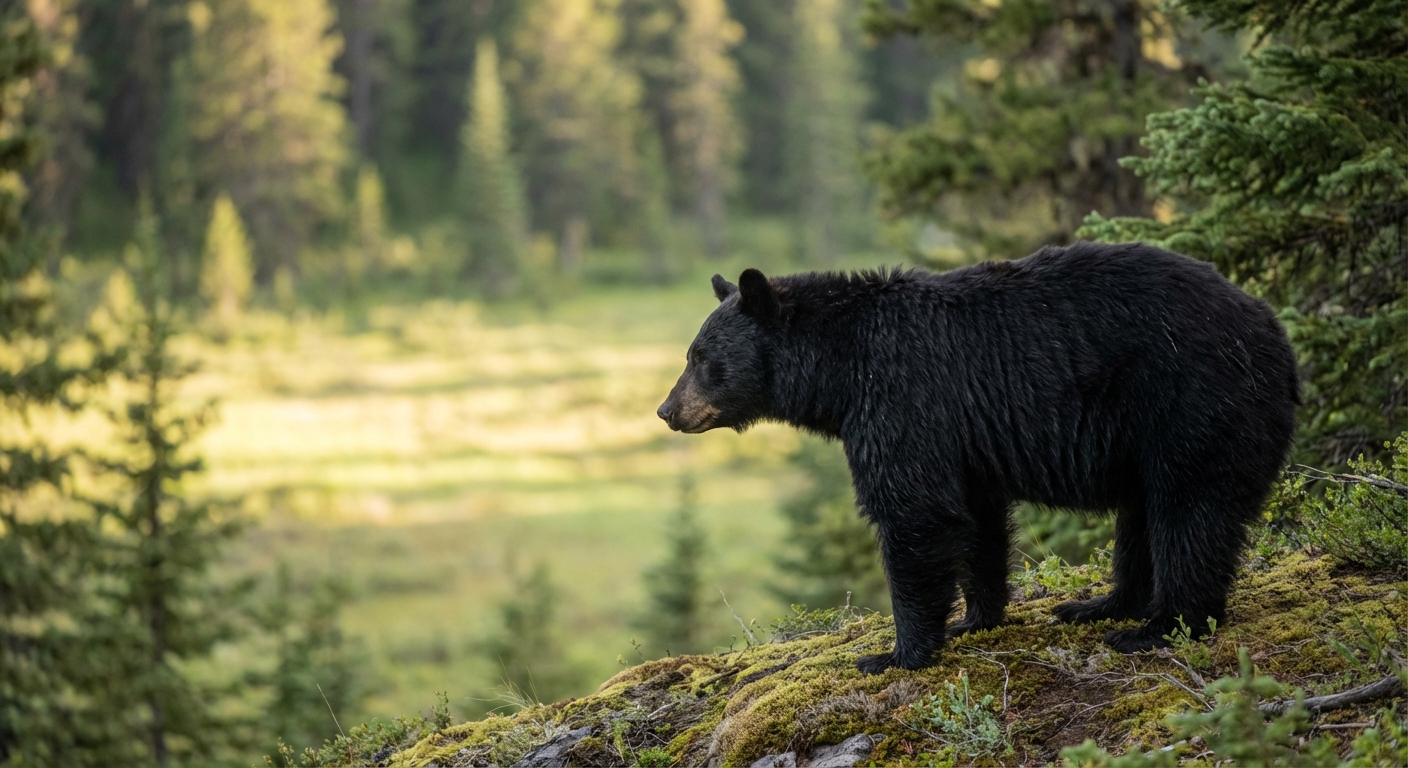
- Shoulder hump: Grizzlies often have a visible muscle hump above the shoulders. Black bears typically do not.
- Face shape: Grizzlies often have a “dished” face profile. Black bears are more straight from forehead to nose.
- Ears: Black bears tend to have taller, more pointed ears. Grizzly ears look smaller and rounder.
- Size and color: Not reliable. Black bears can be brown, cinnamon, or even blond. Some grizzlies can look dark.
When in doubt: default to the safest general steps above, keep distance, and be ready with bear spray.
If you see a bear far away
This is the most common situation, and usually the least dangerous.
- Stop where you are. Confirm it is a bear and check for cubs.
- Give it a wide berth. Back away slowly and increase distance. Use trees and terrain to keep space, but do not hide and surprise it.
- Do not approach for a better view. This is where people get into trouble, especially near food sources, berry patches, or carcasses.
- Leave the area. Turn around, choose another trail, or wait from a safe distance until the bear moves on.
- Tell others. On your way out, calmly alert other hikers.
Distance rules vary by park and country. Some parks advise staying at least 100 yards (90 m) from bears when possible (for example, Yellowstone and Grand Teton). If your area posts a different minimum, follow that.
If the bear notices you (no charge)
A bear that stands up is usually trying to see and smell better, not gearing up to attack.
- Face the bear. Keep it in view, but do not hard-stare. A good trick is to look at its chest or shoulder area rather than locking eyes.
- Talk calmly. “Hey bear, I'm leaving” in a steady voice works.
- Back away slowly. Move diagonally if possible. Keep your footing steady.
- Do not drop your pack. Keep it on.
- Ready bear spray. Hold it where you can deploy fast. Safety stays on until you are about to spray.
Watch for signs of agitation: huffing, jaw popping, bluff charges, swatting the ground, ears back, or a stiff-legged stance. These are often defensive signals telling you to increase distance.
If you come upon a carcass
If you smell a strong dead-animal odor, see scavenger birds, or spot a carcass, assume a bear could be nearby and guarding it.
- Leave immediately. Turn around and go the way you came.
- Do not investigate. Do not approach for photos.
- Be ready with bear spray. This is a classic setup for a sudden defensive encounter.
If a bear charges
Charges are often bluff charges, especially from grizzlies. Your goal is to avoid triggering a chase and to be ready to use bear spray.
What to do during a charge
- Stand your ground. Do not run.
- Use your voice. Loud, firm commands like “Stop!” can help.
- Deploy bear spray at the right moment. Spray when the bear is within your canister’s effective range (details below). A fast charge happens in seconds, so decide early and commit.
- If contact happens: your response depends on species and context (next sections).
If it is a grizzly encounter
Many grizzly attacks on hikers are defensive, meaning the bear felt surprised, crowded, or threatened (especially near cubs or a food source). Defensive attacks tend to be about neutralizing a perceived threat, not predation.
When to stand your ground
If the grizzly is approaching, huffing, or bluff charging, your priority is to hold your ground and use bear spray while backing away slowly if you can.
If a grizzly makes contact in a defensive attack: play dead
If a grizzly knocks you down or starts biting in a defensive way, playing dead can signal you are no longer a threat.
- Lie flat on your stomach. If you are knocked down, roll onto your stomach quickly.
- Hands behind your neck. Interlace fingers to protect the back of your head.
- Spread your legs. This makes it harder for the bear to flip you.
- Stay still. Do not fight back in a defensive grizzly attack.
- Wait until the bear leaves. Stay down for at least several minutes after you stop hearing it.
Important exception: If the attack seems predatory (rare but possible), the bear may follow, stalk, or persist without typical defensive signs. In that case, you should fight back aggressively using anything available and aim at the face and muzzle.
If it is a black bear encounter
Black bears are usually shy and avoid people, but when a black bear attacks it can be defensive or predatory. The standard guidance in North America is: do not play dead with a black bear.
What to do if a black bear approaches
- Stand tall and make noise. Use a firm voice.
- Back away slowly. Keep facing the bear.
- Use bear spray if it continues toward you.
If a black bear makes contact: fight back
If a black bear attacks, fight back aggressively.
- Aim for the face and muzzle. Use rocks, trekking poles, fists, anything.
- Protect your airway. Keep your head and neck covered while striking.
- Do not give up. Predatory black bear attacks can intensify if you stop resisting.
How to use bear spray
Bear spray is one of the most effective tools hikers have, but only if it is accessible and used correctly.
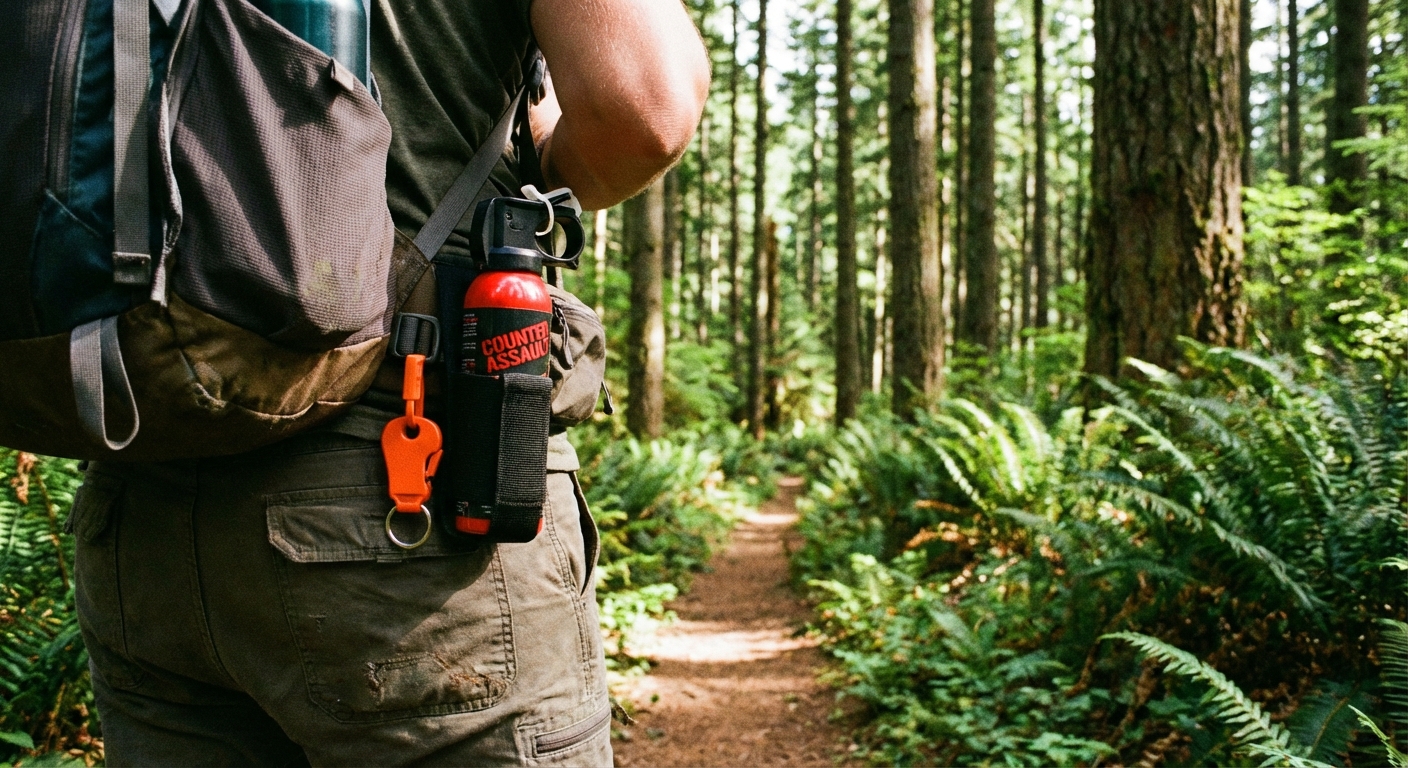
Carry it like this
- Keep it on your body. Hip holster or chest harness is ideal.
- Do not bury it in your pack. A charge happens fast.
- Know the safety mechanism. Practice accessing it and releasing the safety clip at home.
- Check legality and travel rules. Bear spray is often not allowed in carry-on bags and sometimes not allowed on flights at all. Check airline and local regulations before you travel.
Deploy it like this
- Check the wind if you can. Avoid spraying directly into a headwind.
- Aim slightly downward. You want a cloud the bear runs into.
- Start spraying within effective range. Many canisters advertise a max range around 25 to 35 feet (about 8 to 11 meters). In real life, start when the bear is close enough that your spray will actually reach it, and keep spraying as it closes if it is still coming.
- Short burst or sustained blast? A 1 second burst can be useful for a curious bear or to confirm your aim. But a rapidly charging bear calls for a sustained blast to build a thick cloud. Spray continuously until the bear turns or you have emptied the can.
- Move only if terrain allows. If you have stable footing, shifting sideways as you spray can help you stay balanced and keep the bear in front of you. Do not backpedal into rocks, roots, or a drop-off.
After spraying
- Leave the area immediately. Do not chase the bear or approach.
- Expect lingering irritation. Your eyes and throat may burn, especially in still air.
- Report the incident. If you are in a park, notify rangers. If someone is injured, call emergency services.
Pro tip from too many trailhead conversations: buy bear spray before your trip, check expiration dates, and make sure it is labeled as bear spray (not pepper spray). Consider carrying two canisters if you are in a group or far from help.
What not to do
- Do not run. You cannot outrun a bear, and running can trigger pursuit.
- Do not climb a tree. It is not a reliable escape. Black bears climb extremely well, and some grizzlies, especially younger bears, can climb too.
- Do not feed bears. Even accidentally. It trains bears to associate people with food.
- Do not get between a bear and cubs. Back away the way you came.
- Do not surround the bear for photos. Give it an escape route.
- Do not rely on bear bells alone. Your voice and group presence are typically more effective.
Prevention: avoid bear encounters
Most bear safety is not about heroics. It is about reducing surprise and reducing attractants.
Make noise
- Talk with your hiking partners. Conversation is great “bear noise.”
- Call out before blind corners. Try “Hey bear!” when approaching dense brush, loud streams, or switchbacks.
- Slow down in thick vegetation. Speed plus silence is the classic surprise recipe.
Hike smart
- Travel in groups when possible. Groups are noisier and easier for bears to identify as humans.
- Stay alert for sign. Fresh scat, tracks, dig sites, torn logs, and strong carcass odor are all cues to turn around.
- Avoid hiking at dawn and dusk in high-density areas. Those are common bear movement times.
- Keep dogs close. Off-leash dogs can provoke a bear and then run back to you with the bear following.
Manage smells
- Pack food in odor-resistant bags when possible. Not foolproof, but helpful.
- Do not cook or snack absentmindedly on the move in dense brush. If you stop to eat, choose a spot with visibility.
- Pack out trash. Including wrappers, used wipes, and fruit peels.
Food storage basics
Food storage rules vary by region, and they matter. In some places, land managers require bear canisters or provide bear lockers. Always follow local regulations first.
Best options, in order
- Bear locker (when provided)
- Bear canister (most reliable portable option)
- Bear hang (use only where it is accepted and feasible)
Bear hangs are common in some forests, but in many popular areas bears have learned to defeat poor hangs. If the area recommends canisters or lockers, use those. Also, in some ecosystems and tree types, a proper hang is basically impossible.
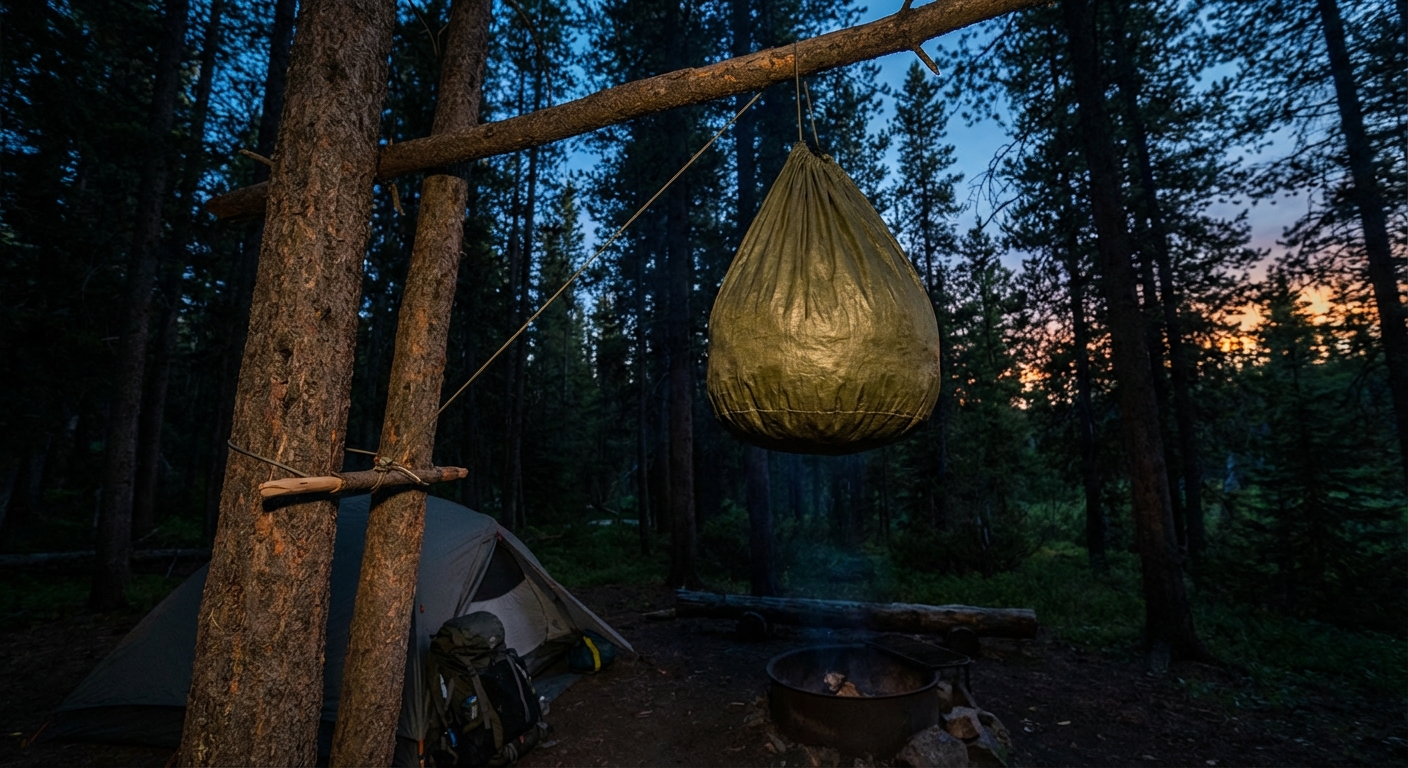
If you do a bear hang: PCT method
This is one of the more secure hanging systems when trees allow.
- Choose a strong branch 15 to 20 feet off the ground (4.5 to 6 m), extending away from the trunk.
- Hang the bag about 12 feet off the ground (3.5 m) and at least 6 feet from the trunk (2 m).
- Use a rock bag to toss the line safely over the branch.
- Hoist the food bag, attach a small stick as a toggle, and let the bag hang suspended.
- Keep all scented items together. Food, trash, toiletries, sunscreen, lip balm, and even cookware if it smells like dinner.
Camp layout
- Use a triangle layout. Keep your sleeping area, cooking area, and food storage separated by at least 200 feet (about 70 adult steps) when terrain allows.
- Cook away from your tent. Avoid getting food smells on your sleeping gear.
- Keep a clean camp. Strain food bits from dishwater and pack them out.
Quick decision guide
If you only remember one calm checklist, make it this:
- Bear at a distance: Stop, assess, give space, leave the area.
- Bear notices you: Speak calmly, back away slowly, ready bear spray.
- Bear charges: Stand your ground, spray within effective range, keep spraying if it keeps coming.
- Grizzly makes contact (defensive): Play dead.
- Black bear makes contact: Fight back.
After an encounter
Once you are safe and the bear is gone:
- Move to a more open area and regroup.
- Check for injuries and treat urgent bleeding first.
- Report the bear to rangers or local wildlife authorities, especially if it was aggressive, had cubs near a trail, or was food-conditioned.
- Review what led to the encounter without shame. Were you quiet near a noisy creek? Snacking in thick brush? Learning is part of safe hiking.
Bear safety is not about being fearless. It is about being predictable, prepared, and respectful of wild space.
FAQ
Should I carry bear spray or a firearm?
In many outdoor safety studies and field guidance, bear spray is widely recommended because it is easier to deploy accurately under stress and reduces the chance of fatal outcomes for both humans and bears. Local laws and personal training vary, but for most hikers, bear spray is the practical default.
Do bear bells work?
They are not harmful, but they are often too quiet to be meaningful at distance or near loud water. Your voice, hiking in a group, and staying alert are usually more effective for preventing surprise encounters.
What if I see cubs?
Assume the mother is close. Do not approach. Back away slowly the way you came, keep your group together, and prepare bear spray.
What if a bear is in my campsite?
From a safe distance, make noise, group up, and give it room to leave. If it is actively accessing food, do not try to physically retrieve items. Use bear spray only if the bear approaches you. Report the incident to rangers.