What to Do If You See a Mountain Lion While Hiking

Maya Lin
Maya Lin is a travel journalist and outdoor enthusiast who believes the best trips combine rugged adventures with urban comforts. After spending six years backpacking across four continents, she founded Trail & Town Guide to help fellow travelers navigate both hidden mountain passes and bustling city neighborhoods with confidence.
Most hikes are a simple trade: you give the trail your attention, and it gives you quiet, views, and a slightly better mood than you had in the parking lot. A mountain lion sighting breaks that deal fast.
The good news is this: mountain lion attacks are rare, and most lions want nothing to do with you. The goal is to handle the moment in a way that lowers the lion’s interest and keeps you from triggering its chase instinct. Below is the practical playbook I keep in my head when I’m hiking in lion country.
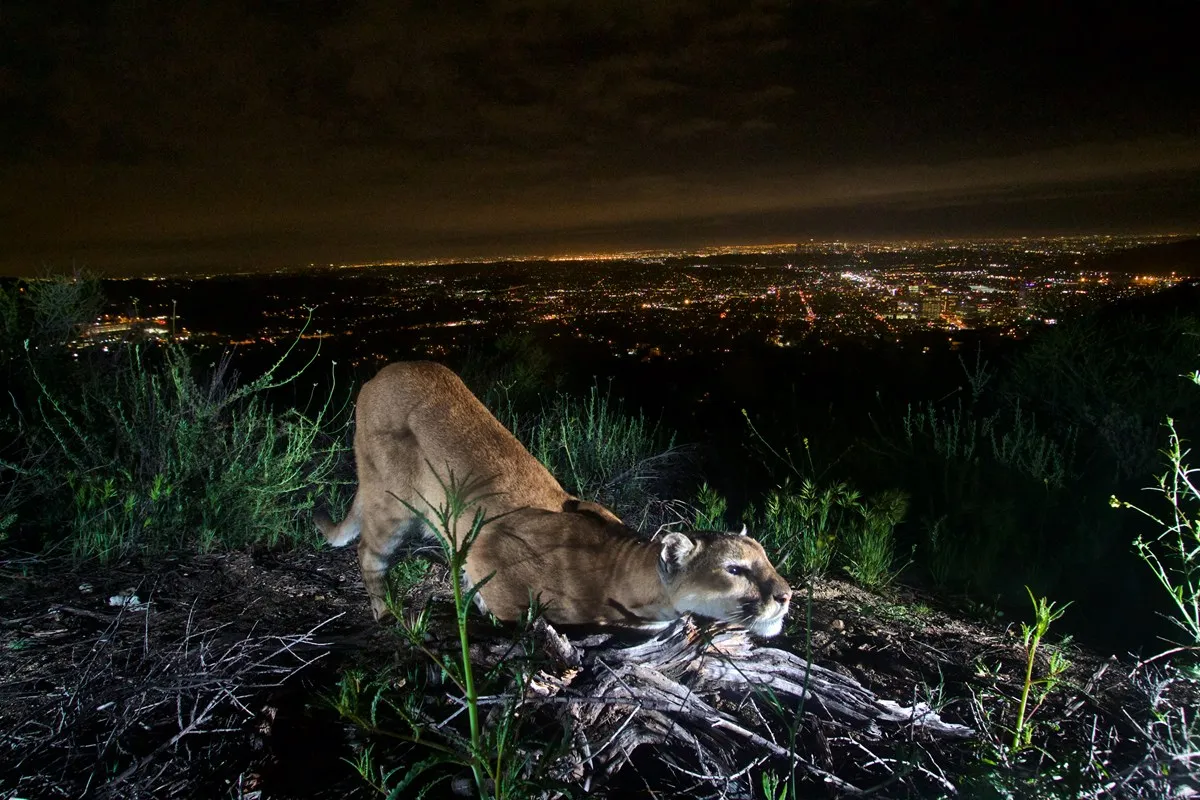
Know what you are dealing with
Mountain lion basics
- Also called: cougar, puma, panther, catamount
- Where they live: much of the western US, Florida (Florida panther), plus increasing confirmed sightings in parts of the Midwest that are often dispersing individuals rather than established breeding populations
- How they hunt: ambush predators that rely on stealth and short bursts of speed
- What they usually do around people: avoid, slip away, watch from a distance
When risk tends to be higher
- Dawn and dusk: often peak movement times, though lions can be active any time
- Areas with lots of deer: prey presence can increase lion presence
- Quiet trails with low visibility: brushy switchbacks, washes, rocky ledges, thick forest edges
- When you are alone or moving quietly: you are easier to observe without being noticed
Important nuance: a lion being seen is not automatically a lion being aggressive. Many sightings are simply a cat moving through its territory or following deer.
How to tell if a mountain lion is nearby
You rarely get a clean “lion on the trail” moment. More often, you get hints. If you notice multiple signs together, treat it like a yellow light: slow down, group up, and stay alert.
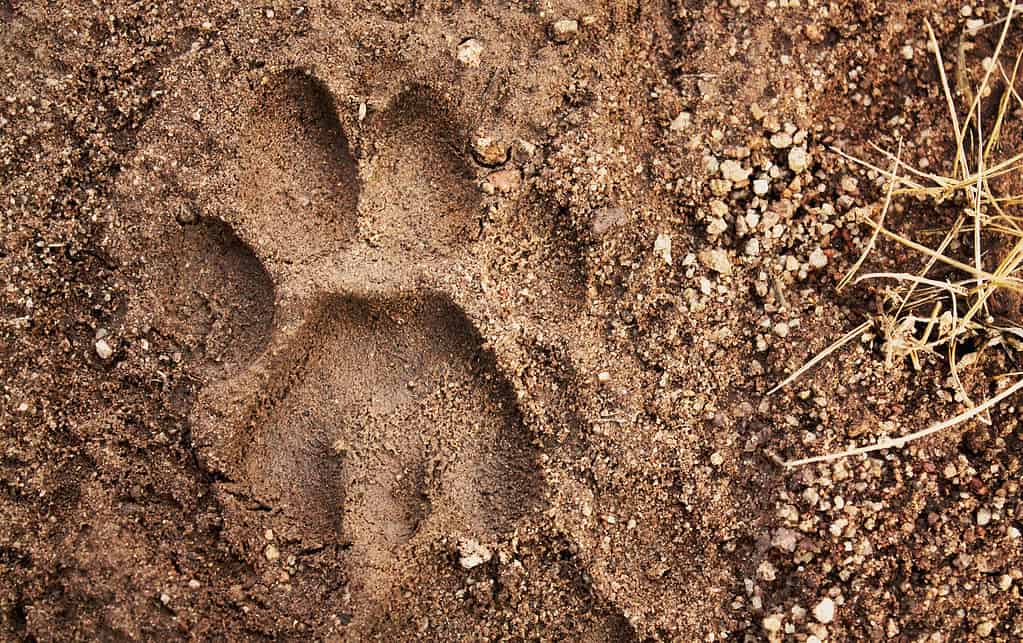
Tracks
- Shape: round, with four toes and a large heel pad
- Claw marks: typically absent because cats retract claws (dogs often show claws)
- Size: adult tracks are often around 3 to 4 inches wide, but snow and mud can distort them, and size can overlap with large dogs
- Extra clue: the heel pad often shows a three-lobed back edge, and the overall print can read as more “M-shaped” than a dog track
Scat and scrape piles
- Scat: often segmented and may contain hair or bone fragments
- Scrapes: a small mound of leaves or dirt kicked up with scat or urine, used for marking territory
Cached prey
If you smell something rotten or see a deer or other animal that looks partially covered with leaves, needles, or dirt, leave immediately. Lions may defend a kill.
The “everyone feels watched” moment
Trust your senses, but do not panic. Many hikers report an eerie feeling before noticing a lion. If something feels off, tighten your group, keep kids close, and consider turning back to a busier trail segment.
Not sure it’s a mountain lion?
People often confuse a mountain lion with a bobcat at a glance. Bobcats are much smaller, with a short tail. A mountain lion has a long tail and a bigger, smoother silhouette. If you are unsure, treat it as a lion anyway and give it lots of space.
What to do if you see a mountain lion
Think of this as a simple priority list: stay upright, look big, stay together, keep eyes on it, and leave without running.
Step-by-step
- Stop and assess. Do not approach. Give the lion space and an exit route.
- Face the lion and maintain eye contact. Keep it in view and do not look away repeatedly. This is one of the clearest ways to signal you are not prey.
- Stay calm and stand tall. Keep your feet planted and your shoulders open toward the lion.
- Make yourself look bigger. Raise your arms, open your jacket, hold trekking poles wide, or lift your pack above your head.
- Talk firmly. Use a strong voice: “Hey! Back up!” The goal is to sound confident and in control.
- Do not run. Running can trigger a chase response.
- Back away slowly. Move diagonally if possible while keeping your eyes on the lion.
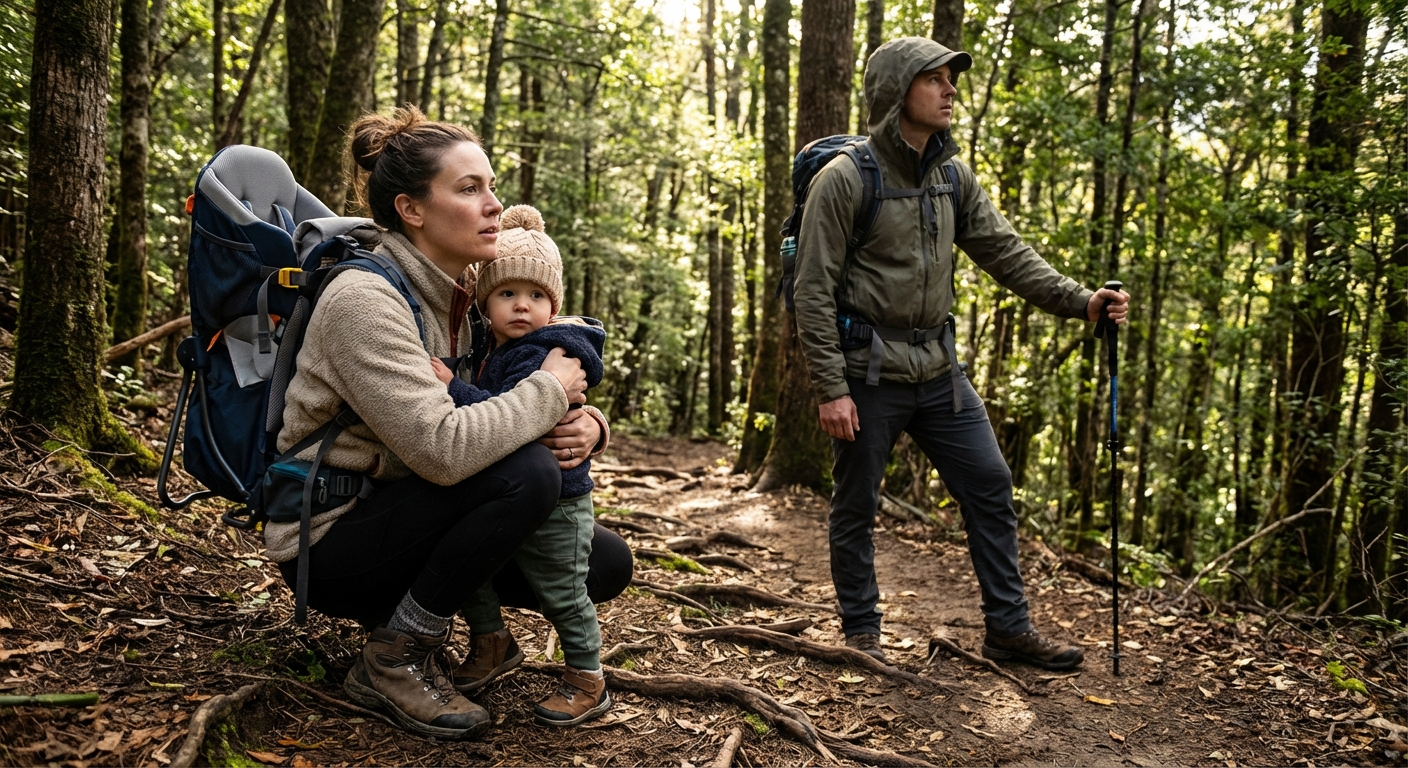
- Pick up small children immediately. More on this below, but do it fast and smoothly.
- If you are on a narrow trail: do not try to “pass” the lion. Stop, give it room, and back out the way you came until it leaves.
- If the lion doesn’t leave: throw rocks, sticks, or dirt near it, and keep shouting. You are trying to convince it that you are not worth the risk.
What not to do
- Do not crouch to pick up gear while the lion is close. Crouching can make you look like prey.
- Do not turn your back and walk away casually.
- Do not approach for a photo, even if it looks calm. Distance is your safety buffer.
- Do not corner the animal or block its escape route.
If you only remember one thing: stay big, keep eye contact, be loud, and do not run.
If a mountain lion acts aggressive
A lion that is stalking (following, crouching, tail twitching, intense focus) or approaching you is not a “cool wildlife moment.” It is a situation you actively manage.
Signs it is escalating
- It follows you as you back away
- It crouches low or circles for an angle
- It fixes on you with intense focus and refuses to break off
- Its ears pin back, and it may hiss, growl, or show teeth (many lions stay quiet)
- It makes short rushes forward and stops
What to do if it approaches
- Get even bigger: arms up, poles up, pack up
- Get louder: shout, clap, bang trekking poles together
- Use deterrents if you have them: a loud whistle or air horn can help; EPA-approved bear spray can be effective at close range if you can deploy it safely and legally where you are hiking
- Do not separate: keep your group tight, shoulder-to-shoulder if possible
If a lion attacks
This is rare, but the guidance is consistent across wildlife agencies: fight back. Do not play dead.
- Aim for sensitive areas: eyes and face
- Use what you have: rocks, sticks, trekking poles, your hands, your pack
- Protect your neck and head while staying on your feet if possible
After any physical contact or near miss, get to safety and call 911 or park authorities immediately.
Why reporting matters
A lion that lingers close to people, follows, or acts bold can be sick, injured, habituated to humans, or pressured by lack of natural prey. Whatever the cause, it is higher risk behavior and worth a fast report.
Kids: key adjustments
Mountain lions key in on movement and size. Kids are small, fast, and unpredictable on trail, which is why family hiking in lion country needs a slightly different rhythm.
Before you hike
- Keep kids close in low-visibility areas (brush, bends, creek corridors)
- Pick busy trails during mid-day if you can, especially with toddlers
- Practice a “freeze and come to me” cue so you can gather everyone fast
If you spot a lion with kids present
- Pick up small children immediately without bending low for long. Scoop them onto your hip or shoulders.
- Do not let kids run. If they panic, keep your voice calm but firm and physically hold them.
- Group up. Adults to the outside, kids in the middle.
- Maintain eye contact and back away slowly while facing the lion.
Pets: dogs on trail
Dogs complicate mountain lion encounters because they move like prey, they chase, and they sometimes run back to you with a predator following. If you take one thing from this section, make it this: keep your dog leashed.
Pet safety rules
- Leash, always. Especially at dawn, dusk, and in brushy terrain.
- Do not let your dog range ahead around corners or into washes.
- Use a short, sturdy leash you can control under stress.
- Avoid hiking with small dogs in high-risk areas and times. If you do, consider carrying them in low-visibility stretches.
If you see a lion while hiking with a dog
- Bring the dog in tight to your side, shorten the leash
- Do not let the dog lunge or bark uncontrollably if you can prevent it
- Maintain eye contact and back away slowly as a group
If a lion focuses on your dog, prioritize keeping the dog close and under control while you make yourself big and loud. An off-leash dog can turn an avoidable sighting into a chase.
Regional risk in the US
Mountain lions exist across a wide range, but the odds of a sighting vary by habitat, prey density, and human development patterns. This is a practical overview, not a guarantee for any specific trail.
Higher likelihood regions
- Western mountain and foothill states: California, Colorado, Utah, Arizona, New Mexico, Nevada, Idaho, Montana, Wyoming, Oregon, Washington
- Texas: especially west and south Texas
- Florida: the Florida panther in south Florida
Lower likelihood but possible
- Midwest and Great Plains: increasing confirmed sightings, mostly transient lions dispersing through, with limited established populations in a few areas
- East: rare and often unconfirmed reports; established breeding populations are not generally recognized in most eastern states
Parks and popular trail systems
You can encounter lions in and near national parks, state parks, and suburban open space. In fact, interfaces where neighborhoods meet deer-rich foothills can be a common setting for sightings.
For the most accurate local picture, check the site or visitor center for your park or land agency (NPS, USFS, BLM, state park service) for current advisories, seasonal closures, or recent sightings.
Smart prevention
The best mountain lion encounter is the one where both of you never realize the other was there. A few habits tilt the odds in your favor.
- Hike in groups when possible.
- Be predictable: talk with your hiking partner, especially in dense vegetation or near running water.
- Avoid dawn and dusk in high-lion areas if you are solo.
- Stay on trail and avoid game paths.
- Keep kids within arm’s reach in low-visibility sections.
- Leash dogs.
- Do not jog quietly through brush with headphones. If you trail run, keep awareness high and consider one ear open.
What to do after a sighting
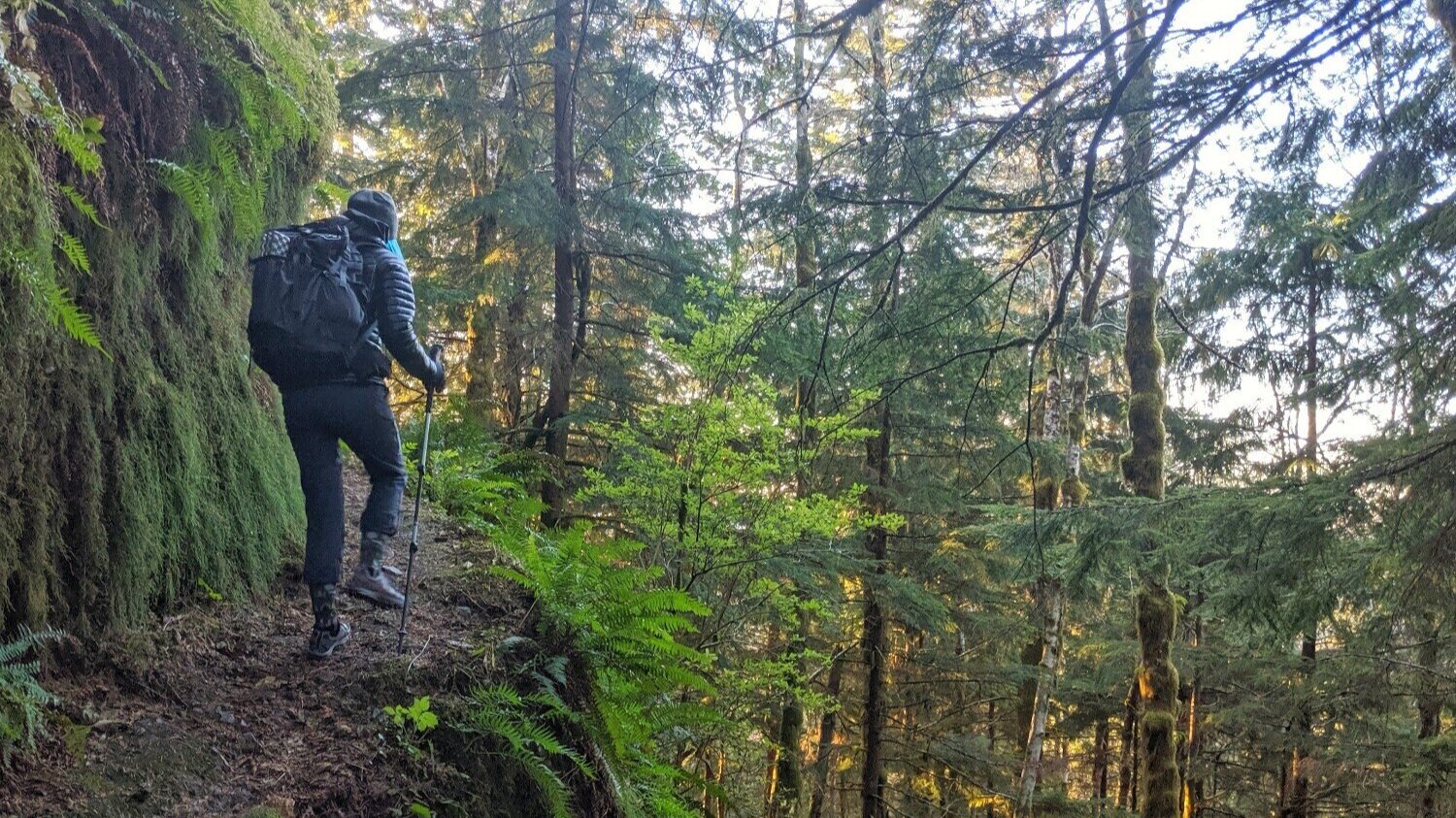
Once you are at a safe distance, take a minute to make the next hikers safer too.
- Leave the area. Do not continue toward where the lion went.
- Note the details: time, location, direction of travel, behavior.
- Report it: to park rangers, local wildlife agency, or the land manager for that trail system.
- Warn others nearby calmly, especially families with small kids and dog owners.
If the lion was close, lingered, followed, or showed aggressive behavior, treat it as urgent and report it immediately.
Quick checklist
- See a lion: stop, face it, maintain eye contact, stand tall
- Do: look big, speak firmly, back away slowly
- Do not: run, crouch, turn your back
- With kids: pick them up, keep them quiet and close
- With dogs: leash tight, dog at your side
- If it approaches: throw rocks, shout, use noise deterrent, be ready to defend yourself
- If attacked: fight back
Common questions
Should I carry bear spray for mountain lions?
Many hikers in the West carry bear spray as a general wildlife deterrent. Regulations and recommendations vary by location, and effectiveness depends on wind, distance, and your ability to deploy it under stress. If you carry it, choose EPA-approved bear spray (not a small keychain pepper spray), practice with an inert trainer, and keep it accessible, not buried in your pack.
Is it safe to hike alone in mountain lion country?
Plenty of people do, and most are fine. If you hike solo, choose higher-traffic trails, avoid dawn and dusk, stay alert in brushy sections, and skip headphones or keep volume low.
Do mountain lions hunt humans?
Humans are not typical prey. Attacks are rare, but they do happen, often involving a lone person, a child, or circumstances that trigger stalking or defensive behavior.
One last note
I grew up hiking the Rockies and I still get that little electric jolt when I see fresh cat tracks in mud. That feeling is useful. It keeps you aware. But it does not need to spiral into fear.
Mountain lion safety is mostly about body language and decisions: stay big, keep your eyes on the cat, stay together, and give the animal space to choose the easiest option, which is almost always to leave.