White Rim Road in One Day: Permits, 4x4 Reality, and the Best Stops
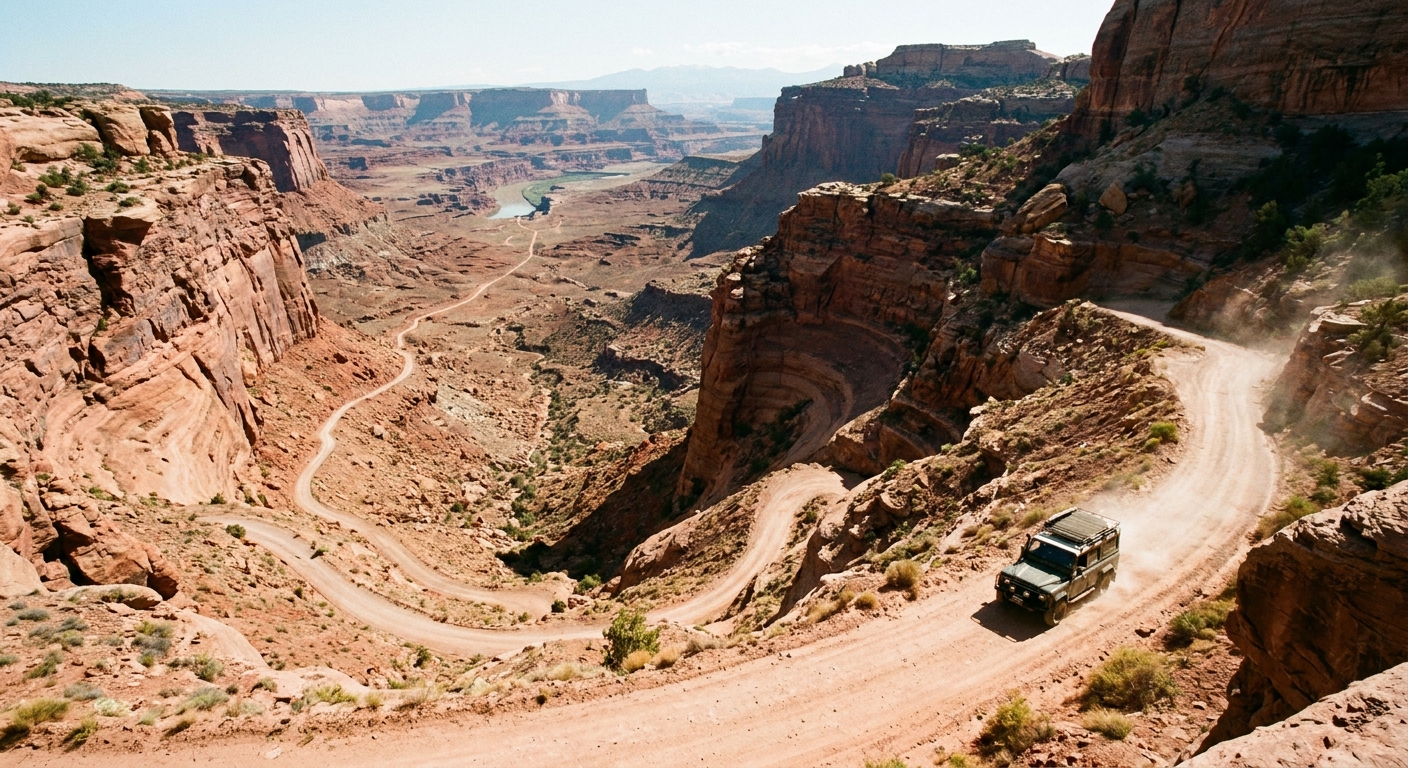
White Rim Road has a way of confusing first-time Canyonlands planners because people talk about it like it is a drive you can casually tack onto a weekend in Moab. It is not. White Rim is a rugged backcountry road that drops off the Island in the Sky mesa to a bench of pale sandstone that wraps around the Colorado and Green Rivers. When conditions are good, it is one of the most unforgettable drives in the Southwest. When conditions are bad, it becomes a long day of tire drama, impassable mud, and the kind of problem-solving you do not want to learn on the fly.
This guide breaks down what White Rim actually is, how permits work for a day trip, what kind of 4x4 and gear you realistically need, and a smart one-day plan that still feels epic. I will also give you a no-stress alternative if you want the views without the backcountry commitment.

White Rim is a backcountry loop
White Rim Road is a roughly ~100-mile dirt loop inside Canyonlands National Park (Island in the Sky district). It was built from old uranium prospecting routes and ranching tracks, and today it is managed as a backcountry motor route. The big takeaway is this: you are leaving the paved world behind for most of the day.
What it feels like
- Slow travel: Even in good conditions, average speeds are low. Between steep grades, ledges, sand, and washboard, you are often creeping rather than cruising.
- High consequence terrain: Parts of the route are narrow with exposure. You do not need rock-crawling skills, but you do need confident driving and patience.
- Limited help: Cell service is unreliable to nonexistent. You should assume self-rescue for minor issues like flats.
- Weather changes everything: Rain or snow can turn sections into sticky clay and make the road impassable. The park can close the road when it is unsafe or to prevent damage.
If what you want is a paved overlook tour with iconic views and zero logistics, that is Island in the Sky overlooks, not White Rim.
Permits: day use and overnight
A permit is required for day-use motor vehicle trips on White Rim Road, and permits are required for all overnight backcountry use as well. Rules and reservation platforms can change, so confirm your specifics on the park’s White Rim permitting information before you lock in plans.
- Start here: NPS White Rim Road (planning, road status, and permit links)
- Permits and reservations: NPS permits and reservations
Day-use permits
Day-use permits are limited. Think of it as crowd control and resource protection, not a formality.
- When to apply: The sooner the better for peak season. Spring and fall weekends fill fast.
- Where to get it: Permits are handled through the park’s system and/or Recreation.gov, depending on current policy.
- What you will choose: Your date and often your intended access point or direction. Some systems ask for vehicle details.
Overnight permits and the lottery confusion
Most “lottery” chatter you hear is about overnight backcountry camping permits for popular zones and dates, including White Rim designated camp areas. If you only have one day, you are not competing for campsites, but you are still dealing with limited day-use capacity.
If you can swing an overnight, White Rim becomes far more relaxed. It also comes with extra planning: water, cold nights, waste rules, and selecting a specific campsite zone.
Fees to expect
- Park entry: Standard Canyonlands entry fee or an America the Beautiful pass.
- Permit fee: A separate reservation or permit processing fee is common.
Print or download whatever documentation the park requires. Rangers do check.
4x4 rules: what you need
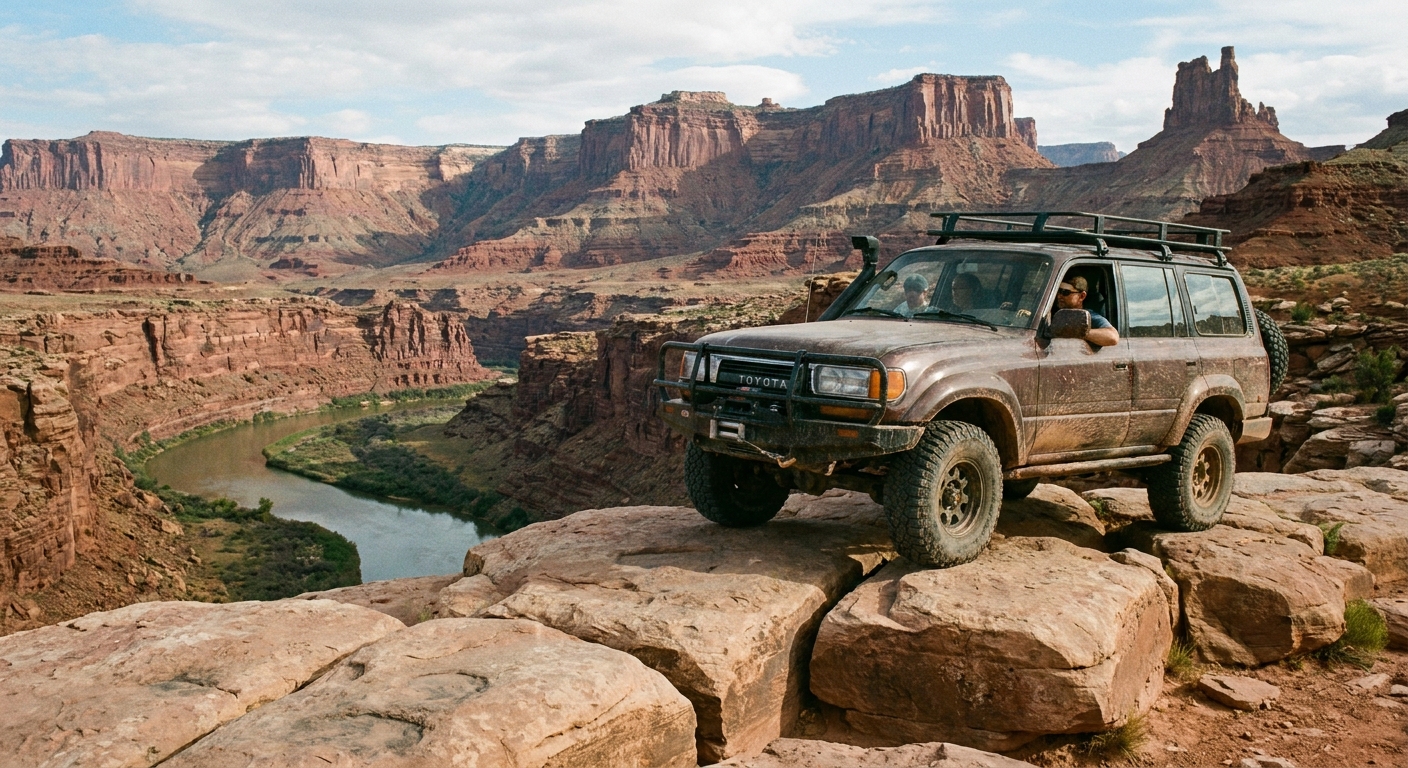
White Rim is often described as “high clearance required” and that is true, but it is not the full story. Canyonlands treats White Rim as a true backcountry 4x4 route, and the requirements are not flexible. Because people act on this information, do not take my word for it. Read the park’s own language on the White Rim page above and match your vehicle to that standard.
Vehicle requirements
- High clearance: Required. You will encounter ledges, ruts, and uneven surfaces.
- True 4-wheel drive: Required. This means a 4WD system designed for off-road use.
- Low-range transfer case (4LO): Required. If your vehicle does not have 4LO, it does not meet the standard for White Rim.
- AWD is not considered sufficient: All-wheel drive crossovers are not considered acceptable for this route under park guidance, even if the weather looks perfect.
- Fuel range: There is no fuel on the route. Start full in Moab and plan conservatively.
Conditions matter, but the baseline is simple: this is a 4WD, low-range road. Plan accordingly, and do not gamble on technicalities.
The spare tire reality (read this twice)
If you take one practical thing from this page, let it be this: carry at least one full-size spare tire, and ideally two if your setup allows. Flats happen. Sharp rock, sidewall cuts, and bad luck do not care that you are on a tight itinerary.
- Bring a real tire repair plan: Jack that works on uneven ground, lug wrench you have tested, tire plug kit, and a way to inflate (compressor, not just CO2).
- Know where your jack points are: Practice at home once. Your future self will be grateful.
Other essentials I never skip
- Water: More than you think. Plan for delays. Desert problems compound fast.
- Food for a long day: Pack like you might be out there after sunset.
- Offline navigation: Download maps. A GPS app plus a paper map is ideal.
- Basic recovery gear: Shovel, traction boards if you have them, and a tow strap. If you do not know how to use it, learn before you go.
- Communication: A satellite messenger is the gold standard for remote routes.
And yes, rental 4x4s do White Rim constantly. The key is choosing a vehicle that meets the park requirements (including low range), staying within the rental agreement, and driving like you are trying to bring it back in one piece.
Rules that surprise people
Before you build your plan around the wrong setup, lock in a couple of rules that catch people off guard:
- Pets are prohibited: Pets are not allowed on backcountry roads and trails in Canyonlands, including White Rim. That includes pets inside vehicles.
- No ATVs, UTVs, or OHVs: ATVs and side-by-sides are not permitted on park backcountry roads like White Rim.
If either of those is part of your trip, pivot to the paved Island in the Sky overlooks instead and you will have a far better day.
Timing and season reality
How long it takes
A full White Rim loop in one day can be done, but it is a long push. For many groups, the range is 10 to 14+ hours depending on road conditions, traffic, stops, and how many tire-related surprises show up.
For a day trip, a smart safety habit is setting a hard turnaround time (for example, early afternoon) so you are not white-knuckling ledges in fading light, or finishing the last hours exhausted.
Season and weather
- Summer heat: Brutal and energy-draining. Carry extra water and plan for slower travel.
- Monsoon storms: Late summer storms can turn the road into impassable mud fast.
- Winter: Snow and ice on Shafer or Mineral Bottom can make the descent unsafe even when Moab feels fine.
Always check the park’s current conditions and closures right before you go. On White Rim, weather is not background. It is the main character.
One-day White Rim: the smart plan
A full White Rim loop in one day is possible for experienced drivers with an early start and favorable conditions, but it is a long, tiring push. For most visitors who have “one day” in their Canyonlands itinerary, a smarter plan is an out-and-back from one of the dramatic access routes. You still get the descent, the river corridor views, and that remote feeling, but you cut risk and time.
Option A: Shafer out and back
This is the route most people picture when they think of White Rim. You descend the famous Shafer Trail switchbacks from Island in the Sky, reach the White Rim bench, then continue as far as time and comfort allow before turning around.
- Why it works: Big views early, clear “turn around whenever” flexibility, and you avoid committing to the whole loop.
- Best for: First-timers who want the signature experience and photos.
- Time reality: Plan for a full day with stops. Start at sunrise and commit to a turnaround time.
Option B: Mineral Bottom out and back
Mineral Bottom Road is another common way to access White Rim. It is still steep in places, still dirt, still serious, but it can feel less exposed than Shafer to some drivers.
- Why it works: Efficient access to river-level scenery and a smoother confidence curve for some drivers.
- Best for: Travelers who want White Rim flavor with a slightly less white-knuckle descent.
Option C: One-night micro loop
If you can snag an overnight campsite permit, White Rim becomes more than a drive. It becomes a desert night with unbelievable stars and sunrise light on the cliffs.
- Day 1: Descend, drive to your designated camp zone, short sunset walk, early dinner.
- Day 2: Sunrise, coffee, then finish a partial loop or return the way you came depending on your campsite and conditions.
This option is slower, more sustainable, and honestly more enjoyable for most people than trying to brute-force the entire loop in one day.
Best stops on a day run
White Rim is not a checklist destination. The best moments are often unplanned: a raven surfing the thermals, the sudden green ribbon of cottonwoods near the river, the silence when you cut the engine. Still, a few landmarks tend to be highlights on day trips.
Shafer switchbacks
The descent itself is part of the experience, with layered canyon walls and expanding views as you drop off the mesa.
Goosenecks
If you are entering via Island in the Sky, consider stopping at nearby overlooks first while you are still on pavement. The perspective from the mesa makes the scale click.
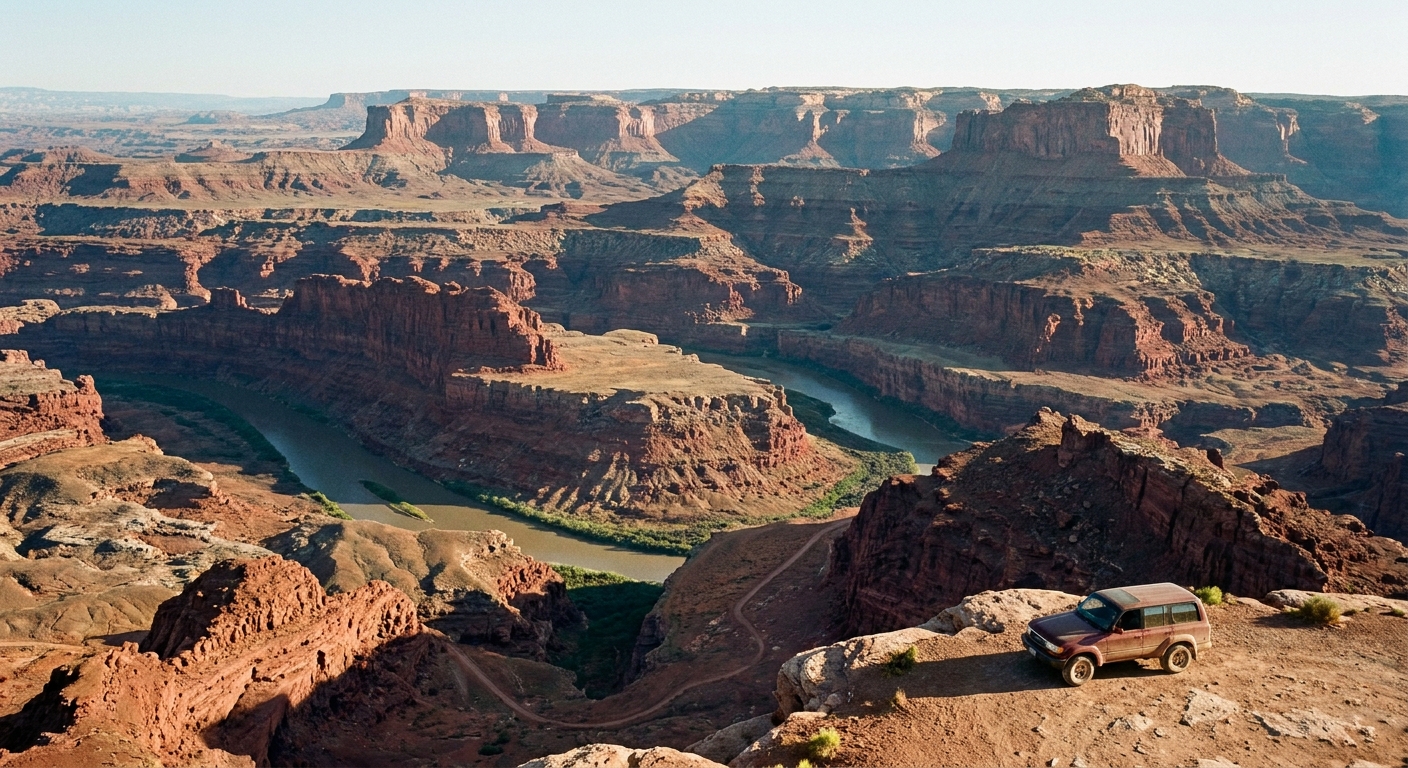
White Rim viewpoints
Once you are on the bench, the cliffs rise above you like a fortress wall. Look for pullouts where you can safely get fully off the road, stretch your legs, and listen.
Potash and Shafer context
You will sometimes hear people talk about “doing Shafer and Potash” like it is the same thing as completing the full White Rim loop. It is not. Potash Road is outside the park and is more of an itinerary and exit concept that can pair with Shafer depending on your route choice, current closures, and what the park is allowing at the time. Confirm your exact route and road status before you count on it.
If White Rim is too much
There is zero shame in choosing the paved highlights, especially if you are short on time, traveling with kids, driving a standard car, or visiting after rain. Island in the Sky is one of the best “big view for minimal effort” areas in the entire park system.
Easy overlooks
- Mesa Arch area: Short walk, huge payoff, especially near sunrise. Arrive early for space and quieter vibes.
- Grand View Point: Classic sweeping canyon panorama with a straightforward trail option if you want to stretch your legs.
- Green River Overlook: A quick stop that helps you understand the geography of the park.
This alternative gives you canyon grandeur without the backcountry permit chase, without the spare tire anxiety, and without committing to a road that can turn from “adventure” to “problem” in a single storm.
One-day checklist
- Confirm permit requirements and road status: Check the park’s current conditions the day before and the morning of.
- Confirm your vehicle meets the rules: High clearance, true 4WD, and a low-range transfer case (4LO). AWD is not considered sufficient.
- Start early: Sunrise departures buy you time, cooler temperatures, and better light.
- Set a turnaround time: Do not let optimism turn into a late, exhausted exit.
- Tell someone your plan: Share your route, expected return time, and vehicle info with a friend or your lodging host.
- Pack water and food for delays: Treat it like a remote hike, not a drive.
- Carry a full-size spare and a way to inflate: This is the most common failure point.
- Bring a human waste plan: In this backcountry setting, be prepared to pack out solid human waste if needed. Carry WAG bags or an approved system and follow current NPS guidance for disposal.
- Download maps: Do not rely on cell signal. Signed junctions help, but they are not enough by themselves. Bring the official NPS map and an offline GPS map or track.
- Plan for expensive help: Towing and recovery can be slow and costly out here. Another reason to drive conservatively.
- Drive conservatively: Your goal is not speed, it is a safe return with your tires intact.
- Leave no trace: Stay on the road, pack out trash, and respect closures to protect the fragile desert crust.
If you want the emotional payoff of remote Canyonlands without turning your vacation into a logistics exam, an out-and-back White Rim day is the sweet spot. You get the switchbacks, the scale, and that rare feeling of being deep in a place that does not care about your schedule. Then you can return to Moab for a shower, a good meal, and maybe my favorite post-trip ritual: a local coffee shop the next morning, while your brain is still replaying canyon walls like a movie.