Zion Narrows Top-Down Permit: Chamberlain’s Ranch to Temple of Sinawava

Maya Lin
Maya Lin is a travel journalist and outdoor enthusiast who believes the best trips combine rugged adventures with urban comforts. After spending six years backpacking across four continents, she founded Trail & Town Guide to help fellow travelers navigate both hidden mountain passes and bustling city neighborhoods with confidence.
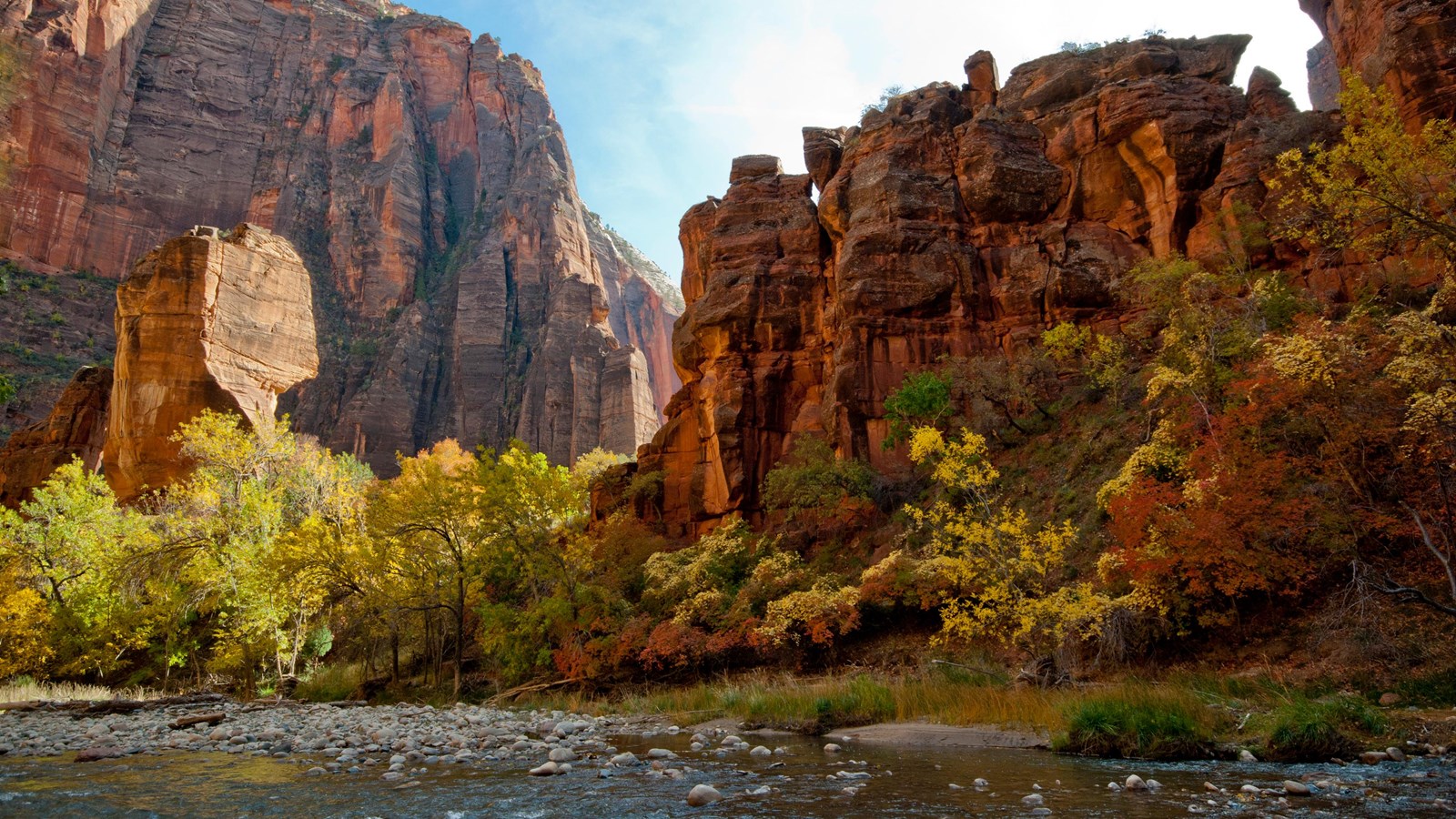
The Zion Narrows top-down hike is the kind of route that makes you feel like you earned your canyon stripes. It is about 16 miles (roughly 25.7 km) of wading, walking, and weaving between sheer sandstone walls from Chamberlain’s Ranch all the way to the Temple of Sinawava. Exact mileage varies a bit depending on your track and water conditions, but it is a full, real day. It is also the kind of day that can unravel fast if you treat the permit and logistics like an afterthought.
I love that this hike is both wildly rugged and weirdly civilized in the best Zion way. You start in quiet ranch country, drop into a river corridor that feels primeval, and finish at a trailhead with shuttles, restrooms, and the promise of a cold drink back in Springdale. Here is how the top-down wilderness permit works, where to actually book it, how to get to the trailhead, and what it takes to pull off the full route in one day.
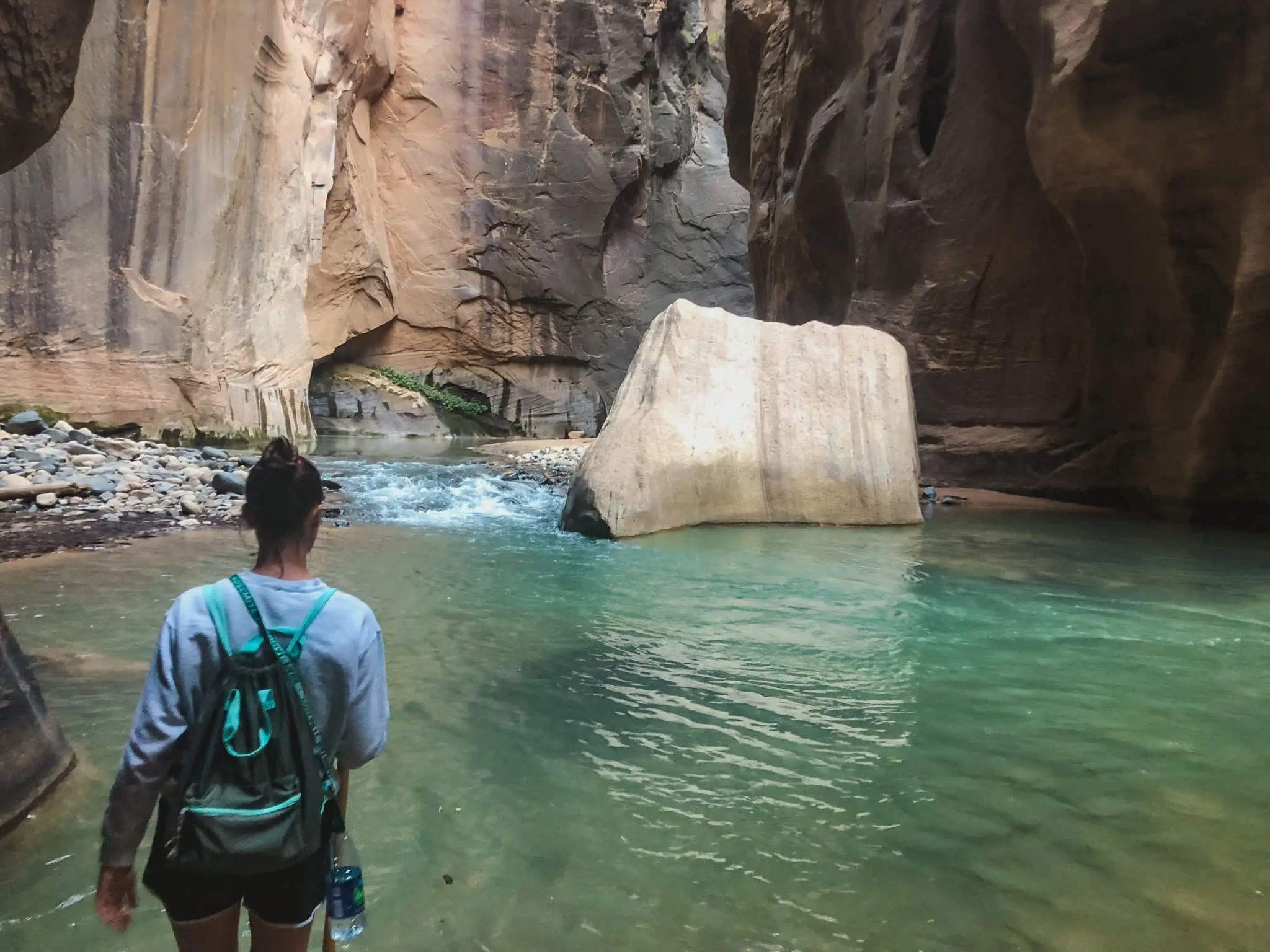
Do you need a permit?
Yes. If you hike the Narrows from Chamberlain’s Ranch down to the Temple of Sinawava, you need a Zion wilderness permit for the Narrows Top-Down (the day hike through-hike permit or the overnight version).
This is true whether you:
- Hike it in a single day (most strong hikers do)
- Backpack overnight in the Narrows (requires reserving a designated Narrows campsite)
Without a wilderness permit, you cannot legally start at Chamberlain’s Ranch for the through-hike.
Day hike vs overnight
Top-down as a day hike
If you are completing the full route in one push, you want the Narrows Top-Down, day hike (through-hike) wilderness permit. This is the permit tied to starting at Chamberlain’s Ranch and exiting at the Temple of Sinawava.
What it does not include: any reserved campsite, and any transportation. You still have to solve the shuttle.
Top-down as an overnight
If you plan to backpack, you need an overnight wilderness permit that includes a reserved campsite in the Narrows.
The big difference is that overnight trips require you to select a designated Narrows campsite that matches your itinerary. In Zion, camping is only allowed in designated sites, and the Narrows corridor is managed tightly to protect the fragile river environment. No camping is allowed outside the assigned sites.
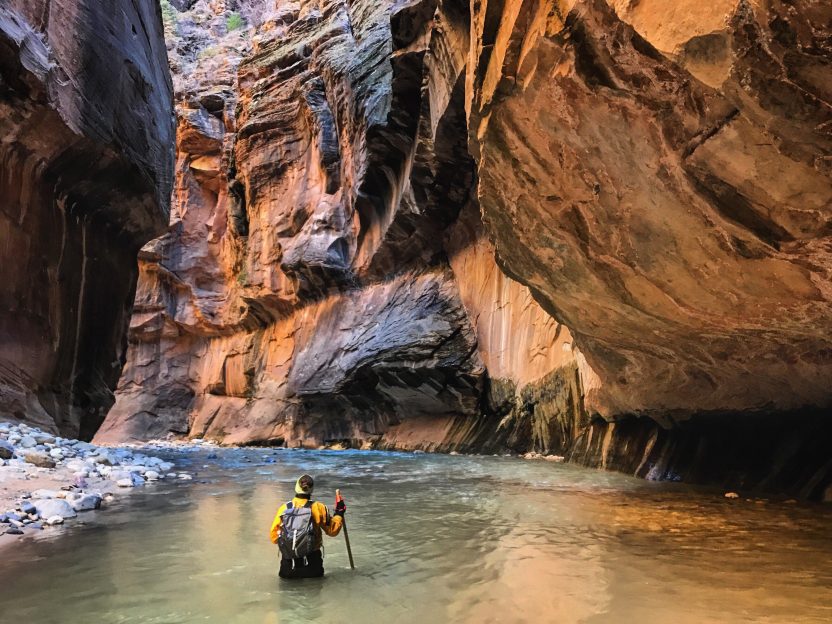
Where to book permits
Book Narrows Top-Down permits on Recreation.gov under Zion National Park wilderness permits. I treat Recreation.gov as the place to reserve, then I confirm the current Narrows-specific rules on Zion’s official wilderness permit page before I travel.
What to search and click
On Recreation.gov, look for Zion National Park Wilderness Permits, then choose the trip type that matches your plan, usually labeled something like Narrows Top-Down (day hike/through-hike) or the overnight Narrows option. If you are going overnight, be ready to pick the specific Narrows campsite option the system requires as part of the reservation.
Release dates change
This is the part I want to be very clear about: release windows and last-minute rules can change. You will often see an advance release period plus some kind of closer-in availability, but the exact timing matters, and I do not like giving false precision on something that can ruin a trip.
My practical strategy:
- Check the official Narrows top-down permit page first for the current release calendar and rules.
- Get your Recreation.gov account set up early and be logged in before the window opens.
- Bring backup dates and be willing to shift by a day or two if your first choice is gone.
Carry your permit
However Zion is issuing permits that season, assume you need to carry proof of your permit. Make it offline-accessible. Cell service is unreliable in and around Zion Canyon, and the Narrows itself is not where you want to be troubleshooting a login screen.
Flow, floods, and closures
The Narrows is a river hike. Access is managed based on current flow on the Virgin River, plus weather and flash flood risk.
- High flow can shut down the top-down route entirely.
- Moderate flow may be allowed, but conditions get slower and more strenuous.
- Even with a permit, you might not be able to go if the park closes the route for safety.
The number hikers watch
Zion has often used a closure threshold around 150 cubic feet per second (CFS) for the Narrows, as posted by the park for the current season. Treat that as a planning benchmark, not a promise. The policy is gauge- and season-dependent, and the park can close the route below that number, or keep it closed if storms, runoff, or debris make the canyon unsafe.
Before you commit, check the park’s current Narrows conditions and closure updates, including the page Zion uses to post flow and flash flood guidance.
Here is how I think about it:
- Lower flow: faster progress, easier footing, more margin for a one-day push
- Higher flow: more resistance, more fatigue, more risk, and a slower pace that can threaten your daylight and shuttle timing
Flash floods are the real wildcard
If there is one Narrows-specific warning that deserves bold print, it is this: flash floods can be deadly even when the river looks manageable at your feet. Rain miles away can push water into the slot. Before you commit, check the park’s current flash flood guidance and weather forecast, and be extra conservative during monsoon season.
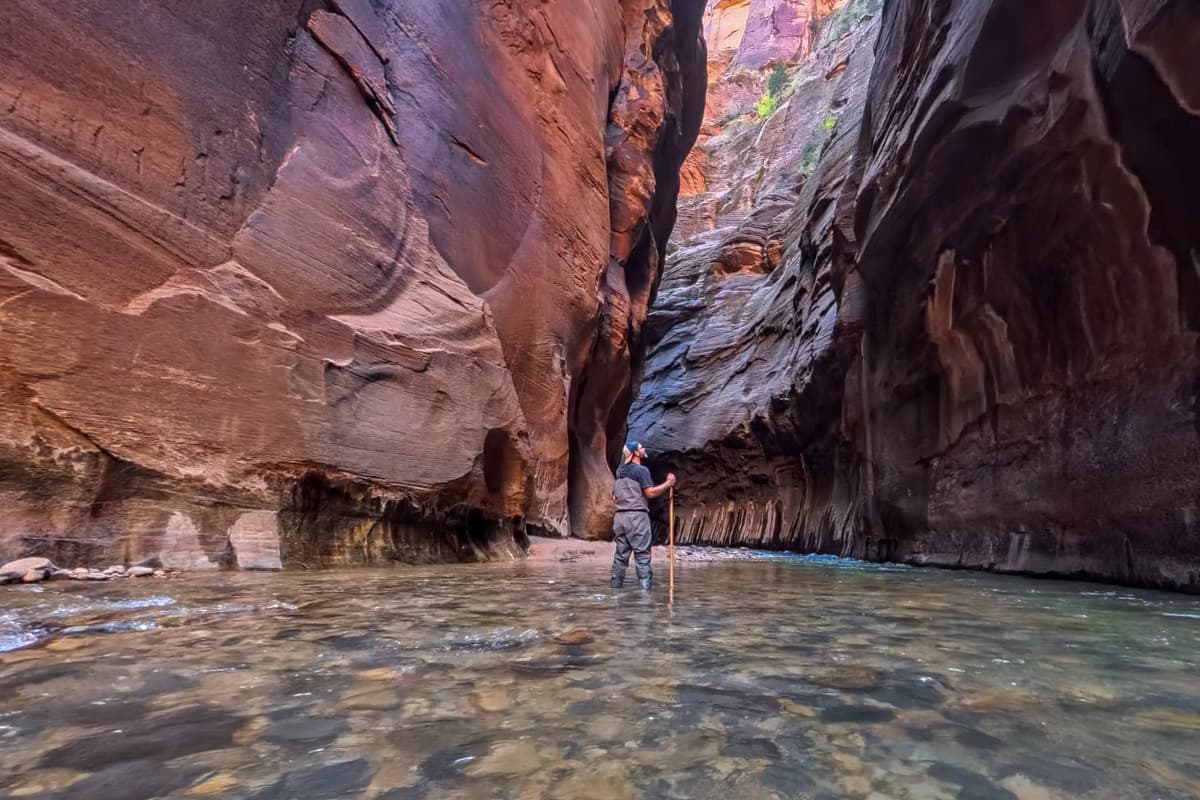
Human waste and water safety
Pack out solid waste
The Narrows is managed to protect a fragile river corridor, and that includes sanitation. Plan on packing out solid human waste using park-approved waste disposal bags (often called WAG bags). Do not assume you can dig a cathole in the Narrows corridor.
Policies and enforcement language have evolved, so treat this as non-negotiable planning and double-check the current Zion requirement for your specific permit type (day hike versus overnight) before you go.
Cyanobacteria in the Virgin River
Zion has had recurring issues with toxic cyanobacteria in the Virgin River. This matters because it is not just a “drinking water” issue. It is a contact and ingestion issue, too.
My rule: do not assume filters, boiling, or chemical treatment remove cyanotoxins. Check Zion’s current cyanobacteria advisory before your trip, avoid swallowing river water, keep your head above water, keep kids close, and keep pets out of the river when advisories are posted.
Getting to Chamberlain’s Ranch
Chamberlain’s Ranch is not inside the main Zion Canyon shuttle corridor. It sits outside the park in a more remote area, and getting there is the make-or-break part of the top-down plan.
In plain terms: you cannot just roll up and assume you will find transportation the way you might for a typical trailhead in Zion Canyon.
Transport options
- Commercial shuttle: The most common solution. You park in Springdale or near the Zion visitor area, then take a paid shuttle service to Chamberlain’s Ranch.
- Car shuttle with two vehicles: Stage one vehicle for your exit, then drive the other to the start. In practice, that usually means leaving the finish vehicle in Springdale or near the visitor area and relying on the park shuttle system to get back and forth, unless private vehicle access into Zion Canyon is allowed that day.
- Private ride: Possible if you have a friend willing to do a very early drop-off and you have a solid exit plan.
Most visitors use a commercial shuttle because it is the cleanest way to keep your finish inside the Zion Canyon system.
Finish logistics and canyon access
You exit at the Temple of Sinawava, then you still have the Riverside Walk paved trail back to the shuttle stop. It is about a mile and change each way, and it always feels longer at the end of a river day, so build time for it.
From there, you rely on whatever Zion Canyon transportation is operating that day. In much of the year, that is the park shuttle. In other periods, private vehicle access rules can differ. Either way, build your plan around the current season’s access and the last shuttle time if shuttles are running.
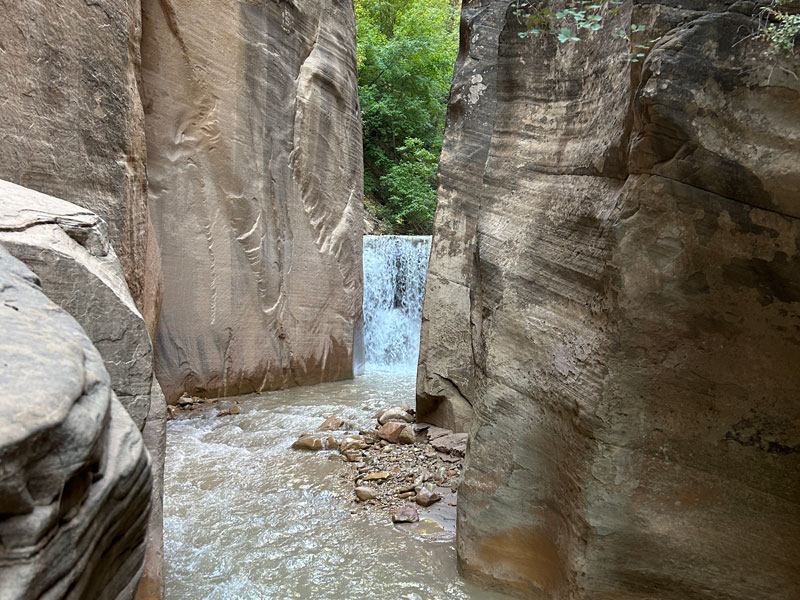
Doing it in one day
I am going to say this as someone who loves long days on trail: the top-down Narrows is not just 16 miles. It is 16 miles where the terrain is the river, your speed is dictated by current and footing, and your energy is taxed by constant balancing.
Time expectations
Many fit, prepared hikers finish in roughly 10 to 14 hours, depending on flow, group size, and how efficiently you move through the water. Faster days happen. So do epics.
Build your plan around daylight, not optimism. An early shuttle to the trailhead is your best friend.
Fitness and pacing
- You need endurance: sustained movement all day, often against water resistance.
- You need durable ankles and knees: uneven rocks and slick surfaces add up.
- You need efficient breaks: snack often, stop briefly, keep moving.
Non-negotiable gear
- Proper footwear for wet, rocky river walking. Many people rent canyoneering-style shoes and a neoprene sock setup from outfitters in Springdale.
- A sturdy hiking pole or trekking poles for balance in current. A single stout pole is popular in deeper water because it is simple and stable, but use what you can plant confidently.
- Dry bags or a pack liner for insulation layers, headlamp, and electronics.
- Layers for cold water and changing weather, especially in shoulder season.
- Headlamp even if you plan to finish in daylight.
- WAG bag or other park-approved human waste carryout system.
Planning checklist
- Permit secured for Narrows Top-Down (day hike or overnight)
- Shuttle reserved to Chamberlain’s Ranch with a pickup time that matches your daylight plan
- Zion Canyon access confirmed for your exit day (shuttle season versus non-shuttle season rules)
- Last shuttle time checked if the park shuttle is running
- Flow and weather checked the day before and morning-of, with a willingness to bail if conditions change
- Cyanobacteria advisory checked so you know what current guidance says about river contact and water treatment
- Group expectations aligned on pace, decision making, and turnaround criteria
If you are on the fence, my honest advice is to treat the Narrows top-down like you would a big mountain objective: it is not just “Can I walk 16 miles?” It is “Can I walk 16 wet, slow, technical miles and still make smart decisions late in the day?”
How your permit shapes the plan
Your permit choice should drive your entire trip structure, not the other way around.
If you are doing it as a day hike
- Pick a date with maximum daylight if possible.
- Reserve your Chamberlain’s Ranch shuttle early.
- Plan to be moving at first light or close to it.
- Budget time for the Riverside Walk at the end. It is easy miles, but it still takes time when you are tired.
If you are doing it overnight
- Lock your campsite first, then build the shuttle around that plan.
- Expect a heavier pack and slower river movement.
- Follow campsite rules closely. Camp only in your assigned Narrows site and keep your footprint tight.
- Keep an eye on flow trends, especially during snowmelt season.
Common mistakes
Booking the wrong permit
The Narrows has more than one popular way to hike it. Make sure your permit is explicitly for Narrows Top-Down from Chamberlain’s Ranch and matches your plan (day versus overnight).
Assuming a permit guarantees access
A permit is permission, not a promise. Flow, storms, and flash flood risk can close the route.
Solving the permit but not the shuttle
People obsess over the permit and then realize, too late, that they have no way to get to Chamberlain’s Ranch at the hour they need. Solve transportation at the same time you solve the permit.
Underestimating river time
On paper, 16 miles looks doable for many hikers. In the river, pace changes. Build buffer time for slower sections, foot care breaks, and the final paved Riverside Walk.
Ignoring permit conditions
Read your permit details and follow them. Group size limits and route conditions can be part of the permit terms, and Zion does enforce Narrows regulations.
Quick FAQ
Can I do the Narrows top-down without a permit if I do it in a day?
No. Starting at Chamberlain’s Ranch for the top-down requires a wilderness permit, even as a day hike.
Where do I apply?
Start on Recreation.gov under Zion National Park Wilderness Permits, then confirm the current Narrows Top-Down rules on Zion National Park’s official wilderness permit page before you lock plans.
Is filtering river water safe?
Not always. Because of recurring toxic cyanobacteria issues, check the current park advisory. Do not assume a standard backcountry filter, boiling, or chemical drops make Virgin River water safe during an active advisory.
When is the best season?
Many hikers aim for late spring through early fall when services are running and days are longer. That said, seasonal river flow and weather are the real gatekeepers. Plan around current conditions, not the calendar.
How early should I book a shuttle?
As soon as you have your permit date, especially for weekends and peak season. Early start times are the most valuable.