Are Dogs Allowed in Yosemite?

Maya Lin
Maya Lin is a travel journalist and outdoor enthusiast who believes the best trips combine rugged adventures with urban comforts. After spending six years backpacking across four continents, she founded Trail & Town Guide to help fellow travelers navigate both hidden mountain passes and bustling city neighborhoods with confidence.
I love Yosemite for the same reason a lot of us do: you can spend the morning chasing waterfalls and the afternoon sipping something iced in Yosemite Valley, watching climbers trace impossible lines up El Cap. If you’re traveling with a dog, though, Yosemite is one of those places where you need to plan with extra intention.
Here’s the simple truth: dogs are allowed in Yosemite National Park, but they are very limited in where they can go. The rules work well for sightseeing days in the Valley. They do not work for most classic hikes, including the Mist Trail to Vernal and Nevada Falls.
The clear rule
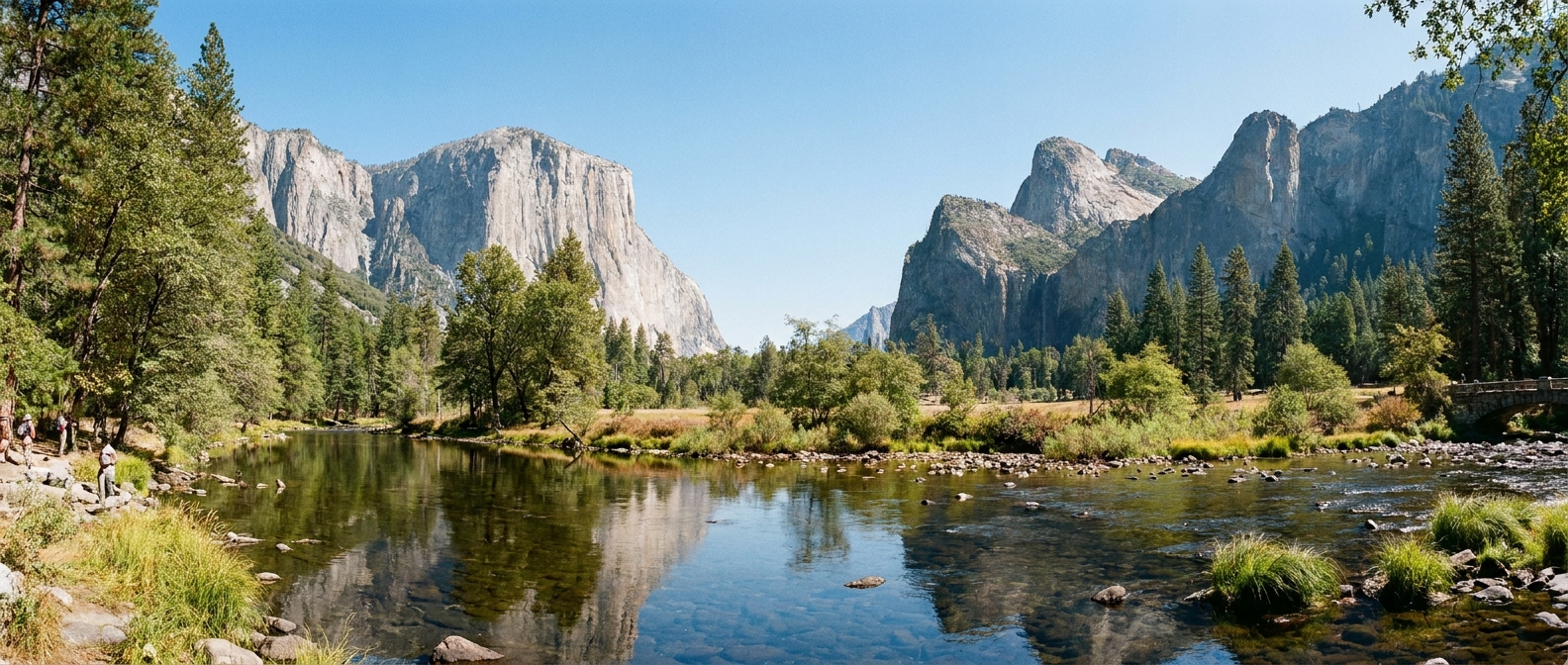
If you remember only one thing, make it this: in Yosemite, pets are mostly allowed in developed areas and on certain paved surfaces, and they are generally not allowed on hiking trails.
One important nuance: “paved” is not an automatic yes. Some paved routes are still considered trails, and if a path is signed as a trail or nature trail, pets are typically prohibited. When in doubt, follow posted signs and check the current NPS pet policy before you go.
Dogs are allowed (on leash) in
- Developed areas like roads, parking areas, and many day-use corridors in Yosemite Valley.
- Paved roads, sidewalks, and some paved bike paths in developed areas.
- Campgrounds and picnic areas (in developed sections).
- Pet-friendly lodging in and around the park (rules vary by property).
Dogs are not allowed in
- Most trails, including boardwalk and nature trails that are signed as trails.
- Wilderness areas and backcountry routes, and anywhere the park designates as trail-only access.
- Many park buildings and public indoor spaces (exceptions are typically service animals, and any lodging rooms specifically designated as pet-friendly).
Those restrictions can feel strict, but they’re common in national parks with sensitive wildlife and heavy foot traffic. Yosemite’s narrow, steep, crowded trails, especially in peak season, are exactly the kind of place where the park prioritizes safety and resource protection.
Where you can go with a dog
If you want a simple starting point for a dog-friendly Yosemite day, these are the kinds of places that are typically within developed, paved corridors. Still, always follow posted signs where you are because rules can vary by route, season, or project closures.
- Tunnel View (viewpoint from the parking area).
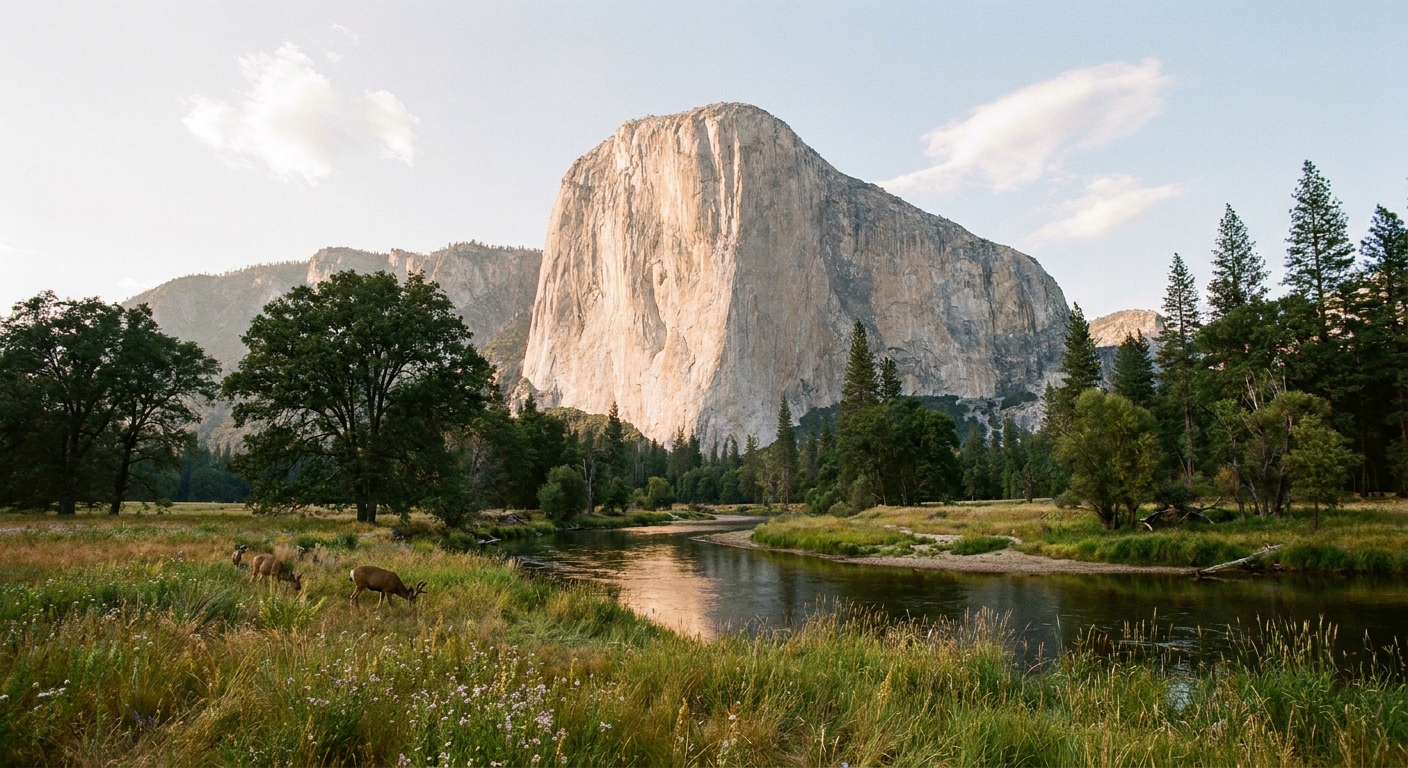
- El Capitan Meadow (roadside pullouts and developed viewpoints).
- Yosemite Valley roadside viewpoints and picnic areas in developed sections.
- Lower Yosemite Fall (via the paved access path in the developed day-use area).
- Paved sidewalks and multi-use paths around Yosemite Village and nearby developed corridors.
Can my dog hike the Mist Trail?
No. Dogs are not allowed on the Mist Trail or the hiking routes to Vernal Fall and Nevada Fall.
This includes the common “alternate route” people ask about. The John Muir Trail is still a trail, so it’s not dog-legal either. In practical terms, there is no dog-legal hiking route to those falls.
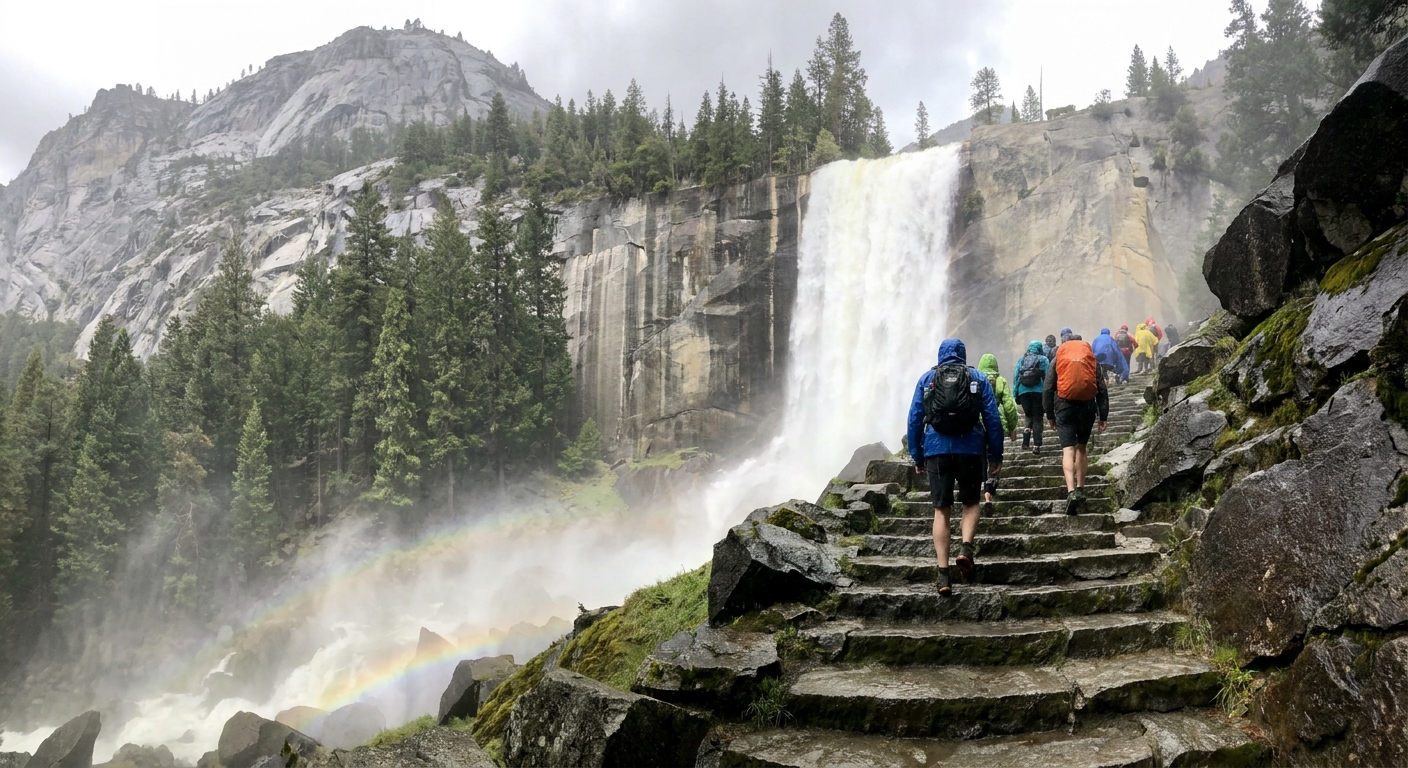
The Mist Trail is steep, often wet and slick, and can get extremely congested. Add spring runoff, uneven stone steps, and tight corridors with drop-offs, and it makes sense that Yosemite keeps pets off this route.
Leash rules
Yosemite requires pets to be on a physical leash in areas where they’re permitted. The leash must be 6 feet or less.
- Voice control does not count, even if your dog is normally perfect off leash.
- Keep your dog close to you, especially around bikes, strollers, and shuttle stops in Yosemite Valley.
- Plan for hot surfaces. Pavement and parking lots can get brutally warm in summer.
- Pack out waste. Bring more bags than you think you’ll need.
Also worth knowing: do not leave your dog unattended. That includes not tying your dog to trees, railings, or anything else and walking away. Yosemite is busy, wildlife is real, and an “I’ll be right back” moment can go sideways fast.
One more reality check: even where dogs are allowed, Yosemite can be loud and crowded. If your dog is anxious around people, the Valley at midday can be a lot. Early mornings and evenings are calmer and cooler.
Dog-friendly things to do
If your dog is coming with you, think “big views with a leash and a water bowl” rather than “summit day.” A few ideas that usually fit the rules (still check signage where you are):
- Walk the paved access path to Lower Yosemite Fall from the main day-use area.
- Stroll the paved Valley path network near Yosemite Village, Swinging Bridge, and other developed Valley corridors.
- Hang out at El Capitan Meadow viewpoints from the roadside turnouts and developed areas.
- Do scenic roadside stops for Tunnel View and other viewpoints accessible from parking areas.
These are the kinds of Yosemite days I actually enjoy with a dog: unhurried, lots of sniff breaks, and a few wow-moments that don’t require breaking rules or pushing your dog past their comfort level.
What about Mariposa Grove?
If Mariposa Grove is on your list, plan on visiting without your dog. Pets are not allowed on the Grove trails, including boardwalk sections that are designated as trails. If your dog is with you that day, make it a drive-and-viewpoint day instead, or trade off with a partner.
What to do while you hike
If your trip includes any of Yosemite’s headline hikes (Mist Trail, Glacier Point-area hikes, Tuolumne Meadows routes, and so on), you’ll need a plan that does not involve bringing your dog on the trail.
Option 1: Trade off hikes
This is the easiest and most reliable option. One person hikes while the other does a slow Valley morning with the dog: paved paths, river views, and a picnic breakfast. Then swap.
Option 2: Do a paved day
If you only have one day and you’re with your dog, lean into what Yosemite does beautifully without committing to trails: viewpoints, meadows, and riverside paved strolls. You can still have an iconic day without chasing elevation.
Option 3: Arrange pet care
Availability changes seasonally, and demand can be high. If you want pet sitting or a kennel, plan ahead in gateway communities and confirm policies before you arrive. Do not assume you can find last-minute care once you’re in Yosemite Valley.
Option 4: Stay outside the park
If you base yourself in a gateway town, it can be easier to arrange pet care, find shaded walking areas, and come and go around your dog’s comfort level. It’s a different rhythm than staying in the Valley, but it can be the most realistic way to mix Yosemite hiking with dog travel.
What not to do
- Do not leave your dog unattended in a car, even “just for a quick hike.” Yosemite temperatures swing fast, and parking areas can become ovens.
- Do not bring your dog onto closed trails hoping it will be fine early in the morning. Rangers do enforce rules, and the impacts to wildlife and other visitors are real.
- Do not leave your dog tied up at a trailhead or picnic area while you go for a walk. If your dog is with you, stick to dog-permitted areas.
Nearby dog hikes
If your priority is a true trail hike with your dog, Yosemite’s rules can be frustrating. The workaround is to plan your dog-hike day outside the national park boundary, then come into Yosemite for sightseeing and your dog-friendly paved time.
Look for dog-friendly national forest or BLM trails in the broader region, where pet policies are typically more flexible than inside national parks. Always check local regulations, seasonal closures, and wildfire conditions, and keep your dog leashed around wildlife and other hikers.
Service animals
Service animals are different from pets. Trained service animals that assist a person with a disability are generally allowed where visitors can go, but pets are still restricted. If you are traveling with a service animal, follow NPS guidance and be ready to navigate crowded, high-distraction environments thoughtfully.
Quick FAQ
Are dogs allowed on Yosemite trails?
In general, no. Dogs are mostly limited to developed areas and certain paved surfaces. There are a few limited exceptions and edge cases, so check current park rules and signage for the specific area you are visiting.
Are dogs allowed on the Mist Trail?
No. Dogs are not allowed on the Mist Trail to Vernal Fall and Nevada Fall. The John Muir Trail route is also not dog-legal.
Are dogs allowed at Lower Yosemite Fall?
Often yes, because the Lower Yosemite Fall area is accessible via a paved path in a developed corridor. Still, always follow posted signs and current conditions.
Do I need to keep my dog on a leash?
Yes. Use a physical leash 6 feet or less at all times in areas where pets are permitted.
What’s the best way to do Yosemite with a dog?
Plan for a paved Yosemite Valley day, add scenic roadside stops, and either trade off hikes with a partner or arrange pet care outside the park for your big hike days.