Olmsted Point on Tioga Road

Maya Lin
Maya Lin is a travel journalist and outdoor enthusiast who believes the best trips combine rugged adventures with urban comforts. After spending six years backpacking across four continents, she founded Trail & Town Guide to help fellow travelers navigate both hidden mountain passes and bustling city neighborhoods with confidence.
Olmsted Point is one of those Yosemite stops that feels almost unfair: you pull off Tioga Road, step out into crisp high country air, and suddenly Half Dome shows up from an angle most first-timers do not even realize exists. Add a dizzying look down Tenaya Canyon, a fun little granite wander, and you have a ten minute detour that punches way above its weight.
I love Olmsted Point for “carry-on only” days in Yosemite: when you want a real hit of the high country without committing to a full hike, changing into boots, or reorganizing your whole itinerary. Here is exactly how to plan the stop.
What you will see
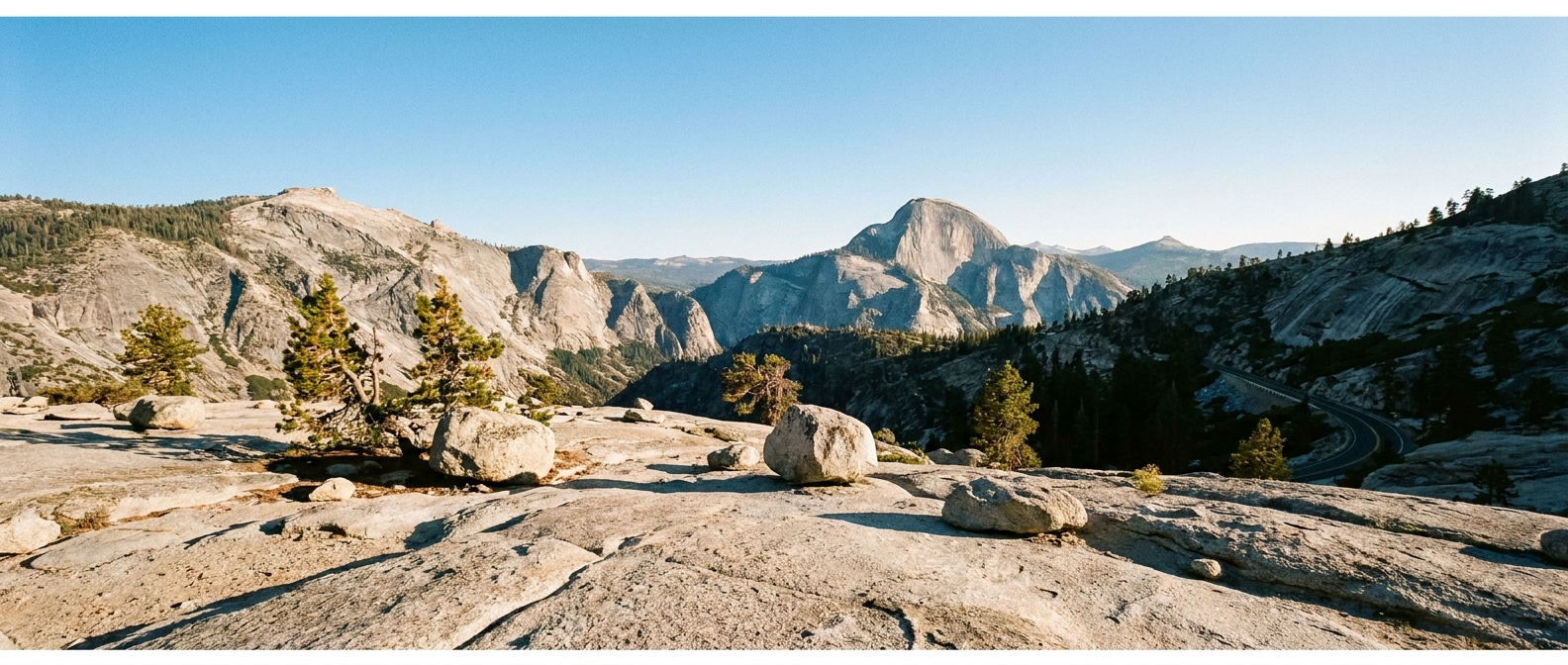
Olmsted Point sits along Tioga Road in Yosemite’s high country and delivers two signature views with almost no effort.
- Half Dome, from the back: This is the big one. From Olmsted Point, Half Dome appears beyond a sweep of domes and ridges, and the face looks subtly different than the classic Valley perspective.
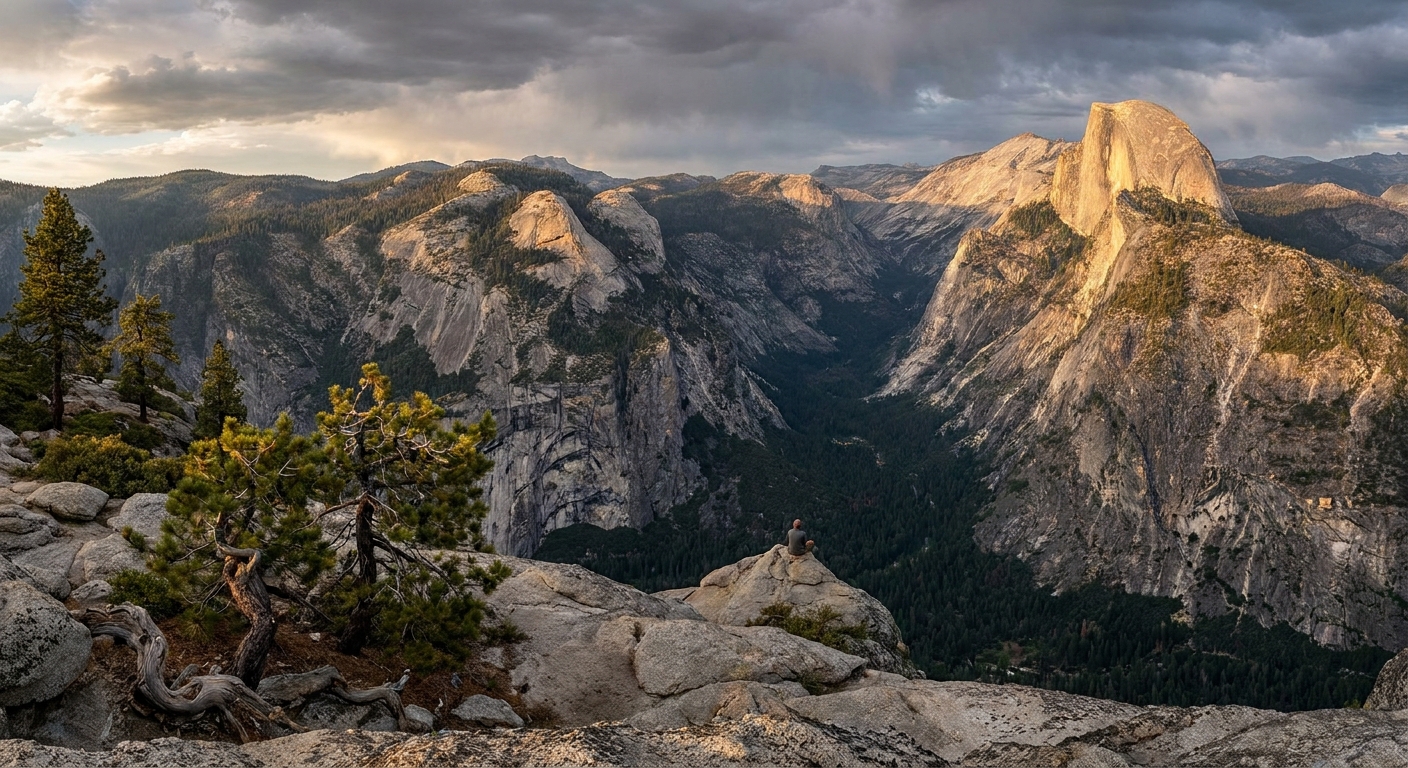
- Tenaya Canyon: Stand near the edge of the viewpoint area and you can look down into Tenaya Canyon. It feels rugged and remote, especially when light is slanting in late afternoon.
On clear days, the granite around you glows pale gold and silver, and the whole scene has that quiet, high-elevation hush that makes you instinctively lower your voice.
The short rock walk
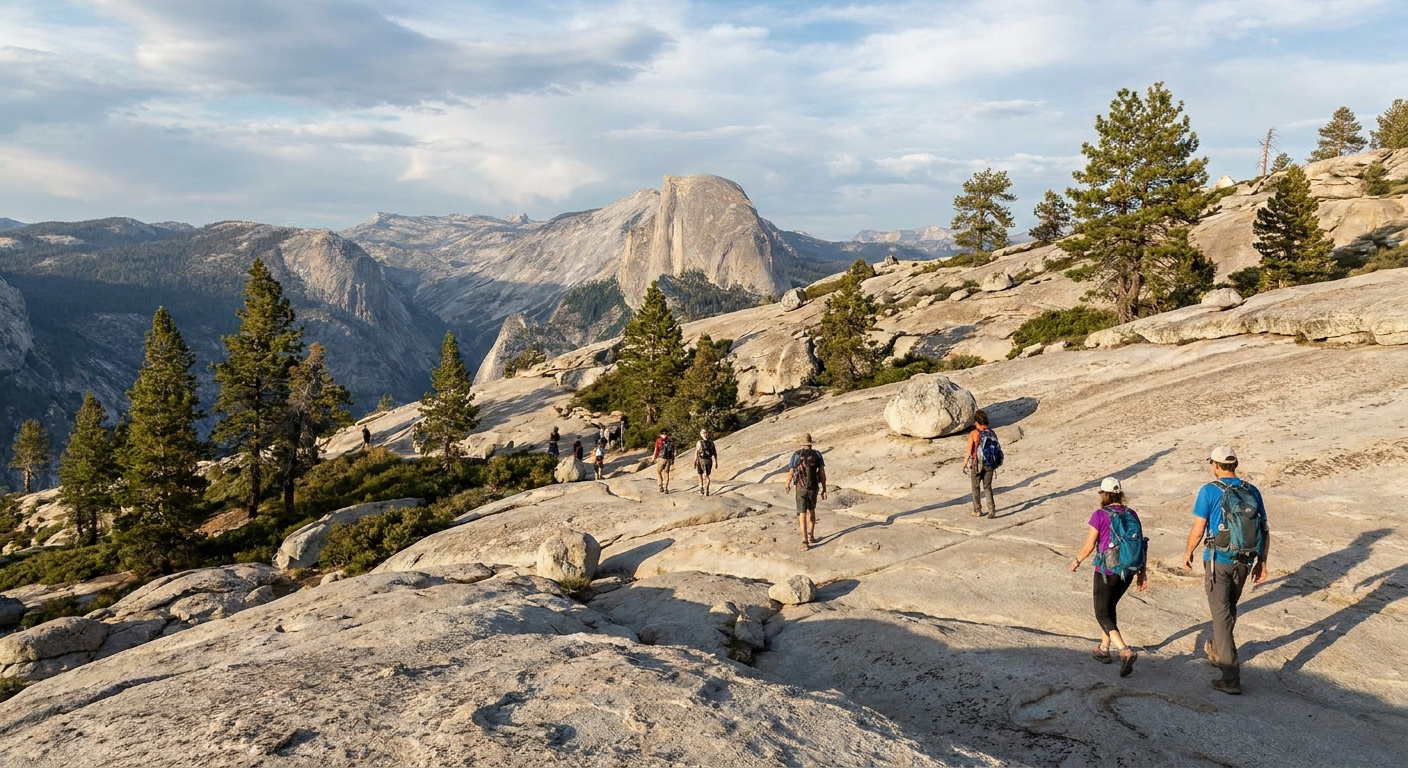
There is a paved viewpoint area, but the best part of Olmsted Point is the short wander across granite slabs just beyond the main pullout. It is not a formal, signed trail in the way many Yosemite walks are. Think of it as a choose-your-own mini adventure on bare rock.
What it is like
- Surface: Smooth granite with shallow grooves and occasional sandy patches.
- Difficulty: Easy for most people who are steady on their feet, but it can feel slippery in rain or icy conditions.
- Footwear: Sneakers with decent tread are fine in dry weather. Avoid slick-soled shoes.
Where to aim
From the paved area, follow the natural flow of footpaths onto the open granite. In a few minutes you will find quieter perches with slightly different angles on Half Dome and deeper looks into Tenaya Canyon. The further you wander (responsibly), the more the roadside feel disappears.
Safety note: This is exposed rock with real drop-offs in places. If you are traveling with kids, keep them close. If you are afraid of heights, stick to the more obvious worn paths and avoid edging out for “one more step.”
Season and road closures
This is the one detail that can make or break your plan: Tioga Road is seasonal, and when it closes for winter, Olmsted Point is not accessible by car.
- Typical closure window: Roughly November through late May or June, depending on snowfall and plowing.
- What to do with that info: Before you build a trip around high country stops, check the current Tioga Road status with the National Park Service. If the road is closed, plan your Yosemite day around Valley viewpoints instead.
Parking and logistics
Olmsted Point is a roadside pullout with limited parking. It is popular because it is easy, and that means spaces can fill quickly during peak hours.
Parking tips
- Expect tight capacity: If the pullout is full, you may need to loop back or wait briefly for a spot to open.
- Go early or late for breathing room: Mornings and later afternoons tend to be calmer than midday.
- Do not create your own space: Avoid stopping in travel lanes or on vegetation. Tioga Road traffic moves fast enough that a “quick” stop can become dangerous.
Restrooms: Do not count on full services at every scenic pullout along Tioga Road. I treat Olmsted Point as a scenic stop, not a facility stop, and plan accordingly.
Best approach direction
If you can choose, driving eastbound (from Yosemite Valley toward Tuolumne Meadows and Lee Vining) generally makes Olmsted Point simpler. The pullout is on the right (south) side of the road in that direction, so you can slip in without crossing opposing traffic, and it feels less stressful to re-enter the road afterward.
If you are heading westbound, it is still absolutely doable. Just be prepared for a bit more patience when turning in and pulling back out, especially when traffic is steady.
How long to stay
This is the rare Yosemite highlight where you can control the time commitment.
- 5 to 10 minutes: Park, walk to the main viewpoint, snap your photos, and go.
- 15 to 25 minutes: The sweet spot. Add the granite wander, find a quieter angle, and actually absorb the place.
- 30 to 45 minutes: If you love photography or want to linger for changing light and fewer people.
My personal rule: if I have the time, I budget 20 minutes and let it stretch if the light is good. That is long enough to get past the “parking lot energy” and into the spaciousness of the slabs.
Best time for photos
Olmsted Point can look great anytime, but a few patterns help:
- Morning: Often quieter, with crisp air and a calmer feel.
- Midday: Bright and high contrast, great for clear visibility but less forgiving for dramatic photos.
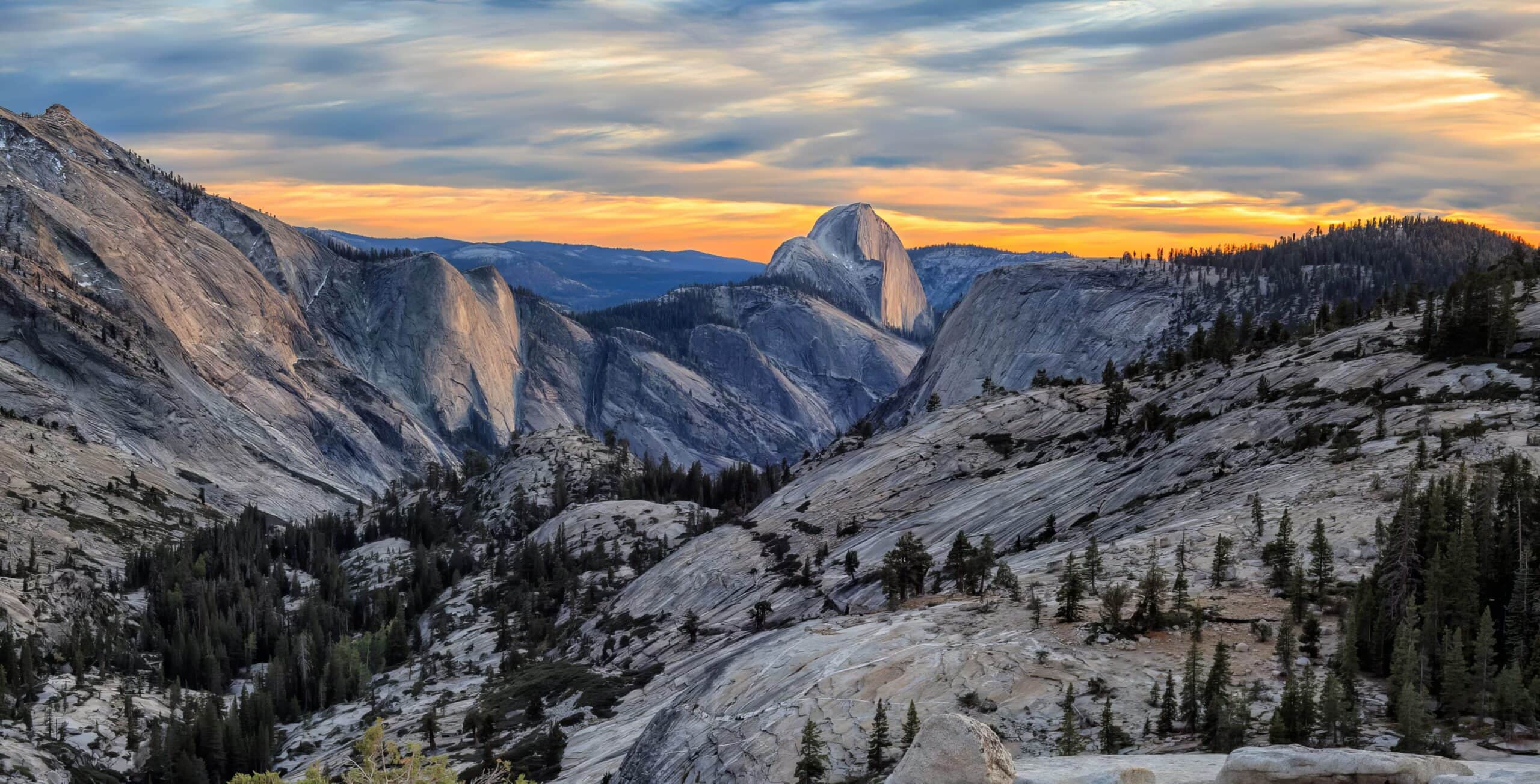
- Late afternoon: Warmer tones on granite and a more cinematic look, plus you may catch people cycling out and traffic thinning.
Even if you are not chasing perfect light, a quick stop here is almost always worth it simply because the perspective on Half Dome is so unique.
What to bring
- Water: High country air can be deceptively drying.
- Layers: Tioga Road elevations can feel cool even when the Valley is hot.
- Sun protection: Granite reflects light, and there is very little shade.
- A small trash bag: Pack out everything, including fruit peels and coffee cups.
If you are trying to keep your Yosemite day efficient, this is the kind of stop where having your camera and a light layer within reach pays off.
Etiquette and safety
- Stay on durable surfaces: Granite and established worn paths are your friend. Avoid trampling fragile roadside plants.
- Give photographers space: People often set up near edges for wide angles. Step around, not through, someone’s shot.
- Watch the edge: It sounds obvious, but the combination of wind, excitement, and smooth rock makes people careless.
- Keep sound low: This is a naturally quiet place. Let it stay that way.
Quick FAQ
Is Olmsted Point a hike?
Not really. It is a scenic pullout with a short walk to viewpoints and an optional roam across granite slabs. Most visitors treat it as a quick stop rather than a formal hike.
Is it worth it if I already saw Tunnel View or Glacier Point?
Yes, because the angle on Half Dome is totally different. It feels like meeting the same landmark in a different neighborhood.
Can I do Olmsted Point with kids?
Yes, with close supervision. The rock is fun to explore, but there are exposed areas and drop-offs.