Bass Harbor Head Light: Parking, Stairs, and Sunset Crowds

Maya Lin
Maya Lin is a travel journalist and outdoor enthusiast who believes the best trips combine rugged adventures with urban comforts. After spending six years backpacking across four continents, she founded Trail & Town Guide to help fellow travelers navigate both hidden mountain passes and bustling city neighborhoods with confidence.
Bass Harbor Head Light is one of those Acadia stops that looks calm and solitary in photos, but in real life it is a tiny headland with a tiny parking lot and a whole lot of people trying to catch that brief window of golden light. I love it anyway, because it delivers fast coastal drama without a full hike commitment. You just need to know what you are walking into: where to park, what the stairs are really like, and how to time your visit so you spend your evening watching the ocean, not circling for a spot.
Where it is and drive time
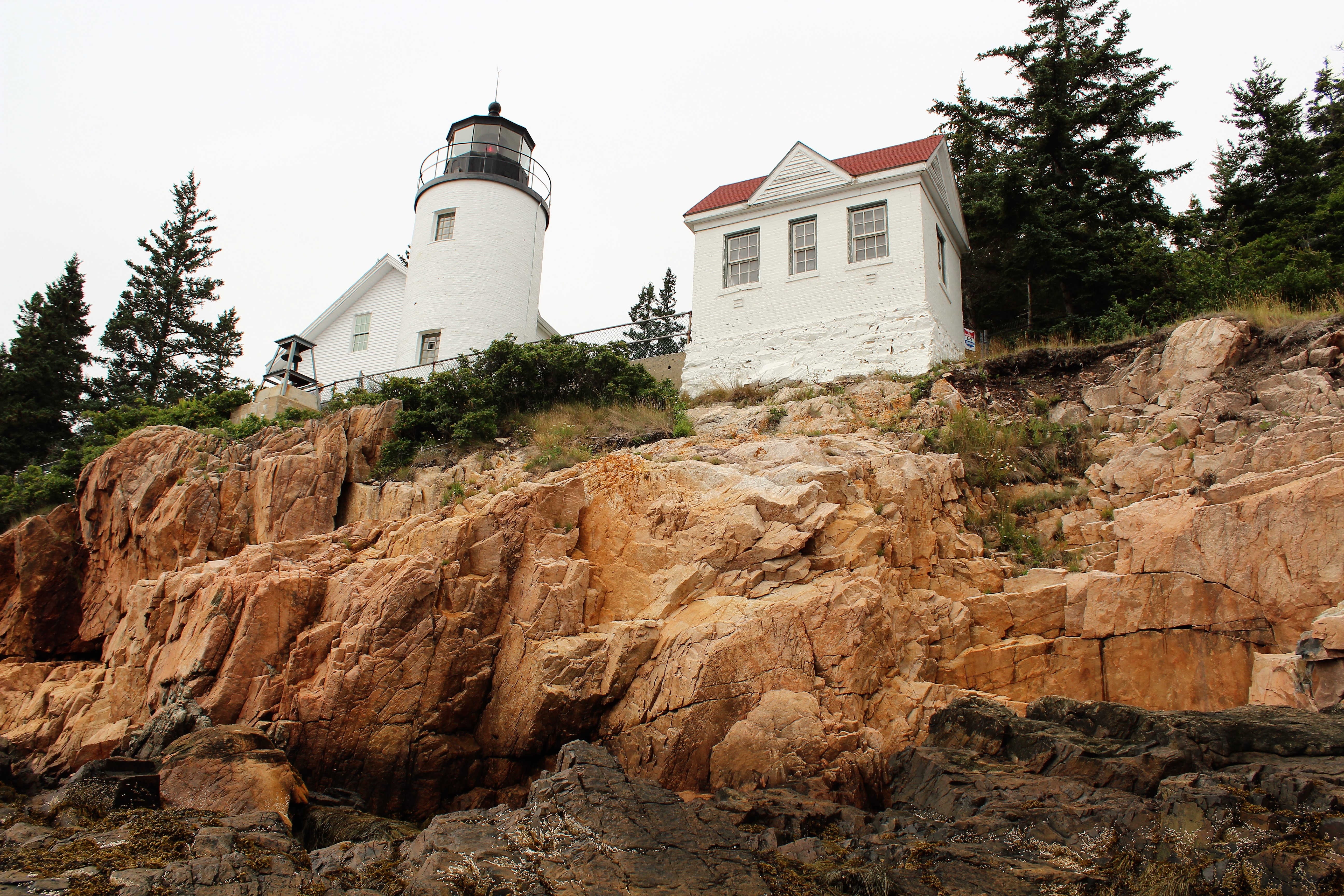
The lighthouse sits on the southwestern side of Mount Desert Island near Bass Harbor and Southwest Harbor. It is within Acadia National Park boundaries, but it feels more like a quick coastal lookout than a big trailhead.
- From Bar Harbor: typically 35 to 50 minutes each way by car, depending on where you start in town, traffic, and roadwork.
- From Southwest Harbor: typically 10 to 20 minutes each way.
Timing matters most around sunset. A drive that feels easy midday can slow down as cars stack up near the access road and the lot fills. If you are visiting in July or August, build in extra buffer and consider arriving even earlier than you think you need.
Park basics to know
- You need an Acadia park pass to enter the park. If you are already exploring Acadia, you likely have this covered.
- No timed-entry system for this stop in the way some Acadia areas operate, but conditions can change. Before you go, it is worth checking current park alerts for road closures, construction, or safety advisories.
Parking: small lot, real crowds
The biggest surprise for first-timers is how limited parking is. There is a small on-site lot, and roadside space is limited. If you arrive close to sunset, you may find every space taken and cars doing slow loops waiting for someone to leave.
What to expect
- Small capacity: It fills quickly, especially in summer and early fall.
- Fast-ish turnover: Many people stay 15 to 30 minutes, so spaces do open up, but you may need patience.
- Congestion: The access road is narrow, so when drivers stop to wait for a spot, everything slows.
My timing rule
If you are aiming for sunset, try to arrive 45 to 75 minutes before sunset. In peak summer, earlier is even better. That gives you time to park, walk down, find a safe viewing perch, and still enjoy the light changing. If you show up 10 minutes before sunset, you might still see a pretty sky, but it can be a stressful one.
If the lot is full
- Do not block the road. It is tempting to pause and wait, but it creates a bottleneck.
- Loop and reassess. If you have time, do another slow pass. If you are tight on time, shift plans.
- Try sunrise or midday. Those times are often noticeably easier than sunset.
I am intentionally not recommending specific unofficial pull-offs because roadside rules and enforcement can change, and the last thing you need is to turn a lighthouse stop into a towing story.
The walk and stairs
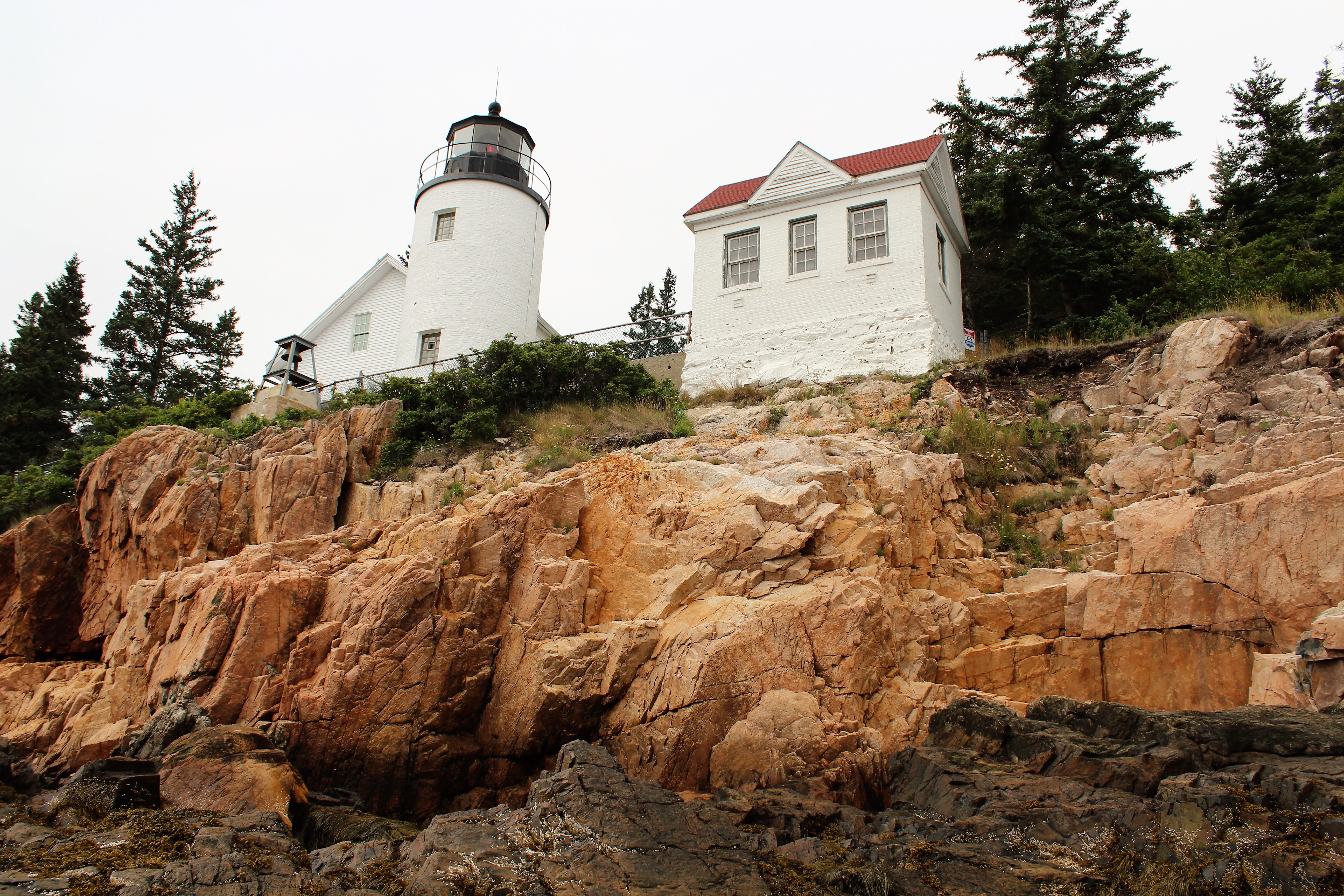
There are two main “experiences” at Bass Harbor Head Light: the easy viewpoint near the lighthouse buildings, and the more classic photo angle from the rocks below. Both are short walks, but the footing is very different.
Upper area
From the parking area, you can reach the general viewing area quickly on a maintained path. This is the best option if you want minimal walking, if you are traveling with someone who is unsteady on uneven ground, or if conditions are wet.
Down to the rocks
To get the iconic view looking back up at the lighthouse, you will take a set of stairs and then follow a short path down toward the shoreline. Expect:
- Stairs: A brief stair section that can feel steep on the way back up, especially in humid summer weather.
- Roots and rocks: The path is short but can be uneven.
- Slippery spots: After rain, morning dew, sea spray, or wet seaweed, the rocks can be slick.
- Edge exposure: People spread out on boulders. There are drop-offs and no guardrails down at the shoreline.
One extra safety note that is easy to underestimate: watch the ocean, not just your camera. Swell and splash can surge higher than you expect, especially on wet rocks. Give yourself a little margin, and do not turn your back on the water.
My practical footwear advice: skip flip-flops. Sneakers with decent tread make a noticeable difference, especially if you are stepping from rock to rock for a photo angle.
Sunset vs sunrise
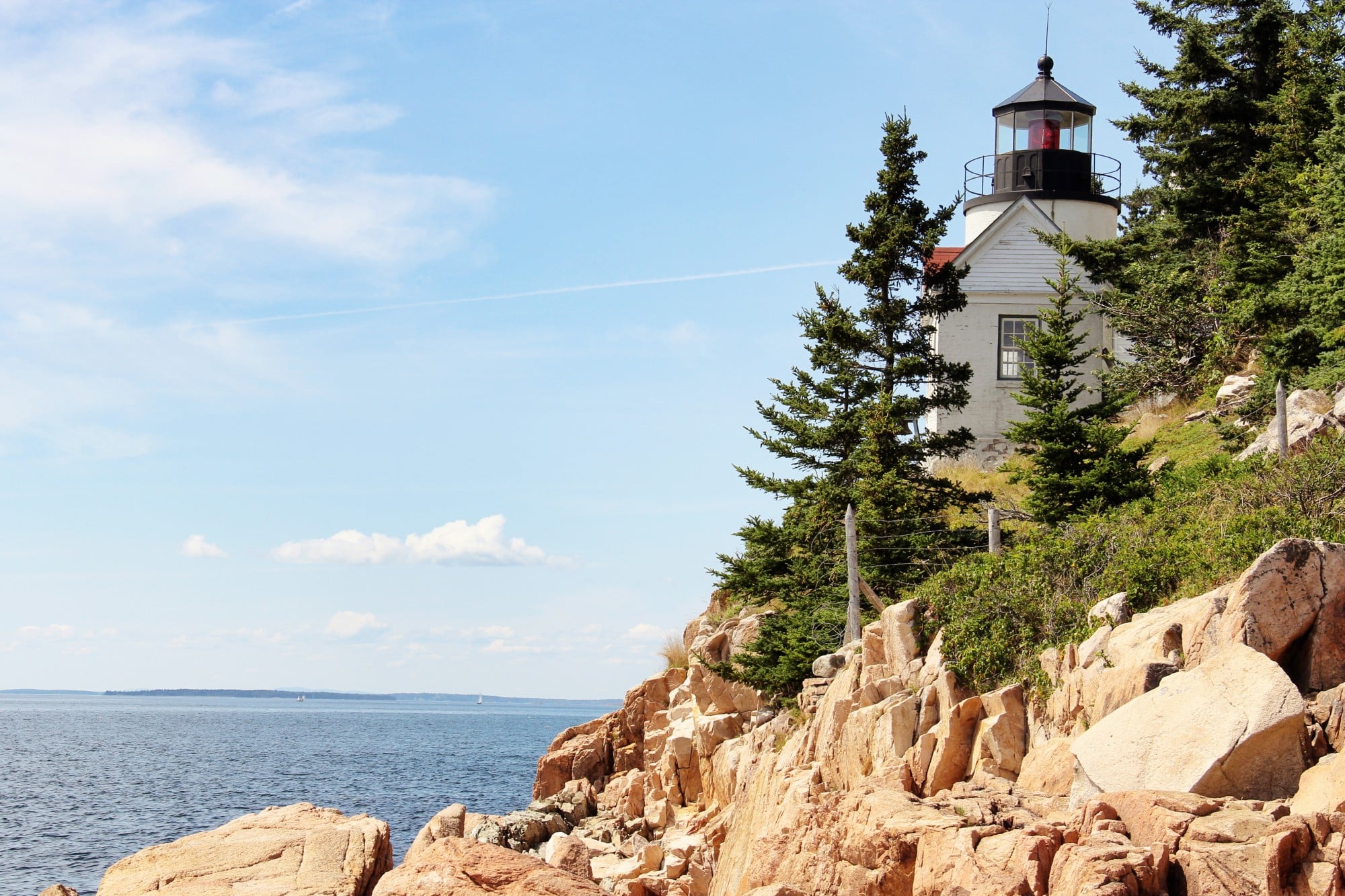
Both can be beautiful, but they feel completely different.
Sunset
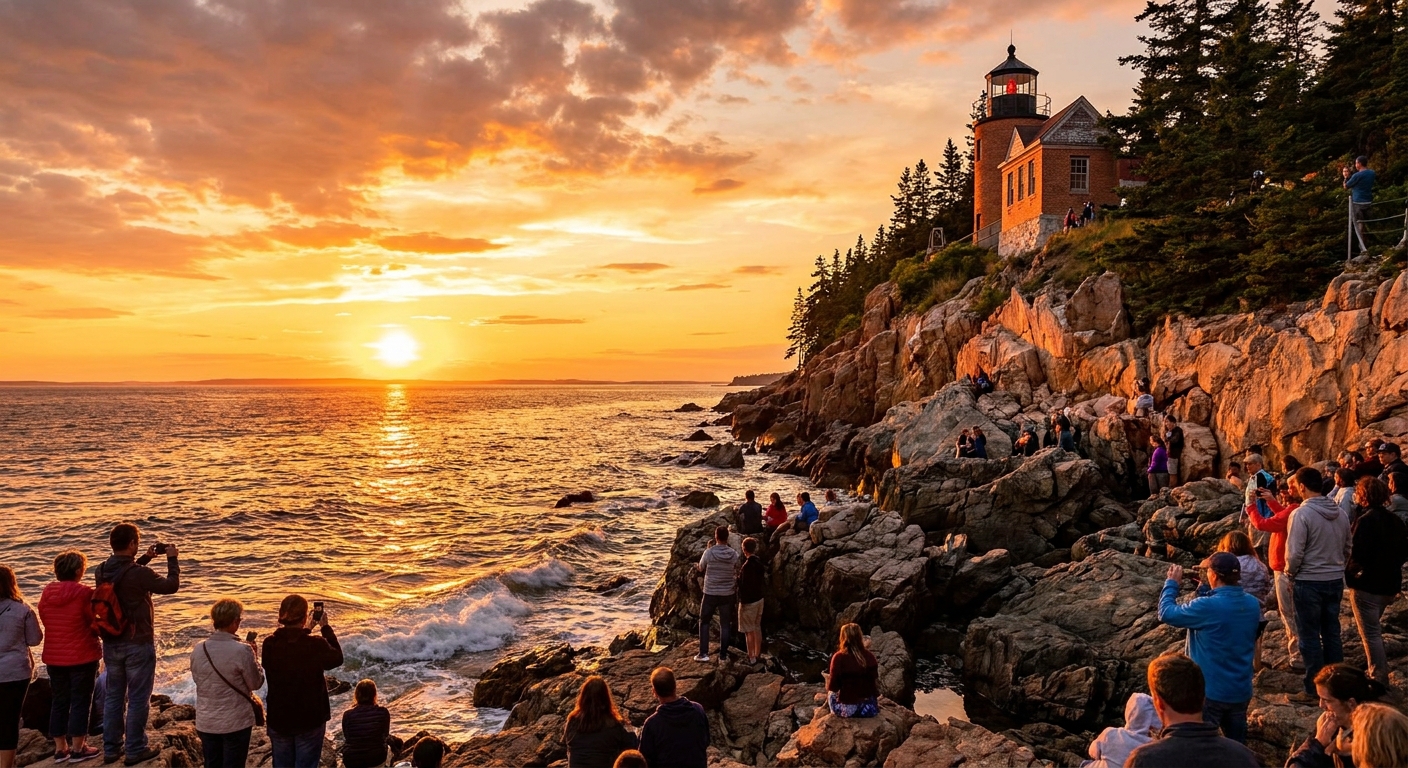
- Crowds: The heaviest crowds of the day typically show up for sunset.
- Parking: Usually the hardest time to park.
- Vibe: Social and lively, lots of tripods, lots of people waiting for the same shot.
If you love that communal, clapping-when-the-sun-dips energy, sunset is fun. If you want a quieter experience, it can feel like a lot.
Sunrise
- Crowds: Often much lighter than sunset, though it can still be busy in peak season.
- Parking: Typically more straightforward.
- Light: Softer, cooler tones. You might not get the same glowing horizon effect as some west-facing sunset spots, but the atmosphere can be gorgeous.
Personally, if you are already doing one “big” sunrise in Acadia, you might not want another alarm clock. But if your trip schedule is flexible, sunrise is usually the simplest way to see Bass Harbor Head Light without the parking chess match.
How long to budget
This is not an all-day commitment. Even at a slow-travel pace, Bass Harbor Head Light is a short stop unless you intentionally build it into a longer loop on the quiet side of the island.
- Quick look: 15 to 25 minutes (park, walk to viewpoints, a few photos).
- Classic visit: 30 to 45 minutes (down to the rocks, hang out, wait for better light).
- Sunset visit: 60 to 90 minutes (arrive early, park, find a spot, watch the full color shift).
Add extra time if you are visiting at peak hours and expect a wait to park, or if you want to move carefully on the rocks.
Sunset strategy
If you are set on sunset, this is how I keep it enjoyable, not stressful.
- Arrive early and commit. Once you have a parking spot, keep it. The “we will just do one more quick stop” plan often backfires.
- Pick your viewing style. If you want the iconic angle, head down to the rocks earlier. If you want a simpler experience, stay topside and enjoy the coastline without scrambling.
- Be patient about the perfect photo. People rotate through popular boulders. If you wait a few minutes, you can often get your shot without squeezing in.
- Plan your exit. Leaving right as the sun drops can mean a slow crawl back out. If you linger 10 to 15 minutes, you often miss the first wave of gridlock.
Restrooms and trash
This is the kind of stop where people assume there will be facilities because it is popular, but you should plan like there might not be much on-site. Use the restroom before you drive out, and pack out any trash. It keeps the area nicer for everyone and makes your visit feel less like a logistics problem.
Accessibility and comfort
Bass Harbor Head Light is easy to reach by car, but the terrain near the shoreline is not universally easy once you leave the maintained paths.
- For strollers or wheelchairs: Stick to the maintained path areas near the top. The stairs and rocky shoreline are not a good match.
- For anyone with knee issues: The stairs are short, but the combination of steps plus uneven rocks can be taxing. Consider staying topside for the best balance of views and comfort.
- Kids: Totally doable with close supervision. Down on the rocks, keep little ones within arm’s reach.
What to bring
- Grippy shoes for the stairs and coastal rocks
- A light layer even in summer, since wind off the water can feel chilly
- Water if you are pairing this with other stops on the quiet side
- Phone flashlight if you stay past sunset. Paths can feel dark fast under trees
FAQ
Do you need reservations?
No. There are no lighthouse-specific reservations for this stop. You still need a park pass to enter Acadia, and it is smart to check current park alerts for closures or changes before you go.
Are there a lot of stairs?
There is a short stair section if you go down toward the rocks for the classic lighthouse angle. It is not a long staircase, but it can feel steep on the way back up, and the footing below is uneven.
Is it worth visiting if you do not want to climb down?
Yes. You can still enjoy coastal views from the upper area near the lighthouse. You just will not get the same perspective as the shoreline photos.
What time should I arrive for sunset?
For the least stress, aim for 45 to 75 minutes before sunset. Earlier is often better in peak season.
Is sunrise less crowded?
Often, yes. If you want a quieter experience, sunrise is usually the easiest way to experience Bass Harbor Head Light without the sunset parking squeeze.