Delicate Arch Trail: What to Know Before You Hike

Maya Lin
Maya Lin is a travel journalist and outdoor enthusiast who believes the best trips combine rugged adventures with urban comforts. After spending six years backpacking across four continents, she founded Trail & Town Guide to help fellow travelers navigate both hidden mountain passes and bustling city neighborhoods with confidence.
The first time I hiked to Delicate Arch, I made the classic desert mistake: I treated a “short” trail like it could not possibly feel big. Then the slickrock started radiating heat like a skillet, the wind picked up, and the arch looked both closer and farther than it had any right to. Delicate Arch is not a long hike, but it is an exposed one. The good news is that with the right timing, water, and a little respect for the rock, it is one of the most satisfying out-and-backs in the Southwest.
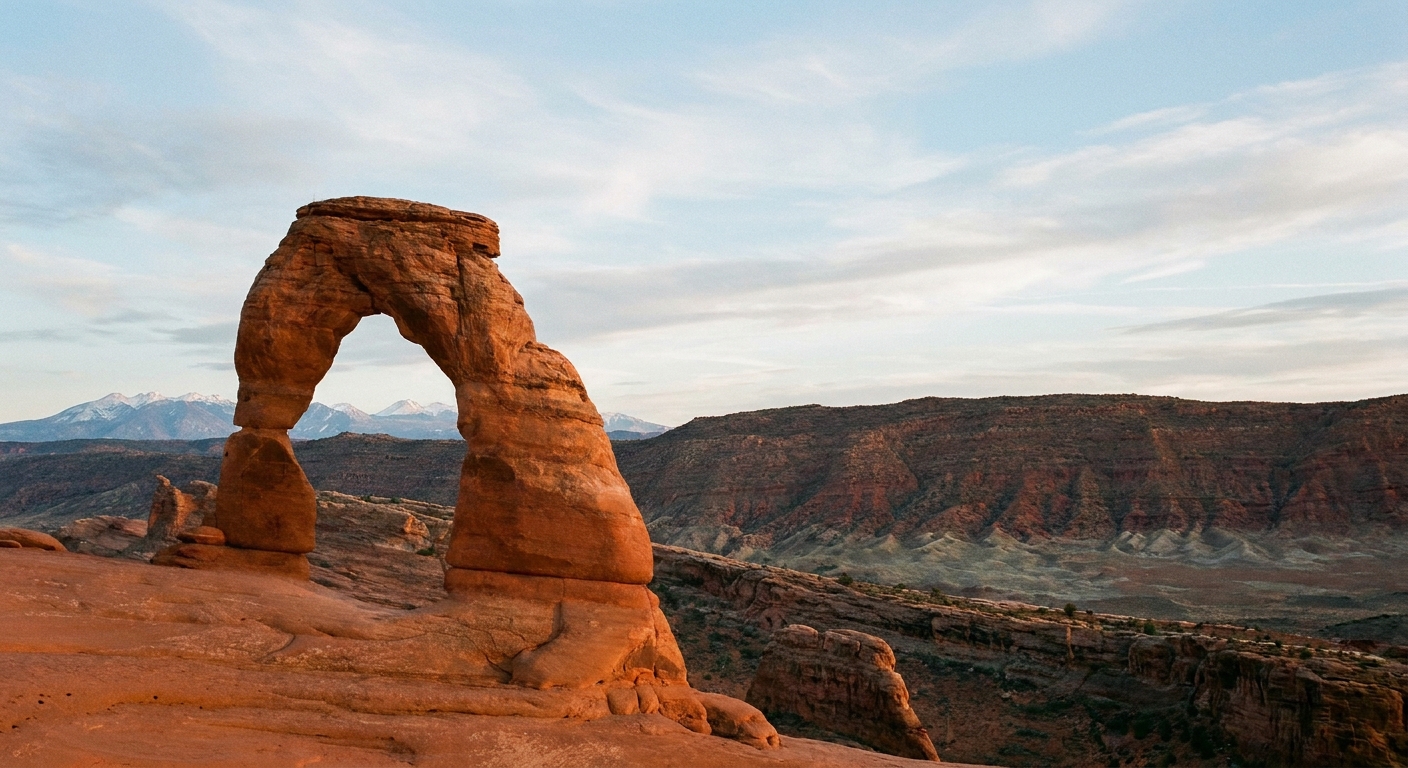
This guide stays laser-focused on the trail itself: where to park at Wolfe Ranch, what the terrain actually feels like underfoot, and how to plan for light and heat so you enjoy the hike instead of just enduring it.
Delicate Arch hike at a glance
- Trailhead: Wolfe Ranch (Delicate Arch Trailhead), Arches National Park
- Route type: Out-and-back
- Distance: About 3.2 miles round trip (varies a bit by GPS and how closely you follow the marked line)
- Elevation gain: About 480 feet
- Typical time: 1.5 to 3 hours depending on pace, heat, and crowds
- Difficulty: Moderate, mainly due to exposure and slickrock
- Terrain: Packed dirt, sandstone steps, then extended slickrock slabs
- Shade: Very limited
Those numbers can look tame on paper. What they do not show is how much the experience changes with sun angle, temperature, and wind. This trail is all about conditions.
Trailhead and parking
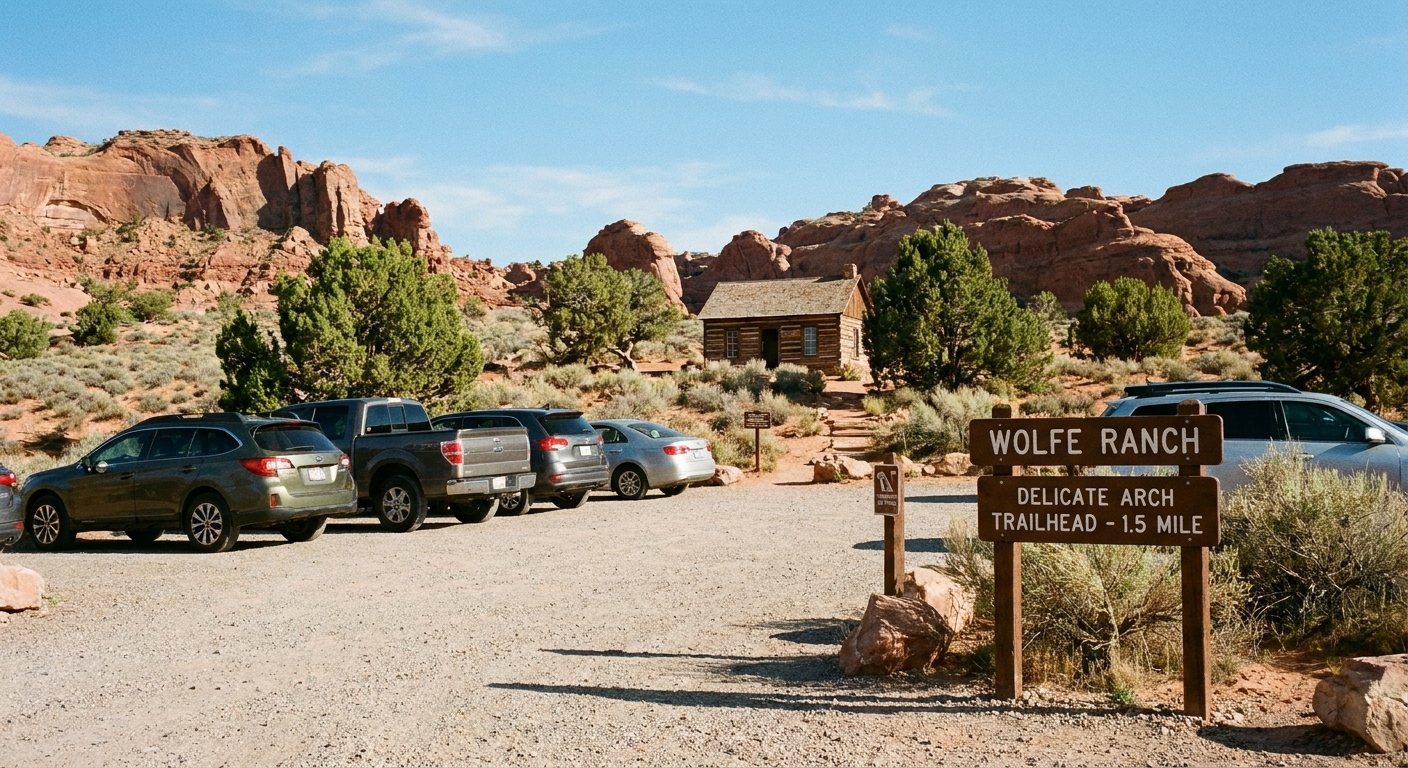
The Delicate Arch Trail starts at the Wolfe Ranch parking area along the main park road, signed for Delicate Arch and Wolfe Ranch. This is the standard, official route and the one most people mean when they say “Delicate Arch hike.”
Parking realities
- Lot size: Limited, and it fills early in busy seasons.
- When it is full: Plan to circle, wait, or try again later. On especially busy days, staff may help manage traffic, but do not count on an organized overflow setup.
- Best time to snag a spot: Early morning or later afternoon. Midday is both the hottest and the most congested.
At the trailhead you will find restrooms. Treat this as your last reliable stop before the hike. There is no water on the trail, and you do not want to be rationing your last sips in the bowl at the arch.
What the trail feels like
1) Trailhead to Wolfe Ranch
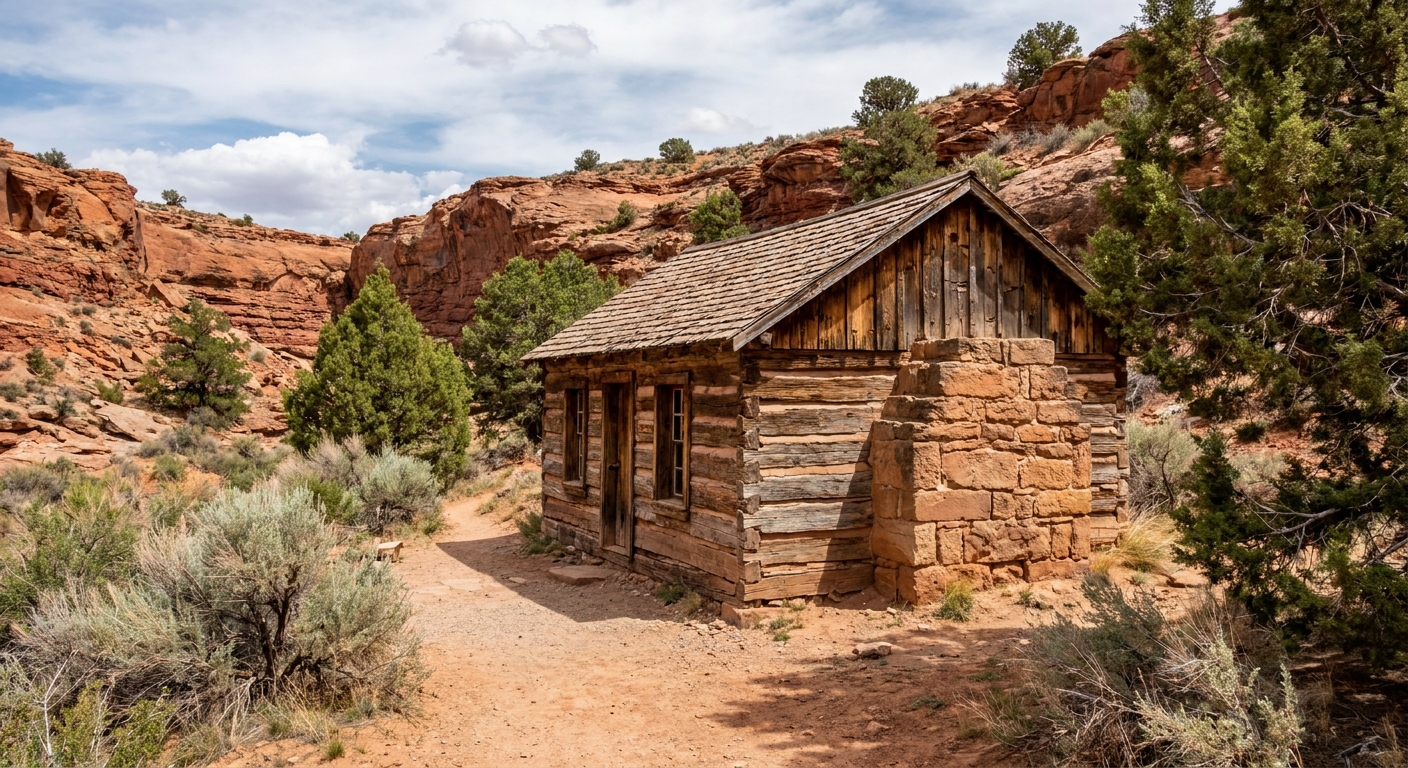
The opening section is straightforward: a wide, well-defined path with a gentle grade. Very quickly you will reach two worthy side stops that are basically free bonuses.
- Wolfe Ranch cabin: A historic homestead site with interpretive signs. Enjoy it, but do not climb on it or handle artifacts.
- Petroglyph panel: Short spur to rock art near the wash. Look closely, then give it space. Rock art is easily damaged by touching and oils.
2) The climb
After the wash, the trail begins to climb. You will encounter a mix of dirt, embedded rock, and stone steps. This is where people start to spread out, and where you should start paying attention to footing if there is sand on the rock.
3) Slickrock and exposure
The signature middle portion is a long stretch of slickrock. “Slickrock” is grippy sandstone when dry, but it is still rock. It reflects sun, radiates heat, and offers almost no shade. The route is marked with cairns (rock piles). In bright light, it is surprisingly easy to drift off the main line, so keep an eye out for the next marker before you commit to a direction.
One section includes a sloped slickrock shelf with a drop-off to one side. It is wide enough for most hikers to feel fine, but it can be intimidating if you are uncomfortable with heights, hiking with kids, or passing people coming the opposite direction. Take it slow, let faster hikers pass at wider spots, and keep your steps deliberate.
If you are hiking near sunset, bring a headlamp. Slickrock looks the same in low light, and cairns can disappear into shadows fast.
4) The bowl and the arch
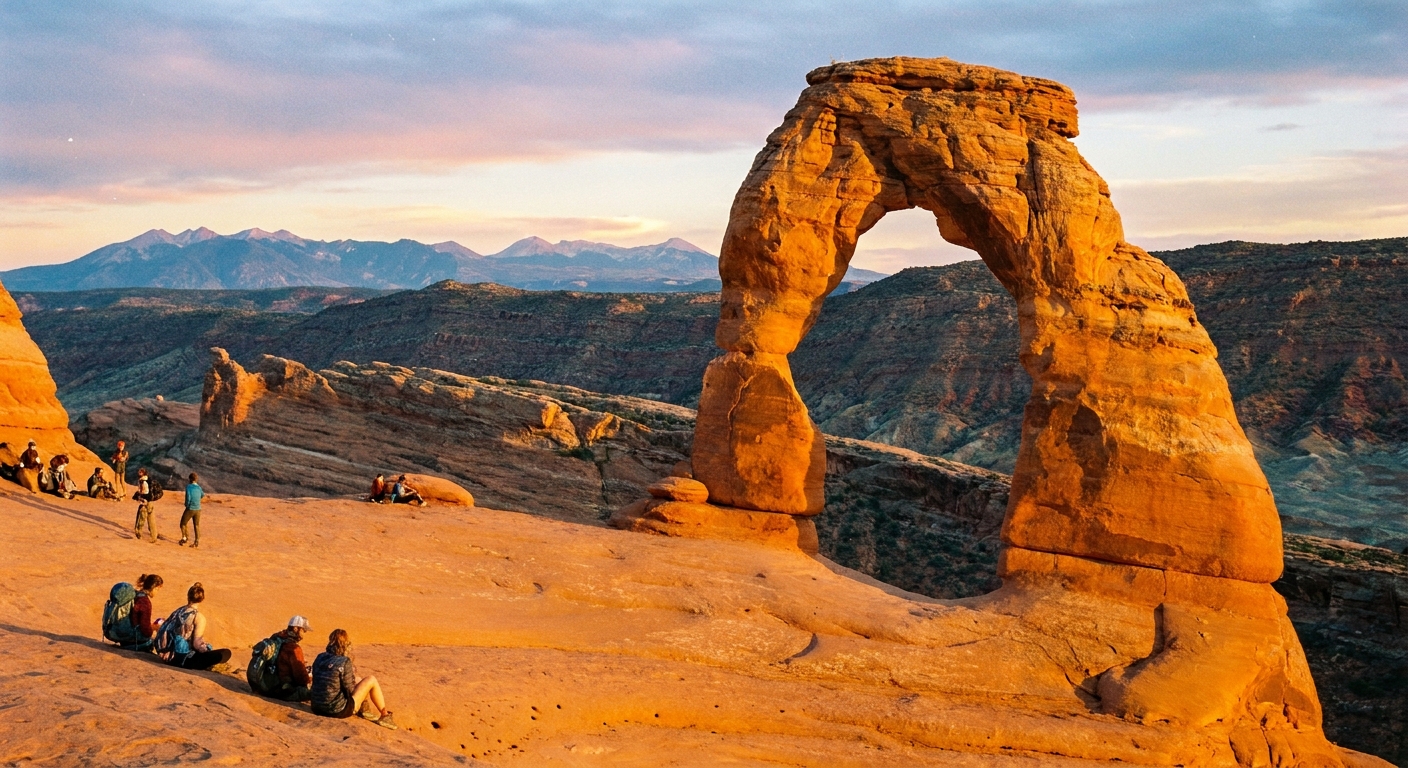
The last bit drops into a natural bowl where Delicate Arch finally shows itself in full. This is where the trail often bottlenecks, and where you will want patience. People linger. People pose. People cry a little because it is genuinely that striking.
Best light
Delicate Arch is famous at sunset for a reason. The warm light ignites the sandstone and deepens the shadows in a way that makes the arch look carved from embers. Sunset is also peak crowd time, so it helps to have a plan.
Sunset
- Pros: The richest color on the arch, iconic photos, dramatic atmosphere.
- Cons: Crowds, parking stress, and you will hike out in fading light.
Late afternoon
Arrive at the arch with plenty of daylight, claim a comfortable seat, and let the light slowly warm up. You get most of the magic with less chaos. It also gives you buffer time if parking takes longer than expected.
Sunrise
- Pros: Cooler temps, more breathing room on the trail, easier parking.
- Cons: The arch does not always glow the same way as sunset since the light hits differently.
Practical timing note for sunset: most people take 30 to 60 minutes to hike back down depending on crowds and confidence on slickrock. Start down before it is fully dark, even if you plan to stay for the best color.
For photographers: bring something to sit on and be ready to wait. The best moments often happen in the last 10 to 20 minutes of shifting light. If you are shooting on a phone, wipe your lens and consider a small tripod if you plan to stay into twilight.
Heat, water, and sun
This hike is short enough that people underestimate it, and exposed enough that underestimating it can spiral quickly. Think of Delicate Arch like a sun-baked staircase: it is doable, but only if you show up prepared.
How much water
There is no single perfect number because it depends on temperature, sun, wind, and your pace. For most hikers, I plan on:
- Mild weather: At least 1 liter per person
- Warm to hot weather: 2 liters per person is a safer baseline
- Very hot days: Consider 3 liters per person, especially if you are not acclimated
If you finish with extra water, you did it right. If you finish with none, you cut it close.
When to avoid midday
If the forecast is blazing and you are not used to desert heat, aim for early morning. Midday in summer can be punishing. The slickrock acts like a heat reflector, and the bowl at the arch can feel even warmer because people tend to linger.
What to wear and pack
- Sun protection: Wide-brim hat or cap, sunglasses, and sunscreen you will actually reapply
- Footwear: Shoes with good rubber grip. Sandals and smooth soles make slickrock feel sketchy.
- Electrolytes: Especially in summer. Plain water is not always enough.
- Headlamp: If you are hiking for sunset or anywhere near dusk
- Light layer: Desert evenings can cool off quickly outside peak summer
Carry-on-only tip from me: I travel with a tiny electrolyte packet stash. Utah hikes are exactly why.
Seasonal hazards
This trail’s difficulty swings with the season more than people expect.
- Summer heat: Start early, bring more water than you think you need, and do not treat the slickrock like a casual stroll.
- Monsoon storms: Late summer can bring fast-building thunderstorms. Slickrock gets slippery when wet, and lightning is a real risk on exposed slabs. If storms are in the forecast, pick another time.
- Winter and shoulder season: Ice can linger on shaded rock and turn the trail into a skating rink. If the rock is icy, this is a good day for viewpoints instead of the main hike.
Slickrock safety
The Delicate Arch Trail is well-marked, but the environment is unforgiving when you treat it casually.
- Stay on the marked route: Cairns exist for a reason. “Off trail” here often means stepping on cryptobiotic soil crust, which is living, fragile, and slow to recover.
- Mind wind: Gusts happen. Keep a solid stance on exposed slickrock, especially near edges.
- Watch your footing on sand: A thin layer of sand on rock is a slip recipe. Short steps help.
- Give yourself turnaround time: If you are racing daylight, weather, or water, the arch will still be there tomorrow.
If you cannot do the hike
If the main trail does not fit your group, you still have a solid option: the Delicate Arch Viewpoint trails. They do not get you to the base of the arch, but they do give you a distant view with significantly less effort. On icy days, they can be the smarter call.
Timed entry basics
Arches National Park may use a seasonal timed entry reservation system during busier periods. Dates and rules can change, so check the official National Park Service site close to your trip for the current program details and entry hours.
Etiquette at the arch
This is one of the most photographed places in the American West. A little etiquette goes a long way toward making it feel less like a queue and more like a shared moment.
- Take turns with photos: If someone is lining up a shot, do not camp in the frame forever.
- Be patient with families and older hikers: The slickrock slope can feel big for some people.
- Leave no trace: Pack out every scrap, including fruit peels and tissues.
- Respect the rock: Do not carve, draw, touch rock art, or stack new cairns.
FAQ
Is Delicate Arch a hard hike?
It is moderate. The distance is manageable for many visitors, but the exposure, sun, and slickrock sections make it feel harder than the mileage suggests.
Can you hike Delicate Arch with kids?
Many families do, but it depends on your child’s comfort with uneven rock and drop-offs. Keep kids close on the slickrock shelf section, bring extra water, and consider going early when it is cooler.
Do you need hiking boots?
Not necessarily. Sturdy trail runners with good grip are ideal. The main requirement is traction on slickrock and comfort on rocky steps.
Is there shade on the Delicate Arch Trail?
Very little. Plan as if there is none.
How early should I arrive for sunset?
Earlier than you think. Build in time for parking, a steady uphill hike, and a buffer if you want to sit and watch the light change. Plan 30 to 60 minutes for the hike back down and bring a headlamp.