Ingalls Lake Hike: Ingalls Pass vs Longs Pass

Maya Lin
Maya Lin is a travel journalist and outdoor enthusiast who believes the best trips combine rugged adventures with urban comforts. After spending six years backpacking across four continents, she founded Trail & Town Guide to help fellow travelers navigate both hidden mountain passes and bustling city neighborhoods with confidence.
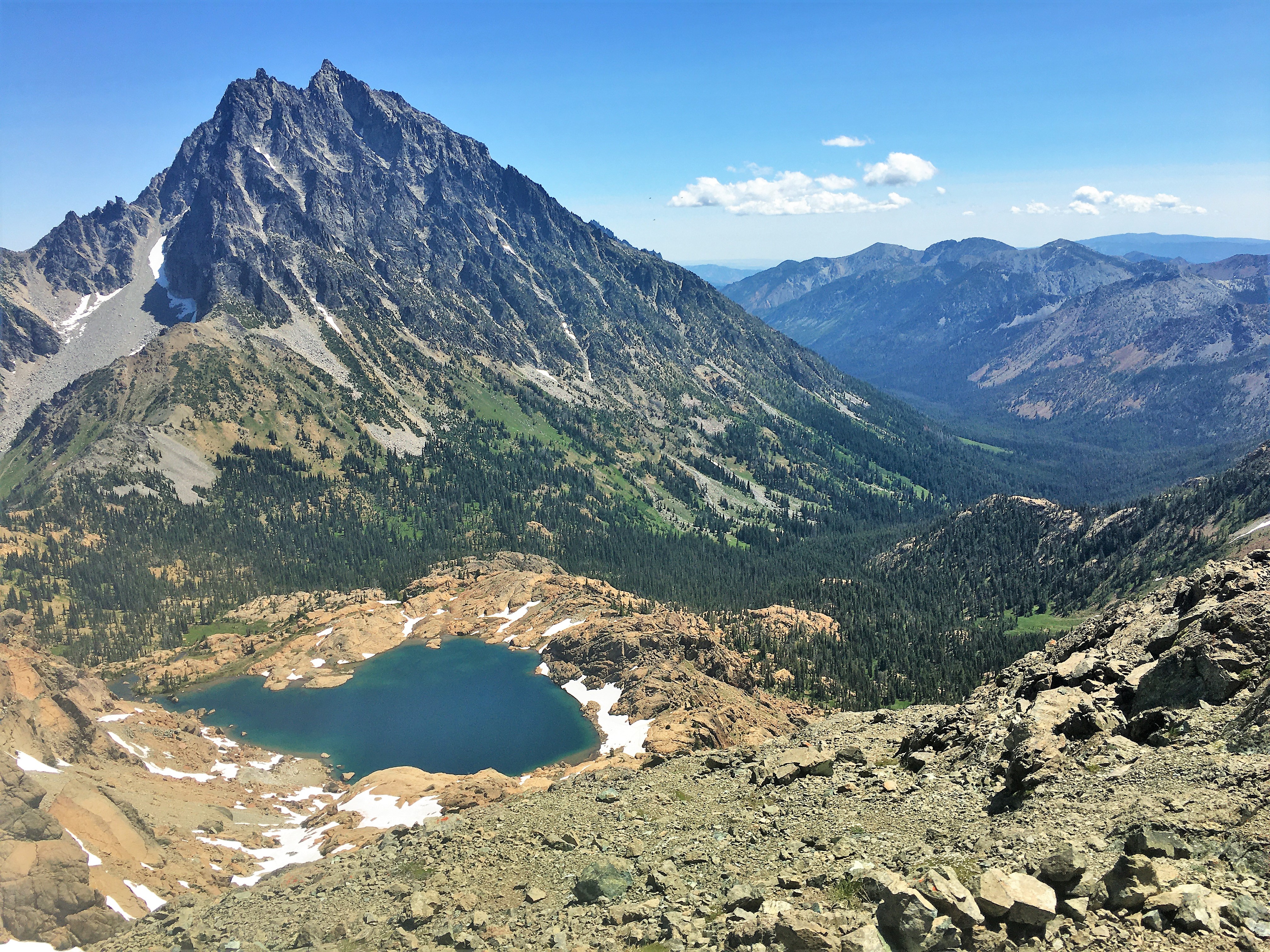
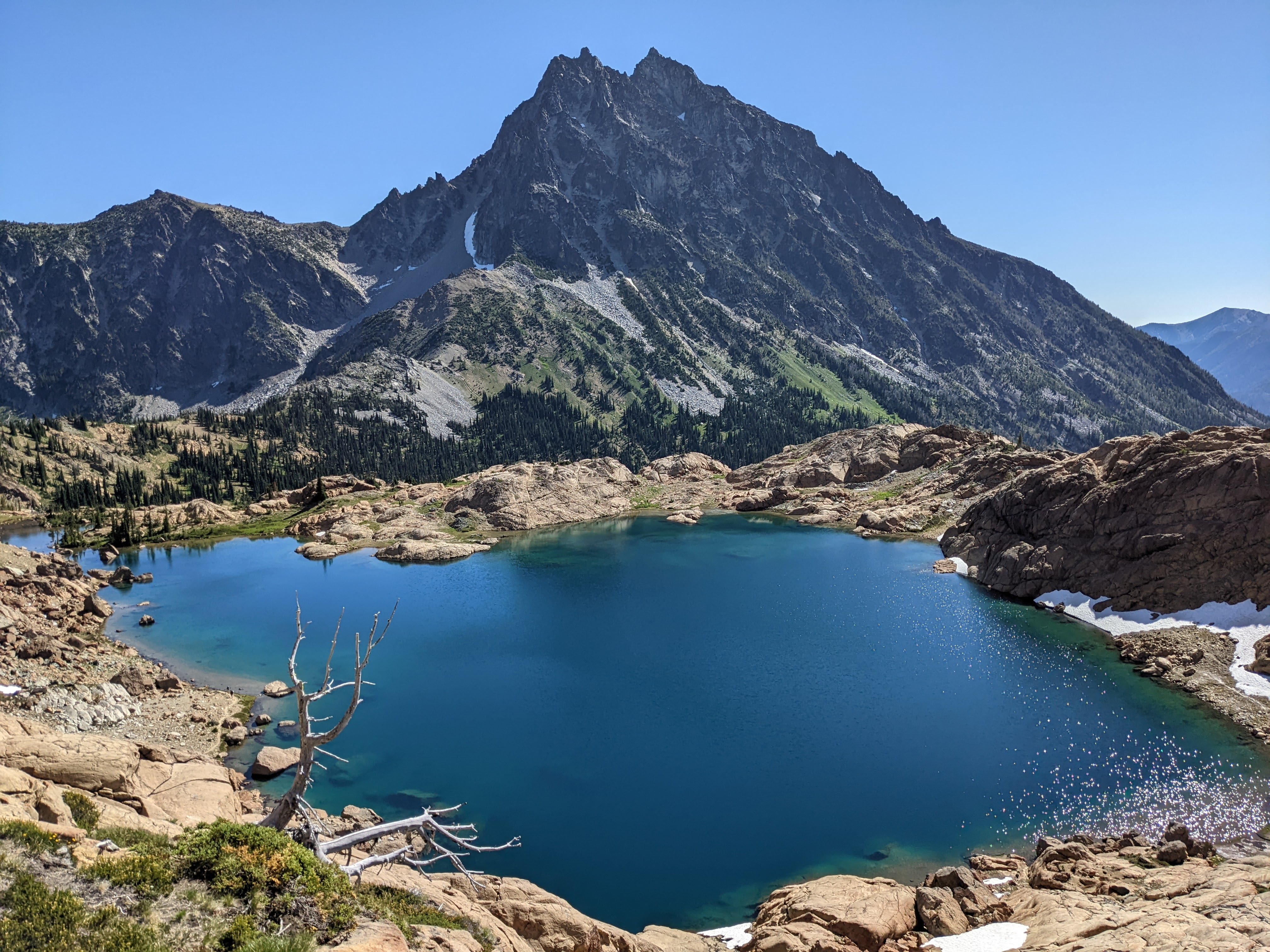
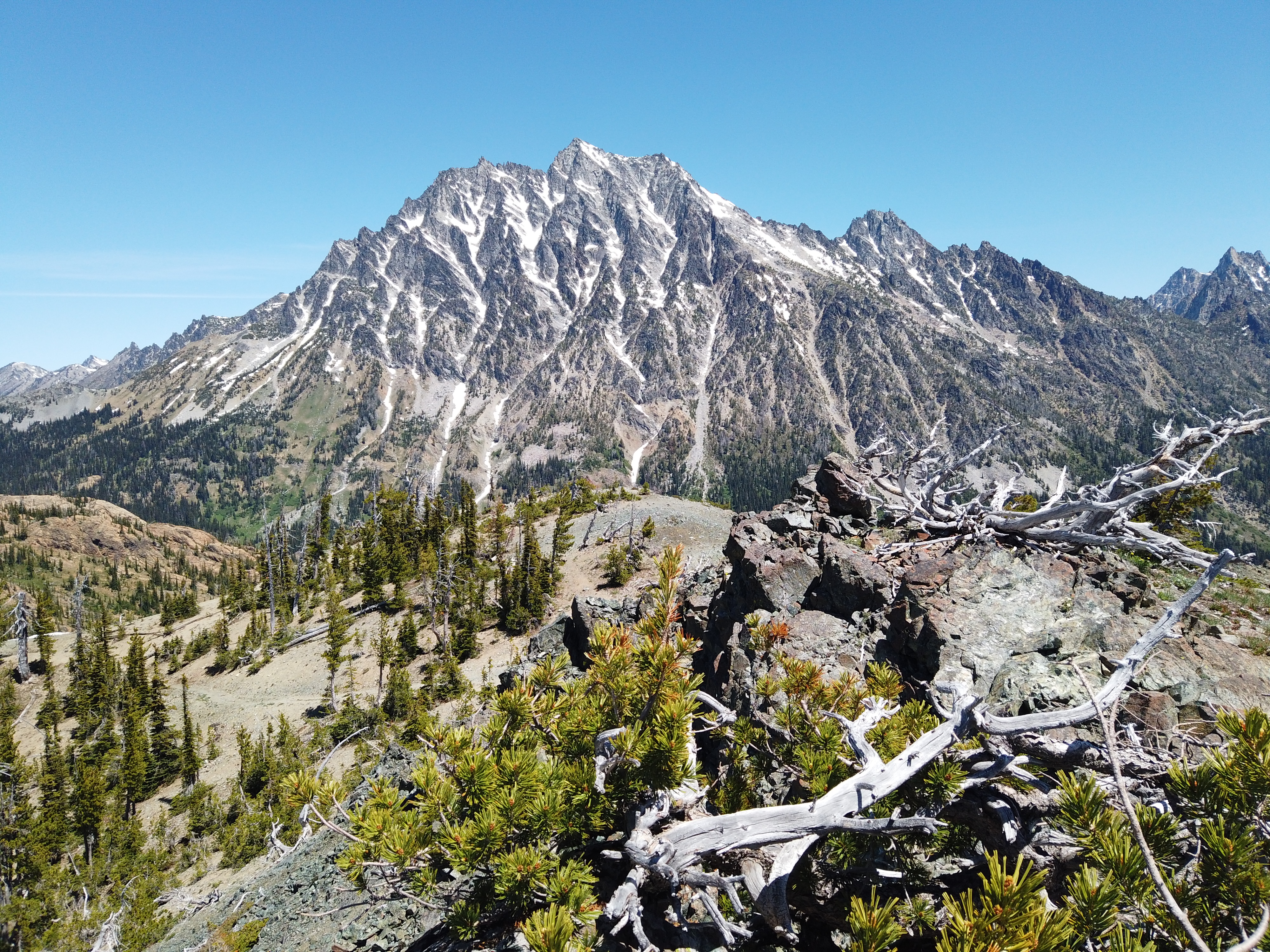
When friends ask me for an “Enchantments-feeling” alpine day that does not involve a permit lottery, I point them east of Leavenworth into the Teanaway. Ingalls Lake is the payoff: a turquoise bowl under the jagged teeth of Ingalls Peak, with enough granite drama to make you forget you never set foot in the Core Zone.
There are two main ways most day hikers reach Ingalls Lake: via Ingalls Pass (from the Esmeralda Trailhead) or over Longs Pass. Both are beautiful. They feel different underfoot, they land differently in your legs, and they attract slightly different crowds. Here is how to choose the right one for your first visit, plus the exact moments when I think it is smart to turn around.
At a glance: pick your route
- Best for a first visit: Ingalls Pass (straightforward navigation once you are on the right trail, big scenery, easier to bail if weather turns).
- Best for a loop day: Longs Pass + Ingalls Pass (one way each direction) if you plan a car shuttle or a longer connecting loop.
- Best for larches: Ingalls Pass tends to deliver more consistent golden payoff in a shorter distance when the needles turn.
- Best if you like a quieter start: Longs Pass often feels less busy in the first miles, especially outside peak fall weekends.
- Best if you are unsure about steepness: Longs Pass can feel more gradual overall, but you still earn it with steady climbing.
Getting there from Leavenworth
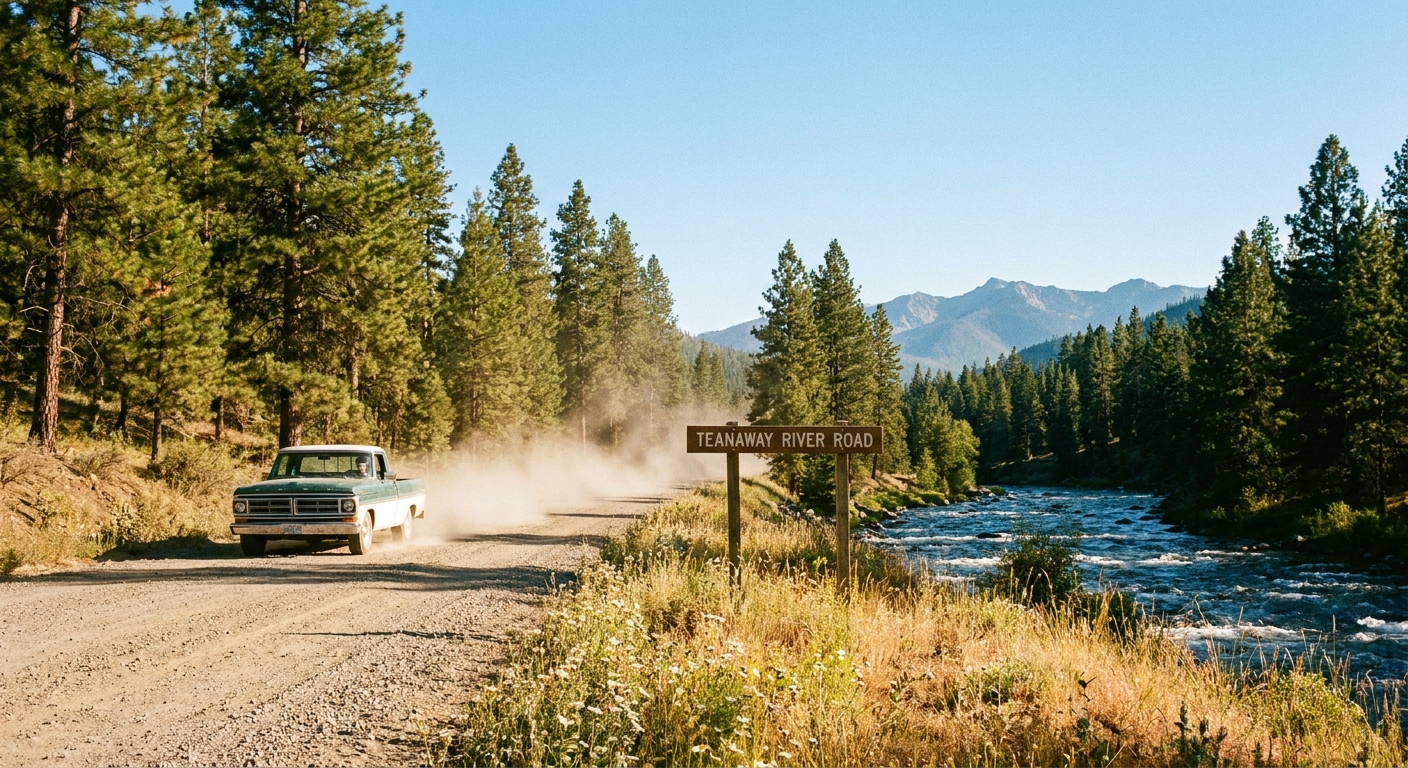
From Leavenworth, you are generally driving toward the Teanaway area near Cle Elum, then turning onto smaller county and forest roads. You will end on stretches that can be washboarded and dusty in summer, and rutted or snowy in shoulder seasons. In other words, it is normal for the last miles to feel slower than your map app suggests.
Road notes that matter
- Expect rougher gravel sections: Passenger cars make it in summer, but go slow and watch for potholes and sharp rocks. After heavy rain, the washboarding and ruts feel worse.
- Snow lingers: Early season conditions can block higher trailheads even when Leavenworth is sunny. If you are aiming for spring, bring a backup hike.
- Weekend traffic is real: Fall larch season turns these trailheads into an early-morning sport. If you want a parking spot, plan a dawn arrival.
If you have low clearance and the road looks questionable, do not force it. Turning around on a narrow gravel road is not the vibe. Pick the day that matches your comfort level, or pivot to a lower elevation walk and save Ingalls for a better road day.
Parking and passes
For both approaches in the Teanaway, most hikers park at the Esmeralda Trailhead at the end of the road. From there, the routes split on trail. I plan as if I will need a Northwest Forest Pass for trailhead parking, unless signage at the lot states otherwise. These trailheads fall under the Okanogan-Wenatchee National Forest umbrella, and pass requirements can vary by exact lot and can change.
- Bring the pass or buy one in advance: Cell service is unreliable, and “I will do it when I get there” is how tickets happen.
- Display it clearly: Put it on your mirror or dash as directed on the pass.
- Arrive early: The lot fills fast and overflow parking can be limited or awkward.
Route 1: Ingalls Pass
If you want a classic, confidence-building alpine day, I usually steer first-timers to Ingalls Pass. Important detail: you start at the Esmeralda Trailhead, but you do not hike “into Esmeralda Basin” to reach the lake.
Do not miss this junction
About 0.4 miles in, the trail splits. To reach Ingalls Lake, take the Ingalls Way trail to the right and continue toward Ingalls Pass. The trail to the left leads toward the Esmeralda Basin and Fortune Creek Pass area, which is gorgeous, but it is not your route to Ingalls Lake.
What it feels like
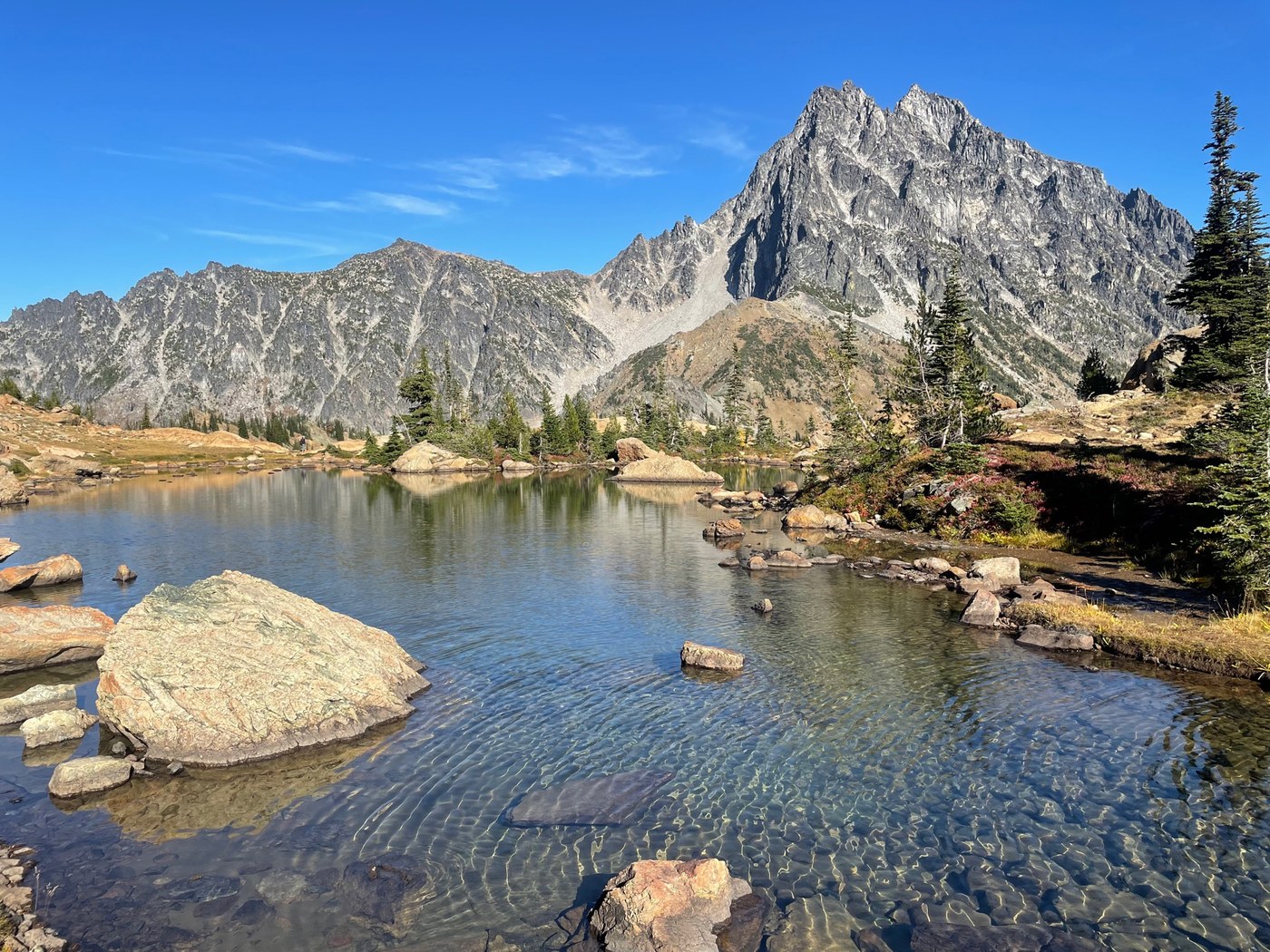
You climb through forest into open slopes and big alpine views that keep getting better. In fall, this is where the larch magic tends to show up in an easy-to-love way: bright gold clusters against gray rock and blue sky. The pass itself is a scenic reward, and the final drop to the lake feels like opening a door into a granite amphitheater.
Mileage and gain
Plan on roughly 9 miles round trip with about 2,500 feet of elevation gain for the classic Ingalls Pass out-and-back to the lake. Expect variation depending on where you park, current trail routing, snow detours, and how much you roam once you reach the basin. I treat trailhead boards and a reliable offline map as the final authority.
Why I like it for a first visit
- It delivers the wow: Ingalls Pass plus the lake feels like a complete alpine story in one day.
- Navigation is simpler if you nail the split: The main mistake here is taking the wrong trail at the early junction. After that, it is generally straightforward in clear conditions.
- Great shoulder-season payoff: Larches and open views make it feel big even when you turn around sooner.
Route 2: Longs Pass
Longs Pass is the quieter sibling in this comparison. It still has strong scenery, but the payoff is a little more delayed. If you like steady progress and a pass-and-drop style day, it is a rewarding way to reach the lake.
Trailhead note
This is the part that trips people up: Longs Pass and Ingalls Pass both start from the same place, the Esmeralda Trailhead. You are not driving to a separate “Longs Pass Trailhead.” Instead, you start on the same main trail, then take the branch toward Longs Pass when the trails split.
What it feels like
The climb to the pass is consistent. When you crest Longs Pass, the world opens, and you get that satisfying moment where the terrain shifts from enclosed trail to wide alpine space. From there, you work your way toward Ingalls Lake with more of a backcountry traverse feel.
Mileage and gain
Most hikers should expect roughly 10 to 11 miles round trip and about 3,000 feet of elevation gain as an out-and-back via Longs Pass, depending on exact routing and how far you wander near the lake. Early season snow can slow this route down in a way that makes the day feel bigger than the numbers.
Who it fits best
- Hikers who like passes: If your favorite part is earning a saddle view, you will love it.
- People who want a different vibe: Less direct pass-to-lake pacing, more movement through alpine terrain.
- Those building endurance: It is a solid training hike that still ends with a wow-factor lake.
Larch timing
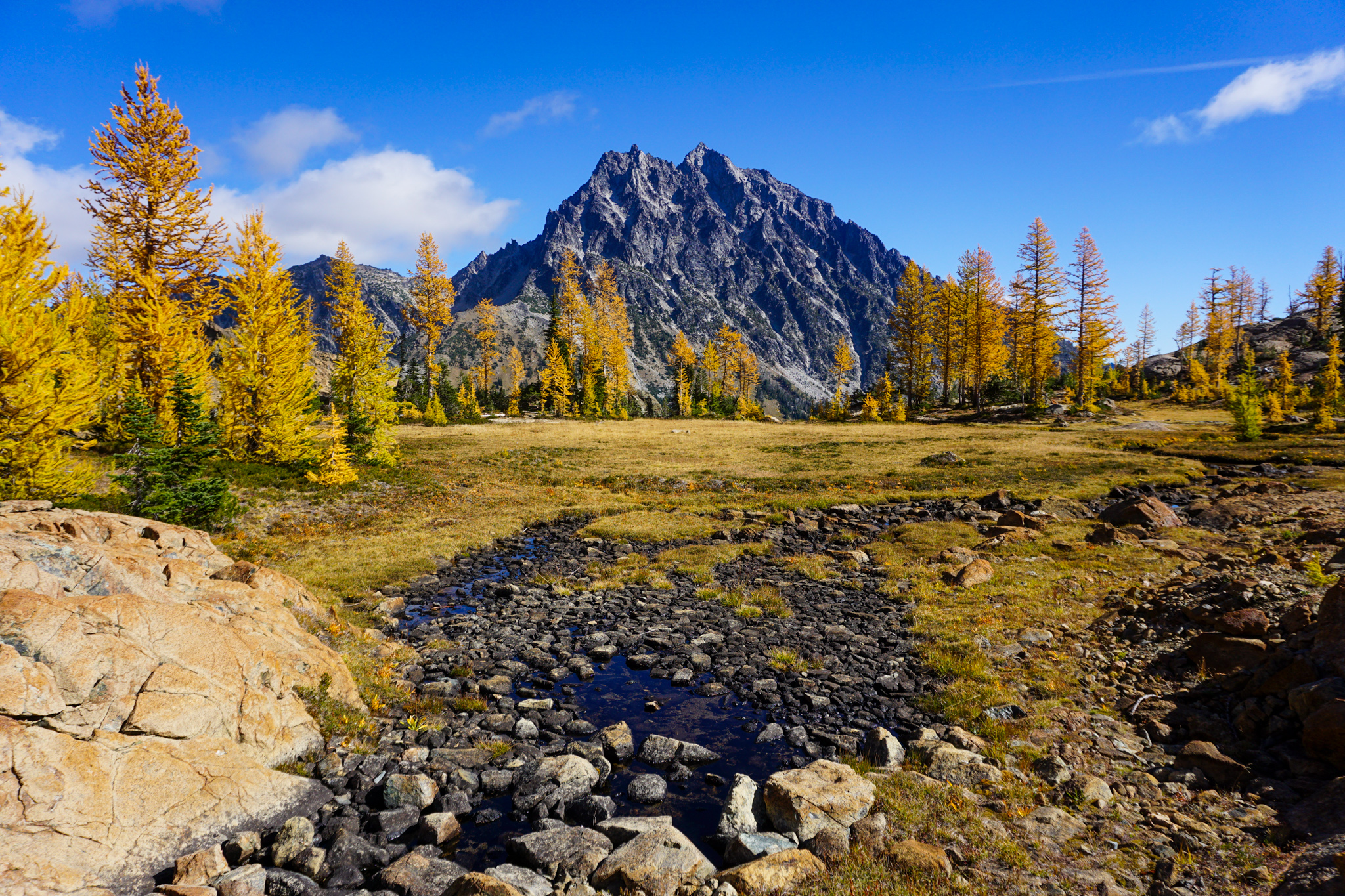
If you are chasing larches near Ingalls Lake, the typical window is late September through October, with the understanding that timing swings year to year based on temperatures and early storms. Some years, the best color is a short, perfect window. Other years, a cold snap speeds everything up.
- Earlier in the season: You will still get killer lake color and peak views, just fewer golden needles.
- Prime larch window: Usually a sweet spot when nights are crisp but the high country is still mostly snow-free.
- After the first real snow: It can be stunning, but expect icy trail, traction needs, and a much more serious turnaround mindset.
My personal strategy is to pick a weekday if possible, start early, and treat parking as part of the plan, not an afterthought.
Navigation basics
Do not count on cell service out here. I download an offline map before I leave town and bring a paper map as a backup if I am heading up in shoulder season. Between the early junction from Esmeralda and the way snow can erase tread near the passes, having a plan beats guessing.
No dogs
This is a big one because people miss it: dogs are prohibited on the Ingalls Way trail and at Ingalls Lake. If hiking with your dog is non-negotiable for you, save yourself the frustration and pick another Teanaway or Cle Elum area trail that allows pets.
Mountain goats
Ingalls Lake country is well-known for mountain goats. Seeing them is a highlight. It is also where visitors accidentally create risky situations, for themselves and the animals.
How much space to give
Give mountain goats lots of space. If a goat changes its behavior because of you, you are too close. Practically, I aim for a generous buffer and use a zoom lens instead of my feet. Goats are strong, fast, and can be aggressive when stressed or habituated.
Shoreline etiquette
- Do not approach for photos: Let them cross the trail or graze without feeling surrounded.
- Keep your group tight: Spreading out can box an animal in near the water.
- Protect salty items: Keep packs zipped and do not leave gear unattended. Human sweat and urine can attract wildlife to trails and camps.
- Never feed wildlife: It is not cute. It is how animals become problems.
Which feels like the Enchantments
If what you want is a Leavenworth-area alpine day with the same kind of granite-and-glow feeling as the Enchantments, Ingalls Pass is the most satisfying single-route day for most first-timers. You get open terrain, mountain drama, and a clean progression of views, plus the lake finale.
If you have already hiked a few Washington alpine trails and you want a slightly more adventurous, pass-forward day, Longs Pass is a great way to vary the experience, especially if you have the logistics dialed for a point-to-point or longer loop day.
When to turn around
Ingalls Lake is worth it, but it is not worth a sketchy descent, a whiteout navigation error, or limping out after dark. These are the turnaround triggers I use in the Teanaway.
Turn around if this happens
- Weather builds fast: Dark clouds, rising wind, and dropping visibility above treeline are your cue to bail. Alpine basins and passes are exposed.
- You are behind schedule: If you are not at your planned midpoint by early afternoon, consider turning around. Descents take longer on tired legs and loose rock.
- Snow or ice shows up and you are not equipped: If you did not bring traction and conditions are slick, stop where you can still descend safely.
- Route-finding gets fuzzy: If you are guessing, you are already spending time and energy you may need later. Turn around while you still feel strong.
- Goat congestion: If mountain goats are lingering on the trail and you cannot pass with plenty of space, wait. If waiting pushes you late, turn around.
Ingalls Pass turnaround moment
If you are nearing the pass and the clouds are already swallowing the peaks, I am happy calling it there. Even without the lake, the high views feel like a full meal, and the descent is much nicer when you are not racing weather.
Longs Pass turnaround moment
If you reach Longs Pass and wind is strong enough to throw you off balance, or visibility is sliding, turn around at the pass. The terrain beyond can feel committing in bad weather, and the pass itself is a natural, satisfying endpoint.
My pick for your first day
If this is your first time aiming for Ingalls Lake, choose Ingalls Pass. Just remember the small-but-critical detail: start at the Esmeralda Trailhead, then take Ingalls Way at the early junction. It stacks the scenery in a way that matches what people imagine when they say, “I just want one really good alpine day near Leavenworth.”
Then, if you fall in love with the area, come back and do a point-to-point day using Longs Pass one way and Ingalls Pass the other if you have a shuttle. That is the sweet spot where rugged adventure meets just enough practicality, which is basically my entire travel personality in hike form.
Quick checklist
- Northwest Forest Pass: Have it ready before you lose cell service.
- Offline map: Download it ahead of time and do not rely on reception.
- Start early: Especially in fall larch season.
- Know the junction: At about 0.4 miles from the Esmeralda Trailhead, take Ingalls Way for Ingalls Pass and Ingalls Lake.
- No dogs: Dogs are prohibited on Ingalls Way and at Ingalls Lake.
- Layers and wind protection: The Teanaway can feel calm in the trees and intense above treeline.
- Water plan: Carry enough. Do not assume reliable sources late season.
- Traction in shoulder season: Early snow and morning ice are common.
- Goat etiquette: Space, patience, and zipped packs.