When Does Aasgard Pass Usually Melt Out?

Maya Lin
Maya Lin is a travel journalist and outdoor enthusiast who believes the best trips combine rugged adventures with urban comforts. After spending six years backpacking across four continents, she founded Trail & Town Guide to help fellow travelers navigate both hidden mountain passes and bustling city neighborhoods with confidence.
Aasgard Pass is the great illusion of the Enchantments: from Colchuck Lake it looks like a steep but straightforward chute, then you start climbing and realize it is either (1) a firm snow ramp that demands real snow travel skills, or (2) a loose, sun-baked rubble treadmill that rewards patience and careful foot placement. The question is not just can you get up it. It is what kind of climb you are signing up for.
Here is the seasonal reality: most years, Aasgard does not truly “melt out” until mid-summer. And in the shoulder season, it can be a technical, consequential snow ascent even if the trailhead is dry and Colchuck Lake is sparkling blue.
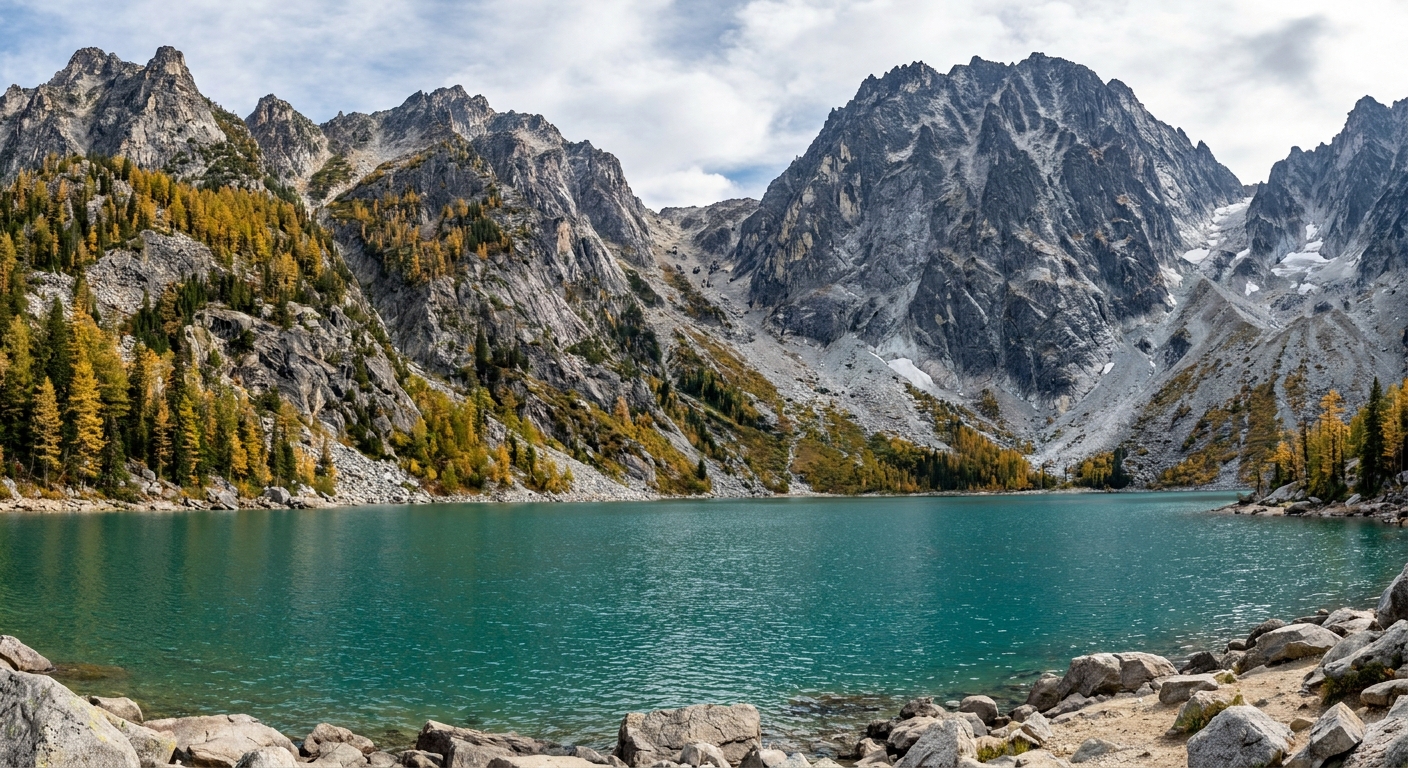
Typical melt-out window
Aasgard Pass is commonly cited around 7,800 to 7,900 feet, and it sits in a steep, high basin that holds snow long after lower trails have gone summer-like. In a “normal” snow year, expect this pattern:
- May to mid-June: Aasgard is usually still a full-on snow climb. The route above Colchuck Lake is commonly continuous snow, and the runout can be unforgiving.
- Late June to early July: This is often the transition period. You may see partial melt, exposed talus bands, and a mix of snow and loose rock. Conditions change fast day to day and hour to hour.
- Mid-July to September: This is the most reliable “melted out” window for the standard hiking season. You are more likely on rock and dirt than snow, although isolated snow patches can linger in shaded corners into August.
- October (first storms): Early snow can return quickly, sometimes overnight. Aasgard can go from dusty to slick and white before you have mentally switched to winter mode.
In heavy snow years, the snow-climb phase can push deeper into July. In low snow years or during a warm spring, you might find mostly melted conditions earlier, but do not count on it without recent, specific reports.
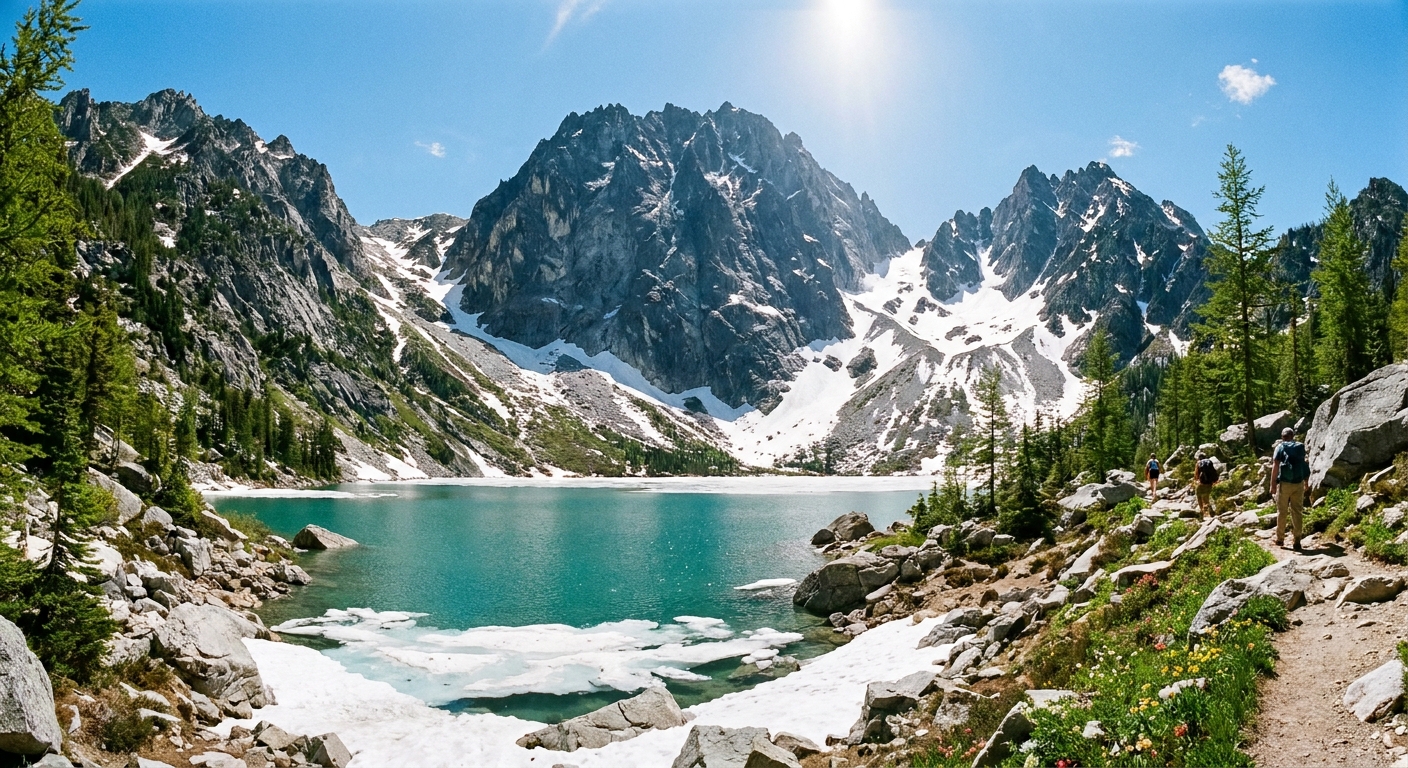
What snow changes
When Aasgard is still snow covered, the difficulty is less about “fitness” and more about traction, timing, and consequences. Three big things change:
1) It becomes a steep snow ascent
Aasgard’s angle is steep enough that a slip can turn into a long slide. Early season often means firm snow in the morning and slushy, punchy snow later. Either way, you need to know what you are doing.
- Firm snow: an ice axe and practiced self-arrest are the baseline. On many early-season days, mountaineering crampons are the right tool. Microspikes can be situational, but they are not a default answer on steep, firm snow.
- Soft snow: you may posthole, lose energy fast, and in warm afternoons the surface can shed small wet-loose sluffs depending on temperature, time of day, and recent weather.
2) Timing stops being optional
On snow, “start early” is not a motivational quote. It is a safety system. Overnight refreeze creates a supportive surface early, then sun exposure can turn it into slick mush or punchy steps, especially on a slope that funnels you toward rocks.
If you are leaving Colchuck Lake late morning on a hot day in June, you are often stepping onto the least stable version of the route.
3) Routefinding gets weird
Continuous snow can hide the summer boot path, hide boulders, and disguise the best line. In the transition season, you may be forced into awkward switchbacks between snow tongues and exposed rock, which is where slips and ankle injuries love to happen.
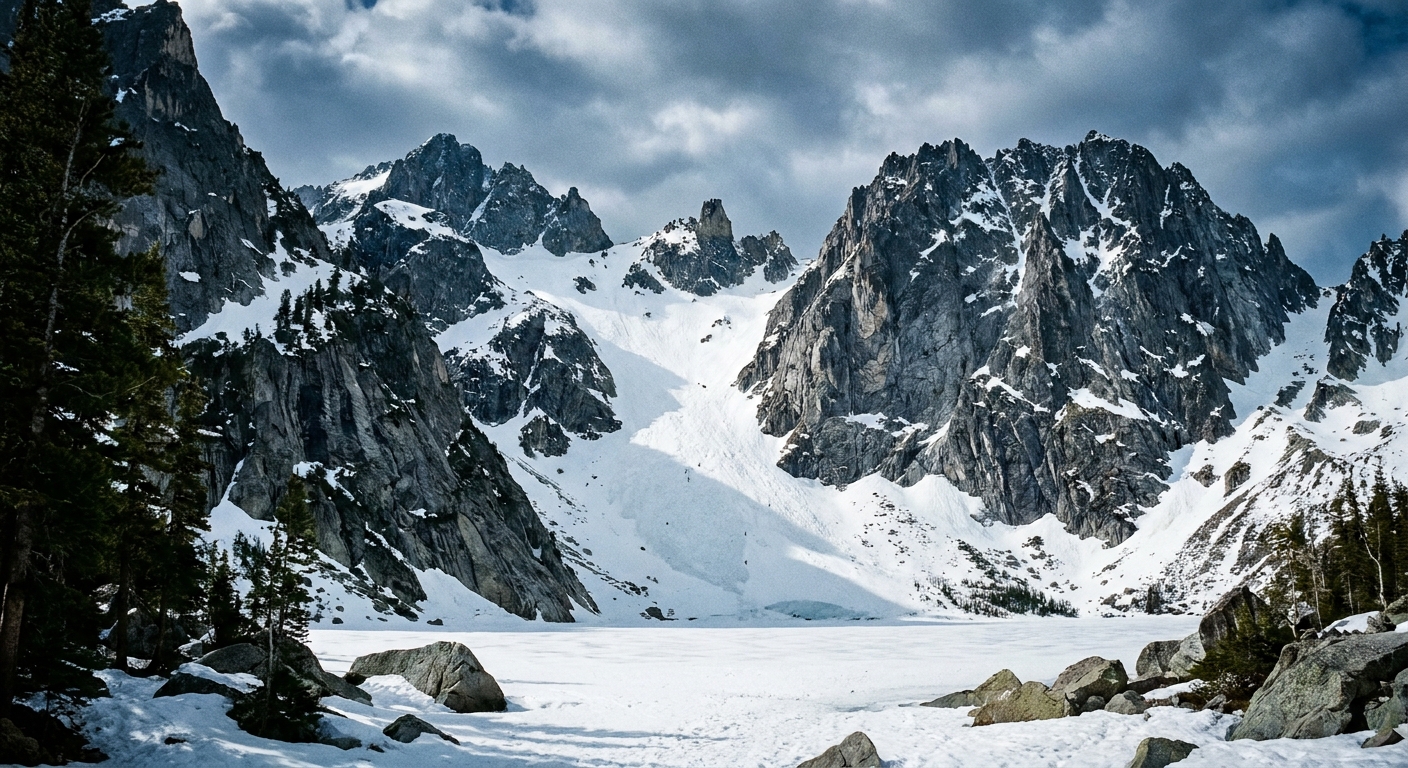
Ascend vs descend
One more reality check: going up steep snow is one kind of problem. Coming down steep snow is another. Many rough moments happen on descent, when legs are tired, the surface is softer, and a minor slide turns into a long one fast.
If you are day-hiking and thinking about going up Aasgard and down Snow Lakes, remember that conditions can be different on the other side. You still need a plan for the descent, and you still need the tools and the skill to use them.
How to judge a no-go
I love a big day in the mountains, but I love an uneventful walk back to the car even more. Colchuck Lake is your last comfortable “assessment lounge” before you commit to the steepest terrain of the day. Here is what I look for from the lake, before I ever step onto the chute.
No-go signs from shore
- Continuous, steep snow all the way up: If the whole chute is white, assume it is a snow climb. If you did not bring an ice axe and do not know how to use it, call it.
- Old slide tracks or debris piles: Lumpy snow piles, dirty fan-shaped debris, or a visible “scar” can hint at recent sluff activity. That is not proof of danger, but it is a loud clue.
- A shiny, icy look in the morning: If the snow looks glossy from the lake, it is probably firm. Firm can be great with crampons and an axe. Firm can also be terrifying with microspikes and optimism.
- People sliding, crawling, or stalled: If you see parties inching up with awkward spacing, or anyone sitting and scooting down, treat it as real beta. The mountain is giving you a live conditions report.
- Rockfall: If you hear frequent rockfall, or see rocks skipping across the snow, that is a major hazard. Snow funnels rock like a bowling lane.
Quick self-check
- Do I have an ice axe, and can I self-arrest without thinking?
- Do I have traction appropriate for firm snow, often mountaineering crampons, not just “maybe microspikes”?
- Do I know how to evaluate snow firmness and safe spacing from other climbers?
- Do I have time to climb while conditions are stable, and descend before the slope turns to slush?
My soft no-go rule
If I am at Colchuck Lake and I find myself trying to talk myself into it, rather than calmly confirming it, I take that as my answer. The Enchantments will still be there when conditions match your skill set.
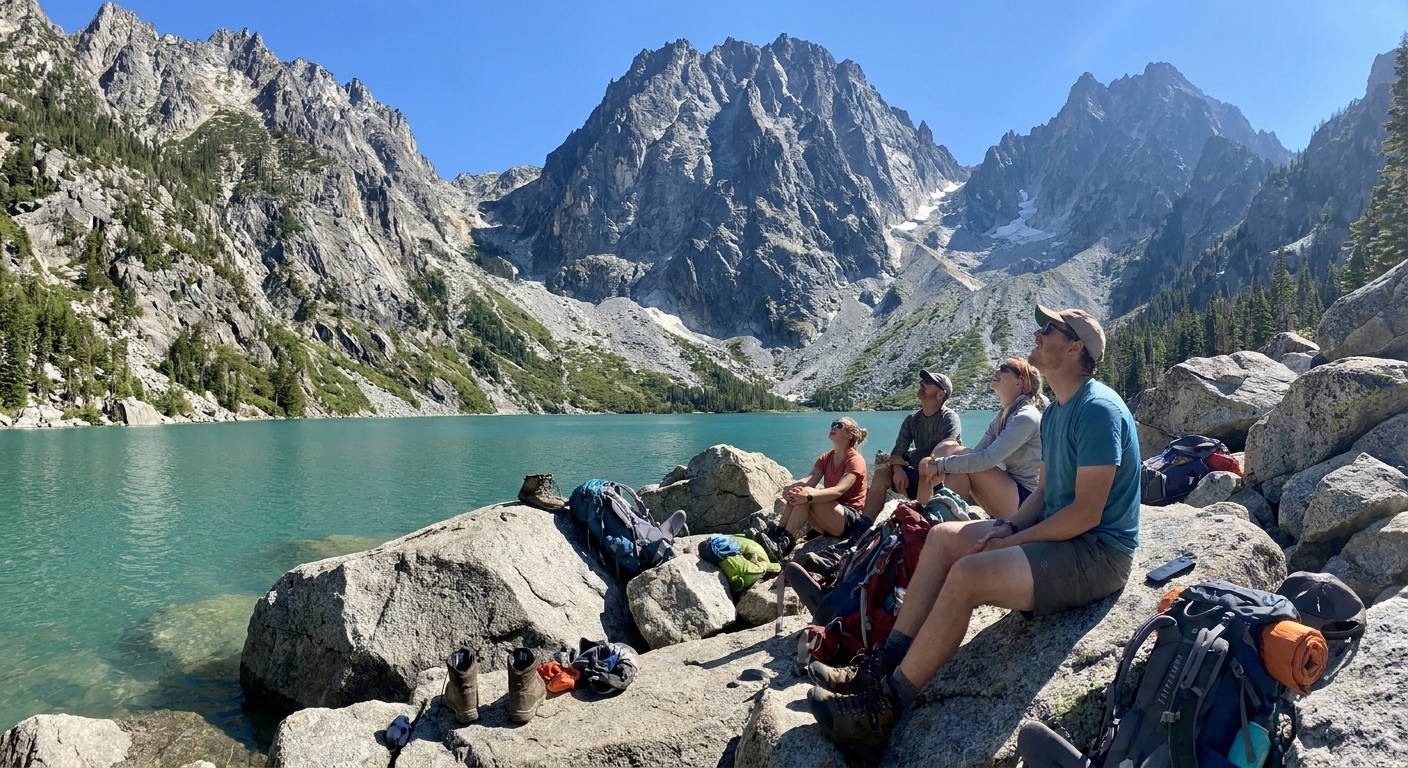
Timing tips
If your goal is to hike Aasgard on mostly dry ground, stack the deck in your favor:
- Aim for mid-July through September for the most consistent summer conditions.
- Watch for heat waves: they can accelerate melt, but they can also increase rockfall and turn the route into loose rubble earlier in the day.
- Check recent trip reports for “continuous snow above Colchuck” and “traction needed” language. Pay attention to dates. A report from two weeks ago can be meaningless after a warm spell.
- Remember shade: even when the basin feels like summer, shaded pockets in the chute can hold hard snow in the morning.
And when Aasgard is melted out, the hazard shifts. Instead of snow travel, you are managing loose rock, exposure, and route discipline. If you want a deep dive into the summer version of the climb, including when to call it because the rubble and exposure are not worth it, keep your loose-rock turnaround notes on the main Aasgard page and treat this one as your seasonal conditions compass.
Safety and expectations
Aasgard is a steep, serious route into alpine terrain, not a casual “bonus” past Colchuck Lake. In spring and early summer conditions, check the Northwest Avalanche Center forecast and recent weather before you go, and treat this article as perspective, not training. If you do not have snow travel skills, this is a good place to hire a guide, take a course, or pick a different objective.
FAQ
Does Aasgard Pass fully melt out?
Yes. In most years, Aasgard is largely snow-free by mid to late summer. “Fully” is relative, though. Small snow patches can linger in shaded corners even in August, especially in cooler years.
Is early July safe without an ice axe?
Sometimes, but not reliably. Early July is often the transition zone where you can encounter steep, firm snow in the morning and slick, melting snow later. If you are going early season, plan for snow and bring the tools and skills, or choose a different objective.
Can you decide at the lake and still have a great day?
Absolutely. Colchuck Lake is a world-class destination on its own. A “no-go” on Aasgard can still be a perfect day: slow lap around the lake, photos of Dragontail and Colchuck Peak, a long lunch on warm granite, and an early return that leaves you energy for dinner in town.
What is the biggest early-season mistake?
Assuming that because the lower trail is dry, the pass will be a hike. Aasgard often holds snow long after the approach feels like summer, and the steepness magnifies small errors.