When Enchantments Larches Peak

Maya Lin
Maya Lin is a travel journalist and outdoor enthusiast who believes the best trips combine rugged adventures with urban comforts. After spending six years backpacking across four continents, she founded Trail & Town Guide to help fellow travelers navigate both hidden mountain passes and bustling city neighborhoods with confidence.
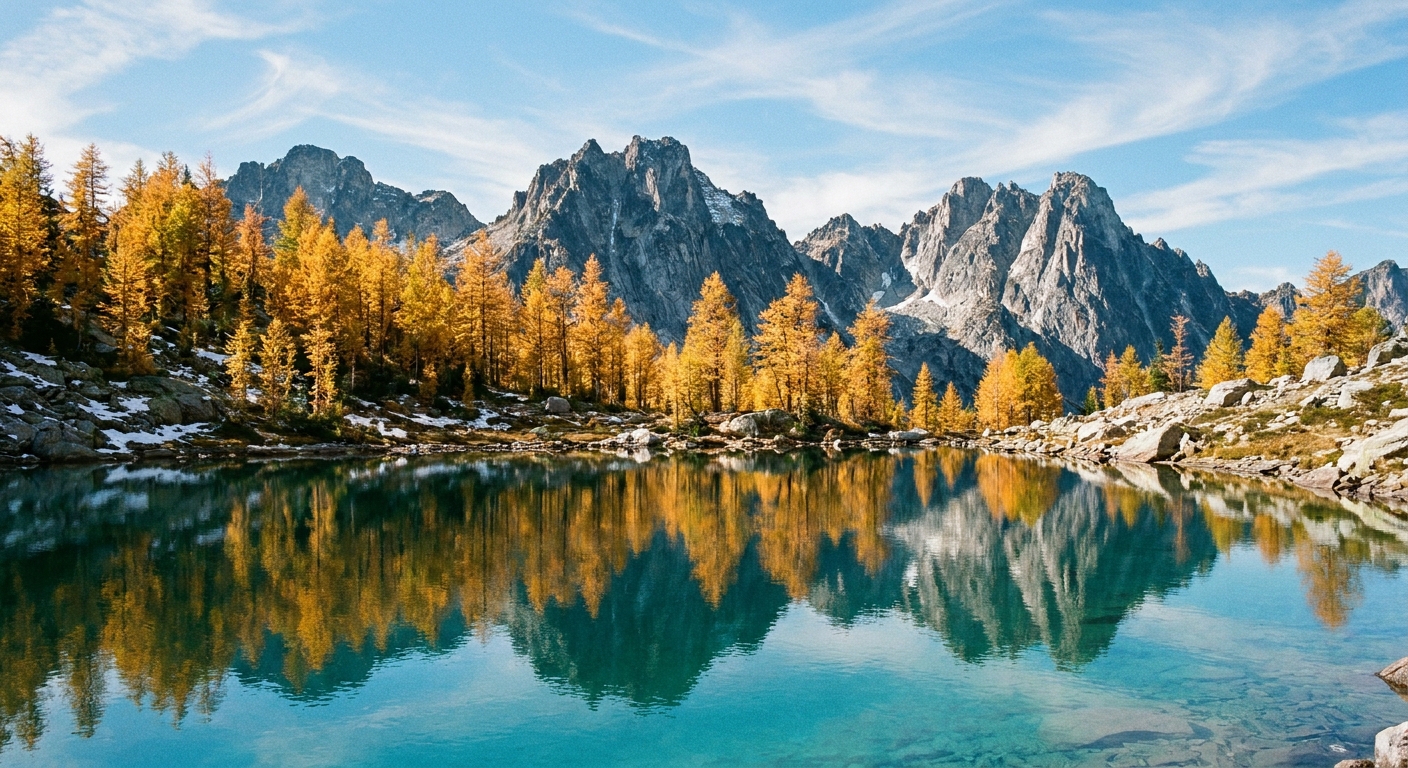
The first time I saw larches up high in the Enchantments, I remember thinking someone had quietly swapped the whole basin’s color palette overnight. Granite stayed granite, the lakes stayed that unreal teal, and suddenly every needle on those alpine larch trees decided to glow like a lantern.
If you are trying to time that “golden week” in the Core Enchantments, here is the truth: there is a typical peak window, but elevation and weather can shift it by days, and some years the show is muted by smoke or stretched out by warmth.
The usual peak window
In most years, larch color around the Core Enchantments (think the high basin lakes and granite benches where larches cluster) often peaks in early to mid-October.
- Most typical peak: roughly October 5 to October 15
- Good “almost peak” odds: late September into the third week of October
That range is wide on purpose. A cold snap can accelerate the turn, and a warm stretch can slow it down. The Enchantments sit at an elevation where small temperature swings matter, and so do wind and that first real hard freeze.
How elevation shifts timing
Larches do not flip all at once across the whole area. Higher elevations generally turn earlier, and lower elevations lag behind. But it is not a perfect staircase. Aspect, exposure, cold-air pooling, and wind can beat elevation on certain slopes and in certain basins.
Rule of thumb
If you are comparing larches at different elevations, expect timing differences of several days up to a week between the highest, most exposed stands and lower, more sheltered areas.
What this looks like
- High, exposed larches: often the first to brighten, and the first to start dropping needles after storms or hard freezes.
- Mid-elevation benches and lake basins: commonly hit the most consistent “all-gold” moment during that early-to-mid October window.
- Lower, protected larches: can look best a little later, especially if the nights stay mild.
What a warm year changes
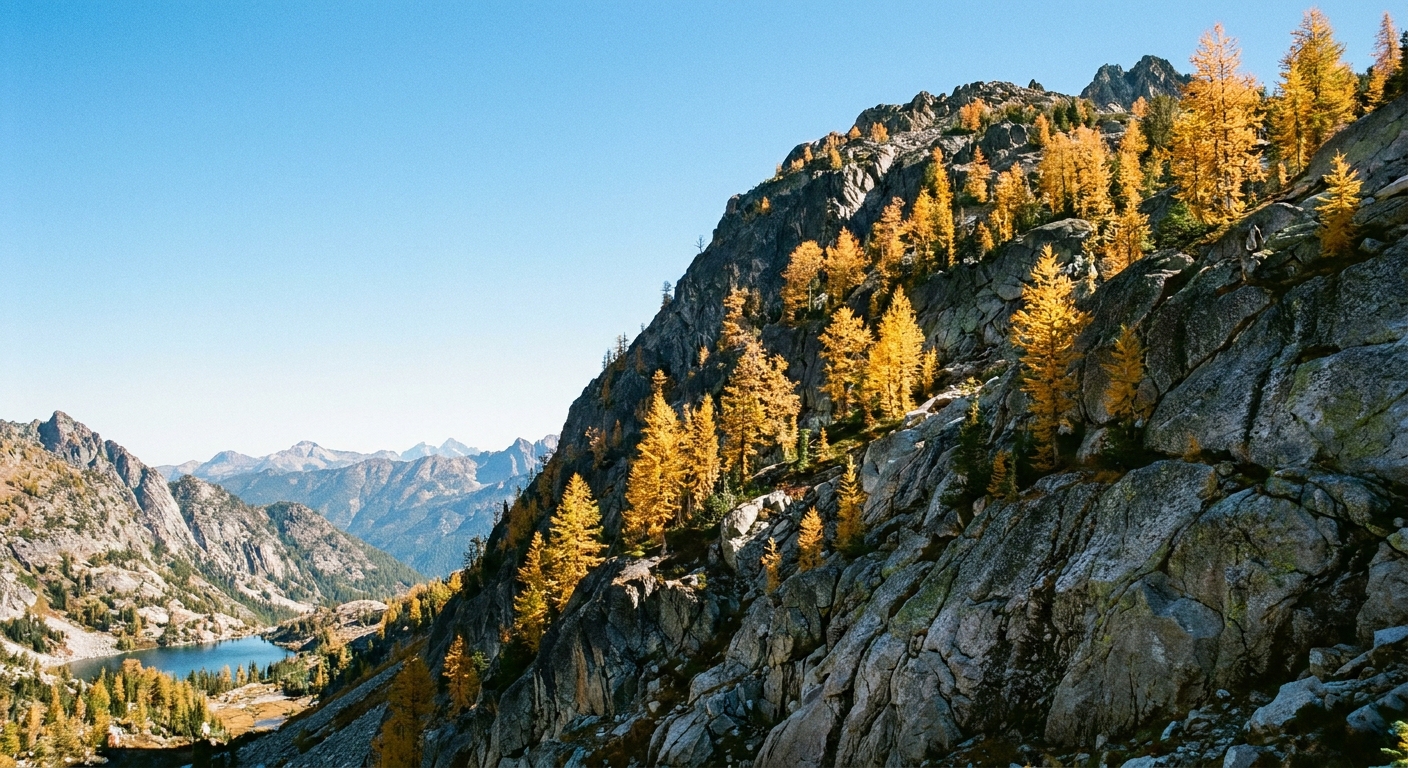
In a warm fall, larches often turn later and more gradually. Instead of a quick punch of color, you get a longer transition where trees move from green to lime to butter-yellow before they hit that deeper gold.
- Timing shift: peak can slide later by roughly a week, sometimes nudging deeper into mid-October.
- Look and feel: you may see more mixed trees, with some still greenish while others are already glowing.
- Tradeoff: a longer season can be nice for flexibility, but the “all-at-once” effect can be less dramatic on any single day.
What a smoky year changes
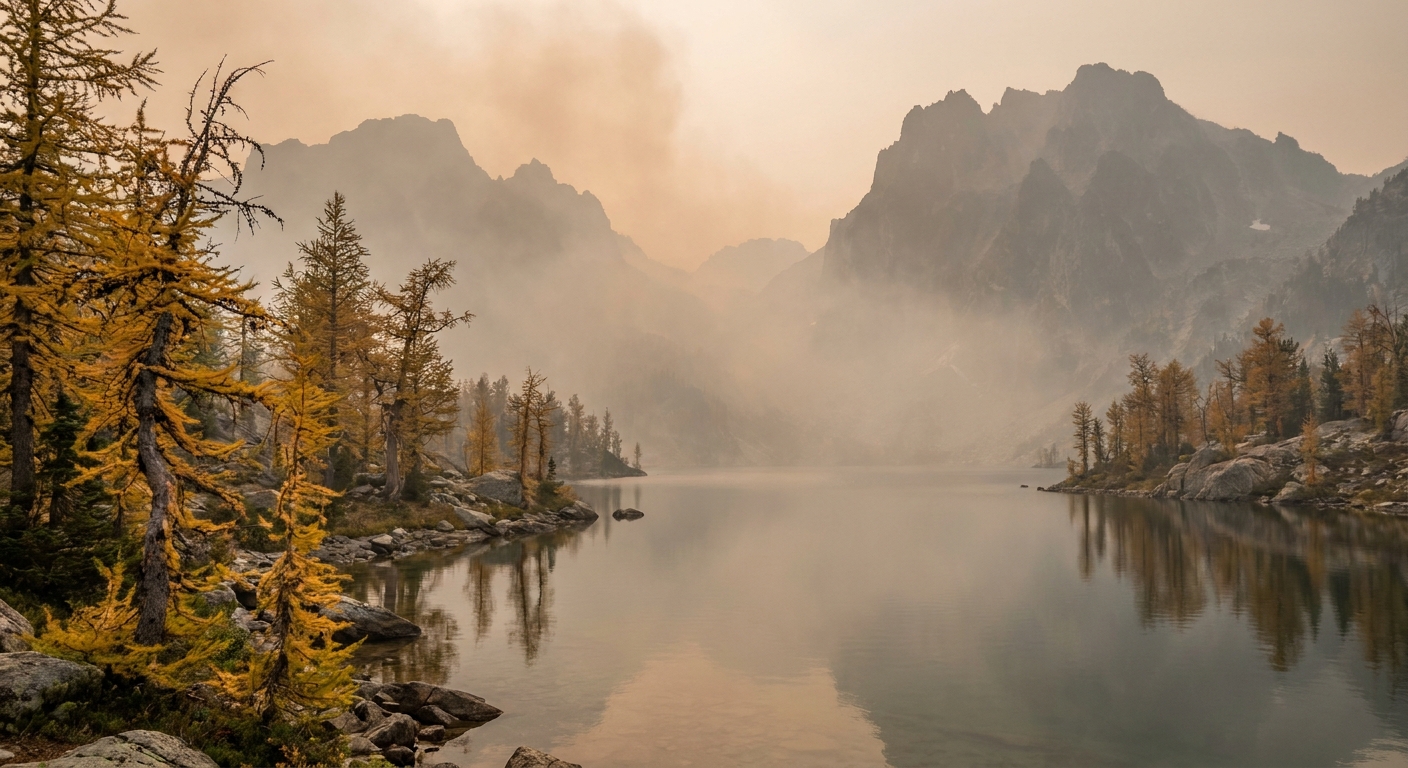
Smoke usually affects visibility and color rendering more than timing. In smoky conditions, larches can still be yellow, but the whole landscape reads flatter and browner because the light is diffused.
- Visual impact: gold can look more muted, more mustard than neon.
- Photography: you may lose the crisp contrast between larches, granite, and lake water. Sunset can look surreal, but midday often looks hazy.
- Practical reality: even with peak color, smoke can make the trip feel like you missed the magic.
How to check conditions
If your dates are close and you want to stack the odds in your favor, do a quick reality check a few days before you go. Recent hiking trip reports can show whether the Core is still mostly green, already glowing, or dropping needles. For smoke and visibility, it helps to look at current air quality and nearby mountain webcams. If you are unsure about snow, ice, or trail access, the Leavenworth-area ranger station is often the simplest way to confirm what is actually happening on the ground.
If you arrive a week early
A week before the usual peak, the Enchantments can still be jaw-dropping, just not uniformly gold yet.
What it looks like
- More green overall: many trees will still read green from a distance, especially in sheltered spots.
- Patchy yellow: exposed larches often start to pop first, so you will see scattered “torches” rather than a whole basin glowing.
- Best moments: early light can make partially turned trees look more golden than they really are.
How it feels
You will get a more late-summer alpine vibe: clearer blues, less of that autumn saturation, and usually fewer needle carpets on the ground. If you are after the full “golden bowl” effect, you may leave thinking, “So close.”
If you arrive a week late
A week after peak, you are playing a mix of lingering color and early signs of winter.
What it looks like
- Still gold, but thinner: some trees remain bright, but you may notice more bare branches, especially after wind or a cold storm.
- Golden ground cover: the trail and granite slabs can be sprinkled with needles, which is gorgeous in its own right.
- More contrast: you can get stunning scenes where a few remaining gold trees stand out against darker evergreens and gray rock.
What can end it fast
The big wildcard is an early season storm or a hard freeze. One blustery system can strip a lot of needles quickly, turning “week late” into “mostly done” in a hurry.
Shoulder-season reality
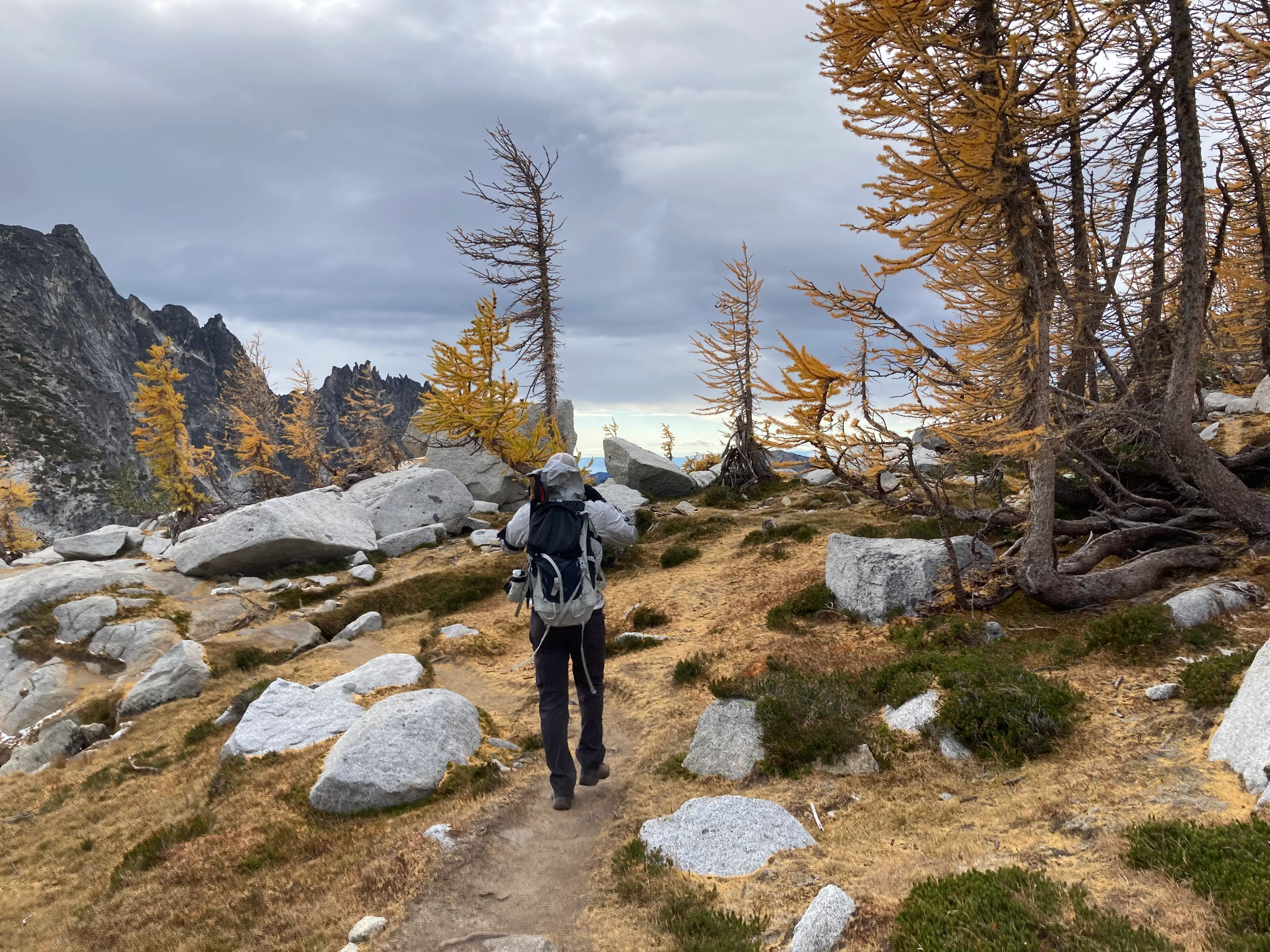
Early to mid-October can feel like a perfect overlap of summer and fall. Late October can feel like winter is actively trying to move in. Days are shorter, temperatures drop fast once the sun leaves the basin, and snow or ice can show up suddenly on steep routes like Aasgard Pass. If your trip is in mid to late October, it is smart to plan for colder mornings, carry layers that can handle wind, and be realistic about traction if the forecast hints at freeze-thaw.
Quick timing cheat sheet
If you want a simple mental model while you plan:
- Late September: early turn at higher elevations, scattered yellow, plenty of green remaining.
- Early October: color ramps up quickly; many years this is the start of the best window.
- Mid-October: classic peak in many seasons; the basin can look drenched in gold.
- Late October: lingering color varies year to year; more needle drop, higher chance of wintery conditions and stripped trees after storms.
How I’d plan with fixed dates
Because the Enchantments sit at that sweet spot where timing can swing, I plan with “layers” rather than a single perfect day.
- If you can choose only one week: aim for early to mid-October.
- If you might be early: prioritize higher, more exposed larch zones for your best shot at color.
- If you might be late: look for spots that hold onto needles longer and lean into the fallen-needle glow as part of the autumn look.
And if you show up in a smoky week, my best advice is to treat it like a different kind of trip: slower mornings, closer details, warm drinks afterward in town, and no guilt if you decide to return another year for the clear-sky version.
FAQ
Do larches peak at the same time every year?
No. Many years cluster around early to mid-October in the Core Enchantments, but weather can move peak earlier or later by about a week, and sometimes more in unusual seasons.
Is it worth going if I cannot hit peak?
Yes. A week early usually means patchy gold with plenty of green still in the mix. A week late can mean fewer needles on the trees but gorgeous golden carpets on the ground, plus dramatic contrast if skies are clear.
What matters more than the date?
Nighttime temperatures, wind events, and storms. A calm, cool week can extend the display, while a strong storm can strip needles quickly even if you are “on time.”