Yosemite Fall Colors

Maya Lin
Maya Lin is a travel journalist and outdoor enthusiast who believes the best trips combine rugged adventures with urban comforts. After spending six years backpacking across four continents, she founded Trail & Town Guide to help fellow travelers navigate both hidden mountain passes and bustling city neighborhoods with confidence.
Yosemite doesn’t shout about fall the way New England does, and that is exactly why I love it. In autumn, the Valley’s granite walls keep their usual drama, but the mood shifts: cooler mornings, softer light, and pockets of gold that feel earned because you have to know where to look.
Most of Yosemite Valley’s color comes from California black oaks, with pockets of bigleaf maple in wetter spots and Pacific dogwoods adding smaller accents along the Merced River. If Tioga Road is open, you can try for quaking aspens at higher elevations for that classic, shimmering-yellow moment, but it is more hit-or-miss up high than the reliable oak glow on the Valley floor.
When Yosemite fall color peaks
Fall timing varies year to year based on temperature swings and the first hard frosts, but in general Yosemite’s color runs on a simple schedule: the higher you go, the earlier it turns.
Typical window (most years)
- Late September to early October: Higher elevations begin to turn first. If Tioga Road is open, you may catch aspens and willows around Tuolumne Meadows, and more consistent aspen displays often show on the east side outside the park in Lee Vining Canyon.
- Mid October: Color starts showing more reliably in Yosemite Valley, especially along the Merced River corridor.
- Late October to early November: Often the sweet spot in the Valley, with black oaks going warm gold and dogwoods adding darker reds, burgundy, and rusty tones in good years.
- Mid to late November: Mostly late-season lingering oaks in sheltered areas, with more bare branches after storms or cold snaps.
If you have flexibility, I aim for late October in the Valley, then I treat anything earlier at high elevation as a bonus if roads are open.
What turns color in Yosemite (and where)
Yosemite’s fall show is less about vast forests turning all at once and more about clusters of color placed perfectly against granite and water.
California black oaks (the main event in the Valley)
Black oaks are the big, glowing-yellow trees you will notice along meadows and roadsides. They are responsible for most of the Valley’s “wow, it is fall” moments.
Pacific dogwoods (small trees, subtle payoff)
Dogwoods do not dominate the canopy, and their color can be variable. In the right conditions they add reds, burgundy, and orange-brown tones along riverbanks. Think of them as Yosemite’s fall accents rather than the whole show.
Bigleaf maples (localized, beautiful)
Maples are not a Valley-wide driver of color, but in wetter pockets near water they can glow gold in the right light.
Aspens (best higher up, year-dependent)
Aspens are the “postcard fall” tree, but you generally need to leave the Valley floor for them. Even then, location and timing matter. If early storms close Tioga Road, skip aspens and lean into Valley oaks instead.
Best fall color spots in Yosemite Valley
If you only have one day, focus on easy, flat Valley walks. The payoff-to-effort ratio is unbeatable, and you can chase good light without committing to a long hike.
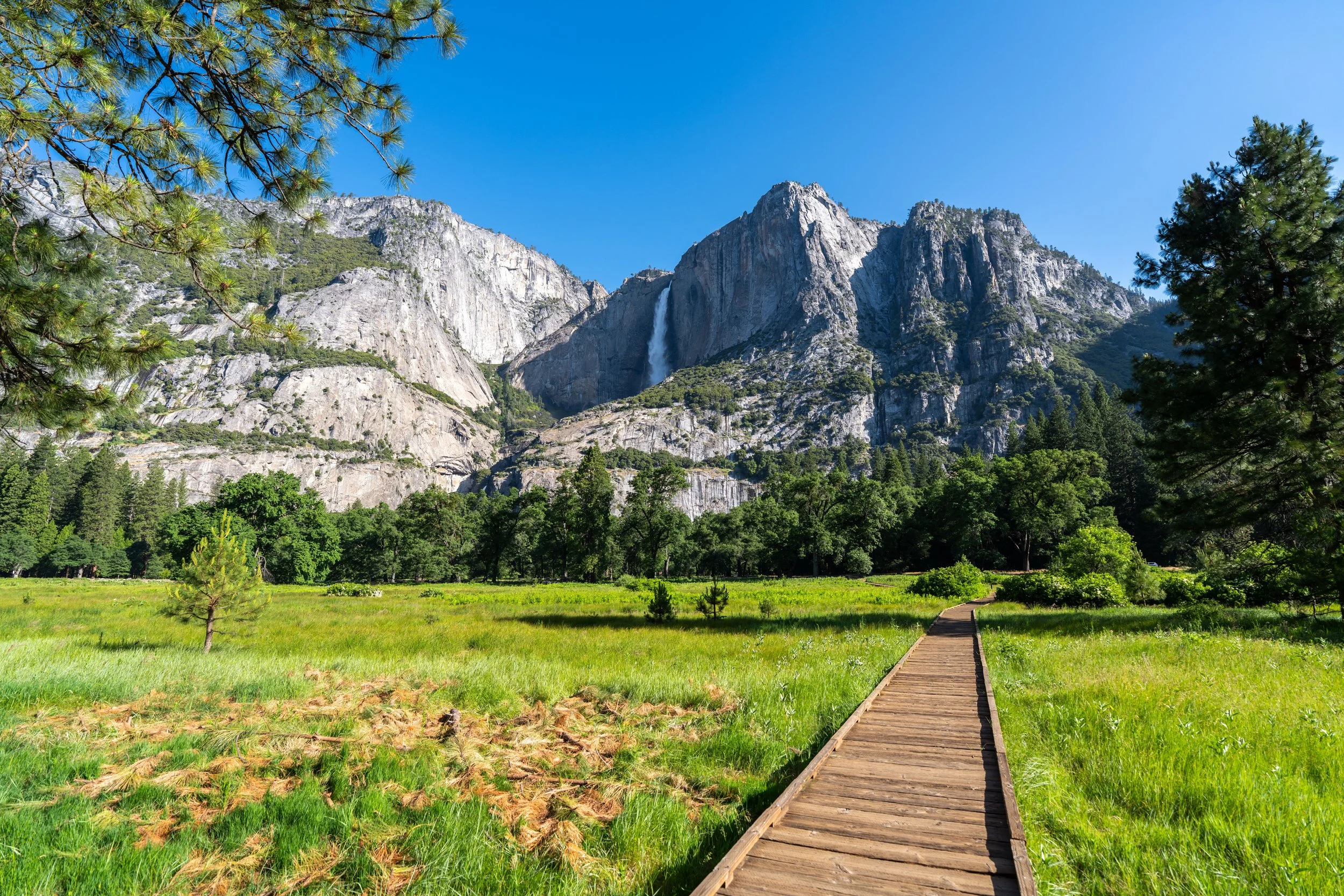
Cook's Meadow and Sentinel Meadow
This is my go-to for classic Yosemite icons plus a surprising amount of color. You get open meadow views, black oaks near the edges, and big sky. Morning is crisp and quiet, late afternoon is warm and glowy.
- Why it works: Open sightlines for granite backdrops behind yellow oaks.
- Best light: Late afternoon, especially on clear days.
- Pair it with: A slow loop plus a quick stop at Yosemite Valley Lodge area for coffee and bathrooms.
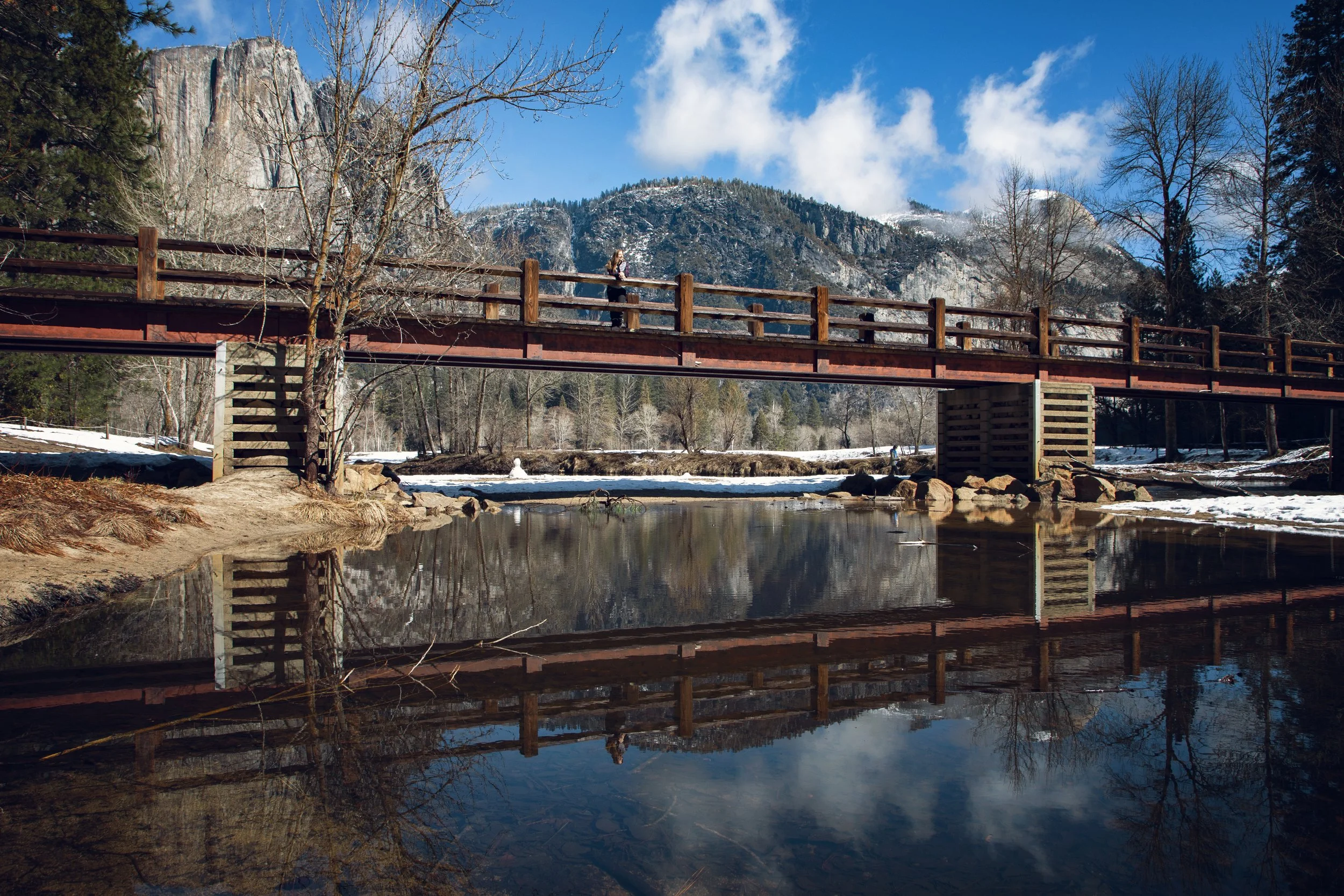
Swinging Bridge and the Merced River banks
Dogwoods and oaks show well near the river, and the water adds reflections when the wind cooperates. Even when waterfalls are low, the Merced keeps the scene feeling alive.
Photographer tip: I look for calm mornings here. When the river goes glassy, the Valley feels twice as big.
Valley View (sometimes called Gates of the Valley)
Valley View is famous for a reason: El Capitan on one side, Bridalveil Fall area on the other, and the Merced threading through. In fall, you can catch yellow oaks framing the river.
- Tip: Go early or near sunset. Midday light is flatter and more contrasty, and the turnout can be chaotic.
Ahwahnee Meadow and the Merced near Curry Village
When I want color without a big plan, I wander this general area. You often find small pockets of dogwood color, plus easy access to food and shuttle stops.
Best easy viewpoints near the Valley
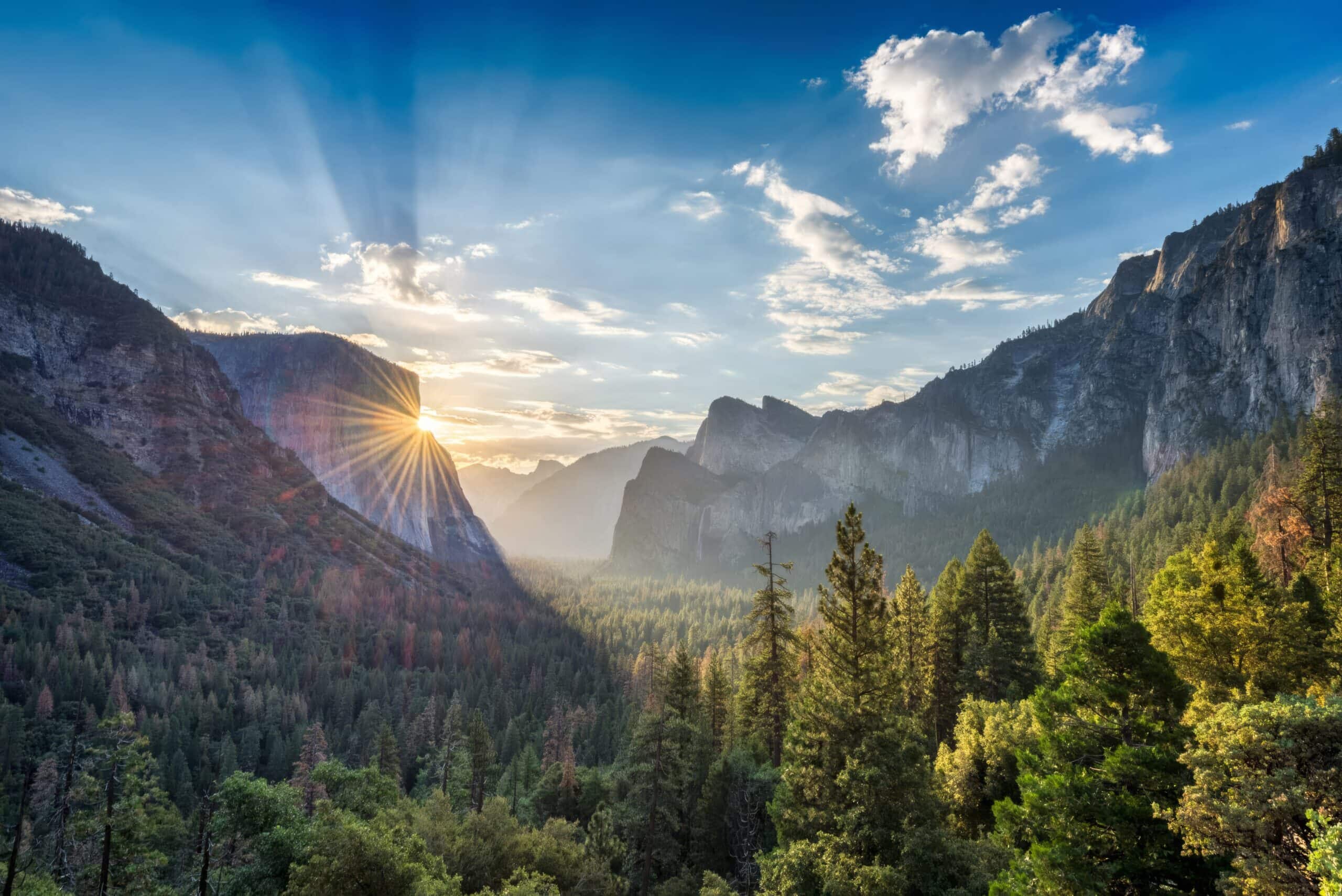
Tunnel View
Tunnel View is not a foliage viewpoint in the “look at the forest” sense. It is a granite-and-scale viewpoint. But in autumn, the Valley floor below often shows a soft patchwork of gold that makes the whole scene feel warmer.
Glacier Point (seasonal access)
Glacier Point gives you a top-down look at the Valley’s color mosaic. Access is seasonal and can change quickly after storms, so I treat it as a bonus rather than a guarantee.
Want aspens? Go higher (seasonal)
If you are chasing that bright-aspen-yellow, you will likely want to pair a Valley day with a higher-elevation drive. The big catch is that Tioga Road is seasonal and closures can happen suddenly after early storms.
Where to look
- Tuolumne Meadows area: Subalpine scenery, crisp air, and scattered aspens and willows. In some years it is lovely, in others it is subtle.
- Along Tioga Road pullouts: Watch for small groves near meadows and creeks.
- Lee Vining Canyon (outside the park): If you are coming from the east side and the road is open, this is often the more reliable aspen drive.
Timing note: Aspens often peak earlier than Valley oaks, so a late-October Valley trip might be perfect down low but past-prime up high.
Crowds in fall
Autumn is calmer than summer, but do not confuse “calmer” with “empty.” Weekends in October can still feel busy, especially at Tunnel View, Valley View, and the easiest river access points.
My crowd-proofing habits
- Start with a meadow loop early, then do viewpoints later when day-trippers thin out.
- Use the shuttle when it is running, especially on weekends. Parking friction is real.
- Walk 10 minutes past the first turnout mentality. Many people do not.
- Plan a midday “town break” inside the Valley for food, a warm drink, and a reset, then go back out for golden hour.
Low waterfalls in fall
Here is the honest autumn trade: you get better temperatures, softer light, and quieter trails, but you might get thin waterfalls or even dry sections depending on the year.
- What stays beautiful: The Merced River corridor, reflections, granite views, and oak color.
- What to adjust: If your dream is booming waterfalls, fall is not the season. If your dream is cozy layers and golden trees against El Capitan, fall is perfect.
I treat waterfalls as a bonus in autumn and build the day around meadows, river walks, and viewpoints instead.
Simple 1-day fall itinerary
Morning
- Start at Cook's Meadow for crisp air and fewer people.
- Stroll toward the Merced River for dogwood spotting and reflections.
Midday
- Easy lunch near Yosemite Valley Lodge or Curry Village.
- Short, flexible stops based on parking: Swinging Bridge, river pullouts, or a mellow meadow wander.
Late afternoon to sunset
- Head to Valley View for warm light on the river and oaks.
- Finish at Tunnel View if you have energy, or return to the meadows for a quieter sunset.
Before you go
- Check entry requirements: Yosemite policies can change by season and year. I always confirm current reservation or peak-hours entry rules on the official NPS site before I lock in plans.
- Confirm road status: Tioga Road and Glacier Point access are seasonal, and closures can happen quickly after storms.
- Confirm shuttle operations: Shuttle routes and frequency can be seasonal and sometimes change. If you are relying on it, verify service for your dates.
- Watch for morning ice: Late fall mornings can be slick in shady spots, including near boardwalk sections and river paths.
Fall tips I actually use
- Dress for big temperature swings: Cold mornings, mild afternoons, fast sunset chill.
- Bring traction only if storms are forecast: Early snow can happen at elevation, even if the Valley is sunny.
- Pack a thermos: This is my favorite season for slow sips at scenic pullouts.
- Stay on durable surfaces: Meadows can be fragile. Stick to trails and boardwalks to help keep the Valley healthy.
FAQ
Is Yosemite worth visiting in the fall?
Yes, especially if you love cooler hiking weather and softer light. The foliage is more localized than in some regions, but the Valley’s black oaks can be gorgeous when you hit the timing.
What month is best for fall colors in Yosemite Valley?
Most years, late October into early November is a strong bet for the Valley floor. Higher elevations often peak earlier, and early storms can change access.
Where is the most reliable fall color in the park?
For consistency, focus on Yosemite Valley’s black oaks near meadows and along the Merced River corridor. For aspens, you will have better luck at higher elevations and on the east side when Tioga Road is open.
Do I need a long hike to see fall color?
No. Some of the best autumn scenes are on flat, easy loops like Cook's Meadow and along river access points near Swinging Bridge and Valley View.