Yosemite Horsetail Fall in February: Viewing Spots and Parking

Maya Lin
Maya Lin is a travel journalist and outdoor enthusiast who believes the best trips combine rugged adventures with urban comforts. After spending six years backpacking across four continents, she founded Trail & Town Guide to help fellow travelers navigate both hidden mountain passes and bustling city neighborhoods with confidence.
Yosemite has plenty of waterfalls you hike to. Horsetail Fall in February is not one of those experiences. This one is a seasonal light event on El Capitan, where the setting sun hits a thin ribbon of water just right and it briefly looks like molten lava pouring off the granite. You are not hiking the Mist Trail to Vernal and Nevada Falls. You are also not chasing the “Horsetail Falls” in the Columbia River Gorge in Oregon, which is a completely different waterfall with a similar name.
What you are doing instead is simple, in the best way: arriving early, parking where the park requires, walking in, standing in the managed viewing corridor near El Capitan, and waiting for a short window of light that may or may not happen depending on water flow, weather, and cloud cover.
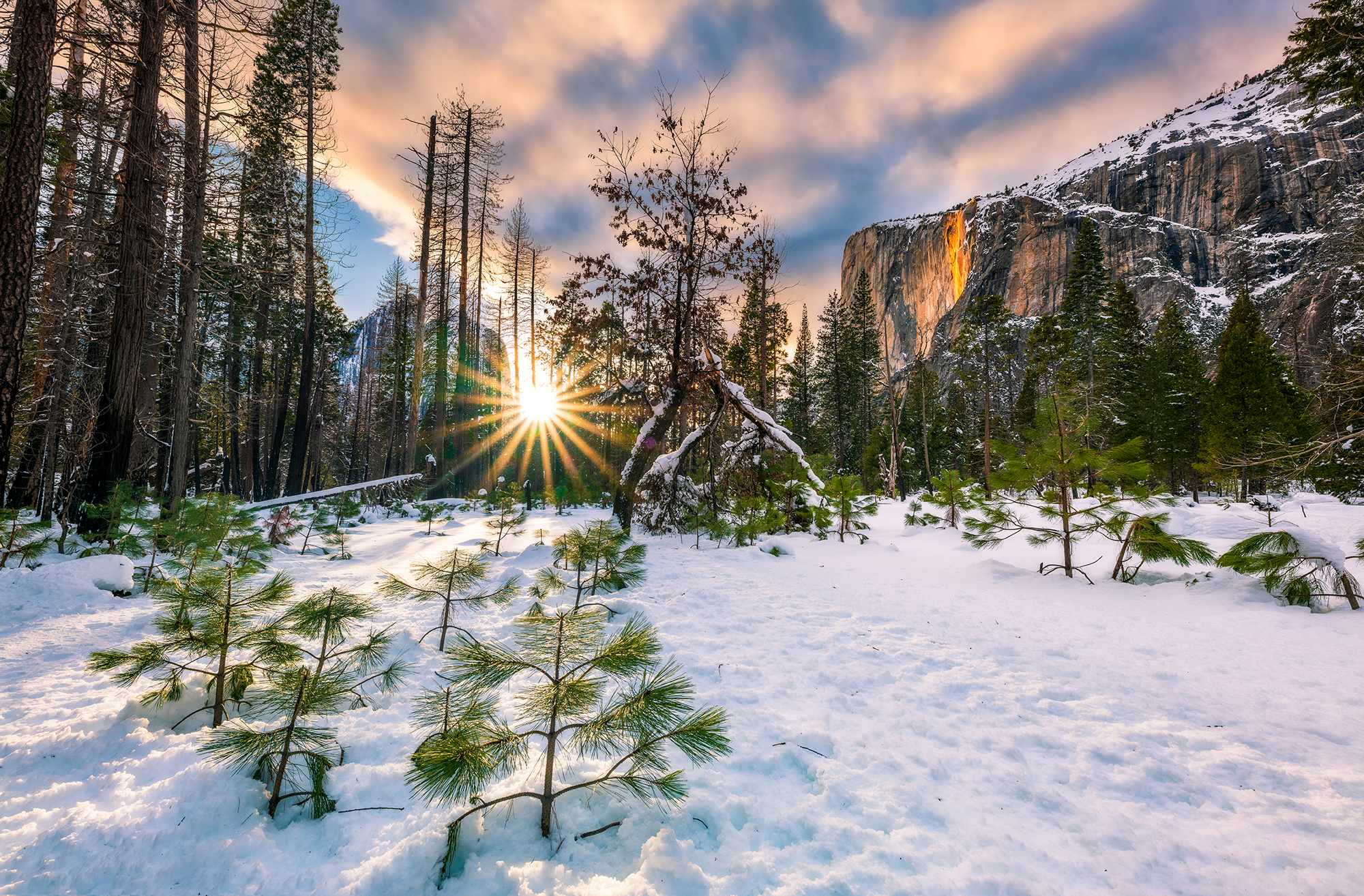
What the firefall is
Horsetail Fall is a small seasonal waterfall on the east side of El Capitan. In February, the sun’s angle at sunset can align so the last light strikes the falling water and turns it orange, red, or gold for a few minutes. It is a lighting phenomenon, not a special waterfall volume and not something you can see all day.
Three things have to cooperate
- Sun angle: A narrow February window near sunset, with the best alignment often falling somewhere in the middle.
- Water: It might be flowing well, barely flowing, or not flowing at all. Warm days that melt snow on top can make the difference.
- Clear western sky: Clouds near the horizon can block the direct sunlight needed for the glow. High thin clouds can still allow a muted effect, but heavy cloud cover often means no show.
I have had evenings where the valley felt electric and the light never arrived. And I have had evenings where it did, and everyone around me forgot to breathe for about 90 seconds. Go with flexible expectations and you will enjoy the whole scene, not just the headline moment.
When it can happen
The firefall effect is possible for roughly two to three weeks in February, with the strongest alignment usually around the middle of that window. Exact dates shift slightly year to year.
Time of day
The glow, if it happens, is a sunset event. Plan to be in place well before sunset because:
- Parking areas fill early on peak days.
- You will be walking in, and you do not want to hustle the last mile in the cold.
- You will want time to adjust your spot and set up if you are photographing.
A good rule is to arrive in Yosemite Valley by early afternoon on weekends during the peak window, earlier if you want a calmer experience.
Where to stand
The classic viewing zone is the managed viewing corridor near El Capitan, where you can look up at El Capitan’s east face and see the fall catch the last light.
1) The viewing corridor
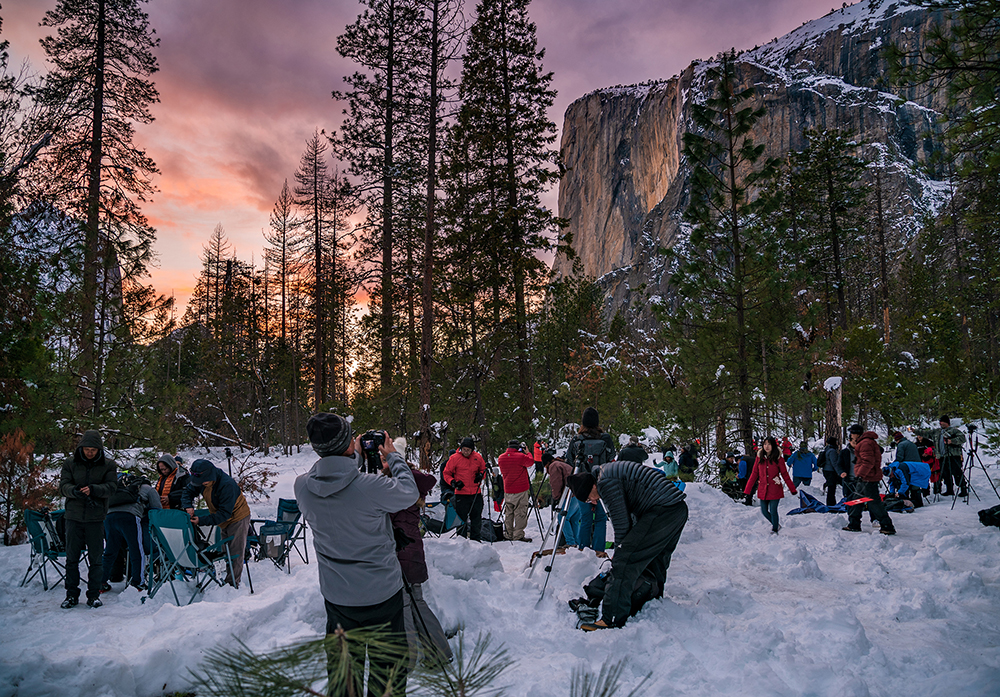
Most people watch from the designated viewing area along the El Capitan viewing corridor. On peak February evenings, this is very much a walk-in experience. You park where the park directs you, then walk to the viewing area and settle in.
- Pros: This is the intended setup for the event, with ranger management and lots of people focused on the same sightline.
- Cons: It can feel like a small migration at the end of the day, and the walk back after dark is part of the deal.
2) El Capitan Picnic Area
This is the part that trips people up because older advice still floats around online. During the February firefall window, parking at El Capitan Picnic Area is typically closed as part of traffic management and meadow protection. Treat it as a place you may walk past, not a place you can count on for parking or drop-offs.
3) Roadside pullouts
Do not build a plan around grabbing a shoulder spot on Northside Drive or Southside Drive. During the event window, the park often prohibits stopping and parking along the corridor, and enforcement is real. If you want the evening to feel smooth, assume you will park once and walk.
4) Is there a trail to it
There is no special trail required for the February glow. You do not hike up to the base. The experience is primarily valley-floor viewing plus a walk in and out.
Parking and walking
February weekends during the Horsetail Fall window can be some of the most parking-stressed days of the winter season in Yosemite Valley. For the past several years, Yosemite National Park has used strict traffic and parking controls in the El Capitan area for safety and to protect meadow habitat.
What to expect
- El Capitan Picnic Area is usually not available: Do not plan on parking there during the event window.
- Roadside stopping in the corridor is often prohibited: That includes quick drop-offs. If you stop where you should not, you can get cited and you also create a hazard.
- Main parking is commonly near Yosemite Valley Lodge: In many recent plans, visitors are directed to use the Yosemite Falls Parking Area and nearby lots, then walk to the viewing corridor.
How far is the walk
From the Yosemite Valley Lodge area, the walk is usually about 1 to 2 miles each way depending on which lot you land in and which route is open and signed that day.
The walk, in real life
The route is mostly flat valley-floor walking, but it is winter. Expect cold temperatures, patches of ice, and a dark walk back if you stay through the last light.
- Bring a headlamp or flashlight: Your phone light works until it does not.
- Wear traction-friendly shoes: Sidewalks and paths can be slick at night.
- Plan your timing: If you arrive late, you are not just fighting crowds. You are also adding a rushed walk to the most stressful part of the day.
Routes and closures can change
Depending on the year’s traffic plan, pedestrian access can shift. Some roads or shoulders may be restricted, and the park may funnel everyone along a specific walking route. Follow posted signs and ranger directions, even if your map app says there is a shorter way.
Bathrooms
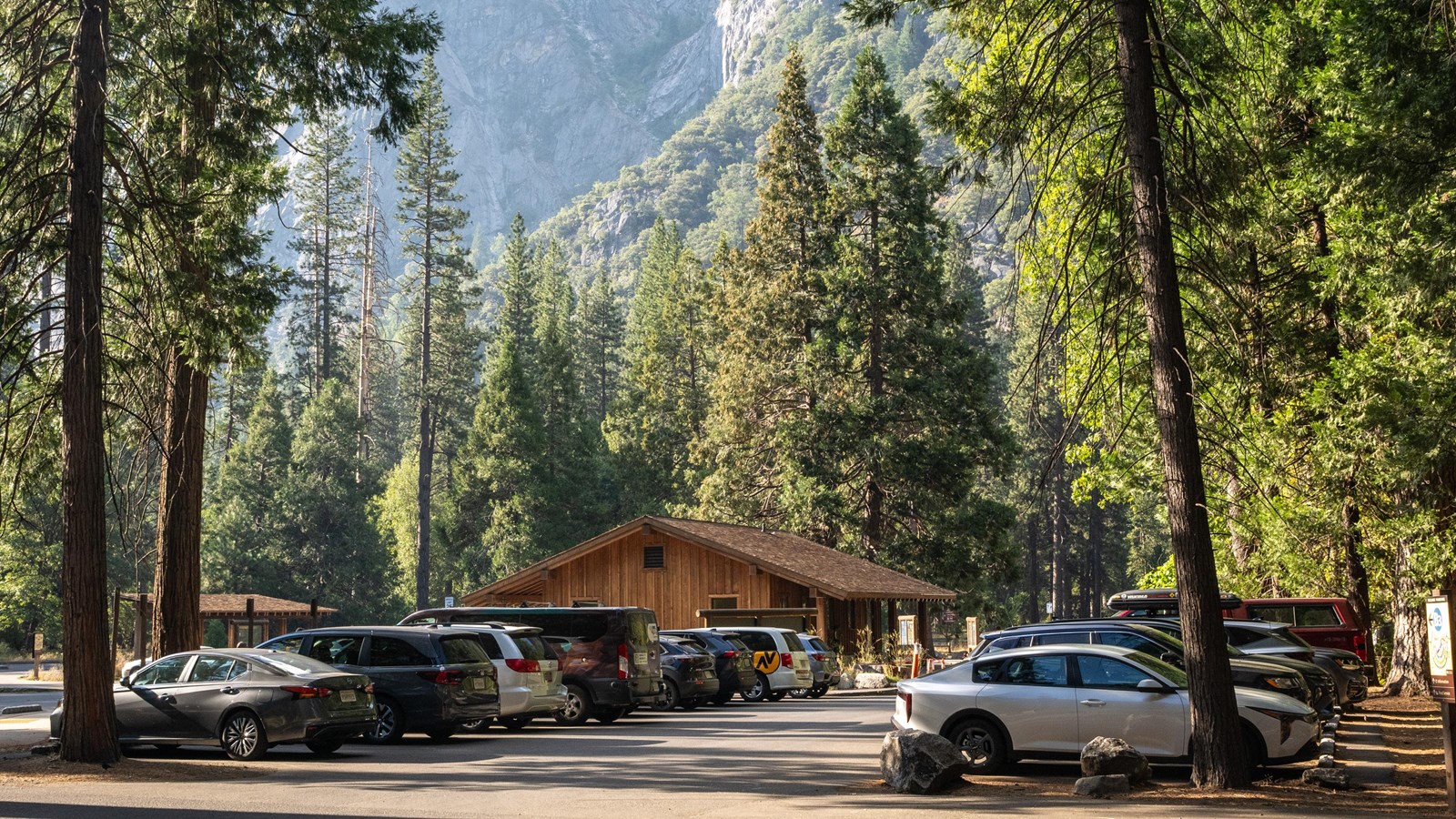
Plan bathroom breaks before you commit to your spot. The easiest facilities are usually near Yosemite Valley Lodge and other developed areas along the valley floor. Once you are settled in the viewing corridor, leaving and returning can be a hassle.
What not to do
- Do not block travel lanes or stop in the road to drop someone off.
- Do not park on vegetation or in closed areas, even if it looks harmless under snow.
- Do not assume you can squeeze onto narrow shoulders without consequences.
Crowds
Crowds spike when the forecast is clear and dry, especially on Friday through Sunday. If there is fresh snow in the valley and a clear sunset forecast, expect a big turnout since the scenery is next level and photographers love the contrast.
Best bets for fewer people
- Weekdays: Tuesday through Thursday are often calmer than weekends.
- Early or late in the window: The edges of the February window can be a little less intense, even though the alignment can still be good.
- Questionable forecasts: Fewer people show up, but your odds of the glow drop too.
What the vibe is like
Even at peak, the mood is usually respectful. People are bundled up, quietly chatting, sharing lens cloths, comparing sunset apps, and passing around trail mix. It feels less like a party and more like a winter tailgate for nature nerds. If you are not photographing, you can still enjoy it by standing back from the tight tripod rows and soaking in the valley’s last light.
Make it a better night
Dress for standing still
February sunset is cold fast. Wear warmer layers than you would for hiking. I like a puffy jacket, warm hat, gloves I can still use my phone with, and insulated shoes.
Pack for the walk
Because you will likely be walking a few miles round trip, I treat it like a short winter stroll that accidentally ends in a night walk back to the car. A headlamp, a warm drink, and a little patience go a long way.
Bring dinner
My favorite move is an early picnic snack and a real dinner in my bag. Once you have a spot, leaving to hunt food can be a one-way ticket to losing your view.
Respect meadow edges
Stick to durable surfaces and obvious paths where possible. Winter can make it hard to see where the meadow begins, but those plants are fragile and the park’s closures are there for a reason.
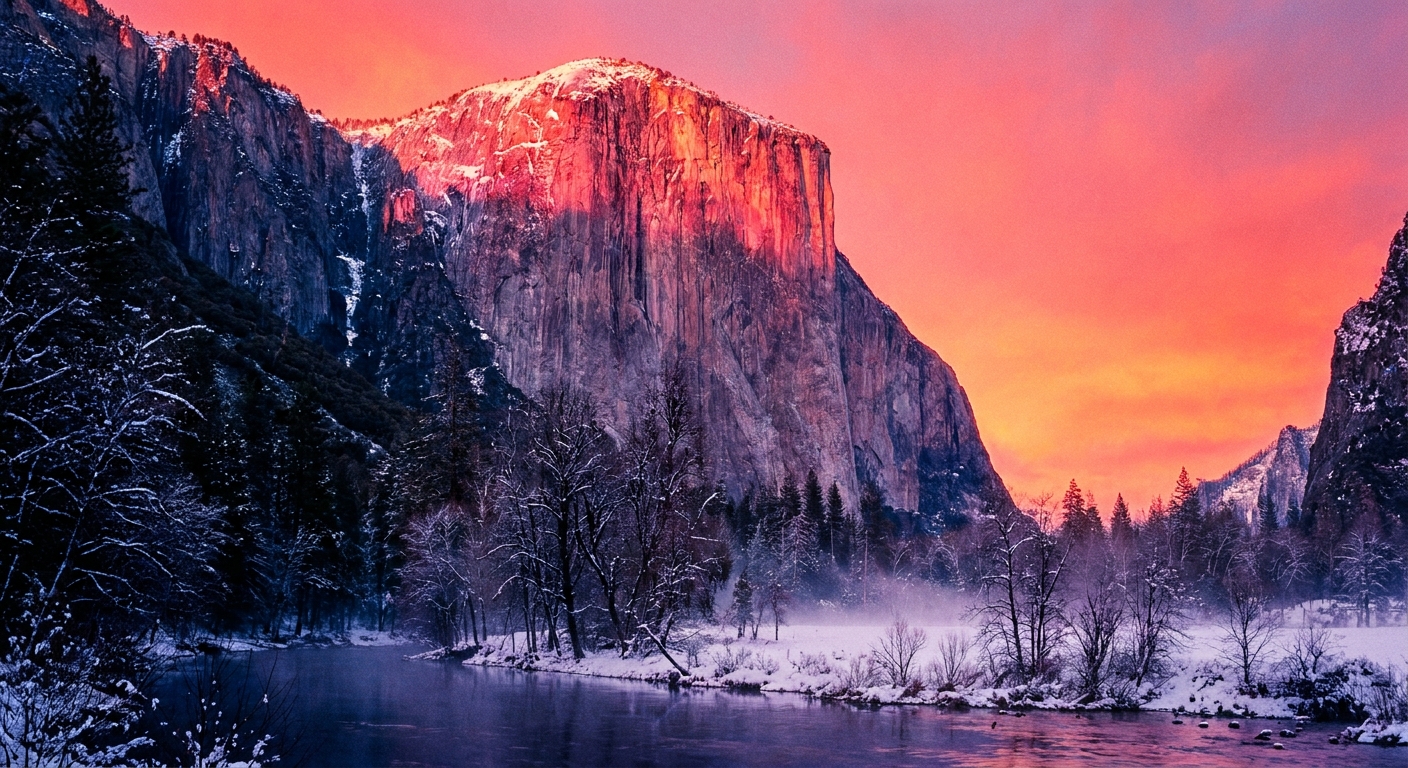
Photo etiquette and safety
- Keep paths open: Do not spread tripods across the walking route or block the flow of people moving in and out.
- Mind your lights: If you use a headlamp, keep it pointed down and on a low setting so you are not blasting it into someone’s frame.
- Hold your line: When the glow starts, avoid stepping in front of lenses and tripods. Everyone is aiming at the same patch of granite.
- Pack out everything: Snack wrappers, orange peels, hand warmers, all of it.
Increase your odds
My best advice is to stack the little variables you can control. Check the forecast for a clear western horizon near sunset, confirm the fall is actually flowing (recent trip reports and official park updates can help), and consider scouting the viewing corridor in daylight so you are not guessing in the dark.
And have a backup plan. If it does not light up, you can still catch a beautiful winter sunset from Tunnel View, photograph alpenglow across the valley, or just lean into the quiet of an off-season Yosemite evening.
What this is not
- Not the Mist Trail: Vernal Fall and Nevada Fall are in a different part of the park, reached from Happy Isles on a popular hiking route. Horsetail Fall viewing is a valley-floor sunset event on El Capitan.
- Not Oregon’s Horsetail Falls: The Columbia River Gorge has a waterfall commonly called Horsetail Falls near the Historic Columbia River Highway. That is a separate destination in a separate state.
- Not guaranteed: Even during the right weeks, it might not glow. Water flow and clouds decide.
FAQ
Do I need a permit to watch Horsetail Fall
Viewing from Yosemite Valley viewpoints generally does not require a special viewing permit, but access to the park can be subject to entry rules, reservations, or traffic management depending on the year and season. In some years, Yosemite uses a park entrance reservation system during certain periods. Always check current Yosemite National Park updates before you go, especially for the latest firefall traffic plan.
How long does the glow last
When it happens, it is usually brief, often just a few minutes as the sun angle shifts rapidly near sunset.
Can I go without a tripod and big camera
Yes. Plenty of people come just to watch. A phone can capture the moment if you keep expectations realistic and steady your shot, but the real reward is seeing the light with your own eyes.
Is this kid-friendly
Yes, if everyone is dressed warm and you plan for the waiting time and the walk back. Bring snacks, warm drinks, and a small blanket to make it fun.