RV and Trailer Limits on Yosemite Entrance Roads

Maya Lin
Maya Lin is a travel journalist and outdoor enthusiast who believes the best trips combine rugged adventures with urban comforts. After spending six years backpacking across four continents, she founded Trail & Town Guide to help fellow travelers navigate both hidden mountain passes and bustling city neighborhoods with confidence.
I love a Yosemite day that starts with pine-scented air and ends with a proper cappuccino, but there is one very unromantic detail you need to get right before any of that: can your RV or trailer actually fit on the road you plan to use?
Yosemite’s entrance routes are not all created equal. One has a famously tight tunnel approach, another has hard length limits, and one is often the easiest-feeling drive for lots of RVs, unless you are pushing height. Below is the road-by-road breakdown, plus how I decide which approach to use when traveling with anything larger than a standard car.
Measure your real size
Before you choose Highway 41, 120, or 140, take five minutes to confirm two numbers for your setup:
- Total length: for a trailer, measure tow vehicle plus trailer bumper to bumper. For a motorhome towing a car, measure the full combination.
- Overall height: include AC units, satellite domes, roof racks, and anything on top. Manufacturer specs can be optimistic, and aftermarket add-ons count.
If you are near the edge of any limit, treat your rig as over unless you have a verified measurement. Yosemite roads are not the place for guesswork.
Also, treat anything you read online (including this guide) as a planning tool, not permission. Yosemite National Park posts the restrictions that matter on its Vehicle Restrictions page, and the signs on the road win if something changes.
Highway 41
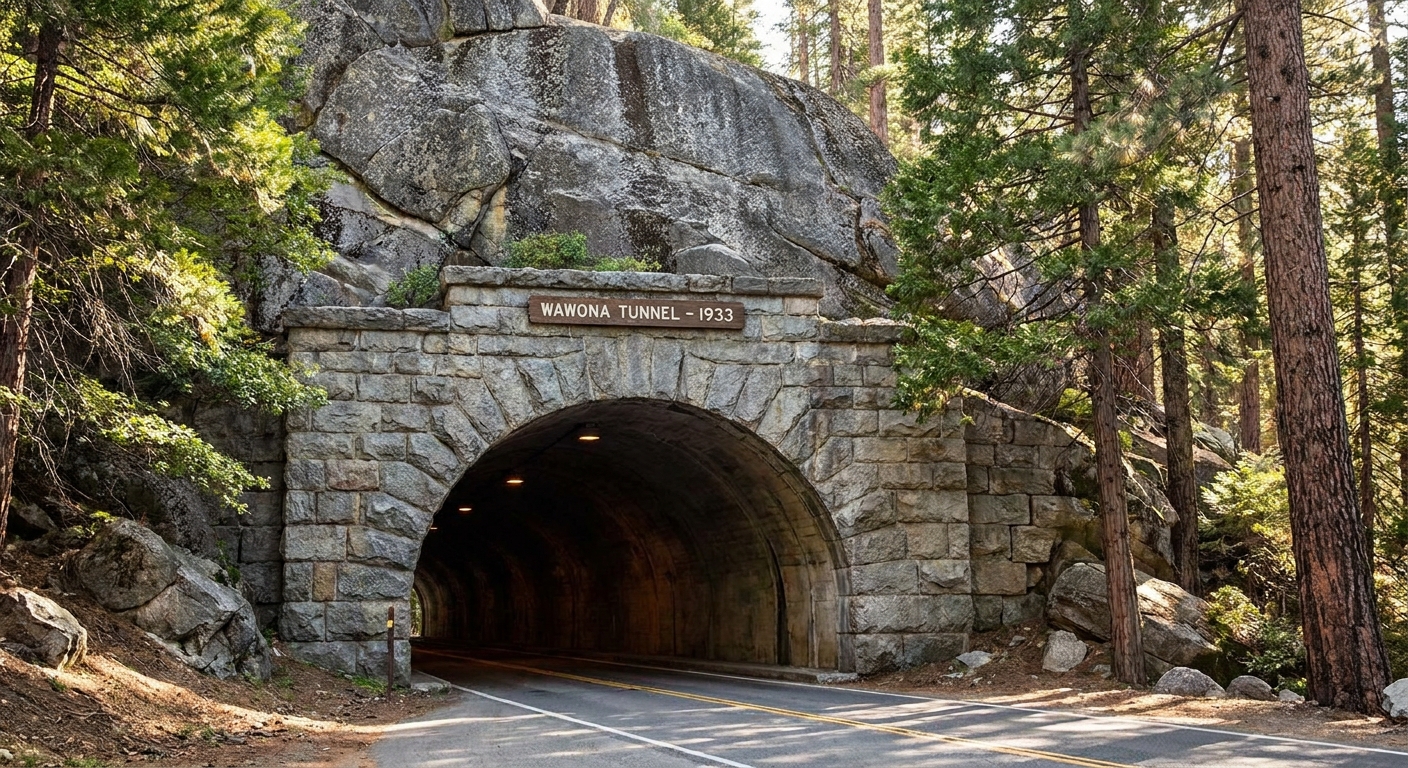
Highway 41 is the route from Oakhurst and the South Entrance, and it is the one most people associate with the Wawona Tunnel on the way to Yosemite Valley.
Wawona Tunnel height
Yosemite National Park lists a key number for this corridor on its Vehicle Restrictions information: 13 feet 6 inches. If your RV or trailer is over 13'6", do not plan to use the Wawona Tunnel route.
- If your rig is 13'6" or under, you meet the posted height restriction for height on this route.
- If your rig is over 13'6", plan a different entrance.
Even when your height is fine, the tunnel approaches can feel narrow and curvy, especially in traffic. It is absolutely doable for a lot of RVs, but it is not always the most relaxing way to roll into the park.
When 41 works well
- Your rig is 13'6" or under and you are comfortable with mountain driving.
- You are approaching from the south and want the most direct line into the park.
- You have checked Yosemite’s Road Conditions updates for any temporary closures or one-way controls.
When I skip it
- Your rig is close to 13'6" and you do not have a rock-solid height measurement.
- You are towing and already feel at your comfort limit on tight turns.
- You are arriving late and want the calmest approach possible.
Highway 120
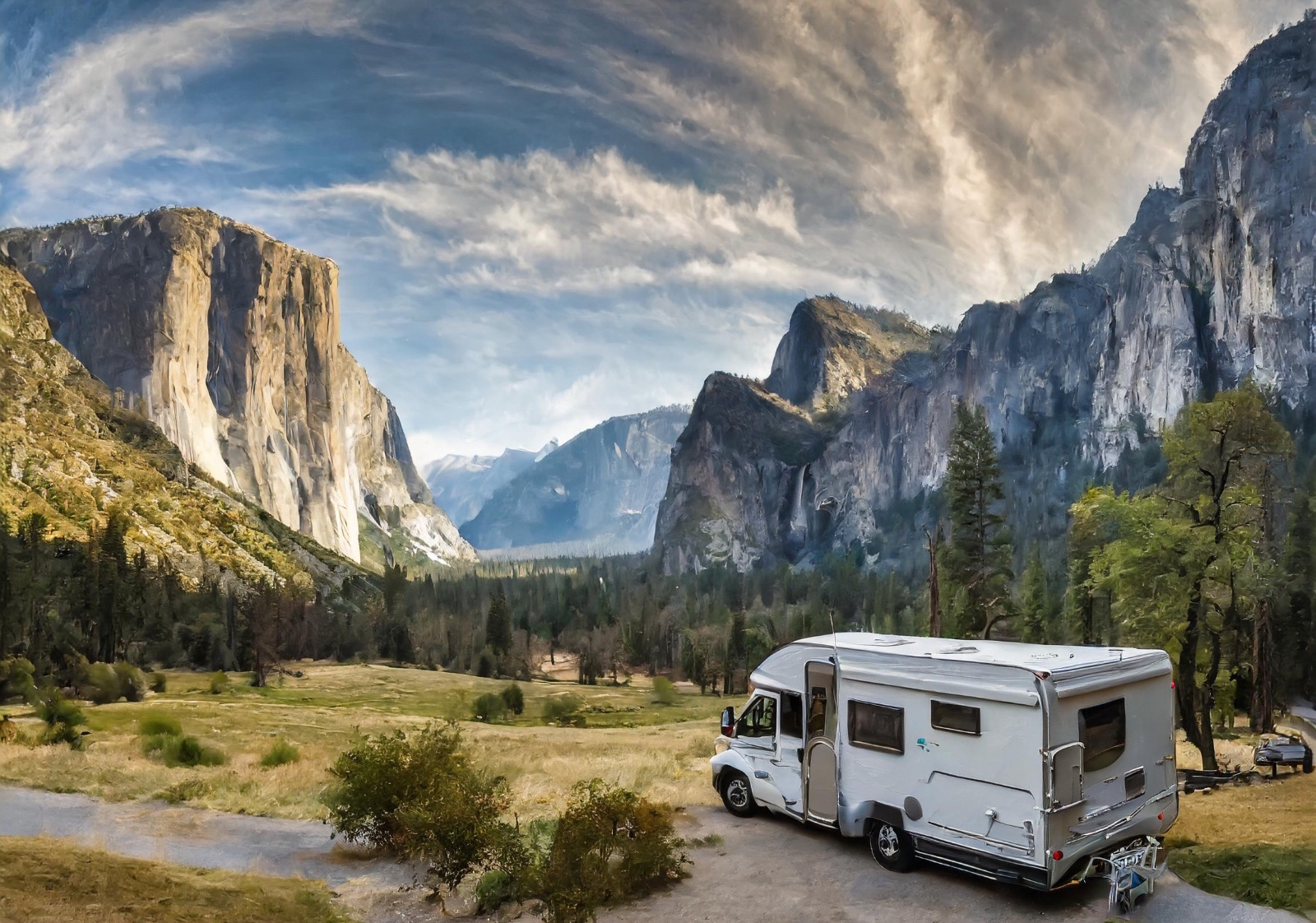
If you are coming from Groveland and the west on Highway 120, you will use the Big Oak Flat Entrance corridor. It is a popular way in, but it is also where Yosemite’s best-known length restriction applies, along with the usual mountain grades and curves you would expect on a Sierra approach.
Big Oak Flat length limit
Yosemite National Park lists a key length restriction for this corridor on its Vehicle Restrictions information. The headline rule that gets most RV travelers is:
- No vehicles over 45 feet in length.
In practice, this is typically discussed as your total vehicle or combination length as driven on the road, not just trailer box length. Because signage and definitions can be specific to the road segment, treat the posted signs on-site as final. If signage distinguishes between single vehicles and vehicles with trailers, follow that wording.
What it means
- Many motorhomes fit under 45 feet, but a towed car can push you over.
- Truck and trailer combos can cross 45 feet quickly once you count bumper-to-bumper length.
- If you are close to the limit, plan conservatively. Tight turns and traffic make long rigs feel longer.
Before you commit, I always check Yosemite’s Road Conditions updates. Construction, rockfall response, and traffic control can add extra constraints beyond the standard restrictions.
Highway 140
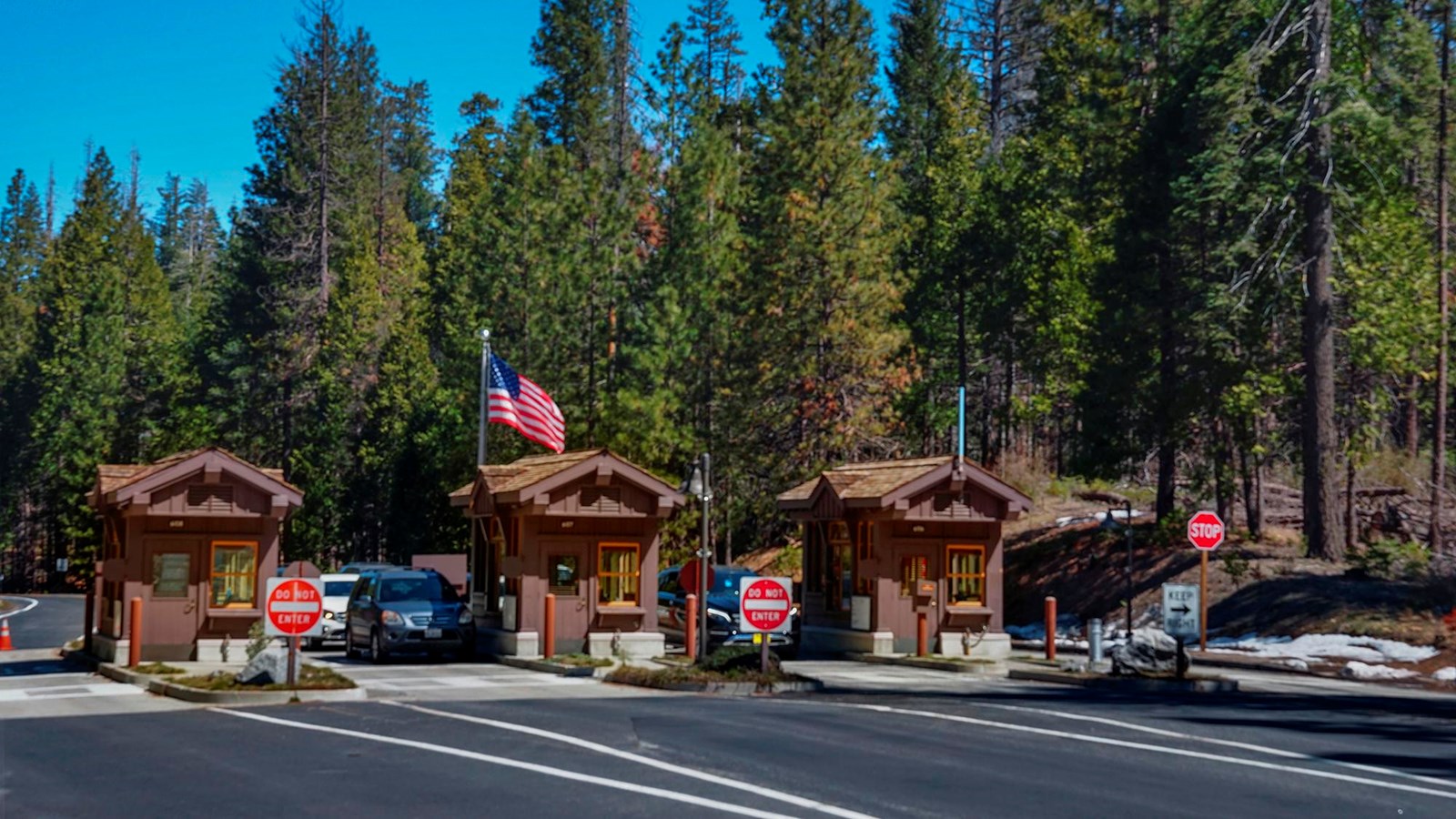
If you asked me to pick one approach that usually feels less technical for RV driving, Highway 140 is often my choice. It follows the Merced River canyon for long stretches, with fewer tight, stacked switchbacks than some other approaches.
Watch for low clearance
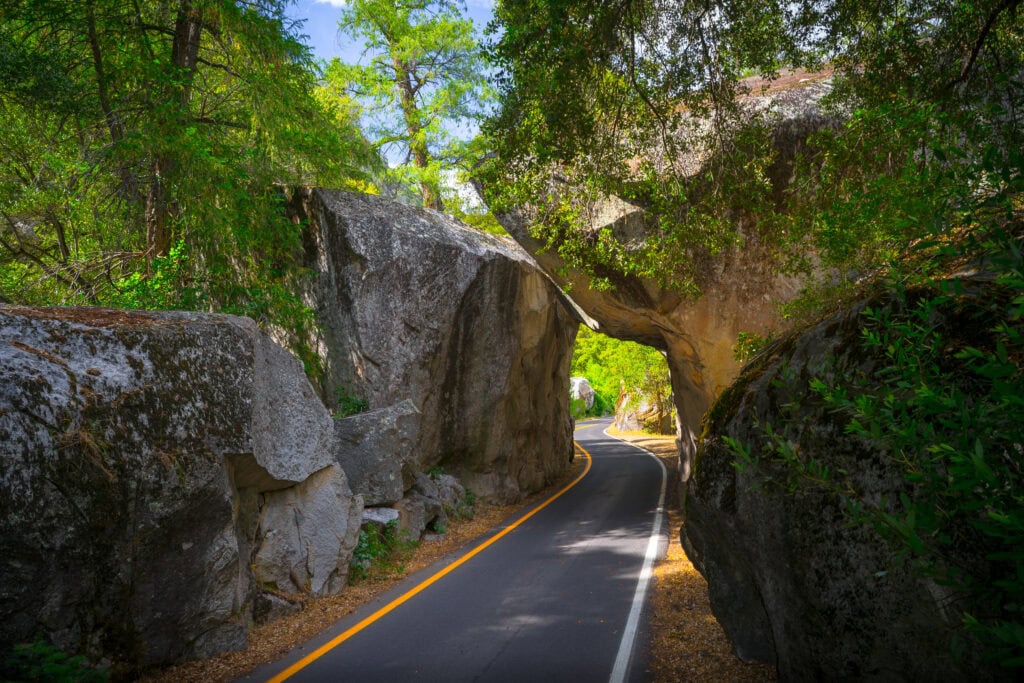
The caution on 140 is simple: watch for any posted low-clearance warnings near the Arch Rock Entrance area and do not assume your height will work without confirming it. Check Yosemite’s official Vehicle Restrictions and Road Conditions pages right before you drive, then follow roadside signs if anything differs.
Why 140 is a favorite
- No Wawona Tunnel on the way into Yosemite Valley.
- River canyon driving that many people find less stressful than steeper, tighter approaches.
- A solid option for longer rigs as long as you are within posted limits.
Quick route picker
If you just want the decision, here is the simplest way I frame it.
Choose Highway 140 if:
- You want an approach that often feels more relaxed in an RV.
- You are confident your rig is within any posted clearance warnings near the Arch Rock area.
- You want to avoid the Wawona Tunnel entirely.
Choose Highway 41 if:
- You are 13'6" or under (per Yosemite’s posted restrictions) and comfortable with narrow, curvy mountain roads.
- You are approaching from the south and it is the cleanest line for your trip.
Choose Highway 120 if:
- Your total length is 45 feet or less (per Yosemite’s posted restrictions and on-site signage).
- You are coming from the west via Groveland and you are comfortable driving mountain grades and curves.
Driving notes for RVs
Do not trust GPS blindly
Mapping apps love to optimize minutes, not turning radius. For Yosemite, use posted restrictions and current road conditions first, then confirm your route.
Fuel and brakes
Top off before you commit to the climb and use lower gears early on descents. Yosemite approaches are beautiful, but they can be hard on brakes if you ride them.
Have a turnout plan
Especially if you are towing, decide ahead of time how you will handle faster traffic behind you. Use turnouts when safe, and avoid stopping in narrow sections where you cannot re-merge confidently.
Do not confuse the two 120s
Travelers often say “Highway 120” and mean two different things: the west approach via Big Oak Flat and Tioga Road across the top of the park. Tioga Road is seasonal and can close for long stretches in winter and shoulder season. If you are routing across the Sierra, double-check whether Tioga is open before you lock in your plan.
FAQ
What is the Wawona Tunnel height limit?
Yosemite National Park lists the Wawona Tunnel route on its Vehicle Restrictions information, including a 13'6" height limit. If you are over, choose a different route and follow all posted signs.
Does the 45-foot limit on Big Oak Flat apply to my whole combination?
It is commonly applied to your total length as driven, including combinations. Because restrictions and signage can be specific, confirm the current wording on Yosemite’s Vehicle Restrictions information and follow the posted signs you see on-site, especially if you are towing.
Is Highway 140 always best for big rigs?
It is often the most straightforward-feeling drive, but it is not a free pass. Pay close attention to any low-clearance warnings and other advisories near the Arch Rock Entrance area, confirm Yosemite’s current Road Conditions before you commit, and treat roadside signage as final.
Do limits change in winter?
Size limits do not get easier in winter, and snow and ice make everything feel tighter. Seasonal closures and chain controls can also change which routes are practical. Check Yosemite road conditions right before you drive in.