Camping at Snow Lakes (Snow Zone): What It’s Like

Maya Lin
Maya Lin is a travel journalist and outdoor enthusiast who believes the best trips combine rugged adventures with urban comforts. After spending six years backpacking across four continents, she founded Trail & Town Guide to help fellow travelers navigate both hidden mountain passes and bustling city neighborhoods with confidence.
Permit zone up front: This is for an overnight in The Enchantments Snow Zone, camping in the Snow Lakes corridor (Lower and Upper Snow Lakes). For most backpackers, the standard, most direct start for Snow Lakes is the Snow Creek Trailhead above Leavenworth. There are other ways to stitch together an Enchantments itinerary, but Snow Creek is the classic “put your head down and climb to the lakes” approach.
Also, quick basics so nobody gets surprised at the trailhead: overnight camping in the Enchantments Permit Area requires an Enchantments permit, and the zone on your permit dictates where you can camp. Day hiking is a different setup than sleeping out. Parking or access rules can also apply at trailheads, so confirm the current requirements for your start point when you finalize your plan. If you are unsure which rules apply to your dates, confirm details with the Okanogan-Wenatchee National Forest (Leavenworth Ranger District) before you go.
The first time I camped at Snow Lakes, I expected a consolation prize. In Enchantments lore, the “real” overnight is often framed as Core Zone or bust. But a Snow Zone permit delivers something the Core does not always hand you on a silver granite platter: a slow, workable rhythm. You climb hard, yes, but you earn a basin that feels lived-in, lake-dappled, and surprisingly cozy once you find your spot.
The approach from Snow Creek Trailhead
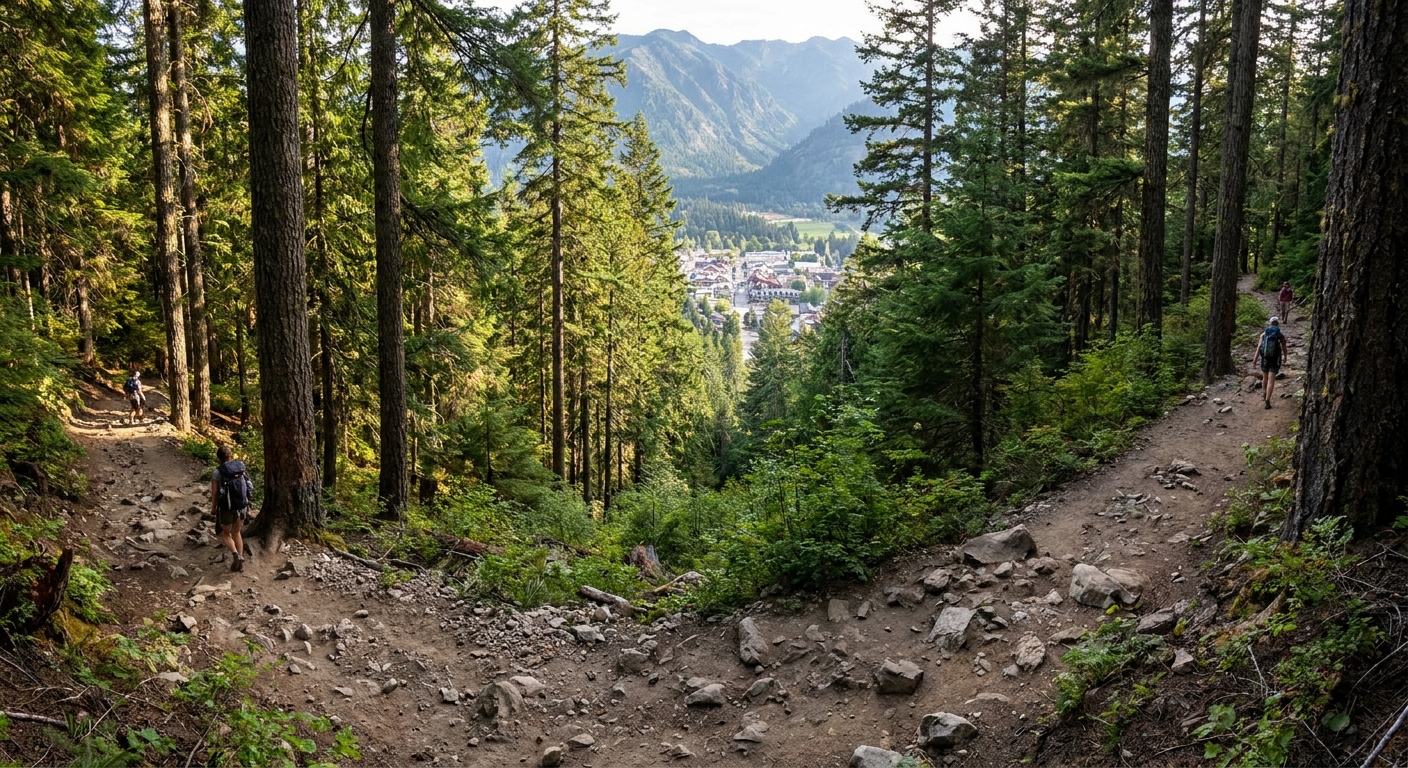
If you’re picturing a gentle lakeside stroll, reset that expectation before you tighten your boot laces. The Snow Creek approach is straightforward to navigate, but it is famously relentless in the way only an old-school Washington trail can be: switchbacks, exposure to sun, and long stretches where the grade does not negotiate.
Quick trail numbers
- Distance: Many maps and trip resources list roughly 6 to 7.5 miles one-way to the Snow Lakes basin, depending on the exact start point and whether you mean “first view of the lake” or “where you actually camp.”
- Elevation gain: Commonly reported around 3,500 to 4,200 feet to the basin.
- Time: Many backpackers take about 4 to 7 hours to reach the lakes with overnight weight, with heat and pacing making a huge difference.
Those are ballpark figures, not gospel. I cross-check a current map (and a recent trip report) the week I go, because small variations add up on a climb like this.
What the hike feels like
- Early miles: Dry forest and warm air, especially in mid-summer. This climb can feel like an oven. Start earlier than you think you need to if you want to arrive with enough energy to set up camp calmly.
- Climb character: Steady, sustained, and mentally grindy. I treat it like a staircase workout with scenery breaks, not a “wander.”
- Near the lakes: The landscape opens, the air cools, and you start to get those first glints of water through trees. That transition is the emotional payoff of the climb.
Once you’re higher up, you’ll pass Nada Lake on the way. On day hikes, people often tag Nada as a turnaround or a snack spot. On an overnight, it becomes a psychological milestone: you are close enough to smell camp, but not close enough to stop climbing.
Navigation is generally straightforward, but I still bring a map or offline app and do not assume I will have service when I want it. The mountains are good at humbling that kind of optimism.
Campsite feel
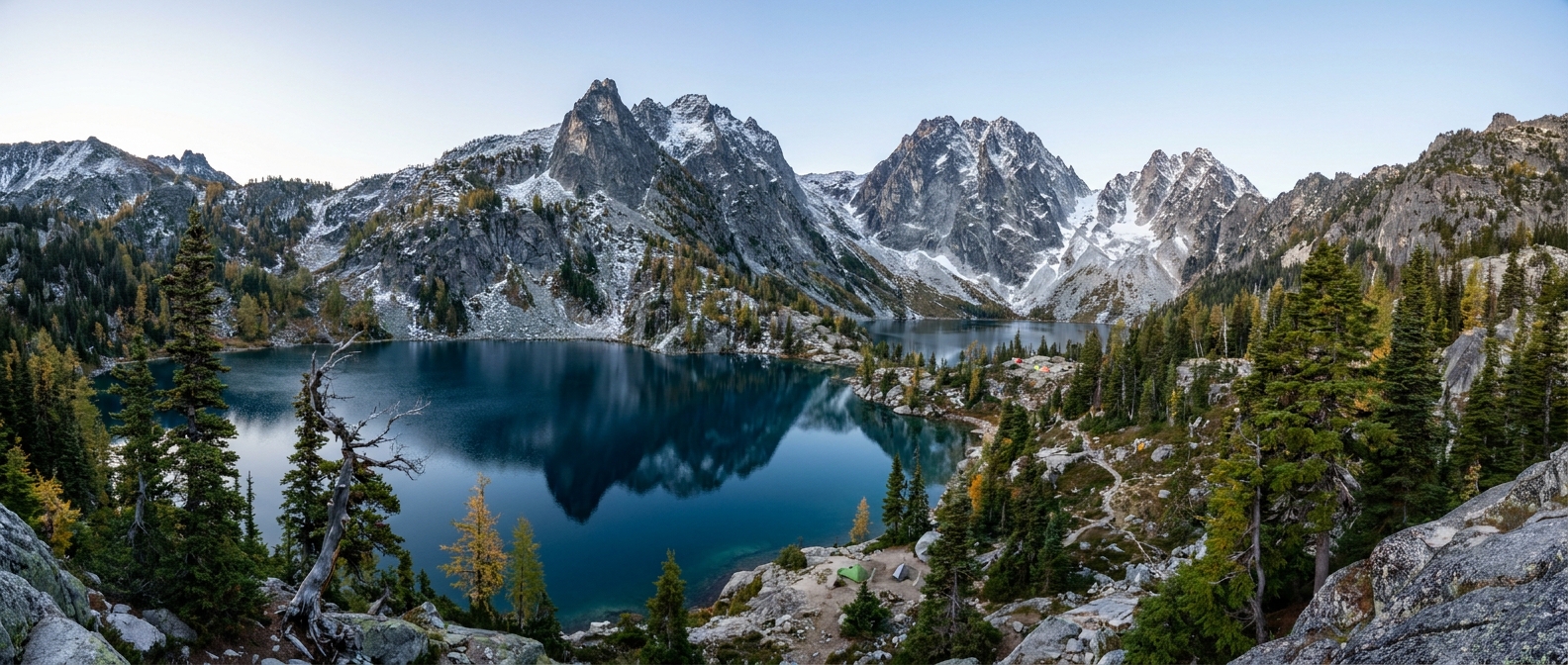
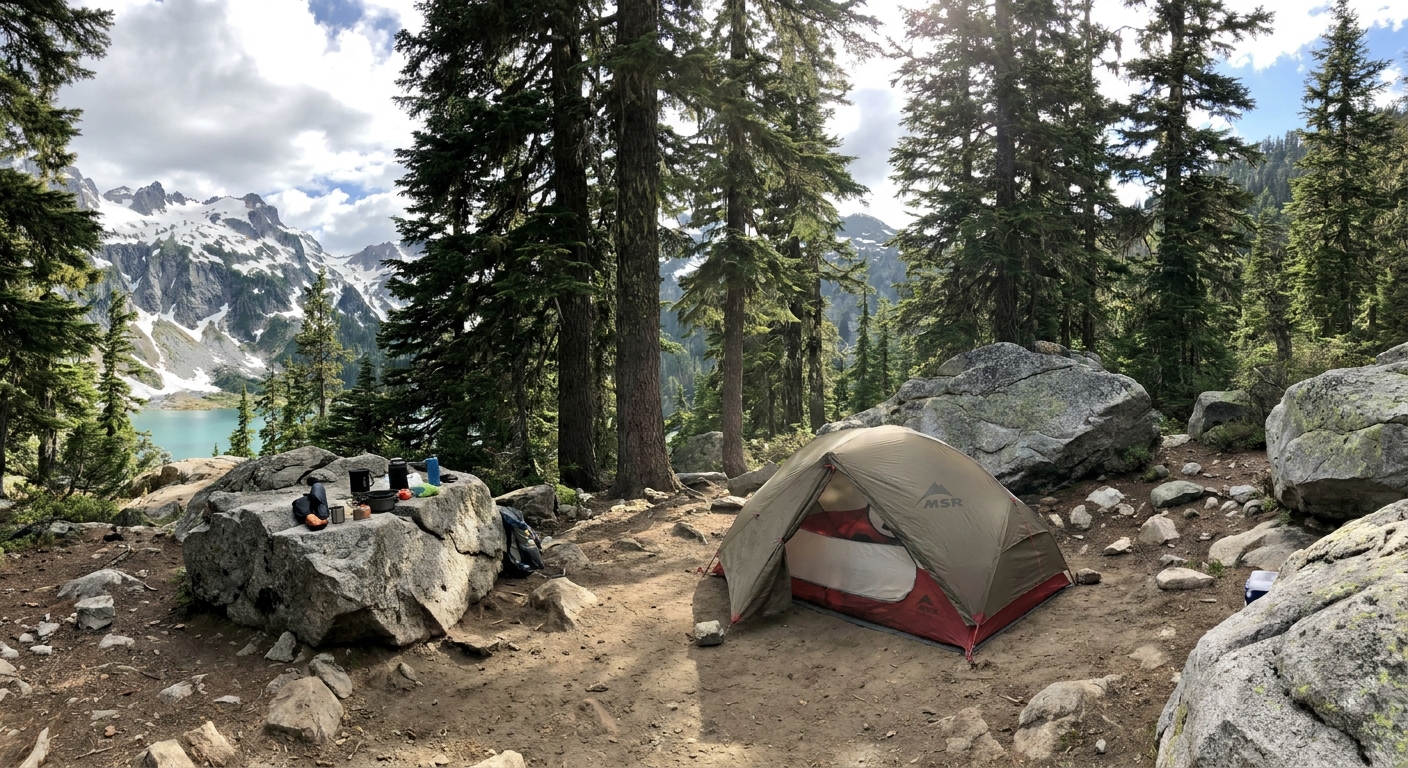
Snow Zone camping has a different personality than the Core. It is less polished-granite theater and more alpine basin practicality. Think: trees for shade, rock for sitting, and enough space that you can usually find a site that feels like yours for the night, as long as you arrive with daylight and patience.
Lower vs Upper Snow Lake
- Lower Snow Lake area: Generally feels more wooded and sheltered. It can also feel busier because it is the first big destination people hit after that climb. If you like having tree cover and a slightly more tucked-in camp, this is often where the Snow Zone shines.
- Upper Snow Lake area: Often feels a bit more open, with more rock and a touch more exposure to breeze and weather. If you want more of that “alpine edge” feeling, the upper lake area can deliver.
Do not read that as a promise. Exact site character varies a lot by micro-location and what is already occupied when you arrive.
What the best sites tend to have
- Durable surfaces: Many sites are already established. Stick to them. The basin gets hammered in peak season, and spreading out impacts is the quickest way to love this place to death.
- Some tree cover: A gift on hot afternoons and a wind buffer when weather rolls in.
- Access to water without camping on the shore: The most comfortable nights I have had here were a short walk from water, not perched right on the lake edge.
It also helps to think like a land manager for ten seconds: camp back from the water, keep your tent off fragile plants, and skip washing dishes or yourself directly in the lake or a stream. A small amount of effort here keeps Snow Lakes from turning into a shoreline eroded by a thousand “just one night” choices.
The vibe at night
Expect company. Snow Lakes is not an obscure hideout. But it often feels less like a runway show than the Core because people are tired from the climb and focused on camp logistics. Nights tend to be quiet in that deeply satisfying “everyone is zipping tents and boiling water” way.
Toilets and water
Toilets
The Enchantments are managed with a lot of care for fragile alpine terrain, and that means being serious about human waste. There are toilet facilities in parts of the Snow Lakes corridor, but the exact type, location, and status can change with maintenance, season, and management decisions. Check current guidance from the Okanogan-Wenatchee National Forest (Leavenworth Ranger District) before you treat “there are toilets” like a guarantee near your specific site.
My rule: the moment you arrive and drop your pack, do a quick orientation loop and locate the nearest toilet location and the most obvious “don’t trample this” zones. It saves the awkward dusk wander later when you’re tired, headlamp is on, and you’re trying not to step on vegetation.
Water
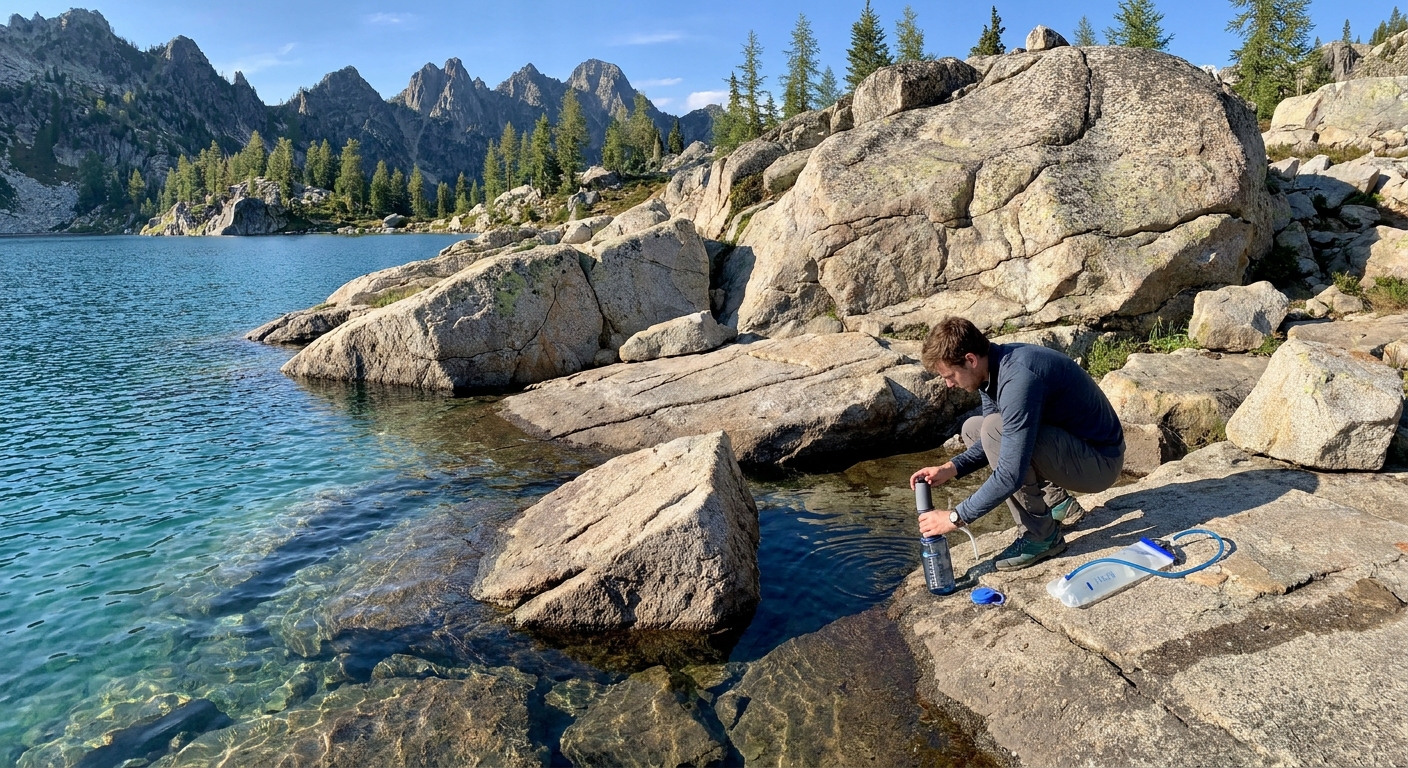
You are camping near abundant water, but it still needs treatment. Snow Lakes and nearby streams look pristine. They are also heavily visited. Bring a filter or treatment method you trust and use it every time.
- Collection: Look for spots with easy access where you can fill without scrambling on slick rock.
- Treatment: Filter, UV, or chemical treatment. Choose the method that matches your patience level when you are cold and hungry.
- Timing: I like to do a big water run before dinner so I am not dealing with it in the dark.
Food storage
The Enchantments are not the place to be casual about food storage. You are in black bear country, but honestly, the smaller thieves can be the more immediate problem. Mice, chipmunks, and bold camp-regular critters learn fast in a high-use basin.
In practice, your best bet is to arrive prepared to store food securely regardless of whether you personally see bears. That means keeping all smellables controlled: food, trash, toothpaste, and the “just a bar in my pocket” item you forgot about.
My Snow Lakes routine
- Cook and eat away from your sleeping area when possible, then tidy immediately.
- Pack out all trash, including micro-trash like corners of packaging.
- Use the storage method required by current regulations for the Enchantments Permit Area for the season you are visiting. In high-use basins, hard-sided storage or other secure systems are often recommended, but requirements can change. Confirm current guidance with the Okanogan-Wenatchee National Forest (Leavenworth Ranger District) when you finalize your plan.
If you are new to this: treat food storage as a core safety system, like your map or headlamp. When it is done right, it is boring. Boring is the goal.
Snow Zone vs Core Zone
I love the Core, but I do not romanticize it as the only worthy Enchantments experience. Snow Zone feels different in three big ways that matter once you’re actually living out of your pack for a night.
1) The effort is front-loaded
From Snow Creek Trailhead, the climb is a commitment. The payoff is that you arrive to camp knowing you earned it. In the Core, depending on how you enter, the suffering can be a different flavor. For many people it is Aasgard Pass, which is its own brand of character-building.
2) The basin feels more sheltered
Core Zone camping is more exposed and more dramatic. Snow Lakes often gives you more tree cover and a slightly more “nested” feeling at camp. If weather shifts, that can translate to a noticeably more comfortable evening.
3) The scenery is water-heavy and corridor-like
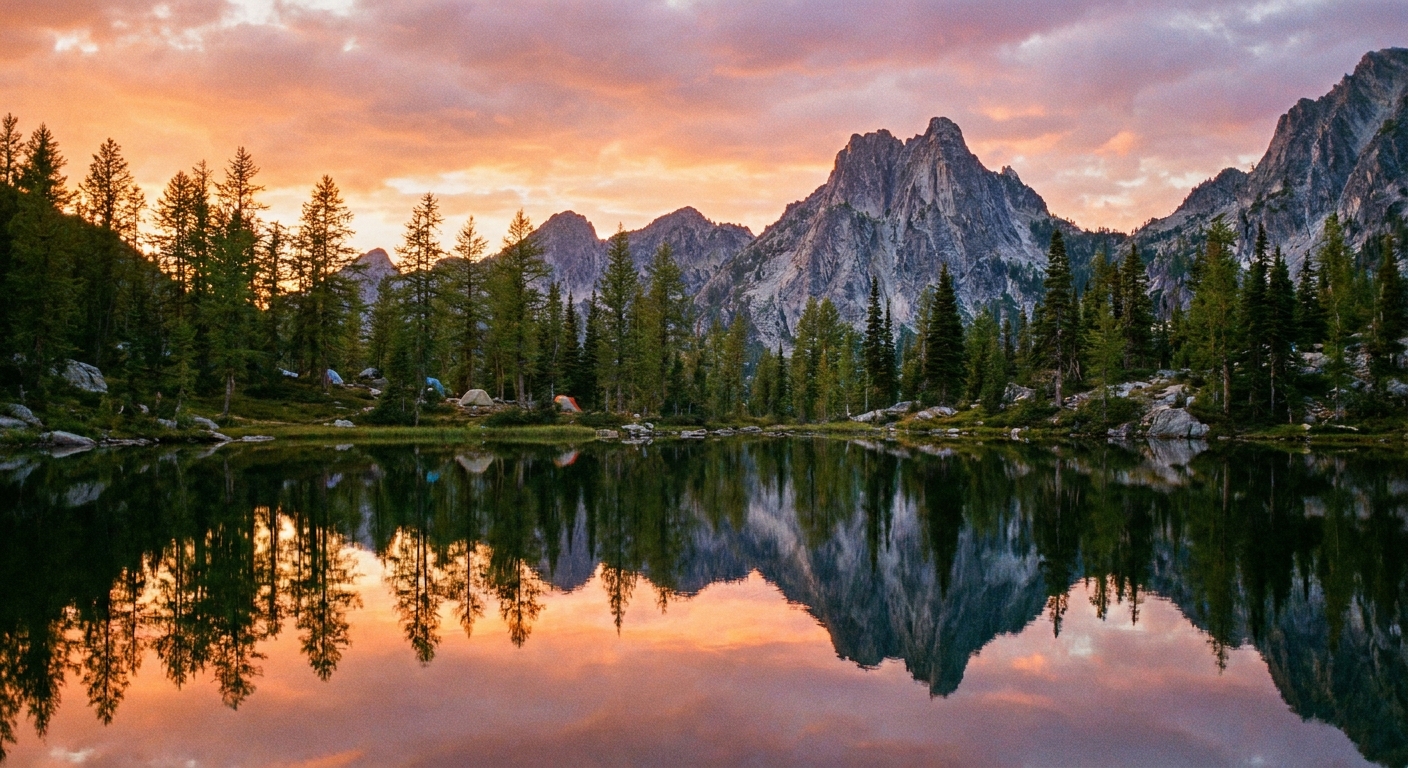
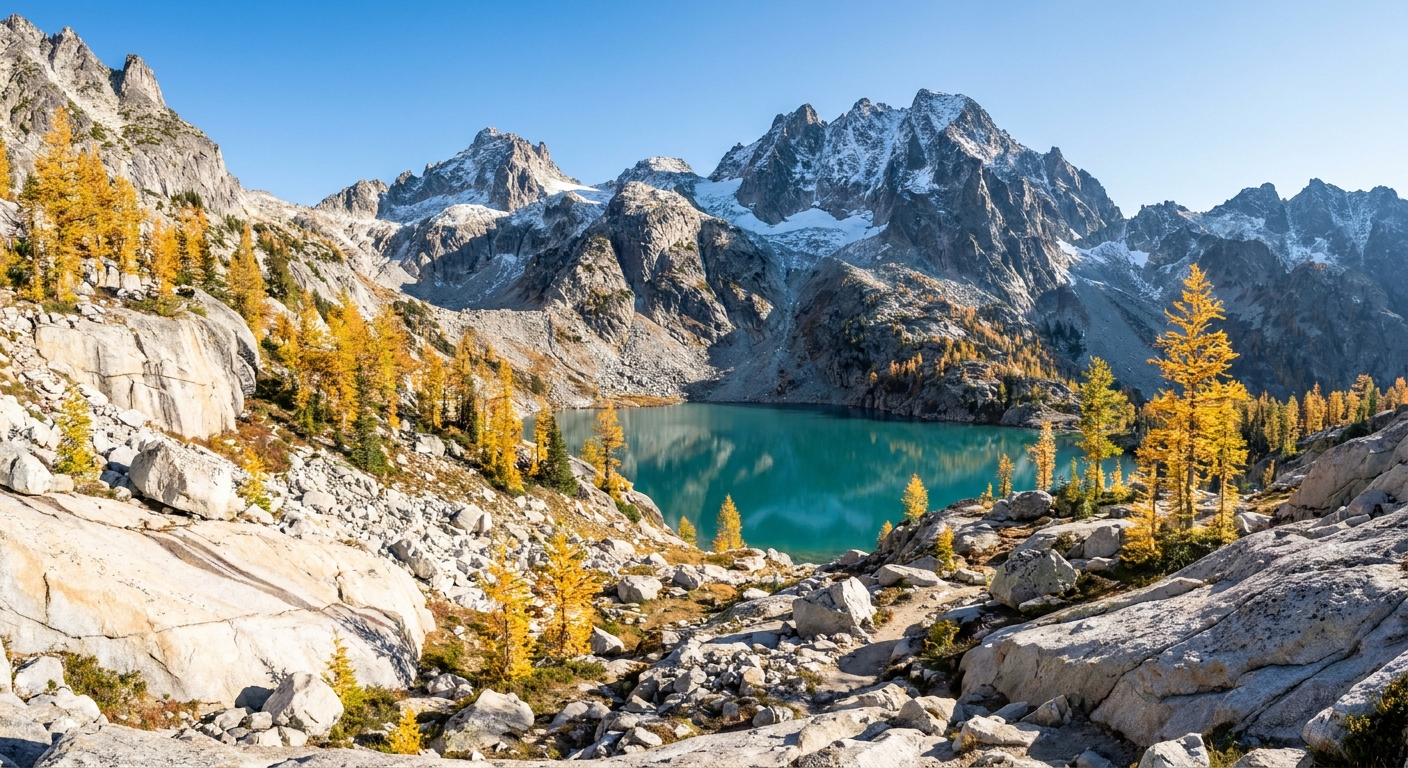
The Core is granite stagecraft. Snow Zone is a chain of lakes and trail segments where you move through pockets of views. You still get big moments, especially at sunrise and late evening when the light hits the slabs above the water, but the experience is less “one continuous panorama” and more “beautiful scenes, one after another.”
So is Snow Zone “less Enchantments”?
No. It is simply a different version of it. If you want the iconic granite wonderland at your tent door, that’s Core. If you want a tough approach that leads to a lake basin where camping is a little more forgiving and still genuinely stunning, Snow Zone delivers.
What to pack
I am carry-on only in cities and just as ruthless about weight in the mountains. Snow Lakes punishes overpacking on the climb, but rewards a few comfort items that make camp feel civilized.
- Water treatment you actually like using (because you will use it multiple times).
- Sun protection for the climb up, including plenty of water capacity. This trail can be hot and exposed.
- Headlamp with a fresh battery, even if you swear you will arrive early.
- Warm layer for evenings, since basin temperatures can drop fast.
- Bug protection in peak season. Some nights are blissful. Some are a lesson.
- A map or offline navigation, even if you plan to follow the crowd.
Optional but I never regret it: a small sit pad. Granite is beautiful, but it is not always kind to tired hips.
A realistic first night
If you’re trying to picture how this all flows, here’s what tends to work well for a first Snow Zone overnight.
- Morning: Start early from Snow Creek Trailhead, eat breakfast you can digest while climbing.
- Midday: Take short, frequent breaks. Refill and treat water whenever it is convenient, not only when you are desperate.
- Afternoon arrival: Pick an established site, set up first, then do water and toilet orientation.
- Evening: Early dinner, clean camp, store food properly, then wander to a shoreline viewpoint for the light.
- Night: You will sleep hard. The climb makes sure of it.
Season notes
- Snow and shoulder season: Snow can linger well into early season, and fall can flip to winter quickly. Bring traction and a warmer kit if conditions call for it, and do not assume the trail will be “summer easy” just because Leavenworth is sunny.
- Smoke and closures: Central Cascades summers can bring wildfire smoke and occasional forest closures. Have a backup plan and check conditions right before you go.
- Bugs: When they are out, they are enthusiastic. You already know this, but I am saying it anyway.
Snow Lakes camping FAQ
Is the hike to Snow Lakes hard?
It is hard in a sustained way. The difficulty is less about technical footing and more about the continuous climb and the fact that you are carrying overnight weight.
Can I treat Snow Zone as a backup to Core Zone?
You can, but you’ll enjoy it more if you treat it as its own trip. Plan for the uphill approach, build in daylight for camp setup, and pick goals that fit the basin rather than trying to recreate a Core itinerary.
Is there reliable water near camp?
There is plenty of water in the basin, but reliability depends on where you camp and seasonal conditions. Plan to treat all water and be flexible about where you fill.
What’s the single biggest difference from a Core Zone overnight?
The overall feel. Core is more exposed and visually dramatic at every turn. Snow Zone is a tougher approach to a more sheltered chain-of-lakes basin where camping can feel a bit more comfortable once you are in.