Can You Swim in Colchuck Lake?

Maya Lin
Maya Lin is a travel journalist and outdoor enthusiast who believes the best trips combine rugged adventures with urban comforts. After spending six years backpacking across four continents, she founded Trail & Town Guide to help fellow travelers navigate both hidden mountain passes and bustling city neighborhoods with confidence.
Colchuck Lake looks like the kind of alpine postcard that begs you to jump in. Turquoise water, granite walls, Dragontail Peak looming overhead, and that “we earned this” glow after hiking up from the Stuart Lake Trailhead.
So can you swim in Colchuck Lake? In most years, yes, in the sense that swimming is not generally prohibited under normal Okanogan-Wenatchee National Forest and Alpine Lakes Wilderness rules, unless a current Forest Order, closure, or area restriction says otherwise. But whether you should after a summer day hike is a different question, because the water can feel shockingly cold, comfortable entry spots are limited, and a swim usually adds time to your day.
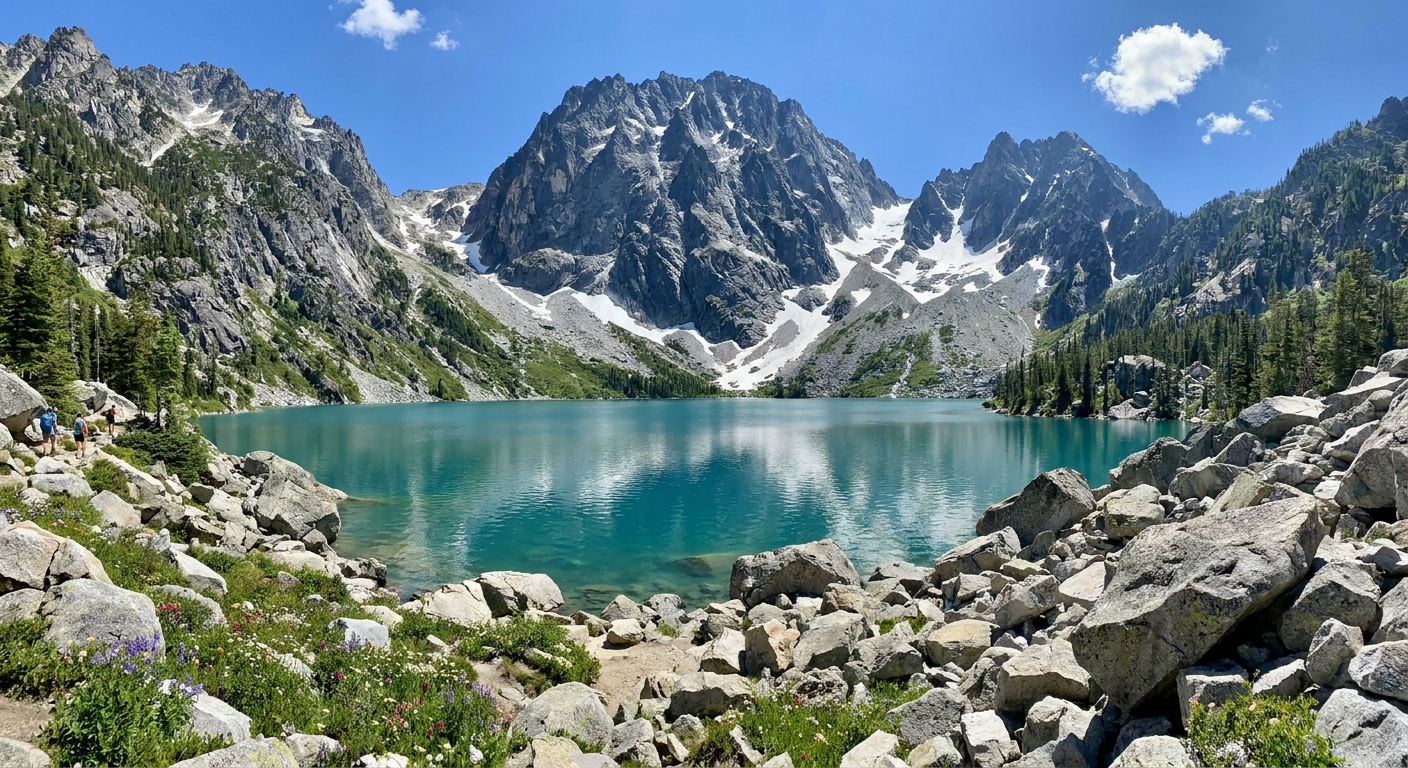
Is swimming allowed?
In practice, people do swim at Colchuck Lake every summer. You will often see hikers wading, quick dipping, or fully swimming on hot afternoons.
That said, Colchuck Lake is in the Alpine Lakes Wilderness on the Okanogan-Wenatchee National Forest, and the rules that matter most are the ones that can change quickly: current conditions, closures, and Forest Orders. Before you go, check the most recent updates from the managing agency for the Stuart Lake trail and Enchantments area (Okanogan-Wenatchee National Forest, USFS). If there is an active closure, fire restriction, or restoration order, that guidance overrides everything.
The bigger expectations here are about protecting the basin rather than banning the activity. Treat this as a fragile, high-use place:
- Do not use soap, even “biodegradable” soap, in the lake or near inlet and outlet areas.
- Stay on durable surfaces when changing or drying off. Avoid trampling vegetation at the shoreline.
- Pack out everything, including snack bits and micro trash like wrappers and tape.
- Dogs: If you brought one, keep it under control and be extra mindful of wildlife and other visitors at the water’s edge.
Quick permit clarity: A lot of people mix up the Colchuck day hike with the Enchantments permit system. A typical day hike to Colchuck Lake does not use the Enchantments overnight permit, while overnight camping in the Enchantments permit area requires the appropriate permit and zone. Wilderness areas can also have separate trailhead registration, self-issue wilderness permits, or seasonal requirements that change, so confirm current requirements on the USFS pages before you go.
How cold is it?
Cold enough that many people turn their “I’m going to swim” plan into a “quick plunge and scream-laugh” moment.
Colchuck is a snow-fed alpine lake. Even when the air is warm at the shoreline, the water temperature can stay very cold through summer because:
- Snowmelt can keep feeding the basin well into the season.
- The lake sits high enough that nights cool down hard.
- Cold water stratifies and you feel that chill immediately once you get past shin depth.
Translation: it can feel icy within seconds, especially earlier in the season. Many hikers are only comfortable with a short dunk or brief wade, not a long, relaxing swim.
Cold shock is the real risk
The biggest hazard is not usually hypothermia from a long swim. It is cold shock at entry, which can cause an involuntary gasp, rapid breathing, and a panicky feeling that makes swimming harder.
If you do get in, ease in slowly, control your breathing, and stay close to shore. This is not the lake for a casual out-and-back across open water.
Also: do not swim alone, and avoid alcohol or anything that dulls judgment before cold-water immersion.
Where to get in
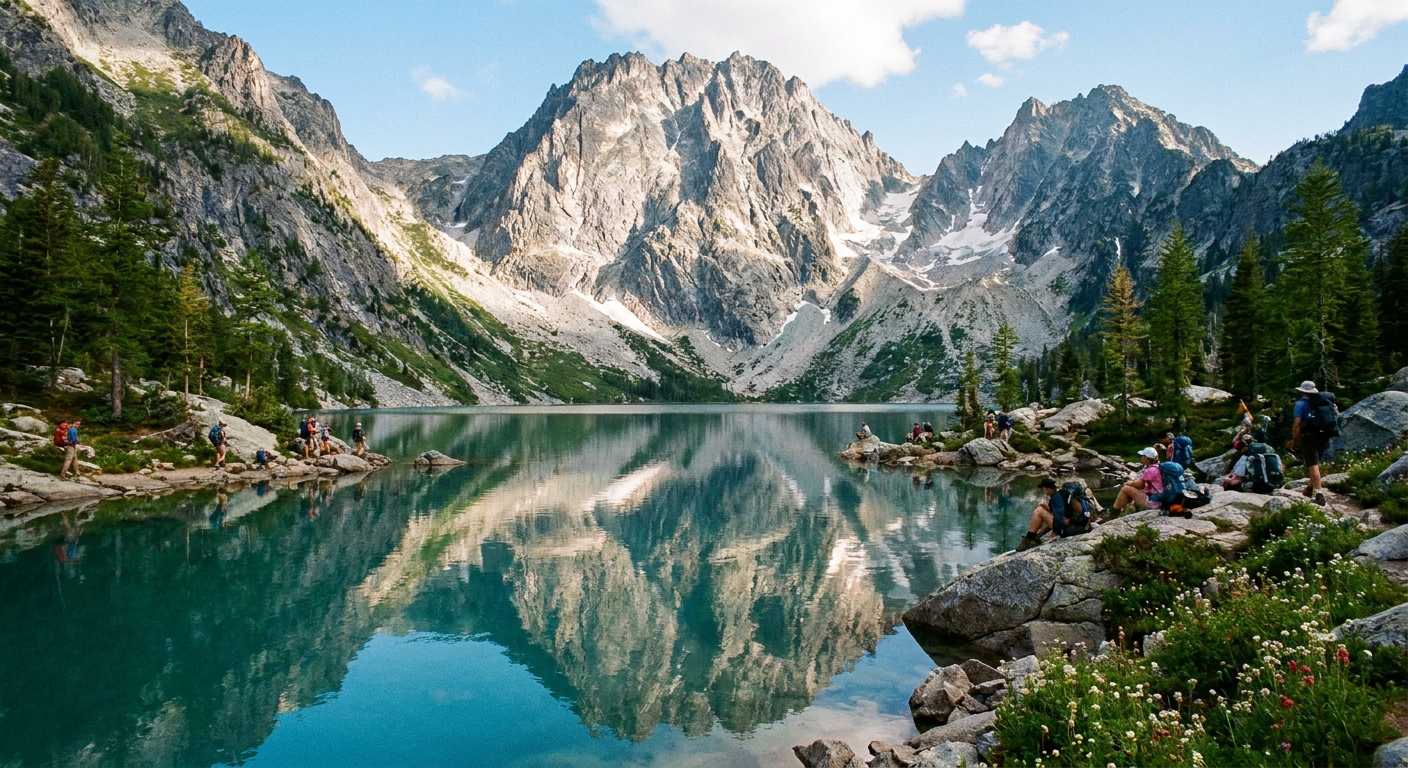
Most of the shoreline is rocky, uneven, and not friendly for a running leap. The “nice” entry spots are limited, and they concentrate people in a few areas.
Common entry spots
- Flat boulders along the main shoreline near the trail: You will see hikers sitting on sun-warmed rocks here, then doing a careful step-down entry. This is the most typical “dip zone.”
- Gentler edges where gravel collects: Small pockets of shallower water can exist, depending on water level. These are best for wading, not diving.
What to avoid
- Jumping from high rocks: Submerged boulders and sudden depth changes are common. A bad landing here is a long way from help.
- Slippery algae-coated stones: If a rock looks dark and slick at the waterline, treat it like an ice rink.
If you are unsure, watch where others are getting in and out and choose the conservative option, not the dramatic one.
Inlet and outlet
Colchuck can look glassy and still, but the moving-water zones are where you should pay attention, especially earlier in summer when snowmelt is stronger.
Be careful near the inlet
The inlet is where cold meltwater pours into the lake. That area can look tempting as a natural “water feature,” but it can also mean:
- Colder water than the rest of the shoreline.
- Slippery rocks and unstable footing.
- Current that may be stronger than expected, especially if you are already numb and off-balance.
Be cautious near the outlet
The outlet is another place where water is actively moving. It is not usually a dramatic river-rapid situation, but it is still the wrong spot to assume “still lake, no consequences.” If you are tired, cold, or not a strong swimmer, give moving water a wide margin.
My rule of thumb: if you can hear moving water, treat it like moving water. Choose a calm, open shoreline entry instead.
Impact on hike time
On paper, “a quick swim” sounds like a 10-minute add-on. In real life, it can turn into extra time you did not plan for. Sometimes it is 20 minutes. Sometimes it is well over an hour. Here is why.
1) You lose heat fast
Even if the air is warm, getting out of very cold water can leave you shivering hard. Most people need time to:
- Dry off enough to be comfortable.
- Warm up in the sun.
- Get layers on, especially if there is wind.
If you start hiking again while still chilled, you tend to move slower and take more stops. Your body is working overtime.
2) Transitions take time
At Colchuck, changing is rarely smooth. You are balancing on rocks, looking for a private spot, keeping gear from blowing into the lake, and trying not to drop socks into sand or water. It adds up.
3) The hike out can get cold
The return to the trailhead is a steady downhill, but it is still long. If you leave the lake late, you also risk hiking out in cooler evening shade. That is when damp clothes and cold skin stop being “refreshing” and start being miserable.
If your day includes anything beyond the lake, like pushing toward Aasgard Pass, a swim can be the difference between a controlled turnaround and a late, drained descent.
Go or skip?
For most hikers on a normal summer day hike to Colchuck Lake, I say: skip the full swim and consider a quick dip only if conditions and timing are right.
Here is when I would consider a dip:
- You reached the lake with plenty of daylight left.
- It is genuinely hot and calm, not windy.
- You have a warm layer ready for the moment you exit.
- You are happy with a 10 to 30 second plunge, not a scenic swim session.
And here is when I would skip it and just enjoy the shoreline:
- You are already tired or crampy.
- Clouds are rolling in or the breeze is picking up.
- You are behind schedule.
- You were planning to keep going, or you have a long drive home.
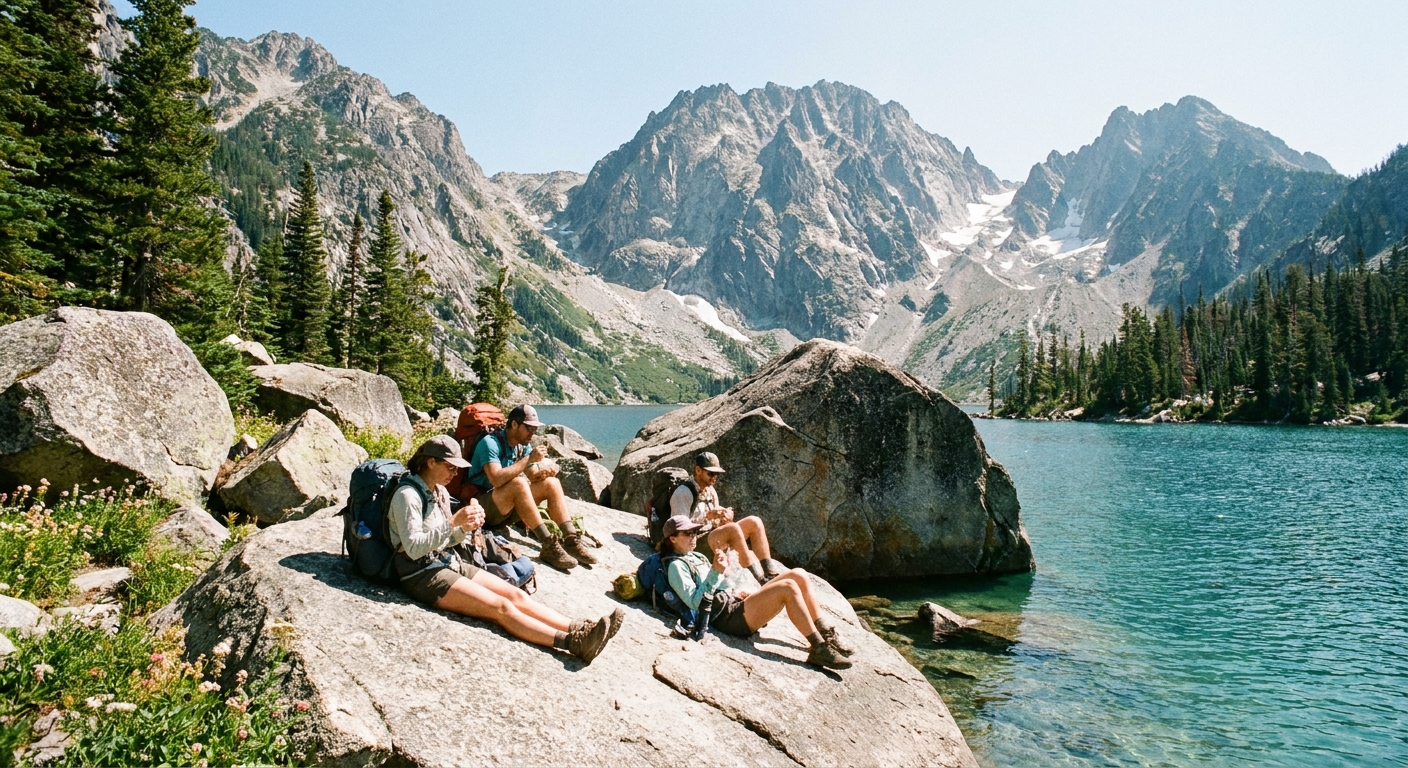
Colchuck is absolutely a “sit on a warm rock, eat something salty, soak in the view” kind of reward. The lake will still feel like an achievement without the shock-to-the-system add-on.
Season timing
Early season tends to mean colder water, stronger snowmelt influence, and more lingering snow around the basin. Depending on timing, you can also run into steep snow patches near the lake where a slip would be a problem, so treat shoreline wandering like a real mountain decision, not a beach stroll. Later summer often brings easier access and slightly less brutal entry, but it is still an alpine lake and it still surprises people.
Dip smarter
- Bring a small pack towel or fast-dry cloth so you can warm up quickly.
- Pack a dry layer you can throw on immediately, even in August.
- Keep essentials dry by stashing your phone, keys, and warm layers in a waterproof bag or pack liner, then closing it fully before you walk to the water.
- Wear secure footwear to the water’s edge. Bare feet on angular granite is a fast way to cut yourself.
- Get in slowly to reduce cold shock. Control your breathing before you go deeper.
- Keep it short and stay near shore.
- No soap, no shampoo, and avoid stirring up shoreline sediment.
If you do nothing else, do this: get out while you still feel good, not when you have “proven something.” Alpine lakes do not negotiate.
Swim FAQ
Is Colchuck Lake deep?
Yes, it gets deep, and depth changes quickly near boulder-strewn shorelines. That is one reason jumping in is a bad idea.
Is it warm enough in July or August?
The air can be warm, but the water is still very cold. Even at peak summer, many people treat it as a quick dip, not a leisurely swim.
Are there lifeguards or swim areas?
No. This is a wilderness setting. If you choose to get in, you are fully responsible for your own safety.
Will I see other people swimming?
Often, yes, especially on hot weekends. Still, never assume that because someone else is in the water, it is the right call for you in that moment. Wind, fatigue, and cold tolerance vary a lot.