Denny Creek to Melakwa Lake: Where to Turn Around

Maya Lin
Maya Lin is a travel journalist and outdoor enthusiast who believes the best trips combine rugged adventures with urban comforts. After spending six years backpacking across four continents, she founded Trail & Town Guide to help fellow travelers navigate both hidden mountain passes and bustling city neighborhoods with confidence.
I love a trail that lets you choose your own adventure in real time. Denny Creek is exactly that. You can stroll to the famous granite waterslides for a sunny picnic, push a bit farther to Keekwulee Falls, or commit to the full, leg-burning climb up to Melakwa Lake. The trick is knowing where the effort starts to spike, then picking a turnaround that matches your group, your daylight, and your comfort with rougher trail.
This guide breaks the hike into three natural decision points with realistic expectations for distance, elevation gain, and what the trail feels like underfoot.
Quick pick
- Turn around at the waterslides if you want the best payoff for the least effort, you are hiking with kids, you are short on time, or you want a laid-back half-day with lots of creekside lounging.
- Turn around at Keekwulee Falls if you want a stronger workout and a waterfall goal, but you do not want to take on the full climb to Melakwa Lake.
- Go all the way to Melakwa Lake if you have a full day, steady knees for rocky steps and roots, and you want that high-country payoff without an overnight pack.
Big reality check: the trail gets progressively rougher and steeper after the waterslides. If anyone in your party is already maxed out or slipping around on wet rock early, turning around sooner is the sustainable choice, not the “quit.”
Trail basics
- Trailhead: Denny Creek Trailhead near Denny Creek Campground off I-90 near Snoqualmie Pass.
- Getting there: take I-90 Exit 47 (Denny Creek) and follow the signs for Denny Creek Campground and the trailhead parking.
- Pass and agency: managed by the U.S. Forest Service (Mount Baker-Snoqualmie National Forest). A Northwest Forest Pass is required for the standard day-use parking at the Denny Creek Trailhead.
- Facilities: there is a vault toilet at the trailhead parking area. Do not count on trash service. Bring your own trash bag and pack it all out.
- Cell service: spotty to unreliable. I treat this as an offline hike and save maps ahead of time.
- Dogs: allowed, and must be on leash.
- Navigation: stay on the main trail. Around the granite slabs, social paths braid and tempt you toward slick edges and fragile creekside plants.
Heads up on junctions: the first part is straightforward. The most common “where do we go?” moment is around the waterslides area, where use trails multiply on the granite. If you want to continue uphill, look for the main tread picking back up away from the slabs and climbing into the forest.
Turnarounds
Distances and elevation gain vary by GPS track, small reroutes, and what someone counts as the “destination.” Use these numbers for planning, then sanity-check with a couple recent sources before you commit. I like comparing a WTA-style listing, a current map track, and a recent trip report.
| Turnaround | Distance (round trip) | Elevation gain | Effort | Best for |
|---|---|---|---|---|
| Waterslides | About 3.5 to 4.5 miles | About 700 to 1,000 feet | Easy to moderate | Families, casual hikers, quick nature fix |
| Keekwulee Falls | About 5 to 6 miles | About 1,500 to 2,000 feet | Moderate | Waterfall lovers, stronger half-day hikers |
| Melakwa Lake | About 8 to 9 miles | About 2,800 to 3,200 feet | Hard | Fit day hikers with time and traction |
Waterslides
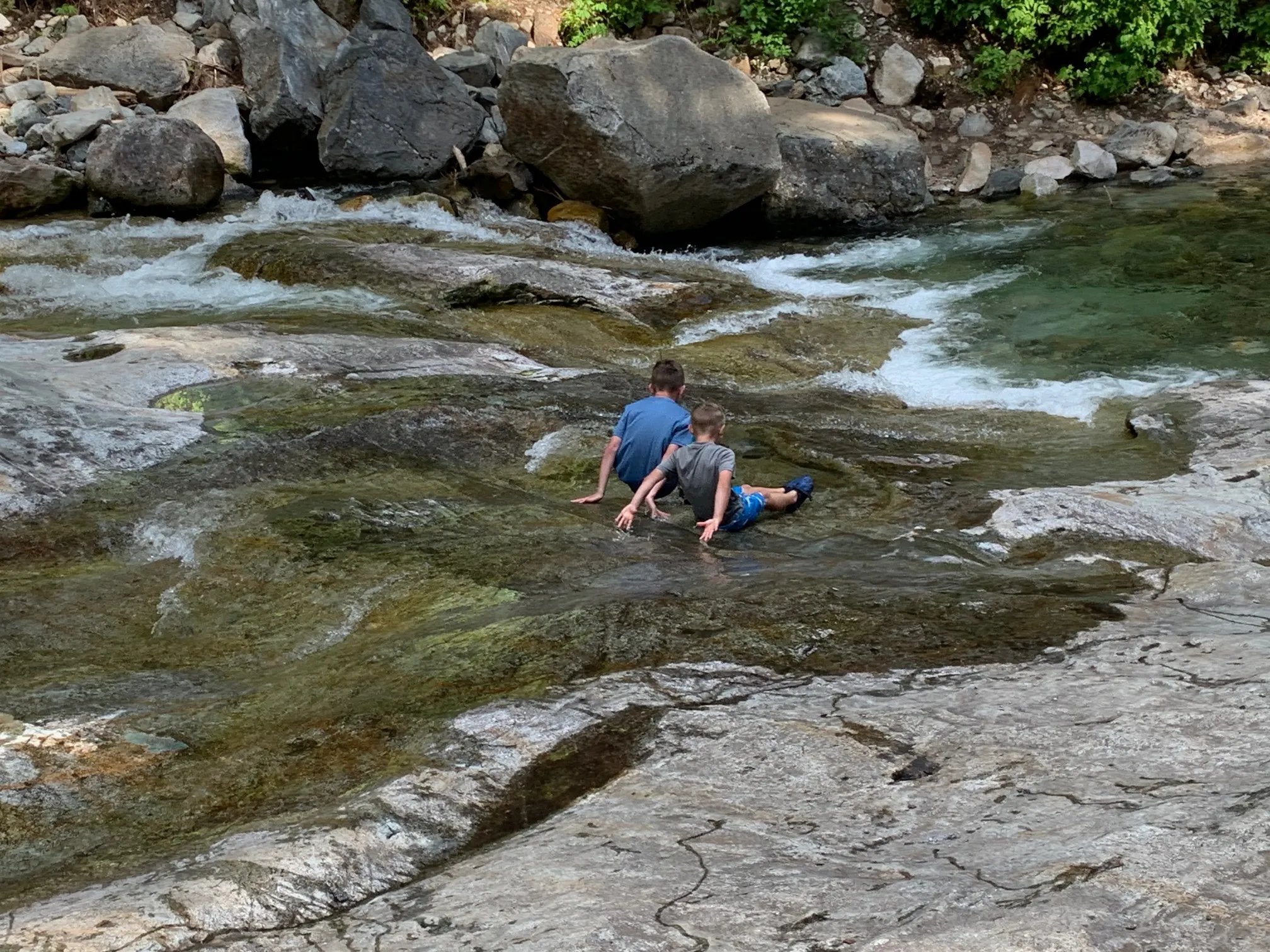
If you only do one thing on Denny Creek, make it the waterslides. The approach is forested and pleasant, with that constant creek soundtrack. Then the trail pops you out onto smooth granite slabs where the creek fans out and glides downhill. On a warm day, it feels like nature built a tiny wilderness water park.
What it’s like
- Trail vibe: steady but not punishing, with plenty of shade and frequent creek views.
- Terrain: mostly dirt trail with roots and rocks, then exposed granite near the slides.
- Time expectation: usually 2 to 3.5 hours round trip with breaks, longer if you picnic or have kids who love rock-hopping.
Who should stop here
- First-time hikers who want a high-reward destination without a huge climb.
- Families and mixed-ability groups.
- Anyone hiking in the shoulder season when you want a solid outing but do not want to be out late.
- People who like to hang out on trail: snacks, photos, creek-dipping, slow travel energy.
Safety notes
- Wet granite is slick. Conditions vary day to day, but smooth rock plus water (and sometimes algae) is a classic slip combo. Walk like a penguin, not like you are late for brunch.
- Creek levels matter. In early season, snowmelt often means louder, faster, colder flow. Admire, do not underestimate.
- Kids: keep them within arm’s reach around fast water and smooth rock runouts.
Keekwulee Falls
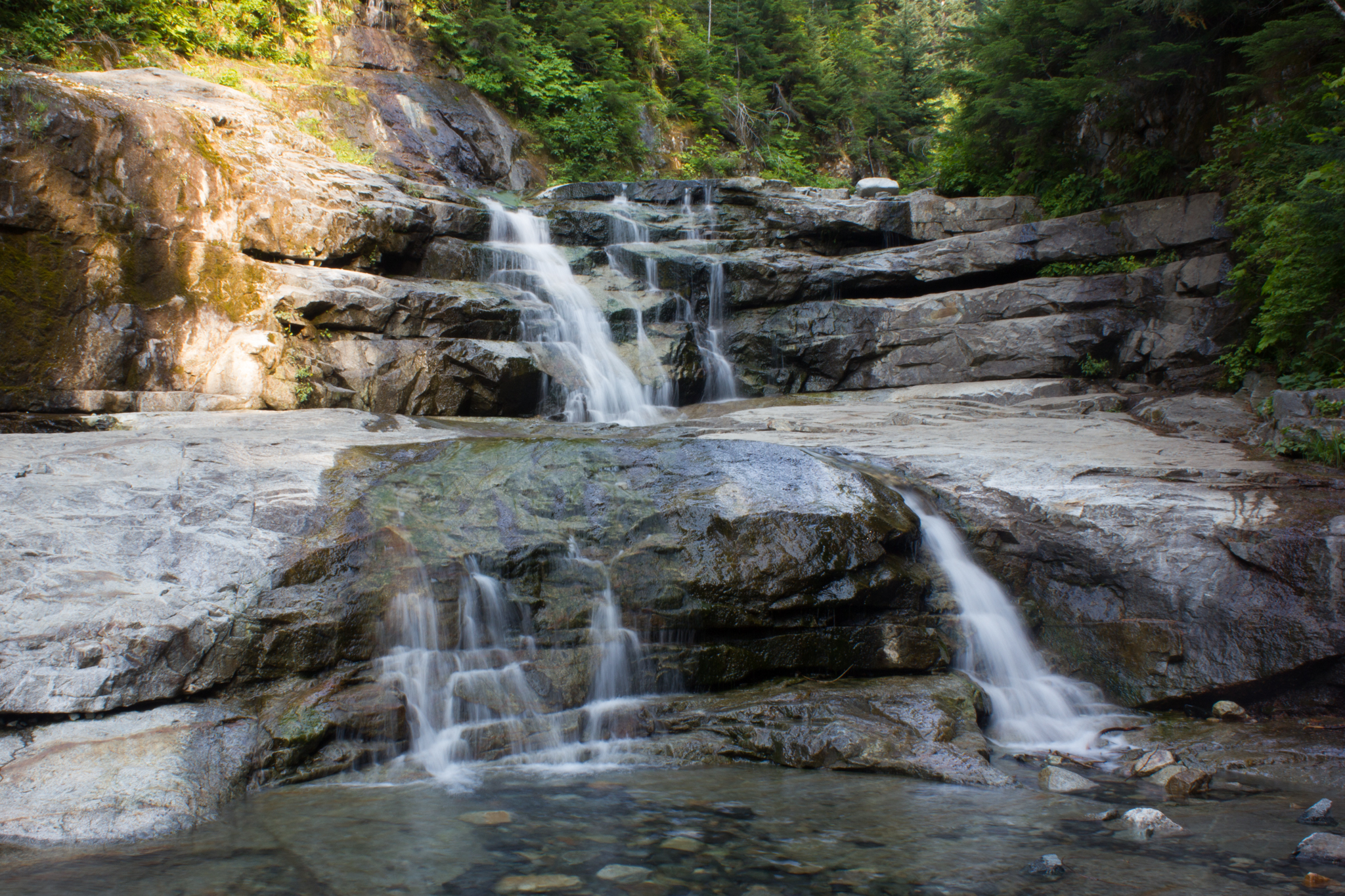
If the waterslides feel like an appetizer and your legs still feel springy, continuing to Keekwulee Falls is a smart middle goal. This is where you start earning your views. The trail gets steeper and more rugged, and the “nice stroll” energy shifts into “okay, we are hiking now.”
What it’s like
- Trail vibe: quieter once many casual hikers turn around at the slides.
- Terrain: more roots, more rocks, more uneven steps. Expect sections where you naturally slow down and place your feet carefully.
- Time expectation: often 3.5 to 5 hours round trip depending on pace and how long you linger at the falls.
Who should aim for the falls
- Hikers who want a bigger workout but do not have the time or desire for a 3,000-foot day.
- People who like a clear destination that is not “just keep going until we are tired.”
- Groups where some hikers could go farther, but you want a satisfying shared endpoint.
Good turnaround cues
- If it took you longer than expected to reach the waterslides, make the falls a stretch goal only if everyone still feels great.
- If you are already low on water or snacks by the slides, do not count on “making up time” higher up. The trail slows you down.
Melakwa Lake
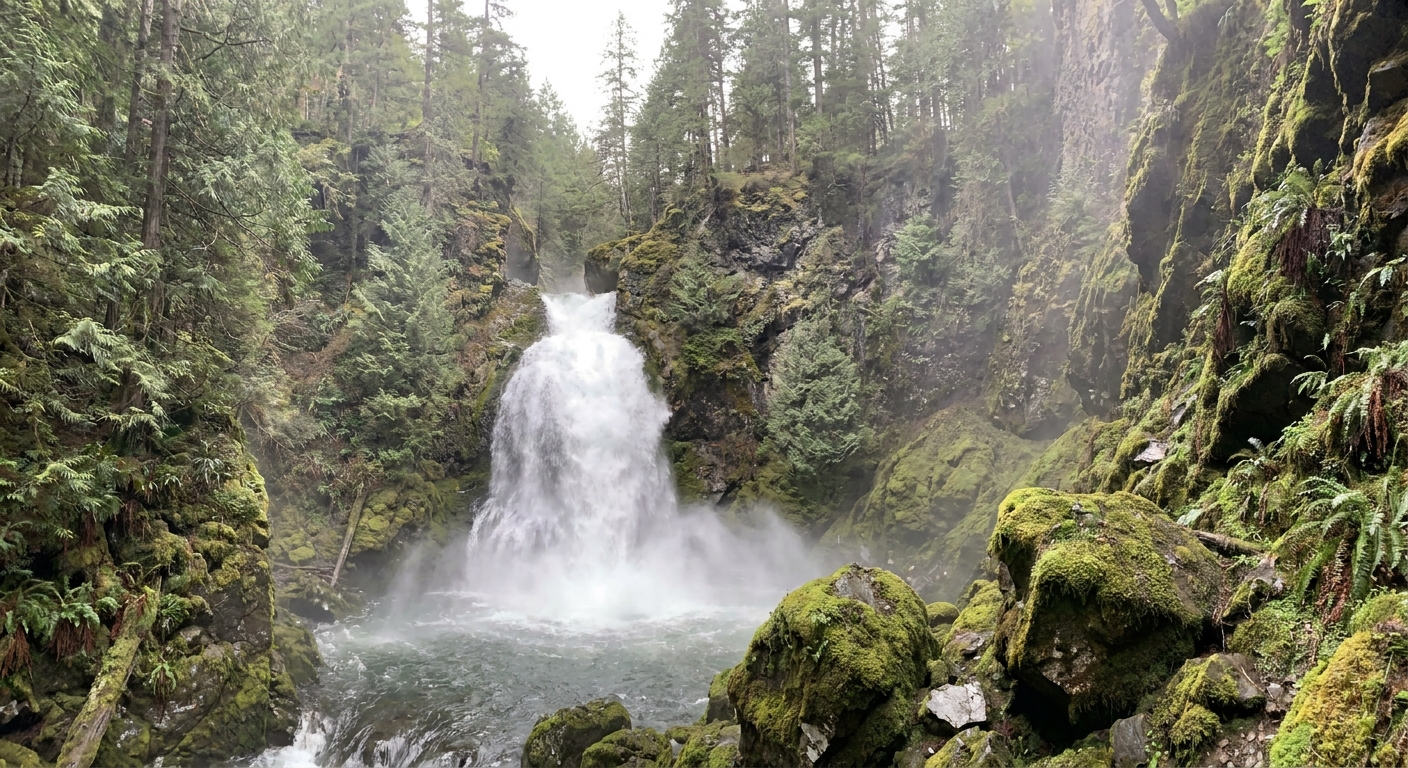
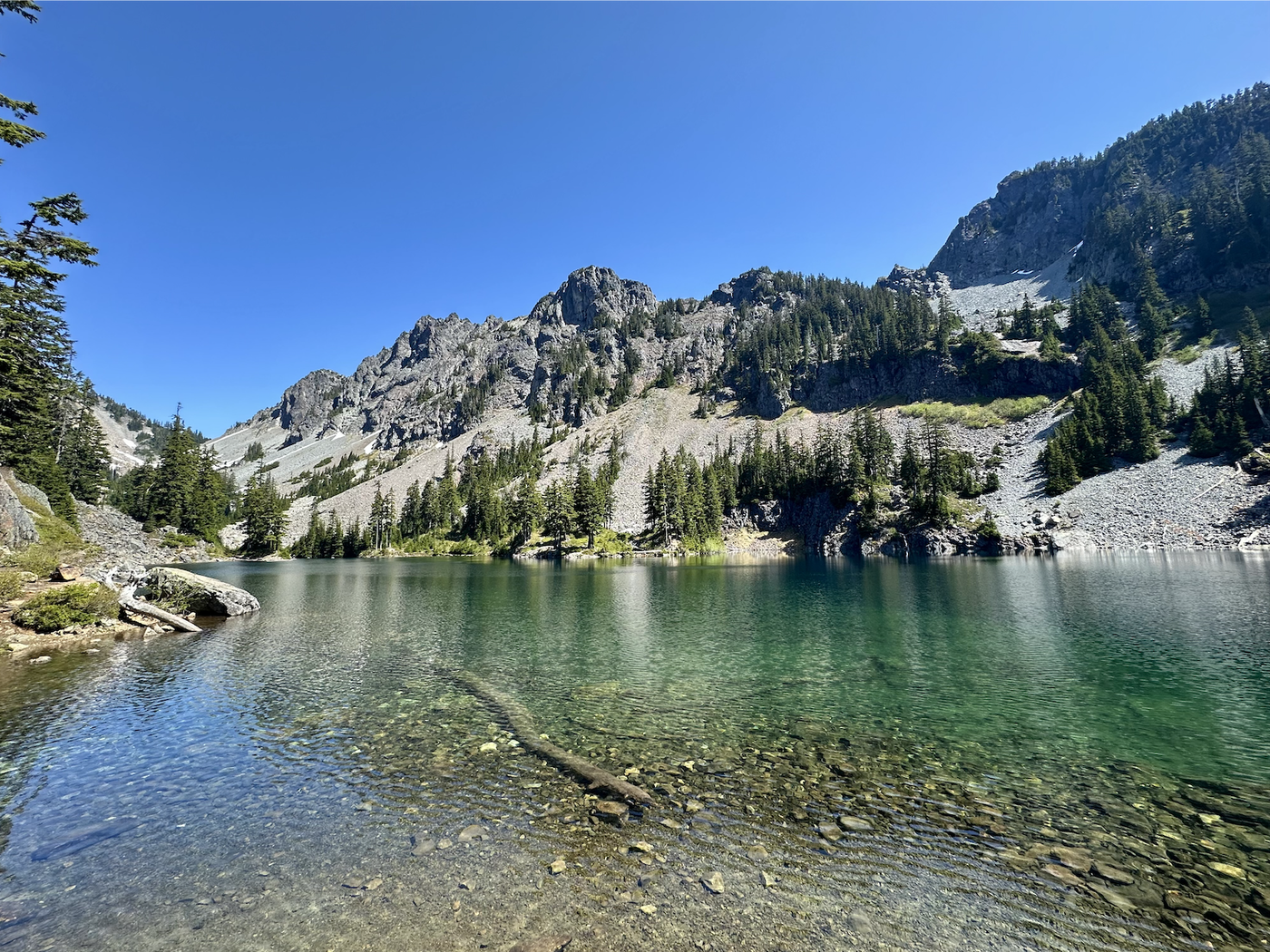
Melakwa Lake is the kind of destination that makes you forget you ever complained about switchbacks. Once you reach the basin, the air feels cooler, the terrain opens up, and you get that high-country stillness that hits like a deep exhale.
But getting there is not casual. This is a serious climb, and it can feel relentless after the lower creek section. Start earlier than you think you need to. Melakwa is better enjoyed with a long lunch and unhurried photos, not a rushed tag-and-sprint mindset.
Wilderness note: the upper part of this hike enters the Alpine Lakes Wilderness. Treat it like a bigger mountain day than the waterslides: fewer people, faster-changing conditions, and more consequences if someone bonks or the weather turns.
What it’s like
- Trail vibe: fewer people as you gain elevation, more “wilderness day” than “afternoon stroll.”
- Terrain: steep, rocky, and rooty sections where trekking poles earn their keep. Expect slower progress and careful footing, especially on descent.
- Time expectation: commonly 6 to 9 hours round trip including breaks, longer for relaxed groups.
Who has the day for the lake
- Hikers comfortable with sustained climbing and big elevation days.
- Anyone planning to take lots of breaks, swim, or explore the lakeshore and still be back before dark.
- People who bring the basics for variable mountain weather: extra layer, rain shell, and a headlamp just in case.
My turnaround rules
- Time: if you are behind schedule before you hit the steeper upper sections, cap the day at the falls or slides.
- Traction: if the trail is muddy and you are slipping, assume it will feel worse on the way down when legs are tired.
- Weather: thunder, heavy rain, or low visibility is a solid reason to keep the day lower.
- Energy: if one person is clearly struggling, a happy group turnaround beats a miserable summit-or-bust push every time.
Turnaround time
If you like rules of thumb, here is mine: pick a firm turnaround time before you leave the car, and honor it even if you are “close.” For a Melakwa attempt, I like a margin that gets me back to the trailhead with at least 1 to 2 hours of daylight left.
Decide on trail
If you are standing at the waterslides debating “keep going or call it,” I use a simple three-question gut check.
- Do we have more daylight than we think we need? If the answer is no, this is a slides day.
- Does everyone still look coordinated on uneven footing? If ankles are wobbling or feet are slipping on wet roots, do not add harder terrain.
- Are we still eating and drinking regularly? If your group is already under-fueled, the climb to Melakwa can turn cranky fast.
My favorite Denny Creek days are the ones where we stop with energy to spare, stretch out on warm rock, and still have enough in the tank for a coffee stop afterward.
Season notes
- Summer: prime waterslide season, but expect crowds. The granite can be hot in the sun, and the climb beyond the slides can feel surprisingly warm.
- Shoulder season: fewer people, but slick rock, cold water, and early dusk make conservative turnarounds smart. Cold rain plus granite is not the moment to test your footwear.
- Early season and snow: snow can linger higher up toward the lake, and it is not unusual for steep, firm patches to slow people down. If you are not equipped or experienced for snow travel, enjoy the lower creek and call it a win. If you do go higher in variable conditions, traction can be helpful, and turning around is always allowed.
Practical tips
- Footwear: wear shoes you trust on wet rock and roots. The creek zone rewards traction.
- Trekking poles: especially helpful if you are going past the waterslides. Your knees will thank you on the descent.
- Water: bring enough for your full plan, not your optimistic plan.
- Filtering: Denny Creek looks tempting. If you take water, treat or filter it.
- Layers: it can be warm down low and breezy up high. I always pack a light insulating layer even in summer.
- Leave No Trace: stay on durable surfaces around the creek and the slides, pack out all food scraps, and keep soaps out of the water if you are tempted to “freshen up.”
FAQ
Can I do just the waterslides without it feeling short?
Absolutely. The waterslides feel like a destination, not a consolation prize. If you take your time, explore the rock, and linger creekside, it’s a full experience.
Is Melakwa Lake worth it?
If you enjoy big elevation days and want that alpine basin payoff, yes. If you are hiking mainly for a fun creek day and scenic lounging, the waterslides can honestly feel more worth it for the effort.
What is the most common mistake?
Underestimating how much slower the trail gets after the waterslides, then realizing too late that the hike back down still takes real time and careful footing.