Arches National Park in Winter
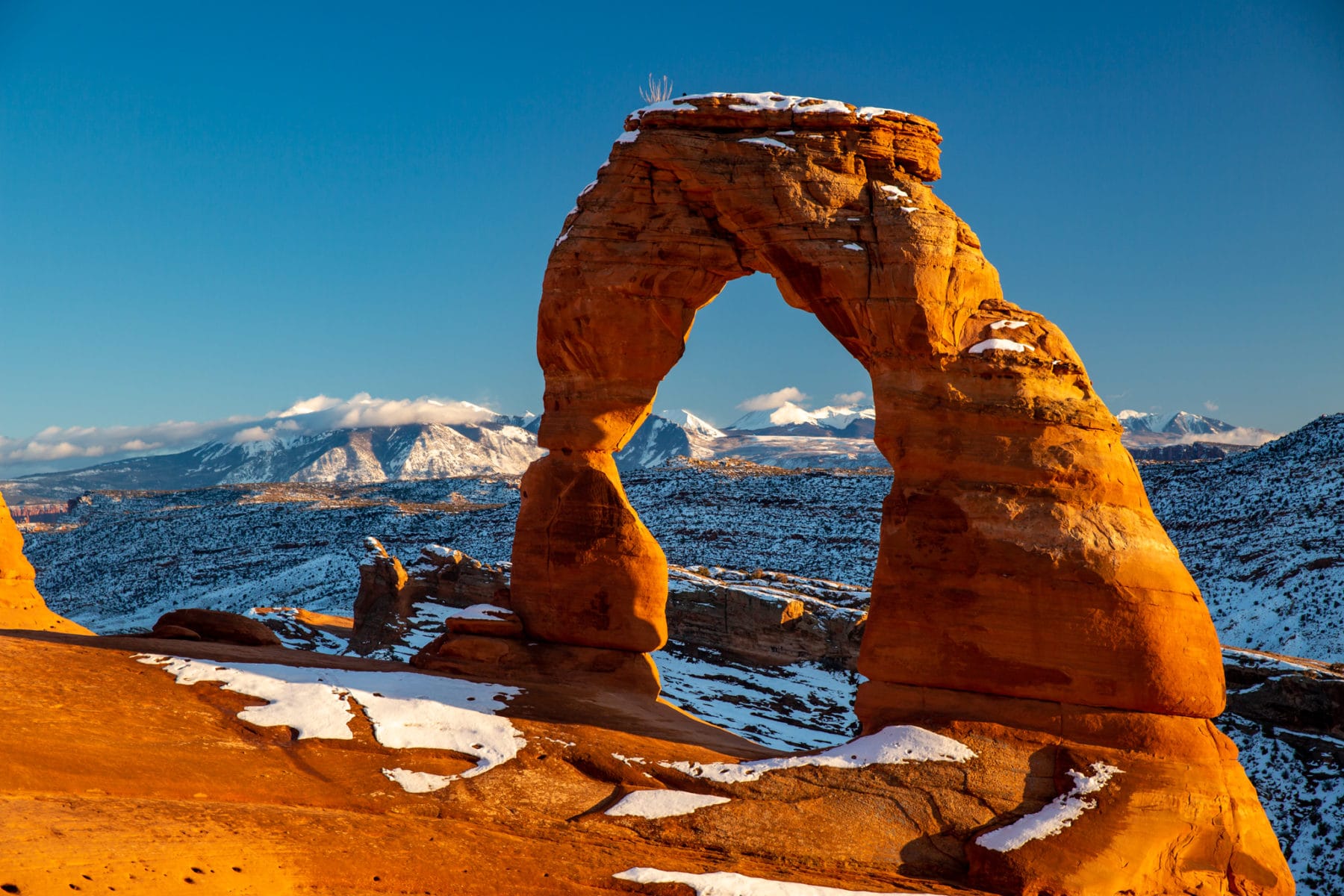
Winter in Arches is the desert’s best-kept secret: clean air, quiet trails, and that rusty sandstone glowing under a low sun. It is also a season where conditions can flip fast. A clear morning can turn into slick, shaded ice by afternoon, and the same short hike that feels casual in May can feel like a miniature mountaineering problem in January.
This guide focuses on what typically stays open, where ice is most likely, what gear actually matters, and how to build a one-day plan that fits winter daylight without rushing the best viewpoints.

What stays open in winter
Most visitors are pleasantly surprised by how much of Arches remains accessible in winter. The park is open year-round, and the main scenic drive and iconic stops are often available even after light snow. The big variable is not whether the park operates, but whether weather temporarily impacts roads and trail surfaces.
Usually open
- Arches Scenic Drive (the main park road): Typically open, but may be temporarily restricted during or after storms for plowing and safety.
- Visitor Center: Open year-round with seasonal hours. Winter hours can be shorter, so plan your arrival accordingly.
- Popular viewpoints and short walks: Balanced Rock, Park Avenue viewpoint and trail, The Windows area, Double Arch, and many overlooks are commonly accessible.
- Trailheads: Generally open, but trail conditions can be icy even when the road is dry.
- Devils Garden Campground: Often stays open year-round, but it typically switches to first-come, first-served in winter. Check current dates and status before you go.
Sometimes impacted
- Temporary road closures: Snow, drifting, or ice can close the scenic drive for hours or longer. Plowing priorities vary with storm intensity.
- Short-term closures for safety: If a storm is actively moving through, the park may limit access while crews work.
- Parking areas: Plowed snow can reduce parking capacity at The Windows and Delicate Arch, which changes the timing game.
Timed entry note
Arches has used timed entry in busier seasons in recent years. Winter often has fewer restrictions, but policies can change year to year. If you are traveling around holidays or spring shoulder season, double-check the park’s current entry requirements before you leave Moab.
Best habit: Check the official park alerts the night before and again the morning of your visit for road status, trail advisories, and visitor center hours.
Road and parking reality: snow is rare, ice is not
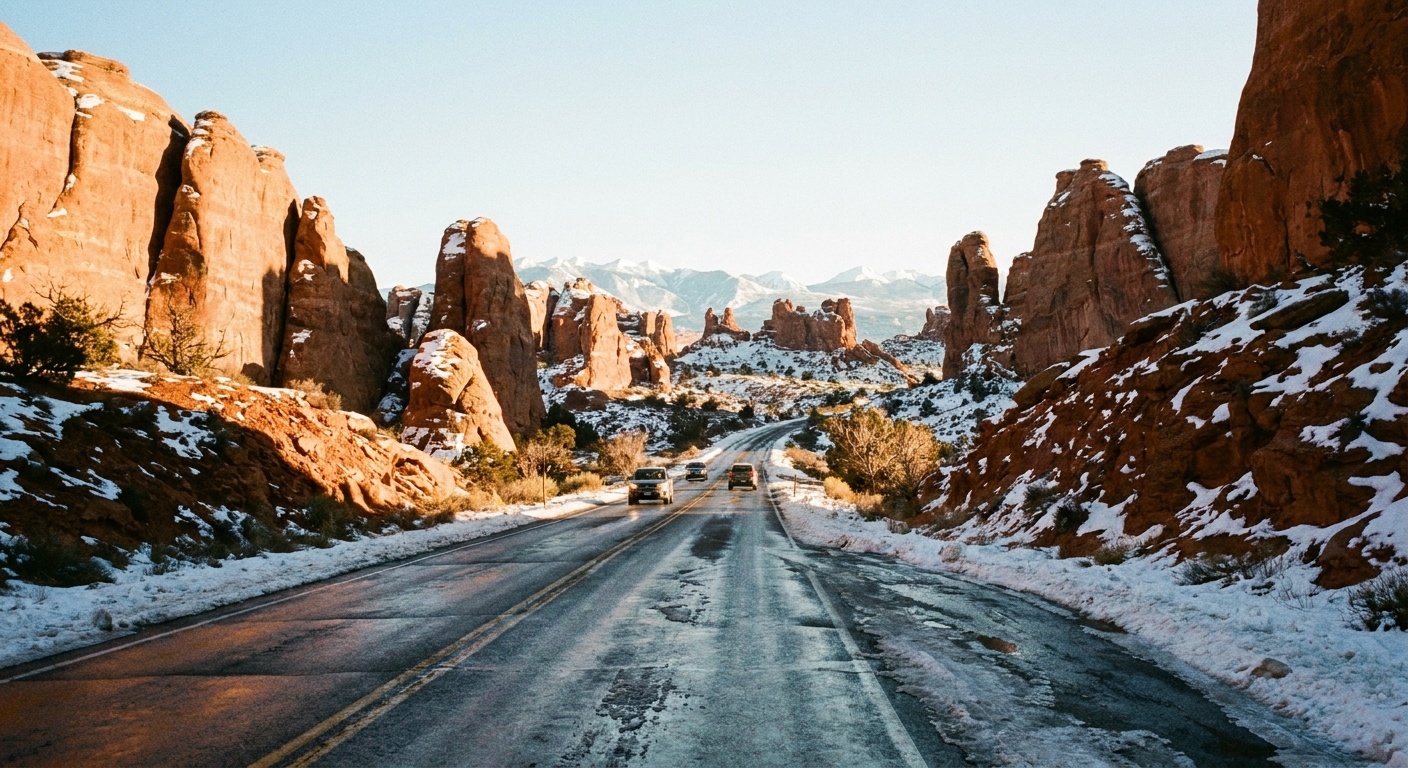
Moab sits in high desert country, and storms tend to be short. The catch is temperature swings. Meltwater refreezes fast, especially in shaded corners of the road and at trailhead parking lots.
- Road surface: The scenic drive is paved, but shaded sections can hold black ice.
- Shoulders and pullouts: Often slushier than the travel lane. Step carefully when you get out for photos.
- Parking lots: Compacted snow becomes slick, especially at popular stops with constant foot traffic.
If you are driving a rental car, avoid assuming it has winter tires. In Moab, many rentals are standard all-season setups. Drive slowly, leave extra stopping distance, and consider delaying your park entry a bit after a storm to let plowing and sun do their work.
Ice risk: where it lingers on trails
The most important winter skill at Arches is reading microclimates. Sun-baked slickrock can be dry and grippy, while a few steps into shade can turn into hard, glassy ice. Expect the iciest spots in places that are shaded, funnel runoff, or get packed down by many boots.
Highest likelihood of ice
- Delicate Arch Trail: The trail crosses slickrock and uses a narrow ledge section. Snow is not the issue here as much as refrozen melt on sloped rock and in the shaded approach. If you see a sheen, treat it like ice.
- The Windows and Double Arch paths: Short, but the combination of shade and heavy foot traffic can create polished ice, especially near steps and drainage dips.
- Park Avenue Trail: The corridor can stay cool and shaded. After storms, sections can remain icy longer than you would expect.
- Any sandstone bowl or wash crossing: Water collects, then freezes overnight.
Lower likelihood (but still possible)
- Balanced Rock viewpoint: Often sunny and quick, but watch for icy patches near the parking lot edge.
- Panorama Point and other overlooks: Wind and sun help, yet pullouts can be slick.
Winter rule of thumb: if you can see the La Sal Mountains looking frosty, assume Arches has at least some shaded ice even if Moab feels dry.
Traction, layers, and the small stuff that saves your day
If you are traveling carry-on only, winter desert trips live or die by versatile layers and a few small, high-impact items. You do not need expedition gear, but you do need traction and temperature management.
Footwear and traction
- Hiking shoes or boots with real tread: Smooth-soled sneakers are a slip hazard on icy rock.
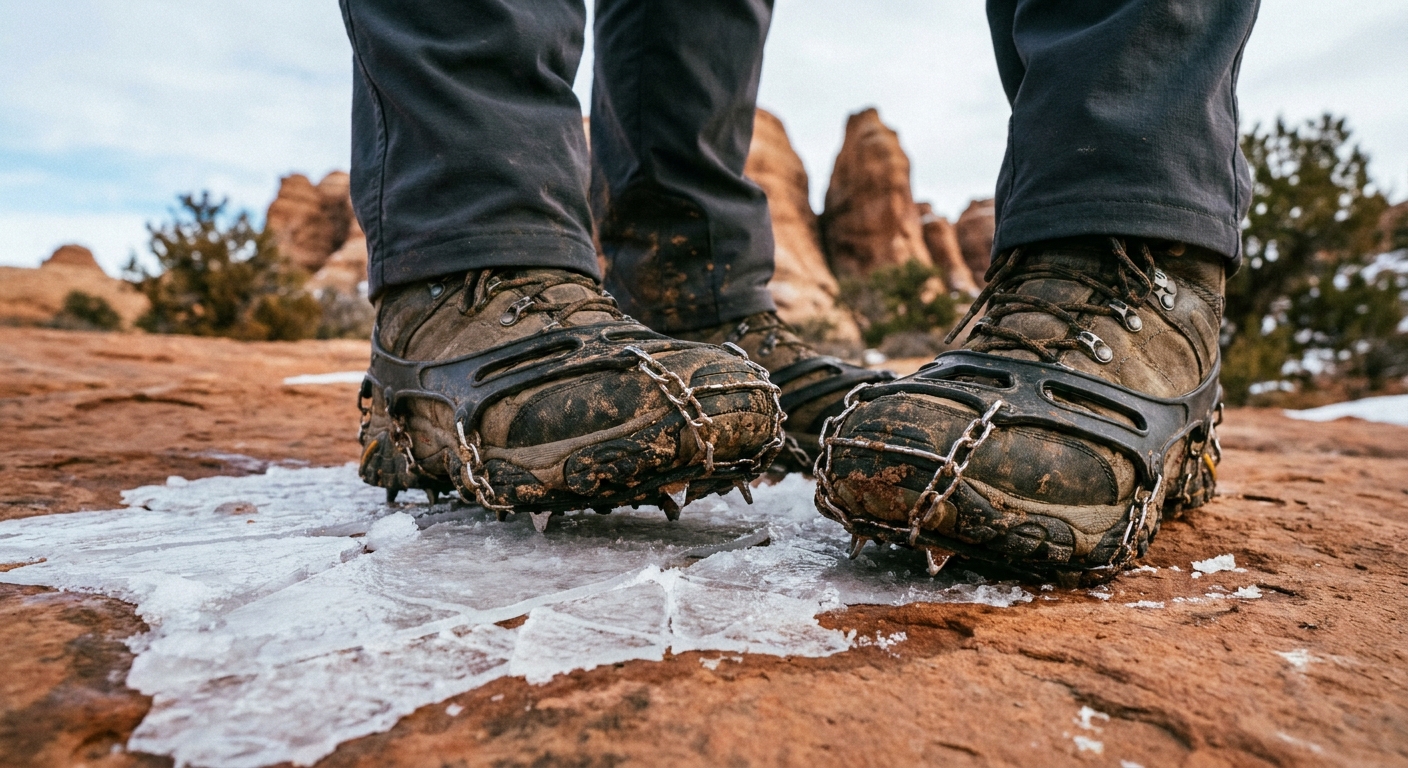
- Microspikes or other slip-on traction: The single best upgrade for winter Arches. They are lightweight, packable, and make Delicate Arch and The Windows feel dramatically more controlled when ice shows up.
- Warm socks: Wool or a wool blend keeps feet warmer even if snow sneaks into your shoe.
Clothing layers
- Base layer: Breathable long sleeve or light merino.
- Mid layer: Fleece or light puffy.
- Shell: Windproof outer layer. Desert wind can feel sharper than the temperature number suggests.
- Hat and gloves: Non-negotiable for sunrise, sunset, and shaded trails.
Daypack essentials
- Water: Winter is drier than it feels. Bring more than you think you need, even for short walks.
- High-calorie snacks: Your body burns more in the cold.
- Headlamp: Short daylight plus slow footing equals a higher chance of finishing at dusk.
- Phone battery buffer: Cold drains batteries fast. A small power bank is worth its weight.
- Sun protection: Sunglasses and sunscreen. Snow plus sandstone can amplify glare.
Shorter daylight: how it changes your one-day plan
In winter, Arches rewards early starts and punishes overly ambitious checklists. The low sun angle is gorgeous for photography, but it also means long shadows that keep trails colder and icier. Add in slower hiking speeds on slick spots, and your summer itinerary suddenly does not fit.
Pacing tips
- Start with viewpoints: Hit easy stops first while you assess conditions.
- Do your longest hike mid-day: Aim for your biggest trail when temperatures are warmest and ice has had time to soften.
- Plan a hard turnaround time: Winter sunsets come early. Decide when you will stop hiking, not when you hope to finish.
- Expect slower movement: If there is ice, budget extra time for careful footing and passing others on narrow sections.
A realistic one-day winter itinerary
This is built for a typical winter day when roads are open and trails may have patchy ice. It prioritizes classic sights without stacking too many “maybe” hikes late in the day. It also bakes in the most casual-friendly stops, so you can scale up or down based on comfort and conditions.
Morning: easy icons, low effort, big payoff
- Visitor Center stop: Quick conditions check, bathroom, and one last look at alerts.
- Park Avenue viewpoint: A fast hit with dramatic walls and winter light.
- Balanced Rock: Short, photogenic, and a good place to test traction.
Late morning to early afternoon: The Windows area
- North and South Window: Short loops with a huge visual return.
- Turret Arch: Nearby and often less crowded in winter.
- Double Arch: A quick walk that feels like a cathedral made of stone.
Winter note: This area is where you will most often encounter packed, slick sections. Traction helps here more than people expect because the walk is short, so visitors tend to underestimate it.
Mid-afternoon: choose one longer commitment
Pick based on conditions and your group’s comfort.
- Option A: Delicate Arch (most iconic): Do it only if the trail looks manageable for your party. If you see widespread ice on the slickrock or in the ledge section, consider saving it for another day.
- Option B: Devils Garden (short version): If you want a longer walk with flexibility, head toward Landscape Arch and turn around as needed. You still get a marquee sight without committing to the full loop.
Golden hour: finish with viewpoints
- Panorama Point (and nearby overlooks): Great for a last light sweep without committing to trail miles.
- Courthouse Towers area pullouts: Easy, scenic, and perfect when your legs are done.
If you are unsure about ice: Make Delicate Arch an “only if conditions allow” goal and keep The Windows plus viewpoints as your guaranteed highlights. You will leave happy instead of stressed.
Weather and what winter feels like
Arches sits at desert elevation, so winter days can be crisp and bright while mornings and evenings feel genuinely cold. Snow is possible, and so are warm spells that melt everything by afternoon and refreeze at night.
- Expect big swings: Layering matters more than owning one heavy coat.
- Wind changes everything: A breezy 45°F can feel colder than a still 30°F.
- Sun is strong: Even in winter, you can get sunburned easily.
Plan like you are hiking in a sunny winter mountain town, not like you are doing a mild city stroll.
Quick safety checklist
- Check park alerts for road status and closures before you enter.
- Carry traction even if the parking lot is dry.
- Start early and set a turnaround time to avoid hiking out in the dark.
- Bring more water than you think and snack frequently.
- Do not trust footprints as proof a trail is safe. Packed footprints often mean packed ice.
- Tell someone your plan if you are going beyond short viewpoints.
Winter Arches can be one of the most peaceful national park days you will ever have. Treat the ice with respect, build in daylight cushion, and you will get the glow, the quiet, and the kind of wide-open desert beauty that is hard to find in peak season.