Canyonlands Needles District: Hikes, 4x4, and Day-Trip Logistics
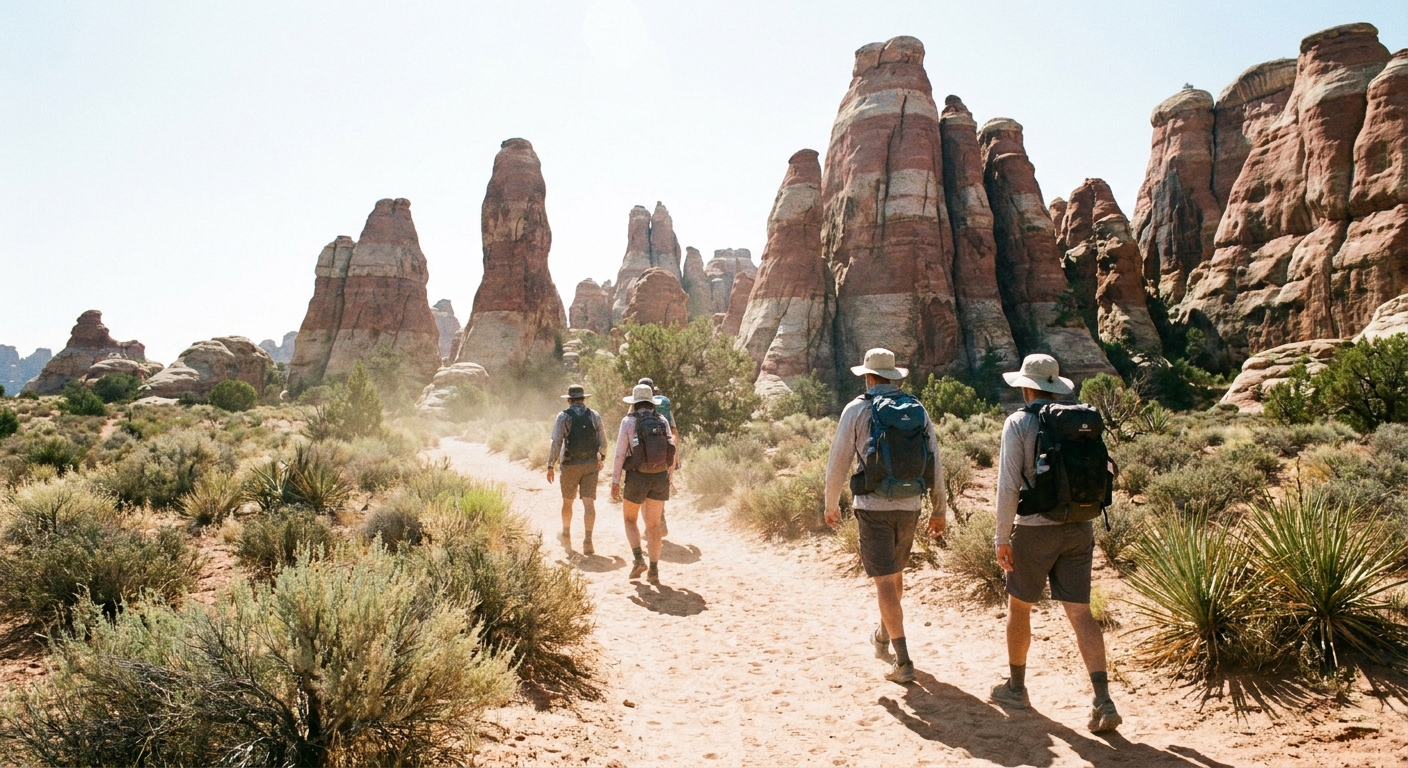
The Needles District is the part of Canyonlands that makes you feel like you earned it. The roads are longer, the trails are more hands-on, and the views are less “pullout and done” and more “keep walking, it gets better.” If you have one day, you can absolutely have a knockout experience here, as long as you plan around two realities: the drive in is significant, and one of the most well-known 4x4 routes (Elephant Hill) is not a casual rental-car side quest.

This guide covers Needles-specific access from US-191, a one-day hike menu with real-world mileage and time ranges, what the Elephant Hill 4x4 sign is really telling you, and how to stage the day if you are sleeping in Moab without turning your trip into a windshield marathon.
Getting there from US-191
If you are coming from Moab, you will almost certainly be on US-191. The “Needles District” turnoff is not in Moab and not near Island in the Sky. It is down US-191 toward Monticello, then west onto UT-211, the scenic access road that runs all the way to the Needles entrance.
The simple route
- From Moab: drive south on US-191 toward Monticello.
- Turn right (west) onto UT-211 toward Canyonlands National Park, Needles District.
- Stay on UT-211 all the way to the park entrance, visitor center area, and trailheads.
Reality check (with numbers): from Moab to the Needles Visitor Center is roughly 75 miles and about 1.5 hours one-way in ideal conditions. In real travel mode (fuel stop, scenic pauses on UT-211, entrance line, slow park driving), many people experience it as 1.5 to 2+ hours each way. Plan your hike tier with that in mind.
Services and signal: UT-211 is beautiful, but it is not quick, and there are long stretches with no services. Treat the junction of US-191 and UT-211 as your mental point of no return and top off fuel and water before you commit. Also, cell service is limited to nonexistent in the Needles and can be spotty on the approach. Download offline maps before leaving US-191 (and screenshot your reservation details if you have any).
Where to stage the day
For most travelers sleeping in Moab, the best staging strategy is to leave early, pack a real lunch, and assume you will spend most of the day away from town amenities.
- Best for a big-hike day: depart Moab early, arrive at the visitor center and trailheads early, hike, then drive back before you are running on fumes.
- Best for a shorter, scenic day: depart mid-morning, do 1 to 2 short hikes and overlooks, then return to Moab for dinner.
If you are not committed to sleeping in Moab, an even smoother move is to overnight closer to the Needles side of the region (for example, around Monticello or Blanding) so your trail time is maximized. But if Moab is your base, it can still work well, just be honest about how long your “commute” will feel at the end of the day.
Your one-day hike menu
Needles hiking is choose-your-own-adventure. The terrain is typically sandy, rocky, and sun-exposed, with occasional route-finding moments where cairns matter. For a first visit, I like to think in three tiers: the marquee loop (big day), the strong half-day (still iconic), and the short-and-sweet trails (low commitment, high payoff).
Trailhead note: the classic Chesler Park and Joint Trail routes usually start from the Elephant Hill trailhead area. Confirm your exact starting point at the visitor center or on the current NPS map before you head out, because junctions and options branch quickly out there.
Option A: Chesler Park and the Joint
If you have the legs and the daylight, Chesler Park plus the Joint Trail is the Needles experience that converts people into lifelong fans. You get the meadow-like openness of Chesler Park, then squeeze through narrow, sculpted corridors in the Joint Trail that feel like a desert-built maze in the best way.
- Distance: commonly about 10 to 11 miles as a loop, depending on the exact spur and how you connect segments.
- Elevation: modest by mountain standards (roughly 500 to 1,000 feet of gain), but the sand and rock slow you down.
- Typical time: 5 to 8 hours for most first-timers who stop for photos and navigation checks.
- Who it is for: hikers who want an “I did the Needles” day.
- What to know: bring more water than you would in a forest. Expect sun, reflective rock, and very few shade breaks.
Seasonal reality: this is a favorite in spring and fall, when temperatures are kinder and parking can still fill by late morning. In summer, heat management matters more than mileage, and an early start is not optional if you want it to be fun.
Practical tip: start earlier than you normally would for a city day. In the Needles, the best moments are often the quiet ones before the parking is crowded and before the heat makes the rocks feel like a stovetop.
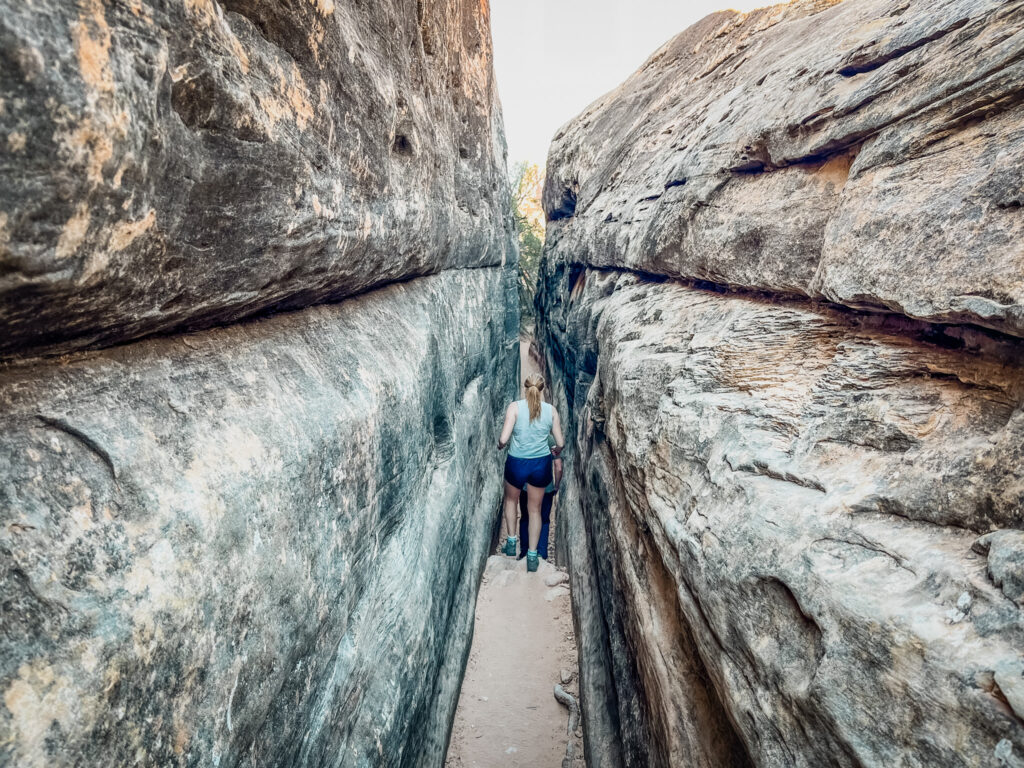
Option B: Chesler Park (shorter)
Not everyone needs the whole loop to feel satisfied. A shorter out-and-back or partial loop toward Chesler Park still delivers the signature scenery: striped spires, big-sky silence, and that surreal moment when the rock towers look arranged on purpose.
- Distance: often 6 to 9 miles, depending on turnaround point.
- Typical time: 3 to 6 hours.
- Who it is for: travelers balancing the drive with a meaningful hike.
- Why it works: you spend more time in the “wow zone” and less time grinding miles just to say you closed a loop.
- Great pairing: add one short trail afterward while your legs are pleasantly tired, not wrecked.
Option C: Short trails and overlooks
If you are arriving later, traveling with kids, easing back from injury, or simply not in the mood for a long desert push, the Needles still has plenty to offer. Short trails here are not “lesser,” they are just more efficient. You get big views quickly, then you can linger, snack, and take photos without counting miles.
- Pothole Point: short and educational, especially fun if there has been recent rain and seasonal pools are present. About 0.6 miles, usually 20 to 40 minutes.
- Cave Spring: short, atmospheric, and a nice way to sample the area’s human history and desert textures. About 0.6 miles, usually 20 to 45 minutes. Important: the loop includes short wooden ladders, so it is not ideal for everyone with mobility concerns.
- Roadside viewpoints and brief walks: perfect for golden light if you are not racing back to Moab in the dark.
If you are choosing the short-hike menu, do two or three small stops rather than one. The variety is the point: different angles, different rock colors, different moods.
Weather note: narrow sections (including parts of the Joint) can feel very different during monsoon season. Flash flooding is rare on many established Needles routes, but summer storms can still make travel sketchy and route-finding harder. If the forecast looks angry, pick an open trail and keep your plan flexible.
Elephant Hill 4x4
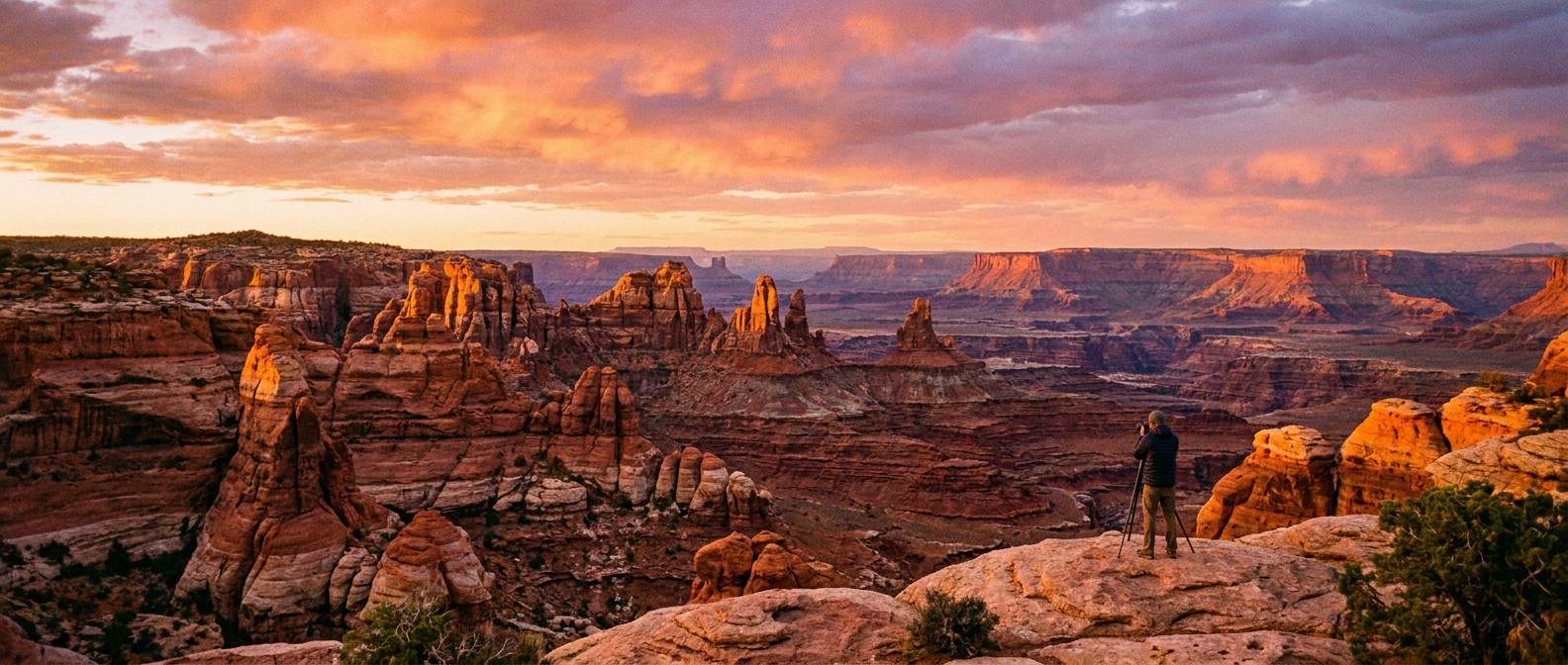
Elephant Hill is one of the most famous 4x4 roads in Canyonlands, and it comes with a very specific vibe: steep grades, tight turns, ledges, and the kind of terrain where “high clearance” is not a marketing phrase, it is the difference between driving and scraping.
High clearance is not the same as “SUV”
Many rental “SUVs” are crossovers with modest clearance and street tires. They might be fine on paved roads and gentle dirt. Elephant Hill is a true 4x4 route where you should expect obstacles that demand:
- High clearance that can handle ledges without bottoming out
- 4WD with low range for controlled climbing and descending
- Comfort with technical driving, including picking lines and backing up on narrow sections
Even with the right vehicle, plan for slow travel, the possibility of pinstripes (scratches from brush), and the need to be self-reliant. Rental contracts often explicitly prohibit rough off-pavement use. That can leave you financially exposed if something goes wrong.
Permits and current rules
Rules can change seasonally and with conditions. Some activities tied to Elephant Hill (especially overnight backcountry trips) require permits. For day trips, requirements can still vary by route, group type, or current management decisions. Check the current NPS conditions page and permit guidance before you go, and confirm at the Needles Visitor Center if you have any doubts.
So should you do Elephant Hill?
For a first visit, most people are happier treating Elephant Hill as a “next time” goal unless they have a properly equipped vehicle, real off-road experience, and the patience for a slow, technical day.
- Do it if: you have a true 4x4 with low range, you know how to use it, and you are comfortable with remote problem-solving.
- Skip it if: you are in a typical rental SUV, you are unsure about your contract, or you want your day to be about hiking, not vehicle stress.
Alternative that still feels adventurous: keep your driving on paved park roads and put your energy into a longer hike like Chesler Park and the Joint Trail. You will get the Needles magic without the “is this where we break the bumper” loop running in your head.
If you want the 4x4 experience without owning the risk, consider a guided 4x4 tour with a permitted operator.
A realistic one-day itinerary
This is the rhythm that works for most first-timers based in Moab: early start, one main objective, one secondary stop, then a calm drive back.
Plan 1: Big hike day
- Early morning: depart Moab, aim to arrive at the visitor center and your trailhead with plenty of morning light.
- Midday: hike Chesler Park and the Joint Trail, take a real lunch break in whatever shade you can find.
- Late afternoon: add a short stop like Cave Spring or Pothole Point if energy allows.
- Evening: drive back to Moab for dinner.
Plan 2: Scenic sampler
- Morning: depart Moab after breakfast.
- Midday: do one moderate hike or a partial Chesler Park outing.
- Afternoon: stack two short trails like Pothole Point and Cave Spring, then linger at a viewpoint for golden light.
- Evening: return to Moab.
Pack like the desert means it: extra water, salty snacks, sun protection, a map or downloaded offline route info, and a headlamp even if you are not planning to finish late. Needles time has a way of stretching when you stop to stare at the rocks, which is the correct behavior here.
Water guidance: for most people in warm conditions, plan a minimum of 3 to 4 liters per person for a big hike, and more in peak heat. If that sounds heavy, that is because it is, and it is still the right call.
Fees and hours: the Needles District is inside Canyonlands National Park, so standard entrance fees apply (or your park pass). Visitor center hours vary by season. Check current hours and any road or trail closures before you leave.
How to pair with a Moab overnight
If you are sleeping in Moab, the trick is to make the Needles feel like its own chapter, not a remix of yesterday. Instead of chasing the same kind of overlooks you might do elsewhere, lean into what the Needles does best: immersive, ground-level wandering among formations and narrow passages.
A clean two-day pairing
- Moab evening before Needles: keep it easy. Prep your lunch, fill water, and get to bed earlier than you think.
- Needles day: commit to one signature hike (Chesler Park and Joint Trail if you can) and one short add-on.
- Moab evening after Needles: reward night. Good food, laundry, and a coffee stop the next morning that feels civilized again.
Think of it as contrast travel. One day you are negotiating slickrock and sand. That same night you are back in Moab with a real chair.
Quick tips
- Do not underestimate the drive. Your “one day” includes significant road time (often 3 to 4+ hours round trip), so plan your hike accordingly.
- Start early for heat and parking. Desert miles are slower, and in spring and fall popular trailheads can fill by late morning.
- No signal is normal. Download offline maps before leaving US-191 and do not count on streaming, navigation, or texting once you are in the district.
- Do not treat Elephant Hill like a casual detour. If you are in a standard rental, assume it is not the right tool for that job.
- Carry more water than feels reasonable. Then drink it.
- Leave no trace, especially in cryptobiotic soil areas. Stay on established trails and rock where possible.
- Pets: dogs are not allowed on hiking trails in Canyonlands. Plan for pet-friendly alternatives outside the park if you are traveling with one.
If you only remember one thing: the Needles rewards commitment, but it does not demand a suffer-fest. Choose the hike tier that matches your day, skip the 4x4 bravado if it does not fit your vehicle, and let this district be what it is: a slower, wilder Canyonlands that feels personal the moment you step away from the car.