Cathedral Valley Loop Planning
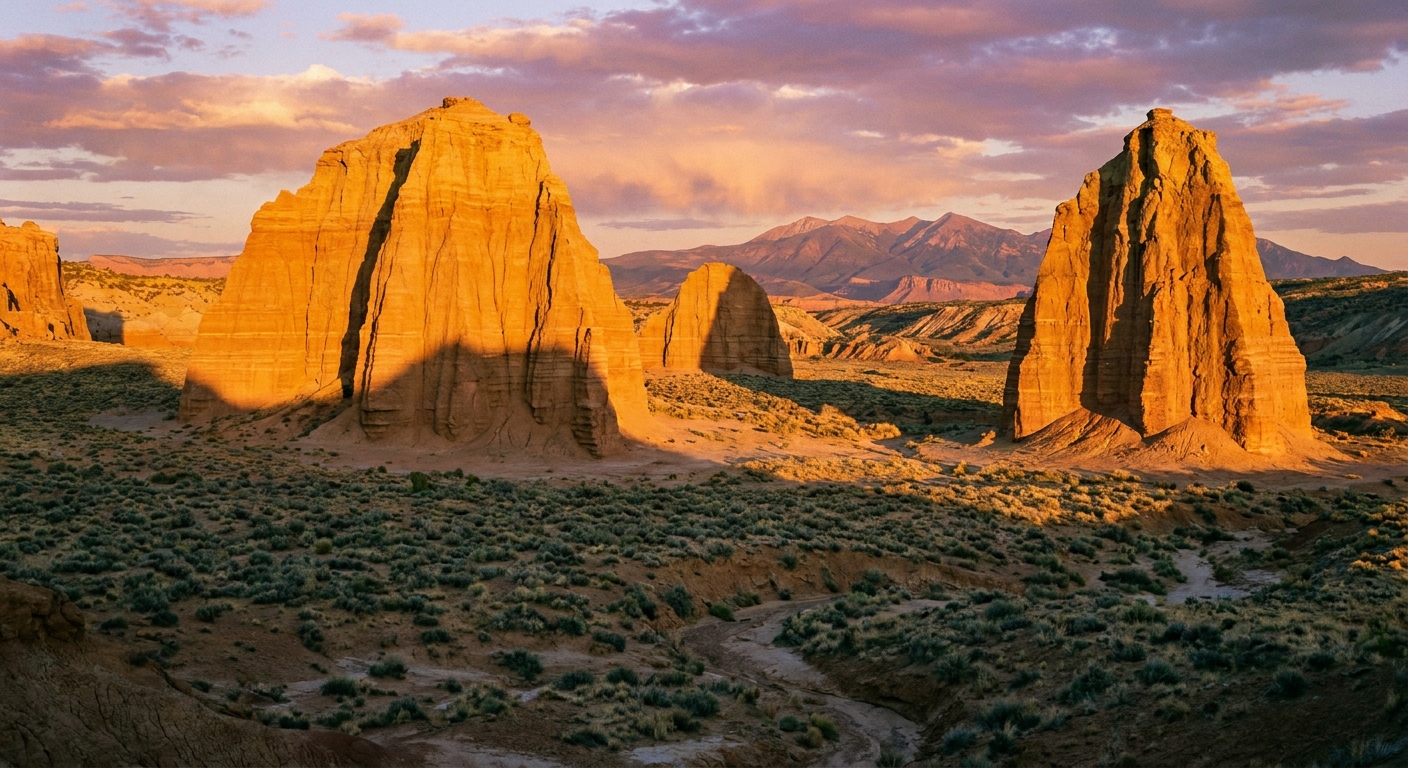
Cathedral Valley is Capitol Reef’s quiet, high-desert backstage. No shuttle, no snack bar, no “just one more overlook” paved pullouts. What you get instead are miles of empty road, tilted badlands, and the Temples of the Sun and Moon rising out of a wide open basin like they were set there on purpose.
If you have already read a general Capitol Reef day-hikes roundup, think of this loop as a different kind of trip entirely. Day hikes are about short bursts of effort with easy logistics. Cathedral Valley is logistics first, scenery as the reward. The good news is that with the right vehicle, timing, and a conservative plan, it is absolutely doable for a confident, prepared driver.

Quick reality check
Before you commit, make sure this loop matches your trip style and timeline. Cathedral Valley is remote and slow, even when conditions are good.
- Road type: graded dirt to rough dirt and sand, with rocky sections and washboarding.
- Signature obstacle: the Fremont River ford on the Hartnet Road side of the loop.
- Services: essentially none once you leave the paved highway. No water, no reliable cell coverage.
- Best for: travelers who want solitude, big geology, and are comfortable making conservative calls when conditions shift.
- Not ideal for: low-clearance vehicles, anyone unwilling to turn around at the river, or anyone counting on “we will figure it out out there.”
My honest recommendation: treat Cathedral Valley like a backcountry drive, not a scenic road. If that framing feels exciting rather than stressful, you are in the right place.
Permits and fees: what you actually need
Do you need a permit to drive the loop?
No permit is required to drive the Cathedral Valley Loop itself on established park roads. You still need to pay the standard Capitol Reef National Park entrance fee (or have an America the Beautiful pass).
When a permit is required
You do need a permit if you plan to camp overnight in the backcountry (including vehicle-based dispersed camping in designated backcountry zones). Capitol Reef manages backcountry camping by zones, and permits help protect fragile desert soils and keep campsites from spreading into every flat spot.
Important exception: the Cathedral Valley Campground is an established, first-come, first-served campground along the loop. You still need to follow park rules, but it is not the same thing as dispersed backcountry zone camping.
How to get the backcountry permit
- Check current rules and seasonal road updates on the National Park Service Capitol Reef site before you go.
- Secure the correct backcountry camping permit for your intended zone and dates.
- Carry a copy of your permit and know the zone boundaries you are permitted to camp in.
Planning tip: If your Capitol Reef plan is mainly day hikes from Fruita, you can still do Cathedral Valley as a long day drive. But if you want the best experience and the best photo light, one night out there makes everything feel less rushed.
High-clearance and 4x4: what “required” really means
The Fremont River crossing is the deal-breaker
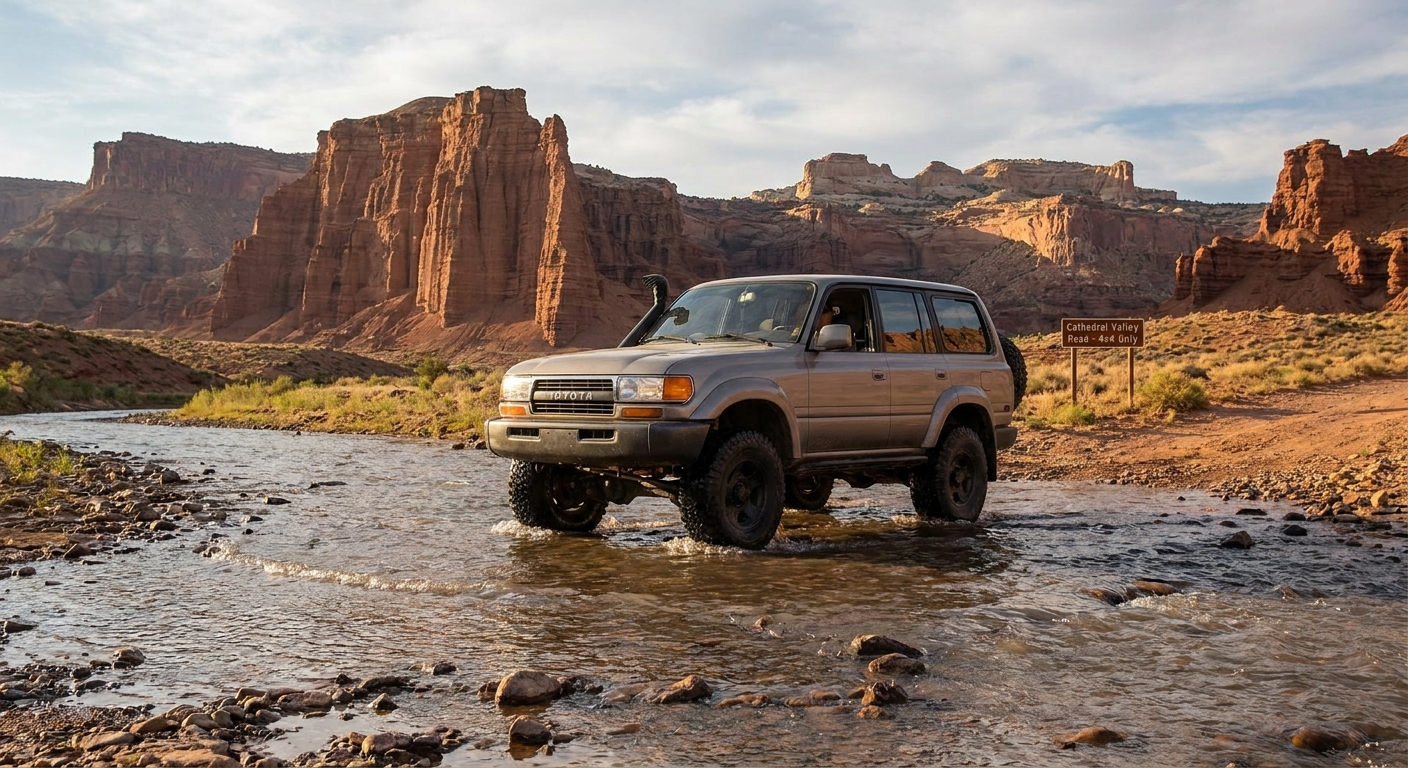
Most people encounter the Fremont River ford on Hartnet Road. Depth changes with season, storms, and snowmelt. Even when it looks calm, it can be deceptively deep, silty, or fast.
- High clearance: strongly recommended for the loop’s rougher sections and ruts.
- 4x4: often recommended, sometimes effectively required depending on sand, washouts, and recent weather.
- Low-clearance AWD crossovers: can sometimes make it in ideal, dry conditions, but this is where people get stranded and where undercarriages get introduced to rocks.
My conservative rule: If you cannot confidently assess and safely ford the river, plan an alternate approach or skip the loop. No photo is worth a flooded engine.
When conditions are not “normal”
Cathedral Valley roads can deteriorate quickly after rain. Clay sections can become slick and impassable. Washes can cut ruts. If rain is forecast, assume roads will be worse than you want them to be.
Desert roads do not need much rain to become a problem. If you see dark clouds building, start thinking about your exit, not your next stop.
Vehicle prep that pays off
- Full-size spare in good condition, plus the tools to use it.
- Tire pressure plan: know when and how to air down for sand and washboard, and how you will air back up.
- Navigation: offline maps downloaded, plus a paper map as backup.
- Emergency comms: a satellite messenger is smart out here.
Waterless stretches, fuel, and the “nothing out there” factor
Cathedral Valley feels close on a map, but it eats time. The loop is slow driving, and stops add up because every viewpoint begs you to step out and stare for a while.
Water planning
Assume no reliable water sources. Bring what you will drink plus a buffer for delays.
- Baseline: at least 1 gallon (3.8 L) per person per day, more in hot months.
- Add a reserve: extra water for a long delay, a wrong turn, or helping another traveler.
- Do not count on filtering unless you have verified a source and know it is accessible. Many washes are dry.
Fuel planning
Fill up before you leave the paved corridor. Dirt roads, low speeds, and 4x4 use can increase consumption. If your vehicle has a short range, consider carrying extra fuel in an approved container and secure it properly.
Food and timing
Pack like you are going on a full-day backcountry outing, even if you are “just driving.” Bring lunch, salty snacks, and something you can eat if you end up exiting later than planned.
The classic loop: direction, stops, and pacing
Most travelers drive the loop as a big circle that includes the Temples, the Cathedral Valley Overlook area, and one river ford. Exact mileage can vary by side trips and road changes, so use current maps and verify conditions with the park.
Clockwise vs counterclockwise
- Clockwise (common): enter via Hartnet Road, deal with the Fremont River ford early, then work your way north through the valley past the Temples, and exit via Cathedral Road toward the Caineville area.
- Counterclockwise: enter via Cathedral Road (no river ford at the start), build toward the Temples, then reach the river crossing later when you are closer to finishing. This can feel lower stress on the front end, but it can also put you at the ford late in the day when you are tired and light is fading.
Maya’s bias: If you plan to ford, I like doing it earlier when your focus is sharp and you have daylight buffer for the rest of the loop.
Key stops worth building your day around
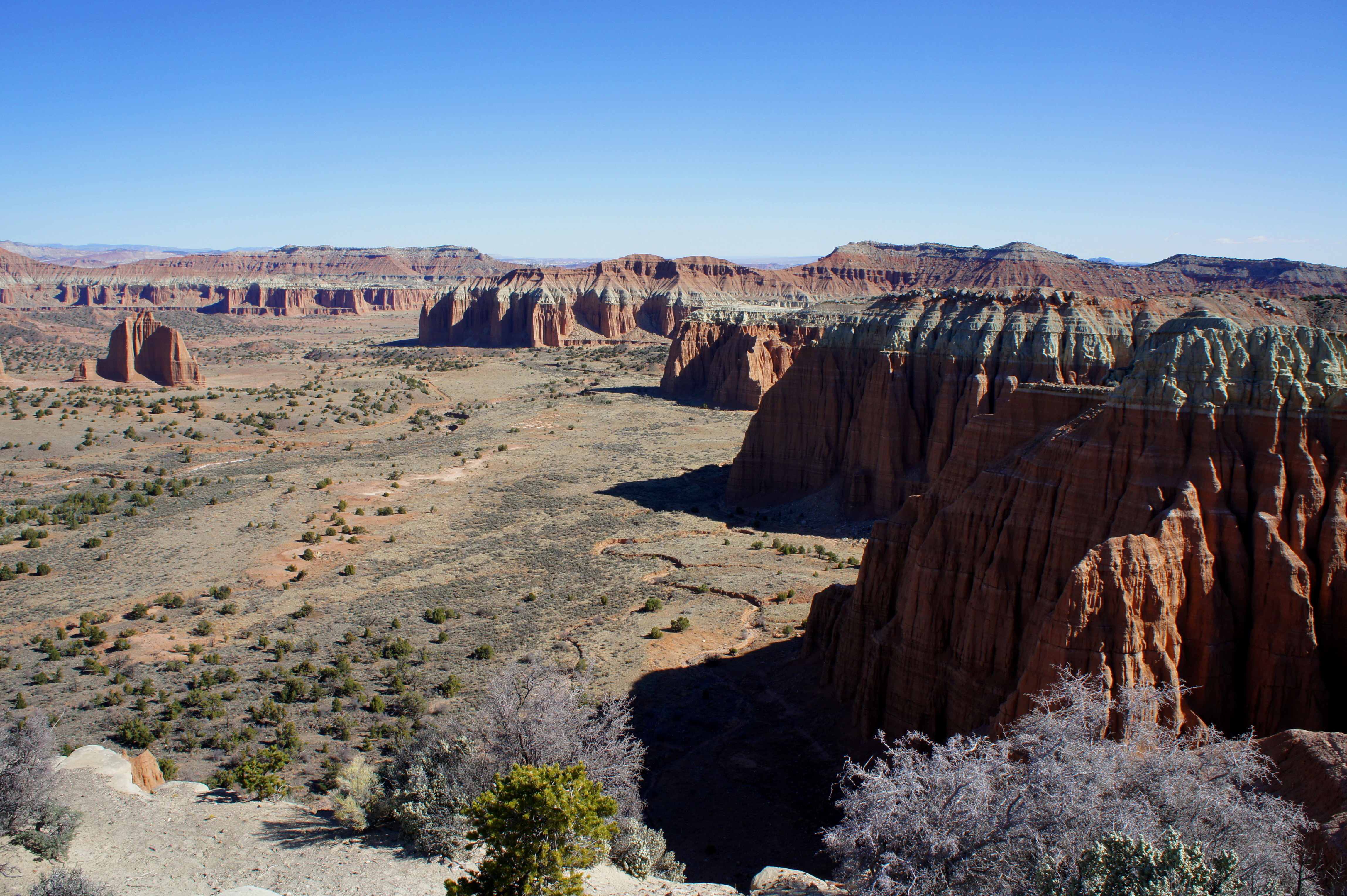
- Cathedral Valley Overlook: big-sky perspective that helps you understand the landscape scale.
- Temples of the Sun and Moon: the headline. Give yourself time to walk around and watch the light change.
- Cathedral Valley Campground: a simple, official place to sleep mid-loop with a pit toilet and picnic tables. It is first-come, first-served, and still feels wonderfully remote.
- Gypsum Sinkhole (if open and safe): a strange and sobering reminder that the desert has layers you cannot see.
Temples of the Sun and Moon: best photo timing
The Temples are photogenic all day, but the difference between “cool rock” and “how is this real” usually comes down to shadows and contrast.
Best light
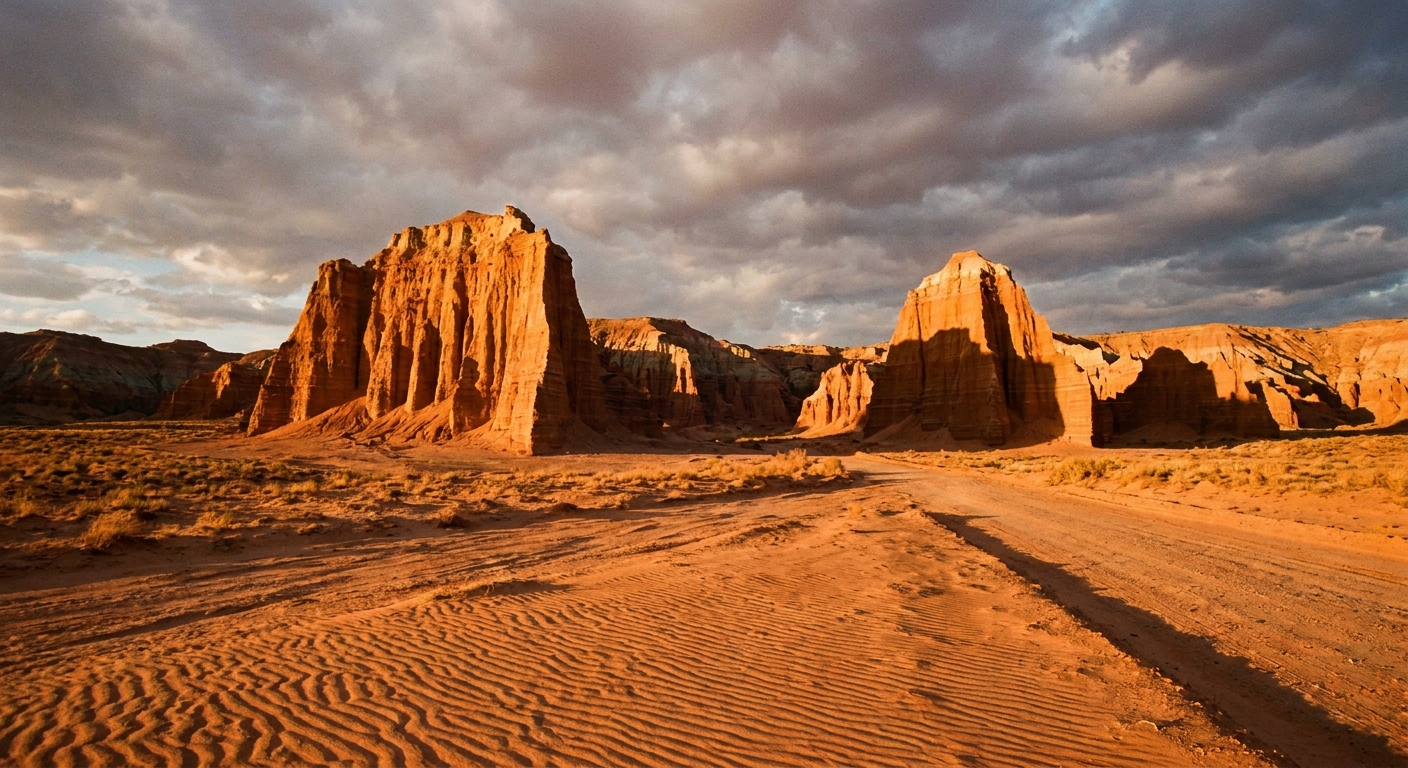
- Late afternoon to sunset: warm tones, long shadows, and better texture on the rock.
- Sunrise: quieter and softer, but you need to already be in the valley before dawn. This is where an overnight camp pays off.
- Midday: harsh light and flatter textures. Still worth visiting, but expect higher contrast and less drama.
Practical shooting tips
- Bring a wide lens for scale and a mid-telephoto to compress layers and isolate details.
- Use the road and distant ridgelines to show how massive the formations are.
- Do not climb on fragile formations or cryptobiotic soil to “get the angle.” The desert heals slowly.
Camping: where you can sleep legally
Cathedral Valley camping is not a free-for-all. Capitol Reef has an established campground out here, and it also allows backcountry camping in designated areas. It is your job to know what you are aiming for before you roll in at dusk looking for a flat spot.
Cathedral Valley Campground
- Type: established, free, first-come, first-served
- Amenities: pit toilet and picnic tables
- What it is not: no water, no hookups, no trash service, and no guarantee of space
If you want the simplest overnight in the loop without navigating backcountry zone boundaries, this is usually the cleanest plan. It is still remote enough that the night sky feels personal.
Backcountry zone camping
- Dispersed style: no picnic tables, no water, no toilets.
- Leave No Trace is mandatory: pack out all trash, including food scraps.
- Human waste: follow park requirements. In many desert backcountry areas, carrying a waste bag system is the lowest-impact option. Verify current NPS guidance.
Core etiquette that keeps Cathedral Valley wild
- Camp on durable surfaces and in previously impacted sites when allowed.
- Respect quiet hours by default: sound carries forever in open basins.
- Minimize fire impacts: if fires are allowed, use an existing fire ring. Better yet, cook on a stove and enjoy the stars.
Good to know: If you are comparing this to the developed Fruita Campground experience, Cathedral Valley is the opposite. Fruita is cottonwoods, running water nearby, and easy bike rides. Cathedral Valley is silence, wind, and a night sky that feels like it belongs to another century.
Safety and seasonal considerations
Flash floods and storms
Even if it is sunny where you are, storms upstream can affect washes and the river crossing. Check forecasts for the broader region, not just the nearest town.
Heat and shoulder seasons
- Summer: heat is serious, and a breakdown becomes a medical problem faster than you think.
- Spring: the river can be higher from snowmelt.
- Fall: often a sweet spot for temperatures and stable weather.
- Winter: cold nights, occasional snow and ice, and very limited margin for error.
What to do if you need to turn around
Deciding not to ford the river or not to push into a muddy section is not a failure. It is good judgment. Capitol Reef has plenty of world-class hiking and scenery that does not require risking a recovery bill.
How to fit Cathedral Valley into a Capitol Reef trip
If you are building an itinerary from our general Capitol Reef hikes list, use this simple approach:
Option A: Cathedral Valley as your “big drive day”
- Day 1: Fruita area hikes and viewpoints (easy logistics, get oriented).
- Day 2: Cathedral Valley Loop (start early, plan for slow miles).
- Day 3: a shorter hike day plus pie and coffee recovery in Torrey.
Option B: Overnight to catch the best light
- Day 1 afternoon: drive into Cathedral Valley and camp (either at Cathedral Valley Campground if you get a spot, or in a permitted backcountry zone).
- Day 2: sunrise or morning at the Temples, then finish the loop and return to Fruita for a shower and a real meal.
Why this works: Cathedral Valley is the kind of place that rewards patience. Pair it with day hikes so you get both sides of Capitol Reef: the canyon corridors you can explore on foot, and the remote open country you can only really understand by driving through it slowly.
Checklist: what I would not skip
- Park entrance pass or fee covered
- Backcountry camping permit if staying overnight in a zone
- High-clearance vehicle, ideally 4x4 depending on conditions
- Full-size spare tire, jack, and a plan for flats
- Offline maps and a backup navigation method
- Plenty of water plus a reserve
- Full fuel tank, extra fuel if your range is limited
- Warm layer for wind and cold nights, even in shoulder season
- Trash bag and a plan for human waste that matches park rules
- A willingness to turn around if the desert says “not today”
If you want, I can help you choose between a day-loop attempt and an overnight plan based on your vehicle, the month you are going, and how comfortable you are with river crossings.