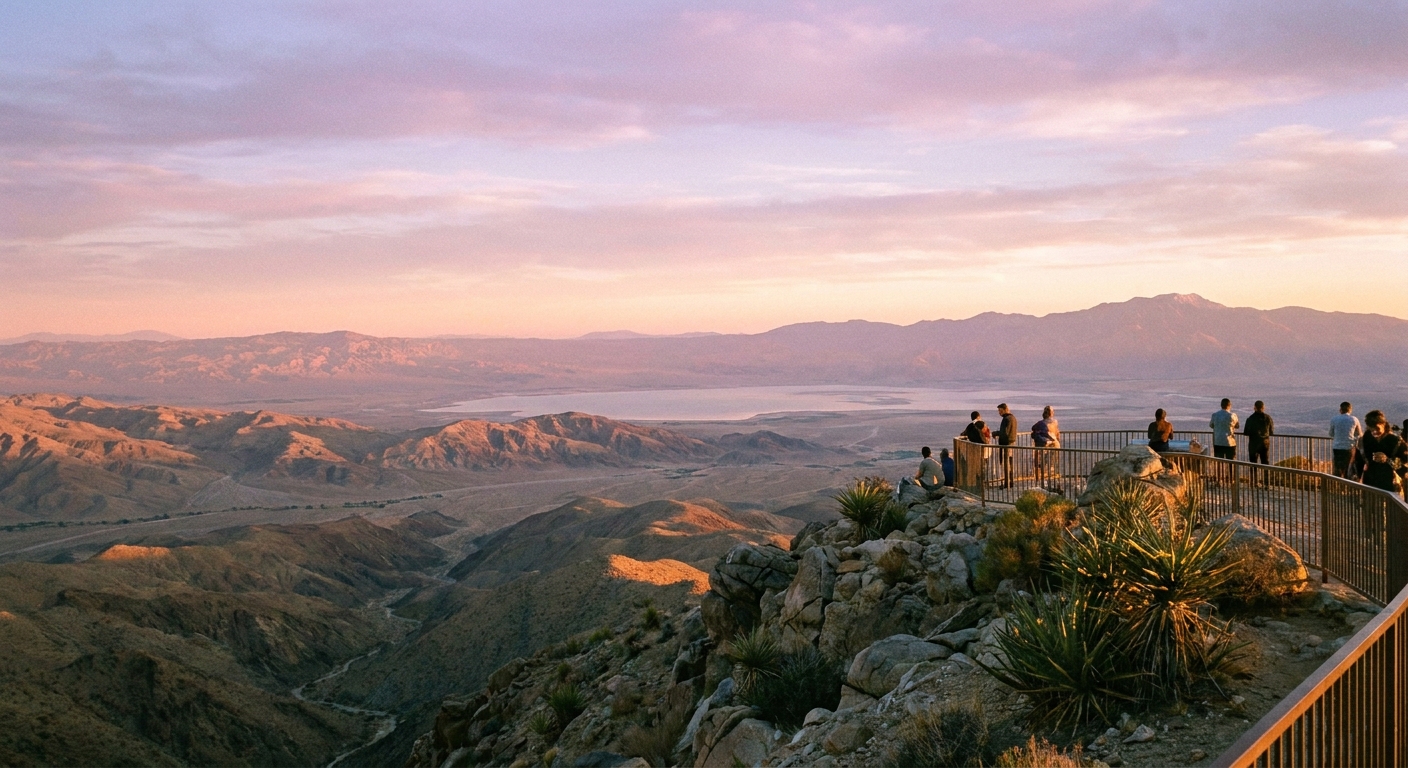
Joshua Tree: North vs South for Day Hikes
Joshua Tree National Park looks deceptively simple on a map. One park, a few main entrances, and a long road connecting the best-known zones. In real life, your entrance choice decides how much you hike versus how much you sit in the car, which trails you can realistically squeeze into a short visit, and whether you can tag on a Palm Springs coffee and pool moment without feeling like you are speed-running the desert.
This page is built for day hikers and short-visit planners. It compares the park’s north side (West Entrance near Joshua Tree plus North Entrance at Twentynine Palms) versus the south side (Cottonwood), with heat timing, simple add-ons, and the logistics people always wish they had earlier.

North vs south: quick decision
If you only read one section, make it this one.
- Choose the north side (West or North Entrance) if you want the classic Joshua Tree hit list fast: Joshua tree woodland, granite boulder piles, short iconic hikes, and a high concentration of “wow per mile.” Great for first-timers and anyone with a half day to one day.
- Choose the south side (Cottonwood Entrance) if you are coming from Palm Springs, you want low-desert scenery (creosote flats, wider basins, big sky), and you like quieter trails. It is also a smart winter and shoulder-season option because it can be pleasantly warm when the higher, rockier north is chilly and windy.
- In summer heat: the north side’s higher elevation can feel slightly less punishing, and boulders can offer small patches of shade. That said, it is not meaningfully safer. Your best strategy is timing and restraint, not heroics.
- Trying to do both sides in one short visit? It can work if you plan a point-to-point drive and limit hiking to one “anchor” trail plus one short loop.
West Entrance note
One clarity point because it matters for real trips: the West Entrance (near Joshua Tree town) is often the most popular for day visitors, and it is absolutely a “hiker entrance.” If you are staying in Joshua Tree, Yucca Valley, or most Airbnbs labeled “Joshua Tree,” the West Entrance is typically your fastest route to Hidden Valley, Barker Dam, Ryan Mountain, and Keys View.
For this guide, I group West + North as the north side because they feed the same central cluster of classic trails.
Drive times that matter
Joshua Tree is not huge, but the distances add up because speeds are modest, you will stop for viewpoints, and parking can slow you down around midday. Treat these as estimates that vary with season, crowds, and how often you pull over.
- Joshua Tree Visitor Center (town of Joshua Tree) to West Entrance: about 10 minutes.
- Twentynine Palms to North Entrance: about 10 minutes.
- North Entrance to Hidden Valley / Barker Dam area: about 25 to 35 minutes.
- West Entrance to Hidden Valley / Barker Dam area: about 25 to 35 minutes.
- Hidden Valley area to Keys View: about 35 to 45 minutes.
- Hidden Valley area to Cholla Cactus Garden: about 45 to 60 minutes.
- Cholla Cactus Garden to Cottonwood (South) Entrance: about 35 to 50 minutes.
- West Entrance to South Entrance (Cottonwood): roughly 1 hour 15 minutes to 1 hour 45 minutes with light traffic and minimal stops, longer if you treat it like a scenic tour (which you probably will).
My rule of thumb: For a true day-hike day, pick one side and keep most of your hiking within 30 to 40 minutes of it. Save the full top-to-bottom scenic drive for a longer day or a point-to-point transit day.
North side day hike plans
The north side is your gateway to a dense cluster of classic Joshua Tree highlights. If you want maximum iconic scenery with minimum driving, this is your side.
Plan A: Half day classics
2 to 4 hours in-park
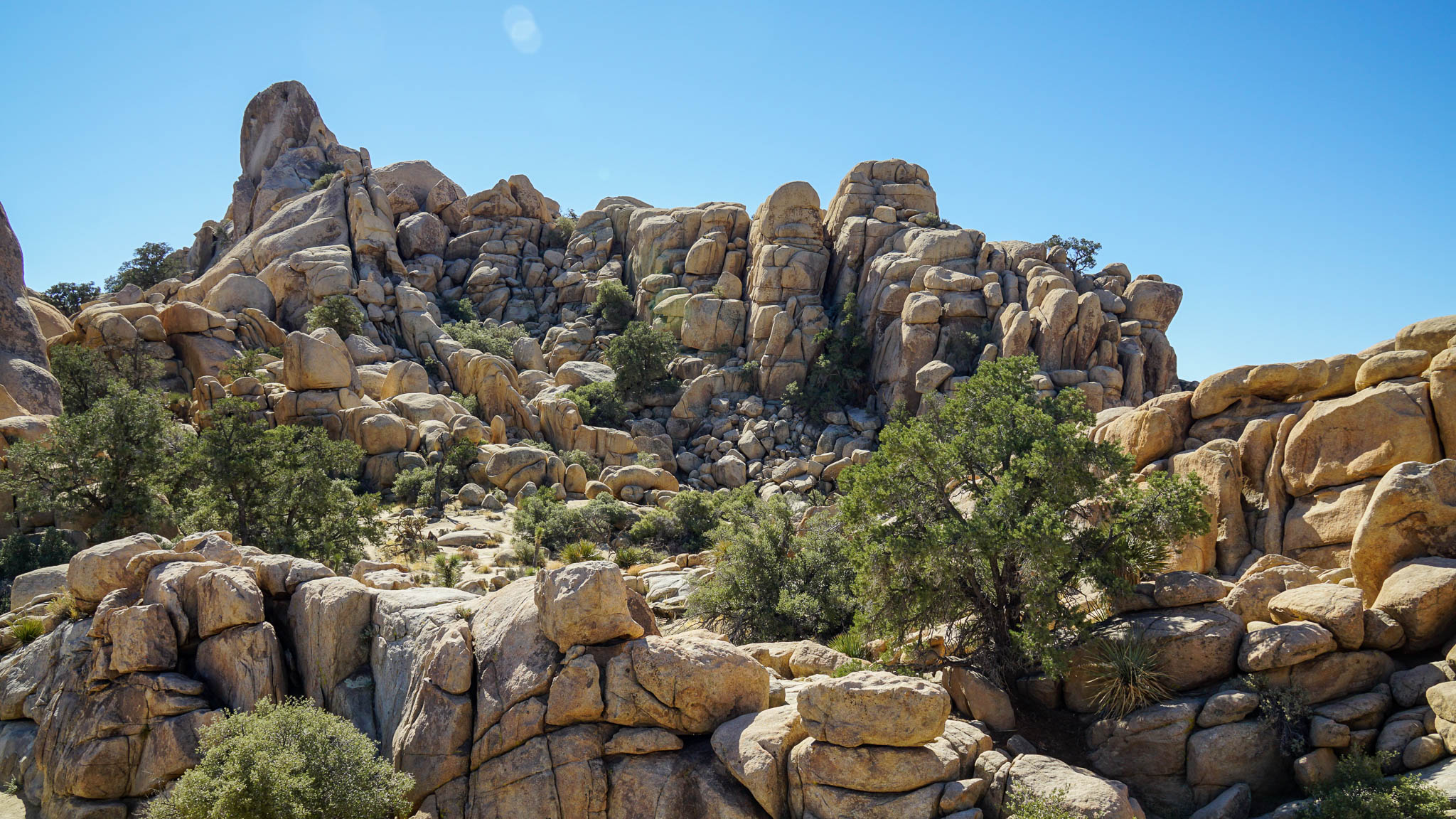
- Hidden Valley Nature Trail (easy loop, about 1 mile): Big boulders, big payoff, perfect warm-up or sunset stroll.
- Barker Dam (easy to moderate loop, about 1.3 miles): Granite, desert plants, and the chance of seasonal water after rain.
- Optional quick stop: Skull Rock pullout for a 10 to 20 minute wander.
Why it works: Minimal driving, easy parking rotation, and you still feel like you “did Joshua Tree.”
Plan B: One anchor hike
5 to 7 hours with breaks
- Ryan Mountain (moderate, steep, about 3 miles round trip, roughly 1,000 feet of gain): A short, punchy climb with one of the best panoramic views in the park.
- Late add-on stroll: Hidden Valley or the short loop at Cap Rock for golden-hour photos.
Timing tip: Start early, hike Ryan Mountain in the morning, then shift to shorter loops when the sun is higher.
Plan C: Quieter classics
4 to 6 hours
- Split Rock Loop (moderate loop, about 2.5 miles): A more spacious trail experience with classic rock formations and fewer crowds than the central “greatest hits” area.
- Short add-on: Arch Rock area if you want a quick scramble-and-wander moment.
Good for: Repeat visitors or anyone who wants more trail time and less parking-lot hopping.
South side day hike plans
The south side starts in a different world: lower elevation, wider desert basins, and a quieter rhythm. This side is underrated, especially if you are pairing Joshua Tree with Palm Springs and want a less hectic park day.
Plan A: Oasis and views
2 to 3 hours
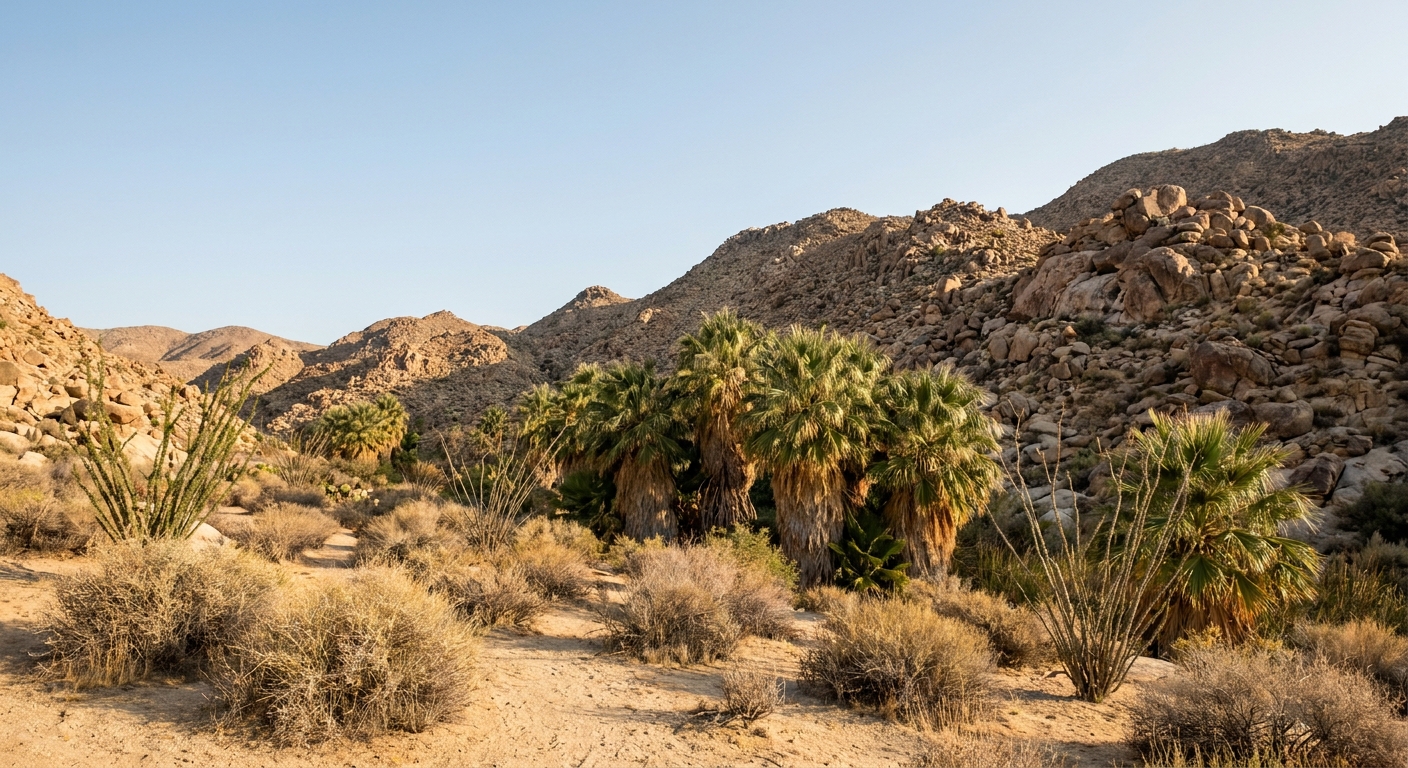
- Cottonwood Spring Oasis (easy, short walk): A quick look at native palms and a reminder that water is the whole story out here.
- Mastodon Peak (moderate loop, about 2.4 to 2.6 miles): A compact hike with big views and a fun ridge feel.
Why it works: Quick access from the entrance, ideal for short visits, and it still feels distinct from the boulder-heavy north.
Plan B: Cholla morning
3 to 5 hours including driving
- Drive to Cholla Cactus Garden (from Cottonwood): Plan a scenic transit and stop at pullouts.
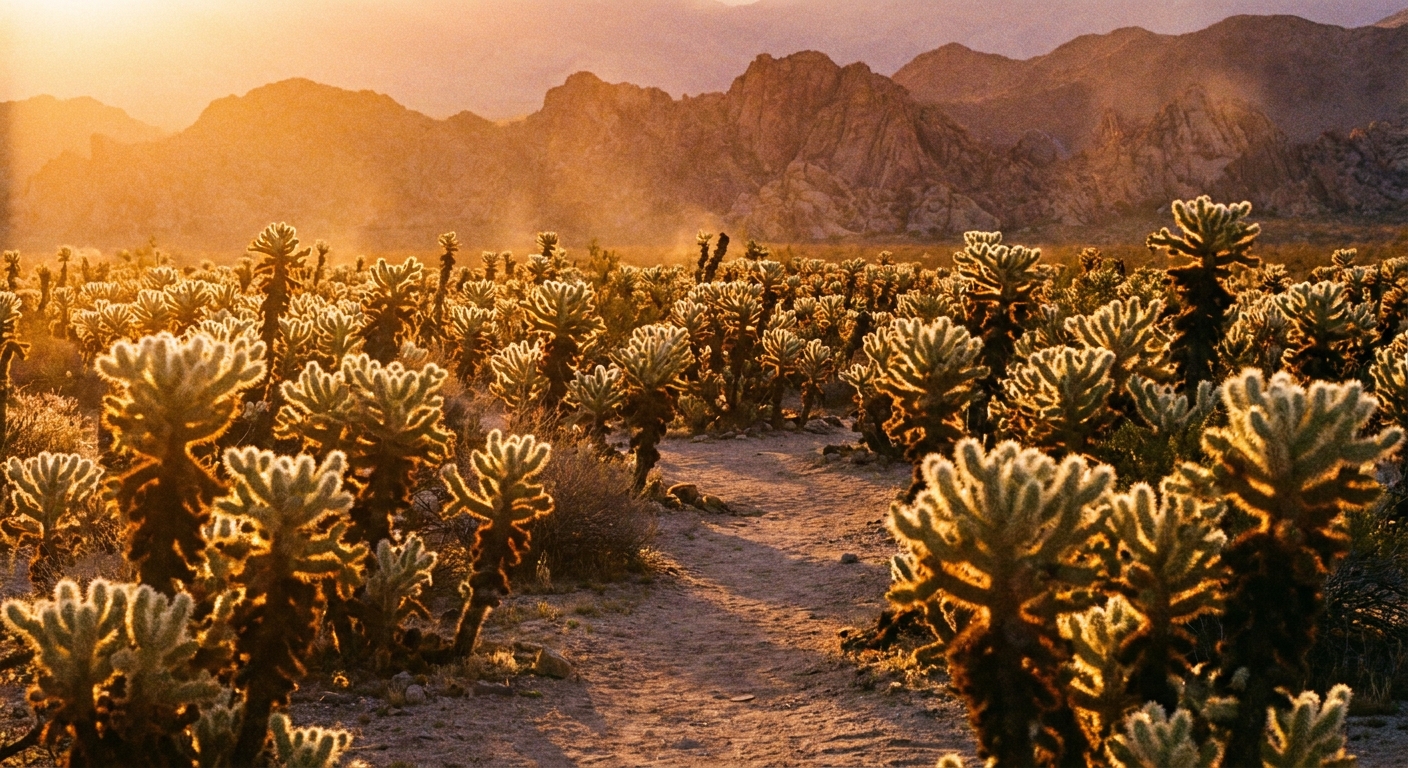
- Cholla Cactus Garden stroll (easy, about 0.25 mile nature trail): Short wandering through dense cholla, best in gentle light.
- Optional add-on: A short stop at Arch Rock area if you continue northward and want a boulder hit.
Photographer’s note: The cholla glow is real at sunrise and late afternoon. At midday it is harsher, hotter, and less magical.
Plan C: One longer desert hike
4 to 6 hours
- Lost Palms Oasis (moderate to strenuous, about 7 miles round trip): A longer hike that earns its oasis ending, with more solitude and a true low-desert feel.
Bring more water than you think. The south side can feel deceptively dry and exposed, even when temperatures look reasonable on your phone.
Summer heat strategy
Joshua Tree is spectacular, but summer is not forgiving. If daytime highs are extreme, shift your goal from “big mileage” to “beautiful timing.”
- Hike at sunrise for your main trail. Plan your longest outing to be done by late morning.
- Use midday for scenic driving, quick viewpoint stops, and short nature loops near your car.
- Choose shorter trails with easy bailouts. A loop near the road beats committing to a long out-and-back when the heat spikes.
- Carry more water than a normal day hike, plus electrolytes. In very hot conditions, a common baseline is up to 1 gallon per person per day, and more if you are hiking hard.
- Assume many trails have little to no shade. Sun protection is not optional: hat, sunscreen, and light layers you actually like wearing.
- Watch for heat illness early signs: headache, chills, nausea, confusion. Turn around early. Pride is not a souvenir.
If you want a “rugged morning, urban comfort afternoon” day, summer is actually perfect for that rhythm. Earn sunrise on a trail, then go claim a shaded patio and an iced coffee.
Both sides without the slog
Doing north and south in one day works best as a one-way crossing, not a backtrack. Think: hike, scenic drive, short stop, exit, food.
Option 1: North to south
Best for a full day
- Enter West or North early, hike your anchor trail (Ryan Mountain or Split Rock Loop).
- Midday scenic drive south with a couple of short pullouts.
- Late afternoon at Cottonwood Spring area for a short walk.
- Exit Cottonwood toward Palm Springs.
Option 2: South to north
Best in winter and shoulder seasons
- Enter Cottonwood, hike Mastodon Peak (or keep it shorter if the day is warm).
- Drive north to Hidden Valley area for a late-day boulder loop.
- Exit North or West depending on where you are sleeping.
Key constraint: You will not do multiple long hikes plus the full park drive without it feeling rushed. Pick one hike that is the reason you came, then treat everything else as bonus.
Where to stay
Near the north side
- Joshua Tree town: Great for coffee, low-key dinners, and quick access to the West Entrance.
- Twentynine Palms: Often easier on budget and closest to the North Entrance.
This setup is ideal if you want to roll out of bed and be on classic trails early, then come back to town for tacos and an early night.
Palm Springs
- Palm Springs: Pools, design hotels, and the kind of post-hike reset that feels like cheating in the best way.
- Best entrance from Palm Springs: usually Cottonwood for an easy in-and-out day. It can also make sense to enter West if your plan is focused on Hidden Valley and Keys View, but expect more driving.
Palm Springs add-on
If you want a “Joshua Tree morning, Palm Springs afternoon” day, keep the plan simple and let the contrast do the work.
One hike, one comfort
- Morning: Choose either a south-side hike (Mastodon Peak or Lost Palms Oasis) or a north-side hike (Ryan Mountain). Do not try to collect them all.
- Afternoon: Head back to Palm Springs for a long lunch and a pool break. This is the desert version of sustainable pace.
- Evening: Optional sunset viewpoint in the Palm Springs area or a casual downtown stroll.
Coffee shop obsession note: Make your caffeine stop part of the plan, not an afterthought. A cold drink in Palm Springs after a sunrise hike is basically a reward system that actually works.
Practical tips
- Fees and passes: You will need a park entrance pass. If you do national parks more than once or twice a year, an America the Beautiful pass can pay for itself fast.
- Start early for parking near the central north-side trailheads. Midday can get crowded fast.
- Limited services in-park: Do not count on reliable water, food, or cell service once you are deep inside. Fill up your tank and your water bottles before you enter.
- Expect limited cell service. Download maps ahead of time.
- Pack for sharp things: cholla spines, abrasive rock, desert scrub. Closed-toe shoes are non-negotiable.
- Leave no trace: stay on trail where marked, respect fragile desert soil and crust, and pack out everything.
- Check current conditions before you go, especially for heat advisories and temporary closures.
Bottom line
North side (West and North Entrances) is the best choice for classic Joshua Tree boulders, Joshua tree woodland, and high-impact short hikes. South side (Cottonwood) is the best choice for a quieter low-desert experience and a smooth pairing with Palm Springs. Pick the side that matches your time window, then commit to one anchor hike and build the day around it. The park rewards focus.