Kanarraville Falls Permits and Slot-Canyon Safety
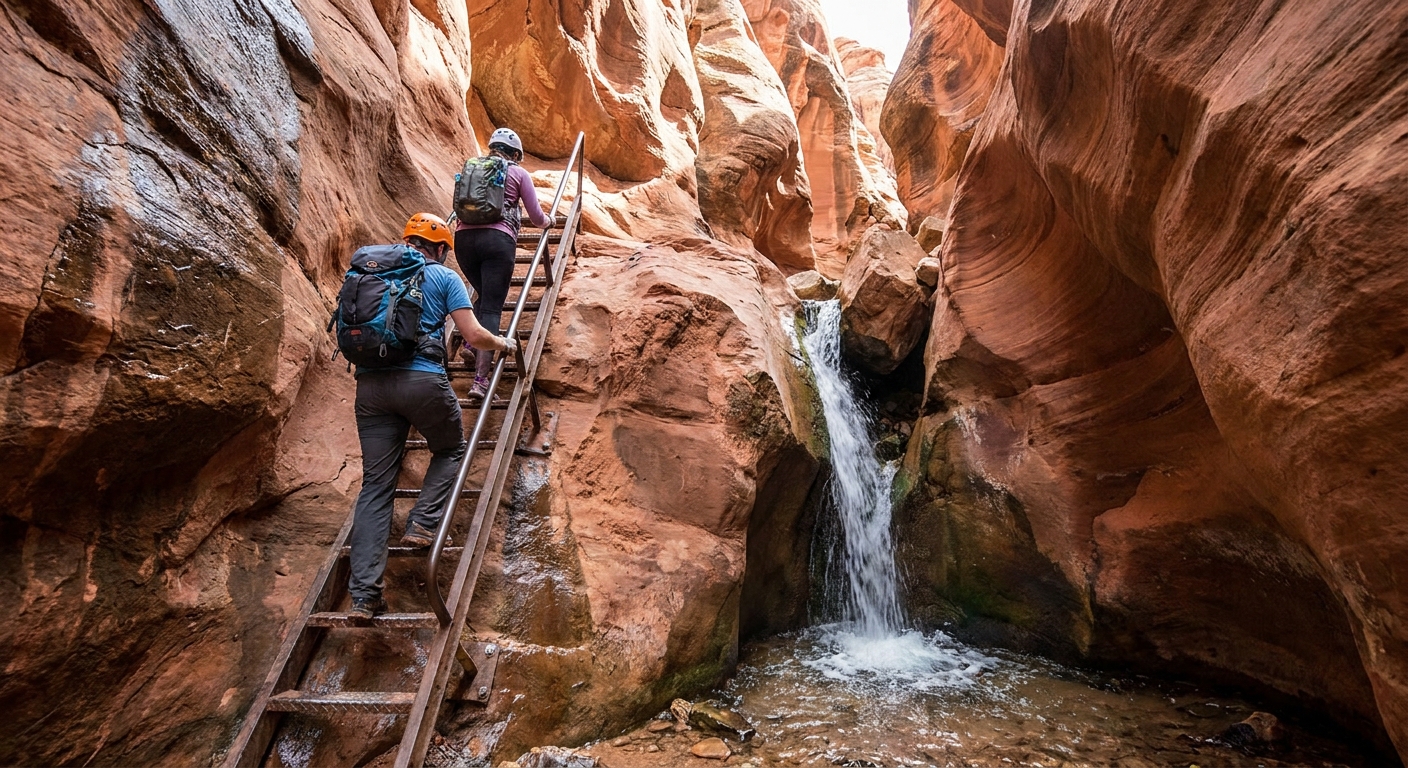
Kanarraville Falls (often called Kanarra Falls) is one of those Utah hikes that looks like a casual creek stroll on social media. In real life, it is a narrow slot with cold water, algae-slick rock, ladder obstacles, and just enough pinch points that small mistakes can turn into big ones.
The good news: you do not need to be a canyoneer to enjoy it. You do need a permit, honest expectations about wet feet, and a conservative approach to weather. This page is built for beginners who want a fun day out without becoming the cautionary tale.

Quick facts for beginners
- Distance: roughly 3.5 to 4.5 miles round trip out and back, depending on where you turn around
- Elevation gain: modest (generally under about 700 feet total), but the creek travel is what makes it feel harder
- Time: plan 3 to 5 hours for a relaxed first visit with ladder waiting and photo stops
- Difficulty: moderate for fitness, potentially challenging for footing and ladders
- Pets: No dogs or pets allowed. Kanarra Creek is part of the town’s drinking water supply and this rule is strictly enforced.
- Wet feet: non-negotiable
Carry-on-only energy here means light but prepared. You want enough gear to stay safe and comfortable, not so much that you are wrestling a giant pack in a slot.
Know what it is (and is not)
This route follows Kanarra Creek through a tightening canyon to a scenic waterfall area where ladders help you move up and around short drops. Most hikers turn around after the main falls section and retrace their steps.
- Expect water travel. You will be in the creek frequently, not just stepping over it.
- Expect tight walls. Slot canyons amplify risk from flash floods and create slippery, shaded conditions.
- Expect crowds. The permit system helps, but peak season still feels busy in the narrows.
If you want a dry, wide trail with overlooks, this is not that day. If you want a playful, watery slot-canyon experience with a clear safety plan, you are in the right place.
Permits: where to get them
Kanarraville Falls requires an advance online permit for day use. You cannot count on buying one at the trailhead.
Use the official Kanarra Falls permit website operated by the Town of Kanarraville. Avoid third-party sellers and “tour deal” listings that create confusion, add fees, or fail at the gate when enforcement checks confirmations.
Permit walkthrough
- Choose your date early. Weekends, holidays, and summer mornings fill first.
- Confirm how permits are counted. Some seasons are per person, and some systems use timed entry windows with daily caps. Read the current rules on the official site before checkout.
- Buy the exact number of permits for your group. Have a headcount before you click purchase.
- Save proof offline. Screenshot or download your confirmation (often a QR code) so you can pull it up without cell service.
- Arrive within your permitted window. If your permit is time-specific, do not assume you can show up whenever.
Before you click “purchase”
- Refund and change policy: know whether you can move dates if weather turns
- Group size limits: small groups move more safely through ladder bottlenecks
- Parking and check-in notes: follow the official instructions for where to park and what you may need to display or show. Enforcement is real.
My rule: If you are traveling from out of town, buy permits only after you have a backup plan. That might be a dry trail hike nearby, a museum and lunch day, or simply a scenic drive if storms show up.
Water and ladders: the real difficulty
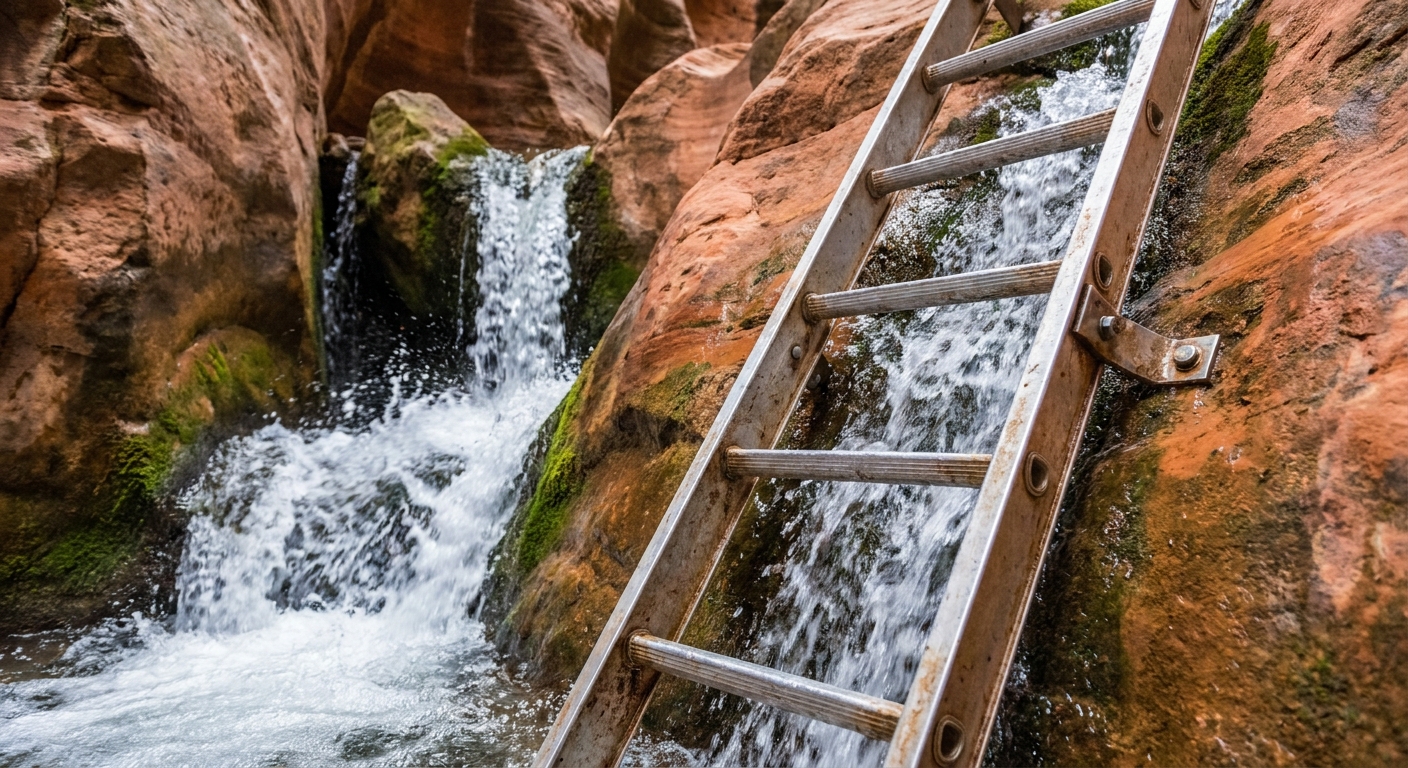
The ladder obstacles at Kanarraville Falls are the make-or-break moment for many first-timers. They are straightforward when water is moderate and you can place your feet with control. They feel completely different when flow is high, the rungs are slick, or the water pushes at your legs.
Important: the number and condition of ladders and obstacles can change after floods and maintenance. Think one to several ladder sections depending on current conditions, not a fixed promise.
How water level changes the day
- Ankle to shin deep: manageable for most beginners with good shoes and patience. Slips still happen on algae-covered rock.
- Knee deep: balance becomes the challenge. Short hikers may have a harder time stepping up to the first rungs.
- Thigh deep or fast-moving: this is where many groups should turn around. Current plus ladders is a bad combo for beginners.
Also, the water is often cold, but it is not always “clear.” After rain, runoff, or heavy use, it can look murky and feel slicker than expected.
Ladder etiquette
- One person on a ladder at a time. It reduces bounce and prevents pileups if someone slips.
- Unclip trekking pole straps. If you fall, straps can twist wrists.
- Keep hands free. Stow phones and camera gear before you climb.
- Let faster groups pass at wider spots. The narrows are not the place for pressure or tailgating.
Helmet question: You will see many people in helmets. For cautious beginners, a climbing helmet is a reasonable extra layer, especially in crowded ladder zones where dropped items and slips happen. It is not required, but it is not a weird choice either.
Waders vs water shoes
You will hear two passionate camps: people who swear by waders and people who insist you are fine in shoes. Both can be right, depending on season, temperature, and your tolerance for cold.
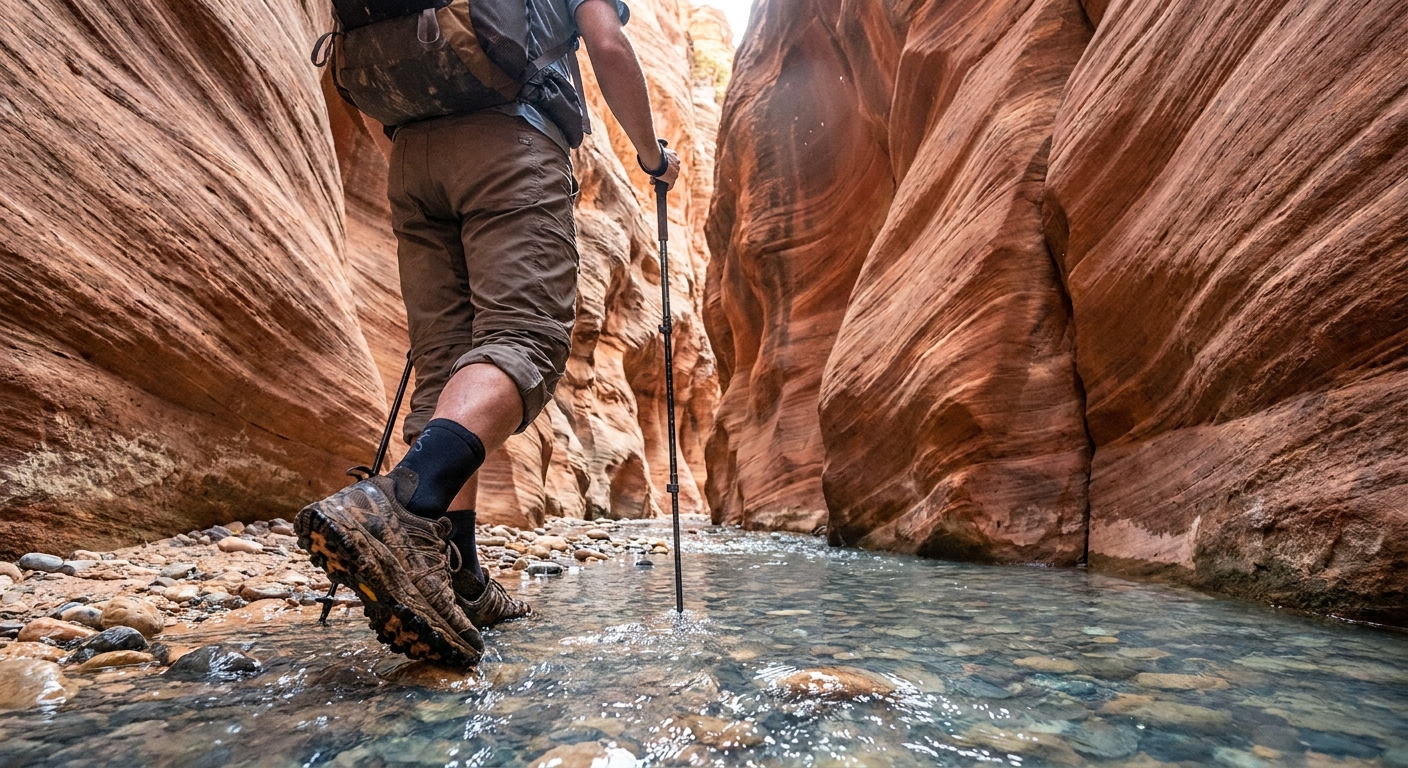
Option A: Neoprene socks + trail runners (my favorite middle ground)
For many beginners, this setup hits the sweet spot. Neoprene socks add warmth. Trail runners grip better than most sandals and protect toes when you inevitably kick a rock.
- Pros: warmth without bulk, good traction, easier ladder climbing than bulky boots
- Cons: shoes will be wet for the rest of the day
Option B: Waders (warm, but not magic)
Waders can keep you warmer, but they are not automatically safer. Bulky legs can change how you balance on ladders, and poor fit can trip you up.
- Pros: warmth and comfort in shoulder season
- Cons: bulk on ladders, can feel unstable, easy to overheat on the approach
Safety note: Be cautious with chest-high waders in moving water. If you fall, they can restrict movement or fill in a way that makes self-rescue harder. If you choose waders, go for a snug fit, consider lower-profile options, and practice walking in them before your trip.
Option C: Water shoes or sandals (only if they truly grip)
Many “water shoes” are basically slippery slippers. If the outsole is not sticky and supportive, you will feel it on algae-coated rock.
- Pros: drains well, no heavy wet sneakers afterward
- Cons: cold feet, toe injuries, often poor traction
What to leave at home
- Cotton socks: they get cold fast and stay cold
- Brand-new footwear: the creek will find your blisters
- Anything you cannot get wet: if it must stay dry, it must be in a dry bag
Packing list
This is a short hike, but the environment is demanding. Pack like someone who expects to get wet, cold, and briefly uncomfortable, because that is exactly what makes it memorable.
- Footwear: trail runners plus neoprene socks, or grippy canyon shoes
- Dry storage: small dry bag for phone, keys, and a light layer
- Warm layer: lightweight fleece or insulated layer for after the canyon
- Rain shell: even if the forecast looks fine, shells buy time in surprise weather
- Headlamp: tiny insurance policy if delays happen at ladders
- First aid basics: blister care, a small wrap, ibuprofen if you use it
- Food and water: more than you think for a wet, effort-heavy walk
- Sun protection: hat and sunscreen for the approach and exit
- Optional helmet: especially for crowded ladder sections
Trekking poles: helpful on the approach, annoying in the slot. If you bring them, collapse and stow them before ladders.
Slot-canyon safety
Slots are serious because they are narrow and they funnel water. You cannot always see what is happening upstream, and you often cannot climb out quickly.
Flash floods: when to skip
If you remember one thing, make it this: do not enter a slot canyon if thunderstorms are possible in the drainage, even if the sky above you is blue.
- Skip the hike if: thunderstorms are in the forecast for the area, you see building dark clouds, or you hear distant thunder
- Turn around if: water suddenly gets cloudy, rises quickly, or carries more debris than before
- Do not negotiate with “maybe.” Slots do not give you a lot of second chances.
Also consider seasonality. Late summer monsoon patterns can make storm timing unpredictable. Spring runoff can raise flow and make ladders feel more committing.
Slip and fall prevention
- Move like you are on ice. Short steps, three points of contact on ladders.
- Avoid the green stuff. Algae is nature’s banana peel.
- Space out. Give room so one person slipping does not knock others over.
Cold water
Cold water is sneaky. It can turn a strong hiker into a shaky hiker, especially for kids or anyone who runs cold.
- Watch for: uncontrolled shivering, clumsiness, confusion
- Fix it fast: add a layer, eat something, move, and consider turning around
If someone gets hurt
In a slot, help can be slow and cell service can be unreliable. If someone takes a bad slip, stop the group, get them stable, warm, and out of the main flow of traffic and water. If they cannot safely continue, turn around early rather than trying to “push through to finish.” If you need emergency help, call 911 when you can, and be ready to describe your location as clearly as possible (trail name, landmarks like ladders and falls, and how far you are from the trailhead).
Leave No Trace
Kanarraville Falls is popular for a reason, and popularity is exactly why it needs extra care. In water-based canyons, impact concentrates quickly.
Stay in the creek when appropriate
In many narrow sections, walking in the water reduces bank erosion and protects fragile plants. If there is an established path outside the creek, use it. If not, avoid scrambling up muddy edges just to keep shoes dry. That shortcut becomes an ugly social trail fast.
Human waste and hygiene
- Use restrooms before you start. Do not count on privacy in the slot.
- Pack out toilet paper. It is the most common and most avoidable eyesore.
- Bring a WAG bag for emergencies. Ideally, nobody needs it. Realistically, first-timers underestimate cold water and nerves. If it happens, do the right thing and pack it out.
- Skip soap in the water. Even “biodegradable” soap does not belong in a creek.
Respect ladders and bottlenecks
Do not climb around ladders or try to create new routes. Those detours crumble banks and put you above other hikers in a fall zone.
Sound and crowd courtesy
Slots echo. Keep music off and voices low. If you stop for photos, step to a wider spot to let others move through.
Pets (again, because it matters)
No pets allowed, even if your dog is friendly, small, or “won’t go in the water.” This is a drinking water watershed and the town takes it seriously.
Timing and crowds
For the best beginner experience, aim for a low-stress time slot.
- Go early: calmer water feel, fewer ladder backups, better light
- Avoid peak heat: you will still want shade breaks on the approach and exit
- Weekdays win: if your schedule allows, your whole canyon experience improves
Four questions before you go
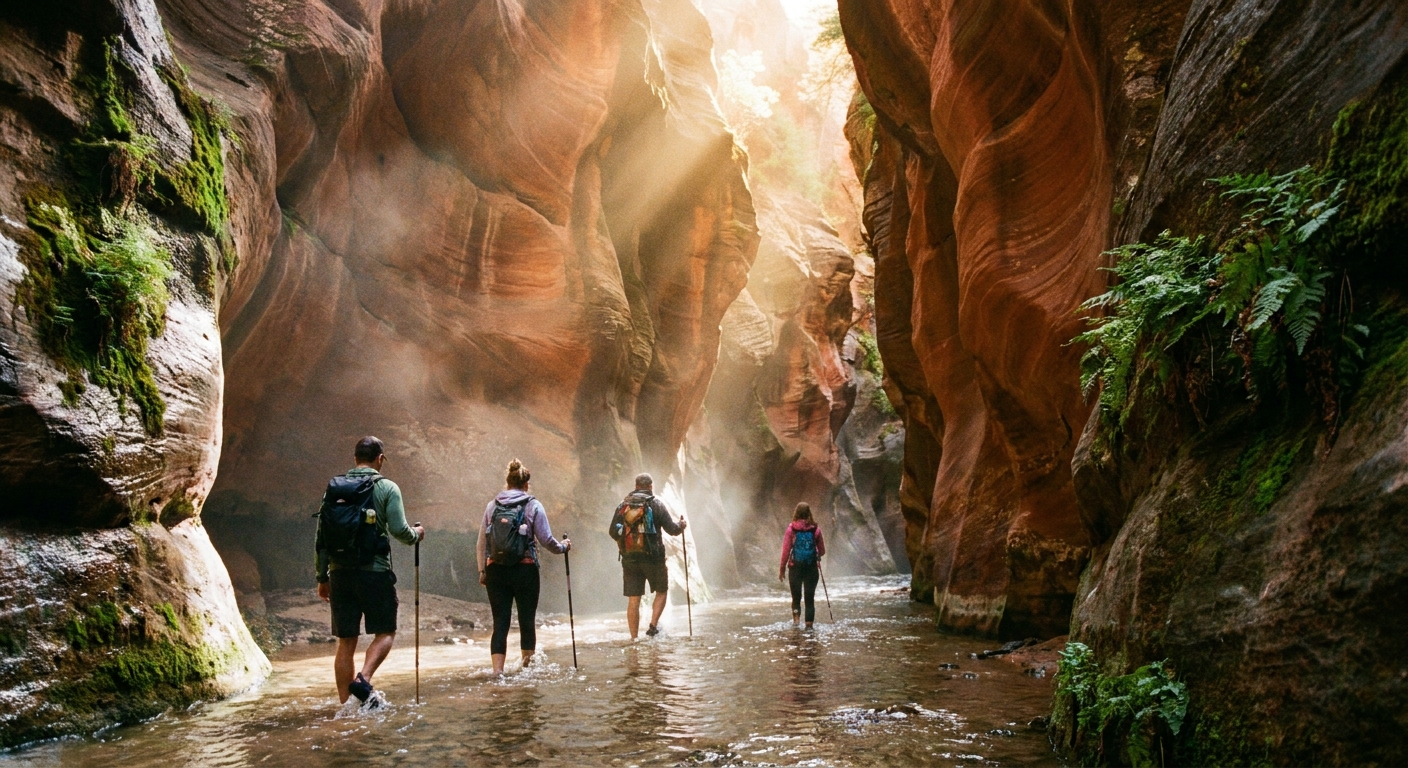
I love a bold plan, but I love an uneventful rescue report more. Before you commit, do a quick gut-check.
- Weather: Is there any thunderstorm chance in the broader area today?
- Water and temperature: Will everyone in your group stay warm enough to move safely?
- Mobility: Can everyone climb ladder sections confidently while wet?
- Group dynamics: Do you have the patience for narrow corridors and waiting turns?
If any answer feels shaky, pivot. Southern Utah is full of excellent alternatives, and your permit can be the start of a smarter plan next time, not a reason to push into bad conditions.
Quick recap
- Get permits from the official Town of Kanarraville Kanarra Falls website and save proof offline.
- No pets allowed. This is a drinking water watershed.
- Plan for 3.5 to 4.5 miles round trip and a few hours on route.
- Plan to get wet. Neoprene socks plus trail runners is a reliable beginner setup.
- Respect ladder sections. One at a time, hands free, move deliberately.
- Skip the slot if storms are possible. Flash floods are non-negotiable.
- Leave no trace by avoiding bank shortcuts and packing out all trash, toilet paper, and any emergency WAG bag waste.
If you do Kanarraville Falls right, you finish tired, slightly damp, and very proud of your decision-making. That is the kind of adventure I will take every time.