Lake Mead and Hoover Dam Walks From Las Vegas
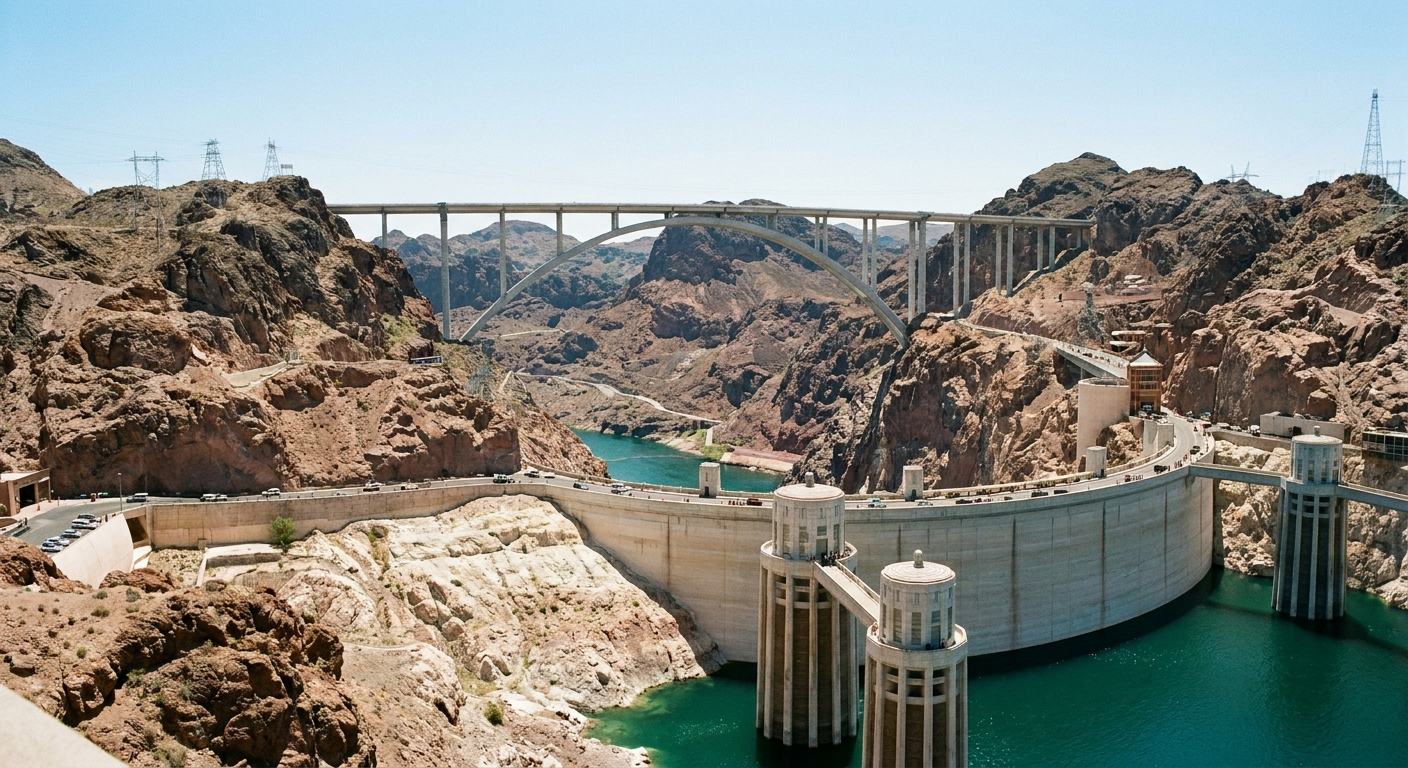
Las Vegas is famous for neon, but the best kind of reset is 45 minutes away: a sweep of desert cliffs, improbably blue water, and one of the most iconic feats of engineering in the U.S. The Lake Mead National Recreation Area and Hoover Dam are tailor-made for travelers who want big scenery without big mileage. Think: tunnel walks with lake views, dam overlooks you can do in street clothes, and quick hikes that still feel like you earned your post-hike iced coffee.

This guide focuses on easy-to-moderate walks you can pair with a half day in the city, plus the practical stuff people forget until they are standing in 105°F heat with an empty water bottle.
Quick planning: time from the Strip
Most visitors underestimate how much time disappears into parking, security lines, and photo stops. Here is a realistic planning baseline if you are starting from the Las Vegas Strip.
- Drive time: 40 to 55 minutes each way to Hoover Dam, depending on your hotel location and traffic.
- Best half-day plan: 4 to 6 hours total (drive, one primary walk, viewpoints, and a relaxed lunch or snack).
- Best quick hit: 2.5 to 3.5 hours total if you only do the dam viewpoints and a short stroll.
- Full, unrushed day: 6 to 8 hours if you add Lake Mead shoreline time or a second walk.
Timing tip: In warm months, plan to be on your trail or walkway at sunrise or in the last two hours before sunset. Midday heat here is not a vibe, it is a hazard.
Fees and passes
Hoover Dam itself is not inside the Lake Mead National Recreation Area entrance gate, but many Lake Mead trailheads and developed areas require an entrance fee (or a valid America the Beautiful interagency pass). If you are doing the Historic Railroad Trail or heading down to lake-level recreation areas, plan for that fee at the gate.
Hoover Dam basics: where to start
Hoover Dam sits in Black Canyon on the Colorado River, straddling the Nevada and Arizona border. Even if you do not book an interior tour, the outdoor walkways deliver the wow factor fast.
Parking and access
- Hoover Dam Parking: The most straightforward option for dam-level viewpoints and walks. Parking is paid and can fill on weekends and holidays.
- Mike O'Callaghan–Pat Tillman Memorial Bridge parking area: Great if you want the classic “dam and bridge” photo angles and a longer, breezier walk on the bridge path.
Expect security presence and occasional restrictions. Do not bring drones, and be prepared for bag checks depending on where you go.
Walk 1: Historic Railroad Trail
If you only do one easy hike near Lake Mead, make it this one. The Historic Railroad Trail follows the old rail bed used to build Hoover Dam. It is wide, mostly gentle, and genuinely fascinating, with five walk-through tunnels carved into the cliffside.
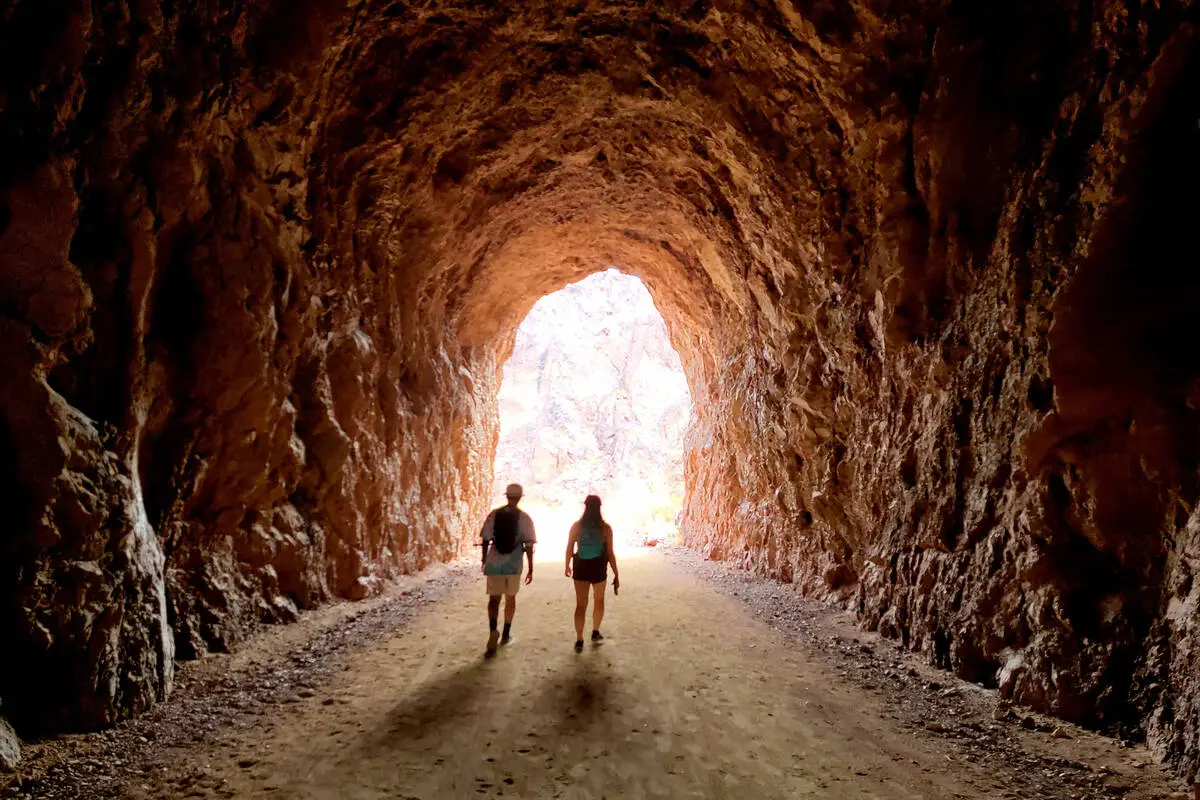
- Distance: Choose your own. Many people do 2 to 4 miles round trip, out-and-back.
- Difficulty: Easy to moderate. Minimal elevation, but full sun and heat make it feel harder.
- Why it is worth it: Tunnel shade breaks, huge lake views, and an unusually “story-rich” trail where the landscape and history are inseparable.
How to do it smart: Start early, walk through at least two tunnels, then continue until you hit your personal “this view is enough” threshold and turn around. The trail is scenic the whole way, so you do not have to commit to a long distance to get the payoff.
Good to know: The tunnels are cooler than the open trail, but do not count on them as real heat protection. Bring more water than you think you need.
Walk 2: Dam top walkway
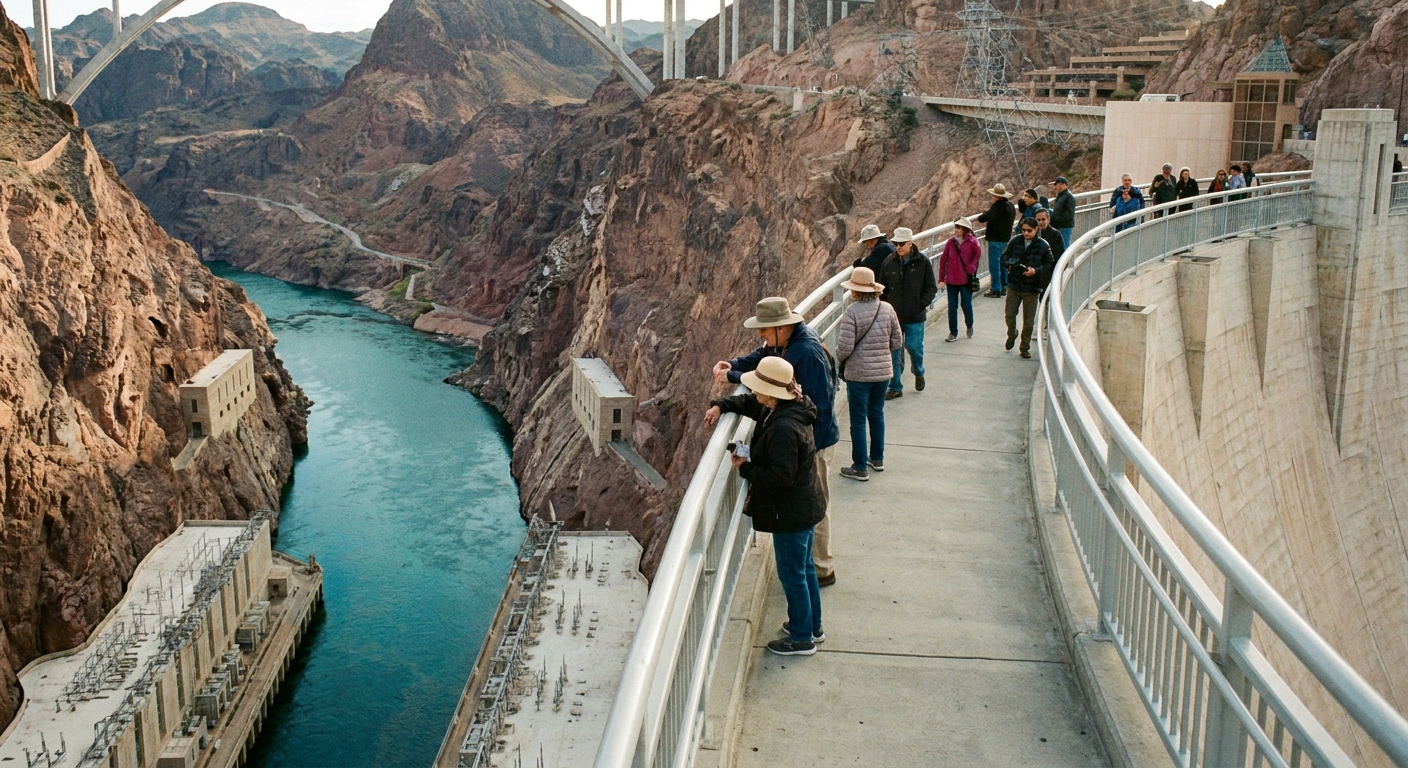
This is the classic: a short, high-interest walk across the dam to look down into Black Canyon and over the reservoir. It is more “urban stroll” than “hike”, which is exactly why it works so well on a Vegas trip.
- Distance: About 0.5 to 1 mile total depending on how much you wander the overlooks.
- Difficulty: Easy, but expect crowds and reflective heat off concrete and metal.
- Best for: First-timers, families, and anyone who wants iconic photos with minimal effort.
Photography tip: Morning light generally gives you clearer contrast in the canyon. In the afternoon, heat shimmer can soften details.
Walk 3: Memorial Bridge path
The Mike O'Callaghan–Pat Tillman Memorial Bridge is where you go for the sweeping, postcard perspective. The pedestrian path is straightforward and delivers an elevated view of both the dam and the canyon.
- Distance: Roughly 1.5 to 2 miles round trip from the parking area, depending on where you start and how far you continue.
- Difficulty: Easy to moderate. The grade is gentle, but it is exposed and windy.
- Best for: Big-picture views, sunset light, and travelers who want to move a little without committing to a trailhead deep in the park.
Accessibility note: From the parking area, you reach the bridge walkway via a set of stairs or a longer switchback-style ramp. If stairs are a no, take the ramp and plan a few extra minutes.
Comfort tip: Wind can be intense on the bridge, especially in cooler months. A light layer makes the walk more pleasant.
More short walks nearby
If you want something beyond the three classics, these are easy add-ons that still feel like you left the city.
Lake Mead shoreline strolls
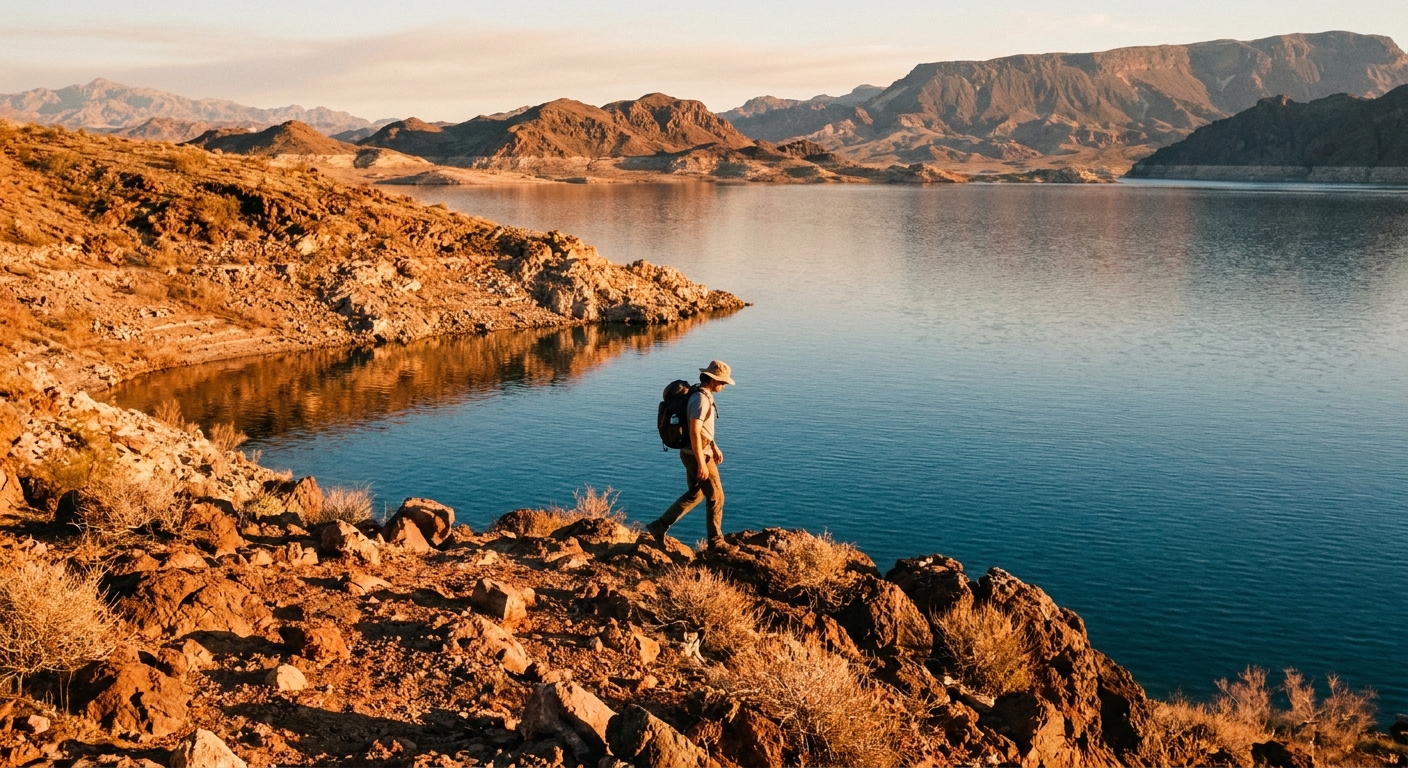
On days when the lake is calling, choose a developed lakeside area and do a simple shoreline walk. You will get water views, desert birdlife, and a calmer pace. These walks are more flexible than named trails, which makes them great for families or anyone traveling with mixed energy levels.
Hemenway Park (bighorn sheep check)
If you want a low-effort nature stop on the way in or out, swing by Hemenway Park in Boulder City. It is not a hike, more like a grassy viewpoint, but it is famous for bighorn sheep sightings. Consider it your “dessert course” after the dam.
Heat and desert safety
I love a low-mileage plan because it leaves room for spontaneous coffee stops and unhurried museum afternoons. But low mileage does not mean low risk in the Mojave. Treat summer conditions seriously.
- Water: Bring more than you expect to drink. For warm conditions, a practical baseline is at least 1 liter per person for short walks, and more if you will be out longer or in direct sun.
- Electrolytes: Add a packet or bring a sports drink. In dry heat, you can lose salts quickly without realizing it.
- Sun protection: Hat with a brim, sunscreen, and sunglasses. The glare off pale rock and concrete is intense.
- Footwear: Sneakers are fine for dam and bridge walks. For the Railroad Trail, wear shoes with decent grip and avoid flimsy sandals.
- Start time: Aim for sunrise to mid-morning in hot months. If it already feels warm in the parking lot, it will feel brutal on the trail.
- Signs to take seriously: Headache, nausea, chills, confusion, or stopping sweating. Turn back, find shade, and cool down immediately.
Desert rule I live by: you should feel slightly over-prepared when you leave the car. If you feel perfectly prepared, you probably packed for a city park.
Best seasons and times
For comfort and safety, fall through spring is prime time. Summer is doable only with early starts and conservative plans.
- Best months: October through April for most visitors.
- Best time of day: Early morning for crisp views and lighter crowds. Late afternoon can be gorgeous, but watch your turnaround time so you are not hiking back in the dark.
- Windy days: Great for cooler temps, less great for the bridge if you dislike gusts.
Sample itineraries
2.5 to 3.5 hours: Iconic viewpoints
- Drive from the Strip to Hoover Dam
- Dam top walkway and overlooks
- Quick stop at the Memorial Bridge viewpoint
- Drive back to Las Vegas
4 to 6 hours: Best half day
- Early drive to the Historic Railroad Trail (plan for the Lake Mead entrance fee or pass)
- 2 to 4 miles out-and-back through a few tunnels
- Hoover Dam viewpoint stroll for the engineering perspective
- Back to town for a late breakfast or early lunch
6 to 8 hours: Slow day by the water
- Railroad Trail in the morning
- Dam and Memorial Bridge photos
- Relaxed lakeside time with a short shoreline walk
- Return to Las Vegas before dark
What to pack
This is an easy add-on to a Vegas trip, which means you can keep it simple. My essentials for these walks:
- Small daypack
- Water and electrolytes
- Sun hat and sunscreen
- Light layer for wind or winter mornings
- Snacks that survive heat (nuts, jerky, bars)
- Comfortable walking shoes
If you are visiting in summer, consider a small umbrella for portable shade. It looks a little extra until you are the only person not squinting into the sun.
Leave no trace
Lake Mead is close to the city, but the ecosystem is still fragile. A few small choices keep it that way:
- Stay on established paths, especially on the Railroad Trail where the landscape can be sensitive to shortcuts.
- Pack out everything, including fruit peels and tissues.
- Respect wildlife space, especially around water where animals come to drink.
- Skip the drones and keep sound low. The canyon quiet is part of the magic.
When to skip it
If it is extreme heat, high winds, or you are short on time and already dealing with Strip traffic, choose a closer urban nature option in Las Vegas and save Lake Mead for another day. These walks are easy, but they still demand respect for the desert and enough time to do them without rushing.
But on a good-weather morning, this is one of the best “city plus wild” combos in Nevada: engineering spectacle, canyon air, and a trail that feels like stepping into the story of how the modern Southwest was built.