Mount Whitney Day Hike Permits
Mount Whitney has a way of making even organized people feel slightly chaotic. You are juggling a permit lottery, a weather window that can change by the hour, and an altitude profile that goes from “pleasant forest walk” to “why do my lungs feel like crumpled paper” in one long day.
This page is here to make the whole thing feel doable. We will walk through how the day hike permits actually work, when to aim for, what to carry, how to acclimate without turning your trip into a suffering contest, and what to do if the lottery gods say no.

Quick facts before you apply
- Trailhead: Mount Whitney Trailhead at Whitney Portal (near Lone Pine, California)
- Summit elevation: often listed as 14,505 feet (4,421 m), though some newer surveys publish slightly different numbers. Either way, it is very high.
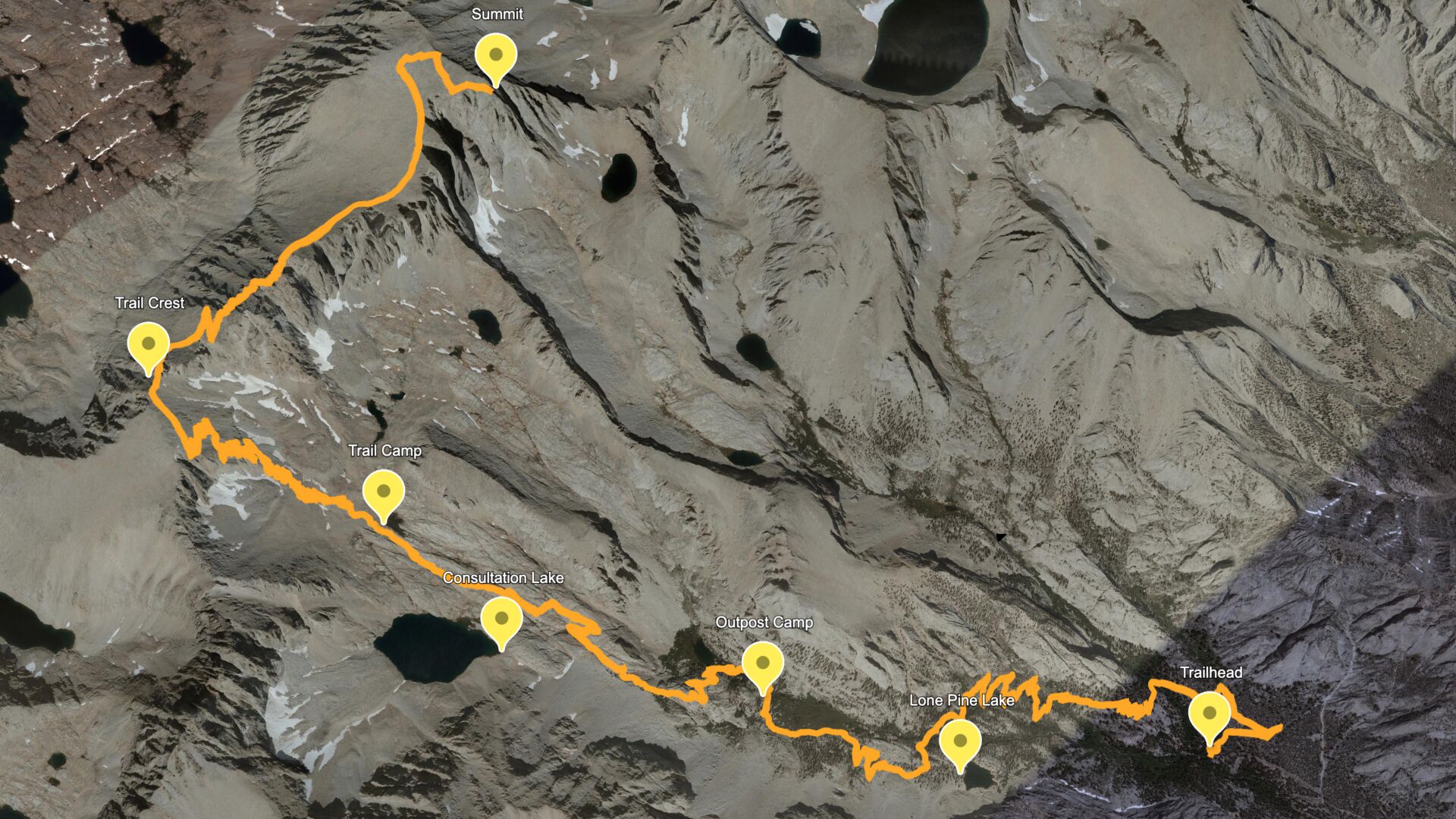
- Typical day hike distance: about 22 miles round trip
- Typical elevation gain: about 6,100 to 6,300 feet (varies by track and device)
- Why the permit is strict: it is a high-demand route through a fragile alpine corridor with limited camping and sanitation capacity
- Famous Whitney rule: you must pack out solid human waste using a WAG bag (yes, really). Plan for it and bring one.
If you are fit but not acclimated, Whitney can still hand you a “nope” halfway up. The permit is only one piece of the puzzle. The other piece is respecting altitude and planning for a realistic turnaround.
Permit basics: day hike vs overnight
There are two main permit flavors for the Mount Whitney Trail (the main route from Whitney Portal):
- Day-use permit: You start and finish the same day. No camping on the Mount Whitney Trail overnight. This is the classic very-long-day push.
- Overnight permit: You plan to camp (often at Trail Camp or Outpost Camp) and summit on day two. You still need the Whitney-specific permit during the quota season.
Note: other routes (like the Mountaineers Route via the North Fork) have different logistics and can have different permit considerations. This guide is focused on the standard Mount Whitney Trail from Whitney Portal.
Both options are competitive in peak season. If you are undecided, think of it this way:
Choose day hike if…
- You are comfortable with a 12 to 18 hour mountain day.
- You hike efficiently and can manage nutrition, hydration, and pacing without a long rest break.
- You are traveling light and prefer one big effort over packing overnight gear.
Choose overnight if…
- You want a better acclimation curve by sleeping higher before summit day.
- You want a more flexible summit attempt (weather, pace, energy).
- You would rather carry a heavier pack than race the clock.
My honest take: if you are coming from sea level and you have not recently spent time above 10,000 feet, overnight often stacks the odds in your favor. Day hiking Whitney is iconic, but it is not the only “strong” way to do it.
Quota basics and dates
During the quota season, entry on the Mount Whitney Trail is limited each day. Exact dates and numbers can shift year to year, so always verify current rules on Recreation.gov and Inyo National Forest updates.
Typical planning anchors that are often true (but still worth verifying for your year):
- Quota season: usually May 1 through November 1
- Lottery application window: typically early February through mid-March
- Lottery results: typically posted mid-to-late March, followed by a short claim window
What stays consistent:
- Demand is highest on weekends and in the heart of summer.
- Midweek dates can be easier to land than Fridays and Saturdays.
- Shoulder season can mean fewer applicants, but more snow and higher consequences if conditions shift.
How the lottery works
The day-use permit for Mount Whitney is typically issued through a seasonal lottery on Recreation.gov. The mechanics can change slightly, but the workflow is usually:
- Create or confirm your Recreation.gov account well before the application window.
- Enter the lottery during the application period for your preferred dates.
- Rank your choices smartly: include multiple dates, and include midweek options if you can.
- Wait for results: if you win, you will need to claim and pay within the required window.
- Finalize your permit details including group size and alternate leader if allowed.
- Carry your permit as required. Do not count on cell service at the Portal. Download it offline and consider a printed copy as a backup.
How to improve your odds
- Be flexible: apply for a range of dates, not one “perfect Saturday.”
- Go midweek: Tuesday to Thursday often has less demand.
- Use your whole group strategically: if everyone insists on being the “leader,” you can accidentally compete against yourselves. Pick one applicant per group unless you are intentionally trying multiple lineups.
- Know your realistic season: choosing dates with typical snow coverage can backfire if you do not have the skills and gear for it.
Important: lottery rules, fees, and timelines are set by the managing agencies and can change. Always treat this page as your planning companion and Recreation.gov as the final authority.
Best time to day hike Whitney
Most day hikers aim for summer into early fall, when the Mount Whitney Trail is most likely to be snow-free and the days are long enough to support a safe turnaround.
Typical sweet spot
- Late June through September: often the best balance of long daylight and a mostly snow-free trail, depending on snowpack.
Tradeoffs by season
- Early season: more snow and ice risk, route-finding issues, and potential for an “easy on paper” hike to become a mountaineering day.
- Peak summer: big crowds, afternoon thunderstorms (yes, lightning is a real factor), and hotter conditions down low.
- Shoulder season: fewer people and crisp air, but rapidly shrinking daylight and fast-changing storms.
My favorite planning mindset: choose your date for conditions, not vibes. Vibes are for the coffee shop after you get back to Lone Pine.
Altitude prep that helps
For many Whitney day hikers, altitude is the main limiting factor, not leg strength. You can be marathon-fit and still get humbled above Trail Crest.
Acclimation plan
- Arrive a day or two early if you can. Spend time at moderate elevation and take a short hike.
- Sleep higher than sea level the nights before if it fits your itinerary. Many people base in Lone Pine and do acclimation hikes nearby.
- Climb high, sleep lower is a classic approach: hike to a higher point during the day, then return to a lower sleeping elevation.
- Hydrate and eat consistently in the 24 to 48 hours leading up to your hike. Under-fueling makes altitude feel worse.
Pacing at altitude
On Whitney, a sustainable pace is one where you can speak in short sentences without feeling like you are doing a TED Talk between gasps. If you are struggling well below Trail Camp, it is a sign to slow down now, not “push through” and hope it fixes itself higher up.
Know the red flags
- Mild symptoms: headache, nausea, loss of appetite, poor sleep. These are common and can worsen quickly.
- Serious symptoms: confusion, inability to walk straight, shortness of breath at rest, worsening cough. These require immediate descent and medical attention.
If altitude sickness starts to build, the correct move is boring and effective: descend early, stay together, and do not try to “sleep it off” on a day hike.
Medication questions (like acetazolamide) are worth discussing with your clinician before your trip, especially if you have a history of altitude illness.
Gear, WAG bags, food storage
Gear rules can change, and they can also vary by zone and season. Always confirm the current Inyo National Forest requirements for your permit type and date.
Non-negotiables for a Whitney day hike
- Headlamp with fresh batteries. Most day hikes start in the dark and many finish in the dark.
- Layer system including wind protection and a warm layer. It can be summer at the Portal and winter on the summit.
- Water capacity and a treatment method (filter, tablets, or UV). Do not bet your day on one bottle.
- WAG bag for human waste and the willingness to use it. Whitney requires you to pack out solid human waste. It is not optional and it is a big deal for keeping the corridor from turning into an alpine litter box.
- Navigation (offline map app plus a backup). The trail is obvious in good conditions, less so with snow or low visibility.
- Sun protection (hat, sunglasses, sunscreen). The Sierra sun is not subtle.
- Calories you will actually eat when you feel slightly nauseated. Think salty, simple, and easy to chew.
Water sources
In most summer conditions, you can refill along the way, but sources are seasonal and can run low late in the year. A practical planning point: Trail Camp is typically the last reliable water before the summit, so many hikers top off there before committing to the switchbacks and the ridge.
Always treat water and always have a backup plan for a dry stretch.
Food storage and bears
Whitney Portal and the surrounding corridor are active bear areas. Overnight trips in the Whitney Zone commonly require a bear-resistant canister, and rangers take food storage seriously.
For day hikes, you typically are not required to carry a canister, but you are still expected to be smart:
- Keep food with you and do not stash it trailside.
- Do not leave packs unattended at the Portal or at the trailhead.
- Check your permit conditions and the latest Inyo National Forest guidance for your season.
Seasonal extras
- Early season snow travel: traction and an ice axe may be essential, plus the skill to use them.
- Thunderstorm season: rain shell and the discipline to turn around early if clouds build.
Turnaround times
A safe Whitney day hike is built around a turnaround time, not a summit-or-bust mood.
A practical rule
- Pick a hard turnaround time before you start, based on daylight, weather forecast, and your pace.
- Turn around even if you are close. “Close” at 13,800 feet can still mean hours of exposed hiking and a long descent.
A very common day hike pattern is a 1 to 3 a.m. start with a conservative midday turnaround on the upper mountain, but your real numbers should come from your pace, the forecast, and the season.
Common reasons to turn back:
- Building clouds, thunder, or graupel. Lightning on the ridge is not a character-building moment.
- Worsening headache or nausea that does not improve with rest, food, and hydration.
- Pace that is slipping behind schedule before Trail Crest or on the switchbacks.
- Any partner having a bad day. The mountain is not going anywhere.
I have never regretted a conservative turnaround. I have regretted “just a little farther” in enough places to recognize it as a trap.
Day hike pacing
Most people begin very early, often well before sunrise. The day usually breaks into three mental chapters:
Portal to Outpost Camp
This is the “settle in” section. Your goal is to start slower than you think you should. If you can hike this comfortably, you are setting yourself up well for later.
Outpost to Trail Camp
This is where many hikers first feel altitude. Small steps, steady breathing, snack often, and do not let a faster group drag you into an unsustainable pace.
Trail Camp to Trail Crest to summit
This is where it gets real: higher, often windier, and mentally tougher. Top off water at Trail Camp if conditions support it, lock in your layers, and keep your turnaround time firmly in mind as you commit to the switchbacks and the exposed ridge.
No permit: backup plans
Not getting a Whitney day-use permit is frustrating. It is also normal. The best move is to plan a Plan B that still scratches the “big Sierra day” itch.
Option 1: Watch for cancellations
Cancellations happen. People drop dates, plans shift, weather scares folks off. Check Recreation.gov regularly as your trip approaches, and be ready to move fast if a spot opens.
Option 2: Consider an overnight permit
If your schedule allows, switching your objective from day use to an overnight itinerary can open different availability patterns. It also improves acclimation for many hikers. You will need the right gear and food storage setup, and you should be comfortable camping at altitude.
Option 3: Pick another Eastern Sierra objective
The Eastern Sierra is stacked with rewarding objectives near Lone Pine and beyond. Depending on conditions and permit needs, look for alternatives that match your fitness and comfort level with route-finding.
Option 4: Make it a trail and town trip
This is my favorite emotional save. Build a long weekend with:
- One acclimation hike to a high viewpoint
- One classic Eastern Sierra scenic drive at sunrise or golden hour
- A celebratory meal in Lone Pine and a slow morning coffee stop
You still get the mountains, and you do not spend your whole trip refreshing a permit page.
Frequently asked questions
Do I need a permit to day hike Mount Whitney?
During the quota season, yes, a Mount Whitney day-use permit is required to hike the Mount Whitney Trail to the summit from Whitney Portal. Outside quota season, rules can differ, so check current regulations before you go.
Can I hike without a permit if I do not go to the summit?
Permit requirements are tied to specific zones and trail corridors, not just “summiting.” If you are entering the Whitney quota area, you generally need the appropriate permit. Confirm your exact plan with official sources.
Do I really need a WAG bag?
Yes. Mount Whitney requires hikers to pack out solid human waste using WAG bags. Carry one, know where it is in your pack, and do not treat this as someone else’s problem.
What is harder: Whitney day hike or Whitney overnight?
Day hiking is usually harder from a cardio and pacing standpoint because you do everything in one push. Overnight is often easier on pace but harder on your back because you carry more, and you need to manage camping logistics and cold nights.
How early should I start?
Most day hikers start in the dark to buy daylight and avoid afternoon weather. Many people start between 1 and 3 a.m., but your exact start time should be based on your pace, forecast, and turnaround plan.
Final checklist
- I have the correct permit for my plan and date.
- I have a realistic turnaround time and I will stick to it.
- I have tested my headlamp and packed layers for wind and cold.
- I have a WAG bag and I am prepared to pack out solid waste.
- I know my water plan, and I am not counting on refills above Trail Camp.
- I have an acclimation plan and a backup hike if altitude hits hard.
- I have a food storage plan that matches current bear rules.
- Someone off-mountain knows my itinerary and expected finish time.
Whitney is an incredible day, even if your “summit photo” is a turnaround point and a grin. The mountain rewards preparation more than bravado, and your future self will thank you for planning like a grown-up.