Theodore Roosevelt National Park North Unit Drive
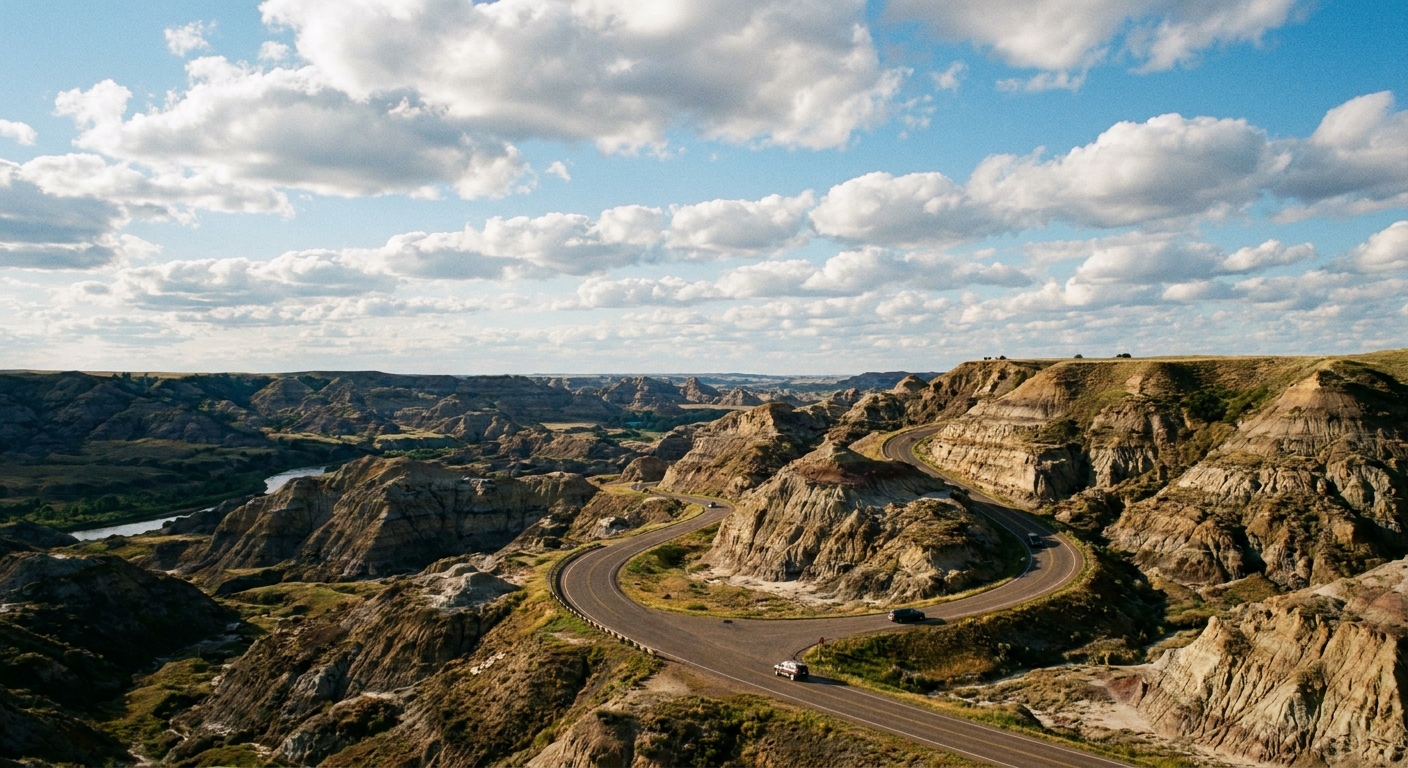
If you only have time for one side of Theodore Roosevelt National Park, the choice feels oddly dramatic for a place built on wide-open calm. The South Unit is the popular classic, close to Medora and I-94. The North Unit is the quieter cousin, reached from US-85 north of Belfield, and it is a long way from “we will just pop in for an hour.”
That distance is exactly why the North Unit hits differently. The road winds through tight river bends and layered badlands, bison wander like they own the place (they do), and overlooks feel more like you discovered them than you queued for them. Just know what you are signing up for: limited services, spotty cell signal, and a vibe that rewards a little planning.

North Unit in a nutshell
The North Unit is a compact, scenic out-and-back drive with big drama per mile. Compared with the South Unit, the terrain here feels steeper and more tightly folded, with the Little Missouri River carving through the landscape and creating frequent, elevated viewpoints.
- Best for: fewer crowds, moody badlands light, bison viewing, sunset overlooks, and travelers who like a slower pace.
- Expect: a longer approach drive, limited services, and more “you are really out here” vibes.
- Good to know: the North and South Units are separate areas with a significant drive between them. This is not a quick hop.
- North Unit bonus: keep an eye out for the park’s Longhorn steers, a very North Unit kind of surprise. As always, wildlife and livestock sightings can vary, so treat this as a “maybe” not a promise.
Getting there and basics
The North Unit entrance is off US-85 north of Belfield. Watford City is a common jumping-off point in the broader region, but you are not exactly “near town” once you commit to the park road.
- Drive time reality check: From Medora, plan roughly 1.5 to 2 hours each way depending on your route and stops. From I-94, many travelers connect via US-85 (allow roughly 1 to 1.5 hours from the Belfield area to the North Unit entrance).
- Fuel and food: Top off gas and grab snacks before you head in. Inside the North Unit, services are minimal. Translation: do not assume you can “just get something” once you are committed.
- Restrooms: Expect restrooms at main developed areas (like the visitor center area and campground), but not at every overlook.
- Cell service: Often limited. Download maps and playlists ahead of time and tell someone your rough plan if you are hiking.
The scenic road
The North Unit Scenic Drive is paved and generally easy, but it is not a straight shot. It rolls, curves, and climbs, especially as you near the main overlooks. You will do a lot of gentle braking for wildlife, sudden views, and the person in front of you who just realized they are in a postcard.
Plan to drive it like a scenic out-and-back, not a commute. Even if the mileage looks small, the pace is naturally slower because of wildlife and pullouts. That is a feature, not a bug.
How long to budget
- Quick taste: 1.5 to 2.5 hours for the drive with a few stops.
- Best day-trip rhythm: 3 to 5 hours including short walks, wildlife watching, and waiting out a bison situation without stress.
- Sunset plan: arrive mid to late afternoon, drive out toward the far overlooks, and work your way back slowly as the light softens.
Overlooks and stops
The North Unit is built for viewpoints. The pullouts are the kind where you step out, take two breaths, and immediately start scanning for bison shapes in the distance.
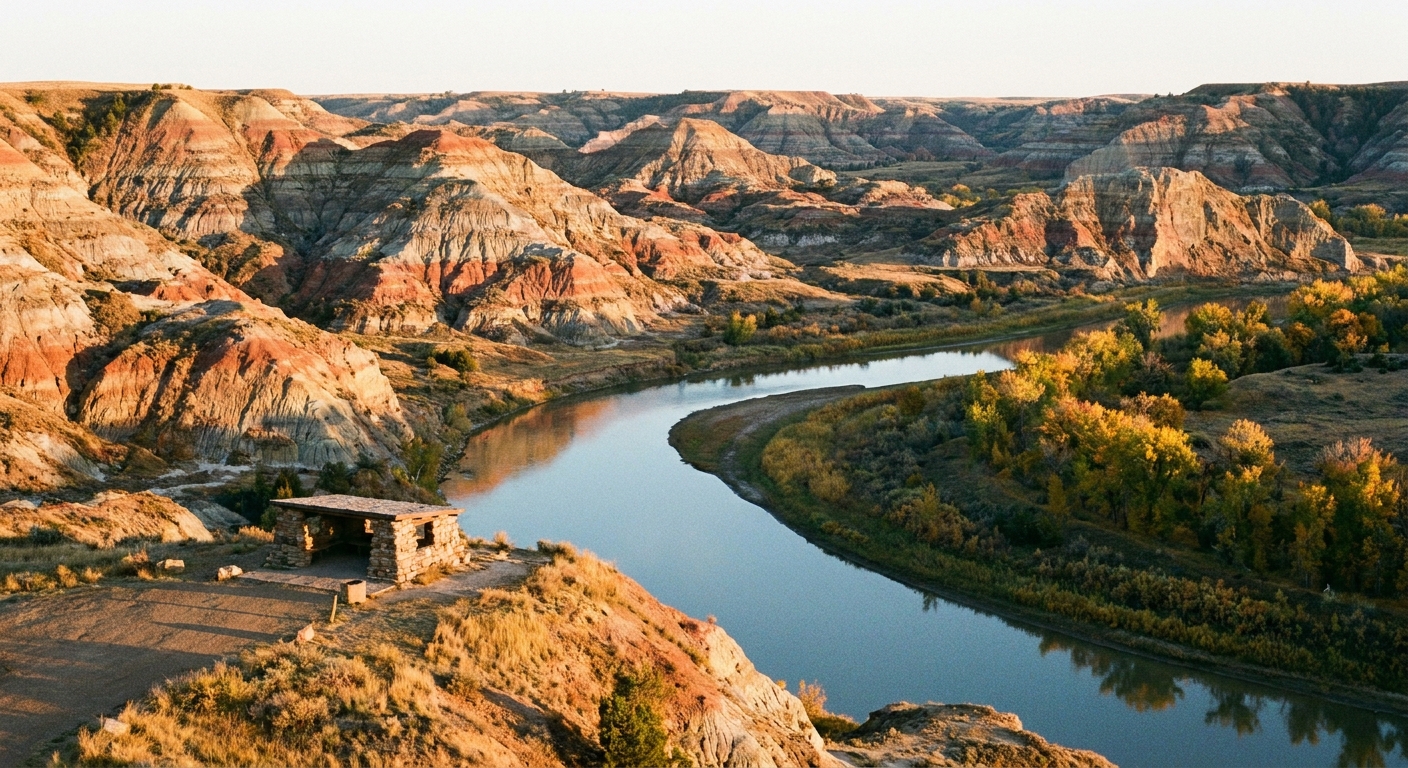
River Bend Overlook
This is the classic “North Unit moment,” where the Little Missouri River makes a sweeping curve below the cliffs. It is also one of the best places to understand the landscape’s scale fast. If you only stop once, stop here.
Cannonball Concretions Pullout
This is one of those stops that makes you do a double take. The cannonball-like rocks are scattered across the hillside like nature was experimenting with geometry. It is a quick hop out of the car with a surprisingly high wow-to-effort ratio.
Oxbow Overlook
Another river-focused viewpoint that feels more intimate than grand. On calmer days, it is a fantastic spot to linger and watch for movement: distant bison, birds riding thermals, and the occasional coyote-shaped dot doing coyote things.
Short walks
- Little Missouri Nature Trail: about 0.8 mile round trip, easy, great for a quick leg-stretcher near the river and cottonwoods.
- Caprock Coulee Trail: about 4.3 miles round trip, moderate, with steady ups and downs and big views for the effort.
Trail conditions can change fast after rain. If the ground looks like chocolate frosting, save the hike for another day unless you enjoy gaining five pounds per boot.
Bison viewing
There is a particular kind of traffic in the North Unit: the “everyone has stopped because bison are doing bison things” slowdown. The good news is that these jams are usually calm and short. The not-so-good news is that a single bad decision, like trying to squeeze around an animal, can turn a peaceful scene into a dangerous one.
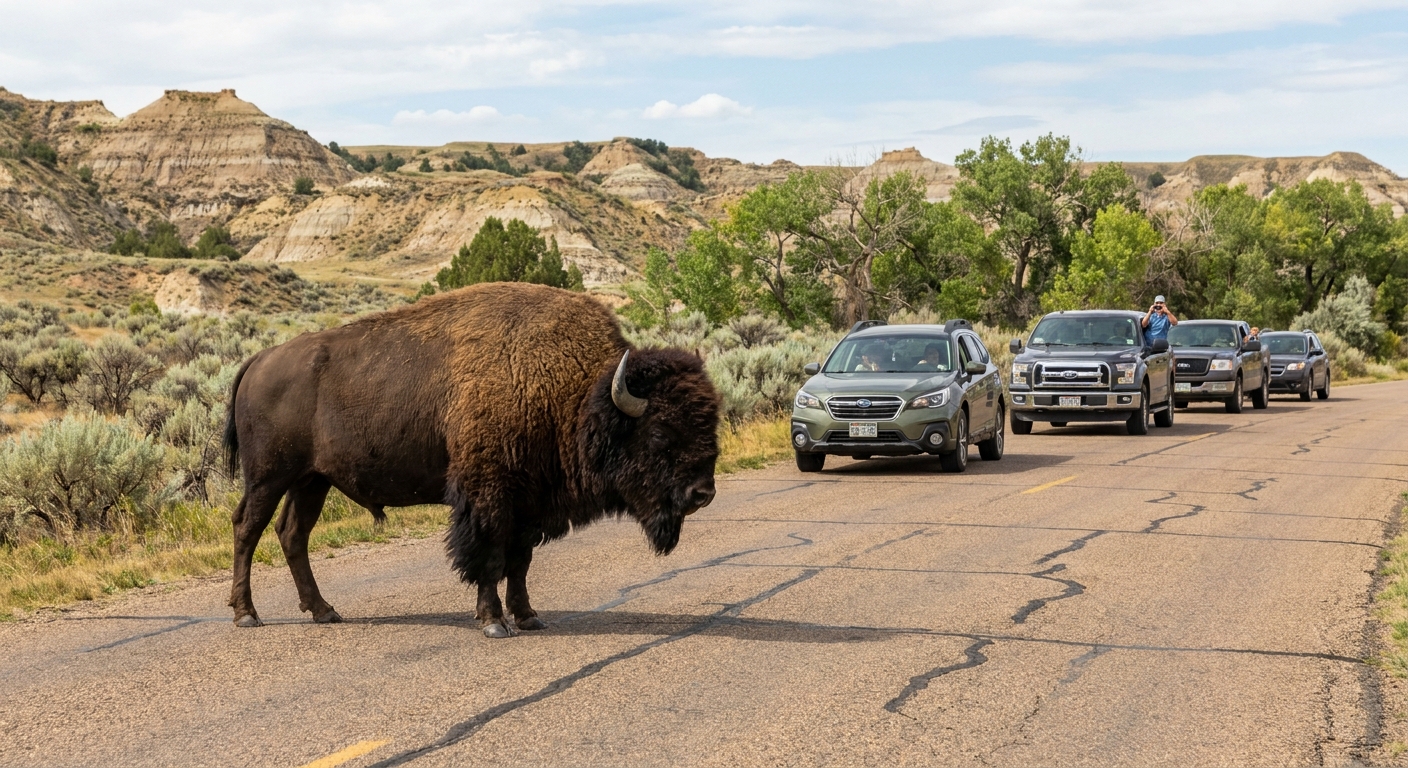
Golden rules for bison jams
- Stay in your vehicle when bison are close to the road. This is not a petting zoo, and bison are fast.
- Do not honk or rev. You are not moving a bison with a Toyota.
- Give them space. If the animal is on the road, wait. If it is beside the road, slow way down and pass only when there is a comfortable buffer.
- Do not stop in the middle of the lane if there is a safe pullout nearby. If you must stop, use hazards and keep your stop brief.
- Never pass a stopped car blindly. It is usually stopped for a reason, and that reason is often 1,000 to 2,200+ pounds.
- Keep windows mostly up if bison are right next to the vehicle. It reduces stress for you and for them.
Wildlife distance basics
Use the standard National Park Service guidance as your baseline: stay at least 25 yards from bison, elk, and other large animals, and at least 100 yards from predators like bears or wolves. In the North Unit, your best strategy is still the simplest one: drive slowly, scan constantly, and build extra time into your plan so you are not tempted to rush.
My favorite North Unit move: pack a thermos of good coffee and treat bison delays like the point of the trip, not an inconvenience.
Longhorn steers
Yes, this is the unit where you might also spot Longhorn cattle. They are part of the park’s history, and seeing them against the badlands backdrop is oddly perfect. Sightings can vary year to year, so think of it as a bonus if it happens. Treat them like any large animal: give them space, stay in your vehicle if they are near the road, and never assume they will move because you asked nicely.
Weather and road notes
The North Dakota badlands are tough, but weather still runs the show. The scenic drive is paved, yet storms, high winds, and freeze-thaw cycles can affect safety and timing.
After rain
- Trails get slick fast, especially on clay. Expect muddy shoes and slower hiking.
- Pullouts can be soft at the edges. Avoid parking with one side of your car in soggy ground.
- Visibility shifts. Low clouds and haze can mute the views, but the colors of the badlands often look richer right after rain.
Snow and shoulder seasons
- Ice can linger in shaded curves and at overlook lots.
- Wind is a factor. Even on dry days, gusts can make driving feel more intense on exposed stretches.
- Services feel even slimmer. Have extra water, snacks, and warm layers, especially outside peak summer.
Season notes
Late spring through fall is the easiest window for most visitors. Summer brings longer days and more visitors. Winter can be beautiful and brutally quiet, but conditions can limit access and make driving slower, so plan conservatively and check for closures.
Check before you go
Because conditions can change quickly, it is worth checking the National Park Service site for alerts the morning you plan to visit, especially after major storms or during winter. If something is temporarily closed, the best workaround is usually: linger longer at fewer stops, pick one solid hike, and savor the quiet.
North vs South Unit
If you are deciding between units, it helps to be honest about your trip style and your route across North Dakota. The South Unit is convenient and iconic. The North Unit is more remote and, for some travelers, more memorable.
Choose the North Unit if you want:
- Fewer crowds and more “I cannot believe this is a national park” quiet.
- A scenic drive that feels wild, with tighter curves and frequent big overlooks.
- Better odds of unhurried wildlife viewing, especially bison without a parade of cars.
- A slower, more immersive half-day or day where the drive itself is the itinerary.
Choose the South Unit if you want:
- Easy access from Medora and I-94.
- More built-out visitor infrastructure and a broader menu of quick stops.
- A classic first visit that pairs well with a Medora overnight.
Best answer
Do both, but not on the same rushed day. The most common planning mistake I see is trying to cram both units into one day while also driving a long distance across the state. If you can swing it, give each unit its own window of time. The North Unit deserves a relaxed pace, not a drive-by.
Sample itineraries
2 to 3 hours
- Enter, settle into the slower speed, and stop at the first major overlook that catches your eye.
- Prioritize River Bend Overlook and one additional viewpoint, like Oxbow Overlook or Cannonball Concretions Pullout.
- Build in time for wildlife pauses, especially bison on the road.
- Return with extra buffer for slow traffic and photo stops.
Half day
- Drive the scenic road with frequent pullouts and unhurried photos.
- Pick one trail based on conditions and energy (Little Missouri Nature Trail for easy, Caprock Coulee for more of a workout).
- End at an overlook when the light is best, then cruise back slowly.
Sunset plan
- Arrive mid afternoon, take your time with the overlooks.
- Eat an early picnic dinner at a viewpoint with a wind layer on standby.
- Watch the light shift on the ridges, then drive out carefully as wildlife activity increases near dusk.
What to pack
This is my carry-on-only brain talking, but the North Unit rewards a little preparedness. You will enjoy it more if you are not hungry, thirsty, or under-layered while waiting for a bison to finish its road meditation.
- Water and snacks: enough for several hours, plus a little extra.
- Binoculars or a zoom lens: better wildlife viewing without getting close.
- Wind layer: even warm days can feel sharp on exposed overlooks.
- Sun protection: hat and sunscreen, especially in summer.
- Good shoes: even overlook strolls can involve uneven ground and mud after rain.
- A trash bag: pack it in, pack it out. Quiet places stay quiet because visitors act like guests.
- Offline basics: downloaded map, a paper map backup, and a basic first aid kit if you plan to hike.
Etiquette
The North Unit’s magic is how calm it feels. A few small choices help keep it that way.
- Use pullouts fully so other cars can pass.
- Keep noise low at overlooks. Sound travels far in open country.
- Stay on trails to protect fragile soils and plants.
- Give wildlife the right of way. Your schedule is optional. Their habitat is not.
The bottom line
Theodore Roosevelt National Park’s North Unit is the choice for travelers who want their scenic drive to feel like an adventure, not an attraction. Come for the winding road and layered overlooks. Stay for the bison pauses, the surprise of Longhorns, and the quiet that makes you whisper without realizing it.
If you are debating North vs South, here is my honest take: if you are already near Medora or you want the easiest first visit, go South. If you can commit the time to reach the North Unit via US-85 and you are good with fewer services, you will likely remember it longer.