Torrey Pines State Natural Reserve
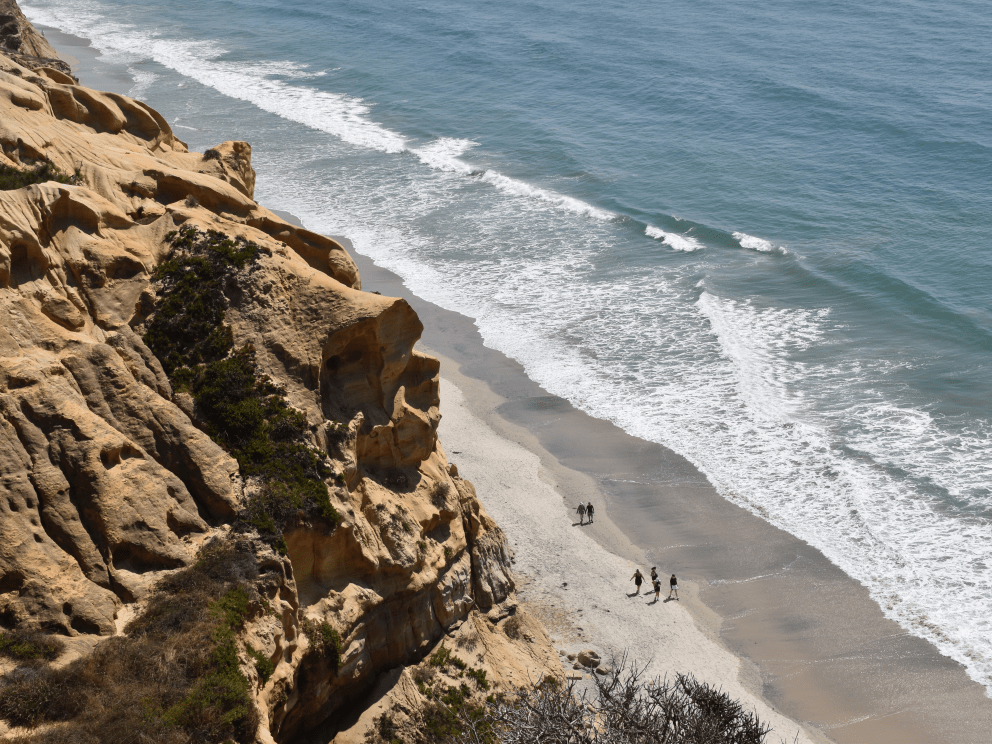
Torrey Pines State Natural Reserve is one of those rare places where you can get a legit “I hiked today” feeling without committing to an all-day sufferfest. Think sandy trails, wind-shaped pines, and blufftop viewpoints that make the Pacific look like it goes on forever. It is also close enough to San Diego that you can do a sunrise loop, rinse the salt off your legs, and still make it to a museum, brewery, or dinner reservation.
This guide focuses on the practical stuff that makes a quick visit actually smooth: parking strategies (including overflow), the easiest overlooks, short-distance options that work for families, how tide and wind change the experience, and easy pairings with La Jolla or downtown.

Know before you go
Where it is
The reserve sits along the coast in San Diego, just north of La Jolla and south of Del Mar. You get coastal bluff hikes, a small network of loop trails, and quick access to the beach below.
Hours and closures
Hours and access can vary by season and conditions, and trail sections can close for safety, erosion, or habitat protection. Check the California State Parks Torrey Pines SNR page before you go, especially after rain or during high wind.
What it feels like
Expect exposed trails with big ocean views, some stairs and sandy sections, and very little shade once you are out on the bluffs. On clear days, the light is unreal. On windy days, it can feel like you are hiking inside a hair dryer pointed sideways.
Rules to know
- Food rules (verify on-site): Many visitors report that eating is restricted on trails to protect wildlife. Because this can be posted or enforced differently by area and season, check current signage and the official rules page when you arrive. Simple workaround: treat it as a water-only hike and plan snacks in designated areas (like your car, outside the reserve) or at the beach where allowed.
- Stay on trail: The cliffs and habitat are fragile, and shortcuts speed up erosion.
- Dogs: Dogs are not allowed on reserve trails. Service animals are the exception.
What to pack (small-daypack mindset)
- Layers: Even if it is warm inland, the bluff can be cool and windy.
- Water: The reserve is short-distance friendly, but sun and wind dehydrate fast.
- Sun protection: Hat and sunscreen are non-negotiable.
- Closed-toe shoes with tread: Better for sand and slick spots.
- Binoculars (optional): Nice for pelicans, dolphins, and seasonal whale spotting from the overlooks.
Restrooms and water
Restrooms are typically available near main parking areas and the visitor center. Water fountains and bottle refill options can be limited or shut off at times, so bring your own water and consider anything on-site a bonus.
Parking tips
Torrey Pines is famous for its views and infamous for its parking on weekends. Your experience improves dramatically if you have a plan.
Fees and passes
Most on-site lots require a day-use fee unless you have a California State Parks pass. Fees can vary by lot and season and are subject to change, so check the current posted rate when you arrive. Bring a card and a backup payment option just in case.
Main parking options
- North Beach lot (near the beach): Convenient for combining the hike with beach time. It can fill early on weekends and sunny afternoons.
- Main reserve lots (topside): Best if you want to start on the bluffs without adding extra climbing. Availability varies and peak times are tight.
Overflow plan
- Go early or go late: If you arrive close to sunrise, you will usually snag a spot and get calmer trails. The last couple hours before closing can also be quieter.
- Weekdays help: If you can swing a weekday morning, do it. You will feel like you discovered a secret, even though you did not.
- Street parking (obey signs): You may find legal street parking along nearby roads, but it is highly location-specific. Watch for posted restrictions, no-stopping zones, time limits, and bike lanes. Do not block shoulders or access. If it feels sketchy, keep driving.
- Be flexible with your start: If the lots are full, pivot to a shorter “overlook first” plan and accept a little extra walking from wherever you land.
- Have a backup nearby: If you strike out completely, head toward La Jolla Shores for a coastal walk and coffee, then return later when turnover improves.
Small mindset shift that helps: At Torrey Pines, parking is part of the hike. If you mentally budget an extra 10 to 20 minutes for circling or walking in, it stops feeling like a personal attack.
Easy overlooks
If you are short on time or hiking with kids, visitors, or anyone who wants the view more than the mileage, aim for blufftop viewpoints and keep it simple.
Guy Fleming Trail
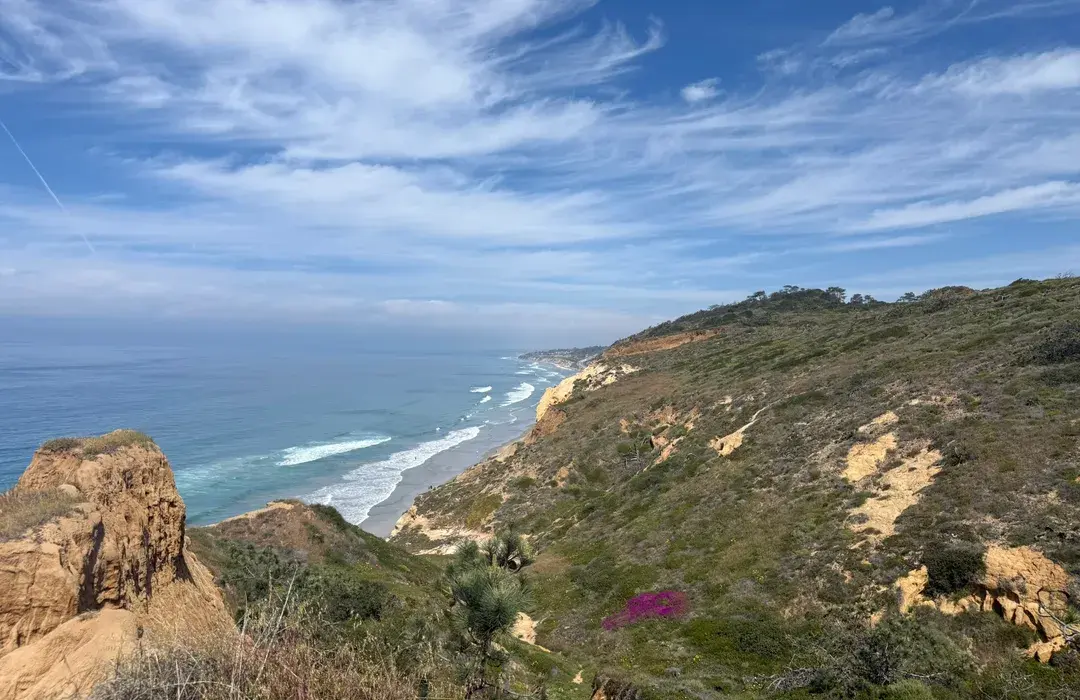
This is the go-to for easy, high-reward coastal scenery. It is a short loop (about 0.7 miles) with frequent viewpoints and a “wow” factor that shows up quickly. You get ocean panoramas, dramatic bluff edges, and classic Torrey pines without committing to steep climbs.
Razor Point
Razor Point is one of the most iconic viewpoints in the reserve. The route is still approachable for most people and is often done as a shorter out-and-back or as part of a longer loop (commonly around 1 to 1.5 miles total, depending on where you start). The payoff is a layered view of cliffs, canyon shapes, and open ocean that feels especially cinematic in late afternoon light.
Parry Grove (stairs warning)
Parry Grove is beautiful and can feel more sheltered than the exposed bluff edges when the wind is really ripping. Just note that it includes a long staircase (well over 100 stone steps) down and back up. If your group wants “truly minimal effort,” stick with Guy Fleming and Razor Point.
Family options
Torrey Pines works surprisingly well for families because you can scale the day up or down. The trails are not long, but there are edges and erosion areas, so keep a close eye on little ones near drop-offs.
Accessibility note: Many routes are not stroller-friendly or wheelchair-accessible due to sand, uneven surfaces, and stairs. If you need a smoother roll, plan on viewpoints from paved areas and keep expectations flexible.
Option A: Quick loop
- Best for: Young kids walking (strollers are generally not ideal on sandy trails).
- Plan: Stick to a short loop like Guy Fleming and add a quick out-and-back to a viewpoint if energy is high.
- Why it works: Frequent “reward moments” keep everyone motivated.
Option B: Bluffs plus beach
- Best for: Kids who need a sandy payoff.
- Plan: Do a short bluff walk first, then head down to the beach for sand play and rocky shoreline exploring when conditions allow.
- Pro tip: Bring a small towel and a change of clothes, even if you “are not planning to get wet.”
Option C: One view, done
- Best for: Multigenerational groups or visitors with limited mobility.
- Plan: Choose one scenic overlook route, spend time looking for pelicans and dolphins, and end on a high note.
Food plan: If eating is restricted on trails (check current signs), treat this as a “water only” hike and plan a real snack break at the beach, in your car, or after you leave the reserve. It is also way less stressful than trying to keep crumbs away from gulls.
Tide and wind
Tide notes
Tide matters most if you want to spend time on the beach below the bluffs, explore rocky shoreline areas, or do a longer shoreline walk. A lower tide generally gives you more exposed sand and rocks to wander. A higher tide can narrow the beach and make certain stretches feel squeezed.
Simple approach: If beach time is part of your plan, check a tide chart the night before and aim for the hour or two around low tide for the most flexibility.
Wind notes
Torrey Pines is gorgeous in the wind and also brutally honest about it. Blufftop trails are exposed, and gusts can be strong enough to make you lean into them.
- Dress for it: A light windbreaker turns a “why did we do this” hike into a great one.
- Eye comfort: If you wear contacts, bring sunglasses. Sand gets airborne.
- Photo tip: Mornings often have softer light and can be calmer. Late afternoons can be dramatic, but wind sometimes picks up.
Half-day pairings
This is where Torrey Pines really shines for the Trail and Town crowd. You can hike, then pivot into a very different San Diego vibe quickly, assuming traffic cooperates.
La Jolla
La Jolla is the easiest add-on and feels like a natural extension of the coastal day. Without heavy traffic, it can be about 20 to 30 minutes. With traffic, plan extra time.
- Post-hike stroll: Head toward the La Jolla Cove area for oceanfront walking, sea lion viewing, and tidepool peeking.
- Beach reset: La Jolla Shores is great if you want a wide sandy beach and a calmer swim zone.
- Food plan: Go casual. Fish tacos, smoothies, or a bakery stop fit the salty, sun-warmed mood.
- Coffee quest: Look for a local cafe where you can sit outside and watch the light change. That is the real La Jolla luxury.
Downtown San Diego
If your group wants more city after the hike, downtown gives you a clean switch from quiet bluffs to lively neighborhoods. Timing can range widely with traffic, so build in buffer time.
- Balboa Park: Ideal for a museum or garden wander without needing to over-plan.
- Gaslamp Quarter: Best for dinner and people-watching later in the day.
- Waterfront: If you want a mellow walk, head toward the bay and keep it scenic.
Timing tip: Do Torrey Pines early, then head downtown after lunch. You will avoid the worst parking scramble at the reserve and show up in the city with your “I already did something healthy” glow.
Itineraries
2-hour easy morning
- Arrive early for easier parking
- Walk Guy Fleming Trail and pause at multiple overlooks
- Optional: quick add-on to Razor Point if energy is good
- Leave before the lots get chaotic
Half-day with La Jolla
- Morning bluff loop for views
- Drop to the beach if tide timing works
- Drive to La Jolla for coffee and a coastal stroll (allow extra time for traffic)
- Late lunch with something fresh and salty
Hike then city
- Early hike at Torrey Pines
- Quick change of clothes in the car if you are sandy
- Balboa Park museums or gardens
- Dinner downtown
Leave no trace
Torrey Pines is a sensitive coastal environment with fragile cliffs and habitat. The best way to keep it stunning is to treat it like it is irreplaceable, because it is.
- Stay on trail: Cliff edges erode and shortcuts accelerate damage.
- Cliff safety: Sandstone can crumble and edges can be unstable. Stay behind fences and do not step past barriers for “just one more photo,” especially with kids.
- Pack out everything: Food scraps included. They change wildlife behavior.
- Respect closures: If a section is roped off, it is usually for safety or restoration.
- Keep voices low at viewpoints: You will hear the ocean more, and everyone wins.
If you only remember one thing: plan for wind, arrive early, and choose one great overlook trail. Torrey Pines does not need a long itinerary to feel unforgettable.