Valley of Fire Half-Day Loop for First-Timers
Valley of Fire is the kind of place that makes you forget you are only about 60 to 90 minutes from Las Vegas. One minute you are on a highway skirting suburban Henderson, the next you are driving through red sandstone that looks like it was lit from inside.
This page is for people who only want Valley of Fire logistics. Not a Red Rock combo. Not a full-day epic. Just a realistic half-day loop with the signature formations, the best photography stops, and the safety notes that matter most when the desert turns into an oven.

Quick facts before you go
Park fees
- Day-use entry: Fees can change, so confirm current pricing (and any resident discounts or waivers) on the official Nevada State Parks Valley of Fire page before you go.
- Payment: Expect to pay at the entrance station when staffed. At times, self-pay may be used.
Hours and best time to arrive
- Day use: Valley of Fire is generally open year-round for day use. Summer conditions can affect what’s comfortable or safe.
- Sweet spot for a half day: Arrive early morning for cooler temps and emptier viewpoints. If you’re going in the afternoon, plan to do the shortest walks and assume you’ll be in full sun.
Bathrooms and water
- Bathrooms: You’ll find restrooms at major developed areas like the Visitor Center and several main-use parking areas. Don’t assume every scenic pullout has facilities.
- Water: Bring your own. Don’t count on water filling being available or convenient when you need it most.
Cell service and navigation
- Service is spotty. Download offline maps.
- Main road: The scenic drive is straightforward, but pulling in and out of viewpoints takes time, especially when the park is busy.
Roads and vehicle basics
- Car type: The main scenic roads and parking areas are typically fine for standard cars.
- Drive smart: Obey pullout rules, watch for pedestrians at viewpoints, and keep an eye out for wildlife near the road.
Your half-day loop (4 to 5 hours total)
This is a first-timer order that keeps driving efficient and stacks the iconic formations early. Times below include a realistic amount of parking, walking to viewpoints, taking photos, and getting back to the car. If you’re a quick photo-and-go traveler, you can trim it. If you love textures and light, you’ll want the full time.
Stop 1: Visitor Center (15 to 25 minutes)
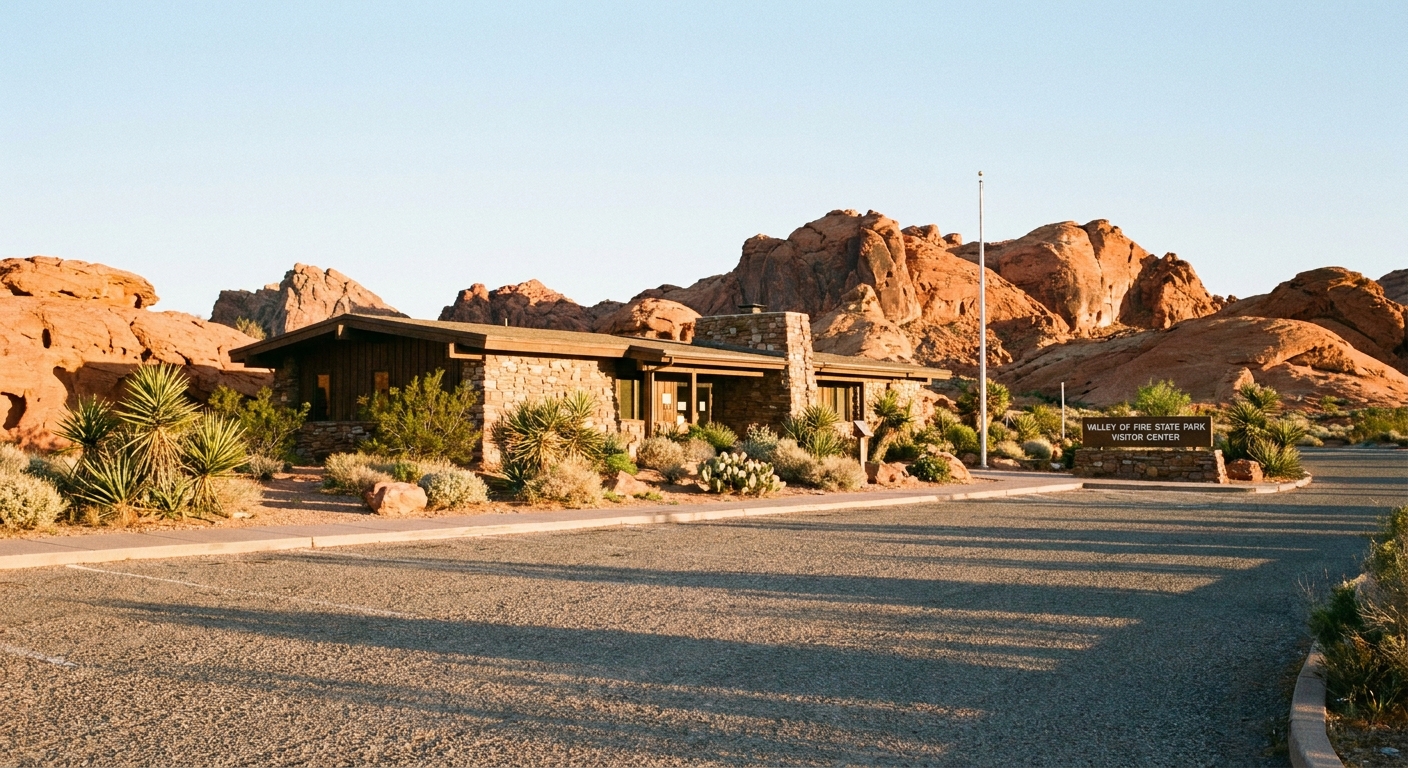
Start here even if you think you don’t “do” visitor centers. It’s the best place to confirm trail closures, flash flood risk, and any summer heat advisories, plus there are restrooms and interpretive context that makes the rock art and geology feel less like random pretty shapes.
Accessibility note: This is one of the easiest stops for smooth walking and quick bathrooms.
Photo note: If you arrive early, the low angle light around the Visitor Center area can be surprisingly good for wide desert scenes.
Stop 2: Atlatl Rock (15 to 20 minutes)
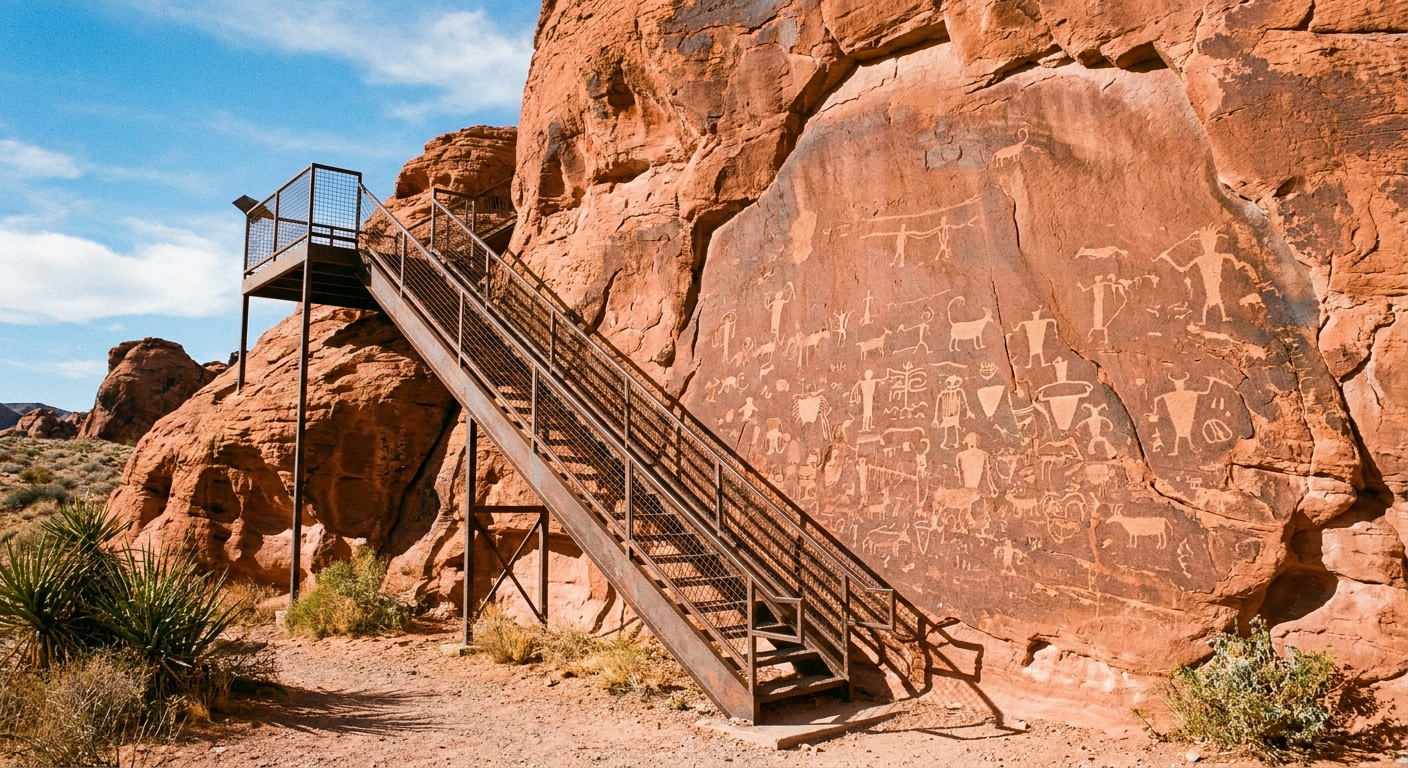
Short, punchy, and high payoff. Atlatl Rock has petroglyphs you can see without a long hike, which makes it perfect for first-timers and for hot days when you want culture without committing to miles in the sun.
- Stairs warning: To get up close to the main panel, you’ll need to climb a steep metal staircase. If you’re avoiding stairs, you can still enjoy the area from below, but the best views are up top.
- Walk time: About 5 to 10 minutes total once parked (longer if you take your time on the stairs).
- What to look for: Bighorn sheep and other figures carved into the rock.
- Respect note: Don’t touch the petroglyphs. Oils from hands accelerate damage.
Stop 3: Mouse’s Tank (Petroglyph Canyon) (45 to 70 minutes)
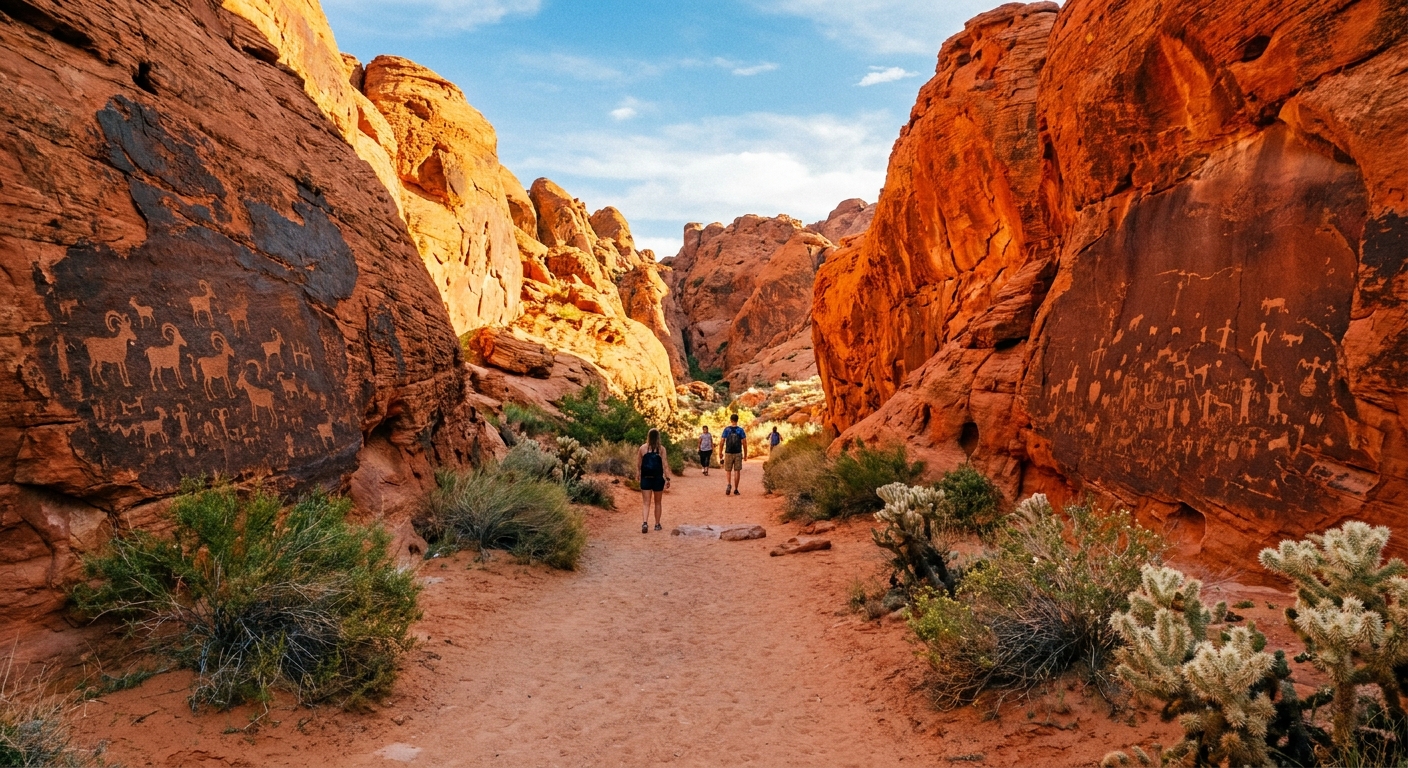
If you only do one short walk in Valley of Fire, make it this one. It’s a mostly flat out-and-back that layers petroglyph spotting with classic canyon scenery. In cooler months it’s a dream. In summer it can feel like walking through a sunlit hallway, so go early and bring more water than you think you need.
- Distance: Commonly listed around 0.7 miles round trip, but check on-site signage for the most current distance.
- Time breakdown: 10 to 15 minutes each way, plus 20 to 40 minutes for slow petroglyph scanning and photos.
- Photography: Mid-morning light can be harsh in the canyon. For texture, look for side-lit panels and frame petroglyph walls with the narrowing canyon.
- Accessibility note: Sandy and uneven in places, so not ideal for strollers or many mobility aids.
Stop 4: Rainbow Vista and Fire Canyon Overlook (20 to 35 minutes)
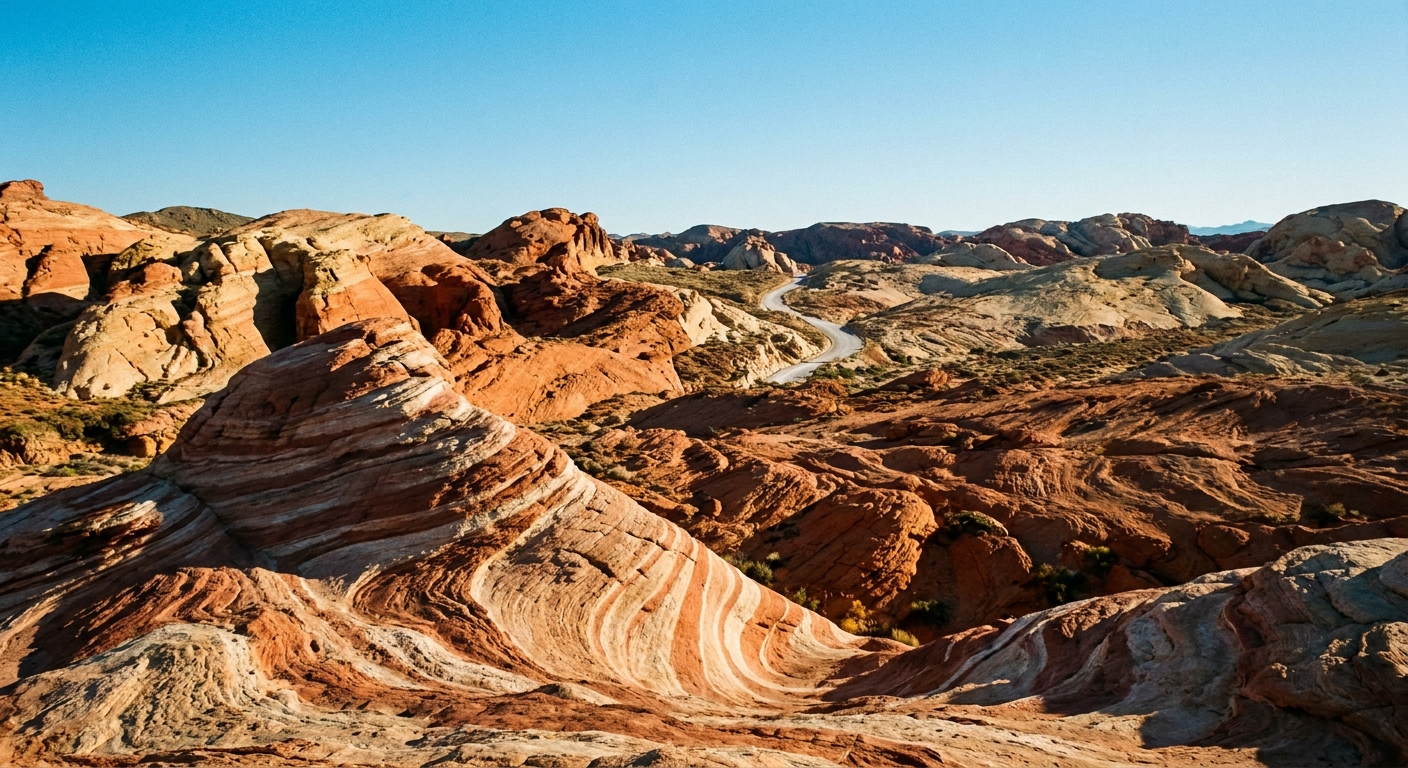
These overlooks give you the wide, cinematic Valley of Fire look without any real effort. If you’re traveling with someone who isn’t into hiking, this is your moment to make them a believer.
- Walking: Short paved or compact paths, mostly under 10 minutes total.
- Photography: Go wide to capture layers of color. A polarizer can deepen blue sky, but don’t overdo it or the reds can look unnatural.
- Accessibility note: Among the easier, lower-effort stops, though surfaces and grades can vary by viewpoint.
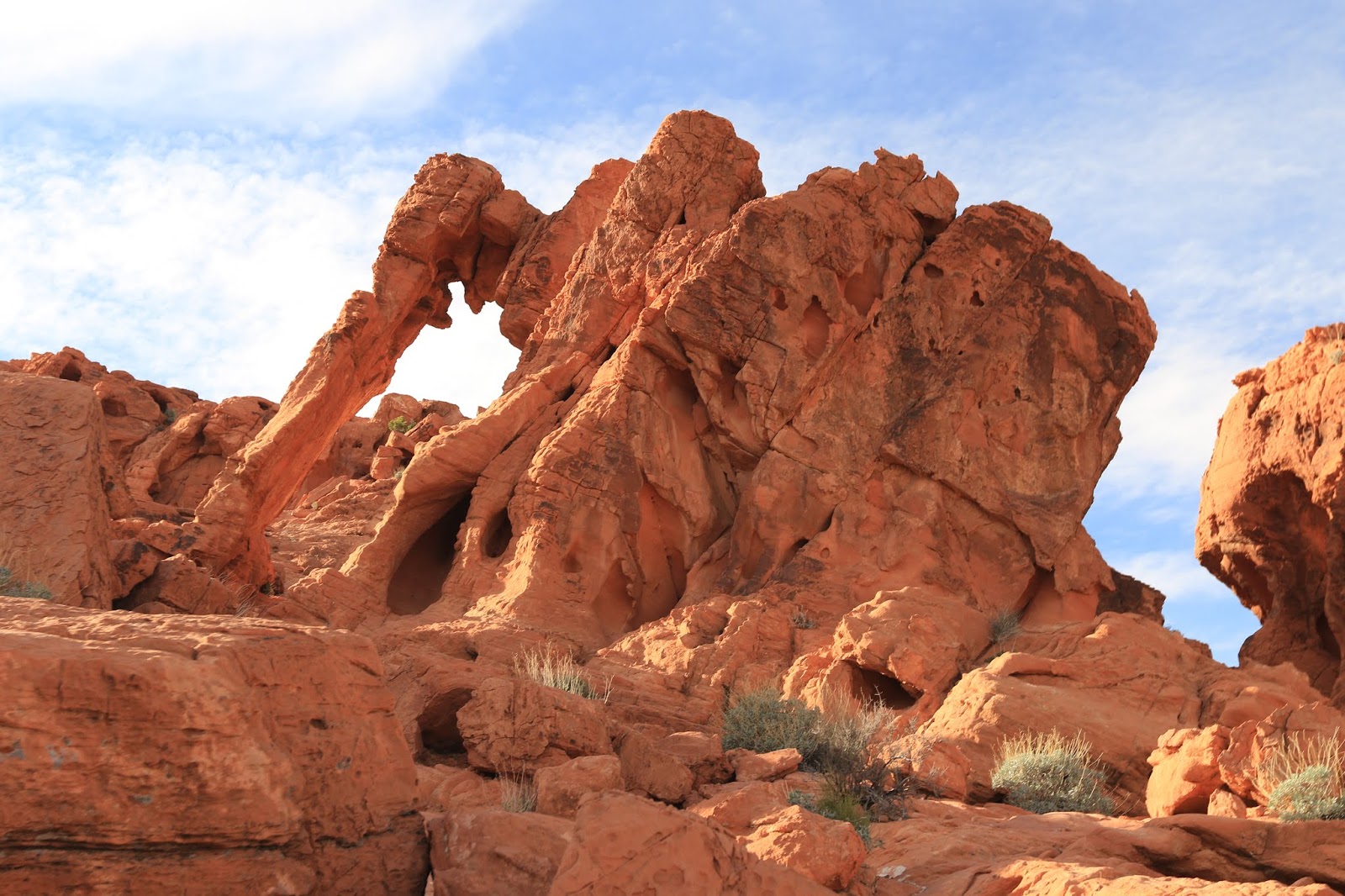
Stop 5: Elephant Rock (20 to 30 minutes)
Elephant Rock is one of the park’s signature “yep, that is exactly what it looks like” formations. It’s also a good bookend stop because it’s right by the east entrance area.
- Where it is: Elephant Rock sits next to the East Entrance on Valley of Fire Highway. If you enter from the west side, you’ll typically see it at the end. If you enter from the east, it’s a great first stop.
- Walking: Short, but you’ll likely wander for angles.
- Photography: The classic view is from the roadside area, but walking a bit changes the “trunk” silhouette dramatically.
Optional swaps if you have extra time
If you’re closer to a 5.5 hour window or you move fast, these are the add-ons that make sense for first-timers. Pick one, not all, unless it’s a cool-season day and you’re feeling ambitious.
Seven Sisters (10 to 20 minutes)
A quick roadside stop where you can walk around clustered sandstone towers. It’s great for scale and for people who like to step off the pavement and wander without committing to a trail.
Beehives (10 to 15 minutes)
Quick photo stop for rounded, honeycomb-like rock shapes. Excellent with kids because it feels like a natural playground, but keep scrambling cautious in heat and on slick rock.
White Domes (60 to 90 minutes, seasonal caution)
This is a beloved loop with slot-canyon vibes and scenic terrain, plus remnants of an old film set area. In extreme heat, it can be a poor choice due to exposure. If you go, start early, and skip it if temps are high or you’re already feeling the sun from Mouse’s Tank.
Realistic half-day timing snapshot
- Visitor Center: 0:20
- Atlatl Rock: 0:20
- Drive + pullouts between stops: 0:45 to 1:05
- Mouse’s Tank: 1:00
- Rainbow Vista and Fire Canyon: 0:30
- Elephant Rock: 0:25
- Total: about 4:00 to 5:00
If you’re visiting on a weekend or holiday, add buffer time for parking and slow-moving scenic traffic.
Photography stops and how to shoot them
Best quick pullouts
- Any safe roadside turnout along the main scenic drive: Look for leading lines in the road with red ridges in the distance.
- Fire Canyon Overlook: Great for wide landscape shots and layered colors.
- Elephant Rock: Best for silhouette and shape, especially when the light is softer.
Light and season tips
- Morning: Softer light, cooler temps, fewer people in your frame.
- Midday: High contrast and harsh shadows. Use it for graphic compositions and close-up textures.
- Golden hour: If your half-day can flex, early or late light makes the red rock look like it’s glowing. Plan for longer shadows and more dramatic texture.
- After rain: Colors can look richer, but watch for slick rock and flash flood risk in washes.
Carry-on-only tip: A wide lens (phone is fine), a water bottle you’ll actually drink from, and a small microfiber cloth for dust are more useful here than extra gear.
Summer heat safety: what actually changes your plan
Valley of Fire isn’t the place to tough it out. Heat illness can escalate fast, and many of the best stops are fully exposed. If you’re visiting late spring through early fall, treat this as your primary planning factor.
How to adjust your loop
- Go earlier than you think: Start at opening or as early as possible.
- Shorten the walking portions: Keep Mouse’s Tank only if you’re feeling good, then lean on overlooks.
- Assume no shade: If there’s no shade on the trail, your body is the cooling system. Don’t let the scenery override the math.
- Use a heat cutoff: If it’s forecast around 100 to 105°F (or there’s a heat advisory), convert this into a mostly drive-and-overlooks visit and save longer walks for cooler months.
What to bring
- Water: More than you think you need. For a half-day, many travelers are comfortable with at least 2 to 3 liters per person, more in peak heat.
- Electrolytes: Especially if you sweat heavily.
- Sun protection: Hat, sunglasses, high-SPF sunscreen, and lightweight long sleeves if you tolerate them.
- Footwear: Grippy shoes. Sand and slick rock are a classic ankle-twist combo.
Red flags to take seriously
- Headache, nausea, chills, confusion, or stopping sweating are reasons to stop immediately, get to shade or AC, and seek help.
- Don’t rely on cell service. Let someone know your plan before you enter.
If you’re visiting in extreme heat, the best Valley of Fire trip is often a scenic drive with short, high-impact stops. You can always come back for longer hikes in cooler months.
Getting there and basic logistics
From Las Vegas
Plan for roughly 60 to 90 minutes of driving each way depending on where you start in the metro area and traffic. Leaving early avoids both heat and the everyone-had-the-same-idea crowd.
Entrances and route choice
- West side access: Many visitors enter from the I-15 side (often thought of as the west entrance area) and drive through the park toward the east.
- East Entrance: The signed East Entrance is on Valley of Fire Highway, and it’s where you’ll find Elephant Rock right at the edge of the park.
- Route tip: If you can, enter one side and exit the other to avoid backtracking. Just confirm your navigation before you lose signal.
Fuel and food
- Gas: Fill up before you go. Don’t count on services inside the park.
- Food: Pack snacks or a simple picnic. Keep it in a cooler if it’s hot, since everything melts fast in a parked car.
Leave no trace basics
- Stay on established paths near sensitive areas and rock art.
- Pack out all trash, including fruit peels and coffee cups.
- Don’t stack rocks or carve into sandstone. The desert remembers everything.
Half-day Valley of Fire FAQ
Is half a day enough for Valley of Fire?
Yes, if your goal is the signature formations and a couple of short walks. You won’t see everything, but you’ll get the highlights without rushing.
Do I need a reservation?
Typically Valley of Fire day use doesn’t require timed entry like some national parks, but policies can change. Check Nevada State Parks updates before you go, especially for holiday weekends.
Are the hikes kid-friendly?
Many stops are family-friendly, especially Atlatl Rock (if your group can handle the stairs) and the main overlooks. Mouse’s Tank is manageable for many kids, but heat and sun exposure are the real limiting factors.
What if I only have 2 to 3 hours?
Do: Visitor Center (quick) + Rainbow Vista and Fire Canyon + Elephant Rock. Add Atlatl Rock if you still have time and your group is good with stairs.